[EP 36] Breaking Free from Limiting Beliefs with Shelly Lefkoe
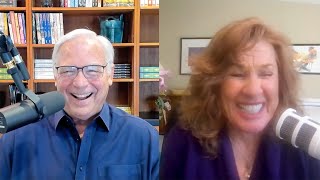
Shelly Lefkoe explains how limiting beliefs form in childhood from the meanings we assign to events, not the events themselves. Her method separates the two through verbal exercises and guided imagery, removing the emotion and the belief's grip. The Lefkoe Institute has reached roughly 200,000 people using this deconditioning technique.
Chapters
Foreign.
Welcome to the Jack Canfield Podcast, where we delve deep into the areas of personal development and transformation. And today, I'm excited to have Shelly Lefkoe with us. A fellow member of the Transformational Leadership Council, which is an international association of about 114, 15 leaders in the human potential movement all around the world. And she's also a pioneer in the field of belief transformation. I'm excited about this podcast because Shelly and I both share a passion for identifying, addressing, and eliminating the limiting beliefs that prevent so many people from achieving their fullest potential. To give a little more background, Shelley is the co founder of the Lefko Institute, where she has developed a proven methodology for helping people identify and rid themselves of deeply ingrained beliefs that hold them back in life and in business. Her approach has been validated by research and has transformed the lives of over 30,000 people worldwide. That's astounding. Her bestselling book, hitting the eliminate the beliefs that sabotage your business and your life, also offers practical insights for breaking through personal barriers. And today, we're going to explore how Shelley's work aligns with our shared interest of freeing ourselves from the constraints of our past programming. Shelley, it's wonderful to have you here to share your experience and your journey with us. Thanks for joining us.
My pleasure, my friend. But that's an old bio. We've reached over 200,000 people worldwide easily.
So we're only 170,000 people behind.
That's it.
Oh, my God. Well, I'm not sure where we got that, but there you are. So that was updated. We're up to date now.
Okay, good.
So, anyway, I'm not sure that everybody listening or watching actually knows what a limiting belief is or where they come from and how they typically affect their lives. Could you just unpack that basic concept with us for a few minutes?
Yeah. I'm so glad you asked, Jack, because I often read things that. You know, 35 years ago, when my late husband came up with this theory that beliefs determine behavior, emotions, and even your reality, people used to say to us, beliefs? You mean like religious beliefs? What do you mean, beliefs? Now everybody's talking about beliefs because most people know you can't make change without eliminating your beliefs. And when I read a lot of what people write, most people don't realize there's a difference between a pattern and a belief. So a belief is a statement about reality that we hold as the truth. That's what a belief is. A pattern is really what we want to change. Nobody cares about changing beliefs we care about changing patterns and patterns are observable. So there's behavioral patterns and emotional patterns and then a reality pattern. So a behavioral pattern is I can observe you procrastinating, I can observe you not speaking up for yourself. I can observe you on the stage looking scared, having a fear of public speaking. So behavior, behavioral patterns are observable emotional patterns. I can see you being depressed, I can see you being anxious. I can see you kind of looking down and upset. I can see you angry all the time. So I can see emotional patterns. Reality patterns are a little trickier, but it's where I do all the right things and nothing ever turns out for me. And that's when people talk about self sabotage. That's because you have a reality pattern. So that's the difference. Now beliefs underlie all of our patterns. So anytime you have an unwanted pattern, know that there are beliefs underneath it that are causing it. Now you asked how our beliefs get formed. So we come into this world and we don't know if we're good enough or not good enough. We don't know if we're important or not. We don't know if life is hard or easy. We don't know if money is scarce and hard to get or flows to us with great abundance. And you know, it's interesting, Jack, I have asked people in every country, I have clients now in Uganda, in Saudi Arabia. And I ask them, when your kids are little and you come home at the end of the day, what do they do? And virtually every parent says the same thing. They run to me and I say, and what do they want? And every child wants three Affection, attention and acknowledgment. Now I'm going to ask you this question. What is the one word question every little child asks all day long? One word?
Look, I mean, I don't know a question.
So if you tell a question, it's.
One word, it's a question.
One word question. So if you tell a child no, you can't, what do they want to know?
Why?
Why? Mommy, mommy, why can't I have dessert? Why do I have to go to sleep? Why do I have to go to school? Why is the sky blue? Why do you have to go to work? Right, Right. So if you are criticized as a child, which we all are, which is why Jack and I are busy all day, The kids ask why, why am, why can't I live up to my parents expectations? Well, I guess I'm not good enough. And I'm going to tell you in a little Bit why most things that try to get rid of beliefs don't, and what does? But for now, if you're watching your parents struggle and they say, oh, God, you know, life is so hard and we can't pay the rent and, you know, and we're really tight and we can't afford this, and that child asks, why? Why are they struggling like that? I guess money is scarce and hard to get. I guess life is hard. That's how our beliefs get formed. Now I'll tell you the secret sauce. Why our beliefs stay with us and people think it's so hard to get rid of beliefs is because we think we saw our beliefs in the world. And it is impossible to not believe something you think you saw, right? So if somebody said to you, oh, I know Jack, I was going to say cornfield, I know Jack Canfield, you know he'll never be successful. You know, he's just not going to be successful, you would say, what? No, that's wrong. And they'd say, no, no, it's true. And you'd say, no, I. I know Jack is successful because you saw all the Chicken Soup books and you saw him on millions of stages, right? So you saw that. You think you saw that he is successful. So you can't not believe something you think you saw. Now, I'll give you all an example. Let's assume you think Jack doesn't like you, and Jack and I are sorry. You and Jack are standing. You and I are standing in the street talking, and Jack walks by and he doesn't say hello to you. Wouldn't you say to me, see, I told you he doesn't like me. And it is as if you could see he doesn't like you, but all you saw was him walk by you and not say hello. And when you're a child, you think you saw, I'm not good enough. Money is scarce and hard to get. I'll never get what I want. When in fact all you saw was certain people, mostly your parents behaving a certain way, saying things, doing things, struggling. And the belief was in your mind you made that up.
No, it's true. I mean, the people I work with all the time, you know, like my mother was vacuuming. I tried to get her attention. She didn't give it to me. That meant she didn't love me. You know, that happens when they're like two years old, four years old, whatever. So they interpret the behavior they see, give it a meaning, and then it's the meaning that runs their life forever. Until they can identify it, release it, change it. As we'll talk about in a minute. Let's talk about how you go about. So you have a client, they're sitting there, they're stuck. They got a pattern that's getting in a way that you can see they're procrastinating. They're not going for the job or not speaking in public. They're not being willing to go sing in the choir, whatever it might be and that they want to do, but they're not doing. And then they sit with you in person, online, whatever. What do you do with them next?
So we start with, as you just said, a pattern. And then we look at what are the beliefs underlying the pattern. So the first way you know you have a belief. So I'm going to do a little exercise. So everybody kind of take a deep breath and just say out loud, I'm not good enough.
I'm not good enough.
Now say, I'm a monkey.
I'm a monkey.
So obviously, when you said I'm not. When you said I'm a monkey, that feels silly.
Right?
When you said I'm not good enough, did it feel the same or different?
Different, of course.
Yeah. So most people say it feels different. Now. I'm not good enough are just words. And the reason it feels loaded or it feels not good or it feels like. I don't want to say that is because you have the belief. Because if you didn't, it would feel like just words. Okay? So that's the first way we know we have a belief. There's one belief that if somebody has, for some reason, it's the only belief that it's pretty much guaranteed the person will either cry or they look at me like a deer in the headlights and go. And I don't make them say it, but you can. The point of that is to see that it's very hard to say. And the belief is, I'm not worth loving. Somebody has that belief. It's very painful to say. So the first thing we do is identify the belief. Then we look at. You were not born with that belief. Right. So what is the source? Where did you first discover that you're not good enough or that money was scarce and hard to get, or that life was hard, or that you would never get what you want. Whatever your belief is, what is the source? Where did you first discover it? Then people will say, well, when I was a kid, I was criticized a lot. I'm not important. Is also a very, very common belief. I'm not good enough and I'm not important are the two most common beliefs people have. And then we're going to talk about survival strategy beliefs in a minute. So we look at what is the source of the belief, and you look in your childhood. And self esteem beliefs are formed in the first six to eight years of childhood. Other beliefs may be a little later, survival strategy beliefs as an adolescent, but it's always parents. So even if you were bullied, even if you failed every subject in school, it generally starts with parents. And then if those other things are true, we take that into consideration as well. So let's assume you have the belief I'm not good enough because you were criticized a lot by your parents. The next step is to look at it made sense. You know, there are certain things you do for belief work and they say you were stupid or not you were stupid, but that's a stupid belief and you shouldn't have concluded that. Of course you concluded it. Any child. You know, I'm doing this for 35 years, Jack, and it got to a point where I say, tell me your childhood and I'll write down every belief you have. It's not rocket science. So we look at alternative interpretations. It's like a game. So the fact that you got criticized could mean you're not good enough. But what's another alternative interpretation? So, Jack, let's play. What else could it mean that you were criticized?
People were upset that they weren't getting what they wanted from me.
So your parents were upset because they weren't getting what they wanted from you, not because you weren't good enough. Is that a valid interpretation? Absolutely. Could mean your parents were shitty teachers and didn't know how to empower you. I have a parenting course that teaches people how to empower your children. Right. They did not have that. So they didn't.
Yeah, My dad had a bad day at work. My mother is frustrated because I'm not the child she wanted. She wanted someone more like the baby dolls and I'm a tomboy. You know, all that stuff.
Which doesn't mean you're not good enough. Brilliant. So my mother wanted a baby doll and I was a tomboy. But the fact that I wasn't what she wanted doesn't mean I'm not good enough. Okay, so we brainstorm. I wasn't good enough as a kid. Maybe I would be as an adult. Maybe I was good enough and my parents weren't. So if there are other valid interpretations, is what you said, I'm not good enough. The Truth or simply one valid interpretation? It's one interpretation. Right.
Right.
Now I ask, doesn't it seem like as a child you saw I'm not good enough? And everybody says, I did see it. People who've been in therapy for 15 years will say, I did see it. Now, for those of you who are watching, I'm going to hold something up. And for those of you who are listening, I'm going to tell you what I'm holding up. So I'm holding up my beautiful brand new pink water bottle. Can you see it? And everyone says, yes. And I'm going to ask Jack, does it have a color?
Yes.
Does it have a shape?
Yes.
Does it have a location?
Yes.
Thank you, my friend. Anything you could see has a color, shape and location. Let say that one more time. Anything you can see has a color, shape and location. Did you ever see I'm not good enough?
Based on that? No.
Well, based on that or yes or no, I don't allow qualifiers.
As a result of your intelligent teaching, I would say no.
No, thank you. There's too much mischief when people qualify stuff.
I know. I get it.
Yeah. So you cannot see I'm not good enough. You can see your parents criticize you. You can see them not acknowledge you. So you can see an absence of something. I can see that Jack is not wearing a hat. Right. But you can't see I'm not good enough. You can see failing in school. And one interpretation is you were in a terrible learning environment or you were a visual learner in an auditory world learning environment. Right. Or you weren't, you know, you had emotional issues and you weren't concentrating, or you didn't do well in groups of 30. But all you can see is what happened to you. I work with sexual abuse survivors. It is my favorite population in the world. Because you can't see I'm damaged goods. You can't see I'm worthless. You can see somebody abusing you. Now the next question is, so if I'm not good enough, whatever belief you're working on wasn't out there to be seen. Where was it?
In my head, thought in my head.
Exactly. In my head. I made it up. And again, you weren't stupid to make it up. It made sense, but you still made it up. Now, the belief at this point is gone. However, there are certain people who give a lot of credence to their feelings. Okay? And I'm going to talk about this. I wasn't going to, but I will now because I didn't think I was going to walk you through the process. Now I ask, what does it really mean that that happened to you? That you didn't live up to your parents expectations that you were abused, that you were. That your parents suffered or struggled? What meaning does that have? And then I say, don't answer because I want to walk you into the answer. So I want everybody to do this with me. Play a game. Jack's going to give us an answer. If you're in a room and somebody you know comes in and doesn't speak to you, what might you automatically think? They don't notice me, they don't like me. Some of you said they're rude, they're having a bad day, they're distracted. Whatever you said, where did that meaning come from? Exactly. The meaning comes from your mind, okay? All meaning is in your mind. Oh, it's going to be a bad day. Oh, she doesn't like me. I'm never going to get a raise. My boss is going to fire me. You know, we give meaning all day long. You know, nobody's going to like me tonight. You know, whatever it is, meaning is in your mind. So if meaning is in your mind, inside your head, do events have inherent meaning?
I'm not sure what inherent means, but I guess the answer is no.
No. Events have no meaning. Now, I'm going to tell you something. Jack didn't say this in his introduction, but we've been friends for over 20 years. Okay?
Right.
Okay. When my husband.
Did you make any meaning out of that, by the way?
None. None at all.
Good, good. I'm just teasing you.
There you go. Is a great question because I almost did, but I'm so trained, I love it. Very good, Jack. So another way of saying events have no meaning, we don't know anything for sure because something happens. So it's not that it doesn't matter. It's not that it has no consequences. So my husband, who was an extraordinary human being that I loved dearly for 35 years, died. Now to say I grieved and I cried, yes, that's very healthy. To not get out of bed is not healthy. Okay? So I use this technique every day. I'm going to teach it to you in a minute. So now, going back to the belief process, because my husband died, does that mean I'm going to starve to death? Does it mean I'm going to be alone for the rest of my life? Does it mean I'll never be happy again? Okay, so the events have no meaning. We don't know Anything for sure. Because Morty died. We don't know anything else other than that. So I ask now the client, what does it mean that you didn't live up to your parents expectations or your father calls you stupid. What meaning does that have? And they get, the events have no inherent meaning. Now, last step. Doesn't it seem like the events made you feel not good enough? Not living up to your parents expectations or your father calling you stupid or failing in school made you feel not good enough? And everybody says, yes, of course it made me feel that way. Can events that have no meaning make you feel anything?
Obviously not.
That's right. So if you're walking down the street and a man walks past you and it has no meaning, what are you going to feel?
Whatever I was feeling before, probably.
No, no. If you're walking down the street, a man walks past you, it has no meaning, what are you going to feel?
Well, nothing in relation to that.
Yeah, yeah, you won't exactly in relation to that. You'll feel nothing. But if you give it the meaning. He's dangerous. What are you going to feel if you give it the meaning? He'll protect me. What are you going to feel?
Safe. Good.
So your feelings, all, all of your feelings come from the meaning we give. Meaningless events. And I'm going to teach you later how to get rid of a negative emotion in the moment. So now I go back to my client and I say, what does it mean that whatever happened to you happened? And they say, nothing. So what made you feel not good enough? The meaning I gave the events. And then I have them close their eyes and I say, imagine giving the same exact events, different meaning. Imagine Uncle Jack and Auntie Shelley are there and we say to you, honey, there's nothing wrong with you. Your parents are dysfunctional. And you go, oh, I see. My parents are dysfunctional. I'm fine. And as you're giving the same events that meaning, do you still feel not good enough? And they go, no. I say, well, if you didn't feel it then, would you feel it today? No. Then you take a deep breath, you say, I'm not good enough out loud. And it feels flat or completely different. Now I want to say one more thing. No amount of evidence gets you to believe that your beliefs are not true. I have worked with five Harvard PhDs. Jack will relate to that. Who all had the belief I'm stupid. And the first one was we were working. Morty and I were doing a workshop for a company and we had just created the process and I had this head of the psychology department, and he wanted to leave. He was miserable. And I said, what do you believe that has you not leave? And. And he looks at me and he goes, I'm stupid. And I said, you have a PhD from Harvard. He said, oh, I conned my way through Harvard. You don't conn your way through Harvard. But he believed that because he saw I'm stupid. So his father used to smack him on the back of the head and call him genius every time he made a mistake.
That's great. I love it. I love it. So I teach this model called E R equals O, event response equals outcome. I agree with you. All feelings are outcomes, not responses. There's a mental belief that comes first. The idea that you said something, then I judged that I'm not okay or you don't love me or whatever. Then I feel bad. You know, I love to do this example where I'm in teaching and I say to someone, if I said to you, you have green hair, would it upset you? And they go, no. Why not? Because I know I don't have green hair. You know, and. But if I said, you're one of the most selfish people I've ever met, would that upset you? And about half the people go, yeah, because inside they have some belief that they are in fact selfish. Because if you don't go into agreement with it, you can't be hurt by it. You know, I always challenge people, go ahead, hurt me, hurt me, don't hit me. But I mean, other than that, make me feel hurt. Can't do it because I have to agree to some stupid thing if I was to let that happen. So you talked about negative emotions. Do you want to say anything more about that?
So we first form beliefs. Then the meanings that you give events come from the those beliefs. So sometimes you just give a meaning because it's just whatever. But a lot of times your meanings come from your beliefs. So anytime you have a negative emotion, stop and ask yourself, what just happened? Jack didn't say hello to me. What meaning did I give it? He doesn't like me. What else could it mean? Jack is shy, but what does it really mean? What do I know for sure? Because he didn't say hello. Nothing. Then the emotion goes away. Now, you could go to Jack and, hey, Jack, are you mad at me? Or you didn't say hello? Anything going on the other way? The way Morty did it? We have a course where we teach this and we have seven different ways to do it, but I teach two because these are the easiest. Something happens, you have an emotion, and you go, what just happened? I didn't get the raise. What meaning did I give it? I'm never going to get a raise. Can you get that? I'm never going to get a raise is in your mind. It's not in the events. So you separate the meanings in your mind. The events are out there, and the minute you do that, the emotion will go away. You know, it's interesting. I am, as Jack will tell you, one of the most relational people you will ever meet, Right? So give me people to work with. Put me in front of an audience. That's my dharma. That's where I want to help people be free. That's what juices me. But if you said to me, how would you like to run a business? I'd say, well, I could do that, or I could shoot myself. Not my wheelhouse. Not interested. I don't know how. I don't want to. I don't care. When my husband died, he left me a business. And it was not financially flourishing because my husband was not somebody who chased the dollar. My husband wanted free people. That was it. And every penny we made went into research to study. You know, we have. Our method has beat cognitive behavioral therapy. We beat Tony Robbins in getting rid of stress. You know, so we have research studies. That's where my husband was, you know, so here I get this business, and. And the first morning after I come back to earth after he died, I didn't want to get out of bed. And I said, what happened? Morty died. What meaning did I give it? I am going to starve to death. I don't know how to run a business. And I said, well, what else could it mean? Well, it could mean I'm going to step up. And I am very, very lucky. Thanks to Jack, I have a lot of amazing friends who are very successful, whose brains I can pick. You know, Marcy Schaimoff and Deborah Poneman are my sisters in getting me back on my feet. And so I learned. And sometimes I still don't think I know what I'm doing, except my business is four times what it was when Morty was alive. And it's nine years, Jack. Nine years since he died. And so far, so good. So the fact that I didn't know how to run a business didn't mean that I'd starve to death next day. What happened? Morty died. What meaning did I give it? I'm going to be alone for the rest of my life. Well, maybe. What else could it mean? Well, it could mean that I'm going to have a whole nother second act. And as soon as Jack helps me find a fabulous, juicy, wonderful guy, that will happen.
Yentez Campfield.
So I did that every day. I just kept getting rid of the meanings that I was giving to his death. And again, I'm not saying his death was easy. I'm not saying I didn't grieve or it's not healthy to grieve. But there's a point at which you don't want to feel those feelings anymore. And if you just practice this tool, it really can help you not ever be at the effect of anything again. I'm not a victim person. I'd rather be efficacious. I'd rather be somebody who can do something about what's happening. And when you have all these emotions, it's very hard to move forward. So this is just a quick tool to get rid of them.
Sure. That's great. Now, let's talk about your book for a minute. Hitting the Wall. You've given us kind of a step by step thing that you do with people. Are there other things in that book? What are some of the key takeaways from the book that if listeners were to get your book, which I encourage them to do. I've read the book Forth gave you a testimonial quote for it.
You sure did. Yes. The first time I did the process with you. I don't know if you remember this. I think we were in Mexico and we eliminated some belief on the bus. I can't remember. I helped Janet Atwood get rid of her fear of public speaking on the bus. I've had more sessions with people on the bus. Um, and you said, Morty has a process that works like magic. We still use that quote. So the book. So we have. We have a program called Natural confidence, which is 19 self esteem beliefs. And I'm going to give you. If Jack says it's okay, I'm going to give you a link to eliminate a belief for free. It's called eliminatebeliefs.com and if you go to eliminatebeliefs.com, you can eliminate a belief for free. And it'll take you to this Natural Confidence program, which is 19 self esteem beliefs that you do with a video. But the book came where I was speaking in Costa Rica at a Mindvalley event and somebody in the audience heard me speak. And he's a serial entrepreneur and, and he owns a Law firm. And he said, now I know why. My clients tell me my advice is brilliant, but they don't do it. They don't implement it. This is the missing piece. We have to write a book. So I said, okay. And he says, we're going to write a book for entrepreneurs. And I said, that's so funny, because I'm the unwitting entrepreneur. So the book is basically, what are the beliefs that underlie all the problems that entrepreneurs have, which is the problems we all have? Procrastination, fear of public speaking, not being able to delegate, fear of conflict. All those issues. And it tells you the beliefs that are underlying those issues and walks you through the process.
That's great. Yeah, that's really cool. I like it a lot.
Thanks.
And encourage y' all to read it. So do that. And do you have online courses? Talk about those. I know you have a parenting course and some other things like that.
I am actually. I have a parenting course, but I'm actually going to be doing a parenting workshop for the first time in a very long time. So I have a passion, my passion project. I believe that the only thing that's really going to change the world is to raise a conscious generation of children. And, you know, Jack, you know, one of the first books, business books I ever read was the Success Principles. And I just. I love that book. I talked. I think I mentioned it in my book. There are so many brilliant things that you can learn. But the thing that Jack teaches that I love is about how to be what I would call an enlightened being. How to not hate, how to love, how to treat people with dignity and respect. So if you raise a child consciously thinking about when they walk away from you, what are they concluding? So if you scream at your child, they're going to conclude, the way to get what I want is to yell right. If you beat your child or every time they do something wrong, you scream at them, they're going to have a fear of conflict again. It's not rocket science. So my parenting work is based on the principles that when your child walks away from you or to be aware your child walks in the house and says, everybody hates me, you can say, well, did you ever see everybody hates you? And you can do nipping negative beliefs in the bud. So I teach parents how to be aware of what beliefs your child are forming and how to get them to not have those beliefs. So when my kids were little, every time they made a mistake, Jack, it's very funny. Every time they made a mistake or they did something. I would say, learning opportunity. Ding, ding, ding, ding, ding. Because I didn't want them to have. I didn't want them to have the belief mistakes and failures are bad, which is one of the most. The third most common belief people have. And you can read every business book on the shelf. It doesn't matter if you. You still have the belief mistakes and failures are bad. So one day, Blake was 9 years old and she did something and I started, and she looked at me, she said, it's getting old, Mom. I got it.
That's good. Good. I love it. I think what you said is we can raise a generation of children that don't have these belief issues, but then you got to raise a generation of parents who can teach them that or a generation of teachers in schools who can teach them that. I think what's exciting is the more of this gets into the culture. I was a member of the self esteem movement for quite a long time and one of the founders of the National Council for Self Esteem and things like that. And the idea that we've got to get this in a school. We have what I call psychologically ignorant culture. We don't know and we need to learn. And more and more of this is getting in there. Shows like Oprah started breaking open some of this stuff to the general public and all the different books that are out there now. When I was growing up, if you had 15 books, you had the entire human potential movement in your library. Now I can't even read all the books of the members of the Transformational Leadership Council that everyone writes because there's so many of them, which is great. There's more and more rubber hitting the road all across the nation, and people are writing local books and so forth and so on. And are you training people to do your work?
I am. In fact, we have a training starting in end of January or early February. We train people to. There's three trainings right now. The Lefko Method, how to eliminate a belief, how to find the pattern and look at the beliefs, find the beliefs underlying the pattern. And then we have something that my genius late husband created called the deconditioning method. And it's where you can literally. I worked with a woman this morning. She bought 10 sessions and she said to me, I have. I am. So when she was a kid, her mother was crazy and her father, every time she did something wrong, her father used to threaten that he was going to leave her with her mother. So she grew up with this fear of abandonment, and she Said to me, shelly, it runs my life. It permeates everything, everything. By the third session, she said, it's gone. It's just gone. I mean, after the session. And here's one of the things we do. So if, you know the Pavlov's dog experiment, everybody write the food and the bell, right? So I'll give you. There are four very, very common things, things that people have fear of, okay? Fear associated with criticism and judgment, fear associated with not living up to an expectation, rejection or abandonment, and fear of. I just went blank. Oh, fear of failure. Fear of failure. Now I'm going to talk about fear of rejection, okay? And we'll do something very fun. So when you. So I'm going to make an assertion, people call me and they go, oh, I have a terrible fear of rejection. Can you help me? Yes. Rejection doesn't cause fear in anybody. So fear is always caused by a real or imagined threat to your survival, period. If anybody tells you different, trust me, if a dog is chasing you, you're going to feel fear. And if you look and you see he has no teeth, the fear is going to go away, right? So fear is caused by a real or imagined threat to your survival. Now, when you're little, every time rejection is present, so is feeling unloved by the people on whom your survival depends. So if you have a parent who withdraws from you when you don't do something they want, you start getting a fear of rejection. But the rejection is not causing the fear. The fear is caused by the threat to your survival, okay? Now, the only reason you have fear today is because your brain never made that distinction when you were little. Now your neocortex just made a distinction. Now, I want you to close your eyes and imagine if your parents were Morty and I, or Jack and I, and we were very, very loving to you, Right? And you never felt rejected by us and your best friend rejected you, would you feel fear?
Well, based on what we've been talking about, I think no. Because my survival isn't being threatened, right?
Exactly. That's exactly right. No, you wouldn't feel fear because there's no threat to your survival. And if you didn't feel fear when your best friend rejected you as a kid or when you were rejected as a kid, would you feel fear of rejection today?
No.
No. Now, there may be a belief, if I'm rejected, I'll die or something like that, but for the most part, that does it. And again, there may be other beliefs to get rid of the whole pattern but this woman got it.
That's great. Oh, that's so cool.
Isn't that cool?
Yeah. I mean, it's like once you get it, like you said, you've got it.
And the other thing I just want to say real quickly is, quick, is anger is always caused by powerlessness, because if you could do something about it, you would. We get angry because we feel powerless. That's why we get angry at our kids. Because you feel powerless, they don't listen. So when you do this process with anger, whatever it is that makes you angry never made you angry. The powerlessness made you angry.
Yeah. It's not the content, it's the context of that. Yeah, I get that. That's cool. The thing I take away from this conversation because I'm always learning new things from you and others is this idea of you can't see it in space, doesn't have a location, you said, a shape and a color, then it's just in your mind and it's so obviously right. But I hadn't thought about that the same way you. I'm going to walk away with that today as a real insight. Thank you for that.
Yeah, you're welcome. One of the things I love the most about. There's so many things I love about you, Jack, but one of the things I admire the most about you is that you are a learner. Front and center, first row with whoever's speaking. I think that's just such a gorgeous quality.
Thank you. Thank you. Well, it serves me. My life gets better when I do. Any final thoughts you want to say before we wrap this up? Obviously, tell people how to reach you@your leftgoinstitute.com and all that. Anything you wish I'd asked you or you're going to go away and say, gosh, I wish I'd said that.
Boy, I gave you the whole kitten caboodle here.
You did. You did. Actually, no, I love it. And I think what I'm just going to say to people watching and listening is, even though she did give you the whole kit and caboodle, there's still the work to do. And you might have been kind of following along a little bit as we went through that, but the book, her online courses, et cetera, it's that doing the work. One thing to know something, it's another thing to use it and to take yourself through the process. I know a little bit about yoga, but if I don't get in there and do it, and sometimes I have to look at a video to make sure, I'm doing it right, you know, then it doesn't serve me at all. So, yeah, I want to encourage you to reach out, get some of the resources that Shelly has and then.
Thanks, honey. But Definitely go to eliminatebeliefs.com and eliminate. There's three of the most common beliefs that people have that you can eliminate for free. And if you do that, that will make the biggest difference. And Lefkoe Institute. L E F K O E. If you want to reach me, that's great.
You know, I, you know, the brothers Cora and I did a podcast with them today, recorded it, you know, and we're talking about the beliefs that people have when it comes to singing. Yeah, I'm not, I'm not safe if I sing. I'm not worthy of listening to. I have nothing to say, you know, all these very similar, you know, I'm not worth paying attention to. And it just keeps showing up everywhere. When you start to go in the direction it would take you, somewhere you want to go, whether it's to learn to sing or express yourself more fully, start a business, become an artist, whatever it might be, there's these core beliefs and you've identified 23 it sounds like for the self esteem world. So I'm curious to see what that's about. I'll be checking that out.
Yeah, I just wanted to tell you something that happened about the singing. We were sitting at tlc. Normally when I go to TLC I just go to have a good time and be with my tribe. But I was sitting at a table with some folks and there was a new a guest and I was listening to him talk and he kept saying, yeah, and blah blah, blah, but I don't want to be famous. And blah blah, blah blah blah, but I don't want to be famous. So when everybody walked away, I said, can I ask you a question? He said, yes. I said, I keep hearing you say, but I don't want to be famous. And the way you say it is very charged. I said, I don't care if you're famous or not, but I'd like you to have the choice. Would you give me 15 minutes? He said, of course. So I got rid of the belief with him and what it was was he had a friend who was famous who got stalked and was just living in fear. And he had the belief that being famous is dangerous. He got rid of that belief. He was so happy. He sent me his family when I got home, that's another story. But he got rid of it. Now he may or may not be famous, but the block is out of the way. And now he has a choice. And that's what I love about eliminating beliefs. Once you get rid of the beliefs, you have pure choice. You're not making choices based on something that's not true.
Very good. Thank you so much, Shelley. I really appreciate that you're joining us today and sharing all that with the people in my community. And I feel uplifted, inspired, lighter, happier, all of that. So thank you very much.
Thanks. Thanks for having me, honey. I love you.
I love you, too. And thanks to all of you who've been listening or watching for joining us today. If you found this conversation valuable, please let your friends, family know about the Jack Canfield Podcast and this special episode with Shelley Lefkoe. And be sure to tune in next time, where I'll once again be talking with a transformational teacher or leader about how to be more conscious, how to live a more authentic and courageous life so that you can experience more love, joy, health, peace, prosperity, success, and real, true fulfillment in your life. Thanks for joining.
More from Jack






[EP 46] Creating Your Own Luck: The Power of Self-Confidence with Veronica de Andrés

[EP 45] Rewiring the Brain for Bliss: Activating Your Spiritual Intelligence with Dr. Dawson Church


[EP 43] Transform Your Life Through Visualization and Emotional Intelligence with Natalie Ledwell

[42] Enhancing Your Health & Longevity Through Peptides and Functional Medicine with Regan Archibald

[Episode 41] The Success Principles 20 Years Later: What’s Changed and What Still Works