[EP 37] Unleashing Your True Voice with The Brothers Koren
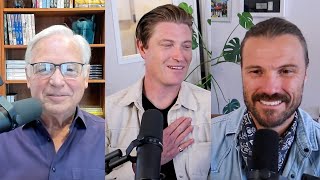
Isaac and Torald Koren, touring musicians turned coaches, teach people to find their authentic voice through what they call voice liberation. They've identified five self-limiting patterns that hold people back and work with clients like sound healer Eileen McKusick to break through them.
Chapters
Foreign. Welcome to the Jack Canfield podcast, people. I'm really glad you're joining us today. I really am excited about our guest today. I'm delighted to have Isaac and Torald Koren joining us. Better known in the world as the Brothers Coren, these 2024 People's Choice Award winners have a fascinating journey that has transitioned from touring the world with music legends like Pink and Coldplay to and Rod Stewart as the Kin. They were called the Kin, them as they were then known, performing with them in stadiums around the world, to now empowering individuals to unleash their voices through their transformative work in music and voice coaching. Isaac and Troll are not only incredibly talented songwriters and musicians, but they're also esteemed members of the Transformational Leadership Council, which we talked about in earlier podcasts, where I've had the pleasure multiple times of witnessing their profound impact on letters to their engaging large groups and the freeing of their voices and co creating a song together, which is always a miracle to me. They just do such incredible work, and I love the work also they do as performers and recording artists, and also their work in empowering people to discover and free their voice, their literal singing voice, and also the voice that's in them that needs to be expressed into the world. And my wife Inga and my daughter Riley have both worked with them in their songwriters journey courses where they wrote and recorded songs with the brothers. So I've seen firsthand again the power of their work transforming my own family members. And they're here with us today, and we'll be talking about their powerful transformational work, including their new podcast called Being Heard with the Brothers Coren and their foundation, which they've started called you'd Big Voice, which is dedicated to helping people find and free their authentic voices. I'm very excited to explore how they're using their incredible musical gifts to facilitate personal growth and healing. So, Isaac and Toro, thank you for joining us today.
Jack, wow. What a pleasure.
I'm speechless. Thank you, Jack. That was beautiful. What an introduction. We're so humbled and grateful.
Well, I'm always humbled by being with you. You're so. I mean, I just have to tell everyone I love you guys, and I think by the end of this, you'll know why. So let's start by exploring the shift you made. You were performing on some of the biggest stages in the world with, you know, major artists, and now you're focusing on voice liberation and healing. So what inspired that shift and how has that transition influenced the way you're now approaching music and coaching.
Well, we started as artists.
Yeah.
And we had a not so humble mission to become the next biggest band in the world. We were beautifully naive and convicted, which I do believe you need quite often. And it actually wasn't. It wasn't until 15 years into our pursuit, which, you know, came with one door at a time, dynamic ups and downs on along that journey, we out of nowhere got this gut feeling, a shared gut feeling, actually, to move out to LA officially and start helping and foster and nurturing other voices to the forefront. I remember that's what it felt like, voices to the forefront. And we had a bunch of different people that were working with at the time. We're like, okay, you can do that on the side, you know? And we came out to la and just as we started to follow this gut feeling on a break from touring, our whole band life kind of started to shift. We started to get less support, we started to tour a little bit less, and this whole other thing appeared. And it wasn't until this one particular fateful afternoon where we were riding in LA and it felt really boxy. It felt very calculated. It felt like we were just trying to write a hit for people that we weren't even in the room. And Isaac and I looked at each other this one afternoon, we're like, this isn't it. Is it? We're like, nah. And so we lost some sleep that night, but we got back together the next day, Jack. And we were courageous enough to say, well, it was such a strong gut feeling to come out here and take a pause from Turing. It's not this, but if it's not this, what is it? And in that breakdown was this message, I guess maybe one of our greatest songs we've written so far, which was this idea. What if we amalgamated together all that we'd done, all the mentoring, all of the voice coaching, all of the artist guiding, all of the men's work we'd done. What if we brought it all together and offered someone a brothered approach to journeying into song, music, voice as a way to get to know themselves? And it just came out of nowhere, this idea. And what I love about this story is you're very much involved because it was within, you know, six months of this experience where we said, well, this feels like self development. Who do we know in that world? We were across from you at the Libero Theater in Santa Barbara. I'll never forget that experience where we went, wait a minute, future. Yeah.
Shout out to Kristen Mullen.
The universe works fast when you listen to its. When you do its bidding, right? And so it was really an accidental pivot. We didn't really mean to be in this beautiful world we find ourselves in now. And we're still artists to, to this day. In fact, we're just reclaiming its next chapter right now. And they feel kind of one too, part of the same experience, right? To be what we facilitate and to facilitate what we are being is. It goes hand in hand.
Now I'll just add to that beautiful story that when invited into the self development world, which is healing, like you said, and transformational and liberational, we can't hide from the work ourselves. And so, you know, in the last 10 years, we've had no choice but to go on our own healing journey and to heal the layers of our own onions collectively and individually and keep taking the medicine, so to speak, ourselves. Otherwise we're hiding behind the process or the lens. So that's the other big part, is that you get to walk the walk and use music, song and voice for healing. We were originally, like Torrent said, just, you know, taking song to the world and, you know, had a mission to, to bring, you know, a positive message to the music world, you know, an unabashed, you know, perhaps bombastic, bombastically universal love message. And, you know, it didn't. Didn't fit the mold, you might say, of, of the radio format at the time. So, yes, we had to kind of find where that natural thing was and we kind of had to drop everything and have a moment of, I don't know what's next before, you know, the seed was planted for what was next and to kind of learn to trust, you know, what, what instead of what you want, what you need, or what is there for you, calling you. So, so that was. That's been interesting and, you know, having. Yes, thank you for, for bringing us into the world of people that are there to create a positive change. And we're there to our mission, really, through the foundation, like you said, and our podcast, is to bring us a voice, positive space, meaning one where we can embrace the voice that we have and learn to kind of actually use it as an embodiment tool, as a transformational tool, as a healing tool in our life, as a way to liberate our expression. And everyone deserves that because everyone has a voice.
So I think what's fascinating is as you were talking before you even got there, I thought, wow, they came to California, they're sitting there trying to write a hit. But what you really were needing to do was learning how to express what was ever in you that needed to be expressed. Which is what you do with people in your songwriting journey course is like, help them find out what's in them that wants to be brought into the world through music, song, words, whatever. And then you had to kind of do it yourself. So that was really cool. And I think your work, it's always so autobiographical at some level, you know, because you're talking about what's going on in your lives and things you're concerned about and care about. Before we go deeper into all of that, I want to just. I know a lot of people are listening to this and they're going like, well, that's all nice, but I can't sing. I don't have a voice. I'm. You know, I remember when I was in high school, someone saying, not to me, I was in the glee club, but to someone, they said, you know, what'd you do with the money? And they said, what money? I said, the money your mother gave you for singing lessons. You know, it was like a put down that they couldn't carry. I think that's a good one.
It's almost polite.
I know. I think a lot of people have that, you know, where, like the, the singing teacher will say, just mouth the words, you know, when you're there in the chorus or something, you know.
Yeah, that's tough.
How do you. How do you work with people? What, what's the. What words of encouragement do you have for someone who's sitting here watching this thinking, well, I don't have the ability to do that. I'm not a singer. I'm not musically inclined. I watched you do with my wife and my daughter. Just an amazing transformation. So anyway, I'll shut up and let you answer.
No, it's beautiful. And may I just say what an incredible privilege it was to work with both your wife and your daughter. Both such different, intriguing, amazing experiences of, of just getting to be their brothers in that journey inward. Right. And. And I think that's the, the, the. The deepest answer is. What we've discovered is that we've been brought up in different versions of voice, hostile environments. And when we're told, hey, what'd you do with the money? And would you spend the singing lesson money on. Or, hey, just mouth the words in the back, you know, maybe you should do sport instead of choir.
We don't do that. Yeah.
Or like, oh, we don't sing. And we start to believe this, this notion that. That singing is for the few. And expression through music and song is only worth doing if you're going to pursue it as a career. And please don't pursue it as a career because it's too risky. And. And then on the other side of that, Jack, is that once it's been looked down upon or judged, as soon as there's fame or success attached to it, suddenly it's revered. So it's this. What we found is that there's this incredible distortion between reverence and criticism. And we often rule ourselves out. What we're discovering time and time again is that voice, music, song was a gift from our ancestors. That it was a way in which we got to see ourselves reflected back in the circle around the fire, celebrated in the songs of not just celebrating the harvest, but. But grieving those that passed. And that there may have been standout lead singers, but every voice was invited to. To feel how it felt to be alive. And what we discovered is it's time now to move out of that voice. Hostile environment made up of two ingredients, competition and comparison, which always creates these inhibitive environments. To feel like you are able. And back to a voice, positive one.
But in the reality, like you said, Jack, there's a study out from 23, 2023, that reveals in America, 75% of the population in this study, it's easy to find, have some form of glossophobia or fear of public speaking. So if you collapse singing and speaking into just voice. Fear of the voice. Voice trauma, we like to call it, just to kind of name it. And perhaps it's a scale, Right? So maybe you don't mind singing karaoke, but you never want to get up and sing at someone's wedding. Or maybe you'll sing in the shower, but not in the car or the other way around. You'll never sing in public. Or maybe you just don't want to sing in front of the family, but you'll sing in front of an arena. But there's various spaces that feel unsafe. And that is some form of glossophobia.
Yeah.
And so many of us have it. So I guess that's good news in that we're, you know, we're not alone in this and it's not something weird, but we find that through more of a kindergarten approach and not too serious, like finding more of a playful approach to the voice in all ways. So it's not just an attachment to sounding good through singing, but it's a sense of where do I feel my voice as a resonance and how Can I be playful with that? And curious and generous and just willing to kind of have an experience first. And, you know, ultimately, we can only sing what we hear. Science shows that. And so a lot of the voice that we, you know, coach every day is about training yourself to listen or to be receptive to the sound that you are. So a lot of it is about acceptance, and then, you know, from there, learning to like or even love. Yeah.
What voice you have find a new friendship to. Most of us don't have a good friendship to the voice that we have. Like, we've ruled ourselves out of a healthy, you know, friend or lover even, that we even deserve to, like, have this love affair with our own voice because it's what we've been given in these bodies, this whole body voice. I would even say that we can only sing what we can let ourselves feel, because that's what we really see, Jack, is that if we really look at health, mental and emotional health, it's really comes down to. To us in the embodied voice perspective, down to what we had support to feel and give voice to. And a lot of us went unsupported to feel how we truly felt. And a lot of us went unsupported to voice what we felt at the time. And so a lot of this work is about revoicing or voicing for the first time what has been waiting. And it's incredibly healing when we allow music, song, voice to carry that space.
What I think is fascinating in the human potential movement and also in acting and in music is it's all about, like, expressing more of who you are. Like, a good actor is able to access a lot of different feelings, you know, and someone that can't do that, they don't come across as real. I was watching a voice the other night, and this constant coaches were going, like, you know, I don't feel like you're feeling what you're saying. You know, if you don't feel it, the audience won't feel it, you know, so you've got to connect to the real feeling inside. And I think for all of us, we're looking at in the human potential side, who are you? What's your authentic self? How do you bring that forward in the world? And that's risky. Just like singing in front of people's risk. You talk about criticism and comparison that. That shows up everywhere. You know, it's like it blocks us in talking to our spouse and talking to our children and talking to our boss and writing our books and so on and so Forth. So very, very parallel.
Very parallel.
Yeah. And I feel like we. It's such a fundamental, simple thing to give ourselves the permission to just feel how we feel and try something that feels risky to our nervous system.
Right.
And the voice sits in that place. It has to be one of the most revealing, vulnerable parts of us. We've been talking a lot about this over the years. What is it about the voice that reveals who we really are and that we can be speaking about something, then we can sing something, and we can truly see that person's heart, that there's this real opening doorway. But ultimately, we have to let go of performance to get to that authentic voice and just to speak practically to that. It means promoting how does it feel as a prompt? And demoting how does it sound? And how does it look to second and third?
And let's just pause for a moment there and take that in. Because the brain is hardwired for music, science shows that we are inherently musical. And so we can hear when a note is off, when it's flat, when it's. When it's pitchy, when it's kind of croaky and imperfect. We have a highly tuned musical brain, and so the odds are stacked that we can kind of let ourselves enjoy what we're hearing without judging it because we're so brilliant musically. And so when you add this permission to the ingredients of our musicality, to the same, you know, to your own voice. Yeah, we. We found that it when we went into schools and we're. That's our first mission or kind of project along. The mission of the your big voice foundation is to. To bring in voice positive space to schools and to really train teachers to get over their glossophobia so that they can be a present and full voice for their kiddos and hold a safe space. We were in the classroom with the teacher saying, zero voices. Voices off in three, two, one. Whoa. And we were just like. We kind of. And then by the end of the journey with the kids, I mean, the kids were ready to go into peace. In about 20 seconds of toning, they just went from all over the place post Covid 9 year olds to. I feel peaceful. You know, it was so, so innate in them. But by the end of the three months that we had with them, the teacher had, you know, created all kinds of new ways. Like, you know, she had a rubber chicken and she was like, pray to the chicken in three seconds. And all the kids were like, praying to the chicken. It was better than voices off. That's True.
Also praying to a chicken any day.
You know, how can we get more creative than shutting down a voice when it's in the way? When we're trying to make breakfast in the morning and the kids screaming, you know, how can we use language that offers dignity and a safe space, but also the authority of the request, you know?
Right.
So, you know, we're learning as we go as young parents and. And so. And our kids are, you know, they have loud, big voices. And so it's an experiment, all of this. And so we are looking forward to going in and finding where those moments are that we all, as adults found ourselves inhibited. And we call them the small voices. And, you know, there's. When we kind of dared to look back after about five years and saw these small voices that inhibit us around the voice and, you know, talk about.
That for a minute. What are the small voices?
Well, we. They're really. Let's define it first to us. It's. And we've been told over many years now that it's kind of like internal family systems. It's parts work. People like, oh, you've studied parts work. And we're like, no, we just studied the voice and the inhibitions. And it's arriving at a similar road, which is saying that in these moments of life where we went unsupported or we went through a feeling like, wow, it's not safe, or it's not okay to be. My full expression let me dim down, let me adjust. We tend to have our nervous system have made these markers. We call them small voices. And the definition is any negative leaning, automatic, unsupportive leaning, thought, feeling, sensation or emotion that goes off in your body or mind right as you are moving to sing, right as you are moving to give voice to something you truly mean, right as you step onto that stage. And they're aimed at. From our beautiful ancient biology to warn us of times before that didn't work so well. And so we. We actually studied, you know, what were the five. We wanted to know, what are the five that are reoccurring over hundreds of people we got to. To do the songwriter's journey with. And we came up with these in. In no particular order, but the most five prevalent across country lines are, yeah.
The first one is, yeah, I'm not good enough. This one was my. My friend. My scared friend. As we would, you know, sing to 20,000 people who were there for, say, pink, for example. God bless pink. And, you know, we would look through her. Her veneer curtains that you could see through one side. So you could see the. You see the 20,000 people coming. And you know, that little. You're not good enough or they don't want you. You know, all of those little small voices would come. And so you. You work with those, you tuck them under your wings. Did some good breathing exercises in the, in the, in the back room. And you, you include them. You know, you run on stage with them. And so, yeah, I'm not good enough in any form. Not enough.
Yeah, it could be I'm not young enough, I'm not trained enough. I'm not as good as someone else singing before me. We see not enoughness show up around the voice really quick. And some of the others, I'm. I'm unsafe. It's not safe to share who I am through the vehicle of voice. Of course, this shows up without voice. These are. A lot of people have been through trauma of all kinds to arrive at the feeling in their mind and body that they're not safe to be themselves. For me, I almost lost my life to OCD in my late 20s, which was a really big turning point for me, to recognize as I had the breakthrough that I had, that I'd been really living a life of following the voice that told me I was unsafe. And at the core of obsessive compulsive disorder is this sense of something's wrong that I've got to fix. And so I've really sort of tracked it back to that little boy that broke off inside me when I was 10 or 11, after our family fell apart. And so that I'm unsafe, we see show up. And a lot, a lot, a lot, a lot of people around voice.
A lot of trauma brings that. The next one that we see a lot is my voice doesn't matter. I'm not worthy. I don't deserve to. To have this opportunity of finding my voice. It sounds like a privilege, you know, something that's frivolous. Like the world needs me to focus on solutions. But we find that, you know, going inward and having an experience of the voice shows up everywhere. And, you know, particularly in a lot of the. The mums that we have the privilege of working with. And then their kids leave for college perhaps, and suddenly they realize the space that they had given up with their voice, perhaps that they're, you know, yeah, big, big voiced children in their lives. You know, people's importance takes up that space. And so then they recognize at some point often that, you know, there's a space for their voice to be Taken up.
Yeah. I think a lot of us have. Have left a space for someone else's voice rather than our own. And so we see this small voice show up in quite a few people that are maybe naturally sensitive and empathic and want to, you know, not take the space. But we find that when we take the space that is ours, we actually influence others to do the same.
The Enneagram Twos have a voice too.
It can be that another, the last two are, oh, I'm too much, don't be too much. And we find that this has been a cultural small voice for us. Australia almost prizes itself on prides itself on, you know, settle down, mate, no worries, you know, fit in. It's very colonial, very English, Irish. What. We found that even in America, the go big American pop culture, that we found that a lot of Americans have gone, have this small voice. And so we tracked it back to the family level, and we discovered that this small voice is often born in the wake of stepping up. And maybe you were five or six and you shared your voice and you recognize that you caused jealousy in the family. Maybe your mom was jealous of you, your brother, your. Maybe you caused a negative response to your beautiful shine. And so this small voice often is about, okay, well, let me dim down, let me fit in, let me not be too.
You were too much at the party and were uninvited the next day.
Yeah, exactly. So it actually calls us back to that. That kind of biological response of like, it's more important to fit in than be ourselves. Last but not least, which is very prevalent, is it's got to be perfect or don't bother. Yeah, it's not an A, then I'm going to get an F. If it's not going to be an A plus, then I just won't even try it in the first place. And we find a lot of people have listened enough to that small voice their whole life. Even though they wanted to sing, they wanted to start that business, they wanted to step out and make that podcast. They've been waiting purely because anytime they approach it, it doesn't seem to be perfect enough to share.
And our mantra for that is for those or any of these small voices is dare to suck. Because we find that more and more, it's a doorway to actually our greatness. It may not be a doorway to excellence and precision and execution, but if you kind of allow surprise to. And, you know, trust and willingness and some. Yeah, some curiosity and generosity to take hold and follow your voice and your creative process, something Great is at risk also.
I think that idea of dare to suck is important. I remember teaching my youngest son to play tennis, and we got up on a tennis court, and after about 20 minutes of him not hitting the ball back most of the time, he said, I'm not good at this. This sucks. I'm not going to do it anymore. Instead of realizing, hey, you got to go through this period where you're 8 years old and you're not going to be great yet. You got to be willing to go through that phase of not being good at something. I think for a lot of people, especially when they're adults, if they've been successful, taking on something new that they haven't Exceed excelled at before is really, like you said, it's scary. And the perfectionism comes in. And I, you know, I'm just. I'm just kind of constantly struck between the parallels of the work you do through song and music and voice and the work I do, you know, through the human potential workshops I do. It's the same thing. I'm not worthy. I have to be perfect. You know, we're going to get in trouble. It's not safe here. All the things that showed up. I've had the client recently who mother had cancer, and it was always like, keep the noise down, keep the noise down, keep the noise down. You know, don't disturb your mother. She's taking a nap. And eventually it wasn't okay, you know, so now they. They. It's fascinating.
Yeah, isn't it?
Yeah.
That's so true that we, at the core of it, the medium that we use is. Is less important than the core human behavior. Right. The ability to. To be free, to explore and be connected to who we really are and play and just how powerful it is to see someone of any age rekindle those parts. And we were talking before about the children, you know, creating voice positive spaces where people feel radically included in the classroom, not. Not ridiculed or embarrassed or. Or, you know, have a time where they actually form one of these small voices instead recognize who they are within the village, and that we can do that by creating these spaces. We also discover that when we work with adults, which mostly we're working with a lot of women from 40 to 70, that we find that really a lot of our time is spent helping human beings from all different countries rekindle the inner children that got shushed, that got. That got burned, that got unsupported. And I love that word because we can actually turn back around. And now looking Inward being, fascinated, generous, curious being willing, finding the awe within us and daring to suck, which is allowing that next thing to bubble up your windpipe past your lips with no attachment to the result it might produce. We can actually rekindle these, like, lost colors of ourselves, which are in the form of younger parts. And they still have a song to sing. I mean, I say that in metaphor, but they might have a literal song to sing, or they might have a painting to paint or a new business to finally do. Regardless, it's the same mechanism at play, isn't it?
What I love about your work, just having this revelation that I think everybody's stuck. You know, there's not a person out there that doesn't have these five voices somewhere in their head. Maybe not all five, but you know, this. It's the human condition. I was reading something by Oprah the other day. She said, you know, all the people she's worked with, it's, I'm not enough. I'm unworthy. You know, blah, blah, blah. And I think that when you have to get up and perform or not perform, just express yourself to use your words. Get out of the performance mode. What happens is it brings everything to the surface. It's just like, you cannot avoid it. And if you're skilled as you are at helping them see that and then notice that and then push on anyway, if you will, what happens is that they have an experience of surviving a risk. And I always teach that self confidence is the result of surviving a risk. So if I get up and I suck or I sing or I speak my truth or whatever, and I don't die because I think my little child thinks that's what's going to happen. When I was 6, that's what happened. Then there's a liberation that occurs, and I think it's sped up in an environment like what you create, as opposed to just living your life out in the world, which is where most people don't move and change that fast. So whether it's me teaching speakers to speak or you teaching people to let their voice out, I kind of recommend this for everybody because it's an accelerated path to liberation of all these voices that you're probably not aware of. They're running your life, but you're unconscious about it.
Yeah, I mean, I think that the voice is overlooked in terms of the behavioral and the link between the voice and our human potential. But science shows that we are one of. I think it's eight or nine complex vocal learners where we store memory through sound and so that that means that we get to kind of sound out our emotional space, our emotional mental sense and memory and expression and. And to kind of unwind that again in our field, in our memory, you know, we can use sound. So there's so much that points to the voice and yet perhaps it isn't overlooked sound space a little bit. And so we're excited to be playing in it and kind of accidentally called into it, if you will.
I'm curious, I know you've worked with like, I don't know how many people. I think you said you did like 900 of these things or something by now. Whatever it is, that you've got a lot of experience with people. I'm curious if you have a story you could share with us about someone who went through your program and obviously it helped with release their voice and all that. But then what were the. Some of the ancillary benefits that came out of that? Oh, yeah.
I mean, I think we should. I want to acknowledge our longest standing songwriter's journey and TLC member. I believe she might be still, but Eileen McKusick is, you know, came to us after going to TLC and she'd been told by seven singing teachers that she should quit.
Oh, my gosh.
That she's tone deaf, that she can't sing and, you know, don't come back. Seven. Yeah, she had, you know, and she shares these stories publicly, so that's also a good reason to share it. And so she. She went and, you know, then recoiled each time, then gathered the courage to go back. She also had a number of older brothers who used to kind of roughhouse her and tickle her and. And, you know, made her feel like Tory was saying, unsafe, you know, to cause attention to herself and just to be tickled and roughhoused. And she talks about. Because she's a sound healer using tuning forks, she talks about her kidneys kind of coiling up into her body. And she came. She went to TLC one time and throughout the. The weekend she shared this story about her voice and how it's affecting her in her life and that she's just petrified to sing. Even though she's confident to speak, she did not have the same confidence. And so she. We. We, you know, work together. She called us and that we went through this series of, you know, that we went into the songwriter's journey and we went into this series of sessions where she would have these physical reactions, sweats, you know, shakes, you know, her hands would get, you know, red and sweaty. And, yeah, we'd have to, you know, stop sometimes too. It was just too much. And the breath, you know, breathing, she couldn't breathe. So we began to start sounding in different sessions and then realized something was occurring. And we got together, the three of us, and we. We started sounding out these sounds that were able to be directed into, at first her body, but then doing it, we would do it ourselves.
Yeah, and she created the whole. She mapped out the biofield, and she's done incredible work in biofield research. And so just purely from our fascination with toning and using the body as a whole body instrument, we. We kind of gave birth to this collaboration that's called Sing the Body Electric. But we started by being curious about what were all the sounds in what we now call the sonic anatomy. And for Eileen, even as advanced as she was as a sound healer, she was blown away by how much biological response she was having, how much anxiety, how many things were coming up from her past by just singing. And so it really was born out of this curious fascination that we all had. And just to give her full credit, she's the kind of woman that when she hits upon a part of her that is ready to be healed next, she's excited, she's. She's encouraged. And I think this is one thing that we find when we can have the mindset, ooh, there's something here to heal versus oh, no, there's something still wrong. That is a game changer. And so we noticed Eileen continue that gave birth to this whole body work. And she's still in the sunrise journey. We're still only next week starting some more songs together. So it's been unfolding for a couple.
Years, but just to kind of cap off the story, you know, seeing her, we were teaching together in Kripalu, Massachusetts, and she was leading, you know, 55, 60 people in this big hall and Toronto, and I was standing back just to kind of witness her growth. But she was singing on pitch. So if you are tone deaf, you do not have to stay that way.
No.
So she has tuned her hearing to be able to lead a whole room in. Sing along.
She's leading the sing along, Jack.
So happy and empowered.
Sing along. And when she speaks now. And here's the other part to. To answer the other benefits, right, the side benefits, the way in which it. She speaks now and. And the. Her willingness to move straight to how it is she's actually feeling and share it authentically. And the way in which she plays with the resonant reverberance of her voice, her gravity, her power, her. Her connection to play. She's just an incredibly dynamic speaker in a way that we've just both witnessed over the handful of years. It just, it's been a transformation to watch her unfold and deepen the work. So that's a great story. There's so many. There's almost too many to count.
Catherine Woodward's story is amazing.
I would just say, just in general, what I've noticed is when you reclaim your voice, and I mean when you form a new voice, positive friendship to being home in your whole body voice, and you get behind it and support it in the ways it didn't get supported. And then you use song as just a modality to express things in your life that went unexpressed. It is entirely fractal. It means that everywhere from, from now on, it will show up in the way in which you are in your voice. And whether we're conscious or not, from the moment we wake up till the moment our head hits the pillow again, we are, we are voice voices accompanying us. And especially if you see it from this perspective, we. Our voice is 50% expressive. The way in which I'm sounding out right now how it feels to be with you and how it feels to be me and alive right now, I'm improvising like jazz with dynamic non melodic expression. And you, on the, on the other hand, are 50% receptive. You are being a receptive instrument by allowing this conversation to take place and you're drinking it in just like Isaac is. And by the way, just, you're an incredible receptive being, which I always love. So. So what we're doing here is we're completing a cycle of voice together. And if you look at voices 50% receptive and 50% expressive, every moment of our day is an opportunity to be conscious of the whole body voice that we get to be this lifetime and that can show up everywhere for our vitality and our wellness and beyond.
Let's spend a little time as we're going to run out of time shortly, but I want to talk to you about your foundation. I want to talk to you about your podcast. I want you to explain to people what the songwriter's journey is. I know you have a new album coming out, so let's kind of do that piece and so talk about your podcast being heard with the Brothers Corn.
Well, our idea around the podcast was to just finally make some space for great brother conversations. You know, we've been often thinking, you know, when you, when you're just teaching live. Don't always get to unpack a conversation and get kind of brotherly. So our intention was to have some nerdy conversations on why music, song and voice has really awoken both of us and how deep it goes, I think, for me, on a behavioral front, for Isaac on this, on a cosmology front, which we get into, but also to create a space to really invite guests in, to have voice positive, to really help shift the culture to voice positivity. So that's our intention. I think our deepest shared intention is to. To help people become aware that that mental and emotional health requires a healthy voice relationship. And we really want to help people remember that our relationship to mind, body is one of the most important food groups you can offer yourself today. And music, voice and song is a great way to do it. It's a great way to melt down the layers of unsupportive thoughts and get right to the heart of how we actually feel today and let the body metabolize. So that's the intention of being heard.
Yeah. That's beautiful. I would. I would add that that many people have been with us and we've been together on stage or just hanging out, but they've never been. They've never had a chance to listen into a conversation between us. And so that's a nice little thing. And it's nice to have that also that kind of permission to have a conversation and not be in our, you know, busy partner partnership. So that's really nice. And obviously, like you, perhaps this thirst to hear transformational voice stories, you know, that. That just really ignites us, our curiosity and our passion. So, yeah, just hearing stories, bringing leaders on, bringing voices from all walks. You know, we believe that there's leaders in every. On every street, you know, waiting, just like you. And, you know, thanks for paving the way of that awareness, because it's really.
I know that you guys, I mean, every time I talk to you, it, you know, that deep conversation, a lot of awareness and knowledge and perceptions of what's really. So I think about voice as a vibration. They say everything in the universe is a vibration. And then we can either express that and allow it to come up or push down and high vibration, low vibration, all of that. So everything you're doing is, like, right at the core of reality, if you will. Just real quick, because I don't want to go too far into this, but I'm sitting here watching you guys, and I'm thinking, people watching this or listening to this, going, God, those Brothers are so cool together. Were you guys always that close?
There was this story our mom shares where Tara was maybe six months old and I'm like three and a half, four years older. And she was down the hallway in the kitchen making dinner, and she heard this scream. And she rounds up probably with the wooden spoon, and she comes in and it was just a scream of laughter. We kind of had this conversation already.
We had a language from early on. Well, we've always been partners in crime for the most part. There's four years between us, so we had some individual space, which I think is important. If you look at relationships, you know, they have to be complementary and there has to be a nice distance of space a lot like a chord of harmony, you know, between two notes. We've always. We've had the blessing of always being interested in heading in similar direction. And I think that makes a great friendship. And so I would say for the most part, we've been, you know, very blessed to be complimentary. Different, but different, but a good chord.
Always fun to be with you guys because you are, you are, you are uniquely different. And you're all so amazingly combined with your harmonies, not only in music, but just the energy of love between you and the joy. Talk about your big voice foundation for a moment.
Thank you.
Well, we. We started it. It's a vision we've had since maybe 2017, you know, because we wanted to. We both have our own mental health stories. We've seen how powerful music, song and voice and other somatic programs are to healing mental illness, to, to and. And that in supplementation with maybe more western traditional approaches, a lot of people don't have the funds, they don't have the resource resources, and they don't even have the access to consider that maybe alternative programs could change their behavioral life and give them a leg up out of survival and into a thriving life. So we wanted to live that out. And for me personally, I had a family that supported me when I really hit bottom. And I couldn't help but think as I came out of that, wow, imagine thinking how many people are hit bottom with no support. And how can we start to create a world where there is support, at least in the ways that we can. So that. That. That sort of paved the way to start it a year ago. We're in our first year and it's all about mental and emotional health advocacy through this medium of music, song, voice. And we really want to start at the school level.
Yeah, there's so much post Covid out of Body kind of not able to focus energy in this school environment. And teachers are understood, you know, understaffed, under trained, underfunded. And there's particularly teacher facing opportunity there as well. So we're creating a scalable opportunity for each grade level and we're building a beautiful team. So we're excited to invite you also Jack, to our first gala event in February and bringing music as well as just a healing tool that we all have access to. And so yeah, the intention is to create a voice positive space for our.
I'm excited you're doing that in schools. That's really, it's so important. I remember my first 20 years was all about education. I was teaching teachers self esteem. How do you raise the self esteem of kids? How do you not destroy it? And someone wrote a book about the state of education is opening language. Schools are grim and joyless places. Unfortunately it's true in a lot of places. And so when you bring in the work you're doing that just lightens all that up and gives people more voice and opens up some freedom. You mentioned creativity like with praying to the chicken and all that good stuff. So I hope you'll, you know, I hope you'll capture this in a way where it becomes a curriculum or an online thing where you can, people can go and learn stuff as well and you know, whatever. But I'm excited about that. Good. Good for you guys.
Jack, that means a lot. Thank you.
Any other new upcoming projects, collaborations? I know you have a release coming of your, your music.
Yeah, well, we do and we, you know, we love the work that we get to do with individuals and it's going to continue. We, we wake up to be brothers in people that are called to this work. We also recognize it's time to, to share our next artist album. So we've been busy doing that and it's it. We recorded it in May in Santa Barbara live. It's a live studio album. We're slowly building songs and this time we wanted to be our most unapologetic, our most like naturally, you know, conscious, not thinking about the music business at all. We just really wanted to get to the heart of what it was that we really wanted to sing that represents what we really care about. And so we just let these songs come forward. We put together this new band. We had 17 people in the choir that have all done the Songwriter's Journey program and we captured this thing and it was a really beautiful experience. We're going to start to share singles and then the album in the Upcoming months it's called Brothers Corrin and the Kin. And it was important for us to reclaim the kin energy finally. So it was like a healing of its own.
Full circle. Yeah. And we took a big risk and recorded in our live studio album, we included a choir, Riley was there of you might say, non professional singers, most of them alumni of our journey. But it was so beautiful to have them there in the video and in the recordings and to sing with a real choir, with a beautiful choir of people we love was.
That's exciting. Yeah, I love that. I love that. So I'm going to ask you to end with a song in a moment and. But before we get there, people want to find out more about your work, your recordings, your podcast, your coaching, your concerts, events, online courses, your foundation. If they want to hire you for one of your experiential keynotes that you do, which are so profound, they want to do the songwriter's journey. Where do they go? How do they find you guys?
Thank you so much, Jack. Well, they go to brotherskoren.com so just brothers k o r e n dot com. There's a direct way to write to us. There's this free gift we'd love to share with you if you just go to the connect page. And yeah, it feels important, especially as Aussie brothers to say if you're listening to this and maybe you've ruled yourself out, but there's a party that's equally excited because we often find that the only people that really come close and work with us are both excited and nervous at the same time because we are playing in the language of voice.
That's where the transformation or the human potential lies.
So if you're feeling both excited, excited and nervous, it might be the indication to reach out to your brothers and we'd love to be that for you because we really do this work for someone who is excited and nervous to discover and rediscover themselves through these ways.
Privately and in small groups. Like you, Jack. We love being with your mastermind.
Yeah, it was so fun. So thank you for that and we look forward to meeting you if it calls you.
Yeah, yeah. Though I do too. Every time I'm with you guys, I love it. So share a song with us and then we'll. We'll wrap this thing up.
I will just add that your big voice.com we're still trying to find the.org access but for now your Big Voice foundation is your big voice dot com. If you want to read about our mission and hear Some stories. We're sharing our journey.
Beautiful.
Beautiful. Thank you. We're gonna. We're gonna sing. I think we'll sing you a song from the new album. And. And. And this took. This took a whole lifetime so far to write. And we even wrote the bridge with a handful of people. So there's. There's a group song. Energy in the bridge was on the.
Call was evolutionary leaders.
It was a. Leaders call in Santa Barbara. And this song really takes us through what it felt like, what's it. What it's felt like to live the lives that we've lived so far. So we tried to be as honest as possible. It's called the Long Way Home. Oh, I'm going to start again.
Look at that.
I dare to suck. And it was. It sucked. Oh, it really did.
Here we go.
I enjoyed it.
I never thought I would make it on my own I took the long way took the long way home.
I.
Never thought I could fill this hole it hurts to say I took the long way home and now fear I stray I took the long way home without home. Half my heart is scared to break While the other part just celebrates I'm here now, I'm here now. I felt so, so little as I grow old it hurts to say I took the long way home I tried so, so hard to be well known it hurts to say I took the long way home and I feel I've changed and took the long way home and I'm home. Half my heart is scared to break While the other part just elaborates I'm hidden now. I'm hidden away. Half my heart hesitates While the other part just says don't wait I'm here now. I'm here now. We were made for this moment.
We.
Were made for this lifetime we are instruments of change we are living for sour say yes, say yes, say yes we were made for this moment.
We.
Were made for this lifetime we're instruments of change we live in for the star say yes, say yes, say yes. Jesus, we.
Change.
Say yes, say yes. I keep on breathing in where are you now? And I keep on praying on breathing out where are you? Where are you? I never thought I would close your eyes it hurts to say you took the long way I never thought I could lose you twice it hurts to say you took the long way home But I see your face on the long way home it's worth the wait the long way home.
Wow. Thank you. That's sweet. I There was one line that jumped out at me. It was somebody spent I forget the exact words, but I spent so much of my life wanting to be well known or something like that. Yeah, I can relate to that.
I tried so, so hard to be well known. Yeah, I took the long way. The long way home.
Exactly. Yeah. There's a lot of that in me wanting to be somebody and, you know, where's my book on the bestseller list? And how many people are following me on Facebook. And fortunately, I've transcended that recently. But that was sweet to know we're all human beings going through the same work. Thank you for sharing that. Thank you for being here. Thank you for being you. Thank you for your commitment to make a difference in the world. And just thank you. That's it, man. And I want to thank all of you who joined us today. If you found this conversation valuable, please let your friends and family know about the Jack Canfield podcast and this amazing episode with the brothers Corin. And be sure to tune in next time when I'll once again be talking with a transformational leader about how to be more conscious, more authentic, more courageous, and how to experience more love, joy, happiness, health, prosperity, success, and true fulfillment in your life. Just like the brothers Corn do and like I do. We all deserve to have an amazing life, and I'm here, as they are, to support you in having that. Take care of yourself.
It's beautiful.
Love you, Jack. Thank you so much.
So great, right.
More from Jack







[EP 46] Creating Your Own Luck: The Power of Self-Confidence with Veronica de Andrés

[EP 45] Rewiring the Brain for Bliss: Activating Your Spiritual Intelligence with Dr. Dawson Church


[EP 43] Transform Your Life Through Visualization and Emotional Intelligence with Natalie Ledwell

[42] Enhancing Your Health & Longevity Through Peptides and Functional Medicine with Regan Archibald