[EP 8] Loving Yourself Back to Life with Anita Moorjani
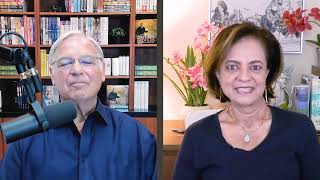
Anita Moorjani describes her near-death experience and spontaneous healing from terminal cancer, and the spiritual lessons that followed: unconditional love, seeing yourself as an expression of God, and undoing conditioning. She explains how self-love is essential to healing and how to shift attention toward joy.
Chapters
Foreign.
Welcome to the Jack Canfield Podcast and today I'm so happy to have a truly remarkable and inspiring guest, Anita Moorjani. Now, Anita is an international speaker and the New York Times best selling author of several impactful books including Dying to Be Me, what if this Is Heaven? And Sensitive Is the New Strong. Now, Anita's incredible journey began when she was diagnosed with cancer and fought a courageous four year battle before slipping into a coma. Doctors had just given her days to live, but what happened next can only be described as miraculous. During her near death experience, Anita was enveloped by a sense of unconditional love. And after 30 hours, she regained consciousness. With a profound understanding of why she had developed cancer and everyone's astonishment, she experienced a spontaneous healing which she attributes to the deep insights and the transformation she underwent during her near death experience. Now, since then, Anita has made it her life's mission to share her story and the lessons she learned on the other side. As a result, she has touched the countless lives all over the world through her books, her speeches and videos advocating for love, self acceptance and empowerment. And today we have the pleasure of delving deeper into Anita's remarkable journey and exploring the wisdom she gained from her experience, which offers inspiration and valuable guidance for all of us. Welcome, Anita.
Thank you. Thank you so much for that beautiful introduction and for inviting me on your show.
Well, I want to say, I want to start by saying I'm so excited to have you here today. You know, I've always been fascinated with near death experiences because of the wisdom that people bring back that the rest of us can benefit from. And I remember sitting up all night one night when I was in graduate school in my 20s, that's more than 50 years ago, reading the book Life After Life by Dr. Raymond Moody. And he'd interviewed about 50 people who'd had near death experiences. And he reported that a lot of them were asked questions by a being of light when they arrived on the other side. And as I remember, the two most common ones were, what wisdom have you learned in this life? And how have you expanded your capacity to love? And I remember because I was in the Graduate School of Education at the University of Massachusetts. I was studying to be a teacher, and I remember thinking at three in the morning and like somebody has just snuck into the professor's office and stole the questions for the final exam of what we're supposed to be learning in this classroom we call life on earth. And I thought, no one is teaching for the final. And so I decided to devote my work of Teaching people how to love themselves and each other. That was really the work I did for many, many years with self esteem, self love, teaching love, and so forth. So your book, when I read it at first, 2012, the dying to Be Me, when it first came out, was really just brought me back to all that. And then I read it again, the Revised Edition in 2022, and then I was so fortunate to have dinner with yourself and your husband Danny a few months ago after you gave this beautiful talk here in Santa Barbara, where I live. So again, I'm just so happy that we're here again. So let me start by asking you this. For people who may not have read Dying to Be Me, can you just share the basic story of your near death experience and the circumstances that led up to it?
Yes, of course. So I was diagnosed with cancer, lymphoma, cancer of the lymph glands in 2002. And over a period of four years, it had progressed. And so by 2006, I had what they called final stage cancer. It was terminal. It was at the end stages. I had tumors, many of them the size of golf balls, from the base of my skull, all around my neck, down under my arms, in my chest, and all the way down to my abdomen. By this point, my body had stopped absorbing nutrition. So I weighed about 85 pounds. My muscles had completely deteriorated, and so I couldn't walk because I didn't even have the strength in my legs to hold on, hold my own weight up. And even when I sat up, I couldn't sit up straight. My neck didn't even have the strength to hold my head up. So my head was always hanging down and my lungs were filled with fluid. And when I would so. So I would choke, when I would lie back, when I would lie flat, I would choke on my own fluid. And so I couldn't even lie back flat. I had these open skin lesions where. Where the tumors were, where toxins were coming out of my skin. And I was in so much pain and so much discomfort. And on February 2nd, the morning of February 2nd of 2006, I didn't wake up. I went into a coma. And the doctors told my family that my organs were now shutting down and that I was in my final hours and I was not going to come out of this coma. But that's when the near death experience started. Because unbeknownst to everyone around me, I actually had left my body and I had entered this amazing, beautiful realm where all the pain was gone, all the fear was gone. Now I had Feared the cancer and what it was doing to my body. I was fearing the treatments for it and what that was doing to my body. I was fearing death. I was fearing everything. And now here I was, having left my body. The doctors basically told my family that my organs were now shut down. But here I was feeling incredible and light and free. I was free of the body, and I felt just so incredible. But the most amazing thing I remember is that I felt as though I was bathed in this ocean of love, Just the sea of love, like. And it was a kind of love that I've never experienced before, because it was like, I didn't. It was unconditional love. And when I say unconditional, what I mean is that I didn't feel I had to do anything to be worthy or deserving of it. I didn't have to work for it. I didn't have to try and maintain it. It was just there. I had no fear of losing it. And I think what happens sometimes in this world when we feel loved, we then fear, oh, my God, what. What do. What can I do to maintain it or hold on to it? It was none of that. I just felt loved. And so that's why I call it unconditional love. Although the word unconditional is redundant because if love is conditional, then it's not love is it. One of the first beings that I recall being greeted by. So I want to say here, though, that I could sense I was surrounded by many beings, not all of them who I recognized as being from this life. Some of them may have been guides and who've never taken that form of life or higher beings. But the first being that I remember actually being greeted by was my deceased father. He had died 10 years prior to this experience, and he was there on the other side to greet me. And I felt so safe and so welcomed, like I had come home. And just so you know, I had a really turbulent relationship with my dad growing up. So in life, we clashed a lot because he wasn't a great dad. He. He wasn't loving or kind. He was. I come from a culture, we're ethnically Indian, My parents are Hindu. And so I come from a culture where the men were very hands off in terms of parenting. It was always the mother's job to take care of the kids. So he never really got to know me or my brother as people. And he was very, very strict and quite cold, not super loving. There was only engagement when he was telling me off for something. So it was never about being kind. Or gentle or loving towards me. But interestingly, here on the other side, all I felt from him was pure, unconditional love. Just incredible unconditional love. And so I felt that because I had felt during my life that I had disappointed him a lot. And I felt that I had to work really hard to win his love. And here he was just loving me unconditionally. And then I started to understand that just like I had been a victim of my culture, he was a victim of the same culture and was just bringing me up in the best way that he knew how. And what I learned was that when we cross over, we not only leave behind our physical bodies and. But we also leave behind our gender, our culture, our race, our religion, and many, many of our beliefs. And really what we take with us is the emotions of the experiences. We take that with us because when we cross over, all we really are are pure consciousness. And I liken that to being pure love or pure God. We can call it what we want, but it is so pure. And so that's what I experienced from my dad. And because we leave behind our bodies, we don't have vocal cords, we don't have voices. So our communication is literally. You can call it telepathic, but it's more powerful than that. Telepathic is something that is used to describe communication here, when it happens, when we happen to be able to pick up intuitively on what someone is feeling. But over there, it's literally you just know. You just know what the other person wants you to know. It's almost like your consciousness and their consciousness can just enmesh. It can just two can become one. And you can know everything that they want you to know without words, without miscommunication. You just know.
One of the things I remember from your talk and from your book is that you're coming from the Hindu culture. Your parents had arranged a marriage for you, and you didn't want to get married to that person. You didn't want to go live in the house. I know in that tradition, you go live in the house of the mother of the person you marry, and then you're under their control, if you will. And you didn't want to do that. And I know that for your father, it was like almost like he disowned you. I mean, pretty, pretty difficult, wasn't it?
Yeah, it was. It was a really challenging time because. Because I rebelled against getting an arranged marriage. I grew up in Hong Kong. I went to a British school. And so most of my peers, my friends, were British. But we had a group of Indian friends who we met at the temple because my parents would go to the Hindu temple every week and I would go with them. And so as I grew up, I was being groomed for an arranged marriage, as were my Indian friends. But I rebelled against it. I wanted to be independent, I wanted to work, I wanted to have a career, I wanted to travel the world. But in my culture, women don't do that, especially not at that time. You just didn't do that. You were expected to be groomed for a marriage and your dad takes care of you and you don't leave home until you're married. And after you're married, your husband and his parents take care of you. So you're expected to live with his parents. Slowly, all my Western friends, my British friends went on to university and careers and my Indian friends all succumbed to arranged marriages. So I was the only one left. So I got really lonely. And so I was always met with the disapproval of my dad because it was like he was disappointed in me, like he couldn't understand why he couldn't get me married when all his friends, all their daughters were all married off. And so they were constantly trying to introduce me to Indian men of my age, of marriageable age. And I was like, just not interested. Finally, because I was so lonely and because all my friends were married and I felt there's something wrong with me, I succumbed and said yes. After I was engaged, I realized that I would not be allowed to work. I wanted to go back to school and study. They would not let me do that. They said, you can't work, you can't study. You have to to be a stay at home housewife. And you're going to learn to cook and you're going to learn to clean and you're going to learn live with his parents and you're going to learn to go to the temple two times or three times a week. And I just didn't want that life. I thought, I can't do this for the rest of my life. And three days before the wedding, and if you know anything about Indian weddings, you know they're like seven days long. The venues were booked, the bands were booked, the elephants were booked, like everything. And everybody had flown in from all over the world for the wedding. And three days before the wedding, I ran away. I ran away and hid out at a friend's house, which brought a lot of shame to the family I was supposed to marry into and to my own family and people after that. I Was ostracized by the community because they. They felt that I had. Basically, it's like, who do you think you are to do something like this and to shame a family like that? And so I was ostracized. And also in my culture, the gender disparity, especially at that time, was very stark. Like, a woman's worth is measured by how valuable she is to the men in her life. And your worth is also measured by how good you are at housework. And that was not something. That was not one of my fortes. I'm not great at housework, and I didn't want that to be the focus of my life.
Well, I want to acknowledge you for having more courage than I did. I knew about five days before my wedding that I was marrying the wrong woman. And it started when I took my first wife home. And my mother, after she met her, went into her bedroom and I went in and she was crying. I said, why are you crying? She said, she'll never be able to make you happy. I know you. And of course, know. I know you don't. I'd love this one. But then I realized, and I. We had 150 people to this wedding. They had all made reservations, hotels, the venue was taken, et cetera, and. And I got married. I didn't have the courage to do what you did. So good on you for that one. However, I think what's interesting is that you did make that move. You did stand up for what you wanted. And yet as you went through to the other side in your near death experience and you realize what had been causing you the cancer that was the opposite of what you actually did in that moment. So talk about that. Talk about the realization you had that made you realize, okay, this is why I contracted this. This is what was going on with my body. And then why you decided to come back and to share that message so strongly with people.
Even though I had made that decision to run away, I still felt deep down that it was my fault. I held the guilt. I would go out of my way to prove to people that I'm not that person they think I am for doing that. Because I was so ostracized in my culture, I had people telling me, you know, men from my culture who I would meet who would say, nobody's going to marry you, and what's wrong with housework? Who do you think you are? All women do housework and things like that. And it was always, all women do housework. And it would trigger me inside because I didn't think it was a woman's job to do that because I knew deep down I was here for something bigger and better. But I didn't have the courage to follow through and do anything. I still stayed within the bounds or the boundaries of my culture and put up with the ostracizing. And the number of times I was told that, you know, when people would introduce me to guys who were maybe a lot older than me, who had had several marriages, and nothing wrong with that, I have no judgment against that. I could very easily fall in love with someone like that. But basically, the way it was presented is here, you're going to meet this guy. Don't be so choosy. You're no spring chicken anymore. You have a tarnished background. That's the way it was presented to me over and over again. So just imagine you getting this fed to you because you've made a decision where you followed your heart, and so you are made wrong for following your heart. And so you never follow your heart again. Until I got cancer and learned on the other side that you're supposed to follow your heart. And that that decision was not a bad decision in the grand scheme of things. I probably like, from looking at it from what I call the God's eye perspective, and I could see the trajectory of my life, and I could see that even making that decision to run away had inspired some other younger women. Even when they heard that I did that, that inspired them that, oh, we can stand up for ourselves when we don't. When we don't agree to this particular arrangement or this arranged marriage. And so I saw everything as from the negative that I had done something wrong. But from this other perspective, it was like I'm supposed to stand up for myself and. And deal with the consequences and then continue to stand up for myself and deal with whatever consequences they bring. Because what then happens is whatever consequences you're bringing on, they are the result of you standing up for yourself. They're the result of you living an authentic life. Whereas when you make yourself small and you repress yourself and you try to please everyone around you and you try to be someone you're not, then the consequences you're facing are not the consequences from an authentic life. They're the consequences of trying to be someone else. And those consequences, those challenges, are actually harder to deal with. They're much harder. You actually feel defeated by those challenges. You don't grow from them. You feel defeated because they're not challenges made from the person you're supposed to be. I hope that makes sense.
It does, it does, it does, it does. Well, you think about this part of you that was a people pleaser, if you will, and so many people, not just women, but women, I think more so than men, because of the cultural conditioning in pretty much every culture on the planet, actually, with maybe a few exceptions, that this is kind of a standard situation that a lot of people find themselves in. And I think most of us find ourselves in that place where we're afraid of losing the love. We're afraid that we're not competent. We're afraid that we need other people to be okay, to love us, to make us feel significant and important and so forth. And so you get to. You're on the other side, you're having this near death experience. And how did you come to this awareness that allowed you to come back and have this spontaneous healing? What was that experience like? Was it a dialogue? Were you being taught? Did you just notice things? Share that with us?
Sure. So I was in what I call like a state of clarity. And there were other beings other than my dad. And I felt like they were communicating with me. But again, it's like a telepathic communication. Like I just knew what they wanted me to know. And so it was like I was receiving all this clarity and all these, these other beings, these other spirits or beings were somehow associated with me. They were my higher guides, my guidance system, my deceased relatives, my. My ancestors. And what blew me away was how many people were looking out for me, how many people were loving me, how many people were making me feel welcomed to come home. So I had been living this life where I thought I was, you know, that. That I had done something wrong. Oh, and to make it worse, it was that when I was as. As the cancer had spread, when I was still in my physical body and alive and dealing with the illness, and I tried everything to heal, and I wasn't healing. And one of the things that I was told by, again, people in my culture is that it's probably your karma. And so. And so you have to do good work to erase that karma. So here I was, somebody who was already a people pleaser, a doormat, trying to go out of my way to make other people happy. I had always been someone who, again, because being a woman in my culture was we were conditioned to be of service to other people, be of service to the men in your culture, be productive and useful to the men in your culture, to your future husband, to your dad. And so I was already that way inclined. And Then to be told, oh, it's bad karma, so I have to do good work. So I had to do even more good work and even more be even more charitable and apologize even more for my existence just to reduce the karma. In actuality, what I realized when I was on the other side was that all of these things, all the cultural conditioning, everything I had been taught, had been making me small and invisible and that I had not come into this planet to play small. And that a more. A more powerful or productive or helpful spiritual teaching for me. And this is what my guides were telling me, they were all telling me what I needed was a very different kind of spiritual teaching. One that told me that you are powerful beyond belief, that you are much greater than you thought you were. You came into this planet to actually break through some of the old spiritual beliefs and the spiritual paradigms. That's why you came here. That's why you. You couldn't fit in. You couldn't go through with the arranged marriage. You. That's why you get triggered when you see women being treated a certain way. You couldn't fall in line with the other women. You came back to show people that it can be different. And so, but here you. You've been trying to play small and be like that and fit into that, but that's not why you came here. So it was. I was suddenly in the state of clarity where it's like, oh, that's what it is. And I realized, you know, and so I wanted to know, like, why is it that something like that, a lack of understanding like that could cause me to get so sick, to get terminal cancer? Why was I being punished? And the response was, no, you weren't being punished. This was your own soul. This was not a punishment. It was a wake up call. It was your own. It was your own body fighting against you because you were repressing your own soul. You were squashing your soul down. Your soul wanted to be big and express and travel and show people what they can do and show other women what they can do. But you, your body was fighting it and fighting it. And so your body manifested this. And because it got tired and weary and it was fighting yourself. And so it was your internal self fighting your soul. And that manifested as cancer.
Yeah, there you go. You make a distinction. And I think you're talking about it right now, about the difference between trying to cure a symptom which your body had called cancer and healing your life. Can you talk about that?
Yes, absolutely. So I believe that when you're suffering from something that is, I would say, a chronic condition, whether it's like, like what we diagnose as cancer. I mean, I don't think cancer in most cases is actually a medical disease. I think it's a spiritual disease. So the difference between curing, curing is just dealing with the symptoms and masking the symptoms and using pharmaceuticals and drugs to just cure the symptoms. So you feel better physically in that moment, but you haven't healed the cause. And healing is really getting to the root cause. And I think the basis of every single serious disease is when we become separate from our soul. It's when our soul's desire is one thing, but we're here being conditioned and following something else, and we're choosing that something else over what our soul's intention was. So we start to fight against our soul because we start to repress it to try and fit in or whatever, for whatever reasons. And that is actually at the root cause of many of our diseases.
You talked about when you were. And I don't know what to call it, Heaven, the other side, whatever. But you said you was like, you realized you were like living life in this huge warehouse and you had a flashlight and then it was as if all of a sudden someone turned on all the lights. And can you talk about that for a moment? Because I just found that fascinating.
Yes, absolutely. So what I realized when I was on the other side is that living in physical life is as though you're living in the dark. Like everything. Imagine, just imagine if all the lights are off and it's pitch black and all you have is one little flashlight in your hand. And so you're navigating through life with this one little flashlight. And this flashlight can only flash its light on one thing at a time. And it's only illuminating one spot of what's in front of you at a time. But you can't see anything else. All you can see is what this one little flashlight illuminates. But having a near death experience is as if somebody turned the floodlights on and you suddenly realize, oh my God, everything exists at once. And if you imagine, just imagine a warehouse that is so huge that you can't see the end of the warehouse, but it's filled from floor to ceiling and really high ceilings, floor to ceiling with these shelves and just all these racks and racks and shelves, rows and rows of them, and they're filled with all kinds of different things. Some wonderful, beautiful things, some fun things and some not so beautiful things, some scary things, like just all kinds of things, and they all exist all at once. And so now you realize that everything exists simultaneously. The bad, the good, the messy, the ugly, the scary, the not scary, the joyful. Everything exists simultaneously. But when the lights are off and you are looking at life with just the one flashlight, all you see is one thing at a time. And when you only see one thing at a time, you assume that is reality, that one thing is reality. So if all you can see right now is fear or sadness, that you think, wow, life is really sad, or life is so fearful, or life sucks, we say that, but in actuality, that's not the case. It's just that our flashlight is focused on that right now, and we have to learn how to shift the focus of the flashlight. And that's something most people are not taught. We're not taught that in school. And I think that is one of the most valuable lessons that we can learn, is that we can shift the focus.
Okay, so you're my teacher. I'm in high school. You're going to teach me how to shift my flashlight. What would you tell me to do?
So I would start with a little exercise. And I don't know how effective this will be on video, but it kind of gets the point across. So if I ask you, Jacques, to look around your room, and this may or may not work for you because you're familiar with the room you're in. But look around your room and identify as many things in the room you're in that are blue in color. Now look around. Look around. Now, what I'd like you to do is I'd like you to close your eyes, and I'd like you to recall as many things in the room that are red. Can you think of anything?
I actually can think of only one thing, but it's. It's a bit. You're right. There are. There are many red things in the room.
But now if you open. Yeah. Open your eyes and look around. Are there a lot of red things you missed?
Yeah, totally.
There's a lot, right? A lot more than you thought.
Yeah. At least seven things I'm seeing just real quickly. Yep.
Possibly more red things than blue things.
Maybe there are, actually.
So what just happened there is you were told to focus on one thing, and so that's all you saw, and that's all you recalled. And that's what the media does to us every day. They tell us to focus on certain things. So what I would teach people is you have to condition yourself to focus on the things that bring you joy. And I would ask them to actually look for media that brings them joy and look for things that do that. And you have to consciously focus on it because the world isn't doing it for you. But eventually, if that's what kids learn and if that's what we get conditioned to do, the media that focuses on the negative will start to lose viewers.
I just read a roomy quote. I didn't memorize it a couple weeks ago. And it was something like, you know, notice the things and people that bring you joy and run toward them.
Yes, yes.
Basically. Yeah, for sure, for sure. Wow. Okay. That was very powerful little exercise. Thank you for that. I think that, you know, we. We do. We get stuck in the habits of watching the same news show or reading the same paper or surrounding ourselves with so much negativity that's. It's in the environment, but we forget. I remember my. My first mentor, W. Clement Stone, who was a friend of Napoleon Hill, who wrote that famous book, Think and Grow Rich. And he said, he started this company and he was selling insurance and he said, you know, he would take like $10 down and trust people to pay him like, $10 a month for these policies. And he said, jack, you have to realize 99 of the people on the planet are good people. They pay their bills, they love their children, all that good stuff. You know, there are people who aren't there. They'll kill you, they'll rob from you, they'll do terrible things. But they're the minority. And the problem with the news is the news always focuses on. On what's abnormal. The flood is not normal. The murder is not normal. The war is not normal. And so we get. We're focusing on all that negative not normal stuff when there's so much around us, the red stuff, if you will, that is uplifting and potentially good. I only listen to five channels on my SiriusXM radio. They're all the comedy channels.
Oh, that's good. I love that.
I just laugh. You know, I want to ask you, you wrote another book on the. The concept of being an empath, which you realized you were. And I want you to talk about that for a few moments. My wife is an empath. For years. And this is, you know, I read the Five Love Languages, which is, you know, like, I'm a nurturing touch is my love language. Hers is quality time. She likes to be listened to. And I say nod and say, tell me more, and she feels loved. But I always thought there's something wrong with my wife she needs to become more like me, really. You know, I'm out there. I'm doing all this human potential stuff. I'm setting goals. She's writing this memoir, but she doesn't finish it. I finish everything, you know, and then I bought this huge house when I Chicken soup took off, and we bought this huge home, which I bought partially because I could run workshops in our living room, not realizing my wife winners 20 people in our living room, she goes nuts because there's just too much energy for her to handle. There's just too many feelings that are going on and all that kind of stuff. And it took me a number of years to realize, wow, I'm doing her a huge disservice by forcing her, if you will, to have all this energy and all these people and all their feelings and all their needs and their unmet. And so talk about that, because I've been rereading in your book last night. You write about it, and I just thought, wow, this is something I had to learn. And if people can hear you talk about it, I think a lot of people will get a lot of benefit.
Sure, Absolutely. So one of the things I discovered much later, like, after I healed from the cancer and after. In fact, it was even after my first book, my first book, Dying to Be Me, came out, and I was sharing my story and out there in the public eye, and I started to notice that I was getting very, very depleted and worn down and run down again. And I thought, oh, this is interesting because I love sharing the story. I love teaching it. I love doing what I'm doing. Why am I getting run down? And then somebody just suggested to me, they said, you're an empath. And I'm going back about 10 years. You know, 10, 11 years. That word wasn't as commonly used at that time. And so I started to research everything I could about being an empath. And I related to it. I realized what was happening is when we share messages like this, and me, I was talking about dying from cancer and healing from cancer. I was attracting a lot of people who were sick in my audience, and I was absorbing their energy. So what an empath is, what I started to learn is that an empath is somebody who feels other people's energies, who feels their emotions. So the way I describe it and the way I've described it in the book. So I wrote a book about this is I think of being an empath or an empath as a. On a. On a sliding scale, everybody has some level of empathy. Unless you're all the way at the other end a sociopath. But, but again, there's very, very, very few people who would be all the way. So we're going to assume everybody that we deal with in our lives has a level of empathy. But on this sliding scale that there are people who are on the high end, so we call them sensitive, highly sensitive. And someone who is highly sensitive is still, I'm not at the top end. So at the top end of the scale is a full blown empath. Now, it doesn't make you better or worse because whatever you are, so it's not saying the more of an empath you are, you're better. In fact, sometimes it can be debilitating, as I'm sure you've realized with your wife, because that's what I realized. For me, I have to be really careful not to get so absorbed in people's emotions that I get sick. So basically at the full blown, you're an empath, just a pip below, you're highly sensitive and then you're just sensitive and then, and then you, you're sensitive with some empathy. But when somebody is sensitive and they have empathy and not a full blown empath, when you're sensitive and you have empathy, you make really great nurses and caregivers because you sense what the other person needs and you're able to give it to them and you have empathy and you're able to give it to them and you're of service in a, in a really positive way. What full blown empaths have to be careful of is that their desire is to be of service to these people because they're very sensitive, they have a lot of empathy, but that empath quality makes them actually feel what the person they're helping is feeling. So when you have things going on in the world, when energies shift of everybody around you and everybody is in fear, you actually feel their fear. So I felt physically in my body, I was feeling a lot of the feelings that were happening that were going on in the last few years. And so this is what happens with an empath. So when you are in a room full of people, you feel the emotions. And unless you understand it and know how to deal with it and know that this is what's going on and it can be very challenging living in this world. And I actually feel that a lot of people who left the world in the last few years, through everything we've been through, were most likely empaths who just couldn't deal with the energy anymore.
Now you in Your book you talk about, at least in the. I just was reading the back end of this book yesterday again and you talk about three things that people can do if they are an empath. You talk about undoing loving yourself, deepening your intuition. Could you unpack that a little bit?
So one of the keys that I always impart is that you really need to love yourself and make that a priority. And I say love yourself like your life depends on it, because it does. Because me not loving myself enough killed me. It literally did kill me. And, and the reason I share what I share is because I don't want you to have to get to that stage to learn this. I think it should be taught in schools. I don't. And when I came back from the near death experience, I actually, I actually one of my first thoughts was why did I have to die to learn this? I mean, we're not supposed to come back after we die. What's the point of learning it at death? And then I realized we actually know it when we're born, but it gets condition out of us. And that is really to love yourself like your life depends on it. And what does it mean to love yourself? Here's what it really means to me. It means realizing that you are an expression of God. You see, I grew up and if you are an empath, so this is really for people who are empaths, who are sensitive, who are intuitive, who are empathic, who are most people who have those kinds of feelings. We are already service oriented. It's our nature. It's almost like for us to feel, to, to, to feel alive in this world. We are, we have to be serving in some way. We love that feeling. And so we don't need to be told that it's selfish. And like it's, it's better to give than to receive. And it's selfish to look after yourself. We don't need to be told those things. It's a given. It's actually a given. What we need to be told is that we need to look after ourselves. We need to expand our own energies. And so I had always learned that I had to be of service. It's good to be of service. It's better to give than to receive. And I'd always learned to see God in other people's eyes. The thing that I realized when I died was that I had never learned to see God in my own eyes. And that for me was the biggest, the biggest takeaway, the biggest lesson, the biggest aha. Is that, oh, I am God as well. Just like I can identify God in everybody I encounter and speak to. I can look at Jack's eyes and see God in his eyes. I. I have to look in the mirror and see God in my eyes and know that even I'm here for a special purpose and a special reason. Even I matter. So I don't need to succumb myself and to bury myself to honor someone else. I still. I can honor myself and then honor other people from that space.
You said something in your book about, I want to talk about love for a minute. You said in God. You said that God is not a being. God is a state of being. Heaven is not a place or a location. It's a state of being. So when you know this, this idea that you are. Because you said, I am God and you are, you're not all of God. You're like one. One drop of water is not all of the ocean, but it is ocean. And when you realize that that state of being exists naturally within, you, just acknowledge it. You become aware of it, you become present to it, as you did when you look into your eyes and realize, wow, that's God looking back at me as well. That's a profound awareness, because I think most people unfortunately project God out onto this bearded old guy up in the sky and don't realize that it's more a state of being than it is a person.
Yeah, it's absolutely a state of being. And it's. It's something that you have with you. You are it, and even heaven. And so my message to people would be, you know, when people say, I'm looking forward to going to heaven, I'm looking forward to what awaits me on the other side, or when the things they do on this side is for the purpose of creating a better afterlife or a better karma for the afterlife, you don't need to do that. We came here to do it here. The intention that we came with was to bring a piece of that here and see how we can actually live the way we live there in that state of joy, in that state of Godness. We came to experiment to see if we can do it here. While here, in this state of duality.
You talk about undoing, talk about that a little bit.
We have been conditioned to always be doing, to get it, to get ahead, to be more, to do more. In fact, the more that you're told, you need to be more of this, you need to do more of this, you need to work at this. And even to an extent, the genre we're in the self help healing genre does that as well. You need to heal this, you need to do more. One of the issues I have with that is that that mindset in itself makes you feel that there's something wrong with you. That mindset is sending yourself the message that you have to work on yourself, that you're not lovable as you are and that you're flawed and there's something wrong with you. And sometimes that mindset itself is the problem. So undoing to me means actually undoing all the work, all the layers that you've added to try and be something, to try and be better, and just stripping off the layers and just getting to know yourself, your soul raw for who it is, for who it came here to be. And also it's about being unafraid to be seen as you, as you. So I'm trying to articulate this in a way that's even better because I used to talk a lot about undoing because we live in a culture where people are always doing, doing, doing, but in actuality, it's about seeing perfection in who you are. Now there's a difference between doing and growing. So you will always grow. You will always grow. So undoing or not constantly improving yourself doesn't mean that you're going to be stagnant. Seeing yourself as perfect also doesn't mean that you're going to be stagnant. A lot of people are afraid of saying I'm perfect as just the way I am. Whereas I tell people that in this moment, for this moment, with everything that you've done and everything you are, you are perfect the way you are, you need to experience a moment of feeling. I don't need to do anything to improve myself or be anything. I am perfect the way I am. But what's inevitable is that because life is life and you're going to move forward, you are going to grow, so you are always going to change, you are going to improve. That is just a part of life that's going to happen anyway. But we can grow and we can improve in a more joyful and relaxed way if we remove that pressure of constantly believing that I have to do more, I have to be more, I have to be something else.
You know, it's interesting, I think I might have shared this with you when we had dinner, I don't remember, but I was in the rainforest and in Costa Rica working with a shaman doing plant medicine. And one of the questions that we were offered as a possibility to hold while we went into the journey was, you know, what would you have me become or do? And, you know, kind of looking for inner guidance, you know. And so I asked that question, the medicine, and the answer I got back was, wrong question. And I'm thinking, wait, they told me I should ask that question. And I said, so what's the right question? Said, it's not about being coming anything. It's not about becoming anything. It's about stop being what you're not. Stop being what you're not. You know, And I realize it's like, stop trying to impress people. Don't try to pretend to read a book you haven't read. Don't try to pretend you understood a joke you didn't understand. You know, just be yourself, you know, and, you know, I can sometimes be a little irreverent. And, you know, sometimes I hold that back for fear people judge me and, you know, whatever. And the more I've allowed all of me to just be present, the more fun I've had, the more people that are attracted to I really am. My students tell me they're having more fun working with me now. My wife's enjoying it more. My chiropractor and I trade the most amazing jokes on the planet and just having a great time. So that for me, that was like, stop doing stuff. And I had another experience where I had a past life regression with this guy who said, I'm going to clap my hand and you're going to go into a past life. So he claps his hand and I find myself in Germany. I think it was like Germany, Bavaria, Austria, someplace like that. I'm a doctor, it's about 1890. I have this patient in front of me who's a woman, and I can't figure out what's going to happen to her. She's going to die. And I was feeling terrible about it, and I made this decision, this will never happen again. I will always know what to do. And if you were to visit my house, you would see that I have 3,000 books. I literally have like a library of books I bought and read. And he helped me understand that that was still coming from that decision, that I didn't know enough. And then he said, you know, you have this thing called intuition. If you trust it, you'll always know what to say or do. And it was like, oh, my God, I could have saved a lot of money and time if I hadn't read all those books. It's not that they're. That I don't draw on the information. It's valuable to have it. But it's like so much of this doing was coming from that place of not enoughness, don't know enough, I'm not enough, I didn't do enough, I haven't learned enough.
Exactly.
Accomplished enough, served enough, etc.
Yes, exactly. In fact, you found life got easier when you stopped doing.
That's right.
And that's, that's my point. Because whenever I tell people to undo or to stop doing, their immediate fear is, oh my gosh, then I'm not going to accomplish anything. I'm just going to get stagnant. And that's not the case. That's not the case. In fact, you go through life feeling more chilled and relaxed and more healthy and more joyful and you attract different people. Exactly. You did. That's exactly what you did. And also in regards to the books and knowledge and everything, of course there's value in books and everything. But one of the things that I learned when I was there is that we are extremely intuitive and tuned in and our guides are trying to communicate with us all the time. And in fact, we all have access to what I now call the infinite net, which is much more powerful than the Internet.
Wait, I love that. Say that again. The infinite net. I love it.
Yeah, the infinite net. Because your guides are communicating with you. And your guides have access to all the other souls and beings that have ever lived, you know, and through their network, the guides network with other guides. They, it literally is the infinite net. So you will always be given the information you need, but you just have to listen and tune into it. And I speak about this in my book, Sensitive is the new strong about tuning in and how important it is if you're an empath, to tune in. Because being an empath is what I call it a double edged sword. Because on the one hand, empaths are extremely intuitive. And it's almost like the veil between, or the separation between my physical being and everyone else's beings is, is not there. It's like the veil is really thin, so you pick up on everything. So on the one hand it's really great because you're very intuitive. On the other hand, you're also picking up on everybody's negative emotions and anger and everything. But the way to deal with it is, what I tell people, if you are extremely intuitive, is to turn off the noise and the information that is coming at you from the physical world, which means the tv, the social media, the people that are telling you you should do this, you should do that, turn off the information from the physical world. And when you quiet that out, you will hear the information from the non physical world. And that information is more uplifting and you will hear it really loud. The more intuitive, the more sensitive you are, the more you can tune into that information. But where we tend to fail or fall down is because we're so intuitive. We tend to, we tend to feel that the noises around us are super loud and we let that cloud us and we can. And it blocks us from hearing the higher intuition.
Yeah, I was using the metaphor yesterday of. I was, when I was a kid we had one of those shortwave radios and you can tune in like channels from Minnesota if you were living in West Virginia or sometimes even Hong Kong. And there's all this. And then occasionally you'd hear a voice, you know, and there's all that outer noise getting in the way of what they call signal, which is what we really want to hear. One of my friends referred to it as the innernet I N N E R net as opposed to Internet because you go inside to listen. Very important. We're going to run out of time here in a minute, but I want to cover 2. Last thing with you real quick. So you're, you're married, you live in a context of relationship and you're in relationship with others. If you know, do you have any advice for people in terms of relationships and long lasting love with a partner?
Oh, I love that question. Acceptance. There has to be. So actually, what keeps us going? My husband and I. Humor. We both have a sense of humor. We're very playful, Very, very playful. And we both use a lot of humor. We laugh a lot. So that's one. Humor is helpful. The second thing is never go to bed angry with each other. And the third thing really important is communication. Lots of communication. Don't hide. Like if you're feeling hurt, if they've said something to hurt you, think of a way of saying it where you're saying I'm feeling hurt, not you have hurt me. And give them an opportunity. Always give your, your partner an opportunity to explain themselves and explain why, why they said, what caused you to feel the way you feel. So communication has been really key in our relationship and we've been married 27 and a half years and we still laugh and we still work together and we live, we're together every day 24, seven.
That's beautiful. That's beautiful. Well, I saw that love between you and we had dinner. One last thing. We talked about guides and all these people. You saw that were there for you and the infinite net and so forth. In your book, you talk about Wayne Dyer and how he was like your mentor for a while and traveled around teaching together. And. And then one day you were speaking after he died, you were speaking with somebody, and they kind of saw him standing behind you. And I remember speaking on stage, and there was an empath, very psychic woman in the audience, and she came up and said, you know, there's about five people standing behind you when you're speaking. I said, really? She said, yeah, there's. There's a Native American Indian chief. There's Helen Keller, who is this, you know, amazing person. And she mentioned three other people. An Indian guy with a turban, so probably a Sikh and so forth. And I realized, wow, that's kind of cool. So I started tuning in. Like, I have this internal board of directors that I can refer to and ask for guidance. And is that still. Is that something you consciously tune into or, you know, on a daily basis or when you need them, or are you aware of them? How does that work for you?
I do consciously tune into them all the time. I check in with them. I ask them questions. I let them guide me and tell me how to do things, but they send me. So the answers, you have to be open to how the answers are going to come. You will either hear thoughts, and you get thoughts in your head, and you'll kind of go, oh, I don't know where that came from. From, but it'll come to you as thought forms. Or you'll turn on the radio and there will be a song. Something compelled you to turn on the radio in that moment where there's a song and something, the words in that song will actually give you an aha moment. Oh, that's what it is. Or somebody will say something, and you're like, oh, whoa. What did that person just say? So what will happen is what your guides are doing is that they're making you pay attention at the right moment moments. Or somebody will phone you who you haven't spoken to and say something. So your messages will come in so many different forms. But don't be afraid to ask them questions. So a couple of tips. They are not too busy for you. They want to help you. This is part of their own advancement as well. That's what they're there for. You help them by allowing them to help you. So don't be afraid to ask them, you know, for as much help as you can. Look out for answers coming to you in every different in all kinds of different forms. The other thing I want people to know is don't be afraid of them. Don't be so in. One of the things that we have been brought up as a culture generally is that we worship. We worship the beings on the other side. We worship them as gods. And I know I may get some pushback for this, but I'm going to speak from the experience I had when I crossed over. So prior to the nde, I used to feel afraid of everything on the other side. I felt I had to please them and appease them and worship them and always be respectful of them. When I crossed over, I realized they worship us.
Really?
Yeah, they're like, you know, they're like, celebrating you coming home and, like, giving us kudos for going through this life because it's a lot easier on the other side. And so it's more like they are there to help us. They're there to serve us because they're trying to help us evolve and evolve the planet. So it's not a case of being afraid of them and worshiping them. Seek them out for support, and they like that and start to develop a language like, you can I do that? I tell myself, okay, when I see a butterfly, this is what it means that so and so is looking out for me right now. And when I see this, this is a hummingbird. This is what it means. And specifically, they will. They will comply. So I noticed sometimes a hummingbird will actually come and look at me at eye level. And I was like, okay, that was pretty obvious, you know, Or a butterfly will come really, really close and practically land on me. So you can have your little signs and your signals. And so maybe, you know, if something just happens once, it's random, but you will notice that certain things will keep reoccurring and you'll know that's a sign. That's a sign for me. It's also certain songs, certain songs, when I notice that I have a question and a particular song means something, that song will just play either on the radio or in the shopping mall I'm in or something like that.
I had the experience about four months ago of a song. I could not get it out of my head. I didn't know why it was there. And it was an old Janis Joplin song. Oh, Lord, won't you buy me a Mercedes Benz? My friends all have Porsches I must make them Been hard all my life no help from my friends oh, Lord, won't you buy me a Mercedes Benz? And I went Like, I don't need a Mercedes Benz. I have a Lexus. It's a great car. And then one day, that line worked hard all my life with no help from my friends, which is not true. I've had a lot of help. But I realized at that moment in my time, I didn't have as much help as I wanted. I was working too hard. I wasn't delegating, I wasn't asking for support. And then when I started doing that, that song just disappeared, you know, so it was pretty amazing how that worked.
Yeah. See, that was your guide, sending you a message. That's how they do it. And they'll keep on at it until we get the message.
We have this internal FM radio station with the songs we need to hear. Wow. I could talk to you for hours and unfortunately we've run out of time. If you were to say one major lesson or you were to summarize what you want people to take away from this or know from your experience, could you capsuleize that in a paragraph or two?
Yes, I probably can. So I want people to know that in actuality, we live in a very benevolent universe, a benevolent world. And when you focus on the kindness and when you focus on the love, that's what you'll experience. And I would want people to know that we are here to make the world a kinder place, not to make the world a scarier place. I want people to know that when something makes you feel fearful, pathologically fearful on an ongoing basis, I'm not just talking about, like, just, you know, fearing one. One little thing. I'm talking about if something is constantly making you feel. Feel fearful all the time and raising anxiety in you all the time, run away from it. Run away from it. Seek out joy, seek out love, seek out kindness, be kind. And when you seek those things out, that's what you will manifest in the world. And because we're all connected, you will be helping to make the world a better place.
That's so good. Well, thank you so much for joining us, Anita. I really appreciate. I appreciate you, your work, work, your books. You've got guided meditations. You do retreats and workshops. You have a newsletter. And if you go to. I'm telling everyone now, if you go to anitamorjani.com that's anitamorjani is M O O R J A N I dot com. We'll put that in the show notes so you'll be able to go there, really encourage you to do that. Read the books. They're just so beautiful. They unfold in such a way. You have such a good writer. So thank you for that. And thank you for spending time with us today. Really appreciate it.
Thank you. I loved it. You asked great questions, and I really enjoyed it. And I love your energy.
Oh, thank you so much. I love yours as well. And also thanks to all of you who've joined us today. And be sure to join us next time where once again, we'll be in conversation with an author, an expert, a thought leader, talking about how you can live a happier, more fulfilling, more successful, more loving, more joyful life. All right. Take care, everybody.
More from Jack







[EP 46] Creating Your Own Luck: The Power of Self-Confidence with Veronica de Andrés

[EP 45] Rewiring the Brain for Bliss: Activating Your Spiritual Intelligence with Dr. Dawson Church


[EP 43] Transform Your Life Through Visualization and Emotional Intelligence with Natalie Ledwell

[42] Enhancing Your Health & Longevity Through Peptides and Functional Medicine with Regan Archibald