[ EP20 ] Giving Yourself Permission to Succeed with Patty Aubery
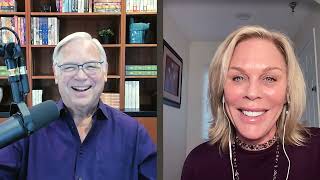
Patty Aubery and Jack Canfield discuss their 30-year partnership building Chicken Soup for the Soul and the Success Principles program. Patty shares how she moved from assistant to co-creator, and why she wrote Permission Granted to help people stop waiting for outside approval to pursue their goals.
Chapters
Foreign.
Welcome to the Jack Canfield Podcast and today's episode is particularly close to my heart is I'm joined by Patty Aubrey. Not just my business partner for more than 30 years, but she's also one of my very closest friends in life. And Patti and I have navigated the ups and downs of the publishing, training and business world together, learning and growing every step of the way. And one of the most valuable lessons we've learned is the art of appreciating our differences. And it's these very differences that have strengthened our partnership and allowed us to achieve more than we ever could have achieved individually. Before we start, let me tell you just a little bit more about Patty. If you don't know about her, she's the president of the Canfield Training Group. She went from being my personal assistant more than 30 years ago to to president of Chicken Soup for the Soul Enterprises. She oversaw the production and marketing of more than 150 chicken soup for the Soul books which have been translated into 50 plus languages. She's also a multiple New York Times bestselling author in her own right, having co authored 13 chicken soup for the Soul books including Chicken Soup for the Expected Mother Soul, Chicken Soup for the Cancer Survivor Soul and Chicken Soup for the Women Golfer Soul, just to name a few, as well as her most recent book which is entitled Permission Granted. Discover how life changes when you give yourself permission. And today, Patti and I are going to be diving into our 30 year journey and we're going to explore how embracing and appreciating the unique qualities each person brings to the table, which are different, can be a game changer in any partnership, whether it's a business relationship or a personal partnership. And we'll share some of our experiences, the challenges we faced and how learning to value our differences has not only fueled our success, but also deepened our friendship. And it's our intention that these experiences will inform and inspire you as well. Patti, it's always a pleasure to talk about our story with others and share what we've learned and I'm looking forward to our conversation today. So welcome Patti.
Thank you. Should be an interesting hour.
You know, when we think back to the start of our journey together, it's really amazing to see how far we've come. And I'm curious, what, what stands out to you most about those early days in our initial vision that we had?
Well, what stands out the most is you living in a condo in the Palisades with red shag carpeting and potpourri in the bathroom. And Incense burning. And I had the nerve to walk in the door to do an interview with you in your purple Dodge van that smelled like cardboard boxes from traveling back and forth all over the place with self esteem in the classroom curriculum guides, if you remember, because it was before chicken and I mean literally. And I had a white Dodge Colt, so we already had something in common. Didn't even know about it. I think the thing that stands out for me the most is that in the beginning I had to just trust my intuition by saying yes to even that job. And my intro sounds really impressive, I'm sure, to some people, but the fact of the matter is, I was 24 years old, I didn't know anything about self help. And I went to one workshop with a boss who he was leaving to go be a trainer. He talked me into spending $249 when I was making 1400 and I think 14,000 a year, so it was only like 1200amonth. And he said, I promise you it will change your life. And I went and it did. It really did. It's what led me to. Back to la. It's what led me to answering that ad in the paper that said secretary wanted 25,000 a year. I never wanted to be a secretary, but I wanted the 25,000. I had set that goal. So I called, I think along with another 200 people that called your phone as well. I think there was that many calls, actually. But that was a lot of money back then for secretary. Yeah, so it was definitely. So that's what stands out the most, like going for it, not worrying about what other people think. I mean, if you recall, my father was not very happy that I was going to go work for a hippie. And it was going against the grain, taking an action that nobody else had taken and that they all thought was weird. But. But you know me, I'm weird. So I guess it worked out.
Why did he think I was a hippie? I'm curious.
I think he got you mixed up.
With Jack Kornfield, the meditation teacher.
Yeah, yeah. Because he was from Iowa, wasn't he?
I think maybe. Yeah, possible. It's interesting. So one of the things you often share when you tell that story is that I didn't hire you at first. I loved your interview. You were my second choice. And I actually hired some woman from Phoenix that when she found out about it was going to cost to live in la, she decided not to do it. And I called you back and said, no, I'd like to hire you. And what did you say to me?
I said, okay, but it's going to cost you 30 instead of 25. And. But I mean. And I was kind of joking, but the reason I said it, too was because that same night, I got a call from the headquarters in Chicago for the company I was working for, and they offered me the Western Regional Sales Manager position. And I kind of knew that as well, because my boss said, oh, yeah, the corporate's calling me tonight. I think I'm going to get this big, like, promotion. And I knew in my head, he's getting fired. It was so weird. And so I was kind of ready for it. And then he called, and then you called, and then the other people called. And I'm like, what am I going to do? But I chose you. I don't know why. It was just intuitive. And I just followed my intuition and went against all my friends who said, who is this guy? What are you, nuts? Including my father.
Well, it worked out.
It paid off. It worked out. I said to my dad, jack, I said, here's the deal. If this doesn't work out, the good news is I'll get a Harvard education for free, and I'll just come back and live with you.
Well, you definitely. We both scored. It was very good. We both benefited a lot. So let's talk about Chicken Soup for the Soul. It didn't start out like a. It wasn't an immediate success. We had a lot of challenges, and I'd love to hear your take on some of those and how you felt. We managed them together.
You know, as I look back on it now, I don't feel like we had a lot of challenges. I mean, we did have a challenge. We wrote a book. We didn't know any different, and we went out to get a book published, didn't know we had to have an agent, got an agent, agent went out to everybody and then gave us the book back. And I was thinking about that today. I'm thinking, you know, the fact that we got rejected from everyone. And he came back and said, I'm really sorry, I can't sell your book should have been the biggest obstacle, the worst day of our lives. But it turned out it saved us $45 million in royalties. It wasn't a bad day after all. And it taught us how to take bigger action and continue to ask and finally find an amazing publisher who was a small little guy that you happen to know, which is another crazy story. And we got to basically run our own publishing company. What do you think was the Biggest obstacle.
Well, if we'd have had a big New York publishing company, we'd have been one of many, many, many books they were doing. And Peter Begzo, who was at Health Communications, his company was slowly going bankrupt. And we came along and basically saved the company. But what happened was because we were one of a very few books, it actually, you know, we got a lot more attention, if you will, in the marketing and sales of that book. When I say we had some difficult and challenging times. I remember there were times when we didn't have enough money to pay the bill for the toner in our computers, our copy machine. And you managed to make sure we did talk about that.
That was definitely challenging because I wasn't used to thinking that outside of the box at the time. I had only met Mark for a few minutes when that happened, who was the out of the box thinker? And I would say, jack, we can't. We can't pay the bills. And you would say, it's your job to see the glass half full or half empty. It's my job to see it half full. Figure it out. So I just had to get really proactive. I'm like, okay, I'll call the landlord. I'll tell them we need to make payments on our rent. I'll call the toner people. Because back in those days, I mean, even in today's world, toner is really expensive. And we were printing out hundreds of manuscripts to go promote this thing. So we owed, I don't know, $5,000, I think, to the toner company. So negotiating that and yelling at you every time you went to the plant store on the weekend saying, stop spending money.
We talk about this focus of this podcast being about our differences and how they played a big part in our success. So I'm curious, what are your thoughts about what our differences are and how those styles actually supported each other in our success?
Well, what I've learned over the years is you've always been a teacher, and so everything is very methodical with what you do. And I'm much more add, sky's the limit, fake it till you make it kind of person. And so with you being so structured, in fact, I used to get upset because you'd tell me how to sharpen a pencil and it would freak me out. But the reality is, you were like that slow and steady, the tortoise wins the race kind of thing. And in the beginning especially, I have to give you credit, I was pretty crazy. I was young and not focused. And you put up with Like, a ton of crap. But you gave me space to grow, and I was never going to be that person that could work in a cubicle. And I think that by having this balance. And also, I have to say out loud, you hate confrontation. So even if I messed up, you didn't want to confront me on it, which played to my advantage when I was younger. I don't know if it does sometimes today, but. But it just worked. And I think because you were on the road so much, you just basically said, hey, I'm gone for three weeks. Here's a stack. And so I thought, oh, my gosh, this guy just, like, left me with stuff, and I get to just make it up and figure it out. That was like a dream. And so I think that's when you got home. And I said, I'm changing my title from secretary to vice president of operations.
It did. It did. It did. It did. You know, we've had our moments over the years. I mean, we've had our little fights and so forth and so on, but I think the thing I notice about all relationships, especially in corporations and also in my marriage, is that those opposites, if you will, create kind of a whole. Like, you really cared about the finances and the details, and I was just out there wanting to, like, you know, teach and save the world and so forth. And I think sometimes I felt you were trying to hold me back. And maybe I felt you felt my favorite. I was trying to hold you down or whatever, but it worked.
Well, if I remember, I would say you said, you know, you weren't charging a lot in the beginning. And I would always say, you need to up your fees. You need to up your fees. And you would get defensive and say, I just want to make a difference. And I'd say, good. I just want to make money, so together we're better. And it was. I was sort of joking, but, you know, again, I didn't really. This was a business for me. It wasn't about changing lives. And that didn't show up until a couple years in, where I saw the power of setting goals and being in a business with other people that want to support each other and thinking big and things like that. So I got. I bought in. You know, at the beginning, I was much more interested. Like, this is just a job that could make a lot of money, to be honest.
Well, we did end up doing that. I don't know why, but I feel like I want. I want to share this story with people, because there was a time when we did have our moments where we. We'd get. Yell at each other, I'd slam the door and walk out, you know, that kind of thing. Because, you know, I don't like confrontation. So one of the ways I would avoid it is to leave. You know, fight or flight. You and I were the good news about you. You kept pushing me beyond what I thought I could do. You know, like, here's the next project we need to do. And, like, you know, I would say, you're ruining my Christmas vacation. I don't want to create an album right now, but we need it. We need you to do this. You know, and then once we were having this, you don't want to talk me into, you know, finally writing the success principles book. And then there was also this time when I don't know what we were fighting about, but I said, you're killing me. You're killing me. You're just giving me all these new projects I have to do. I don't want to do it. I wanted to have more time for myself. I just kept saying, you're killing me, and then I'll let you finish the story if you will.
Well, so part of this whole thing was I would come to you with an idea, and you would say, you're killing me. And my interpretation was, oh, he thinks he has to do it all by himself. But I sort of have it all planned out. But you said it over and over and over, like hundreds, if not thousands of times over a span of probably five years, maybe 10. Literally, probably 10. And so I remember the day that we had a very large fight. And that was the same day that the past lives woman, Sandra, was coming up to visit. And so she came, and you called her and said, maybe we should do. You said, call her and ask her if we should do the session together. And I said, okay. And I didn't want to. I was really not happy with you at the moment. So when I called her, she said, oh, no, darling, this is all about you, in her little accent. So I said, okay. And so you went to your office, I went to mine. We got back to the property, and she came in. And I didn't know anything about past lives. I was really leery, you know, very leery of a lot of people growing up in this world of chicken soup where everybody sort of has an agenda. So I wasn't sure if she had an agenda or if she was real. So she had to, like, prove herself. And so she said, here's the deal, Jack and you have been married several Times in past lives and in this last life, you wanted him to have more. You are that husband, and he was the wife. I said, what? She like, you were the man, he was the woman, you were married. I said, okay. And then she said, and you kept wanting him, meaning her, the wife, Jack, to have more kids. And she, meaning Jack, died in childbirth. So in this lifetime, you owe him. And so she said, because you killed him. And I went, oh, my gosh. So I literally ran over to your office and said, you have to come here now. This woman is for real. And when you came over, I said to you, so, Jack, what do you say every time I bring you a new project?
I said, you're killing me.
You're killing me. And so Sandra said, do you want to know why? And so she reiterated the story to you. And then she did all this crazy cutting cords and all kinds of crazy stuff. And we never had that conversation again, right?
It was over. It was funny because, like, you were getting me pregnant with the new idea that I thought was going to kill me. And once she did, once I understood it, and once she did, what she did was like, removing some kind of, like, karmic bonds or something that bind us together. That part I don't fully understand either. But the point was, it ended that, like, we haven't had that kind of fight hardly about anything literally since then. That was years ago. So I think it's fascinating when people come together, not only are you coming together with the person that you see, you're coming together with their. Their history. And many of that can even be in lives before the one you're in. I remember reading a book called We Were Born Again to Live Together by a guy who does this kind of work, past life stuff. And this woman, he was writing an underground newspaper at the University of Arizona, and she was freaked out. Like, she thought, like, you know, she just didn't want him to do it. And when they were regressed, it turned out that he had created a newspaper against the King back in about, you know, the 1700s in Europe. And the men that worked for the King came and killed him right in front of her. And that was what was being re Stimulated by that experience. And so it's interesting how that stuff plays out. And we're attracted to each other. What I've also learned is that as we go through our lives, we're often interacting with people more than once. Sometimes I'm your mother, then I'm your daughter, then I'm your son. And we're learning all these different ways we can relate. Now we're business partners and so on. So that's fascinating to me.
So the ending to that story, she said, this lifetime is all about the two of you figuring it out. Because you have a huge thing to do. You're going to change millions of lives and you're going to do it together. So you can't kill each other.
Not allowed. So talk about this in terms of the doing things together to matter. One of the things you did, because you kept coming up with all these products, we created this online train the trainer program where we train teachers to do the self, the work on success principles. And at that time, it was a three week program. People would come for a week in May, maybe again in July and again in November, and we were in the Middle east and that all changed. Talk about that.
The real story.
Yeah, the real story.
So we were in the Middle east and it was probably the third week in, and I was like thinking to myself, I don't know if I can listen to Jack speak one more day. And you had these huge audiences of 5,000. I had like 20 women in a room somewhere. And so I just thought, what am I doing here? And I literally, for the first time ever heard out loud, just be a student. I'm like, all right, this is weird. And literally I'm the only girl in the room and only blonde girl with blue eyes and the rest are men that are in robes, basically. So I start doing the work and you do this meditation and guided visualization. And all of a sudden I just had this massive download, like, we have to do an online certification to train people around the world to do the success principles. It's clear as day these 5,000 people in this room are never going to come to California. I started mapping it out and I was so excited. And then I told Junior, like, you are nuts. And if you remember what I said, I said, well, we know that, but let's just talk about how we could really scale this thing. And we did.
Yeah, you spent two years. We came back, we videotaped a couple of trainings, and then you edited it for, I think, two years into what it is now. And then now we have about 5,000 graduates of that program in 117 countries that are doing good work all around the world. One of my favorite stories is when the earthquake happened, my wife was there like a week before it happened. And. And the reality was we had people that have been trained in our work going village to village where all these houses that were built with stone. And not the greatest cement, if you will, had fallen apart. And people were just sitting around, like, you know, in a daze and helping people realize they could rebuild their lives. And, you know, plus people working in corporations, nonprofits, churches, schools in Africa. I just found out from Cynthia Kersey, who runs the Unstoppable foundation, that literally thousands of people have gone through our Success Principles program as a result of what you created. So that's been quite profound. And then you came to me and said, we should have a goal to train 1 million people to train this work by the year 2030. And I'm thinking, there she goes again. And then I remember I just kind of shined it on for a while. And then one day, I remember sitting in bed on a Saturday morning, and I said, well, if we could do it, what would the math look like? How would we get to a million people, a million trainers? And I realized if we could train a million people to each train a thousand people a year, in eight years, you could read 8 billion people, which is the population of the planet. That kind of got me excited. And now we're at the place where we're training trainers of trainers and creating regional coordinators in places like India and Europe. And so this whole infrastructure is building. But again, it takes me a while to catch up to your visionary reality, but it requires that. It requires someone to have a vision and someone to be able to ground that in practicality. So, anyway, I appreciate that.
Well, I think we switched roles at one point because you really had the vision in the beginning, and then you were so into it. And then once I figured out I could do it, too, I started to get more creative and started dreaming bigger. So it worked. But I think that that's kind of a funny one, too, because you didn't actually say you're crazy or too much so. But what I didn't realize about you for years, and this is for everyone to hear, the minute I would say I have this idea or something other than you're killing me, you would ask me a thousand questions, and I would get so defensive. I'd be like, why are you asking this question? Don't you trust me? I've helped you make all these millions of dollars. What's wrong with you? And I think this probably went on for, I don't know, 15 years. And then one day you said, I just have to catch up. It's not that I don't trust you. And I went, oh, I guess I made that about me. Why didn't we have this conversation a long time ago would have saved us hundreds of fights. So that's why I think it's kind of comical today. It was worth sticking it out for the last. Actually. It's been 35 years. We tend to tell ourselves stories that don't support our future. You know, we make it about us when it might not have anything to do with us. Like your thoughts didn't have anything to do with me, but I made it about me, which is not a good.
Place to live when we think about telling ourselves stories. Talk about how you got involved with the first chicken soup book that you co. Authored.
So the first chicken soup book that I co authored was. I started it in 1995 when I just had JT and my mom or my husband came home and said, hey, I. I have good news and bad news. And I said, well, what's the good news? Or I said, what's the bad news? And he said, you, mom has breast cancer. I said, what's the good news? They caught it really early. They couldn't even see it on the mammogram. She just knew it was there, and they got it out, and so she had to go through radiation. And my sister was working for us at the time, and she was studying for her nursing state boards, and she said, why don't we put together a book, Chicken Soup for the Surviving Soul for Mom While she's going through her cancer treatment. And I said, well, that'd be really cool, but why would Jack and Mark let us do that? We work here. I can't believe I ever said that. If you're out there listening, never say that. And she said, are you kidding me? Who else deserves this more than you? You were starving for four years before the first book ever hit the light of day. And you know, you deserve it. And so I was scared to death to get to ask you guys. So we put together a proposal. We went into this conference room. I was so freaked out. Like, he's going to say, no. I don't think I was ever that nervous ever. And I said, we want to do Chicken Soup with Shopping Soul as fast as I could for my mom. And you guys looked at each other, went, yeah, cool, great. I'm like, oh, yeah, cool. Okay.
Well, you wrote a book called Permission Granted, and it's kind of about that. Like, giving yourself permission to show up, stand up, speak up, ask for what you want, do what you want. Talk about that a little bit.
I thought about this, probably, gosh, in 2012, and it was during a Frustrating moment. I've had many. I have to admit, I'm far from perfect. And I was like, I just want to give myself permission to just say whatever I want and care about what people think. And, you know, because I'm very. I was raised Catholic. I feel judged very easily. I get defensive. And so I played with the concept for three or four years. Permission to not give a F, or permission to whatever. Came up with all kinds of sarcastic things. But I had to work through the sarcasm to get to the grace before I could actually deliver it and not embarrass both of us. I thought about it and thought about it and I struggled with it because I thought, oh, gosh, I'm concerned that you're going to think, oh, I'm jumping ship and maybe I should be doing the success principles for Women First. And I just, I kind of knew. And the kicker, the icing on the cake was my mom had been rigged, diagnosed with cancer, and she died right before that book. And she made me promise. She said, promise me you will not be invisible. I did not raise a daughter to be invisible. Give yourself permission to show up. And that, that put me over the edge to do it. And so I remember I was in my Nashville house, you were in Santa Barbara, and I called you and I said, call me at 3 o' clock on Saturday. And it shocked you, which probably was a little alarming for you. I don't typically do that. And when you called, I remember what I said. I said, I have to tell you something. And I was nervous again that you were going to be upset that I wasn't going down this other road. And I said, I've met someone. And you said, who? And I said, myself. Do you remember that?
Yeah.
And I just said, you know what I need to do? Permission granted. First, I need to give myself permission to do this so I can talk about it more, and then I can do whatever you want. And you said, great, how can I support you? And I said, well, let's see, that's a good question. Let's dial back to when you're my age, you can work for me 18 hours a day, drive an hour and a half each way to work and do whatever I say, just for a day. But all joking aside, you did say, how can I support you? And again, I could have stopped myself. So I think it's so important that women especially embrace it. But I think many too, too, like, give yourself permission to be who you are, to be yourself, to not hide, to show up, to ask for what you need to say what's on your mind, because if you don't, it's not a healthy thing to do. And it makes life more fun, too, because I think relationships can really deepen when you have those crucial conversations. So that's just me again, being two steps forward, one step back, and asking anyway. And I think the biggest thing that you and Mark both taught me was ask, ask, ask. Like, take action. And so often we get so afraid, we're in fear, or we get paralyzed almost by thinking, what if I get turned down? Or what if they say no? So because I've been asking for so much stuff for the two of you for so long, when I had to ask for myself, it was a little bit easier. It wasn't easy. It was a little bit easier. And I see so many people that they don't ever ask for anything, and then they have a huge ask, and you want to throw up on yourself. So I always tell everybody that I work with, just ask for the little things. You know, ask for, can I borrow a cup of tea? Can I borrow some sugar? Can I borrow your T shirt? I don't care what it is, but start practicing that muscle before you ask for that big raise, or you ask for the book, or you ask for whatever it is that you truly, truly want. And it's scary because you got to balance it out.
Yeah, I know. It was a big. You know, for me, asking was really hard in the beginning because I was so afraid of rejection. And then we wrote a book called the Aladdin how to Ask for Anything and Get It. And in writing that book, I really had to explore my own history of asking, feeling afraid, not asking, being rejected and all that. And then realizing eventually that, you know, the worst that happens is you get a no, and you already have a no before you ask, so it can't get worse. And so that was really helpful. And every program we do, we talk about the steps of having a vision that supports your purpose, turning it into goals, creating affirmations of visualization, and then you gotta act. And one of the major action is asking and rejecting rejection. And so that's been core for all of us. You, me, everybody we work with. And so it's interesting that we all have to go through that, it seems at some point. And if you don't ask Gandhi, I still have that quote on my computer, if you don't ask, you don't get from Gandhi. And he asked the British to leave India. And that was not an easy ask. And eventually, because of the nonviolence they did. So it's very, very important.
Well, it's kind of fun, too, to make it a game. Can I tell another story?
Sure, of course. That's what we're here for.
Do you know what story I'm going to tell?
I have no idea.
I love this when you don't know. Okay, so we were in San Diego doing a workshop for trainers. And we were walk. And we're walking down the beach, walk. And there's this restaurant, and it's packed. It's a Friday night, and like, let's eat there. And you said, we can't get in there. We'll never get in there. I said, I'm going to ask. And you're like, you're crazy. And part of what worked for us was, I don't care. I'm obnoxious. Like, I wasn't Mr. Chicken Soup. I had nothing to lose and everything to gain. And so I said, I'll bet you $100 we'll get in there. And you're like, fine. And I didn't have $100, as you know. I never have cash on me. And so I went up to the gal at the front, whatever, what are they called? The hostess. And I said I had to size her up. Like, she probably read Chicken Soup for the Teenage Soul. And so I said, by the way, have you ever read Chicken Soup for the Teenage Soul? And she said, oh, my gosh, it's my favorite book. And I said, good. That guy behind me, he bet me a hundred bucks we couldn't get a table. He's the chicken soup guy. I can give you the hundred bucks or him. She's like, right this way, Mrs. Aubrey. I think you're a little mortified.
But, you know, it was really good because I realized in that moment that here I am teaching all this stuff, and I still had that little glitch of like, oh, thinking we can't, you know. And I tell people, never say I can't. And there I was doing it. Fortunately, that was a number of years ago, so I can pretend I'm beyond that now. But what happened was, I learned from you with that, I learned from you. I can now walk up at the front of a line at an airport where it's like, there's no chance I'm going to make the plane and talk to the guy who's checking in. Everybody out to the curb and say, what would it take to get you to bring me number one in line? And I said, would $100 do it? And they Go. Yes, sir. You know, I wouldn't have done that 10 years ago. And at some level, you know, I used to feel guilty about that, but now I've learned if you don't ask, you don't get. And I've made flights that I would have missed otherwise. So it's, thank you for the lesson. I appreciate it.
Well, you taught me the lesson. And you were asking for contracts and you were asking people to buy into your dream. Like if you ask people to come to, hey, you want to join the Transformational Leadership Council, they say yes. So you just ask on a different level. You methodically think it through. I'm more of a random asker where it's like, oh, we're in this line. Let's go do something crazy. So it's not that you don't do it, you're just not as obnoxious as I am.
Well, we're moving toward the end of our time here. Is there anything else you want to talk about or share or ask or.
I would say for anybody listening, you know, trust your intuition. Figure out what you're passionate about. Do what makes you happy. Don't take no for an answer. Ask questions if you want, but don't let somebody crush your dream. I really believe that in the beginning of Chicken Soup, we didn't have all the noise and the chaos with social media. We had a fax machine and a phone and we weren't comparing ourselves to other people on Instagram or Facebook. And nobody had any reference to whether or not this was going to work or not. There had never been anything like it, and we went for it. So don't let anybody steal your dream and surround yourself with people that will support who you are, what you do and how big you think, because it's going to be necessary if you really want to make it work.
That's great. Talk for a minute. I know, I'll just tell everybody. Patty still president of Campfield Training Group and we co lead almost all the things we do now. Workshops, retreats, our legacy club, our Reignite youe Life mastermind group, et cetera. And so Patty has become a partner with me in that work as well, but also has her own gigs that she does as well and developed her own. So talk a little bit about pattyabry.com, you have some groups you do over there, your audience builders, things like that. And then we'll give out your website and people can reach out to you if they want.
What I love to do, kind of as my side hustle. Is look at what's missing in the market. What do our students need? And so because we work with a lot of authors and speakers and coaches, lots of times they don't know how to build their brand or they don't know how to articulate what they do and what problem they solve and what they have to offer. So they don't typically know how to build a business or an audience. And so I love to do that and coach people along that way. So that's called audience builder. I'm always running some permission granted, winter, summer, spring, or fall edition, and I do some speaker trainings. I look for what's missing, what people need that are in our tribe, and I try to create it and help them get through something more quickly than I did because we took a lot, especially me. I took a long time to get where I'm at, and I really want to get people there further, faster with less effort and more support. So I'm kind of known as the chief believer and the cheerleader. So if you need one of those, you can check it out@pattyabrey.com or you can come to BTS with Jack and I and see us there or anything else that we do. I. I'm hard to lose. I leave a trail everywhere.
Well, BTS is breakthrough to success. We do that a couple of times a year. If you go to jackcampfield.com, you can find out about that. And one of the things, Patty, I love this little metaphor you always share with people. You say, we know a lot of you are trying to do a lot of different stuff, especially if you're in the training, coaching, authoring business. And a lot of times there are people out there offering all kinds of services that don't really deliver. And Patty always says, if you get on our train, we won't let you off in a bad neighborhood. So we've literally explored what works, what doesn't work, and make sure that we've curated that. So you're going to get the best possible advice, support training that you can possibly get. Thank you, Patty, for being on my podcast. This is fun. I've enjoyed it.
You're welcome. My pleasure. Anytime. I'm just over here hanging out.
Okay. And thank you for watching, all of you today, joining us. And do make sure check out Patty's website. Check out ours as well. Jackcampfield.com Lots of trainings that are online, some are click to buy. Some you can do at your own pace. Some are live, some are hybrid. But our commitment is to help you get to where you want to go. So wherever you are you in whatever area of your life, whether it's financial, health, fitness, fun, relationships, whatever, we want to help you live the life of your dreams. And we've been doing that now for millions of people all around the country. And if you'd like to learn how to teach that, which is a huge need for right now in the world, especially after the pandemic we've gone through, we'd love to share with you how to do that as well. So thanks for joining us. We look forward to seeing you next time on the Jack Canfield Podcast.
More from Jack







[EP 46] Creating Your Own Luck: The Power of Self-Confidence with Veronica de Andrés

[EP 45] Rewiring the Brain for Bliss: Activating Your Spiritual Intelligence with Dr. Dawson Church


[EP 43] Transform Your Life Through Visualization and Emotional Intelligence with Natalie Ledwell

[42] Enhancing Your Health & Longevity Through Peptides and Functional Medicine with Regan Archibald