[EP24] Ask Jack Canfield with Patty Aubery
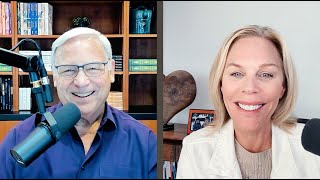
This YouTube Ask Jack episode (Jack Canfield with Patty Aubery) is a practical Q&A on personal, professional, and spiritual development. Key guidance: clarify values and life purpose before goal-setting; align goals with values; cultivate appreciation and meditation; use visualization, mirror work, and EFT/tapping to overcome fear and self-doubt; build daily disciplines (meditation, goal-setting, exercise, reading/listening, gratitude; the "hour of power" and evening review); seek mentors and form peer groups; schedule focus/buffer/free days to protect work–life balance; treat failure as feedback and learning; and use simple writing practices ("vomit copy", one page/day, transcribe recordings) to start a book. The tone is instructional, anecdotal, and encouraging, with many named exercises and resource pointers.
Chapters
Foreign.
Hi, I'm Jack Canfield. Welcome to the Jack Canfield podcast. And we're doing something a little different this time. Some of you have been submitting questions and wanting to know things that perhaps we hadn't thought to address. And so we've started this new thing which we'll do on a regular basis called Ask Jack. And I'm joined by Patti Aubrey, who is my business partner for about 30 years, maybe a few more. Started when she was 14 years old working with me. Say hi Patti.
Hello everyone. I was 24, but I'll take 14.
There you go. Anyway, Patti has joined me and started working with me as an assistant and then she became a co author with some Chicken Soup for the Soul books and she became president of Chicken Chicken Soup for the Soul Enterprises. And then when we turn main focus into training with the Canfield Training Group, she's president of that as well and is author of many New York Times best selling books herself. Does trainings for empowering women and other things going on and on, talking about her amazing successes. She's quite phenomenal and she co leads a lot of workshops with me, our retreats and so forth. So I've asked her to work with me and ask these questions of me. And certainly Patty, you're welcome to join in if you want to expound upon or expand that answer of mine. Glad to have you do that as well. And I would just say this too, if you're watching this as we get to the end of this, you go, wow, I'd like to submit a question. You can go to askjackcampfield.com you can send an email to askjackinfo.com with your question and we'll be curating those questions. We'll try to answer questions that a lot of people you're asking and we'll keep doing this as long as people are getting value. Let's take it away, Patti.
All right. You promise to bring value?
I do, I do.
Okay. First question that we have came in and it says, what's the first step to take when you want to grow both personally and professionally as well as spiritually?
Well, basically I think the first thing you have to do is get clear about where do you want to grow to? What does the end result look like? What's your vision of where there is? You know, my book the Success Principles says how to get from where you are to where you want to be. So the idea is where do you want to be? What does success in your personal life look like? Relationships, health, finances. So Forth what does it look like professionally? And then what does it look like spiritually in terms of, you know, happiness, joy, being connected to God, cosmic consciousness, inner peace, whatever it might be. Once you have a clear vision of what that looks like, then you also want to look at, you know, what are my core values? What do. What do I really value in life? I think too many times people set goals that have to do with what we call our ego, which would include, you know, big financial goals and goals of power. And what I think is important is your goals are aligned with your values and aligned with your essence. You know, a lot of the work that we've been doing lately is realizing this quote we quote often from Stephen Covey, which is, you don't want to get to the top of the ladder and realize the ladder was leaning against the wrong wall. In other words, you're chasing what society tells you is success, but you're not experiencing happiness. And we all know people who are successful, who are movie stars, athletes, billionaires, whatever, who are not happy, who are addicted to drugs, who don't have great relationships, don't get along with their children, you know, depressed, end up in rehab and so forth. So basically getting really clear of what is. Who's the essence of you. And one of the things we do in a lot of our work is help people get in touch with their life purpose. I believe everyone's born with a purpose in life, and, you know, mine's to inspire and empower people to live their highest vision in the context of love and joy. Someone else's is to invent things that help, you know, people feel better, like in medical machines, things like that, music, being a chef, you know, something that naturally was part of you. You know, I remember hearing a story once about this little girl who loved to play the violin, and her mother said, you've got to do something else besides play the violin all day. Go outside, play outside. So she goes outside in about 10 minutes later, her mother looks out and she's playing the violin. And there's another kid in the neighborhood, he's got his violin over there, and they're playing the violin together. They just love to do violin. And we see about these people who are natural dancers and singers and poets, writers and athletes. I have a nephew who's three now, who literally walks around dragging a baseball bat, one of these Nerf ball baseball bats, and he's wearing a baseball glove. It's clear his purpose is going to be athletics of some kind. So it's really important to just Tune in and trust that part of yourself so that your goals and values are aligned. We recommend the Barrett Value center is a great place to go. And there's all kinds of assessments online where you can clarify your values and make sure then your values are clear and your goals are aligned with that. Because values usually are an expression of your spiritual qualities that you're meant here to express. And one of the things I would say to you, we do a breakthrough to success seminar, number of times a year, usually twice. We do some retreats and we always do life purpose exercise. We do sometimes values clarification exercise, passion tests, things like to get in touch with your natural passions. Um, we're doing one April 12th to 14th in the spring. We're doing another one in the fall. So if you want to come and find out the right place to put your ladder against the wall, we'd love to have you join us with that. One of the quotes that I've been using a lot in my teaching lately.
Is from Howard Thurman, who was Martin.
Luther King's spiritual advisor, who said, don't ask what the world needs.
Ask what makes you come alive.
Because what the world needs are people who've come alive. So people who found their passion, people who are doing the thing that makes them full of joy. You see all these mediums today, we're.
Channeling all these different entities out there, and they're all talking about following your joy, trusting your intuition.
Do the things that makes you happy. And then if you do that, you'll find a way to express that into.
The world in a way that you can monetize, turn into a career, and so forth. And I would say a couple more quick things. Number one, before you start focusing on your goals, take some time to do some kind of activity that will get you in touch with appreciation. So, couple of examples. There's one called a quick coherence process, where you close your eyes, you imagine breathing into your heart, your heart expanding, and then you imagine some person, place, animal, or thing that you really, really appreciate, and then you feel that expanding and expressing that out to them and, and really focusing on that appreciation and bringing that back to your. Your own body and then sending it through your body as well. And when you're in that state of.
Appreciation, then set the goal, then move.
Forward, because that state of appreciation is really one of the highest vibrational states you can be in. And when you're in that state, you're more connected to what's really true for you. So I would encourage you to do that as well. Meditate regularly. And lastly, don't get attached to outcomes. This is kind of the new information that's really coming in right now. I just spent before I came on with you, Patty. I was interviewing Marie diamond, who's a feng shui expert. Something I hadn't heard until now, but there's these nine year. There's these 20 year cycles that happen and we're coming into this thing she called the nine and the. We're moving from wisdom to spirituality. We're moving from knowledge to expression and feeling more joy in our life and living our passions. So we've got enough wisdom now. Read all these books and all these books have been written. There's all these podcasts like this over. But now it's about expressing what we know in a joyful way and experiencing the joy of living that wisdom. So I think that's a big piece of what's happening that she made me more aware of and clear. So trust your intuition, trust your attraction to the things that make you happy and joyful and then take, do what we call take the next obvious step. One of the things that I find that's happening for people that are successful is once they get a sense of where they want to go and what, what's happening for them, their purpose, their expression, their vision, then what is the next obvious step for you to take? And then take that and then see what happens next. See what keeps showing up. See what keeps showing up. Patty and I were talking this morning to a group of people about how when we started Chicken Soup for the Soul, we got rejected by 144 publishers. And yes, it was disappointing, but we kept on going because we knew in our heart of hearts that this was meant to be. And we finally got a little publisher out of Florida called Health Communications, which wasn't a big publisher in New York like Harper Collins or, you know, Doubleday or something, but because it was such a small publisher, we were one of the few books they came out with every year and we got a lot more attention, a lot more support. As Patty mentioned this morning, it was like it was almost our publisher. And all that delay, if you will, actually was to our advantage. And so trust the process as it unfolds, but keep tipping the next obvious step and you'll start to see that this kind of begins to balance out. And you'll be taking one step professionally and let our step spiritually and it will all integrate together.
Good answer. And, and for anybody out there that doesn't know you very well, they should definitely know that that's how every time you operate that way, where you trust your intuition and you follow a passion and you turn it into a business, it always works. It's what happened with chicken Soup. And a lot of people said that's too spiritual, that no one's going to buy that and. But you were, you were on ambition and you were pretty convincing. So I jumped on the mission with you. But if you had second guessed that, I don't know where we'd be.
No, we had one of our staff members quit. He said we're out there trying to get jobs in corporate consulting and you're out there talking about chicken soup for your soul. We'll never. Well, literally we've made tens of millions of dollars doing corporate consulting because of the success of those books. So again, trust your inner guidance and not everyone's going to agree with you. That's okay. Trust you. Agree with you.
Absolutely. Okay, so question two is how can one overcome fear and self doubt when aiming for higher goals?
You know, anytime you start something new, usually there's some discomfort that comes with that and you're stepping out of your comfort zone. What you're used to, what's normal, what you know, you're good at, your self confidence is, I know how to do this, but I'm going to go do that. Maybe I've never done it before. You know, when tech technology came along with AI coming along, things we've not been familiar with. First time you give a speech, first time you put a book out to the public. First time you have your first coaching client, you know, whatever it is that your next steps are, what happens is fear often shows up. Now the thing about fear that most people don't realize is that fear is self created. You're creating fear by imagining something in the future that that hasn't occurred yet. So someone could say, let's go skydiving. And you go, no, I don't want to do that, that's too scary. Or come with me and co lead this workshop with me. No, I don't want to do that. This is too scary. Well, what's happening? You're really saying, oh, that sounds kind of fun. Skydiving. I hear it's pretty cool. But I am imagining if I did that my shoot wouldn't open, I'd go splat and I'd be dead. Or I imagine I'd forget my words and I wouldn't know what to say. People would laugh me off the stage. I don't think I want to do that, but it's the imagination of this negative thing that's happening. And usually it goes back to an earlier event in your childhood. Sometime when you tried something and you failed. Sometime you did something, you got bullied about it or laughed at. I remember when. I don't know if I ever told you this, Patty. I was in Sunday school. I was probably a sophomore in high school and we were supposed to be reading these stories from the Bible around Christmas. I'm reading along and it says Jesus, Jesus sprung from Mary's womb. And I had never seen that word. I didn't know what it was, but I learned to speak phonetically and it went W, O, M, B.
The only word I've ever seen was.
B O, M, B bomb. So I read Jesus sprung from Mary's womb. And everybody began to laugh. And that was the last time. For a long time I wanted to do a reading from the Bible.
I've never heard that story in 35 years.
I know, and it was. But what happened was that was not a fun experience. I didn't want to have that happen again. So the way I would avoid that was, don't do that. So, you know, do you want to do the reading?
No, let someone else do the reading.
Now. I obviously overcame that because now I do public speaking and so forth and read for my books and on and on. But the point being that often our fears are a projection into the future of something that happened in the past and what we want to do. Because it is a skill to use our visualization skills to imagine something in the future. Choose to imagine something good happening. Imagine it happening. Well, you're going to give the speech.
Imagine a standing ovation.
You're going to go and perform. Imagine. People said it was a great performance. You're going to go write a poem, imagine somebody enjoyed it, you know, whatever. And then if you do that, and I'll give you an example, I the first, like, major speech I gave when I was in my twenties, I taught.
Classes in high school and so forth. I wasn't scary, but I was going.
To follow Norman Vincent Peale, who was this national, well known author. He had the church in New York.
He was, you know, it's like following.
Tony Robbins today or something. And so basically I was scared and I was imagining, I'll not be as good as him, I'll forget what I'm going to say and so forth. But I went into the men's room, I went into a stall, I didn't.
Take my clothes off or Anything.
I just sat on the toilet and I remember thinking, okay, you teach this stuff.
Close your eyes, visualize yourself giving a great speech.
And then at the end, imagine everyone.
Jumping up and giving a standing ovation.
So I did that, and by the.
Time I got out of the stall, I was like, already I'd given a great speech.
Now I just have to go experience what I'd already visualized. And I gave a great speech. I did get a standing ovation because I used the power of visualization to imagine positive outcome instead of a negative outcome. Now that's a visual thing we do. Visual, auditory, self doubt is when we talk to ourself. It's thinking, it's our mind. And we imagine that I can't do it.
I imagine I'm not smart enough.
I imagine that I'm not experienced enough. I don't know what I'm going to.
Say, you know, I don't have the.
Credentials I need, whatever it might be. And it's pretty much the similar thing. So rather than doubting yourself, replace it with, with a positive thought. I can do this. And one of the best ways to build self confidence is to do the thing you're afraid of and survive it. So we always say that self confidence is a result of surviving a risk.
Now you don't want your first speech to be to 5,000 people. You know, maybe you go and you.
Give a speech to 20 people at your church, or you do it to a small group at work, or you do a brown bag lunch, or you talk to, you know, the 20 salespersons in your car dealership. But the point being, every time you do something you're afraid of or you tell yourself you can't do and you.
Survive, you build self confidence.
And what's also kind of cool is every time you do something while you're sleeping at night, your subconscious mind is.
Going over what you did that day.
And seeing where it could have been better. And if you remember, Patty, we used to teach juggling in our trainings. And I would get buy all these, you know, these little sandbag ball kind of things so when they drop, they don't roll.
And we start the first day and everyone's dropping them. And then, then I'd say just throw one ball to one hand and catch it. Now throw that one back to this and up this high.
Don't walk forward.
Got the wall plane, got the height plane, Just do one ball. Second day, throw this ball. When that one's peaking, throw this one up the crossover.
By the end of the week everyone was juggling and what was happening is.
In your subconscious mind at night they're going, oh, we threw it too far forward. We threw that one before, we should have. They bounced off that way.
And it's saying, well, let's not do that.
So what happens is it's integrating what you learned. Learning to ride a bicycle, learning to ride a stick shift car, learning to give a speech. You're constantly improving if you'll just do it. And so basically you're going to get better if you do the work. And so think about this. What's the worst that could happen if you do the thing you're afraid of? Obviously don't jump out of an airplane immediately if you don't get good coaching and have the guy holding on to you and do a tandem jump and all that good stuff. But for most things, the worst that can happen is they'll say no. You won't get a standing ovation, you won't get the sale. The first time you try to sell your book, the publisher won't say yes, like what happened with us. But you can survive that. You've survived every risk you ever took in your life. Everything you've ever done, you survived it. You wouldn't be watching this if you hadn't survived. So acknowledge the fears. Visualize what you would rather have. Notice the self doubt. Change it to something positive. I can do this. I have the ability to learn to be a great speaker. Do the mirror exercise every night. What did you accomplish that day?
Look in the mirror.
Go, Jack. I want to acknowledge you for doing this today. You did three podcasts, you recorded, you did a webinar, you met with one of your groups. This is like six hours in studio today, but you did great. And then you did any temptations you overcame. You didn't eat that cupcake that your wife brought home from the restaurant for dessert for lunch. So I didn't eat that thing. Any disciplines you kept? Oh, I did my yoga this morning. I went to see my trainer and. And then basically you end with I love you and then you go to bed. Now you do that every night. Over time we have one person that's done it for 10 years in a row, over 3,000 something times that she's done this mirror exercise. She's got the most self esteem and self confidence of anyone I've ever met. And there's one other little technique I like, it's from Mel Robbins called the high five yourself exercise. Every time you pass a mirror in your hallway, your bathroom, whatever Even your car mirror, just high five yourself in the mirror, say good job, you're great, I love you. Little techniques to acknowledge yourself and things like that. And finally I would just say if you haven't learned about EFT tapping yet, you can go online. I've done some videos. Nick Ortner has a tapping solution. Dawson Church, you can check on his work. There's a tapping solution app you can get on these apps. You just tap on these nine acupressure points while you think of your fear. And literally about five times through that sequence the fear's gone. It's amazing. So you don't have to let fear run you anymore. We have the techniques, I feel like Arby's, we have the beats, you know, so we have the techniques that you can use to get yourself over that.
Well, I think the fastest way to the other side is to take the action. Yeah, I mean I always say that people, when they come to our trainings, when we're certifying trainers and speakers and coaches, I've never seen anybody's, you know, blood and guts end up on the wall like it's never happened. It's not going to happen today. But we tend to really overthink it. So and I love the way you phrase it sometimes, like you're negative goal setting right now, stay positive.
Right.
So nobody wants to negative goal set.
Right, Yeah, I love that quote this. But just, you know, worrying is negative goal setting. Zig Ziglar said that one of the great motivational speakers of all time. And it's true, when you're worrying about something, having the self doubts, you're afraid, you're actually using your creative mind to create the actual thing you don't want. And so again, switch to the positive, believe it's possible, take the action, use some of these new techniques like tapping and so forth to disappear the fear and then just go do it.
Next question. You ready?
Yes.
Okay, so the next question is, what daily habits would you recommend that would contribute most to one's professional and spiritual growth?
Well, I think, you know, there are so many things you can do that are what we call disciplines of success. But I think boil it down to some of the most powerful ones. Obviously daily meditation. And a lot of times people think meditation, you're going to sit there and you just try to quiet your mind. And the mind rarely quiets down. There's always this little background noise called your brains speaking. One of the great techniques, just watch, just watch as if you're watching a movie or listening to a radio show. And just because when you're watching, you're not the mind anymore, you're the witness to the mind. You're developing what we call witness consciousness, which is the observer. And so what happens when you become the observer? You're moving into a place of awareness and you're not the content anymore. You're pure awareness. And awareness is where you want to be. Awareness gives you choice. Oh, I'm aware. I'm thinking that thought. That thought's making me feel bad. What would be a better thought? I could choose a better thought, you know, and so what's a thought that would uplift me? So we have choice about the thoughts we think, the visualizations we bring in our mind. So when you're in that witness position, you're seeing how you make yourself miserable, how you scare yourself, etc. What happens over time is you develop more of that witness position. More peace comes in. Now there are meditations that are guided meditations, many of which we teach. And we have a course. It's a DVD or. No, it's an audio program you could download now, used to be CD3. Yeah. Called Awakening Power. And what happens is, it's, it's. They're guided visualizations, guided meditations. We. We have one that's based on a Kabbalah which. Where you bring light down through your different parts of your body, bring it down into your solar plexus, into your lower part of your body, down into the middle earth and so forth. And what happens, you're awakening. What are called Sephiroth are kind of like chakras. And by listening to a meditation, guided. And you can get ours or ones on YouTube you can listen to. There's just so many available. Some of the paralympical things that come out of learning strategies. What you can do is just follow those along and what you'll end up with, you'll be more peaceful, you'll have insights, you'll have more. You'll be de stressing yourself. Your hormones in your brain and neuro.
Neuro enzymes and all these things start.
To change and bring about de stressing and health in your body. So daily meditation will be a really big one.
I would just recommend that for everybody. I started meditating when I was in my mid-20s and I've been doing it ever since.
I would like to say I do it every day.
I don't probably four or five days a week.
But what happens when I do?
Just in a couple of minutes, my whole body relaxes.
I go into this zone.
I have better Thoughts, things come up in my mind that are creative and so forth.
So meditation.
And there are many, many forms you can learn.
Goal setting.
All the research is that people have set goals.
The top 3% of achievers in the world, goal setters.
That's why you'll see things online, the 3% club. And you know, there have been studies done. I was just talking to a professor at Pepperdine University who studies high achieving people and she said they all set goals.
I wrote a forward to a book.
Called the Billionaire Secret. This friend of mine interviewed 21 billionaires. They all set goals, they all meditated, and they all exercised every single day. It didn't matter if they were 81 years old, 50 years old, whether they were in China making windshields for cars or they were opening up hotels. One guy was opening up a supermarket every seven days in the Soviet Union. That's how wealthy he was and how successful he was. But every day he meditated, exercised and focused on his goals. So that's an important one. Read for personal development. They were all readers. Now, even if you listen, you're a listener. You can listen to podcasts, you can listen to TED talks, you can listen to audio programs of people people produce and all these online courses that are there but engage in personal development, what we call constant and never ending improvement. You need to be growing. If you're not busy growing, as Bob Dylan said, you're busy dying.
There's.
There's no stasis. It's one way or the other. I would say gratitude will be another habit that I would build in. Whether you do it by writing in a journal, just saying it out loud, doing what we call a rampage of appreciation. You walk around and notice everything you're grateful for and grateful for Patty, and grateful for these ring lights so you can see me. I'm grateful for this microphone so you can hear me, and grateful for the media company that is recording all this, is going to edit this and turn it into a great podcast. I'm gratitude for the fact that I live in Southern California where the weather is amazing. So you just go on and on with that. But you really want to feel the appreciation, like I talked about earlier. Close your eyes, feel the gratitude, focus on people and things you appreciate, and then express that appreciation. Maybe send out an email once a day to someone you appreciate. And one of the ways you could combine all this is what we teach called the hour of power, where 20 minutes of meditation, visualization, affirmation, gratitude, 20 minutes of exercise, 20 minutes of reading or learning of some kind. Do it in the morning. You first wake up. And then in the evening, I recommend something called the Evening Review. Close your eyes. Ask yourself, where could have I been more on purpose today? Where could have I been more focused on my goal? Where could have I been more compassionate, more aggressive, assertive, you know, whatever it is you're working on? And you're going to get images of where you kind of blew it. Maybe you got impatient in the bank line. Then just relive that in your mind. How would have I liked to have been? So the next time you go there and you're about to be doing the thing that's not going to get you where you want to go, you're going to be more likely to do the right thing. And I meditate before I go to bed as well and do some yoga, stretching. So these would be things. I think it would really help you. And I would also say find a coach or a mentor or someone that you can look up to and ask questions of, get guidance from. Patty and I have had a lot of mentors. Chicken Soup for the Soul. We reached out to five bestselling authors and asked them, would you mentor us how you do do it? And, you know, I think it was. What was his name?
Steve. The guy who wrote the Road that Traveled, Scott Peck. He said, do three interviews every day.
For the first year.
Do one interview a day for the next 10 years. And he sold. He made $40 million off one book doing that. And we didn't do it quite as intensely the first year. We did more than one interview a day, but we just. That's first book sold 10 million copies in a year and a half because of asking people. So be willing to ask. Ask, ask.
I don't recall him ever saying, promote the same title for 20 years, which I've been doing. I have the success from Souls down in every format and every medium possible. Let me ask you a trick question. Out of everything that you just said, what do you think the most if you could do, if you could only do one thing, what would it be? I know what it would be for me. I'm testing you.
I would say meditation, and then act on what you get in the meditation.
In other words, meditation without action is kind of like. It's fun.
It's like going to the movies and seeing cool things, enjoying the experience. But make sure you put it into action.
But when you meditate in the morning, you don't have to do an evening review and think of how you upset the bank teller because you're grounded. So I definitely would book meditation if I had to do one thing.
Pretty true.
And in today's world, you can literally listen to an audiobook, be walking at the same time, you know, walking through nature, being grateful for all these different things, and meditate. I mean, it doesn't even have to take an hour. And, yeah, I think for a lot of people, you know, they don't. Meditation feels so hard. So, honestly, if you're listening to this and you're like, I have never meditated. I don't even know how my brain goes too fast. I would say, welcome to the club. But also, the guided visualizations are kind of that first step.
Yes.
Because you're listening to somebody else. And for me, that was the easiest way for me to get into the zone today. I can do it, but it took me a long time.
Yeah.
Because my brain is a little bit crazy, so.
Well, I. When I first learned about meditation, it was about. It was about quieting your mind. And they said, count to 10 without having another thought. And it would go like I'd be in my head. I go, 1, 2, 3, 4. Oh, this isn't so hard. Oh, that's the thought. 1, 2, 3, 4, 5. I made it past four. Oh, that's a thought. One. It was just, you know, it was insane. But eventually I could get to 10. But in generally, there's so much easier ways to do it. Right now with so many of these videos.
I don't think I could have done that back then. Yeah, okay, not me. I've got way too much chatter. Okay, so next question. And you kind of just started to basically mention this, but how important is mentorship and achieving professional success?
I think it's very important. And I think a lot of people think they're afraid to reach out to a mentor, and a mentor can save you a lot of time. In other words, if you go to Africa and you're going to go up a river you've never been up, and you don't know where the alligators are, you don't know where the rhinoceroses are, the hippopotamuses, you know, if you get out of the boat, you don't know where the quicksand is, you know, whereas the friendly people, the people that can eat you, the, you know, whatever, so you want to guide, and they've been up the river, they figured out what works and what doesn't work. So in life, there are people who've been before you. They've started businesses, they've written books They've developed million dollar companies. They figured out how to do Internet marketing and so forth. And I find that a lot of people are afraid to ask. And obviously some people do courses, you can certainly sign up, you know, for them. But, you know, in the book that we did called the Power of Focus that Mark Victor Hansen and Les Hewitt and I wrote, we have a story about a guy that was one of Les's clients who owned a trucking company in Canada.
And he knew there was this trucking.
Company down in Texas where this guy.
Was cleaning up, making a fortune.
And he really wanted to know what this guy was doing. And he wasn't in competition with him because the Texas guy was not doing.
Trucking in Canada, and he was not intending to do trucking in the US.
So he called him up and he said, you know, I have a trucking company. You're the best guy on the planet. Buttered him up a little bit, told him, said, you know, would you be willing to mentor me for 10 minutes a month?
I just call, you ask a few.
Questions, you answer me. All I want is 10 minutes. Now, it's hard to say no to 10 minutes. I mean, who doesn't have 10 minutes?
I think sometimes we ask for too much too fast.
Now people feel overwhelmed by that.
So anyway, the guy said, yeah, sure, I'll do that.
So that went on for about three or four months. And finally the guy in Texas said.
Look, why don't you just fly down to Texas, just shadow me for a week, notice what I do the end.
Of the day, ask me any questions.
You want, and we can get this through this a lot quicker. You'll find out what I do and.
How I do it. So he flew down to Texas.
The guy was very gracious. He just followed him around, noticed how he ran everything, and then he went back to Canada and basically 10 times his income over the next few years.
Based on what he learned.
So I always like to say, start.
With 10 minutes, you know? And I remember this kid heard me.
Tell that story, and he called me.
From Harvard, he was in a business.
School, and said, can I have 10.
Minutes of your time once a month?
I went, okay.
And I mentored him for a couple of years. Now, if you're watching this, don't call me and ask for 10 minutes.
One of the things I'm doing right now is I'm having a lot more.
Boundaries in my life. I have four books I want to.
Publish, and I'm focusing on that.
So I would be saying no to you.
So I'll save you a little time, but there's a lot of people out there who will say, yes, they want to pay it forward, so make sure you do that. And you know, I've been very grateful in my life at UMass, when I was University of Massachusetts, I was a doctoral student. And there was a guy there who was very well published. His name was Sid Simon. He written a bunch of books on values, clarification. And he actually invited me to come to UMass and get a doctorate.
And he would get me some money.
To be a student teacher, an intern, whatever, work on my doctorate. So I got a scholarship.
In a sense, he mentored me.
Every week I'd have lunch with him for like maybe 20 minutes. And he would eat very quickly, ate like piece of cheese and nut and apple. He was very health conscious, lived way into his late 80s.
And what happened is that I learned.
So much from him. And I would ask him questions. One of the questions that changed my life, I asked him about some subject I wanted to find out about. And I said, I can't find a book about it. And he said, if you're looking to.
Understand something and there's no book about.
It, you're supposed to write it. So that became my first book, 100 Ways to Enhance Self Concept in the Classroom. Because there were no books on that at the time. Now we have AI, we have chat, GPT, all that stuff. There's probably easier ways to go. But the point was, he was always there for me. And you can find people like that in your life. And finally I would say, you know, you and I, we have a lot of people that we call our mentors. We have this gang of eight that we had for a long time with Stuart, Emery and Brian, you know, different people like that, who we would meet a couple times a year, my birthday and so forth. We started the Transformational Leadership council. There's about 114 members right now. All people who do this work, John Gray and Lisa Nichols and people like that. We get together twice a year. We're all mentoring each other in a sense. So I always tell people, if you're in a profession, rather than seeing everyone as a competitor, why don't you get people together in the same field? Meet once a month over lunch, share ideas about how you can all be better. I had a woman, she lives in Greece. She took our training, training program. She went back to Greece, started teaching people the success principles, and then she started a coaching program. And she said, I feel stuck.
I want my program to Grow, but.
I don't know how to grow my coaching business. And she said, I know all these people that know answers to do that. They're much more successful. I said, why don't you start a European coaching group? All people who own coaching companies. Why would they want to talk to me? I'm not that successful, and they think I'm competing with them. And I said, well, do this. Just call them up. She knew who the eight or nine people were that she thought were the best. I said, just ask them if they'd be interested in being part of a group that would all share with each other coaching ideas to grow their coaching business, ask each other questions, do hot seats, whatever. And she did. And eight out of the nine said yes. They meet once a month online, and they get together once a year now for a weekend, and they support each other. And the reality is that you don't know. We always assume a no before we ask. And, you know, if they say no, so what? You already have a no. Be willing to ask and start a group like that. I think if you do that, you're going to find that there's a lot more mentorship out there, whether it's someone in your company who's, you know, above you two levels, whether it's someone in your field who's ahead of you. Sometimes, you know, they run groups. They'll charge you for it, but sometimes it's worth investing in yourself. I know Patty and I do these workshops for authors, and literally many of them go on to be best sellers, Amazon bestsellers. We had one person that was in that group. It's a veterinarian. And Patty said, look, your book's great, but why don't you start selling products? Dog food, cat food, you know, whatever. I don't want to do that. And Patty finally convinced her to do it. She just retired because she's making.
I had to do the math for her. Then she got it.
Yeah. Yeah, exactly.
So, you know, it's interesting. I think so many people are not even. I don't even know if they're afraid to impose on people to ask. But I think I. What I experienced. I experienced it today in one of my groups that I'm teaching. It was six women and this one gal. It was our last call. And she said, well, I'm just really struggling with getting my webpage up. And I said, well, you have two designers in the group. You have a content creator, you have a course creation person and a therapist. What else do you need? You know, it's like, why did you wait until now? I could have helped you six months ago. And I think sometimes when people don't share where they're stuck because they want to look like they've got it together, they have no idea what opportunities are right in front of them. You'd never know who's in your room.
Well, and you know, I know I grew up with, I had a rich aunt. We were not rich, but I did have a rich aunt, and I had a rich great aunt. And my mother would tell me anytime I would go to house, don't ask them for anything. Don't be a burden. So I grew up with this thing, like asking people for something was being a burden, was being inconsiderate, was being, you know, greedy, needy in a way that you're not supposed to do with people that have things, you know? And I think my parents didn't want us to look like we needed stuff. You know, they did, like the fact that maybe we weren't as wealthy, well off, whatever, and it was embarrassing for them. But the point is, I didn't ask for help. And literally, it was when we wrote the Aladdin Factor, which was about how to ask for and get anything you want, that I started overcoming my own issues around asking. And much better, ask her today. I'm not the best person on the planet, but there was a time you could even offer me help and I'd say, no, I'm okay. You know, So I think there is that sense of like, not asking is like being greedy. It's overstepping your bounds. So I would encourage people. Again, we talked about earlier, step out of your comfort zone, whatever that is, and ask. And it'll be uncomfortable. Start. I mean, I remember starting just by asking someone to pass the salt, you know, whatever it is. But would you open the door for me? Could I get 10 minutes of your time? You know, would you read my book? And then little by little, you know, I could get to ask for investment money. Could you give me investment advice? Would you put me on your stage? Would you introduce me to this person? Nine times out of 10, I was getting yeses. And then your, your self confidence builds because you're surviving that risk again. But you gotta start somewhere.
Well, and I love what David Meltzer said a long time ago. He said, you get to help people every day when you're coaching or teaching or training or writing a book or whatever you're doing. And I said, yeah, I do. And he said, how does it feel? And I said, I love it. It's my life purpose to help other people connect the dots. And he said, well, then why don't you ever ask for help? Because you're robbing us of the feeling that you get to have when you help people, but you don't let us have that same feeling by helping you. And I went, oh, lots of reframe.
Mm.
So if you're afraid to ask, think about it as. I think a lot of people, especially people like us, that have been in the publishing world and speaking and consulting and this whole self help field, we have been in those trenches. We have done it the hard way because there wasn't a lot of people before us. And so when someone calls to ask me a question, I want to give back because I know what it was like to not know what to do next. So for me, it's. It's always a pleasure.
Yeah, I get it.
You can't call Jack, but you can always call Patty. Just so you know.
All right.
Okay, next question. Can you share a strategy for maintaining work life balance while pursuing ambitious career goals?
Yeah, I think the biggest thing. And we'll go, we'll do a little deeper dive with this, but the biggest thing has to do with scheduling time for both. In other words, you have to prioritize your tasks at work and also prioritize your life. What's important in your life is it your relationship with your children, your spouse, Is it relationship to your health? So as you find time for exercise and seeing the proper doctors and nutritionists and maybe taking a week off and going surfing so you can just relax and rebuild your muscles when you're swimming out into the ocean, whatever it might be, so that there's time for maintenance, if you will, and, you know, working out, doing yoga, doing Pilates, having a trainer. And so basically, what does life mean? And here's one of the things I see a lot for men especially, they're trying to balance their life between work and their family. And what gets left out is called self, meaning I go to work, I come home. All my family members have needs. The kids want to play, they need help with their homework. They want to be acknowledged and supported. You know, they want to play ping pong or whatever and you know, daddy, take me out to dinner. They want to feel special, you know, and, you know, you've got the desire to do that with them and it's fulfilling for you up to a point. As they get older, perhaps. For me, I like them when they're past three years old. Babies, you don't get as much I.
Don'T get as much backing.
My wife loves little kids, that she's a born again grandmother or something. But anyway, for me, so there's the to do list, the honey do list that your wife has for you. Fix this, maintain that, solve the problem, the sink stripping, you know, whatever. But there's time you need for you for watching a football game, meditating, hanging out with your bros, playing poker, doing.
Your hobby, practicing the guitar, you know, whatever it might be that's for you. So it's work, it's family.
Maybe you have another category called friends.
Maybe the community that you want to.
Contribute to philanthropy work.
But find time for you.
It's like, am I doing things I love? One of the things we teach a lot is having a 20 things I love to do list.
20 things.
When I do them, they bring me joy. So on my list is playing ping pong with my grandson, listening to Bob Dylan music for whatever reason I grew up in that age, you know, exercising.
Watching comedy shows or listening to comedy, listening to TED talks, going for a walk, taking a nap, playing my guitar. You know, there are certain things I do that are not necessarily engaging with other people. Some are like playing ping pong with my grandson. But generally make sure you do at least one thing a day that's for you. Now, one of the things Patty and I learned a long time ago, we.
Went to Chicago on a regular basis.
For a couple years, work with a guy named Dan Sullivan to ran a strategic coach program. He talks about free focus and buffer days. And I want to just unpack that.
For a moment because it's about time management.
So you have balance in your life between work and yourself.
A focus day is anywhere from 65 to 85% of your day focused on.
Doing things that produce bottom line results.
In your business or your profession. So this is a focus day activity.
For me right now.
Today I've is the whole focus day.
I met with clients, I did a webinar, I've done. This is the third podcast I'm recording today. All these things add up to bottom line income for our company, making a difference, building our brand, etc. And so if I'm writing a book, if I'm speaking, if I'm training, those.
Are called focus days. They have bottom line results. Now a buffer day is doing things you have to do, but they don't.
Create bottom line results. They might lead up to it eventually, but you have to go, perhaps buy groceries, you have to take the dog.
To the vet, you have to do housekeeping.
In your house, mow the lawn, you know, spend time with people, et cetera. Training your staff doesn't necessarily produce bottom line income. Like me doing an enrollment call with somebody or coaching somebody where they're paying me. But you need to do that to grow your business. Being in a training. If Patty and I were to go to a training, that's considered a buffered activity. We're not getting paid, but we're building our ability to get paid in the future. And then also hanging out with other people, you know, that that might be fun to hang out with, doing things like that, where it might be that I gain knowledge. Like if I go to the transformational leadership convention, I'm making friends that could.
Possibly do business with us.
But it's not a direct income activity at that moment. We have to do those things. We'll talk about that in one more minute. How to minimize that, because that's one of the goals. But a free day is midnight to midnight with no work related activity. That means no cell phone calls. It means no texts to people in your company. It means no reading for business.
You're not listening to a TED talk.
Because it's going to help you make money. You're just doing things you love to do. It's free time.
Free time.
What happens is most people do a lot of focus day activities and they do a lot of buffer day activities and. But they don't have a lot of free time or they do a lot of buffer day activities. They're not doing a focus day activities. And what Patty and I have learned over the years is that when you take a whole day and focus as opposed to doing a focus day activity, then you got to run to your school and bring your kids lunch, which you forgot.
Then you come back when you're doing.
Work for an hour.
Getting a little close there.
Yeah. What happens is, is that you're, you're just, you're. That this is jumping back and forth like the multitasking thing we try to do. So if you can put all that into one day called buffer day activities and have schedule that so you have more focus days where literally you can work, I like 85% of my day is just doing things that create bottom line results. If you're in the nonprofit world, it's not necessarily income. It could be impact. Now what you want to do is look at your buffer day activities and figure out what can I delegate? Who can I hire to do this? Do I have a gardener? Can I have a kid in the neighborhood? Cut my grass for $10 an hour. Could I hire somebody to come in and clean my house, do my laundry, you know, water the plants? Anything at all that you are doing that could be done by a $10 an hour person or a $15 an hour person. Where you could then go be a Counselor and make $200 an hour or $100 an hour or work on your book. That might eventually lead to, you know, $75,000 book advance. So that's a. I had one of my nieces live with us for a year while she went to community college in Santa Barbara. She bought all our groceries, took stuff to the cleaners. All of that work she did in exchange for a free room in our house. So we didn't have to think about it. We had a list. We check off what we wanted and she'd go get it. So now the average American I read somewhere spends like, you know, four hours a week grocery shopping. And think about four hours a week regained as 200 hours a year. That comes back to you. That's five 40 hour work weeks like that. It's like having an additional month to be productive and Focus Day. You want to really figure out how do I protect my focus time? Do I not take calls between 10 and noon? Don't check my email, don't. When I hear pings on my phone, don't look over there. So figure out how to do that and then start to have schedule time for free days and schedule it. And when they're scheduled, hold them sacred. If, if, if Patty invited me to her son's wedding and, and I said, I'll go, I'm going. I'm supposed to, you know, I've made a commitment now. If something comes up and says, will you come and do this other thing? I'll say, no. I made this commitment to my friend whose son is getting married. Hold that like your daughter's getting married. When you make these commitments to your Focus Day activities so that you don't end up doing all these other things that are distractions and then what happens? You've got boundaries. Set boundaries. I don't take calls on Mondays. I only write on Mondays. Patty and I just set some new rules this year. We mainly, with few exceptions, but mainly only do this kind of work where we're interacting with the outside world. Tuesdays, Wednesdays and Thursdays. Sometimes we have to work on a weekend because we're doing a weekend workshop because that's when you all are available to come. But generally, and then I've set a rule that I'm taking a week off every month. I never used to do that. I could go to a seminar. I could hang out.
I can write.
I could do whatever I want to do. And that's changed my. My life. I'm getting more sleep. I'm healthier, I'm more relaxed. I'm losing weight. No, not as much stress. So I've got boundaries, and I have to say no to people. What do I think about saying no when you have to say no to people? I learned this a long time ago. Two things that were helpful. Number one, I love what you're trying to do. Your project's really important. I'm not saying no to you. I'm saying yes to myself. I've made a commitment to my family. I made a commitment to this work I'm doing, this book. I'm finishing, whatever. So I'm saying no. Like, I just said no to you about don't call me to mentor you for 10 minutes. So, you know, not doing that. And so you're not saying no to them. You're saying yes to yourself. And I've had people, when I said that go, oh, I respect you for having boundaries, that your. Your family is important. I appreciate that. And the other thing is, you can say no. I have a policy. I don't lend my car. I have a policy. I only work with people. Like, I don't do testimonial quotes for fiction books because I'd have to read the whole book. I'm not a fiction writer. But for nonfiction books, sometimes I will say yes, I'll look at that, because that's something I know. So I have a policy that cuts out half of the requests. So I don't lend my car. I don't lend money. You know, things like that. It just ends the conversation because it's a policy.
Well, I think one of the things that I would just want to, like, stress even more so is the free focus buffer days. Because I know for me, that was, you know, we. When Chicken Soup started, I got pregnant right when it started to take off. And so it's like, oh, my God, how do I manage a family and do all this work and everything else? And the first time I took, I. When we went to class, there was probably about 50 people in that class. I want to say in. In Chicago with Dan Sullivan. And it was this big deal. He's like, raise your hand if you've had 30 free days this year. Raise your hand if you had 60, 90, 120. And I'm thinking, What the heck is a free day? And so, like, you can't work for 20 from 12 to 12. And so I thought, I'm gonna take the day off, and I'm gonna take my son to McDonald's. And I got to McDonald's, and these moms were outside playing in those gross ball things. They weren't, but the kids were. And they were all chatting, and I was in the corner, and I honestly didn't know what to do. I'm like, is this what people do on a free day? Like, is this the outside world? Because, you know, we were working on 5, 10 books at a time. And so it was. I felt guilty. I felt like I was doing something wrong. It was. It was absolutely bizarre. So if you're listening to this and you think, there's no way I can do it, there's always a way. Where there's a will, there's a way. It's just. The question is, if it were possible, how can I make it happen? And. And it's strange, and it is weird. I just wanted to acknowledge that.
No, I. I get it. It was hard for me, too. I was a workaholic. That's literally what. What I did. We both did it. We supported each other in doing it. But after Dan Sullivan and really starting to look at. We color coded our calendars. You know what, Green for one kind of day, red for another one, blue, whatever. And what happened was you could start to see there's not enough of these free days. And now, I mean, Patty, you take long vacations, I take long vacations. We take days off with our family. You know, for me, I have a spa day. Get a massage, you know, sit in my. I have a sauna at home. Sit in that. So forth. Right. Now, Sundays, I take all Sundays off, with a few exceptions for weekend workshops. And that's my day with ingen. We just hang out, you know, don't do much of anything. Go to the farmer's market, maybe go to a movie, you know, stay at home, go out to dinner, whatever you want to do. But that's a no to other people's requests. And that wasn't always the case. And I know it's true for you, too. And I think both of us are happier, more relaxed, healthier. You just did two weeks at a spa. I know you did a little bit of work.
It was not a spa, or it was a. It was a jail.
Jail. But it was one of those places where you detoxed and lost the weight in the process.
Yeah, you do you juice and you don't get a lot of food. I always say when the toaster on or when the. When the napkin holder on the table looks like a toaster, you know, you haven't eaten in a while. It literally did. But I also want to say that I think work, life, balance isn't always going to be the case. You know, there are those times where it's. It's game time, and you have to plan ahead for those things and just know. I know six weeks in a row I'm going to be gone. I know my dog needs to be taken care of, my husband, My kids can handle themselves. They're old enough to do so. But when I get back, I also know that it's time to make quality time. And there's something different from quality versus quantity. And so that was a big shift for me, too. I thought I need to be home all this time. But the reality was, if I'd been home that much, my kids would probably be ax murderers. You know, I think I did us all a favor, so. But when I was with them, I just made sure it was quality. So that, I think is a big difference, too. When people get second, I just have to go hang out with my family, and then it becomes a burden.
Yeah. One of our friends at a TLC meeting once trained Transformational Leadership Council made a very important distinction. He said balance is. Is a noun, and it's not really possible. Balancing is really a word, a verb. You're constantly balancing. Think of someone on a tightrope, they've got that big long pole, and you see them constantly going like this. What they're doing is they've gone too far that direction, so now they're putting a little more weight over here to bring them back to center. When you're driving a car, you don't just get in it and go like this. You're constantly kind of adjusting, you know, too far to the left, too far to the right. So it's a. It's an ongoing process. Sometimes maybe you've spent too much time hanging out and you need to really buckle down and launch your book and do a road tour like we do when a book comes out. You know, do a week of, like, getting up at 3 in the morning, doing radio shows that are 6am in New York. And you do that for a week or two because you need to. And then maybe you schedule some time off as a result of that. Or. Or you might be finding you're sick and you need to go take some time off. To recover. And you're not going to be working that hard. So it's a matter of doing it. And over time you begin to learn what is balanced for you. And everybody has a different thing. You know, some people can go seven days in a row and never need to take a breath. Then they take three days off. Some people, they go to five o' clock and they're done. You know, they need to let go and say goodbye, I'm done for today. So find out what is that rhythm for you and then begin to honor that. And then like sometimes you'll just, some inner voice says, hey, you're working too hard, let's take the weekend off or let's, you know, cancel that meeting and.
Get sleep in tomorrow night or morning, whatever.
And then sometimes you'll get that little voice saying, hey, if you're going to get this done, you're going to have to buckle down and maybe you know.
Do an all nighter or something.
But trust that, you know, listen to.
Your inner guidance and your body.
And so it's a, it's an act of balancing rather than there's no such thing as perfect balance. Constantly adjusting it.
Right, good point. All right, next question. What role does failure play in personal growth and how should somebody handle it?
Well, I think failure is a natural process of what has to happen as you grow. A lot of times people think failure means something bad happened. And the result is that failure is part of growth, it's part of learning. Think about this. Everyone watching this learned to walk. And the reality is that you fell down quite a lot. And the reality of that is that you didn't feel like you failed. Your parents didn't say, oh my son can't walk, I'm never going to like help him again. You know, we'll give you 100 tries and if you fall down one more time, you're on your own. They just said we're going to keep doing this until you get it right. And we learn something every time we did it. Just like I mentioned, you know, we learned something when we juggle, when we juggle the balls, the balls go forward that night. Our subconscious is figuring out how to integrate all that. We learn the same thing is true from failure. And so failure is not a bad thing. It's just something that's part of learning. So think of failure as a learning experience. What did I learn from this? You know, maybe I remember the first time we did a self esteem seminar way back when it was down in where we were in Santa Monica and Barbara DeAngelis's training center. And I went in there and I did this exercise on Sunday called the Total Truth Process. And a Total Truth Process is then was this huge emotionally cathartic exercise where people would have towels, they beat on these chairs, pretend it's your father and you're mad at him and scream, I hate you and all that stuff. And people would cry and they'd let go of anger and he'd look 10 years younger, but they were exhausted. And then we'd send them home and that was the end of the seminar. And then we went. That should probably happen on Saturday, not Sunday afternoon. So we learned from that, you know, and sometimes we do too many talking and not enough experiential stuff or, you know, we needed to do more processing with people, more interaction, whatever, more meditation, less meditation. So every time you do something, you're going to learn something new. And that learning is okay. I remember a story that the president of IBM told. He said, this guy did a, did something and cost the company a million dollars. And the guy that had done that, whatever it was some snafu. He tendered his resignation to the president and you know, it cost the country a million dollars. I'm sorry, I'm willing to resign. And the president said, no way. No way. That was a million dollar learning experience. And if you think I'm going to let you go after spending that much money for what you learned, that's ridiculous. It's, it's the way we, we grow the company as we learn.
That's a good way to look.
And, and there was another company I worked with once that every time someone made a mistake, they would go and ring a bell and they would say, oh, we learned something new. And they would have to put in what they learned into the community by something of some kind of website thing in the company. So learning is how we, you know, mistakes are how we learn to go make it better. And I think one of the things.
That we want to do, think of.
It as a feedback mechanism. It says, of course that didn't work. I'm trying to go here and I'm.
Driving my car and all of a sudden I'm driving off the right side of the road. What do I need to do? I need to turn the wheel, get back on the road. So that failure was feedback, get back on track.
So basically one of the things we.
Teach people is to ask for feedback.
So.
And feedback has been the secret of our success, especially with chicken. Super.
The soul.
And one of the great questions you.
Can use in your marriage, in your.
Company, if you're managing somebody, if you have children, your spouse, friends, the question will be on a scale of 1 to 10, how would you rate me as an employee, as a boss, as a spouse, as your father, as a mother, as a sister? You know, how would you rate this sales transaction we just had? How would you rate this product we just installed for you, you've used for the last month. So anything where you would like to make sure you're doing it right.
You know, most people are afraid to ask for feedback because they're afraid of what they're going to hear. In a sense, it's like they've somehow failed, they screwed up, they don't want to hear it. And the problem is you're the only one who's not hearing it and you're the only one that can do anything about it. So basically have the courage to ask. And then if you ask, on a scale of 1 to 10, how would you rate me as a husband, how would you rate me as a teacher? How would you rate this real estate transaction? Anything less than a 10 gets a follow up question. And the question is, what would it take to make it a 10? Because that's where the value is. In other words, if I say Patty, how would you rate me as a business partner? And you go three. That doesn't tell me anything. I get that you're not satisfied, but it doesn't tell me what to do, it doesn't tell me how to improve. So if I say what would it take to make it a 10? And you say show up to meetings on time, you know, acknowledge me more, you know, whatever it might be, the reality is I now have information that I can use. I don't have to agree with it if I don't want to, but I now know what it would take to have you experience, experience me as somebody that you like working with. And so ask your people that, ask your children that, ask the people you, you know, work with, et cetera, clients, and then you keep growing and trust that, that, that, you know, not all feedback is accurate. You know, if I ask my son, how'd you like my casserole? And he's six years old, I don't have to take that as like if he's a, a 20 year old adult and he knows more about cooking. But if you get a lot of people telling you the same thing, you know, then pay attention. And where it really paid off for Patty and I is that when we were doing chicken soup for The Soul. Every story you saw in a book had been graded by at least 20 people, sometimes 40 or more people. On a scale of 1 to 10, how would you rate this story? And if it was less than a, you know, 10, what would make it better? And what happened is if a story didn't grade like 9 or above, 8.9 or above, it rarely made it into a book. And so that's why the books were so good. A lot of stories I wrote did not make it in the books because my ego would have liked to have had it in the book, but the readers were telling us, no, this is not working for me. And we had old people, young people, women, men, East Coast, West Coast, Midwest, Christian, Jewish, Muslim, atheists, you know, on and on, so that we had a broad spectrum of society. So that would have a universal appeal. And that literally was critical for us in terms of getting that to happen. I'll say one more thing about feedback. When we were selling Chicken Soup for the soul, we got 144 rejections. And the feedback was the stories. People don't buy books of short stories. The title's stupid. You know, whatever. And finally someone said to us, ask the next person you try to sell the book to. What would have to happen for you to say yes is a great question. What would have to happen for you to say yes? And the person that we asked said we'd have to know that we could sell 20,000 copies of the book. So, Mark, my co author, and I went out and we used to put on people's chairs an 8 and a half by 11 sheet of paper, little bit of a picture at the top that looked like a book cover we thought we'd use. And then I blank promised to buy blank number of copies of Chicken Souvenir Soul, their name and their address. Today we'd have their email address, which we didn't do at the time. And when we had commitments to buy at least 20,000 books, one person said, I'll buy a thousand. Give me all my coaching clients. That publisher said, okay, let's do this. Because he knew that he had a commitment to sell 20,000 books. So if we hadn't asked that question and got that feedback, maybe he wouldn't have bought the book. So it's again asking for feedback. Really, really, really important.
So, Patty, you would have taken no for an answer?
Yeah, I think we have time for one more question. You want to.
I would say the only. The only failure is not taking action, because all failure is just data. And we're all going to fail at things. I want to write a book. How do I start writing if I don't consider myself an expert?
Well, one of the things is that most people are more of an expert on something than you think you are. I remember Mark used to always say to me, I'd tell him something, he'd say, you need to write a book about that. I say, mark, everybody knows that. And you go, no, they don't. I didn't know it until he told me. And I'm really smart. So there's things you know about, you know, about your own experience in life. You know, Patti and I, as I mentioned, we coach a lot of authors. Sometimes they're in the process of writing a book, sometimes they've written a book. And one of the things we find, everybody's an expert on their own life. You can write a memoir of your experience of how you parented your children, what you learned from being married, what you learned as a teacher in a classroom, how you went through rehab, how you got over being an addict, how you survived your husband's death, how you survived divorce, how you survived abusive childhood. So you have all of these awarenesses that if you have any arc of going from here to there, getting over that negative experience, whatever it might be, rejection, grief, didn't get into school. I wanted whatever. What happens is you are an expert in that now. The other thing is, you may know a lot of stuff. I remember I didn't want to write a book on self esteem. I did it for the classroom, but not for adults. Because I said, well, I'm not Nathaniel Brandon. He's kind of written the book. And who am I? I'm not well known. And the reality was that I knew some things Nathaniel Brandon didn't know. I had an audience of people who loved me, who didn't know about Nathaniel Brandon. I had my own stories of how I applied the principles that he was teaching that I had learned. So I did. I knew I knew a lot. And so I remember, you know, if you're sitting there going, I want to be a speaker, but I'm not as good as Jack Enfield or Tony Robbins or Brian Tracy or Lisa Nichols or whoever, what happens is you're stopping yourself. You don't have to be as good as us to make a difference in the world. You know, about, you know, things I don't know. I didn't go to rehab. I didn't have to deal with an addiction. I didn't, you know, have to deal with. I had some abusive parents, but not like some people. Remember the book, a child called it, Patty, where this poor boy was, like, treated like an animal, kept in the basement, you know, not fed food the right way, whatever. So he had a story to tell that I couldn't tell. And so if you've overcome anything, if.
You'Ve learned how to do something, if.
You know how to throw a good party, you know, we have a friend.
Who started the Inside Edge, and she.
Is a great entertainer, and she used to throw these parties, which she called.
Parties with a purpose and, you know, party to celebrate your success. A party for graduation, Christmas. She said, what if you had a.
Christmas party where everyone would bring a Christmas tree bulb and, you know, and.
Put it on the tree one at a time.
But the bulb had to represent what.
Quality they were going to try to.
Bring more into their life in the next year.
So someone might bring an angel and.
Say, I want to be more, you know, unconditionally loving. They would talk about that.
Someone else stood up.
I remember they had a spider web. I thought it was all black. I thought, what's that about? And she said, I want to build.
A network of friends because I don't have as many friends as I like in my life.
So everyone had their little ornament to put up there. And when they put their ornament up.
They disclosed something about themselves.
We all got to know each other better.
We could support each other in achieving.
Those goals because we had listened. She threw a party on the Queen Mary, called the Comma Joe B.
Party.
And the goal was, come as you're.
Going to be in five years, dress the way you want. If you have artifacts you want to bring, like mocked up book covers, a picture of your airplane that you now own, you know.
And so we all showed up and for four hours.
Four hours. It's a long time.
We had to pretend it was five.
Years in the future and we were living that life.
And I showed up as the guy.
Who had already published all these books. I remember Susan Jeffers, who wrote Feel the Fear and Do It Anyway, had.
Not written a book yet.
She had three mocked up book covers. She went on to do that.
There was a guy showed up in a leather apron and tools like a.
Sculptor would wear, became a great sculptor.
There was one guy there I'll never forget. He wanted to be a successful investor. And so he had someone call him.
On his cell phone about every 10 minutes.
Did he go, what?
Oh, yeah, yeah, that's good, yeah, buy a thousand shares of that. Okay, good.
Ten minutes later, the phone number? Yeah. What?
Well, I think you're right. We should sell those, you know. And so he just pretended he had all these stockbrokers calling him. And there was one guy there, younger guy, and he would. About every 10 minutes, he had someone call him too. I don't know, his sister, brother, whatever.
And he'd say, no, no, no, no.
I'm not going to get back with you. We're done. This is over. And I know I'm the best guy you've ever been with in your life, but I can't do it anymore. And then phone would ring about 20 minutes later. He said, no, I told you, we're done. You know, in about an hour and a half in it, he goes, jlo, we're done. We're not doing this anymore.
You know.
And so he was like, rejecting, you know, Jennifer Lopez in his fantasy. But the point being that every one of us in there were about 100 people at that party. Every single one of us went on to achieve those things that we were acting as if that night. And the other thing that happened was we then took that technique. And at the end of all of our long trainings, we have a come as you'll be party. And people come as they'll be. And within three to five years, everyone achieves everything they did that they talked about at their come as you be party. So again, maybe you could write a book called Parties with a purpose if you were her. So again, people write books on decluttering, on how to survive divorce, self esteem in a classroom, raising healthy pets, how to be a vegan, how to feed kids on a football team and still be a vegetarian mom, you know, whatever. You have things that are valuable. So all you have to do is. What we call. This is kind of a gross term, but it's called vomit copy. You simply get words on paper. Get words on paper. And when those words are on paper, you can go back and later you can edit them. When I did Chicken Soup for the Soul, Patty, you remember, I made a commitment to write two stories a week. I wrote one on Monday and I started a new one on Wednesday. And then the next week I would edit them. And again, two stories a week. In a year, what do you got? You got 100 stories. And then we met Mark Victor Hansen. We had about 90, 70 of them done. Mark contributed some more. As a result of that, we ended up with a book. And so it's that commitment to write. One of my friends calls it bum glue Schedule time. And here's the cool thing. You can speak into a recorder. You can use Otter on your computer, which Patty does. I use something called Rev, which sends it out. And it gets typed by some people, probably in Indonesia. The Philippines comes back, I just edit it.
Got a book.
Could write by typing. You could write by hand. Whatever you want to do but spend getting words on paper. If you do that, write one page a day. Think about it. One year from now, you'll have 365 pages written. Then you can go to the feedback stage. Ask people.
Yep, that's the best part. I remember the first book I did, and I had to go out and get feedback, and someone said, this is morose. I was mortified. But it forced me to go out and get funny stories. And it's kind of hard to find funny stories when you're talking about Chicken Soup for the Surviving Soul. But we did it. All right, well, I think that's the end of our questions. I know we had a few technical issues, but I appreciate you answering these questions. I'm sure everybody will be excited to get them and hear what you had to say. And until next time, I'm just around the corner. I'll give you a grade of 1 to 10 if you show up.
More from Jack







[EP 46] Creating Your Own Luck: The Power of Self-Confidence with Veronica de Andrés

[EP 45] Rewiring the Brain for Bliss: Activating Your Spiritual Intelligence with Dr. Dawson Church


[EP 43] Transform Your Life Through Visualization and Emotional Intelligence with Natalie Ledwell

[42] Enhancing Your Health & Longevity Through Peptides and Functional Medicine with Regan Archibald