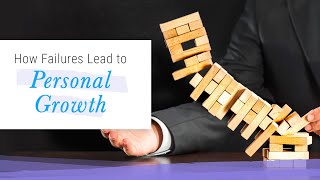
Jack Canfield argues failure is essential to learning and faster success. He shares how he charged $25 for his first therapy client in the early 1970s and moved a seminar exercise from Sunday to Saturday after feedback. He teaches four questions to transform failures into wins: why it happened, where's the silver lining, what you can learn, and where you go from here.
Chapters
You know, in my teaching, I talk a lot about the importance of making failure your friend. And this is a key principle of success. After all, making mistakes is how you learn. Failure helps you understand what not to do in the future. But recently someone asked me, okay, Jack, so exactly how do I make failure my friend? When I make an effort and I don't get the desired results, how do I turn that failure into a win? And that's a great question. So today I'd like to show you how your failures can lead to personal growth. You're also going to learn four powerful questions that you can ask to transform any failure, no matter how big, into your future success. Now let me share a couple of experiences where my failure led to success in my life. Where my willingness to fail and make mistakes were what allowed me to get better at what I was doing and eventually become very successful at it. Back in the 1970s, I spent several years as a psychotherapist in private practice. And like anyone who's a coach, a therapist, a consultant, a speaker, a massage therapist, a yoga instructor, or a teacher of any kind, there's always that first day, that first class, or that first client. And I clearly remember my first client, he was a professor from a local university. And we had a one hour session together. This was in the early 1970s. I remember the fee was only $25 for an hour. I remember feeling at the end of the hour that I had not really helped him much. I had taken a tact that proved to be unproductive in helping him move past his block. And at the end of the session, when he went to write me a check, I told him that I didn't feel that the session was that fruitful. So I declined to take it. But I told him that I was going to know what to do better next time. And he seemed satisfied with that and he agreed to return the next week. Now, during that week, I consulted with my supervisor and we developed a protocol for the next session based on what had transpired during the first session and the next week, I used that approach and we were successful. Now, it would have been easy to have given up after that first session and told myself I didn't have what it takes to be a good therapist. But instead, I learned from my failure and carried on. And eventually I became one of the best therapists in western Massachusetts. Now, the same thing happened when I started conducting large group trainings under the title of the Self Esteem Seminar. I had taken a lot of trainings and put together a lot of exercises I thought would help people build high self esteem and strong self confidence. And I scheduled my first weekend workshop in Los Angeles. And one of my favorite and most powerful exercises was something called the Total Truth process, which helps people release long suppressed negative emotions and return to a state of love, joy and inner peace. A mistake I made was doing the intense emotional release exercise on Sunday afternoon pretty much at the end of the seminar. When I read all the feedback forms from the workshop, I realized I'd left people way too raw and open at the end of the seminar without enough time to integrate the experience and get everyone back into a purely positive state before sending them back out into the world. Now, armed with that feedback, I moved the exercise into Saturday afternoon in the next workshop. And it all worked out perfectly. But I never would have known that if I hadn't just started with my best shot and then learned from the mistake and corrected it. Now, successful people know that to succeed faster, you have to be willing to fail faster. If you want to succeed, you are going to fail. It's not a question of it, simply a question of when and when you try to achieve something you've never done before. You're going to make mistakes and experience setbacks. It's an inevitable part of the process. And making mistakes is how you learn. You see, the secret to success isn't learning how to avoid failure. It's learning how to respond to failure in a way that gives you the information and the expertise you need to improve your performance and get better results in the future. So I'd like to teach you four questions to ask yourself after every experience of what you call failure that will help you make failure your friend and transform every mistake into a future win. So the first question is, why did this failure happen? What were the causes or factors that resulted in the situation? Dig deeply into that. The second question is, where is the silver lining? What are the positive aspects of this failure? In what ways is the situation not a total loss? Then a third question is, what can you learn from this? How can you do better next time? What help and what resources do you need to get a better outcome in the future? And the fourth question is, where do you go from here? What are the next steps you need to take to mitigate the effects of the failure and leverage this experience into a future win? Now, if you ask these four questions every time you experience failure, I guarantee you'll be able to bounce back faster and transform every failure and into a win that will catapult you closer to your goals. You know, Winston Churchill once said, success is not final, failure is not fatal. It is the courage to continue that counts. So this week I want to challenge you to think of a recent failure you've experienced, something that's been holding you back, maybe from making real progress toward your goals. Then ask yourself the four questions I just shared with you to determine how to make that failure a learning experience that catapults you forward. Because failure is not an obstacle to success, it is a step toward it. But giving up or refusing to learn from your failure is an obstacle to your success. So keep taking your best shot and then learn from them. The faster you try something and see how it turns out, and then make the necessary corrections, the faster you'll grow and eventually succeed. And let me know what you think in the comments. Thanks again for watching. And remember, you can achieve anything you can imagine in life as long as you just take that first step now. If you found this video helpful, please make sure you like it, share it with a friend who may need it, and subscribe to my channel for more videos like this one. And for some additional exercises and tools for self improvement, make sure to visit jackcampfield.com and check out the links in the description below.