How to Lead a Successful Workshop | Jack Canfield
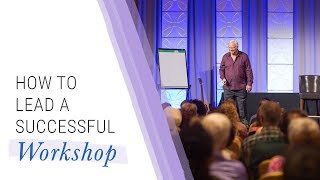
Jack Canfield walks through his methodology for designing and running workshops. He covers defining outcomes, using icebreakers and small-group exercises, teaching core principles like taking 100% responsibility, and securing action commitments from attendees.
Chapters
Hi there, I'm Jack Canfield and today I want to share with you how I think about and organize any presentation or workshop I do. If you want to become a successful thought leader, author, speaker, workshop leader, or you simply want to share your message with the world, you must understand the thought process necessary to get the result you want. And today I'm going to share with you my very own process, what I call the Canfield methodology. A formula for success I use every time I speak, whether it's for an hour or for a week long workshop. First, I want you to think like you were building a house. When you build a house, you have to start with a blueprint. You don't just keep your vision of the house that you're going to build in your head, right? If you've ever built a house, you know that would be an expensive mistake. You think about all the details, the size, the amount of rooms, the layout, the overall feel you want, where the plumbing goes, the electrical, all that stuff. It's all very important to have it all clearly in your mind that you can refer to. And you need to do the same thing when you're designing the content for your workshop or for a speech. Start by determining what is the desired outcome you want for your attendees? Is it to help them find their true purpose? Improve their business, increase their income, Learn a new skill, develop a new habit? You see, determining the purpose will then help you determine who should attend your workshop or your talk. How many people should it be and where should it be held? And of course, it's important to know who your audience is so that you have relevant examples and stories that they can relate to. For example, if you're speaking to a woman's group, you. You probably don't want to only use a bunch of sports analogies. In my work, I use a pre programmed questionnaire that is filled out by the meeting planner or the individual attendees who will be coming to the workshop so I'm clear on what outcomes we are looking to create for them. Now I'd like to share a template that I use that provides me with the structure I need to stay on track and cover all of the key ingredients I've discovered that make a presentation clear, that make it engaging and that make it memorable for your audience. First, you have to start by engaging your audience. Clarify your purpose and your goals for the seminar of the talk. What is the central purpose of your event or presentation? What do you want people to go away from the seminar? Knowing and experience and being or doing. Next, you have to set the tone for the day, tell your audience why this message is important to you. What I refer to as your why. What makes you so passionate about what you're going to be sharing with them? Tell them the story, perhaps of how you became so committed to sharing this subject. And the more open and transparent you are with your audience, the more connected and safe they will feel with you. Next, you want to include some kind of humor. You can tell a funny story, you can add cartoons into your presentation, or you can show a funny video. No matter how serious your topic is, using humor is the best way to connect with your audience and get everyone relaxed. Next, I introduce an icebreaker activity which is specifically designed to create a safe space and give you and the group a chance to bond quickly and efficiently. It could be as short as a 90 second exercise, a short 5 to 10 minute game, or even an hour in a longer workshop filled with several short exercises and done in a specific order to create a specific effect. Now you can introduce an exercise to complete in small groups, or simply have everyone stand up and walk around the room and share two things they're grateful for or why they chose to attend your presentation, what they're hoping to get out of it. So use your imagination and always demonstrate what you're asking them to do before you have them do it. For example, if you're asking them to share a recent success they've had or or to share one thing they hope to take away from the presentation today, tell them how you would answer that question before you have them do it. And again, be totally honest and transparent so the group gets to see that you're human too. This will build huge levels of trust in the room. Now, the fifth thing I focus on is you've got to take time to give them what they came for. Introduce a concept or principle that will deliver on your promise to them and why it's important. In my case, I typically start with the first principle in my book, the success principles, which is to take 100% responsibility for your life and your results. This is the fundamental principle that everything else I teach stems from. Now, after introducing the concept, create credibility by sharing any research, any statistics, any case studies that validate what you're teaching them. Seventh, then go ahead and drive your message home with a story that will illustrate the concept. Stories are a great way to Velcro your message or your concept that you're teaching into their long term memory. And stories keep your audience engaged. Everybody loves a good story and it's even better if it's a story from your own life. Now, that's not always possible, but personal stories have the deepest impact. The eighth principle is in order to appeal to all types of learners, I typically follow up with an interactive exercise or demonstration. To drive the point home even deeper, I like to ask for a volunteer and invite them to come up on stage with me and do a demonstration for the whole group, which works best for shorter presentations and workshops. Or I might have them fill out a worksheet and then get into groups and share their answers with each other while I walk around and help them. With some groups, I have them do a total group activity like a meditation or a guided visualization. Number nine. At the end of the workshop or the concept you're teaching, I like to wrap it up with a debriefing session. Now, you can do this by putting people in pairs. You can put them in a small group of three to six people, or you can simply have a few people share their AHAs and their awareness in front of the whole group. Now, this also gives the participants the opportunity to ask questions if they're feeling stuck or for something they don't understand. Now, if one person has a question, there's almost always other people who have that same question. While you're doing this, honor and celebrate the level of trust that has been established so far in your presentation. It's best to be impartial to their feedback in this part of the session. Don't necessarily evaluate their ideas or contribute more, but definitely encourage their input and then go ahead and listen to what they have to say. Number 10. One more step. When everything has been reviewed, get everyone to commit to one action step that they can take to get them closer to their goal or closer to applying what it is that you've taught them today, and then have them write it down. Better yet, have them commit it to a partner, which we call an accountability partner that they have to call or send an email to once they've completed it. That makes people take it really seriously. And lastly, and very important, make sure that you have a clear transition when you're moving from one concept or principle to your next one. And once you've introduced your next principle or topic, all you need to do is repeat the same steps we just went over again. And when you've reached the end of your workshop, whether it's one hour, a full day, or many days, have a final closure exercise and then wrap that up with a powerful story that will emotionally move them and and have them leaving motivated and inspired, ready to go home or back to work where they started from, to go from where they are to where they want to be. Oh, one more thing. Remember, whenever you can use visual aids, whenever you're running a workshop or speaking, there are basically three types of learners auditory, visual and kinesthetic. And if you follow the formula we've been discussing, plus some PowerPoint or keynote slides, you will have accommodated and reached all three types. And that's how you think like a trainer and lead a compelling and engaging workshop. But of course, feel free to modify the outline I provided to make your workshop your own. Thank you for watching and remember, nothing will change for the better until you do. Now, if you found this video helpful, make sure you like it, share it with a friend who may need it, and subscribe to my channel. For more videos like this one, and for some additional resources on how to train others to be successful, visit my website@trainthetraineronline.com thank you for watching and remember, you too can make a big difference in the lives of others.
More from Jack






[EP 46] Creating Your Own Luck: The Power of Self-Confidence with Veronica de Andrés

[EP 45] Rewiring the Brain for Bliss: Activating Your Spiritual Intelligence with Dr. Dawson Church


[EP 43] Transform Your Life Through Visualization and Emotional Intelligence with Natalie Ledwell

[42] Enhancing Your Health & Longevity Through Peptides and Functional Medicine with Regan Archibald

[Episode 41] The Success Principles 20 Years Later: What’s Changed and What Still Works