Love Your Life: Creating Clarity, Purpose and Passion with Jack Canfield & Marci Schimoff
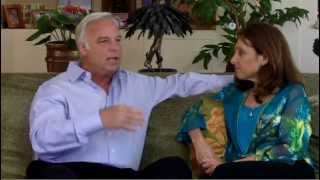
Recorded interview from the Love Your Life Summit in which Marci Schimoff interviews Jack Canfield about his career (notably Chicken Soup for the Soul), personal practices, and practical guidance for following joy and life purpose. Canfield discusses following intuition, distinctions between success and fulfillment, removing limiting beliefs, daily disciplines (gratitude, Rule of Five), and his Breakthrough to Success seminar.
Chapters
This is Marci Schaimoff and welcome to the Love youe Life Summit. 21 years ago I had an experience that changed my life. And it happened to do with Jack Canfield, who's sitting here with me today. I would not have imagined 21 years ago that I would get the privilege and honor of not only having Jack as someone that I'd be interviewing today, but as a wonderful dear friend and my mentor in this life, one of my main mentors. So I'm very, very excited about today's conversation that we're going to get to have together. So let me tell everyone about you, Jack. Everyone knows all about you, but I'm going to tell them about you even more. So you probably know Jack Canfield as the co creator of the New York Times best selling series Chicken Soup for the Soul. The series currently has 215 titles. I was numbered three or two actually. And more than 125 copies in print in 47 languages.
Well, that's correct. That's more than 125 copies. I think you meant to say 125 million million copies. Let's do that. Here's what's really cool. Let me just. I'll be part of my own introduction. We just found out, I don't even think you know this, that last year in china they sold 350 million chicken soup for the Sole books. So according to the people that keep numbers, yeah, we're up to 500 million copies. That's a half a billion books sold.
And I don't think the second best selling book series has got to be maybe less than 100 million. So the contrast between that.
Yeah, it's huge.
That's amazing, Jack. So Jack is also the founder and CEO of the Canfield Training Group which trains entrepreneurs, corporate leaders, managers and sales professionals in how to accelerate the achievement of their personal, professional and financial goals. Jack's personally helped hundreds of thousands of people on six different continents become multimillionaires. Business leaders, best selling authors, leading sales professionals, successful entrepreneurs and world class athletes. While at the same time creating balanced, fulfilling and healthy lives. Jack is a dynamic speaker. I've heard him speak hundreds of times and every time I'm still completely engaged. He was recently inducted in the National Speakers Association Speakers hall of Fame. He's appeared on more than a thousand radio and television shows including Oprah, Montel, Larry King, everything that's on tv. He's been in the hit film the Secret, which I'm happy to be there with you and the Opus which I'M happy to be there with you and beyond belief which I'm happy to be there with you. And he's been in a number of others. Jack's best known success resources are his best selling book the success how to get from where you are to where you want to be. The power of focus, the Aladdin factor, maximum confidence, self esteem and peak performance. And Jack Canfield's key to living, the law of attraction. All of these resources consist of powerful strategies and techniques that are designed to at a minimum, double your income and double your time off in less than three years. He's been presenting these powerful principles for over 38 years. And so for those of you who don't know this, one of my favorite things in life is getting to have my name next to Jack Canfield's on the COVID of Chicken Soup for the Soul books. Jack, you have without a doubt changed my life. And I mean there is nobody who on a professional level has been more generous and more someone that I saw admire and who has. You've changed my life. You have brought me through the ability to do the Chicken Soup for the Soul books and your incredible generosity in inviting me and my partner, business partner that I'm Jennifer Hawthorn in to do those books with you. You've taught me so much. You are, I just, I so respect who you are as a person. Your integrity is complete. You have a full heart. You're the whole package. And you from the bottom of my heart, Jack, you know you've changed my life and you know how grateful I am. But I want to tell everyone this is the man. So this is the man. Thank you, Jack.
Thank you my dear.
And thank you for being here with us.
It's a pleasure. I think I should join a 12 step program on how to stop writing books. Listening to all that was.
Well actually and we're actually Jack's beautiful home. And Jack, you have more books than anybody I've ever met. You have what is latest count, 5,000 or more in your library.
It's about 5,000, yeah.
You know what I love is that you are a continuous learner to the nth degree. Can we give your age?
I'll be 67 in August of this year.
And you have not slowed down. You just told me your schedule for today. It starts, you know, early in the morning, goes to very late at night. And you love what you're doing.
I do.
And you are when you sit and learn, you go to seminars. Jack is always in the front row. He's writing everything down. He's trying it out in his life, he's applying it. And I think that you. So walk your talk. So let's find out from you. What have you done? What do you feel has been the most important things in your life that. That have brought you to loving your life the way that you do now?
Well, I think there's a lot of things that have created that. Number one, I've always followed my heart. I believe that as many teachers are teaching today, that if you follow your joy, Joseph Campbell said, follow your bliss. Abraham says, do that which brings you joy. And if you do that, that's your internal guidance system that tells you this is what is for your highest good. This is what's going happen to. To take you to the fulfillment of your vision, your purpose, your intention, what you're here for. I believe each of us is born with an inborn purpose. Just like, you know, a chrysanthemum can't be a carnation, and a carnation can't be a rose. Jack Canfield shouldn't try to be like, you know, something else. What?
Don't try to be like anybody else.
So I was trying to think of someone else's name. I couldn't even think of who else I wanted to be like. But anyway, the idea is that for me, always, from the time I was a little kid, if I was interested in collecting baseball cards, I collected baseball cards. When I was tired of that, I played marbles. I became the marble champion of our neighborhood. I always just went for that which attracted me. You know, the law of attraction talks about attracting things to you. But I also believe you have to let yourself follow that which you're attracted to. And so whether it's a certain study of, you know, field of study or whether it's certain kind of music or a place you'd like to vacation or whatever the people you're attracted to is to. I always allowed myself to follow that. I never let anything stand in the way. You know, when I did the first Chicken Soup for the Soul book, everyone in our company was saying, that's a stupid title. We're trying to be in the business world. People are going to judge us as being woo woo and weird.
I was, by the way, one of those people that thought, oh no, he's not going to go out with the title Chicken Soup for the Soul, right? I'm glad I didn't say that to you though. I'm glad I did.
I had one staff person in my company quit over it. And the person that runs my foundation Told me he thought it was the worst decision I'd ever made professionally. Because at that time we were really targeting our work into the corporate world and professional associations. But I knew in my heart I had to do this, and so I did it. And, you know, now Chicken Soup is a soul, is a brand. You know, it's worth hundreds of millions of dollars, and it's an expression.
People say, well, that's. Oh, that's so Chicken Soup for the Soul.
Yeah. Well, I remember in New York, you know, when they were. We got feedback when we first tried to sell the book, you may remember, we had 144 rejections of, you know, people saying it's a stupid title. People don't read short stories, you know, whatever. And, you know, we just stuck with it. And now in New York, when a book isn't very emotionally moving, they say, could you make it more chicken soupy? You know, so it's become a genre. Motivational inspirational stories. I have a collection probably of 300 books that will tell you they owe their existence to the model that we created with Chicken Soup. And so I think whatever you call it, inner guidance or following your soul's impulse or trusting your gut or your intuition, whatever that is, if you do that, then you're going to have success and you're going to have fulfillment. See, I think I make a distinction between success and fulfillment. Success for most people is related to financial success, you know, having the perfect spouse, lots of vacations, travel, whatever it might be. And for years I thought that success was the, you know, ability to produce a result. So if I wanted a great relationship, I could do that. If I wanted to raise healthy children, I could do that. If I wanted to become a millionaire, I could do that. But in the last few years, I've redefined my definitions. Success as the fulfillment of your life's purpose. If you fulfilled your life purpose and you may not have become wealthy, you may have been a poet your whole life and lived, you know, on the edge. I have a son who's a hip hop singer, lives in San Francisco, and he's not rich by any means, but he's, you know, wealthy in terms of money, but he's rich in terms of experience, self esteem, the joy, the connections and relationships and his creative process of unfolding. And he's done, like, self produced something like nine or ten, ten albums. He's well known in the Bay Area, and he's a happy kid. So it's a matter of fulfilling what you came here to do. And when you do that you live a happy life.
I think that's a huge distinction. I mean, I think that we as a society are so trained to think that success is these exact things like the money and the right house and all of that. So how do people break free from being mindset and that training to really feel the freedom to say, okay, I know that real success and fulfillment is going to come from living my life's purpose instead.
First I'll tell you a story that we published in Chicken Soup. It comes to mind and then I'll answer your question more directly. But the story is about a fisherman in Mexico who took every Saturday off. And he's sitting there on the dock and this American tourist comes by. He's a businessman. And he says, they start talking and he says, you're a fisherman? He says, yeah. He says, why aren't you out fishing today? He said, well, I'm just taking some time off to enjoy the day. And he said, well, you know, if you were out fishing, you'd make more money. If you made more money, you could buy more boats and you could have more people fishing for you. Eventually you could have this big company of fishermen. And the guy said, well, why would I want to do that? He said, well, then you'd be able to take days off and do whatever you want. He says, I'm already doing that. Why would I work so hard? And so I think we have to give up this conditioning that we all got from our parents. And I can see it in my own home. I have a 17 year old daughter and you know, I'm a much more laissez faire kind of parent and my wife, and there's no right or wrong here, but she's always pushing her. Get your homework done, get good grades. And I know all kinds of people who never graduated high school or college. You know, I think it's a good thing to do, but if it's really not part of your purpose. And she's. My stepdaughter's a singer and an artist, amazing singer. She writes already, college level and she's just not all that excited about, you know, English and biology. And so the reality is that I know she'll turn out well and I know she'll turn out fine because she'll follow her heart, which she's doing right now. And so we have to get past that conditioning that we all got as children, that we have to work hard, sacrifice now for the future. I think working hard is important, but I think you have to work on something you're pet about otherwise hard work. Just like is misery, it's suffering. It's like we start to learn that I have to suffer to be happy. And you can't be suffering and be happy. It's just. I mean, you can be in prison and be happy, but it's your attitude. But if you're doing something you hate and you don't feel like you have a choice about it, and you're striving to get these symbols, what I call symbols of success. See, most people really want the experience of success, but they've now attached it to the symbols because they see successful people and they have the Rolls Royce and they have the Mansion and they have all this stuff. They think, well, if I have that, then I'll be successful. The fact is, those are just manifestations of someone that's living their dream, pursuing their passions, etc. So I say go directly for the experience. Well, why do all people want to be successful? They'll tell you, I want to be happy. You know, I want to be free. I want to be able to express myself. We. You can do that now. You can do that right now. So if you trust the universe and trust the designer that made you, and I do, then I go back to if it's making you. If you feel joy. And I make a distinction between joy and the idea of just momentary pleasure. So we have a lot of people who are addicted to gambling and sex and drugs and alcohol. And those things may feel good for a moment, but they're not the things that really sustain us. True joy is a different experience than that. And it's. I don't know how to explain it, but when you have it, you know it.
Yeah, I talk about unhappy for no reason. I talk about people because they're unhappy. They go for happiness for bad reason, which means I'm going to use these addictions so that I can feel a temporary state of happiness. But what we really want is causeless joy, which is, you know, happy for no reason. We want to have that experience of feeling freedom, of deep fulfillment in our heart that isn't dependent on any particular circumstance where, you know, anywhere you could go, you would feel that because you carry it with you. That's what people really want most deeply.
Well, we live in a world where I can't remember any course in school called Joy101, or how to expand your capacity to love. I mean, all the things that people feel pain about in their life, you know, loneliness and in a sense of not connected to their purpose, not fulfilled that's not being addressed in the schools. I always say nobody ever got divorced because they didn't know the seven causes of the Civil War. They got divorced because they didn't know who they were. They didn't know how to express who they were. They didn't know how to defend who they were in a sense of having boundaries in their life and so forth. And when you can learn how to produce joy, or it's not even produce it, it's allow it. I think you know Ram Dass, a great spiritual teacher who spoke at my college when I was a graduate student at the University of Massachusetts. He came in and he said, I'm going to talk for four hours. At some point, you're going to hear what you need to hear. And you can leave then because it's just a big screen of projection. And I have a lot of wisdom, and you can't possibly integrate all this. But you'll hear one thing tonight that will change your life. And I think one of the things I heard several things, but one, and I did leave before it was over. I was so full. But one of the things he said was the sun always shines. The sun doesn't look down on New Orleans and say, oh, you've been bad today. You have Mardi Gras. Everyone was getting drunk and having sex. No, the sun just shines because that is the nature of the sun to shine. And so it's not about necessarily, you know, creating something. It's about removing the blocks that are allowing that to come out. When I've had three children and two stepchildren, and when they were little kids, they were just always real. They were happy. They were transcendent most of the time, unless you got in their way. And then they get a little temper tantrum about being kept from what they wanted. But generally, they were curious, they were happy. They could play with the cat's tail for an hour and a half, just being in that moment of presence. And so I think what happens is, I use this metaphor that came from a trip I had when I was in Bangkok, Thailand. We went to see the Temple of the Golden Buddha. And this Buddha is about 10 and a half feet tall. It's solid gold. It weighs several tons of gold. It's considered one of the largest gold objects in the world. And it's worth $196 million if you just melted it down and made earrings out of it, as opposed to the iconic religious value. But we were watching it, we were in the temple looking at it. And I Looked off to the right, and there was a case, a glass case. This case was a piece of clay. It was about that wide and about that tall and about that thick. And it said that in 19, I'm going to make up a number, like 15, something like that. They did not know they had a golden Buddha. They thought they had this big clay Buddha and they were lifting it to move it from one side of Bangkok to the other because the temple was being relocated. And the crane slipped and a big crack went down through. And they were freaked out, like you've broken the David or the Pieta or something. And so they covered it with a canvas because it was starting to rain. And that night they shined a flashlight in to see if it was staying dry. And they noticed that the was something reflecting back light from inside the crack. And they said, well, clay doesn't reflect light. There must be something else in there. You got to remember this thing was about, you know, 10 inches thick. So they chipped away in the back where it wouldn't be seen if they screwed up. And lo and behold, they found this golden Buddha. And their best theory was that 300 years earlier the Burmese were attacking Thailand and that they knew they were coming and they covered up the Buddha and covered it with clay and painted it so it would look worthless. They think all the monks that knew the secret were massacred by the marauding armies, and so the secret died with them. Now, the word discover means to take the COVID off of that which is already there. Like Columbus didn't discover America. America was already here. But he did take the COVID off the ignorance that it existed. And so I think that each of us is like a. We're like a golden Buddha, a golden Christ, or however, whatever metaphor you want to use. There is a spiritual essence within us. Call it your soul, call it your purpose, call it your natural being, your wonder child, you know, whatever. And that is wanting to radiate out. And what happens. I think Buckminster Fuller said there's no such thing as a genius. He said some people are just damaged, less meaning. We get de genius by our school, by our parents, by the bullying that occurs in our. In our world, the conditioning, you know, other kinds of things, toxins in our body and so forth. So I think that happiness, joy, love exists within us. It's simply a matter of removing the obstacles, the negative thoughts, the limiting beliefs, the emotional wounds, whatever you might call it, that are stopping us from allowing that, you know, the fear, etc. And it's like another metaphor. I Use in my trainings is it's like we have a diamond in us. We cover it with a ball of manure, which is all this negative stuff. And no one wants to go around and say, hi, I'm a ball of manure, right? So we then put nail polish on top of the manure. Now we walk around like these little balls of, you know, like billiard balls, all looking shiny and our body suits and our Mont Blanc pens and our Porsches and so forth. But we're afraid to look inside because when we take the nail polish off, what we see is manure. And yet what we forget is underneath that is the diamond. And if we can all remember that, then it's willing, we're willing to go through that, letting go of the fears and the wounds and the negativities and all that and get back to our true essence.
Well, you know, you've always taught that. And I just want to let everyone know, actually, how I ended up meeting you, because it relates to this story and this whole idea of following your passion. And I don't even know if you know the backstory on this.
I may not.
So I had always known. I'd seen my first motivational speaker when I was 13. I saw Zig Ziglar many years ago, and I knew that's what I was supposed to do. And I knew that I wanted to teach something about how we could find that inner beauty and essence inside. Self esteem was the term in those days. And I was working in a corporate training, and I was teaching business writing, and I was teaching stress management things I didn't particularly want to be teaching, but it was at least giving me the training that I needed. And I knew it was time. My heart said, it's time to study self esteem and to study how to have people really have that experience. And so I did some research. This was in 1989, before the Internet was around. I didn't have a computer. And I did some research on who could I study with in self esteem. And this guy's name, Jack Canfield, kept coming my way, came to me three times over a period of two weeks. And we know the rule that if you hear something at least a few times in a short period of time, you got to listen. So I called, send me money, Send me money. Okay. So anyway, I listened and I did some research. And Jack was teaching his course at the time. It was called the Self Esteem Training Facilitating Skills Training. It's now called Breakthrough to Success. And I said, that's it. I'm Going and I brought my best friend with me, Carol Klein, who's also my co author on many books. And we went and I sat in that class and in the first five minutes that you spoke, I said, this man knows what he's talking about and he's living it. This is my mentor. And that was four years before Chicken Soup for the Soul ever came out. So it was, you know, before all of that was happening. And you really teach people back then. So for the last, and I think you did it of course before then too, for the last 35 years of your career, you've been teaching people how they can remove the blocks to the experience of their inner exquisiteness. And what do you think are some of the biggest obstacles that people have to that experience of their exquisiteness? And especially as it relates to doing their life purpose and living their purpose?
Well, I think, you know, there are a number of things that keep people from. Let's break that into two different questions. The exquisiteness is that it starts with self awareness. So there has to be self awareness, self acceptance, self expression. Then you get self realization and self actualization, a lot of selves. But anyway, the idea is that I can't appreciate something I doesn't, I don't know exists. So I have to first, especially if you're a normal person that's been wounded by all the kind of growing up of a western culture, it's universal. But mostly I work with people in Europe and America, but in Asia as well. But the point being that we have to become aware of what's in there. So there's a number of activities that I have created that allow people to really connect in through visualization, through, you know, exercises back and forth. You're getting feedback from people about, you know, the magnificence that I see in you. I mean, most people, when I ask them to simply say, you now have 90 seconds to tell people what you love, admire, appreciate and respect by yourself. Most people can't fill up 90 seconds and by the end of a week long workshop, they could probably wax on for five minutes, you know, because they've gotten so much aware of what's in there in terms of their qualities, their strengths, the love, the compassion, the patience, the fairness, all that stuff that most people don't think about because we haven't directed our attention there. I think the next thing you have to accept all of you and that includes, you know, there's new work. This is very interesting. I just read this article yesterday. The new work involving in this whole work about self is what's called self compassion. Self esteem is often with parenting based on rewards for things you didn't really do. And so we're pumping up self esteem when it wasn't earned. And you don't have to have earned self esteem in the sense that just, you know, God, don't make junk, that kind of idea that who I am is beautiful. But there's another kind of self esteem. There's lovable and capable. So the lovable part of you is all of you, including your sadness, your fear, your grieving. And I think for a lot of times, people have tried to be this perfect person and not own the essence of who they are. And that sometimes I can have feelings and I can be lost, I can be depressed. We have this ideal that I should be happy every minute. And I think it's possible for some people. I think we have the gurus that probably have achieved that. But I remember this one story about a guru in India who said that everything's an illusion. He was happy all the time because he realized he was just living in this Maya. It was all illusion. And his son died, and he was crying. And his disciples said, master, you said, everything's an illusion. Why are you crying? Your son was an illusion. He said, I know, but it was a bigger illusion than most. So I think, you know, there's this attempt sometimes to deny the human side of us and that we have. We have all these emotions. You know, we do have anger. And sometimes, you know, Christ got angry at the money changers in the temple. There is kind of an anger that comes out of when your rights are being violated. You know, you stand up for yourself. And we have sadness when we lose something. And, you know, I don't experience a lot of grief because I realize people are walking, I love the metaphor, walking from one room in the house to the other when they die, that their spirit and essence goes on. But as much as I know that there are certain things that have left my life that I've grieved over, research says that if you cut your hair, you actually have a small grief. And if you don't think that's true, talk to most women after they get a hair dyed or get their hair dyed not quite the shade they wanted. They've lost that image of who they were. So I think we can be happy most of the time and we can let go and work on letting go of the things that keep us from that. But I do also believe that we have to acknowledge that my sadness, my anger, my Ambition, all those are parts of me I once read. You know, you introduced me in this video. And there's a guy named Robert Resnick, who's one of my mentors, who was a gestalt therapist. And I remember once his bio in a brochure went something like, robert Resnik is a therapist. He is sometimes happy, he's sometimes sad, he's sometimes angry, he's sometimes very patient and accepting. And he went on with all these polarities. And I remember getting dinner and just smiling like, God, that's so honest and true. And as you know, my wife Inge is absolutely the most spontaneous person you've ever met, and very transparent and very real. And people love her realness. What you see is what you get. And I think, you know, Scott Peck wrote a book called People of the Lie, which was about spiritual teachers and leaders who try to hide their human side. You know, we see all these scandals right now about people having affairs and so on and so forth. And you find people that were having affairs crucifying people that were having affairs, you know, in the public light. And so there's this projection and disowning of parts of ourselves. So I think we need the more of us we own, the more compassion we have. And the more compassion we have, then those things that are, like, self destructive, they tend to fall away. But when we judge them and push them down, they're like in this. Do you ever leave something in the refrigerator in the back for like a month? You didn't really get a potato salad. There's a big green moldy thing growing. Well, that's what happens when we reject parts of ourselves. So it's important that we accept all of ourselves. What stops us from being successful and stops us from being, I think, ultimately fulfilled. To be successful and be fulfilled, you first have to know, what is my purpose? Do I have a purpose? And I believe we all do. But how do I tune into that? There's a bunch of techniques from guided visualization. There are psychics you can talk to. There's what I call a joy review. You look at your life and say, when was I happy? And usually you find a pattern. Like, one of the women I write about in my book, the success principles was Ms. Virginia and Julie Lapley. And when she was at Ohio State University, she thought she wanted to be a veterinarian because she studied. She loved animals. Everyone said, oh, you should be a vet. You love animals. Well, she loved animals. What she didn't like was biochemistry and anatomy and all that stuff. And she was miserable. And she just one day woke up and went, I'm not happy. When was I happy? And she said, I started doing a review of when I was happy. I was most happy when I was a leader. I was a leader in my school. I was on a student council. I led different teams that I was part of. She said, I led debate teams and all this. And then she said, when I was at Ohio State, they'd have these leadership conferences where all these people would come from different high schools and then she would lead and mentor them. And she went, I like leadership. That's what makes me happy. So she went to Ohio State University and said, do you have a leadership program? They said, no. She said, can I design an independent study course of putting different things together I think would help me be a leader. Communication skills. She did media training, speech, you know, all these different kind of things that she studied. And she got the first degree ever from Ohio State University in leadership. And when I met her, she's now about 30, I think when I met her, she was 26, and she was running workshops in the Pentagon for colonels on leadership.
Amazing.
You know, she became an expert in leadership. And then you see her, she's always smiling. And now she's running leadership programs for girls relevant to our women's talk today all around the world. So it's like she found her passion by looking back, when was I happy? And that is the clue. And there are other ways to get there. There's paper and pencil tests you can do. So once you know your purpose, then the next question is, what's my ideal vision of how I would manifest that purpose in all areas of my life. Relationships, health and fitness, financial philanthropy, etc. So most people don't have a vision of their ideal life. You have to have a vision in order to get there. Walt Disney had to have a vision of what a movie was going to look like before they could start shooting it.
Did you have a vision of this? Of the way your life is now?
Kind of. You know, it's very interesting. My uncle was one of the richest men in the town they grew up in. My father was one of the not richest men in the town.
Two sisters, rich dad, poor dad.
Well, yeah, two sisters. My mom married a guy who was, you know, lower middle class, I think made $8,000 a year, that's eight with three zeros afterwards, and worked as a florist. And then my uncle owned the insurance agency in town and probably had investments in about everything else in town. Restaurants, car dealerships, etc. And so he had a mansion and he used to fly to New York to buy clothes and take my cousin to go to see plays and schools and best medical care. Always was reading. Had lots of. Had a nice home and you know, three car garage and a barn and horses and tennis court, swimming pool. And I remember thinking, I want that, you know, and I think it's okay to want what you want. Now I live in a beautiful home and I just saw this movie. I am, I don't know if you saw it.
No, I just saw too.
Yeah, I think it's a great movie. And one of the things he said in that movie I love, he said it's okay to have a large home if you use it. If you use it to make films like we're making today, to have meetings with people. We've had 30 people in this living room out of which we created the Transformational Leadership Council. I've had, you know, salons with Barbara marks Hubbard with 50 people sitting in this room. Marianne Williamson sat on the other end of that couch when she was deciding to run for Congress. And you know, I wrote a check.
I was there too.
You were with. That's right. So the reality is this home and our offices are on this property. So it's, you know, it's three acres and it's a multi million dollar home, but it's being used. You know, it's not like a 17 bedroom house like you talked about in the movie that wasn't being used, which is for ego. So I think I knew. I'll tell you another quick story. Jean Houston, I know you said was in the series. I was taking a workshop with Jean and she had us, we were in Connecticut it on the grass outside and she said, reach down, take some dirt today. I'm not sure anyone could do this because of what we know about bacteria. But anyway, I said take a little piece of dirt, roll it into a seed, swallow the seed and imagine the seed grows into a plant. What is it? And afterwards, mostly women in the workshop, they're going, oh, I saw this daffodil, it was beautiful. This carnation, this little iris growing. I saw this bamboo shoot up and you know what a bamboo, they send out runners. And pretty soon the whole world was covered with bamboo and it was sending out runners to the moon. And then later we had to write a poem out of this gibberish language we created. Done that workshop exercise with me and you know, I was going, so I translated it and it was like the Russian General was covering the hordes of the, you know, going across the steppes of Russia with his hordes of armies. And I thought, oh my God, I'm a megalomaniac. So I said to Gene, I said, I'm really worried about myself. You know, all these images are so huge and overwhelming and over. She said, no, you're not a megalomaniac. You just have a huge destiny. You're going to affect millions of lives before you die. Now this was 20 years before chicken soup. And but I just trusted that that was correct, you know. And I've always lived my life trusting that what I'm attracted to, there's a reason for it, there's a purpose for it. So for me, I never second question my second guess myself. I think one of the things that in the Abraham work they talk about one of the worst things you can do is once you make a decision to start second guessing your decision, you know, make a decision, do the best you can with it, live with it for a while. Not if it doesn't work out, if it's painful, if you're pushing the river, then you can back off at any point. But don't be constantly doubting yourself. That's one of the things that really gets in the way. You know those Bose noise reduction headphones?
Yes, yes.
Well, I actually did some studying on how that works. So here's the wave of the sound of the airplane engine or the kid crying in three rows above. And then they create, that comes into the headphones, it creates the opposite wave. So these two waves are like this going along like that and it collapses the wave. And so when you have an intention, something you want that you feel passionate about, but then you go on, if I can afford that, or what my people think, or my mom might not like it, or my wife. And you've instantly taken this wave and created the counterwave and clone. Now there's no power for that intention to go out in the universe and actually attract to you that what you want, let alone your subconscious mind won't work on it in terms of coming up with solutions for it.
Well, yeah, but now, so what do you do with those doubts that come up and those things, because I think those are, you know, as you know, we think these are amongst the biggest obstacles that we have to really having that vision be created, manifest. What do you do?
I just had to send me to like a aerosol can, you know, like, like rage. You just spray the doubts in the dog.
But no, if you have, if you package that and have it in a can. I'm sure that you will. That will be as successful as chicken soup.
If I can come up with it, I would. That's right. No, I think what you have to do with that. This goes back to self awareness. Why meditation is so important. Most of us live our life unconsciously. In other words, we're having thoughts, we're not aware we're having thoughts, we're just having them. They're just like, almost like the air we breathe. We don't notice them. If you meditate or if you do affirmations or if you do any kind of self awareness, self help work, you start noticing. I was working with a client today on the phone, a coaching client before this interview, and he was saying, I'm really afraid. I've got this 15 minute product I want to do and I've rewritten it and rewritten it and rewritten it for a month and I'm still not ready to do it. I'm just so afraid. And I said, well, what do you. How are you? I said, how are you scaring yourself? Because to have fear, you have to be in the future and you have to be imagining something bad happening. Even if I have a gun to your head and you're afraid you're still in the future. You're afraid I'm going to pull the trigger and kill you. That's what's scary about it. Not the metal touching your head. That's not scary. It's the image of like I'm not going to be here any longer, that thought. So if I stay in the present, 99 times out of 100 things are fine when they're not. Just do something, you know, respond to the situation.
Yeah, yeah, yeah.
But mostly there are situations in our head that don't exist. So when a doubt comes up and, well, so when you, when you first become aware of the doubt, you have to notice it. So if I'm not happy, if I'm in pain, if I'm struggling, if I'm, you know, worrying, whatever, stop and say, okay, what am I thinking? You know, many of the people say, think a better feeling thought. Because all thoughts create feeling. So create a thought to produce a better feeling. We'll give you an example. I live in a town where all the men are taken. There's no men available. The women, you know, they're all married. So that thought will make you miserable if you're single. But if you say, well, wait a second, how did all those women get married? There has to be Someone around, you know, the perfect guy is not in my field of vision right now, but he's on the way. Now, if I order a pizza from Domino's, I know it's on the way. If it doesn't come within 30 minutes, it's free. So they're working on it. And let's go back to doubt for a minute. If I call up Domino's and I say I'd like a pizza, and they go, great. They give me the address, and I call five minutes later, how's my pizza doing? I started worrying about it. I'm wondering if you're gonna send it. Now. If I do that every five minutes for a couple days in a row, every time, they're gonna put me on the don't pick up the phone list, right? And it's like the universe does the same thing. So the first thing is become aware if I'm not happy, if I'm not producing results, what is my thinking? What am I thinking? And then say, okay, what is the opposite of that? What would be the opposite? So, you know, this person who was afraid to produce his product, he said, I'm afraid of success. I'm afraid of failure. If I'm successful, people are going to judge me. I was an overnight success. He didn't deserve it. He hasn't worked that hard for it. If I'm successful, people will come to me. My family will all want money. They're going to like. I won't go. If anyone likes me for me. You know, that big fear a lot of rich people have and successful people have. But I said, so what? You know, a lot of people can come to you for money, say no. A lot of people are going to like you. Not for you, but for your fame. Some of those people will be fun to hang out with. You know, I wanted to be close to Ken Cragan because I thought he was a neat guy to be around. But as I got to know him, I really liked him, you know? So there are people that are attracted to me that are not for any kind of reason other than, oh, Jack Canfield. Maybe it'll rub off, or he'll endorse my book or whatever. And some of those people have become lifelong friends. Others, I just write them off. They're not for me. There's no simpatico. So basically, when the doubt comes up, think about what would be the opposite feeling that would make me feel good or thought that would make me feel good, and then choose. This is where intention comes in. You know, we can choose to bring our attention back to something we get so distracted by. One of my friends calls shiny things, you know, things that really aren't that important, but they're sparkly and they're distractions, you know, but we have the ability to focus. Like right now, everyone watching this, you're probably not aware of what you're feeling in your right foot. But as soon as I say right foot, you're aware of it. Now, if I go on talking about something else, you'll lose track of your right foot. But let's say your life depended on every five minutes paying attention to your right foot. You'd probably set a timer, you know, so you wouldn't blow that and die. So the idea is, when we know how important it is to focus on our thoughts, surround ourselves with positive people, positive books, like, you're happy for no reason. And what was the first one you did?
Love.
Love for no reason. Second one was love for no reason.
Happy was first, then love.
Happy. Okay, love. That's right. The second one. Yeah. And, you know, whatever. You read books like that, what happens is you end up feeling better because you're surrounded in a thought form of positivity. What radio stations do you listen to? Do you listen to Fox News and cnn? Someone said CNN is constantly negative news. That's what it stands for. Or do you listen to something uplifting like a talk show like this where you're learning new ideas, or listening to a CD in your car rather than the country station that has songs like I'm lying on my back with tears in my ears, crying my heart out over you, you know, so it's. You have to, like, take responsibility, responsibility for the mental set you live in. And, and, and then the doubts start to go away. And if you read inspirational books like the Chicken Soup for the Soul series, for example, Plug, Plug, Plug. But no, really, we have like, 225 books in this series now. And what happens is all those stories uplift you. And so if you were to surround yourself with that rather than, you know, all the, you know, we know, people have died in hurricanes and tornadoes and so forth in the last week. If you want to do something, do it, but don't dwell on it, because it's not going to make you feel good.
So there are so many things that you. I mean, you are an encyclopedia of all of the most important success principles. I mean, you had 64 of them. Is that right?
I could be the Jackopedia site.
Yeah, the Jackopedia, exactly. For success. You are it. So this is going to be a hard question for you, but I am asking this event, everybody.
Sure.
If you had to pick three things that you think are the three most important things that people can do right now in their life, to love their lives, more practical things they can do on it. And I know by the way that you practice the things, you try everything out and you see what works. So out of everything that you've seen, everything that you've done, what are the three most important things?
Well, that's a good question. First of all, I'm going to give you a. I'm going to give you a. What's the word? I want a warning statement.
Okay.
And then I will.
Disclaimer.
Disclaimer. That's exactly what I. The word I couldn't find. I'm looking up for the word disclaimer number one. I don't think it's just three things that will make you happy. I think, you know, I wrote a book, the Successful 64 Principles. Why? Because I thought those were the ones that made my life work.
I remember actually I was helping you a little bit on the editing of that book and I kept saying, well, you could take this one out. You said, no, no, can't take that one out. That one's really important. Got to keep that one in.
It's like asking, which of my organs, which of my three organs are the most important. Try living without your kidneys or your brain or your lungs or whatever, even your anus, you need it. Because if you can't get rid of toxic waste, you're in trouble. So the reality is that I think that there are lots of things and I would really encourage people. There's a whole series, everyone's going to say different things. And I'll just say one more little proviso before I get into what I think the three might be. There's a guy in Transformational Leadership Council named Steve Pavlina, you may remember.
Yes, I do.
And Steve lives his life as a series of 30 day experiments. And I think this is one of the most brilliant ideas I've ever heard. It started when someone asked him. He said, I want you to. I think you should be a vegetarian. You feel better? He said, well, no. And he argued with the guy. He said, no, I'm not going to do that. Then, well, why not? How do I know if I feel better or not if I don't try it? So he said, For 30 days I ate like a vegetarian. I felt better. He said, so someone said, you shouldn't watch the news. So for 30 days, he didn't watch the news for 30 days. He only listened to positive music for 30 days. He read for an hour every day. Whatever it was, he said, I'm going to experiment with that and see how.
It makes me feel, but at different times. So he wouldn't do all the experiments at once. He would pick one at a time.
Exactly. And that's one of the real problems in self help is people try to do too much too fast and over overwhelm themselves and give up. And we say it takes 30 days to create new neural pathways based on some neuroscience research that's out there, which I won't recount right now, but the idea is like, you know, pick one or two or three things max, work on those, get those logged in, and then move on to the next one. So I think.
And by the way, I'm always leading people to say, you know, as you hear all of these interviews with everyone, pick what really resonates with your heart in the moment for you now, because in two months it may be something else that somebody else said, but right now it may be exactly what Jack's about to say.
And I think you can relate to this too, Marci, that you've read a book, come back to it two years later, read it again, and took something totally different away from the book because that's where you were and that's where you are now is totally different. So one of the first things I would say to create really good, you know, happy life is to accept things the way they are. And, you know, I'm a big fan of Byron. Katie. I don't know if you're interviewing her for this series, but her work of learning, and I did this work for about a year, every night, religiously, of looking at every time during the day when I was upset, which meant I wasn't happy. And asking what belief was I holding about how that event should have been or that person should or should not have been, then saying, can I absolutely know that's true? Well, I can't know how you should be or what that person should think or what they should do. And then how do I feel when I hold that belief? I end up feeling separate from them, judgmental, unhappy myself, constricted and contracted. Who would I be without that belief? I would be this happy, peaceful person. And I did that every day for a year. And the result of that, at the end of the year, I was absolutely at peace with 90% of everything that happened in my life. I didn't even have to do the worksheets anymore. It just whatever showed up, okay? My kid threw up on the back seat of the car. The dog peed in the living room. You know, the dog, the cat fell off the roof and asked to go to the vet. My daughter didn't clean up her room. My wife was late picking me up. It just is what it is.
And I love Katie's expression with that. Byron, Katie's expression is loving what is. And let's just very simply give people the four questions. This is Byron Katie's the work, and it involves four questions. You take a belief that you have and you ask these four questions. Number one, is that true? Number two, do I absolutely know that that's true? Can I really know that that's true? Number three is how do I feel when I have that thought? And number four is who would I be or how would I feel without that thought? And then you look at a turnaround step statement and we'll give this in your, in the written materials that go along with it so that you can follow along. But Byron, Katie's the work is brilliant.
Yeah, just the work Dot com. Go there and download work. Keith I'll do. I support her work 100% because her work supported me 100%. I'm much happier because of that. But it is a daily discipline. I talk about daily disciplines, things you do every single day. And that was one that I really recommend people. I think another thing is I teach this thing called the rule of five, which is every day do five specific action steps toward the achievement of your number one purpose, intention or goal. So if your number one purpose is to lose weight right now, and that's a fair goal for people, what are five things you could do every day? Well, I could do aerobic exercise. I can cut out carbs. I can read something inspirational, motivational about weight loss. I can have an accountability partner to make sure that I do what I say I'm going to do. I can keep score, meaning write down all my food. All the research shows if you do that, you're more likely not to eat as much because now you're aware of what you're eating. I can take a walk after dinner. I can drink 10 glasses of water a day. I can do hyperventilation, kind of breathing. That raises my metabolism, exercise before I eat breakfast. I mean, there's a lot of things you can choose from, but five things a day. When Chicken Soup at Soul came out, as you may remember, we did five interviews every single day. If we Couldn't find an interview. We spent at least an hour trying to get an interview, sending out free books. As you remember, we sent free books to the O.J. simpson jury. And as a result of that, we got national news coverage. And so you never know what's going to work. But five specific action steps every day.
And, you know, that has been something that I've lived. I've remembered that story. I mean, to me, that was amazing. Jack and Mark Winchiggins for this whole came out, they would do things like you would go to hair salons and give a book to a hair salon for free because you knew that a woman sitting under the hairdryer would read the book, love it, and go buy it. Or you'd go to a flea market and you'd stand out in the middle of the aisle with an open book and say, you got to read this story. It's so great. And I remember your commitment to each other to do five things a day. And I have. That's lived with me. I don't always do that, but I really remember that. I think it's a beautiful rule. So the rule of five is your number two.
I think the last thing I would say is really a combination of two things. I'm always trying to sneak something in.
We'll let you buy on this one.
Okay.
It's okay. A little cheating, but it's all right.
Well, remember we did 101 stories at Every Chicken. That's right. Right.
Couldn't be 100. It had to be 100.
101. Yeah, but they're related. And the first is to ask. I think one of the things that stops people from being happy in life is they don't ask for what they want. And there's several levels of asking. There's what I call asking on this plane. Asking your husband, asking your children, asking your colleagues, asking your employees, asking your friends specific requests. Most people are so afraid of rejection, they don't ask for what they want. And my belief is rejection is a myth. If I were to ask you to have dinner with me tonight, and you would say no, and you know, this would be on film, and I go, oh, Jack got rejected in front of all those people. And I say, that's not really true. Think about this. Did I have anyone to eat dinner with before I asked Marcy? No. Did I have anyone to eat dinner with after I asked Marcy? No. Did my life really get worse? No, it stayed the same. So if there's nothing to lose, which there never is, and everything to gain by asking. Ask. The worst that happens is you'll get a no. You've already got a no, so you're not going to get worse than it is. And I always say you can handle the no. Like if you apply to Harvard and don't get in, you weren't in Harvard before you applied, you're not in Harvard after you applied. And the fact is, you spent your whole life not going to Harvard. You know how to handle that. It's not that big a deal. So ask, ask, ask, ask, ask, and ask. A lot of people. You know, there's a numbers game. I find most salespeople, they find it's one out of every eight or one out of every 25 that buys. So you just got to ask a lot of people and be willing to hear the no. It doesn't mean you're bad. It's simply means that person right now is not going to give you what you want. I remember Barbara Kingsolver, who's an author, wrote in one of our Chicken Soup for the Writer's Soul, she said, if you get a rejection letter from a publisher, it doesn't mean your book is bad. It simply means the editor that will love your book does not live at this address.
Isn't that a great quote?
That's great. So the second part of that is gratitude. In other words, a lot of us ask, but we don't say thank you. So we. So whether we're asking God or the universe or source energy, however you hold that, or whether you're asking on the physical plane for whatever we want, whether it's prayer or whether it's a simple request, start with gratitude. And gratitude actually comes before the ask. If you start from a place of gratitude rather than from a place of lack. So if I start going, I'm so desperate I need to sing as opposed to wow. My life is so full. The asking comes from a different place and has a different vibration to it. So my big exercise, and I learned this from Jerry and Esther Hicks and their work with through Abraham, is the gratitude exercise every single day. So I start my day with I shoot for seven minutes. I'd lie if I said I'd do it that long every day. But I'll either write in my journal or I'll just lie in bed and focus on what I'm grateful for. There's a lot of redundancy, my wife, my cats, which I absolutely love. This incredible home I live in, my staff. To be living in America with such abundance, to have all the friends I have that share this work and the great gifts and blessings of that. The good weather, the fact that I'm alive. I think it was Norman Vincent Peale said, any day above ground is a good day. Yeah, yeah. So there's so many things to be grateful for. So whether you do it in the morning to set the day, or at the end of the day to go back over all the things you appreciate, make it a daily habit to be. Be grateful. And then what we find is when you're in a state of gratitude, the universe gives you more to be grateful for. And I've never seen that not work. So it's a very powerful daily exercise.
Fantastic. And I think my experience has been the way that you can accelerate these things is to do them in groups and to do them in actual, in periods of time, in trainings. You and I have both taken every training under the sun, would you say, pretty much combined? I think the two of us have.
Covered it all up until the last two years. There's now like 8 billion training.
That's true.
It's like I always say, A to Z, Areca to Zen training.
Yeah, yeah, yeah. And that actually you are not here by accident. You are here because you've done the work, and you've done the work on yourself. And you've seen this with. With thousands of people that you've trained, isn't that right?
No. I always say, when people say, what's the best thing I can do to become a better speaker? Be more successful, be very. Work on yourself. When you change and transform yourself, everything around you transforms in reaction to that. Whatever's true on the inner world will manifest itself out here. So the more abundant your consciousness, the more abundant your external environment will be, and the more you learn about how to live a successful, fulfilling life. And here's the deal. Tony Robbins said, success leaves clues. Success leaves clues. Everyone who's been successful has left clues. Books, tapes, audio programs, franchise manuals, whatever it is, go study the clues. Hang out with people who have done what you want to do and learn from them how they did accelerates. W. Clement Stone said, you can 10 times the speed of your growth if you'll study other people's methodologies for success. I spent one year working with him, and it totally changed my life. I went from making 8,000 a year to making 80,000 a year, just a very few years using those kind of principles that I've learned in workshops. And ever since then, my first year of getting into this, I took 38 weekend workshops. The Only time I didn't take workshops was when they weren't offering them Mother's Day, Christmas, New Year's, Thanksgiving, and I was a junkie. They said workshop junkie, but look at me now. The results are here. And I claim it's because I studied and exposed myself to be impression. What's the word? I allowed other people to make an impression on me.
Yeah. And so what you've done is you've actually taken all the best of the things that have worked for you and you put together the Breakthrough to Success workshop. So I want you to just explain a little bit, because I know you've got one coming up in August.
Yes.
And to me, as I said earlier, this was the workshop that changed my life. There is no question about it. I mean, not only did I meet Jack during that workshop, but the workshop itself was so powerful in terms of helping me in that week break through the internal barriers that I had to achieving success that after that my whole career turned around. I mean, I had. My speaking engagements just flourished. And then of course, I helped with the Chicken Soup for the Soul books and everything changed after Breakthrough to Success. So I want you to tell people what, what it is and why is it different?
Well, it's a seven day seminar. I think it was like 10 or 12 days. We've gotten better. We're more effective, more efficient. It's a seven day seminar. There's usually about 300 corner people in the room. We limit it to that. People from 20 countries usually come. It's an experiential workshop, which means I don't sit and talk at you like we've been doing here because we've been talked at and read the books. But why is it we've read the books, taking the seminars, etc. And our lives still don't work? It's because those principles weren't embodied inside of us. They were just intellectual constructs. So we've created a series of activities over the course of seven days that when you leave, you are absolutely transformed into a different person. Not like a lot of people are afraid. Well, my husband still love me and my friends still like, yeah, absolutely, but you're going to be much more effective. Just naturally, without thinking about it, you will respond in a more positive way. You know, we talked about asking. You came to me after that seminar and said, and you asked me, you guys ought to write a book for women, Chicken Soup for the Women's Soul. And I said, that's a great idea. And I started to walk away. And you Said, wait. I said what? He said, we should write it with you. I think it was you and Jennifer Hudson. And I said, well, why would I want to do that? It's our idea of the book. You said, well, second of all, first of all, the Chicken's for the Whip and Soul was my idea, not yours. And you said, we're women, you're not. It will have more credibility, which it did. And I went, makes sense, let's do it. And that was the. I think the women sold and the teenage sold books of any books we did in that series. Sold more books. I think you said like 19 million books, 15 million books you've sold. The teenage was 19 million out of the 125 million at that point that we were talking about until last week. So the reality is you started living those principles and, and immediately put them into action and created yourself being a millionaire where you weren't that before and impacting all of these lives and opening up yourself to meeting incredible people. So basically you're going to be clear about your life purpose. You're going to get your goals clarified, your vision clarified. You're going to learn why most people set goals and don't achieve them. You're going to learn all the blocks that people have and you're going to manifest how to get through those so that they're embodied in you before you leave. Not something you're like, oh, I have to do it, I'm going to struggle. We remove limiting beliefs, we go back and heal childhood wounds. But more important than what we do is what you get as a result of it. Most people double or triple their income within a couple of years. We had one yoga teacher who took it from Boston a few years ago. Her January income the following year was better than her previous whole year's income. And we hear that kind of over and over and over. Nigel Risner, who took the workshop for Bingham, came because he wanted to make more money as a small speaker, went back and his kids now talk about Nigel, dad before Jack and dad after Jack. He said, now I'm the perfect father and husband, my kids love me. I'm so glad for how you transformed my life. And so if you want to have more health, more abundance, more freedom, your body's going to feel better, you're going to look better, etc. Anything you want, whether it's non profit impact or whether it's personal gain, it's all available to you. And if you go to our website, which we can give just jackcampfield.com you can click on our training button and you can find out about the training. We'd love to have you come take it. We do this every year, usually in August, August 8th to 14th. If you're watching this in 2011, we would love to have you. I mean, literally, we could fill this room with people with stories like Marcy's who've gone from being ordinary people to ordinary people doing extraordinary things and perceived by the world is extraordinary, but not any different than you and I who grew up normal, who now have extraordinary lives because we learned the principles. And what I always say, and this is true for everything you're watching in this series that you're viewing, is if you work the principles and the strategies, the principles and strategies always work that you have to work them. They're not something they're just going to like, appear because of watching the Secret one time.
Well, I will say from obviously my personal experience, if you were to take one seminar ever, this is the one to take. And if you're to take hundreds of seminars ever, this is the one to take. This seminar has, as I said, I mean, it's completely changed my life. I live by the principles that you taught there. I still do the practices that I learned 21 years ago or 22 years ago. And the entire.
Did you know we let kids under 10 in the church?
Thank you so much. I actually assisted with the seminar a few years after that. Very kind. So this truly is absolutely transformational experience. And so from my heart, I just urge you to check this out and I believe this will sing to you. So, Jack, any last minute comments? You know, you're a marvel to me because you, you have just this wealth. I don't think I know anybody else that has as much knowledge about breaking through to another level in life than you do. I mean, you just, you just live it. I love being around you and I love how you live it. So what would be your last closing statement of anything that you would love to share with people about loving their life?
Well, you've just watched however long this interview was and you know, you've heard a lot of different ideas and a couple strategies and some options of choices you can make. And I would say that everything you're currently experiencing in your life right now is a result of the decisions you made and the actions you took in the past. And if you want your life to be different next year than it is this year, you have to make some new decisions and take some new actions that you're not taking. Because if what you're currently doing would produce what you want. What you want would have already showed up. So you have to take on some new behaviors, make some new decisions, Whether it's taking my workshop or doing the Byron Katie work or whatever it is that you now are drawn to do that you feel inspired to do, make the decision to do it. Don't just watch this and let it be entertainment. You know, we have enough entertainment. You can turn on HBO and you can watch a movie. But if you really want your life to change, make some decisions to apply the principles and strategies that you're learning in this series. And I promise you, your life will be transformed and you will be fulfilled and you will be happy. And it will be for a reason because you've made some new choices, but.
You'Ll be happy for no reason. That's great. So you can go to Jack's site, which is www.jackcanfield.com, and you can just see the Breakthrough to Success seminar there. You can pick up any of his books anywhere. And really, the man is legend. And so please, I just. I know that you will get so much out of. Out of spending more time with Jack in any way that you can. And I'm so happy to have gotten to do this with you, Jack.
Me, too.
I love you. You are just such an exquisite man. I mean, truly beautiful soul on this planet who has so deeply changed my life and the lives of millions of people. And I'm so glad that you listened to the call of what you're here to do, that you really are living your purpose well.
Thank you. And it goes both ways. Thank you. Thank you.
And thank you all for joining us on the Love youe Life summit. Because when you and Jack and I and everyone start loving our lives more and more, this planet changes. So live in love, grow in love. Flourish in love today and every day. Thanks for joining us.
More from Jack







[EP 46] Creating Your Own Luck: The Power of Self-Confidence with Veronica de Andrés

[EP 45] Rewiring the Brain for Bliss: Activating Your Spiritual Intelligence with Dr. Dawson Church


[EP 43] Transform Your Life Through Visualization and Emotional Intelligence with Natalie Ledwell

[42] Enhancing Your Health & Longevity Through Peptides and Functional Medicine with Regan Archibald