Podcast Episode #2 | The Potent Healing Power of The Mind with Jairek Robbins
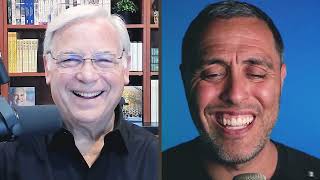
A recorded interview between Jack Canfield and Jairek Robbins exploring how success evolves from "getting" (the first mountain) to "giving" (the second mountain). Robbins recounts a five‑year intentional preparation to be ready for marriage, his use of Gottman research (seven relationship behaviors) to build world‑class relationships, and a malaria hospitalization that led him to design an "ideal day" vision and mental‑healing practices. He describes his Core Four framework (1. self; 2. relationships; 3. business; 4. lasting wealth), lessons from his role at Success Enterprises about scaling and multiplying wins across organizations, and advocates for community‑centered "human development" and education reform. Practical pointers include Gottman resources and Robbins' website/programs (jair ekrobbins.com) and a forthcoming Core Four offering.
Chapters
Foreign. Excited to introduce someone I have immense respect and admiration for, Jerick Robbins. Jerry's a best selling author, a performance coach and a speaker and Jerk's dedicated his life to helping professionals achieve success by living with purpose. When he was just 23, Jarek received the Congressional Award Gold Medal from the United States Congress and has since gone on to train various organizations including Harvard University, which is where I went to school, the US Military, which is where I did not go to school, UPS and several Major League Baseball teams, and recently was appointed as President and Chief Strategy Officer of Success Enterprises, which publishes Success Magazine, which has been one of my favorite magazines for decades. And Jarek's decades of coaching experience have led him to unlocking and sharing secrets for maximizing performance and success. But what I truly admire most about Jarek is how he lives a consciously and intentionally designed life of adventure, philanthropy and entrepreneurship, engaging in thrilling experiences all around the world while making a difference at the same time. I'm excited about talking that with him today, and I think you'll learn a lot in the process. So let's dive into our conversation with Jerrick Robbins as we discuss unlocking your full potential. Welcome Jarek.
Thank you for having me.
My pleasure. I really was looking forward to this and still am. So it's been a while since we last spoke. You were on one of our coaching expert calls and it seems like you've been on an incredible journey. As I said, you're now the President and Chief Strategy Officer for Success Magazine, so congratulations on that. And our listeners are always eager to learn and grow. And many, including myself, find that our definition and relationship with success is constantly evolving. I'd love to hear how would you personally define success for you? And if so, how has your understanding of success evolved over time?
If it has so success to me was an evolution. And I ran across a book called Finding youg Second Mountain that really highlighted what a lot of it felt like to me. And what it describes in the book is the first mountain is a lot about what I can get from life. And so everyone who's scaling that first mountain either wants to get strong or they want to get rich, or they want to get healthy, or they want to get love or they want to get something, they're trying to extract something. Or if you're a business owner, how do I get my team to give me more effort? How do I get my customers to pay more? It's all about getting. And if you watch closely, there's people trying to scale that mountain over and over and over again, at some stage of life, the book described that you realize there's only really three things at the top of any mountain. A feeling of accomplishment, feels great to get there, thin air and a nice view. Maybe a fourth, a walk back down if you're lucky. Not everyone makes it back down, but that's it. And at some stage of your life, when you're getting, getting, getting, getting, getting, getting, at some point it's just a thin air and nice view and a little feeling of accomplishment. And then it fades and it doesn't feel like that anymore. And the author says at some point you either get kicked off the first mountain, meaning life sideswipes you with a near death experience, a wake up call, a loss of a loved one, something happens that just kicks you off that first mountain, or you kind of get bored because you get to the top over and over and over again and you realize it's just the same thing that's always been there. Thin air, feeling of accomplishment, nice view, walk back down, that's all you have. And so eventually it says, you venture through this very motivational place they call the Valley of Despair, where you recalibrate and consider everything of what you really put here for and what's life all about and what's the purpose of it all. And eventually not everyone, but a lot of people find their second mountain. And their second mountain becomes about what I can give to life. And so if you reverse that, how do I give to my health? How do I give to my team? How do I support my team even more? How do I make sure they have the training and resources necessary to really succeed? How do I help them achieve their version of success? And what the second mountain is all about is you might be scaling the exact same mountain as before, but the reason it would be termed your second mountain is because the truest joy, the fulfillment, the thing that lights you up isn't getting to the top. It's when you watch the person you brought with you get to the top for the first time and you see their eyes light up and, and you see their excitement and you see their joy and you see their fulfillment and you see their new belief in self not realizing people like them from places where they're from under circumstances like that. They didn't think it was possible to experience that, and now they did. That's where the magic comes from. The magic comes from not getting to the top. The magic comes from who you brought with you. And that second mountain is now that unveiling where community really matters. And it's saying, ah, I figured out how to get there quickly myself, which was a reflection of my journey. I spent a few decades of my life scaling that mountain over and over and over again in different categories, whether it was becoming the best version of myself. Happy, healthy, strong, fulfilled in this great place, mentally, emotionally and spiritually. Finding the love of my life to share it all with, building a booming business, investing and creating passive income so I don't have to work anymore. My money pays for my life solving all those mountains. It was fun, it was exciting, it was interesting. And at some point it was like, now what? I've checked off all of the things. Like, I remember hitting a stage of life in a transitionary period and I recommend people do this. Where I made a bucket list of everything I wanted to experience on earth as a single man, as a single person. Here's all the things I want to experience on this planet. And I did them, all of them. And then it clicked. I said, there's nothing else on earth I want to do by myself. Everything else that I want to do on this planet requires sharing it with someone special. And then I created. I went on a five year journey to get ready and prepare to meet my wife. So, side topic on relationships. I always ask people, if you were going to play basketball and you wanted to make it to the NBA, how much do you think you'd practice over 5, 10, 20 years of your life? If you wanted to play soccer, how much would you practice to make it to the major leagues? If you wanted to be great at business, how much would you practice before you expect yourself to be wildly successful? And then I say, okay, great. If you wanted to have a world class relationship, how much would you practice, prepare, read and study and really prepare yourself before you expected to have a world class relationship with somebody? And everyone gives me that look your dog gives you when they don't understand. Which is like, huh? I was like, it's weird. We all expect to have a world class relationship, but none of us expect to have to put in the time, effort, energy or resources in order to prepare ourselves to be ready for one. But we think it's silly if anyone did that and tried to get into the mba, why is that? And so I started preparing myself, found my wife after five years of practice and research and study and refinement. And we've spent the last 10 years practicing together now. So my version of success is really first was figuring it out for myself and now has become helping others scale those mountains.
I'm curious when you said you spent five years practicing getting ready for a relationship with a woman, your wife. What exactly did you do? Share some of that. What were some of your practices?
Great question. So I had to get aware that what I was doing wasn't working. That was step one. And how I became aware of that was realizing none of these relationships seem to work. And not all of us want to admit that. We want to blame it on them and say it was their fault and the bad timing and wrong place and wrong person. And at one point, I realized I was the only consistent factor. I went, okay, if the only consistent factor in all these things not working was me, the two thumbs, this guy, okay, I got to figure this out. I got to do some work. And I had done plenty of work on achieving success and aligning with my bigger vision and knowing who I am and realigning my values and knowing my purpose and all these things. But I didn't realize there's a whole nother language you have to learn how to speak, and there's a whole other universe you have to learn how to understand and fall in love with, and there's a whole other set of patterns that you have to learn how to communicate with and through. And so I started going and seeking out people who had spent decades studying relationships. I remember I crossed paths with a group, John and Julie Gottman. They had at that time, done 30 years of research on over 3,000 couples to figure out what works and what doesn't. I was like, ooh, I like these people. They have scientific research on what works. And I went and studied a few of their books and then took a few courses. And then I'm like, okay, I'm getting certified with these people. This is good stuff. They broke it down to seven things couples must do for it to work. And in these seven things are present, the relationship works. And if these seven things break down, the relationship eventually falls apart. I was like, ooh. My male brain was like a formula. So I got very excited for a clear formula on how I could make a relationship work. And I started just studying those seven things. It was understanding your partner's future vision, creating a vision together. So I have my vision, my partner, she has her vision, my wife. And then we had to create our vision. And I was like, that's interesting. It's something that you have yours, I have mine, but together we co create something special. Another piece of it was the rules. Most of us don't realize we have a rule book in life. And I always say, imagine if you And I sat down to play a board game and someone handed you the rule book to chess and me the rule book to Monopoly. It doesn't sound that big of a deal in the beginning, but when you say, do you want to be the white pieces or the black pieces? And I laugh and go, okay, I think I'll be the train and you can be the top hat. You go, okay, they're a little weird. Who cares? We'll keep going. And you say, well, I say, here, roll the dice. And you look at me and go, there are no dice in this game. Move one of your pieces. You can't move your piece unless you roll the dice. And now we're starting to look at each other like, okay, what's wrong with you? Why don't you understand the rules of how relationships work? And what's interesting is most of us, number one, aren't aware of our own rules. And number two, never took time to extract, learn, or appreciate or even understand our partner's rules. And so there's inevitable conflict coming. And so one of those other things was learning how to understand my rules. Learning how to understand how to raise my hand when I go, ooh, I just discovered a new rule I didn't know I had. How do I know that? Because I just got upset for seemingly no reason. And I had to ask myself, why am I upset? And my brain says, because you're not supposed to do that. And I said, why not? And then I wrote it down and went, shoot, I have a rule about what people are or aren't supposed to do in times like this. Or my wife would get upset. And I go, ooh, I think you have a rule. She's like, I don't have rules. I'm like, okay, maybe you have a suggestion of how to or not to do that. That was the translation. She doesn't like the word rule. So suggestion of how I might do it better. And we laugh about this and learn about each other and start to realize, ah, there's a whole blueprint that we don't even know about ourselves, but we have to somehow become aware of and then get good at sharing with each other instead of being mad at each other over it. Stuff like that. So five years of piece by piece by piece learning and putting it together, and then practice.
I know everyone, and instead everyone listening.
To this instead of thinking we're supposed to be perfect, enjoying the practice. It's like if you went out on a basketball court for the first time and you stood on the three point line of An NBA court and shot. And you missed the ball. You missed it. You wouldn't get angry that you missed the shot. You'd be like, give me the ball again. That was my first time. Give me another shot. But somehow in relationships, if you miss the layup once, you get mad and think you're horrible at it, it's like, no, no, go practice, do it again, do it again, do it again. And that, that practice is where the magic starts to come over time.
I know our listeners are going, and you don't have to do all seven, but what are a couple other things from the Gottman work that you found so valuable?
Totally creating shared meaning. Creating shared meaning when an event happens, asking each other, what does that mean to you? And this is what it means to me. Now can we both come to an alignment and create a shared meaning that's empowering for both of us? Oftentimes I have my meaning and she has her meeting and it's different and we don't agree. It's like if you're willing to have a conversation and say, here's my experience and what it means to me, can you share your experience and what it means to you? Ah, can we collaborate and co create a meaning that it means to us? Where you have yours, I have mine. But then we've created an. One of my friends described this concept. They said when they get into a disagreement, they came up with this concept called the third pillar. It's something both of us value more than anything when we're together. What is that third thing? So that if you have your opinion, I have my opinion and they differ, we can ask, what would the third pillar do? What would it mean to the third pillar? And theirs was love. And so one person says yes, one person says no. And they say, well, wait a second, what would love say in a moment like this? What would love think about this? And they both stop and think and feel in the love and say, well, what would love do? And both of them usually can clearly see love would say yes to this. We go, okay, there we go. That's what it would do. So there's an overruling third pillar that they both adhere to and believe. That is the most important thing when we are together. When we're apart, I have mine, you have yours. Totally different. When we're together, we choose to allow that third pillar to be the overriding vote.
Very good. And people are watching this, are probably wanting to learn more about this. Is there a basic Gottman book that you would recommend to people Or a website they should go to.
Oh, probably just to art. Yeah, probably. Gottman.com Go to the art and science of love. It's a great starting point.
Now, when I talked to you last, you. You talked about. One of the things I love about you is like, you, you're so intentional. I mean, just what you just shared about the relationship practice and all that. And you shared a story about how you decided about wanting to have a perfect day in your life. And it took you a while to create that, but can you share that story? I believe you were in Uganda. You're sick, you're in a hospital, and I won't. I'll let you take it from there.
Totally, totally. So this concept of it started with most people. It's saying, hey, if I want to live my ideal life, life, have I dream it to be life on my terms, life how I want it to be. For a lot of people, you have this experience where you try to think about it and you're like, shoot, I don't know. It seems like such a big question. Like, I don't even know what's going to happen in the world five years from now. How in the world am I supposed to plan this perfect life or this ideal vision? And so what we did is we. We shrunk it. We're like, okay, just come up with one day. Like one perfect day. That's all you had. And so for me, where that really came into play in my life is I had heard the concept before. I had written down versions of it, but I had done a volunteer trip and I was over living in a village in Uganda. I was teaching organic farming each day to local farmers and helping them revive their land and bring the soil back to life. And while I was there, I happened to get malaria a couple times. And at this point, I grew up in Southern California, and I believe in the power of the mind and how it can help us heal. I believe in using vegetables and natural resources from the earth to help cleanse and clean out the body. And so my belief was if I, you know, was able to visualize, focus and use my mind strong enough, and I was able to drink enough green drink and vegetable juice, it would cleanse my body of this ailment and I would be fine. And I was trying to solve for the challenge of malaria. And that doctor looked me straight in the face and said, that's the stupidest thing I've ever heard in trying to solve for malaria. And I looked at it, I'm like, it works for Everything else, my gosh, headaches, colds, all kinds of common, everyday, normal stuff. And he's like, that's great. I totally understand that. Have you ever had malaria, though? And I was like, only my second time, doc. And he's like, okay, it's probably your first. It's just hibernating and recoming back, just so you know. And him and I had this big debate on medicine, and we went back and forth. And I always tell this story because it's interesting. It was the first time I called my parents because the doctor was trying to tell me how bad it was. It was the point that I was having trouble breathing. I was having slight vertigo. My body was starting to kind of shut off. And the doctor pulled me aside. He's like, I don't know how to explain this to you. He's like, are you a math guy? You like numbers? And I was like, yeah, I'm not great at them, but I like them. And he goes, sure, let me show you the math. That'll make sense. So he did a blood draw. He put samples on the screen in front of me. He had his machine count how many malaria parasites there were in each blood cell. And I had like 55,000 parasites per one blood cell. And he's like, that's not a good sign. He said, at this stage, they're gonna break out of the cell, go lay eggs in all the other cells, and double every 8 to 10 hours. Which is why you feel good and then you just collapse, and then you feel good, and then you collapse and you feel good and you collapse and. And so he's like, let me do Math. Double every 8 to 10 hours. Multiply it out. He said, basically, you got about six days left to live. Five, six days. And that hit me like a shockwave. That was one of those things when someone says something and you feel it literally press through your body. I felt that vibrate through my body and went, wow, that's intense. And I remember thinking, wow, what am I going to do? And so I called home. I called my dad first, and he's a little tricky to get a hold of. He was busy doing stuff. And I remember it was the first time in my life where he got on the phone and he said, what's going on, pal? I said, I got malaria. It told me I had six days left to live. I don't know what to do. What do you think? And he said, your mind is so powerful, if you believe the medicine will heal you, take it and take it immediately. If you believe your mind will heal you, do what you believe with total certainty. And trust me, your body will take care of you. And I know how powerful that statement is. I know how true it is. And I hung up the phone. And in that moment, it was the first time in my whole life, I asked my dad for advice. I'm like, that didn't help. I was like, golly, he knows so much. But that one just didn't. It was basically like, if you think it'll help, take it. If you don't, don't. And I was like, you didn't tell me anything. So I tried mom, and I called mom, and she did what moms do, which was, gosh darn you. I didn't raise you for 18 years for you to go kill yourself in some godforsaken country. You take the darn medicine. And then she said the thing you never want to hear in this voice and tone, and she said, and I'm on my way. And then hung up the phone. I was like, oh, crap, she sounds angry. And so it was one of those things like, okay, shoot. I mean, with that much certainty behind, take the damn medicine, I guess I'm going to do it. So I took it. It was the worst 11 days of my life. Because the way the medicine works is the first pill causes all the malaria to hatch at once. So you have, like, seven waves hatch at one time. Then the second pill, according to the doctor, is supposed to kill it, and you have to keep repeating the process until you kill enough of it off. And so, worst 11 days of my life, I went from, like 225 pounds down to, like, 180 in the next few weeks. It was rough, vertigo, all bad stuff. But while I was lying there going through this process of cleansing, I remember just thinking of, like, shoot. The fear crept in. It was like, well, what if this doctor's right? What if I don't have more than these six days? And I remember that thought of, how would I want to live my life if these were the only days I had left? What would my perfect version be? Now? Some people dream of, like, oh, I would travel, and I'd go do these things. I was like, not that I didn't have that privilege. In that moment, I'm lying in the hospital bed. I'm sick. What is my version of my ideal day? That if all I had were these five days or six days left, I'd feel so alive. I would feel so full of love. I'd feel so. So just. So just purposeful. And meaningful. I'd feel like a life well lived, that that's the day I got to live for these six days. And so I started dreaming. What would it be? How would I wake up? How would I feel? What would I see? I didn't have the chance at that point to choose who would be with me. I could dream about it and see them in my mind, but they weren't able to get there. How would I treat the people around me? What joy could I bring to the person sitting next to me in a hospital bed who's struggling with their life? How could I communicate with people? What messages could I send to the people I love? And I started to think of what was in my control at this moment. Now I had a bigger vision for when I get healthy and when I feel good. All the things I want to do and be and experience and create and give and share and have and all those things. But in this moment, what could I control in this moment to make this day an ideal day? And then over time, how could I expand that vision into this dream vision of how I wanted to live my life? And so each day while I was there, I tried to mentally step into it. And it's something that's so powerful when you're trying to heal, is creating an environment in your mind that's a sanctuary. A beautiful, peaceful, calm, abundant, flowing place. Mentally, even though physically your body's going through hell and back. Mentally, you can live in this beautiful place if you create it in your mind. And so my first ideal day vision was created mentally in my mind and emotionally in my body, which I believe helped the healing process, hopefully. And then over time, it became something that physically came into my reality as I redesigned how I was living my life.
You mentioned that you're living your life, your ideal days. Now, I remember you talked about walking down this path to where the cows were and all that stuff. And you have these. I. Can you describe your ideal day? You know, not like too long. I want some other questions I want to get to with you, but what is it? What does an ideal day look like in your life now?
Well, I can tell you I made one of the grave mistakes in this last year. And it had incredible opportunity. It was something I said I would never do. So last year we had talked and then I got a call from Success Organization, Success Enterprises, asking me to be the face of Success and to come be the president of Success and help them grow their business, which we've done successfully. I reorged one of their departments and grew it 300% year over year revenue and got it healthy and profitable in eight months. All this stuff. But I swore I would never take a corporate job in my life. I worked so hard to create the life I wanted, to, wake up when I wanted, go where I wanted, be with who I wanted, live how I wanted. And so they called me and I respectfully said, I'd love to be on the COVID but I'm not interested in corporate job. Thank you, but no thank you. I got off the phone, I talked to my business mentor and my wife, and both of them, after 10 years of telling me, do not let anyone, anything distract you, said you might want to do this one. I was like, are you, are you messing with me? You've been telling me for 10 years, don't let anything distract me. And now you're telling me to weave away from my business and go focus on building someone else's. What are we doing here? And he teased me. He said, I know you know what you can do. I know your clients know what you can do. And the results you've gotten them, they speak for themselves. And he goes, I know you have clients in 127 countries, but I'm going to say something that might be sobering or sound rude, but it's not. He goes, most of the world doesn't know you exist. Thanks a lot. I'm glad to know you believe in me. And he goes, yeah, I believe in you. You're great. But sometimes you got to do things that'll help you reach even more people. And he says, sometimes that's the price you got to pay. I was like, I'm pretty happy with where we're at because what you were describing is exactly what we wanted to do. We'd wake up, when we'd feel like it, we'd go walk and see these cows. We'd go surf twice. We'd have surf dates twice a week with my wife and I to start and end the week. We'd go walking every day together. We'd be out in sunshine. We were working on projects we love with clients we adore. We had this incredible life we built. I had narrowed work down to three days a week, four hours a day, just doing stuff I'm deeply and wildly passionate about. And the rest of the time was me focused on being the best father and best husband I could possibly be. And so I said yes to this journey with success. I could tell you a few things. One, I understand why people like to quit corporate jobs. I learned all the reasons why I'm like, okay, now I get why they all want to get out of here. And you know, it's paid off. They just did this as a thank you. So they put myself and my family on the COVID as, as a thank you for the work we've done with them over this last year. And it's interesting because it was doing something that took me away from my ideal vision, my ideal day, how I wanted to live my life. And so going back to the shared meaning, my wife and I talk about it and I have pages and pages and pages of things I've learned, like great lessons, business lessons, communication lessons, leadership lessons, team lessons. And just so you know, the company that bought success did $185 billion last year in home sales. They have, what is it, 79 or 80,000 sales representatives or agents that work for them. They have 1700 employees. And. And so I've gotten to work face to face, toe to toe with the owner of that, who started it, founded it, and scaled it, and wonderful man, so much to learn. And I was like, wow, that was an incredible toe to toe, day to day education. Great way I could give back and make sure that I did my part, I pulled my weight, I served and did my commitment of what I said I would do. And I have as many pages I have of great lessons I've learned. I have probably even more pages of things not to do, which oftentimes become the most important things you can take away from anything. Knowing what to do is critically important. Knowing what not to do is the difference between success and failure. And so to be able to learn inside of an organization and watch it, one of the biggest standout things I've observed in comparing their ability to scale and grow and multiply versus most people's, comes back to that first and second mountain piece. The reason most people are not succeeding at the level they desire is because the only person that wins is themselves. If it works out. The reason that this organization is succeeding at such an insane level of growth is because all their people involved win when anyone wins.
That's great.
Yeah. And so I always ask people, if you succeed and achieve all your wildest goals, who wins? And if it's only you, I guarantee you're struggling. But the moment you multiply, who wins? When you win, I guarantee you'll start to see traction much faster.
Well, the one thing I would agree with, with your wife and your business mentor is more people should know about you because you're one of the most clear, well thought out well considered, deeply conscious people I've ever interacted with. And so I really want you out there. Obviously not to the the level of distraction that's going to take you away from what you are doing. But more people deserve to learn from you. I'm going to. There's a question if I don't ask you and I want to make sure we get it in. One of my staff who helps control, she runs our community, if you will, whenever we do coaching clubs and things like that and she loves challenges and she heard about your challenge you call the Core four challenge that you've done with a lot of your one on one clients. Could you talk about that?
Sure. It's something I've been working on for over probably 20 years now, one on one capacity. And whenever I do something long enough that I see consistently gets results and I start to see a pattern, I'll refine it, refine it, refine it and then eventually I'll package it up and put it in a very accessible format so that I could share it with as many people as possible. So I did a lot of performance coaching for decades and we worked and worked and worked and worked, worked, nailed it, figured out exactly what needs to be present. We and you know, personal clients will pay me 2500, 5000, 10,000 plus a month to work on this together. So they're doing extremely well in life. They're able to afford it, it's worth it, has a strong ROI for them professionally and business wise and personally to do it. But then the general citizen of the world, that's an extreme investment that's usually out of reach. So I always ask the question, how can I get it to more people so that they can use it? So we took all those tools, packaged it into a program, put it online on udemy, made it $13 and now that program itself has clients in 127 countries around the world accessing the exact tools I've used with those clients for years to better their life and increase their performance. We're about to do the same thing with this Core 4 concept which was what's the path so many people are trying to figure out? And the path I've studied, the path I've lived and then at this point the path I want to give and share and help other people navigate. And step one was learning how to become your absolute best self. So mentally, emotionally, physically, spiritually, your best version of yourself. Step two was check off that bucket list, you are good as an individual. Step two is who do you want to share your life with and how do you create that deeply passionate and fulfilling relationship with each other and the practice you commit to doing together for life? Step three is can you build a booming business to cover it, to pay for it, to make sure that you have the life you want, both freedom wise, but also financially to cover how you want to live your life and take care of that. And then that fourth step, which was the last few years I stepped into, which was creating lasting wealth, and lasting wealth was, number one, time freedom. Can you choose how you spend your day each day? Number two is financial freedom. Can you invest properly to get to a place where you don't have to think about money anymore, but your money's making money for you and it covers your life and you're good. And usually when people have time, freedom and money freedom, the third piece is what they're hunting for, which is a reason for being a purpose. What is your reason for being at this stage of your life? Which I grew up in a place where I was always learning and refining my reason for being, my purpose, my mission. But I didn't realize it evolves as every major transition in life happens, both internally and externally. And the example that I was shared with is if you were driving a Ferrari on Highway 101, it's a beautiful place on a sunny day and a great vehicle to do so. If all of a sudden you find yourself in Bakersfield and you're driving through a cornfield, that's no longer a good vehicle, that's a bad choice. Even though it's a great car, a great vehicle, it's the wrong vehicle for those conditions. Therefore, a dune buggy, an off road truck, a monster truck, any of these other options would be a much better choice to navigate those conditions. So as the world changed, as you changed, as what you, the community and or the business or what you participated in changes, have you made time to consciously update your reason for being in this environment in these conditions? And so helping people navigate all four of those stages, we call it the core four, and learning how to go through each stage effectively, efficiently, how to make sure you check all the boxes and don't try to skip anything. And then how to get to that place where we've created a community of people who are accessing that lasting wealth stage and then sharing it with each other, teaming up and helping others get through the path.
And that's going to be available on Udemy. However you say that Udemy eventually not.
Yet, that one isn't available yet. If you went to jerrickrobbins.com you could just opt into our newsletter and we're going to announce it when it comes to life. But I believe at this moment community is so important. I actually wrote an article about it in Success which was personal development has been so focused on the individual accomplishments and achievements of people that we needed a new term. And I just used human development as a broad term to start with because I haven't quite honed in on it yet. But it's this piece where personal development was about learning how to use the tools on yourself and how you experience and process and move through the world. Human development is how you use those tools in the community of others, not just the other people who like the tools and know the tools and use the tools. How do you stand shoulder to shoulder with someone who disagrees with you and continue to use the tools? How do you stand toe to toe with someone who sees it differently than you and continue to use the tools? How do you stand and stay in that relationship or family dynamic that's uncomfortable but continue to use the tools? And I think that's the evolution where it's a call to people to say, hey, stay in community. Harvard research shows the number one factor that determines how happy people are, how long they live and how much they make is the ability to foster a tight knit group of people, family, friends, community. And so I think now more than ever with challenging times in the world, community matters more than ever. I always say start with a community of like minded people so they don't just beat you down the first time you missed the shot. Start with people you could practice with. But then you have to make a commitment to say, I've practiced enough. It's time to go back into the challenging situation and continue to choose to use the tools even when it's hard, even when it's difficult, even when I want to run away and go back to my tribe who all agrees with me? How do I stand here and stay in that love and stay in that strong place and continue to give?
That's really good. We'll, we'll put your website in the show notes and we'll mention it again before we're done with this. I'm just curious. You know, I was a teacher, I started as a high school teacher and I, I got into human development because I literally need my students who are all black. Inner city kids needed human development. They'd had no self esteem. Most of them thought they were inferior because of the way the culture had treated them. And so Forth. And then I got involved with W. Clement Stone, it was a friend of Napoleon Hill, and started teaching that stuff in my classrooms. Everyone started doing well. And so I'm curious, have you thought much about the transformation of education? Like, you know, people will pay you like $10,000 a month to learn these things and, you know, wouldn't it be great if we could teach some of this in our classrooms? I've always envisioned a class called Self Science, where you study yourself instead of biology or mathematics or history or whatever. What are your thoughts about that?
I love it. I have friends who are doing that at a, at a college level or university level, and I have other friends who do it. They don't do it in the actual system. They do it more with speeches or trainings. I have a great friend of mine who does that. He was homeless in Detroit. He now speaks at schools. He has this program called School Days where they go to schools and they actually teach that inner city youth, the people who are trying to figure it out and, and they teach them these skills and tools through these extracurricular programs within the youth, the really young ones. And the beautiful part, he's been doing this for 30 something years now. And so he has kids that he was speaking to them and sharing with them when they were little, little. And then they got into the high school and some of them made it into sports, and then they got to college and some made it into sports. And he was the speaker. They kept asking to come speak. Now a few of them are in the NBA, NFL, and, and they're saying, oh, coach, you have to get this guy to come in. I mean, he's been talking to me since I was in sixth grade. And it's amazing to see that commitment where he's been working with them through these programs all the way through their journey and helping them mentally and emotionally charge through all those challenges and get to that place in life that they deem success. So I love that. And those are things that excite me. My favorite, that performance program we put on you, Demi. I mean, I get text messages and direct messages from, you know, kids in, in. It's not called middle school over there, but let's say in the US it's equivalent to middle school. And, and they'll say, oh, sir, I took your program online and, you know, I, I'm a, a girl and I want to be a pilot, but my parents here in India tell me that's ridiculous. And, but I believe it. And I have a vision and I work towards my vision. Every day. And so many years later, I got a message, sir. I passed my pilot's license. I'm on track to become a commercial pilot. And I'm like, how are your parents thinking? Like they're so proud. And I'm like, I thought they said you couldn't do it. She's like, I know, but I did. And so it's neat to see those programs accessible and going around the world and finding people who need it and are interested and want to apply it and want to break through barriers and, and do things I love.
Now the biggest thing for me is when I get those emails and, or if I'm in a room and I see people's eyes light up like they finally get it, you know, that's what feeds my soul. For sure. I, I love your, your metaphor about, you know, climbing the mountain and then you come down and teach other people to climb the mountain. And for years I had this image that my job was to go up to the mountain, gather as much light as I could that was up there like a big ball of snow, come down and hand out snowballs of light to all the individuals. I'm doing it, but I've never changed the metaphor. It's liter leading people up the mountain so they can gather their own snow. But anyway, that's. I appreciate you for the update. That's good. I have a couple of questions I always ask guests first. Is there anything that you think people misunderstand about you?
I mean a silly one. I ripped the muscle in my eyelid. So I have a giant droopy eyelid and a surgeon told me I actually use my forehead to lift my eyes and. But droopy eyelids. I mean, I've been pulled out of a car and a doctor, a police officer, DUI testing me because I have droopy. I don't know if that counts. It's just a silly thing that people look at me and make a decision based on a torn muscle of that counts.
It reminds me I was at a school and I was reading a children's book I wrote with. Co wrote with somebody to this little group of like first graders sitting around. And at the end I said, do any of you have any questions? And this little girl looked up and my nose is uneven because of a rugby and accident and it was broken. And she goes, how come your nose is not even. I can relate. So here's another one. If you could go back to your 18 year old self and give yourself one piece of advice, what would it be?
Eighteen year old Me living in the front end of a house, three roommates, curtain is a door. My whole life, business, everything was in that room. Probably. Just enjoy it, enjoy it. It'll turn out better than you think. Make sure you enjoy every moment of it.
You know, everyone's talking about how fast the world's changing right now. You hear everyone talking about that. I'd love your perspective on this. What do you think the world will look like in the next, let's say, five years? As you see the world unfolding and the trajectory we're on, do you have a sense of where it's headed?
I think we're at pivotal points. We're at a crossroads. Things can get unbelievably better if. If we learn how to collaborate and work together and navigate through. Through challenges globally, community, wise, local, national, global, all of it. Or things can become incredibly challenging. Very, very challenging. Supply chain will break down. Trade across the world will shut like starvation will go up. I'm actually listening to a book about it right now that's doing all kinds of research and comparison over generations. And I think our opportunity is to give people the tools to learn how to better collaborate and communicate and connect with each other in hopes that we take the road, that things get tremendously better.
Speaking of books, if you were to recommend three books that have been seminal in your. I mean, you mentioned one of them. The Second Mountain. Exact title, but what are three books you'd recommend to people off the top of your head?
Amazing Development of Men by Alison Armstrong. In sync with the Opposite Sex by Alison Armstrong. Business. It's just one of my favorite books. The Road Less Stupid by Keith Cunningham. He's. He's my business mentor.
The Road Less Stupid. I met Keith once. Yeah, he's a cool guy. I didn't know that book, though. The Road Less Stupid. That's a good title.
Yeah. Not the best title of a book, but unbelievable book. My favorite chapter is the chapter he wrote called the Log of Lessons Learned. And it's everything he learned after losing about 100 million bucks in the 80s. That's where I learned the lessons of what not to do become way more important of what to do.
You could write the book on the lessons you've learned by working in a corporation. Given everything. I love it. So Your website is jarrickrobbins.com J A I R E K robbins.com Two Bs in Robbins and we'll put that in the show notes. As I said. Do you want to say anything more about your website?
That's all. If this goes out sometime soon, I would say go grab a copy of Success magazine. It's on the shelves right now for the May June 2023 issue. And it, it kind of goes against the grain. It's traditionally one or two people in suits looking successful. And I wanted to put my version of Success on the COVID which was looking happy, healthy, and with the ones I love. So it's my family on a beach in shorts.
I like that. I noticed it was a little different than the usual picture. One last question. Reflecting on your life so far. If you look back, all your achievements are all what you want to call special moments in your life that you're most proud of. Could you just pick one and tell us why?
Every day, my wife and I choosing to love each other with all of our heart and soul.
All right, Well, I love you, man, and thanks for sharing. Literally, we could probably spend six hours talking. And I appreciate it. So we'll make sure we do this again. Maybe I do it every year. And we'll find out what you learned not to do this year.
Right? I hope I make better decisions next 12 months.
All right, my friend. Thank you so much. Jerrick.
More from Jack







[EP 46] Creating Your Own Luck: The Power of Self-Confidence with Veronica de Andrés

[EP 45] Rewiring the Brain for Bliss: Activating Your Spiritual Intelligence with Dr. Dawson Church


[EP 43] Transform Your Life Through Visualization and Emotional Intelligence with Natalie Ledwell

[42] Enhancing Your Health & Longevity Through Peptides and Functional Medicine with Regan Archibald