Podcast Episode #3 | Escaping the Entrepreneurial Time Trap with Marie Forleo
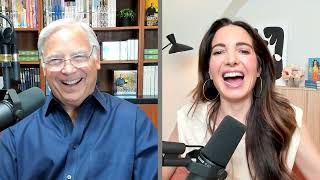
Marie Forleo talks with Jack Canfield about escaping overwhelm through her Time Genius program. She shares how a health crisis shifted her thinking, the mantra "I don't do overwhelm," and concrete tactics like defining one primary project and a four-minute afternoon success plan.
Chapters
I saw it and this thing was staring at me. It was calling at me. It wanted me to come to it so bad. It was my couch. And then I heard the voice in my head that said, marie, you can't take a break. You got another interview coming up in two hours. You got to go to the store and get groceries for dinner. Your dog, Kuma, he needs his medication and he needs to be taken to the vet today. You've got about 100 emails and 12 texts. And oh, yeah, you promised you'd call your parents. So no, there's no five minutes laying on the couch for you. Foreign.
Guest joining us. She's a powerhouse in the world of personal development. A New York Times bestselling author, and a true inspiration to millions. Marie Forleo is literally a force to be reckoned with. A leading voice in personal development who has inspired and transformed the lives of millions of people around the world. Her book Everything is Figureoutable has touched the hearts and minds of readers and empowering them to overcome challenges and achieve their dreams. As the host of the acclaimed shows MarieTV and the Marie Forleo Podcast, Marie has been captivating audiences with her insightful conversations and practical wisdom. And her ability to connect deeply with her listeners and guests is truly remarkable, as you'll see today. Now, Marie's impact goes beyond the media. Through her legendary online training course, B School, she she's guided thousands of entrepreneurs on their journey to success, helping them start and grow their businesses with confidence and clarity. And today I'm going to be talking with Marie about her latest program, Time Genius, in which she shares her expertise on mastering time and designing a life you love. And her insights on reclaiming control of our time and attention, I believe are really needed as they're invaluable in this fast paced world we're now living in. Welcome to the podcast, Marie.
Oh, Jack, thank you so much. It's such an honor to be with you.
Well, and likewise with you. I'm really glad to be talking with you today because of this time thing. It's just like everybody, including myself, you know, overwhelmed, lots of stuff going on, trying to find balance, find time for the things that really matter. And from what I can tell, you've done that. You've mastered how to teach that to people. And we talked earlier, before we came on air about some of the successes you've had. So let's start by sharing a little bit about your personal journey, how you discovered the importance of time management and creating a life that you love.
Yeah, you know I just want to say at the onset that it is still a dance for me. And I feel like it is a work in progress for all of us. In terms of people who are passionate about what they do, their careers, their businesses, their lives, there's always going to be those tugs of like, wow, there's so much I want to do. And then that desire in us to rest and recharge and to have those other areas of our lives thrive too. And I think it's a really exciting dance and it's one of the most worth it conversations to continue having throughout your life. And so for me, in terms of the journey really to mastering this, I have always been obsessed with time because as an entrepreneur, someone who's super passionate about what I do, I think in the early stages of my career, I was looking to squeeze as much as humanly possible out of every moment. So I was so, so into the science and the neuroscience and the behavioral science and trying every different possibility, every different principle, every different planning system that I could to get as much into the day as possible. And that was awesome, and it was beautiful and it helped me. But I will tell you this, Jack. It is easy for me to overwork. It's easy for me to be in that state of pushing and pushing and pushing and when is enough. And it was a few years ago now that I really hit a wall. And I'll tell you what that looked like, and it was a big wakeup call for me. I remember being at my desk working, and I went downstairs to get a drink and I looked over into my living room and I saw it. And this thing was staring at me. It was calling at me. It wanted me to come to it so bad. It was my couch. And then I heard the voice in my head that said, marie, you can't take a break. You got another interview coming up in two hours. You got to go to the store and get groceries for dinner. Your dog, Kuma, he needs his medication and he needs to be taken to the vet today. You've got about 100 emails and 12 texts. And oh, yeah, you promised you'd call your parents, so no, there's no five minutes laying on the couch for you. And Jack, I remember giving myself, actually not giving myself permission to go lay on the couch, even for five minutes, because you know what that would mean? That would mean I was lazy, unproductive, not ambitious enough. And if I need to put my head down on the couch in the middle of the day, even for just a few minutes, you know what that really means. It means that I don't have what it takes to be as successful and as accomplished as I really want. So what did I do? I pushed myself to keep going. I grabbed another cup of coffee and I marched right back up on stairs. And I kept on working because all that pushing and pushing and punishing and punishing myself, in my head, I was like, well, that must be the secret to success. I can't stop doing it now. Like, I've been doing this my whole life. Look how far it's gotten me. And like so many of your listeners, I've got a lot of things on my shoulders. I feel like it's all on me. And if I stop or even slow down, even for five minutes, I realized I was so afraid that everything that I had built up for so long over my career was just going to fall apart. Now, I wish I could tell you that that was like an isolated incident, but it wasn't. And I got to the point, Jack, and it was really scary that I started waking up in the morning and I never had these thoughts before, but I started hearing this voice. Like, the moment I opened my eyes was like, I can't do this anymore. I want to run away from my life. I wish I could just disappear for a while and not exist. And look, because of all the studies that I've done and because of the work that we do in the world, I was doing all of the things, Jack, that we know we're supposed to do. So I was meditating every day. I was working out. I was getting enough sleep, journaling, praying, like, all the stuff, but none of it was working. And I was starting to get to this place where I just started to feel really desperate and feel really alone. And I started to feel a level of depression and anxiety that I had never experienced in my life. And I felt so much shame around that. And then it got to the point where my body started sending me signals. So we started to. I basically discovered that I was having these abdominal pains. I didn't know what was going on. And it turns out that I had all of these tumors growing inside of me, including one that was the size of a kind of football growing outside of my uterus. Cut all this to, like, having to have an urgent hysterectomy, and that it all got me to slow down. It was like the first time in my career that I had ever had or taken six weeks off. And this experience, Jack, really kind of brought to my mind something. I was like, I wonder if this is just Me, you know, and I started, I actually wrote to my audience and I said, hey, I've got this idea about a project around time, like, how many other people are struggling with this? And, you know, I sent out this survey and we had over 7,000 responses in like a day or two. And people weren't just one word responses. It was like novellas that people were writing. And I just realized that I had such a broken relationship with time and that I think culture has had such a broken relationship with time and success, and that it was time for me to kind of right that ship, to reexamine things and to really put everything in check. And that's kind of the impetus to where this experience, time genius came from. Because I realized, you know, it's not our fault collectively, like, we're kind of evolved into this part of culture where many of us are on 24, 7 or we think we need to be. I was hearing from many people, like, no matter how hard they work, they feel like they were never getting it all done, could never get it all done. And resting felt like it was almost like a dirty word. Like if you sat down to rest, you were either weak or there was something else more productive you should be doing. And then if, you know. So it was just so many kind of messed up notions and ideas that I realized I had within me and I really needed to change it, and I did. And that's kind of what gave birth to this new experience.
So, so what? What did you change? So here you are. You're. You're like a lot of people that we attract because we teach about achieving your dreams and do all that. And people want to pursue their dreams and their passions and their spiritual growth, and they got families to raise and parents to take care of, and they end up feeling overwhelmed and trapped. So I'm curious, what did you do and then how did that begin to inform your. The work that you're doing now with people?
Yeah. So for me, I think that experience of having that urgent hysterectomy and then really being laid out for six to eight weeks and not being able to move gave me first an opportunity to recognize how hard I was pushing myself mentally, how addicted I was to constantly producing, and how much I had kind of fallen victim to this notion that it's never enough. Like, there's never enough time. I'm never going to get it all done. And I realized first and foremost that living in this world that I call time stress, which is that world where no matter how hard you push yourself or how hard you work, it's never seeming to add up. And where you start to actually not enjoy your life anymore, where you feel like you're on this treadmill. And I started to change my own mindset and say, you know what? Rather than there's never enough time there. There's always enough time for what's most important. And what's important for me right now is to actually articulate and decide what stage and season of life am I in and what do I need to prioritize and how do I get better at saying no? So we'll walk through all the different things that I changed, but the very first thing was most important. Understanding that, becoming what I call a time genius. It's an inside out job. It's starting to recognize all the different ways for me that I had programmed myself to feel never enough. To feel like I was always in time. Scarcity, to feel like no matter how hard I worked or pushed that, it was never adding up to where I wanted to go.
You know, it's interesting, I. When I was in graduate school, we had a class in education on what's called self science education and believe that, that everyone has a core killer statement. It goes, I'm not blank enough. You know, I'm not accomplished enough, I'm not experienced enough, I'm not attractive enough, I'm not doing enough, I'm not, you know, all that. And then also, I don't have enough. And you're saying, I don't have enough time, I don't have enough accolades, I haven't produced enough books yet, I haven't, I don't have enough people following me on Facebook or Instagram or, you know, it's like no matter what it is, it's never enough. And if it's never enough, it doesn't matter how much you have. You're living in the context of not enough. So how did that, how did. Was that just a decision you made? Was it some awareness you had? How did you get to that place where you, where you changed it from? Wait a second. I am enough. And I'm going to decide what enough is. How did you do that?
Well, there was this really cool thing that happened to me. I'll tell you, it was another kind of one of those life moments where an aha dropped in that changed everything. And this is something that everyone in your audience is going to be able to use. So I remember being in my kitchen and my partner, Josh, we've been together for about 20 years. He would ask me all the time like, hey, Marie, how's it going? Like, how was your day? What's going on with work? What's happening in the business? And Jack, I would answer him time and time again with, ugh, I'm so overwhelmed right now. I've got so much on my plate. We've got a MarieTV shoot coming up. I've got all this content I've got to create. We've got to hire another creative programmer. You know, if I could only get through these next few months and then I'll finally be able to breathe. Have you ever said that?
Yeah. My wife reminded me of that for years.
And so I remember there was one day where I was just about to say that again. And it was as though I had this out of body experience where I didn't think to kind of have this conversation in my head, but I finally saw how repetitive and ridiculous this I'm always overwhelmed statement was. And it was like this voice came in from out of, out of my body and was like, wait a minute, Marie, do you hear yourself right now? Like, are you listening to what you're saying? This has been the same sad I'm so overwhelmed song for years. Are you finally ready for a new possibility? And Jack, it was like this portal opened. I didn't try to create this, but I saw this new possibility. And then a mantra appeared in my mind that changed everything. And the mantra was this. I don't do overwhelm. And I was like, I don't do overwhelm. I don't do overwhelm. And the moment I registered that simple phrase and I actually said it internally, I don't do overwhelm. I felt this incredible weight lifted off my shoulders. I felt like my chest could breathe. I felt like I saw a new possibility for a new way of life. And I'm not kidding you, from that moment on, I was like, I don't do overwhelm. I'm not going to do it. It's not going to be something I even entertain. It was like if a neighbor came up to me, Jack, and said, you know what, Marie? I really, what I want you to do, I want you to go murder your neighbor. I'd look at them and I'd be like, what, are you crazy? Like, that's not something. Murder is not something I do. And so by drawing this line in the sand that says, I don't do overwhelm, I actually started to set a new standard for myself. And what that looked like was this. In the middle of the day, I stopped Opening my email inbox When I knew it was not the best and highest use of my time, I stopped automatically saying yes to invitations, Whether it was to a conference or a speaking engagement or some opportunity, unless it was truly a full body. Yes. And I started to really pay attention in those micro moments where I was just going into my habitual I'm always overwhelmed emotional addiction. And I would catch it and stop myself. Now here's what's interesting about the statement I don't do overwhelm. Not only is it incredibly useful, but it's also backed up by science. So research has shown that when we human beings frame a refusal using the words I don't rather than I can't or just no, we're way more effective. So they've studied this when it comes to choosing whether or not we should eat certain foods. So when we say like I don't eat chocolate cake for instance, rather than I can't eat chocolate cake, were between three and eight times more effective than when we just go like this. And so this little statement I don't do. And for me it was overwhelm completely helped me change my behavior. It helped me change the neuroscience in my brain, which helped me change my belief, which helped me start to show up in the world in a whole new way. So no longer was I overstuffing my calendar. No longer was I swimming in this world of constantly being overwhelmed. And that's really what started to make the shift for me of going like, oh, there's this whole other way that I can exist and be quote unquote successful without constantly being run down or putting myself in such a place where my body was actually failing.
Talk about you said I. Unless it's a full bodied. Yes. How do you know? Full body. Yes. For you.
So for me, this notion of a full body. Yes. And I've paid attention to this throughout the year. So I think all of us, certainly myself included, you know, you can get an invite and it could be to a possibility, an event, a mastermind, you know, some kind of business get together or something on the personal side. And you want to be liked, you want to be popular, you want to make people happy, you want to participate. Maybe there's even a part of your heart that's like, oh yeah, that would be fun. Or that sounds like fun. For me, a full body. Yes. Is when there is not a moment of hesitation in my body about, but do I really want to, you know, like it's. There's this feeling that I have inside when I Get an invite where it's like an instant inner flag that comes up that's like, you know what? It sounds good on paper, but the moment that date starts to arrive in your calendar, you're going to regret it. And there are other things in life. Like, I have a trip coming up down to California in September where the invite came in. And Jack, there was absolutely no hesitation in body or mind or even thought. Like, it came in and it was just like yes. And I felt enthusiasm in my body. I felt energy in my body. Everything felt light, it felt forward moving. It felt like I had just had a beautiful cup of coffee, you know, that wouldn't have a crash at the end. And there's other times, and I actually just had this experience recently where I was attentive yes. To something. And the moment I started to pencil it in my calendar, I felt heaviness, I felt dread. I could feel myself in advance wanting to think of ways to get out of it. And I was like, oh, it's not a true yes for me. It's not a full body yes. Does that add some context to that one?
Yeah, yeah, yeah. A friend of mine wrote a book called if it's not a hell yes, It's a hell no meeting yes. You know, and I love that idea. I mean, if John Gray calls me up and says, you want to come up and see me for a couple of days, that's a hell yes for me. I love hanging out with him, but there's other people. I go, well, I should do that. I don't know. And then it's like a hell no, because it's not a hell yes.
That's exactly right. And have you noticed, because I've done that too, where, you know, you say yes because your ego wants you to say yes. Or to your point, I should say yes because there's a connection there. Or this would be good for my career. X, Y and Z. And not only do you wind up, for me, not liking myself because it's, you know, it's not a true yes, but it eats up so much time because I'm thinking about how do I get out of this all the way up until the event? Like, it's just it. So it doesn't just waste the time of the event. It's all of this psychic bandwidth and emotional bandwidth of heaviness and dread that has a negative impact on all of my other life and my work in between when I said yes and the actual event.
Yeah. And then if you try to back out at the Last minute. It accomplishes all the things you didn't want to accomplish in the first place, which is all these people you wanted to like you now don't like you because you didn't come.
That's right. That's 100% right.
I get you. No, I went through a period where I felt like I wasn't enough, so I had to have all these approvals and diplomas and, you know, awards that people give me. You know, you do a free graduation talk because they're going to give you an honorary doctorate, you know, which means you're going to go do something for free. And basically after three of those, I went, well, how many doctor, Dr. Dr. Campfields can I be? And I don't need that anymore. But I was doing it because of out of my own sense of I'm not enoughness. So I really get what you're saying.
Yeah. And you know what, I want to ask you this actually though, because I think it's interesting, you know, I remember the world so clearly prior to social media and I remember starting my business, you know, prior to social, and it was just honestly the new world of email and blogs in like 1999. And one of the things that for me, I tagged for myself is that social media is actually, I don't participate in it. Like my content is there, but I'm not there as a personal human. I love making content, I love sharing ideas, I love connecting with people. I love having conversations. But I wondered for you, you know, that feeling of not enoughness. My viewpoint and perspective is that social media has been something that can amplify that for people and make them absolutely like crazy and not a good way. And just this feeling where your phone has to be with you all of the time and there's no margin or no space for daydreaming or just being. Yeah, I didn't know if you had a perspective on that because that feeling, not enoughness. That's one of the things we talk about in time. Genius. Because I've notice, noticed that people spend an enormous amount of times on their phone on social and wind up feeling terrible.
No, it's. It, it. Well, it's insane. You know, every once in a while when I go the wrong, I. I've gone off track with it and you know, then you get some little thing that comes up. So last week you spent this many hours on, on your phone, you know, and you can see the data right there. It's like, oh my God. But yeah, I know for me, you know, Tim Ferriss talks about doing a digital detox, you know, where you just like get away from it for a while and don't watch it, don't, don't even answer email. If it's really important, someone will probably tell you about it. And you know, I have staff also that can, you know, go through that and tell me what's important and so forth. But for me, yeah. And you see all these people comparing. Well, he's got 400,000 followers, I've only got 100,000 followers. I've got to do more. And you know, all of a sudden we're finding out what you ate for breakfast today and do I really care? You know, but it's tr true, we're much more into comparing ourselves with others than we ever used to be. I think because there's more data, there's more available to do that with. And when you think about how everyone's airbrushing and everything's edited and everything's made perfect and so forth, you're comparing yourself with something that isn't even real. And then that's true. You can't win. I always say comparison is a fast track to misery. You either come out first then, and then you feel like you don't measure up or you come out better than you feel like, well, I, why would I talk to that person? They're less than me. It creates division and bad, low self esteem and divisiveness and on and on. So yeah, I mean, there's good value for social media that can help people with new information and all of that. But, but in general, there's as much negative in anything, anything that comes along, like AI is the same thing. There's good, good aspects, bad aspects, we get to wait and see. But I think ultimately we have to be responsible. Just like what we put in our bodies with food, we have to be responsible for what we watch, what we listen to, what we read, what website, what websites we go to, what apps we have on our phone. You know, all that good stuff. So I'm just curious, you, you got this class and which sounds great, what are some of the practical strategies that you are recommending to people? I don't expect you to teach your whole course in one little podcast here, but give us some ideas of what's in there.
Yeah. So time Genius is this beautiful experience. We take people through it in five days. And I particularly built it for busy people like us, ambitious, creative, busy people who probably right now are saying, but I don't even have the time. Like I'm So underwater that I don't have the time. And one of the most important aspects of the program comes, well, first of all, in module one, day one, we just talk about these two worlds of living in time stress versus being a time genius. And when you're a time genius, you actually feel like you have more than enough time for what's important. You very easily say no. And this is probably the most important thing that we do on day two is when you know what's important, you can ignore what's not. Meaning we clarify what is truly most important to you at this stage and season of your life. And that last nuanced part is so important, Jack, as you know, because what's important to us when we're in our late teens or 20s or early 30s is usually very different than what's important to us in our mid-30s and 40s and 50s versus what's most important to us in our mid-50s and 60s and 70s. And like, every stage and season of life is different. And sometimes we haven't done the sit down and check in with ourselves to go. What really matters to me now is there this book that I'm trying to get done that is the most beautiful thing that I want to give birth to in the world. Is it my health that really needs my attention? Is it a member of my family? Is it being in my garden? It could be. Who knows what it is for you? But I think at least in my life, I had run on autopilot for so long because it was so successful that I wasn't stopping to say what's true for me in this stage and season of life. So even that's philosophical. But we break it down to help people get that crystal clarity they need, Jack. So then once we know it's important, it becomes a lot easier to start structuring our days to make sure what's most important gets done first. And from a tactical standpoint, there's one trick that I've used that has helped me so much and that anyone can start doing right now as we're listening to this podcast. So this is especially helpful if people don't have the same schedule every day. And that's very true for most entrepreneurs. You know, they can be traveling, they could be speaking, they could be working with their team, they could be working solo. So every day is not necessarily going to look or start at the same time. So here's a four minute thing that you can do every single afternoon that will set you up for success and get you on that path. To being the time genius that you deserve to be. And it's this. Not at 5 o' clock or 6 o' clock or whenever you close up shop for the day, but usually around 2 or 3 in the afternoon, set a little alarm and give yourself four minutes to write down your success plan for the next day, meaning what time you want to get up and what are the handful of the most important things, like not seven, not ten, one to three things that if you got them done, you, the next day would be a big huge winner. So whether that's, you know, a half hour on your particular writing project, it could be making a few pitches or calls, it could be your workout, your meditation again, depending on what's most important to you right now that we decide in day two, it's giving yourself this beautiful success plan written down simply on a piece of paper. You know, I have my little notebook here. I use very simple, wide ruled notebooks. Nothing fancy, nothing complicated. And I know exactly when I'm waking up. I know exactly what my few first tasks of the day are. And then if there's any personal things like, oh, I know I need to order the dog food, or I know I need to do this for my parents or whatever it is, those are written there too. And Jack, the simple success plan. Not a to do list. A success plan helps me so much because when I wake up, I don't open my email. I'm not looking at other people's agendas. I know exactly what I need to get done. And a simple success plan like that only takes a few minutes. And it leaves margin for the surprises in life. When you're not packed so tight, when your schedule is not to the minute, to the minute, to the minute all the time. You have space and grace for the inevitable things that could happen, which can include things with your own health, someone in your family, something happens with your team or technology. There's enough margin in there to allow you to get done what's most important and to be appropriate to the unexpected nature of life.
I'm curious why three or four in the afternoon instead of like five or six? What's, what's the reasoning behind that?
The reasoning behind that is I found, at least for myself and for so many of our students. I've taken thousands of people through this process. Now usually at five or six o' clock, we're a little toasty. We can be a little just like, like you just want to finish things up and you're not necessarily full of that clarity and that perspective that you would have at two or three where you've really got a good handle on what is most important rather than just either trying to rush through it or what tends to happen for a lot of people, especially if you have a family, you know what I mean? You've got a lot of other things pulling on your attention. Five or six o' clock comes around, someone's asking you what's for dinner? Or hey, remember we got to go make it to that play or we got to make it to the school or doing what? And then you forget to do it. So there's just a many more things that could happen from your own energy level dropping to interruptions to just being too tired or to be pulled away for a legitimate reason that then you wake up in the morning and you're like, wait, what the hell? What's okay, I'm going to go in my email, what's going on in my calendar. You just don't set yourself up for success like you do if you get it done at that two or three mark. And then you can also close up shop for the day and just really be done. Like be absolutely done. And know that when you wake up and you do your morning routine, you go and you're like, oh, this is all I got to get done. I'm good.
That's great. Well, I've always taught people to plan the next day the day before, but I like doing it earlier because it is true. Like, like tonight I'm going to see a movie with my wife to be belonged to the cinema society. And if all of a sudden I'm doing something and she said we got to go now, then I wouldn't get to it. So that's right. I hear that. That's cool. Very good. All right, so I'm curious. Procrastination is a big issue for a lot of people. And so we've talked about saying no and that's difficult because of fear of rejection, fear of people won't love you, you know, all of that good stuff. Fear of missing out, you know, procrastination on the other side, just like not doing some of the things that you know you ought to or want to do. Do you talk about that at all?
Yeah, we do. We go into that a little bit later in the program. I think what's interesting, there's a couple interesting things about procrastination and one, this is a counterintuitive idea that's not going to apply to everyone. But I do just want to share it because I don't think we talk about it enough, and it's that sometimes procrastination can actually be a good thing. It can be a blessing. And here's what I mean by that. Obviously, if there's a project that, let's say you want to write your manuscript, let's say you want to write your course or your program, or you want to launch a new product in your business or something that's legitimately. You're like, I want to do this. We can teach you. And we do have all different kinds of ways in the program to help you kind of break it down, structure it, get the accountability you need so that that project gets done. We can handle that. But what I think is more interesting and rarely talked about is can you ask yourself some questions about why you're procrastinating on it? Because sometimes I think procrastination can be a blessing in disguise. And here's what I mean. I remember there was one deal I was going to do with someone who's a very cool person, amazing human being, But I kept delaying on signing the contract, which is odd for me. I'm an action taker. I like to get things done. And I found myself procrastinating on this. And rather than beating myself up, Jack, and thinking like, oh, you're just like, you know, being whatever, overwhelmed or you're not getting things done, I really stopped. And wouldn't it be funny, I got an email from this particular human. It was a couple days later, and the interaction revealed that this was not going to be a good business deal. It was almost as if there was a part of my subconscious that knew that this wasn't for me. And so I was behaving a little oddly around it. And I am so grateful to my procrastination because I never signed the contract, because I learned that it would have been a bad, bad mix of chemistry, probably would have lost money, definitely would have lost time, and it was not the right deal for me. So I think that for anyone listening who struggles with procrastination, again, to have a little bit deeper look and ask yourself, what is it about this project that is causing you to procrastinate? And may there be any bit of your subconscious or intuition that might be speaking up that says, this thing really isn't for you. It might even be a work project. You know, I've had times in my life where people like, you should do this, Marie. You should be writing this book. This should happen. This you should do. This is going to help a lot of people. It Made sense to my brain. But you know what, Jackson? It didn't make sense to my heart. It wasn't my intuitive truth. And if I'm not moving on something, there's a real reason for it. And for anyone listening, if you're like, yeah, but I procrastinate all the time. You know, if. If you're interested, join us for time. James, we can, we can handle all the normal stuff, but I'm more interested in having people really tell themselves the truth about why they're procrastinating to see if there might not be something else going on.
A friend of mine and I were talking about this. I know. A couple months ago, and she was saying that sometimes we procrastinate because it's really not our thing to do. We think we should do it, but it's really not ours. You know, we think because I'm a person that's into ecological sustainability or racial justice or whatever, I should be involved in that. But I don't get involved because at some level it's really not my thing to do. And then sometimes, like you're saying intuitively, you know, that there's something wrong here. I'm waiting. Something not, or it's just not the right time. You know, like sometimes the astrology is not lined up or something, you know, to make it work. And some part of us knows that at some deep level. So, yeah, that's a good thing to, to think about as well. Wow.
Yeah, a great little line of that. Sometimes putting it off is a sign that you need to call it off. So just as a little, you know. So putting it off might be a sign that you need to call it off and a little sit down with yourself. It can also relieve you from beating yourself up and feeling like, oh, I'm just a procrastinator. Oh, I'm not getting things done, or I'm not ambitious enough, or I'm not a go getter. It's like, no, maybe you should free yourself up and have more spaciousness for whatever else is supposed to find its way into your world.
How do you help people deal with this? There's this balance of, like, we set goals, we set time, we set schedules, we get involved and we have disciplines we build in, like our yoga class. We meditate in the morning and 3 o', clock, we plan our next day and so forth. How do you help people balance, like, the rigidity of these commitments with the spontaneity and flexibility that, that you want to have to be able to respond, you know, intuitively and. And to the joy and to the things that emerge that are exciting.
There's a couple different facets of that that we walk through in the program. And I really. I'm excited to talk about this because I think one of the things that I struggled with Jack in the past with some of my interactions, and I tried so many different systems because I'm a lifelong learner and I'm a lifelong student, and I'm always trying new things, wanting to be better. But I did find that that rigidity was especially hard for someone like me. I call myself a multi passionate entrepreneur. I have a lot of energy, but it flows in a lot of different directions. So too much structure for me feels suffocating and it feels unproductive. So I wanted to build time. Genius. To really help people that were built like me, who were like, you know what I mean? If you box this in too much, it's like, no, I gotta break free. So one of the cool things about the program is there is a lot of flexibility, but built in. And we talk about also giving yourself time and space to be what I call is in the trenches. So this is one of our little phrases that we talk about a lot. I'm sure you've been there in your life. We all have, and we'll be there again. In the trenches are times and periods of your life where you either get knocked to your knees, you get exhausted, there might be something unexpected that occurs. You might lose a key team member. There might be something occurring with your family that you really need to give all your attention to them. And I find that where I have fallen down in the past and other people have as well, is where we try and do our normal things. Right? When we're in the trenches of life, where you're trying to meditate for 20 minutes every day and work out and have this full workday where everything is scheduled and you're also handling a huge family crisis, and you're also dealing with grief, and you're also making your way through some really challenging, difficult emotional situation. And when I started to talk about this idea in the program and started to help people understand, hey, are you in the trenches right now in some area of your life? Did you just have a baby? Did you just lose a parent? You know, there's so many things that could happen. And then I say, okay, this is where we scale back. This is where we say, oh, my usual morning routine, maybe it's 45 minutes, maybe it's a half hour. What's the three minute version. What's the version where there's a minute of meditation, I do a minute of sun salutations, I do just a minute of journaling, and that's enough. And then giving people the language and the tools to peel stuff off of their list without guilt, without allowing themselves to go down this mistaken, tragic, and toxic notion that they're not enough if they decline things for a few months or if they postpone a project or if they let people on their team know. You know, I know we had these plans for this corner, but life showed up differently right now, and we need to make an adjustment. And so there's more time for sleep, and there's more time for some emotion, and there's more time to just eat and be. And I found through working with thousands of people now, that some of those concepts and teaching people how to modulate your morning routine based on your. What we call your primary project, whatever's most important to you right now, there's lots of different levers that we can pull that create the flexibility so people don't feel locked into a rigid structure and. But they're also still moving towards their most important outcomes and goals. Does that make sense?
Yeah, totally. I always tell people, if you're in a boat and it's leaking, it's not a time to be doing yoga.
I love you. Yes.
Bailing out the water, it's like. Yeah, I get that. I get that. You mentioned primary project. Talk about that.
Yes. So as someone who has a lot of ideas, like many people listening do, and there's so many projects that you want to get done, and there's personal things, and there's your home, and there's the creativity, and there's the business, and there's your mission and your philanthropy and all that stuff. Oftentimes we can feel a little bit paralyzed. Like, gosh, what do I focus on first? Or If I do 20 minutes here and this and that, and then all of a sudden, we're in this state of overwhelm. And you know my favorite mantra on the planet? I don't do overwhelm, because that's not a place I go anymore. So deciding what your primary project is is something that we talk about in Module two on day two. That's all about knowing what's important so you can ignore what's not. And so I take people through an exercise where it is this beautiful brain dump of all of the things that you would love to accomplish, let's say, in the next 12 months, and we kind of put them into different buckets. It could be around your creativity, it could be around your finance, it could be around your home or your health or whatever. And then we walk people through certain questions to help them clarify for themselves what is their most important primary project that they would love to get done, whether it's over the next month or three months or six months, whatever their time frame is. And so your primary project becomes that one thing. That one thing that you know for now is where you're putting the lion's share of your free time and energy. And then all of a sudden, we build your structure, we build your calendar around baking in time for that primary project in a way where it's always making progress, but you're not leaving the rest of your life to go to the dumps, if that makes sense. So a primary project, it could last again for a couple weeks. It could last for a whole year, just depending on what someone's up to. But we help them break them that down and identify it. So then they also. That notion of when you know what's most important, you can ignore what's not. They have scripts then to be able to say no to things and not feel bad about it.
Yeah.
And they have all of their other ideas kind of hosted on a beautiful little sheet of paper so that when this primary project is complete or almost complete, you can kind of move something else into that number one spot.
Yeah. I think when I've gotten most overwhelmed in my life is when I had four primary projects and I was trying to do them all at the same time. And same work very well.
Same.
That's good.
Did not. Yeah. You feel like a failure and you're being pulled in a million directions and everything's going slower and you're like, why can't I get it done right?
Exactly. Exactly. A couple more questions for you and then we'll start wrapping this up. A lot of people you talked about the importance of like, you know, your heartfelt. Yes. And you earlier said you need to say no to things. I think it's very difficult for people. We've kind of touched on it, but I want to go a little deeper. But saying no. Setting boundaries, fear of, like, you know, people not liking you anymore. And I just. I interviewed a woman named Anita Moorjani not too long ago who wrote a book called Dying to Be Me, who actually got cancer because she made other people's needs more important than her own. And then she had this near death experience and realized that came back, all the cancer disappeared within a couple of Weeks. And you know, it's amazing. I mean, you had the uterine thing you about talked. Talked about. And so how do you recommend people develop that ability to say no?
Yes. This is one of my favorite things to talk about and I put it into a fun context. I talk about getting a first class ticket on the no train. So what that means is that for a certain amount of time, right, and you can give yourself 30 days, you could give yourself three months, you could give yourself a week, depending on how entrenched your automatic yes is. So just trust yourself for a time period and for whatever that time period is, you have a first class ticket on a no train. And what that means is that any request that comes into your world, even if you don't verbally say it out loud, your internal response is nope. Like it's just a no. You just automatically say no. If a friend invites you to dinner, you'll say, you know what, I need to check my calendar. Let me get back to you so that you have enough space to be able to then come back. I'm not going to be able to make it. Someone asks you to be on the committee or volunteer or you know what, Jack, we would love you to come give this commencement speech because we have got an honorary doctorate waiting for you. And so Jack can be like, I'm on the no train right now. No, thank you. So that's this idea of it's just an automatic no. And it can be a fun and playful game. Like I said, you don't have to just blurt out no in a rude way to anyone. But it's something you say internally so that you can start, start clearing the decks so that you can feel into your full body. Yeses. And what I found is most helpful is giving ourselves time. So whenever an invite comes in to say, I'm going to need to check my schedule, I don't know if I can make that, you know, if it's a clear no and you know it's a no, or you're not able to of course handle it immediately. But if you're that kind of person who tends to over commit, create that space, look at your ticket on the no train, look at your calendar. And then the other thing that I thought was a really cool trick, you may have heard this one, but I think it's a great reminder if you wouldn't be excited about doing it today, don't put it in your calendar for three months.
That's really cool, right? If you're not excited about doing it Right now, you're probably not going to be excited about doing it next week. Exactly.
You're gonna. You're gonna hate it. And I know this for me. I talk to friends about this all the time. I have one dear friend and we laugh at so hard. We're like, oh, my gosh, I said yes to this thing six months ago, and now it's here. And I'm like, what was I thinking? Why did I say? Because it was so far off in the future, and we're kind of torturing our future self. But if we love our future self enough to really bring her into the present, say, do you really want to do this tonight? Would you be excited about doing this this afternoon? If the answer is no, just like your friend's book, it needs to be a hell no. And knock it on your calendar. Wave that first class ticket. Choo choo. I am on the no train right now.
I just share one other technique I learned years ago that was really helpful for me, which was when you're saying no to somebody, to say this no is not against you or your project. I think it's wonderful, and I love you and I love your project. My saying no is for me because right now my highest priority is my family or working on my book or, you know, getting my health back in line. And when. Whenever I've done that, people go, oh, okay, I get it. They respect you more because you're taking care of yourself and you're not making. Because a lot of times when you say no, they think, well, he doesn't care.
Yes.
And you can say, you know, I really. I love. I love your project. I think it's valuable. But my no is really for me right now because this is my priority, and that made it a lot easier for me to do.
I love that so much. You know, Jack, that's almost like a beautiful saved response. You know what I mean? That someone could have, whether it's in their text or email, not that it would be canned, but just that it would be there. Because I find that I've seen so many of us when we're in a situation where there's emotion involved and our hearts are involved and you don't want to hurt someone, that we sometimes don't have the words. So I love that. I love having that as like a little script and, you know, people can memorize it, but then if a text comes in or a conversation comes in, I love that so much. It's so beautiful and it's so honoring of making sure the Other person feels seen and respected and also knows the real reason.
I want to ask you, just, just tell us more about how people can find out about your program. I know they can go to marieforleo.com but tell us about the Gene Time Genius program. How can they enroll? Find out more.
Oh, yeah, absolutely. I think your team will have links that people can click through to Time Genius is this. It's a beautiful five day experience. We've got some free training coming up, like a free webinar where you can learn all about the world of time stress versus being a time genius. I'll share one thing, Jack. Did you know that the average American will now spend the equivalent of 44 years of their life staring at screens? I know. And for most of us, and that's not just our cell phone, but it's computers and iPads and television screen. You know, all the screens compile and so in Time Genius. If you're one of those people that has suspected that your relationship with time and your ability to get things done is just not where it should be, or you're pushing yourself so hard and you're not feeling the satisfaction, the results that you know you should be getting, let us help you transform your relationship time forever. Not only will you get more done in less time, but you'll also have more margin and more space for dreaming and playing and singing and laying in the grass and looking at the clouds and having that freedom that for folks who are ambitious, that's why most of us got in this game in the first place. You know, it wasn't to be stuck to our work 24 7. We can be totally passionate about what we do. We can make the hugest difference in the world and we can have this beautiful, rich, full life outside of it too. And so your team will share the links, but we'll have a beautiful webinar that will teach you how to kind of break free from the toxic lies of time stress and how to step into being a time genius, starting right now. It's really fun, it's really fast. And if you've got like two hours a day for five days, I can pretty much guarantee that your relationship with time will never be the same again in the best way possible.
Very good. 10 hours of positive screen time will save you from 40,000 hours the rest of your life wasting your time watching things that aren't going to help you. I had a mentor once who said the average American watches six hours of TV a day watching other people get rich while they're not watching other people have great relationships while they're not, you know, getting healthy while they're not, like, so on and so forth. So I love what you're doing. I think it's so valuable. Such a great contribution you're making.
Oh, thank you. I'll do one last tip just on that. Another mantra. Because mantras have saved my life and continue to. Because I have such a. I have a very overactive brain. Create before you consume. So for anyone, if you're one of the. There's like 80% of cell phone users within the first 15 minutes of their day, that's what they're doing is consuming other people's dreams rather than creating their own. So if you're one of those folks, take on this mantra, create before you consume. It doesn't mean that you necessarily have to write or produce something unless that's your primary project. But you can create a stronger mind by just sitting in stillness. You can create a stronger body by moving it. You can create a stronger relationship with the people that you love by giving them your full attention and asking them about themselves. You can create more peace in your heart by just taking a walk outside. So create before you consume could be in a kind of productive, generative sense in terms of something tangible to sell, making you rich. Or it could just be creating that full, beautiful, rich life that you want want, rather than consuming other people's dreams through media.
Very good, Very good. Well, lots of mantras to think about here today, so thank you so much. I love your wisdom. I love that you're so committed to continuing to grow yourself so that you have something to share with others and just keep up the good work. And I could have talked to you all day, but life goes on.
And thanks, Jack.
I appreciate it. So I'm making sure everyone go check out time. Genius. And all this, as we said, all the stuff will be in your show notes here. And I look forward to seeing all of you next time. Until then, realize there's only so much time that you get. Let's use it wisely. Bye, everybody.
More from Jack







[EP 46] Creating Your Own Luck: The Power of Self-Confidence with Veronica de Andrés

[EP 45] Rewiring the Brain for Bliss: Activating Your Spiritual Intelligence with Dr. Dawson Church


[EP 43] Transform Your Life Through Visualization and Emotional Intelligence with Natalie Ledwell

[42] Enhancing Your Health & Longevity Through Peptides and Functional Medicine with Regan Archibald