Sean Smith Interview | Jack Canfield
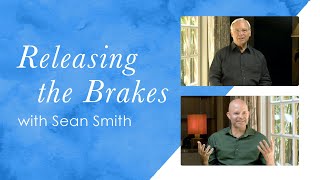
Sean Smith, a Success Principles trainer, describes how a teleseminar shifted him from playing it safe to building a coaching career. He credits Success Principle No. 10, "Releasing the Brakes," with his biggest breakthroughs, explaining how limiting beliefs resurface each time you level up, like border patrol guarding your comfort zone.
Questions this video answers
2021-07-01
More than 3,800 people
107 countries
Over $300,000
No. 10 — "Releasing the Brakes"
Chapters
Hello and welcome. I'm Jack Canfield. I'm really excited to be here with you today to launch a new segment where I'll be unpacking the success principles with some of our top certified trainers and coaches. Now, for over 40 years, I devoted my life to helping people create lives of greater joy and fulfillment based on their definition of success. And through my books, my workshops, and my digital programs, I. I've empowered millions of people to live their highest vision. And I've trained and certified more than 3,800 people to teach my proven success methodology in 107 countries around the world. And today I'm here with Sean Smith, who's one of the first people to become a certified success principles trainer. Sean is also a successful author, a poet, an actor, a TEDx speaker, and creator of Elite Coaching University and the Neuro Transformational Coaching Method. I love it. Sean, you've done so many cool things. It's really good. So welcome to our studio.
Thank you and thanks for being such a catalyst for all those things.
Well, thank you for responding to it and taking your life to the next level and supporting all the people along the way. I know you've made a huge difference in so many lives. I haven't seen you for a long time, so it's good to have you in the studio.
I used to have hair.
I think you used to have hair. I used to have dark hair. So anyway, thanks for being here. So before we dump into where I want to go with you later, just tell our audience a little bit about how you discovered the work that I do and how you got into it. What was that journey like?
It was on a teleseminar, remember those way back when? And I was just frustrated, you know, I was. I knew I had work ethic and I was involved in a couple businesses and just wasn't producing the results that I wanted financially primarily, and business. And I heard you talk about breakthrough to success and I had this voice that immediately said, I want to go to that. Right? It sounds really cool. But then I had this other voice that said, it's too many days, too expensive. We don't do things like that. And so I immediately shut it down, like, okay, well, I'll just continue banging my head against the wall. But then I had this voice of wisdom and intuition that said, yeah, you don't do things like that and you also don't have what you want. And it was just this massive connection of the dots for me. And I realized I've been demanding the results without following the recipe. I've been wanting my growth to be comfortable, which I think is easy for us to do. And over the years, I just learned that there's no familiar path to uncharted territory. And yet that's what I was demanding at the time. I want it to be easy. I want to know exactly what it looks like so I can pack a bag and I can, you know, understand that I'm going to be good. And. And it just called me forward. Like, just the invitation called me forward to do something I'd never done before. So that's what got me into the room. And then in the room, I remember we were doing some. Some purpose exercise or a combination of exercises. And I remember you had us go from one group to another. And as I was going from one group to the next, I had my binder open, and I had just written, like, the first draft of the purpose exercise that you walked us through. And as I read it, I just felt this overwhelming sadness, like, shame, you know, like, I'll never do that. I'm not good enough. And I was sitting myself down again, essentially. And then that voice of wisdom showed up again, and it said, how many people have you not helped because you won't get over your fears? And I literally stopped, you know, created a little traffic jam. Some people bumped into me. But that moment just changed my entire life because it changed my fuel. It changed the reason you talk so much about service and helping other people. And in that moment, I switched from being more committed to my safety to being more committed to my service. And I just thought, you know, how many kids are out there? At the time, I really wanted to help kids. How many kids are out there that are on drugs or on gang or in gangs and just struggling with their life because you're sitting on your hands. And I remember I start crying, like, I gotta do this work. And so that was the moment that I just tapped into a different fuel and just became ignorance on fire. I mean, I didn't know what I was doing, but I was doing a lot of it right. And I've learned that ignorance on fire is much better than knowledge on ice. And so I just was driven by this idea. They gotta feel what I felt. And so I started. I quit the businesses that I was in, and I started speaking and coaching and stayed connected to your work and all the seminars. And we generated over $300,000 our first 18 months as a coach and just kept going, you know. And since then, I don't know, it's been millions of Dollars and traveled the globe. And it's really cool to actually look back on the 15 years and remember that moment in the room that really ignited all of it.
That's wild. I loved hearing that. That's so cool. I just love looking at your face. You're so lit up right now.
Remembering.
It's good. So I've written this book, you know, the success principle. I think when you read it, there were 64 principles and we did a 10th year anniversary that are 67 out of all those principles. As you look back on your life in these years since then, what principle would you say is the favorite one or the one that had the most impact in your life?
Yeah, it's actually easy for me to pick that one out. And it's number 10, I believe it's releasing the breaks. And first of all, I pulled out the book the other day to look, to scan through and I was like, this is just a work of absolute genius. You know, I was like 500 something pages, amazing. So I commend you. And that's one of the reasons that got me into the room is you had just release that book. And so for me, releasing the breaks has been everything. And what was stopping me early on was, you know, the fear of not being good enough. What if I take action and what if it doesn't work and what if people don't like me and all the what ifs that shut us down. And as soon as I got over this, I'm not good enough, I just took a bunch of action. But I coasted for a while, right? Like I thought once I got over that, then I was done. And after I'd say a couple years of being relatively successful, I wanted bigger goals and bigger dreams. And then the thoughts came back, right? These thoughts of I'm not good enough. And it was so strange because I thought, like, I was done with that. You know, I already checked that one off the box. I checked that box. And so what that taught me is that this is not a line to cross. This being the brakes. It's not a line to cross, it's not a box to check. And as soon as I had bigger goals, then the doubts came back. And it was so cool. As I was wrestling with all this stuff, probably back in 2008, I was walking around my studio office and I just had this vision of like, all these walls are my comfort zone and as if they showed up in real life. I imagined a bunch of people sitting, sitting on top of the walls. And it was like, this is My border patrol, like these guys are here to keep me in this room because that's who was telling me, you're not good enough and it's not going to be safe. And so this process of just trying to understand, you know, why are they saying these things to me and why am I sitting myself down and why am I beating myself up? I recognize that I put them there, right? Like I told them what isn't safe. I told them, don't let me see the biggest spotlights and don't let me really go after all the money. And so they were just essentially doing their job. And what I recognized is the closest I got to the walls, the louder they got because I was threatening the walls. And that's what their whole mission was, is to keep me inside these walls. And so over the years, I've just learned that when the inner doubts get loud, that's not a warning sign to turn around and go away. It's a welcome sign to keep going because we're almost there, you know, And I know you know this. You teach it that so many of us stop just before, just before the big breakthrough. And so now I don't get scared when the doubts are screaming at me. Now I get scared when they're silent. Because if they're silent, that means I'm not threatening the walls, I'm not risking anything. I'm just sitting in the middle of my comfort zone. And that's when they can take a break, right? And go to the break room. Like, he's not doing anything. So, you know, we don't have to be on our post. And this dance, I think with our, with our doubts is probably the most important thing that I've learned in 15 plus years doing this work is that we have to understand this is, this is an evolution. You know, this isn't a line that you just cross. And now I'm good. And now I'll have no fears again. And now I'll never doubt myself again. I think too many people are waiting for that to happen before they get in motion. And what I've learned is that it's just, it's such an evolutionary process. Right. And I had this other cool vision. I think you'll like it. Do you ever see the movie? I think it's Game of Death. Bruce Lee, Old Bruce Lee movie. Yeah. He had like the yellow jumpsuit on. And that was one of the most iconic moments because he fought Kareem Abdul Jabbar. Right? Remember, big seven foot guy? Well, in that movie, Bruce Lee fights A bad guy. And then when he kills the bad guy, then he goes up the stairs to the next level, and there's a different bad guy with a different weapon. For whatever reason, I had this vision one day that, like, that's, like, personal development. I feel like I'm fighting all these bad guys, but why do they keep showing up again? I figured if I beat, you know, I'm not good enough, then they would just be sitting on the ground, and I never have to see him again. And what I've learned is that we all essentially have just a collection of big fears. And we might defeat the bad guys on level one, but as soon as we go to the next level, those same guys are just gonna greet us at the door. But I used to think that means I was taking a step back. And it wasn't until I'd probably say about five years in that I recognized that I was just evolving, right? It's like Pac man, you go to the next level. Were you thinking the same thing? Right? Maybe because I look like him, you go to the next level, and it's the same monsters, but they're a little faster. But we are faster also, right, as Pac Man. So we need to recognize that us bumping up against level two of I'm not good enough, or level two of whatever our fears are, is actually pulling progress. And life is. Is about just making progress. It's not about getting rid of, you know, all of our fears. And I think so many people think it's. It's. It's a thing that it really isn't. So many people think it's just almost like this linear, you know, this linear road, and hopefully it's paved all smooth and it's a little downhill so that we can just jump on it.
I'm good enough to do cable television, but I'm not good enough to be on NBC. I was on NBC, but I'm not good enough to be on Oprah. Just on Oprah. I'm not good enough to talk to the UN or something. It just keeps going. But each time you conquer that, then that room gets bigger. As you're saying, people on the wall get. Send it out a little bit, right?
And the border patrol will always be there. It's just the walls are moving out. So I think our mission is really to expand the walls, just continually pushing the walls out. And I remember you telling a version of that story. That was one of the things that really helped me, because here I see Jack Canfield and all the things that you're doing. And you're the one on stage and I'm buying your books and all that. And I remember you saying, I think you had just maybe sat down with Bill Clinton or one of the presidents and you recognized that you had this fear show up. And that helped me realize that even somebody that's gone through as much as you've gone through, we still have that human process. And I recognize that you, you know, personal development is not about what I think most people think it is not about becoming somebody that you're not. I think personal development is about unbecoming everything that we're not. You know, we put on all these layers and all these masks and essentially we just. We just walk around. I know you remember the book, you know, Are youe My Mother? Right? We're walking around instead of going, are you my mother? We're walking around with all these layers going, well, you like me in this and what if I change this? Will you like me in this? And will you not leave me if I show up as this, you know, not version of myself? And I just recognize that it's exhausting. There's nothing more exhausting than inauthenticity. It just takes so much out of us to keep all these layers on. And when we can get back to that place of who we truly are underneath all those layers, we get back to that essential space where love and joy and desire and taking action. That's where we have this default motor to go. And it's not about just continuing to try to motivate ourselves out of our fears. So I've just learned that this journey is about stepping more into who I am. And it doesn't mean that I like if people don't like my work or if people don't like what I have to say. It's not like I enjoy people not agreeing with me. It's just that I don't wait for their permission anymore. Right. Like I always tell people, so many of us won't speak our message until it's pre approved. Right? So somebody pre purchases the album, then we'll go ahead and sing our song. But it's really not about being pre approved. It's about being me approved. And now I say things not because I want everybody else to agree with them. I say things because I just have things to say. And I'm just more driven by the fear of recovery than, you know, the fear of rejection.
And no, it's true. Nobody on their deathbed ever regrets what they did. Do they regret what they didn't do.
That's the piece. And I can feel the energy of this coming up. And I just made a decision to no longer save any room in my casket for potential.
Live it all out.
Live it all out. Turn down an empty glass.
That's a beautiful life. I love it. I love it. I love it. Well, you've talked about a lot of principles. You snuck a lot of stuff in there. About taking action, about not letting fear stop you, about confronting your limiting beliefs. You know, driving through our life with the emergency brakes on, we need to let that go. That's appropriate. The trick is we're not all parked on a hill. We don't need that emergency break. You know, we need to let it go. And a lot of us are driving with and I love a couple of quotes you said today. No such thing as a familiar path to uncharted territory. That's powerful. And personal development is not about becoming something we're not. It's more about unbecoming everything we're not. And something you had talked about before we came on air. You said we're not running from the dangers of the future as much as we're running from the damages of the past. I think that's a really powerful thing. I loved when you talk. Told me that. So anyway, thanks for coming here and sharing all that with you. We could talk forever. It's so much fun. So thanks for joining us today, Sean.
Thank you for not just this, but who you've been in my life.
You're welcome. You're welcome. And thank all of you for watching today. I'd like to challenge you to think about what are the ways in which you can implement this success principle in your life? This week, I want you to ask yourself the questions, Am I avoiding committing to a path of progress, personal growth, because it might be uncomfortable? What is it that I want to express that I'm holding back from expressing? And what limiting belief is stopping me from taking action? Am I willing to choose to believe the opposite is true? So I want you to think about this. You probably believed in Santa Claus for eight years. Are you willing to believe in yourself for like eight months and just see what happens? And finally, am I willing to be afraid and take action to anyway? And if you do, I promise you your life will change for the better. Well, you've learned a little bit about our good friend Sean Smith and his favorite success principle, and I'd like to learn a little bit more about you. So I'd love to hear about what your favorite success principle is. And why it's your favorite. And to do that, I invite you to record a video explaining which one of the success principles has transformed your life or resonated the most with you, and why. And then go ahead and post that. Make the video. Post it on Instagram, Twitter, Facebook, using the hashtag favorite Success principle so we can find your video and future it. Feature it on one of my future channels, if you will. I'm going to leave that in there. We won't edit it out. That's how we talk here. We feature our future anyway, so I can't wait to see what you guys come up with. And if you found this video helpful, please make sure you like it and subscribe to this channel for more videos like this one. And thanks again for watching. And remember, nothing in your life will change until you do.
More from Jack






[EP 46] Creating Your Own Luck: The Power of Self-Confidence with Veronica de Andrés

[EP 45] Rewiring the Brain for Bliss: Activating Your Spiritual Intelligence with Dr. Dawson Church


[EP 43] Transform Your Life Through Visualization and Emotional Intelligence with Natalie Ledwell

[42] Enhancing Your Health & Longevity Through Peptides and Functional Medicine with Regan Archibald

[Episode 41] The Success Principles 20 Years Later: What’s Changed and What Still Works