Self Esteem for Kids | The Big Bad Bully, with Miriam Laundry & Jack Canfield
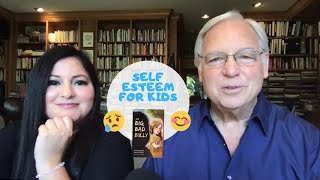
Jack Canfield and Miriam Laundrie read from The Big Bad Bully and lead kids through exercises to build self-esteem, including affirmations, mirror work, and guided visualization. They cover how to handle the internal bully, turn "I can't" into "I can," and answer questions about meditation for kids and using the book in classrooms.
Chapters
So welcome. I'm Jack Canfield. You probably know me as the co author of the Chicken Soup for the Soul series. And I'm just going to minimize my screen here so I can see some things. Where did I do that?
Hi, I'm Miriam Laundrie. I am from Canada and now in beautiful California.
Very good, very good, very good, very good. All right, so basically we just want you to know that we're going to be doing this today. We're going to be reading this story to you. We're gonna be taking some questions and I want you to know one of the reasons I'm really excited is that I have a grandson. His name is Ozzie. There he is, such a cute little kid. And he's gonna be watching with us today. So I'm really excited that he's with us. And Miriam, you have four children?
I have four children. I have two teenage daughters right now. On the one side is my 16 year old. In the middle, my 14 year old. And then my boys are 12 and 7. And truly they're. I write children's books.
That's great. So we're really excited to be sharing all this with you. Go back to our major screen here. There we are. And so basically what's going to happen? As I said, we're going to read this story. This is a very powerful story that really has tremendous impact. Then what we're going to do is we're going to do some exercises and some activities with you so that you'll be able to take this information and actually integrate it into your life so that you can have just feel better about yourself. We all have bullies in our life and we want you to become your best friend so that you don't let the bullies in your life run you. So, Miriam, what inspired you to want to write this book?
Well, a few years ago, my daughter was 12 years old at the time and she was dealing with her own bad bully. This bully was criticizing her. She was being criticized because of her frizzy hair. She was being criticized because she was short. She was being criticized because she started getting pimp on her face. And it was really a difficult time for my daughter. She was suffering a lot from this. I don't know if you have been bullied before. You understand how difficult this is. And bullying comes in many forms. Sometimes it could be a classmate, sometimes it could be your brother, your sister, sometimes even a friend. And we really need to learn how to stand up for ourselves and be strong when this is happening. So I had A really deep conversation with my daughter during that time. And after I was able to her, I thought, well, if she is going through this bullying, then there are many, many other children going through it. And that's when I decided I would put this into a story. I contacted you and together we wrote the Big Bad Bully.
Very good. So you're going to read the story and I love the story and why don't you go ahead and do it?
So just sit down and relax. Enjoy the story. Jack and I co wrote it and our illustrator is Eva Morales from Spain. The Big Bad Bully. Pigtails are for babies. She snarled at me. Her words hurt more than the time I broke my arm. I quickly untied my hair. I wore my hair down for the rest of the school year. That was the first time I met the Big Bad Bully. I was in the second grade. I'm not sure where she came from. I had never noticed her at school before. But she noticed me every day that year. And in grade three, grade four, Grade five, she called me names like Fatty, Piglet and ugly. Things are worse now that I'm in the sixth grade. Even when I don't see her, I can always hear the whispers, the giggles and the growls. Who dressed you today? Your baby sister? Hey, fuzzball. Ever hear of a comb? Now she makes fun of my face. How did you possibly fit another zit on that nose of yours? Many nights I cry myself to sleep. How can someone be so cruel? Doesn't she know that words hurt? I don't know what to do anymore. I have to put a stop to this. But I am weak when bully is around. Tomorrow is my day, I tell myself. But will I be strong enough to face the Big bad bully? Or will I run away like a scared little chicken? I woke up ready. I ate a good breakfast and headed to school. I knew I would find her in the girl's bathroom like I usually did. I was going to put an end to this once and for all. I quietly opened the bathroom door and took one slow step inside. I am brave, I told myself. I can do this, I whispered. I looked up and there she stood right in front of me. A lump formed in my throat when our eyes met. I was about to say something, but I stopped myself Instead, I looked deep into her eyes. And that's when I saw her. Really saw her for the first time. She was me. She was the one that had been bullying herself this whole time. Sometimes we do that. This girl's bully started in grade one when she looked at herself in the mirror thought, pigtails are for babies. And the bullying continued later on with. Whenever she'd look in the mirror, she'd think, you're a fatty piglet ugly. And we do this to ourselves. It was the same bully that did this to my daughter. She was bullying herself. She was looking in front of the mirror one evening and saying things like, why are my legs so short? Why do I have so many pimples? Why is my hair so frizzy? So. So we wrote the story so that we understand that sometimes the bully is an internal bully, the bully in our minds. And most stories have. At the end of a story, it says the end. Well, for our story, we want to say it's the beginning.
We really believe that it is the beginning for you. Because basically what happens to us is that we're constantly judging ourselves and criticizing ourself. And so often when we do that, we end up feeling really, really bad about ourselves, and it can depress us. And we don't want you to be depressed. We want you to be empowered and excited about yourself, in love with yourself and all of that. So what we're going to do to help you integrate this and let this take you to the next level is to read, to go through some exercises with us. But first of all, think about this. You have an inner bully, I have an inner bully. We all have inner bullies. And the way we bully ourselves is by saying negative things to ourselves, like, I'm not smart enough. I'm not athletic, too big. My nose is too big, My hair is too curly. I'm too short, I'm too tall. And so what happens is we're going around saying, I'm too fat, I'm too skinny, not pretty enough, nobody likes me, I'll never make the soccer team. I can't sing like Emily sings. I can't dance, I can't do math. I don't have any followers on social media. I'm a loser. So all of these things that we say to ourselves actually make us feel really, really bad. And so what we want to do is teach you some ways to turn your inner beauty into your inner friend, someone who really supports you and loves you. And so I'm going to teach you a couple of techniques, and we're going to practice them today as we're here as a group. So the first one is called the Mirror exercise. And the mirror Exercise is something you do where you stand in front of the mirror, and what happens is you're going to go through three stages where you Talk to yourself. And the first thing you're going to do is look. Make eye contact with yourself. Look yourself right in the eye and say the words I. You say your name. So for me I would say, hi, I'm Jack. And what you do is you're calling your consciousness forward so that you pay attention to yourself. So I would look in the mirror and say Jack. And then what happens is the next thing I would say is all the things I want to acknowledge and appreciate myself for that day. So for example, I might say things like, jack, I want to acknowledge you today for finishing your homework, for getting up and going to school on time, for not being a problem when your mom was trying to get you out of bed and get dressed. You got up without a fight. And then you got to school, you went to class, you got an A on your spelling test today, Jack, that's really great. And then you went and you went to soccer practice and you scored a goal in practice, which was really cool. You came home, you took the dog for a walk, which you didn't have a fight about that with your mom as well. You ate all your food for dinner, including your vegetables. You did your homework and you didn't stay up until midnight watching video games after your mom closed the door and you turned on your flashlight or got out your cell phone. And you're going to get a good night's sleep. And then you end by saying I love you. And what happens is for most of us, it's difficult sometimes to say I love you to ourselves. It can be pretty awkward. But we need to that the most important love you can get is the love you give yourself. And then obviously there's a love of your parents, the love of your friends, the love of God and so forth. But the reality is that your love is really, really important. And so often when we do things like that, it feels a little awkward at first. But I'm going to encourage you. Every night, either alone or maybe with your parents, you actually do the mirror exercise. And what we know is if you do this for a month, month, every day and don't miss a day, it's going to be really important and really powerful to help transform your self esteem, your self confidence, your level of happiness, your willingness to take risks, to express yourself fully, to ask for what you want and all of that. So basically again, start with your name and then you say all the things you appreciate about yourself, Any disciplines you kept, like maybe you did your practice to piano, maybe you practiced soccer kicks in the backyard, maybe you worked on your spelling test, whatever it is, but little disciplines that you do on a regular basis. Maybe you are learning to play the guitar, and so you did your scales, but whatever it is, any disciplines, and any temptations you overcame, you didn't eat candy, maybe you're working on losing some weight, or you just want to be healthier. And so all of those kind of little disciplines, any temptations you didn't do. And then you end with I love you. And then finally be the person in the mirror. So if I was talking to myself in the mirror, I would take a deep breath at the end, go become the person in the mirror who heard all that, and then say the words, thank you. So what I'd like you to do right now, to practice this, since we're not all sitting or standing in front of mirrors, is to simply go ahead and close your eyes. So wherever you're sitting, just close your eyes, Take a couple deep breaths, and with your body, just let your shoulders relax. Take another deep breath and then exhale all the air out of your mouth, out of your chest, out of your stomach. Take one more deep breath and exhale deeply again. Very good. And then start by saying your name to yourself. So imagine you're standing in front of a mirror. Maybe it's in your bathroom, maybe it's in a door, or it's on the wall of your room. And you're looking deeply into your eyes. You're smiling at yourself. And then you just simply say your name so that you call yourself forward. And then begin to think about and to say out loud, not out loud in the room, but imagine out loud you would do this at home. So you're imagining now saying, I appreciate you for the following things. Think about whatever it is you need to appreciate yourself for. Any successes you had. Maybe yesterday or today at school, Maybe in some kind of practice. At home. Maybe something you did for a friend, something kind you did. Maybe something having to do with sports or playing an instrument. Maybe you reached a new level in a video game. And then also appreciate yourself for anything that you didn't do that would not be the best thing for you. Maybe you didn't eat a lot of candy. Maybe you didn't watch too much tv. Maybe you avoided teasing your sister or having a fight with your brother. Maybe you avoided saying something mean to some. Some other kid in your class or on the playground. And then end by looking deeply into your eyes and saying the words, I love you, Knowing that you are worthy of love, worthy of attention, worthy of respect. Worthy of being appreciated. Then imagine being the person in the mirror who just heard all those words. Take a deep breath and breathe them in. Take one more deep breath. Imagine saying the words thank you to the person who just said all those words to you. Thank you. Now one more thing. Appreciate yourself for appreciating yourself. Very good. Then go ahead and open your eyes, come on back and join us and just notice how it feels to have appreciated yourself. Very good. I'm going to suggest you do that every single day for at least a month. And if you do that every night, every day for a month, you're going to find that you're going to feel better. You're going to stop saying negative things to yourself because you're going to be replacing that with positive things that you say to yourself. Now one of the other things I want you to do is I want you to begin to look at what are all the things you tell yourself you can't do. You probably have a lot of what we call self talk where you talk to yourself. You say things like, I can't sing, I can't do math, I can't do a cartwheel, I'll never make the soccer team, I can't speak in front of the class. That's too scary. I can't swim, I can't score a goal. You know, I could do a lot of things, but I can't spell, I can't really write, I can't draw. My brother's a good drawer, but I can't draw like him. I can't ride my bike, I can't skate, I can't skateboard, I can't make the team. So all those things when you say I can't, if I were there with you, I would have you put your right arm out to the side and every time you said can't, I would push down on your arm, make your arm really weak. Then I would have you say I can, I can play soccer, I can sing, I can dance, I can do math. Your arm will be really, really, really strong. And what that tells you is every time you say the words can't, you're actually making yourself weak, physically weak. And what happens out of that is you actually become a self fulfilling prophecy where you start to actually not be able to do it as well because you tell yourself you can't do it. You know, I used to teach high school a long, long time ago and I was working with some of the math teachers because I taught history. And I would have them all have them close their Eyes the kids in the class and say, I can do math. I'm really good at math. And they would actually do better on their math problems. So when you're about to take a test, you can say, I can get an A on this test, I can get an A on this paper. And it literally actually helps you be better at it. So one of the things I want you to do is maybe tonight, or maybe your teacher will have you do this or your parents will have you do this. After we're done today, make a list of all the things you've been telling yourself you can't do. And then what I want you to do is I want you to crumble it up, throw it in a garbage. Maybe you want to take it and, you know, have your mom or dad help you and just burn it. I know that Miriam, when she goes into classrooms and she helps kids do that, she actually brings a paper shredder. Which you call shreddy, right?
That's right.
And you have all the kids come up and just shred their list of I can'ts.
Yes. And it's about letting go of all those I can'ts. And it's really just a thought. When we say I can't to ourselves, we are basically not even giving it a chance. We're not going to try. But when we change that I can't to an I can, that gives us possibilities. There's a chance, and you're going to go for it. Yes. So I get the students to write their I can'ts, and then we shred them. You can use scissors, cut it up, rip it up, whatever you want to do, but let it go.
And then what you want to do is take all those things you said I can't and actually write a list that says I can. I can sing, I can dance, I can do math, I can impress my friends. I can shoot the basketball and get it to go through the hoop. I can do nothing but net whatever it is that you want to do, totally say it. And the more you say it, the more you'll believe it. And the more you believe it, the more you'll actually be able to do it. Now, there's a little technique I want to teach you. It's called affirmations. Affirmations are positive sentences that you say to yourself. And you're going to replace your inner bully thoughts with your positive inner friend thoughts. And I'm going to say some affirmations right now. And what I want you to do is to repeat them out loud after I say them. So if I say I'm a good person, you're going to repeat out loud, I'm a good person. And so to help you with that, I think what we'll do is I'll say I'm a good person, and then Miriam will repeat it back, like with you. So, you know, that's the timing of the right time to say it. And then we'll just go through this list because I want you to affirm all these things we're about to say are actually true of you, and you'll come to believe them and support yourself and become your inner friend instead of your inner beauty. So are you ready?
Inner bully.
Inner bully. Right? We want you to be your inner friend. So here we go. Get ready to do this. Everyone say, say these really loud, wherever you are. Don't worry about what anyone else thinks of you. You might want to sit up straight, take a deep breath, stick your chin out, stick your chest out like you're really powerful. And here we go. I'm a good person.
I'm a good person.
My words are powerful.
My words are powerful.
I'm a positive person.
I'm a positive person.
I think positive thoughts about myself.
I think positive thoughts about myself.
Now only say nice things about myself.
I now only say nice things about myself.
I remind myself how great I am.
I remind myself how great I am.
I am important.
I am important.
I am smart.
I am smart.
I am beautiful.
I am beautiful.
I am handsome.
I am handsome.
I love who I am.
I love who I am.
I am worthy of your love.
I am worthy of your love.
I am worthy of your time and attention.
I am worthy of your time and attention.
I am special and unique.
I am special and unique.
I am creative.
I am creative.
I can learn anything.
I can learn anything.
I believe I can do anything.
I believe I can do anything.
I always do the best I can.
I always do the best I can.
I get better and better every day.
I get better and better every day.
Very good. Now take a deep breath. Let that out, and just notice how you feel right now. See, when you say those positive things to yourself, it actually affects how you feel. And so it's not so much what other people say to you, it's what you believe about yourself that really matters. I mean, I could come to school and tell you you had green hair, but you probably wouldn't get too upset by that because, you know, you don't have green hair. Now maybe one or two of you do. That's okay because you Dye your hair. That's cool. But what I'm saying is, you know what color your hair is. And so it doesn't matter what anyone says to you. You know what color your hair is. As you begin to affirm these affirmations every day, and again, I would implore you and encourage you to do these affirmations every single day. Think about all the positive things you'd like to believe about yourself and then just repeat them. And over and over, those words become a belief that you actually believe. And so I would recommend that you write your affirmations down, the things you want to affirm about yourself and place them where you'll see them every day. Perhaps on your bathroom mirror. It might be on your bulletin board. Maybe use tape, maybe use pushpins. It could be inside your notebook, your journal or your cell phone, and just say those every day. Also, you can go to YouTube and there are some wonderful videos that last about six, seven minutes. And they have affirmations just like I read to you. And there's music behind them and the person says the affirmation. You repeat them just like we did here. And I'll tell you two of them, you. And maybe you can write these down or the adults you're with can write them down and then you can go there. One's called 33 positive affirmations for Kids Self Esteem. Another one is called 39 EPIC Affirmations for Kids Success and Confidence. And if I'm going too fast, you can always review this, watch this video again and write those down. And for older kids, we have a wonderful friend named Romeo Marquez. He's kind of a rap singer and he has a track called I Am on his Awakening Greatness Morning inspiration YouTube audio. That's Romeo Marquez Jr. The I Am track on his Awakening Greatness Morning Inspiration YouTube.
Yeah, I wanted to share that. I actually had Romeo CD in my minivan and I would put it on when the kids were coming on coming in the van. Whenever I had to drive them to practices, I would have his music. Because it's positive, it's affirming. If you're a parent out there, you want to do these things for your kids and support them.
Very good. So another thing that we recommend you do, it's a fun little exercise and we recommend all of you do it. You can do it in class, you can do it at home. And it's basically taking your name and with your name, taking the first letters of your name and writing them down the left hand side of the page like this. So There we see Jack. And then what you do is you actually come up with a word. It's a positive quality that you have. And you put that. It starts with those letters. So for me, Jack becomes joyful. Because I'm a very, very happy guy all the time. I'm very athletic. Played a lot of sports when I was growing up. Football and basketball and track and swimming. And I still do all kinds of exercises and work out in the gym and go jogging today. And I'm kind. I'm a very nice person. And everyone says, you're a very kind person, Jack. So you take your name and think of what are qualities that start with each of those letters. And you can make that. And if you're in a class, you could have everyone put everyone up around the room. And also you could have your friends tell you what they think your positive qualities are to start with those letters so you can get some feedback from what they see as your positive qualities as well. And Miriam's going to share hers with you.
Here are mine. Magnificent, inventive, radiant, inspiring. Artistic and musical.
You are artistic and musical. I love all that.
Well, I enjoy listening to music.
Well, but then you've got a daughter who's a singer. Actually thinking about becoming a professional singer. And plays the piano, plays the guitar.
I love listening to her.
Very musical. Okay, now, another thing we're going to do with you is we're going to do a meditation. Now, what does that mean? I'm going to ask you to close your eyes and focus. You don't have to close them yet, but focus on something you'd like to be better at. See our inner beauty. Our inner bully rather tends to put us down and tell us we can't do anything. But your inner friend believes you can do anything you want. And one way to support that is to imagine yourself having already done the thing you want to do. Now, as we do this little exercise, I'm going to have you close your eyes in a minute and imagine that you're looking out through your eyes at what you would see if you were doing something you would like to be better at, something you would like to have a success in. So it might be getting a good grade in school. It might be reading something in front of the class without being nervous. It might be having the courage to raise your hand and answer a question in the classroom. Or it might be scoring a winning goal in a soccer match or hitting a home run in a Little League game. Or it might be doing really well in gymnastics or performing well in a musical instrument or singing, like your daughter, or dancing, whatever that might be. So what I'd like you to do is to go ahead and again, sit up comfortably, close your eyes, let your shoulders relax. Just become aware of your shoulders and let your breath begin to slow down a little bit. So just take a longer, deeper breath in. Your eyes are closed, your shoulders are relaxing. Breath is getting deeper and slower and longer. Then just go ahead, take one more deep breath and exhale all the air out. And first, focus for a moment on something you really are already good at, something you do really well, whatever that might be. Could be a hobby you have, could be a game you play, could be hopscotch, jacks, baseball, soccer. Could be something you do online. Anything at all that you feel you're already really good at. Maybe you're a really good speller, maybe you're good at math, Maybe you like to draw, and you draw really well. And just take a moment and just acknowledge how good you are at that one thing. And now begin to focus on something you'd like to be better at. Might be, as I said, getting a good grade in some class in school that's been challenging for you. Or scoring the winning goal in a soccer match or a home run in baseball, or doing something really well in volleyball. Or maybe it's performing well on a musical instrument, or singing or dancing or acting in a play, or mastering a magic trick, or getting really good at a video game, or learning to skateboard better. Whatever it is, focus on that. And for a moment, imagine what it would feel like if you were doing that thing really well right now. What would it feel like to get a good grade or to score that goal or to perform perfectly? Imagine doing it. How would you feel in your body? What expression would be on your face? Let yourself feel how proud you would feel having accomplished this goal, achieved this success, done this thing really well. And then think, who else would be happy for you? Your friends, Your family, anybody else, Your coach. And imagine them right now cheering you on, feeling happy for you, feeling proud of you, and celebrating your success. How does that feel? And now bring your attention back to your breathing. And then go ahead, take a really deep breath. And then let that breath out. And remember, you are always able to close your eyes and touch back into this vision. And imagine being happy as you achieve your goals. And this will actually help you achieve them. And now take one more deep breath. And as you exhale and breathe out, go ahead and open your eyes.
And.
Just notice how you feel right now, very Good. Now remember, you can close your eyes and imagine doing anything you want. Well, and that will actually help you be more successful at whatever you're imagining. It's also going to make you feel more confident and happier just by imagining it. Now, the last thing we want to do to share with you before we open up the space to take some questions is we're going to talk to you about creating something called a vision board. Now, vision board is a place where you glue or you pace, or you take pictures of the things you want to do, things you want to be, things you want to experience, things you want to have. Now, it can be on a poster board, can be on a big piece of paper, or even on a bulletin board. You can tack it up with pushpins or thumbtacks. And you also can add words to your vision board that express what you want to experience. Words like love, joy, happiness, fun, calm, strong friends, or things you want to do like surfing, swimming, dancing, and so on. So you would take pictures. You can cut them out of magazines. You can go on Google, type in anything you want. Can be a certain toy you want. Could be some clothes you want, some shoes you want some sporting equipment. You want pictures of people playing basketball or volleyball or people at the beach, whatever it is you want. And then you could go to Google Images. You go to Google, type in the thing, hit images, and then you can basically print those out, cut them up, put them on your vision board. And you also want words and phrases like I am smart, I'm lovable, I'm strong, I'm kind, things like that. So here's the pictures of some kids who we know who've actually gone and put things on your vision board. Now, you can do these things at home. Like you see here a family where one night they all got together and made their vision boards. Here's looks like a boy and his sister who've done their vision boards at home. And then you can also, here's another one that some kids made. You can see the hands there holding up their vision board. You can make a family vision board as well. There are actually companies that sell vision boards that you can fill in with words and pictures. And so you see, this one has different categories of my goals. I'm dreaming of places I want to go. We see California, Italy, Yellowstone National Park, Cape Town, South Africa. Over there it says, inspire me. Who are the people that inspire you? And then things you want to try on this vision board, we see kayaking and yoga and swimming with the whales. And then pictures of like, the best day you'd like to experience, pictures of people you'd like to love. And you see words there. Here's another one. We see a picture. This is one that my company sells. You just go to jackcampfield.com and this vision board looks like a book. You can actually close it, take it with you when you go on vacation. Or if you want it to be more private, you can fold it up and stick it in your drawer, or you can unfold it and put it on your dresser or next to your bed. And it comes with all these words like, I am perfect, just as I am. I am grateful. I can do anything. Lots of love. You see pictures of herself, pictures with her family. Looks like people playing soccer there, her being an artist and so forth. So also, you can do this as a whole class. Here's a group of girls that are. One of them is a daughter of a friend of mine, and she got a bunch of those vision boards, and they had a vision board party. And you see they all ended up with their own vision boards. So you can do that as well. And then you can also do it as a school class. I love this project where the teacher had everybody make their own vision board. Then they put them up on the lockers in the hall, and then they went around and everyone got to explain their vision board and what was on their vision board. Everyone got to know each other a lot better about what they really cared about and what they really wanted in their life. So I really want to strongly encourage you to make a vision board and to do that in your class. Do it with your family, do it by yourself, however you want to do that. So it's really, really very powerful as a technique. And so make sure you take time to do that. At some point in your life, you're going to be really glad you did. And then what you want to do is every day, look at your vision board, and it'll remind you of all the things you want to do, the things you love, the things you care about, the things you're aspiring to become. So now what we're going to do is we have a little time left. We're going to open up. If any of you have any questions, what we'd like you to do is type them into the chat. You can do it, or your teacher can do it. Your parent can do it, if you're watching at home or with a grandparent. And if you have any questions for us about the book, about any of the things we've talked About. About turning that inner bully into an inner friend or anything about us. Go ahead and type that into the chat and we will take a look at that and we will see if we can answer them. I see a lot of people saying, hi. Appreciate that. If you have a question, let us know. Some people saying, we love your book. Thank you for writing it. Great story, Strong message. I'm going to do this with my women's empowerment group with adults. This is great. For those who don't have mirrors in front of them, they can turn their phone's camera to selfie mode. I never thought of that. You can do that. That's really cool. In today's modern technology, you don't even need a mirror. You can do this sitting in bed and you can look at yourself and do the mirror exercise. That's a cool idea. Thank you for that. Looking to see if there's any questions here. How do you deal with teachers, Meditation, resistance. Basically, you know, a lot of times people, the word meditation scares people because they think it might have to do with some religion. Just use the term guided visualization. That'd probably been a better term I could have used there. Just imagine closing your eyes and simply imagining what you want. This is what people do all the time. You know, you lie in bed and you think about how cool it would be to score a goal, how cool it would be to get an A, how cool it would be to have somebody ask you out on a date, you know, whatever it might be. And that's a natural thing we do. I mean, we have to imagine every day, just when we get up, like, what are we going to wear today? And so you imagine what kind of clothes you're going to put on and how you're going to look and how people are going to respond to that. So all athletes visualize their successes. If you're an Olympic athlete, you visualize crossing the finish line ahead of everyone else. You visualize hitting that home run. You visualize scoring the goal. And so this is a very natural thing. So don't worry about the phrase so much. I love this term, too. Someone says you can also use the phrase dreaming awake. Dreaming. That's good. It's just a daydream. We all daydream. We look out the window and we imagine being on vacation and so forth. So it's just conscious dreaming.
There was a question I saw.
Okay.
Somebody asked if the mirror exercise is included in the book. Yes, it is. So at the back of the story, the mirror exercises there.
Put this down. So it doesn't glare. Yeah.
Plus several other exercises like the affirmations are in there. Jackals. We also included.
There's a bunch of exercises in the back of the book, the one we did with writing your name down. You can see there's as well, there's some examples of that. So there's a number of activities that are there when we end this call. I'll also share with you a couple of resources for those of you that are teachers and parents. We have a curriculum called self esteem in the classroom. Things like that. Question says. I'm interested to know more about the influence of social media and its influence on the interviewee bully. What have you learned about this in creating this book? A lot. Why don't you talk about it first? Because what you saw this with your own kids and I'll add to that.
Yeah, for sure. I mean, social media technology is great in many, many ways, but also it can be tough when we are looking at other people and judging ourselves that we're not the way other people are. And the thing with social media is that most of it is not real. You can change so many things about a photograph and kids are posting those out there. What we need to remember is that we are who we are and we're perfect the way we are. The other thing is we have to be very, very careful in how we. How we judge ourselves compared to other people, how we compare ourselves to others. And I mean, we never win when we're comparing ourselves to others.
No. I told this story. We were on TV up in Toronto the other day, and I told a story about Robert Redford. And those adults listening to this know that Robert Redford was one of the most handsome actors in the history of America. And he literally was quoted in a magazine as saying, I was coming home from dinner with Paul Newman, who is another actor, and he said, God, I was thinking to myself, here's old Paul. What is he, 60, 61. Still looks like he did when he was in his twenties. He races race cars when he wants to. He makes movies when he wants to. He contributes to charity. He's married to a beautiful woman. He said, God, by the time I got home, I wanted to shoot myself. And that's Paul Newman. So I always say, you've never compared yourself to somebody and come out exactly even. You know, you either come up better than and then you don't want to play with those people down here, or you come out worse than and you feel like you're not worthy of playing with the people up above. You. And so we recommend to stop comparing yourself. And just if you're going to compare yourself, compare yourself to who you were yesterday. Are you getting better? Are you working harder to get, you know, to become a better singer, a better athlete, a better parent, whatever it might be. So that's the importance of that. There's a question. Well, just. I want to say one more thing about social media because you mentioned this. You know, people are putting their photoshopped pictures on Facebook, you know, and so they're putting their best. Maybe they take 80 pictures of themselves. They put the best one up there. They don't talk about the challenges they had that day. They talk about all the great things they had that day. So I think people will like them, that they'll be more worthy of love. And the reality is that that's not the totality of who we are. And so it's so easy to see the movie stars, the teenage idols, the Taylor Swifts of the world, and whoever else you're watching out there and compare yourself to them. And it's an impossible game to play. You'll never win that. And so it's really important to do the work and know that you're normal, that it's normal to go through all kinds of changes in your body as you get older. It's normal to have doubts about yourself. It's normal. But we want to replace all that with. With positive self talk.
Here's another question. At what age do you suggest that children can begin to meditate?
I was at a school in Iowa about 10 years ago, and they had kids in kindergarten sitting for about 10 minutes with their eyes closed. They were sitting on the floor with their legs crossed. I've seen it in school where kids are sitting at their desk with their hands folded on their desk, and it's just a matter of closing your eyes, taking a deep breath, and then focusing on the sensation of the air coming in through your nose and going out. If you were to close your eyes right now and focus on the sensation as you breathe in, the air feels cooler. As you breathe out, it feels warmer. And you can just focus on that or you can focus on the rise and fall of your chest as you breathe in and out. We're breathing in and you're just becoming what we call mindful. You're becoming aware of what you're experiencing in your body. So I've seen it as low as young as like 5 years old preschool kids. So any, any age at all, you can learn to meditate. Kids naturally do meditate you ever just see kids staring out the window? You know, probably if you're a teacher, you see kids staring out the window, and they're just off in their own little land. And so it's a way to de stress. I remember teaching some kids, I think they were sixth graders in a school in Rhode island, and I had them close their eyes and imagine going to a land where everything was really nice and they were surrounded by people who loved them, and everything was beautiful and calm, and it was a warm sun, and it was nature, and there were deer and all this. One boy came back and he said, I want to go there every day. And I said, why? He said, because that's the land of no hassles. So he said, my life, everyone's hassling me. The kids in my class, the teachers, the hall guards, the people on the playground, my parents, my brother, my sister, my friends, kids in the neighborhood. So we need a place to de stress and just calm down. And I would suggest if you're about to take a test in school, just close your eyes for maybe 30 seconds, take a few deep breaths, and relax. Because when you're afraid, what happens? This is a little lesson on your brain. When you're afraid, all the energy in your brain is in the back of your brain in a place called the amygdala that will not be on the test. You do not need to memorize it. But when you are wanting to take a test, you want the energy to be up in what's called your prefrontal cortex, the front of your brain. And when you relax and take deep breaths, all that energy then comes up to the front of your brain. You can remember the things that you studied, and you make better rational decisions. And so it's a way to be much more successful.
Here's another question. Are you thinking perhaps of doing a book about how to handle dealing with a bully who is someone else?
I would say we hadn't thought about it until recently. Whenever we brought this book out, everyone started asking that. So I think the answer is yes. I don't know immediately how soon we'll do it, but I definitely think that's something we're going to do as a result of. Of all the things that we've heard from everybody.
And I'll share this. I thought of the bully within first because there are a number of bully books out there that are very, very good, but nobody is talking about the bully inside our heads. And the idea that we were bullying ourselves just came naturally from that conversation that I was having with my daughter. But yes, we have been talking about writing a book about the bully out there because that is happening also. I think the first step is helping ourselves deal with our own inner bully so that we're strong enough to face what's out there.
Person says, my grandchildren meditated since the age of five. Their charter school teaches mindfulness. That's beautiful. Love to see that.
That was Amy's question there.
Oh, good.
Can we share the link to this reading? That was also.
Yes, yes, absolutely. Let anyone know about this reading. We want everyone to have advantage of it to show it to their children in school, wherever it might be. So thank you very much for that question. Someone says thank you for the book that you did. So I think we're pretty much running out of time here. If you have a final question, we'll stick a stay on the line here for about another 30 seconds and otherwise we'll just want to tell you a couple of resources we have here and we can bring up the slides. So again, we want to encourage you. Share the Big Bad Bully. Miriam has written three other books that are all related to building self esteem and self confidence. One's called I Can Believe in Myself. Why don't you talk about the difference between these three books real quick?
Sure. I Can Believe In Myself. That was the very first book I wrote, is about letting go of the word can't and actually believing in yourself. You talked a little bit about this. I have a character in there, shreddy, where this little girl comes up with shreddy and let's go, let's go. She lets go of her. I can't. Which for her was I can't speak in front of the class and do show and tell. So that's a great book. The second book deals with. It's called I Can Make a Difference and it's talking about how we can use our three T's, our time, our talents and our treasures to deal to help other people so we can always make a difference. Yeah, I Can Be Me is about being yourself. A lot of times we want to change who we are or the things that we like because other people don't approve of it because somebody may make a comment. But this is really about being ourselves, who we truly, truly are, and learning that that is just perfect. We are perfect the way we are.
So a couple last questions that just came in I want to respond to really quickly. Then I'll share one more resource with you. Somebody says, would you have advice on coming up with language or on Talking back to your inner bully, having a prepared response, and the answer is, yes, that's really good. One thing you can say to your inner bully is, I don't like it when you talk to me like that. I want you to be my inner coach instead. And so then you can say, instead of telling me this, say that to me. So instead of telling me what I did wrong, tell me what I could do better next time. Sometimes we just need to say, shut up. I'm not going to listen to you. But it's better if you can also replace the negative thing that the interview bully is saying with the thing that you want them to say. So you're kind of training be like training a dog or training someone else just to be kind to you. Someone writes in, I'm from Bolivia. Hola, you're from Bolivia too, aren't you? That's where you grew up. I love it says, my daughter Ali is asking for you to explain this. Between happiness and joy. I think joy and happiness are very close. But joy for me is an inner, natural state of being absolutely naturally who you are in love with yourself, in love with the world. You experience joy when you're doing something that you really love to do. Like when I play the guitar, I'm experiencing joy. When I'm dancing, I'm experiencing joy. And so joy is the essence of you just being naturally who you are. Happiness to me sometimes feels like I have to do something to be happy. You know, talk to myself a certain way. I don't think for most kids I would worry about the difference between happiness and joy. Do you make a distinction between the two at all?
I don't. Yeah, I don't. I want to be both. I want to be happy and I want to be joyful.
There you go. There you go. There you go. I'm going to do some research on that, though. I think it's a good question. Will you be putting this recording on YouTube? I don't know that we were planning that, but I'm going to find out if we can, and we obviously should do that. Thank you for all the positive feedback. Appreciating that very much. Congratulations. My name is Pamela. I live in Bolivia. There you go. I'll share this with my teacher candidates so they can take this in their schools and teaching practice. Perfect. So one more resource I want to share with you, if you could put that up. Thank you, Andrea. This is something called self esteem in the classroom. It is a curriculum guide I wrote with a number of other teachers. I co authored it and it has 149 activities for all grade levels, starting in first grade, kindergarten, all the way up to high school. And it tells you what grade level each activity is appropriate for. And that's a downloadable thing. You can just go to my website, jackcampfield.com, go to the store, press on books. You'll find that and it's a great resource, has literally hundreds of activities that will help children feel better about themselves. Someone just wrote in that the difference between happiness and joy is the happiness is glitter. It's on the outside, joy is within. That's a good way to say that happiness is something that is a result of finding joy. I like that too. All right, very good. Any final words? Miriam?
Thank you all for being here. If you are in a classroom, I really hope you enjoyed this presentation. If you're a parent, grandparents, please go ahead and share this link. We appreciate all of you here and we appreciate the the story of the big bad bully reaching more and more children.
I say the same thing. Thank you for joining us. Just know we love you all. If there's any way we can support you, just let us know. You can always drop us an email. Just go to infojackcampfield.com we'll be glad to answer any questions you have. And we wish you all the best and thank you for joining us from all around the world, it seems. And thank you and have a great day. And remember, treat yourself kind, be kind to yourself, be kind to others and your life will get full of joy and happiness. Excellent. Perfect. Bye everybody.
More from Jack







[EP 46] Creating Your Own Luck: The Power of Self-Confidence with Veronica de Andrés

[EP 45] Rewiring the Brain for Bliss: Activating Your Spiritual Intelligence with Dr. Dawson Church


[EP 43] Transform Your Life Through Visualization and Emotional Intelligence with Natalie Ledwell

[42] Enhancing Your Health & Longevity Through Peptides and Functional Medicine with Regan Archibald