Starting the New Year Right
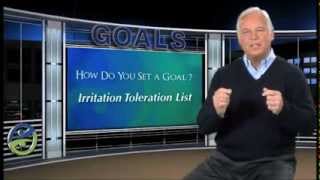
Jack Canfield teaches three concrete techniques for setting goals that actually stick: an irritation-toleration inventory to find what bothers you, a 101-goal bucket list, and a seven-area vision exercise. He warns against goals based on what you think you should want, and cites research showing that writing and reviewing goals works.
Questions this video answers
Seven
55% (research cited from the University of Pennsylvania)
December 13, 2014
Chapters
So why is it so important to set goals? Because you want to be a winner. You want to be one of the people that gets what you want. And the first thing that happens when you set goals is it forces you to sit down and clarify what you really want. Most people never take the time to really sit down and intentionally plan out their life. They live a life of reaction rather than a life of creation, a life of intention. And so when you sit down to think about, well, if I'm going to set goals, what do I set them for? What do I set them about? And you have to have some sense of what you want to create in your life. What's the ideal life that I want to live look like? What do I want in terms of relationships? What I want in terms of health and fitness? How much money do I want to be bringing into my life? What impact do I want to have in the world? So we're going to be taking a look at all that, but the key thing is to sit down and take time. And I'm going to suggest that once you stop watching this video, you set aside at least a half hour and better, an hour and, and sit and really start to think about, what do I want my life to look like, what do I want to experience, what do I want to do, what do I want to be and what do I want to have? And you can look at this in any timeframe at all. You can say, well, these are my lifetime goals. Like, I want to be in the Speaker's hall of Fame, or I want to win an Olympic gold medal, or I want to retire with an investment fund of 30 million in my portfolio. Those are long term goals. But you also want to have short term goals. What do you want to accomplish in the next five years and in the next year and think a lot about what do I want to accomplish 12 months from now? Where do I want to be experiencing? You know, if we were sitting here a year from now saying what would have to have happened for you to feel really proud and successful and pleased with the success you'd made in that year? So we can look at all those different time frames, but sit down and ask yourself, what do I want to experience? And one of the things that I teach people, that's really powerful is that you can really look at all different areas of your life. And we're going to jump into that in just a few minutes. The other thing that's very valuable about goals is they give you a sense of potential, momentum, motivation. They give you a sense of direction in your life. A lot of people don't really have any direction. They're just responding to what other people want, the demands they place on them. I always say that people that don't have goals get used by people who do. People that don't have goals work for other people that have them. And my Jim Rohn, my friend Jim Rohn once said something like. He said, you know, if you don't have goals, you're going to be part of other people's goals. And I can tell you what they have in mind for you is not much. So you want to be someone that's saying, here's what I want, and I'm going to go for it and create it and have it in my life. Another reason that setting goals is important, and I think it's really the most important reason, is that when you set a goal, it requires you to become something bigger than you already are. In order to achieve it, it requires you to grow. My mentor, W. Clement Stone, who I worked for back in the 1970s, he said, I want you to set a goal so big that it requires you to stretch and become someone worth becoming. And the point of that is that it's not the goal. Because any goal you achieve, whether it's a car, a house, your TV show, a great reputation, a big portfolio, lots of money, all that can be taken away. You know, cars are stolen, houses burn down, earthquakes happen, marriage is dissolved, fortunes are lost. But who you became in the process of developing, that can never be taken away from you. And that's really the payoff. It's called mastery in life. And you want to be putting yourself out there and forcing yourself to grow, to develop new skills, new mindsets, new relationships, new competencies, et cetera. And that's really the ultimate outcome because that will always stay with you. You can never learn less, you can only learn more. And we want to have you constantly growing yourself. And goals require you to do that. And I want you, when you set your goals, to set goals that will stretch you, not freeze you. If they're too big, you'll freeze. If they're too small, they're boring. And if they're just at the right level, you know you're going to grow. How do you decide what to write down as your goals? We know they need to be measurable and specific. But what do I write down? I'm going to suggest three quick techniques you can do. One is what we call an irritation toleration list. You walk through your house or your apartment Your office, your car, your garage, your factory, anything that you have dominion over. And make a list of everything that isn't exactly the way you want it to be. That door never closes, right? I can never find a stapler when I want it. I've got this hole in the screen door. I don't have a, you know, the pots I need in my kitchen, whatever it might be, and make a list. And then what I'm going to suggest you do is that's what you don't want. Ask yourself, what do I want? Because a lot of times what people focus on is what they don't want. I don't want to be a bad parent. I don't want to have my house foreclosed on. I don't want to lose my car. And now you're focusing on the very thing you don't want is where you're putting your attention. We know from the law of attraction that will actually get you more of what you don't want. So it's okay to look at what you don't want only long enough to say, okay, I want the opposite of that. Now that you know what you want, I'm going to suggest that a good way to get started on that is to take a weekend and just really blitz through all those things and get them handled. And a lot of people, when they come and they listen to me talk like this, they say, wait a second, I want to be a millionaire. I want to have world peace. I want to end hunger in Pakistan, whatever it is. And you want me to walk through and worry about, I don't have a stapler next to the Xerox machine? And the answer is yes. And here's why. If you are sitting there going, I can't even get the door to close on my garage. What makes me think I can create peace in the Middle East? And so, basically, you've got to start having successes with a lot of these little things getting handled in your life. So it gives you the confidence that you can handle the big things. Secondly, it clears the slate so that every time you walk past the Xerox machine, you're not going, man, I wish we had a stapler. I can't find this. I can't find that. It allows you to really start focusing on the bigger things in your life. So. So that's the first way to start getting clear about some things you want. Secondly, I'm going to suggest you make A list of 101 goals that you want to achieve before you die. 101 goal list. You may have seen the movie the Bucket List. It's the same thing. Here's Morgan Freeman and Jack Nicholson saying, I'm going to die soon. There's all these things I wanted to do. You don't want to get to the end of your life. And all these, well, someday I wish I had and not have done them, you know? John Goddard, who I write about in my first Chicken Suit for the Soul book at the age of 15, made a list of 126 goals that he wanted to achieve. And when I met him, he was in his 70s. He'd achieved 117 of those goals. He'd been to the Great Wall of China. He'd gone to the Great Pyramids. He'd gone down the Nile river in a boat. He'd done about everything anyone could ever think to do. But because he set that list, and every year he reviewed it and said, okay, what do I want to do this year? He led a magical life. Lou Holtz, football coach at Notre Dame. What did he do? He reads about this in a book and says, okay, I'm going to set a list of 101 goals. And he goes off and he set a list of 108. And when I met him, he accomplished 102amazing goals. Land on an aircraft carrier, Go under, you know, water in a submarine. Take a raft race or a raft down the Snake River. You know, all the things that we've wanted to do, just don't think about them out there. Put them on a piece of paper. Because we now know from research that the simple act of writing a goal down increases your chances of achieving it by 55%. This is research done at the University of Pennsylvania. We know if you write it down and you read it just a couple of times throughout the year, it increases your chances of 100%. And if you read it every week and review it, we know that it increases your chances. You're going to get 200% more than the irregular people. That's how many goals you're going to achieve. So read. Writing it down is critical. So make that list and be brave. Just put down things you want. Don't worry about how it's going to show up. We'll talk about that a little later. And the third thing I'm going to recommend is what we call the vision exercise to look at your life. And we divide your life into seven areas. There's relationships. There's finance and money. There's your job and career. There's health and fitness. There's Fun and recreation. There's what we call personal, which is just, you know, things I want to own, things I want to do just for the sake of doing them. This includes your spiritual goals, your emotional goals, your educational goals, and lastly, contribution. What difference do you want to make in the world? What legacy do you want to leave? And if you were to look at each of those areas and say, one year from now, what would have I like to have accomplished in that area of my life? And then say, okay, that's a goal I'm going to set for myself. Now you've got seven goals. Now, for some people, seven goals may be too many. You might want to say, well, that's more than I want to take on. Maybe I'm going to prioritize and pick three or four. That's fine. We don't want you to overwhelm yourself. But if you really want a balanced life and a very fulfilling life in all areas, so you're healthy and you're happy and you're successful and you've got a great energy in your body and you're getting out there and making a difference in the world, and you're growing your financial world. You're going to have a great balance. So we want you to look at all those areas of your life and then think about specifically, what's one thing I want to accomplish in every one of those areas. And if you do that, you're going to have a real, really great year and you'll have a head start in setting your goals. So let's look at some of the common traps and pitfalls that people fall into that stop them from setting goals correctly and also from achieving their goals. Number one is what we call unrealistic goals. People say, okay, I want to do something that's totally impossible for them, but they just got it out of some place like the cultural norms they see. Everyone wants to be a millionaire. So we'll have people in our seminars that are making 35,000 a year, and we'll say, what's your financial goal for the next year? And they go, a million dollars. We'll have people making 500,000 a year. What's your goal? A million dollars. And so there's this external cultural norm that says, oh, a million dollars. But it's not really necessarily relevant to your situation. One of the concepts that we teach is that there are four levels that you can be setting goals from. First is called repair and recovery. If you're sitting there and you've just come out of bankruptcy or, or You've lost your job or you have no foundation, meaning you don't have any kind of infrastructure to start a business with no assets, nothing you can invest with. You know, making a million dollars in one year, it's not impossible, but it's not likely. And so you want to say what would be a next step up for me to get me from repair and recovery to what we call foundation? I remember when I first started my company, I didn't have a typewriter. I had one phone in my house. I can remember where we had like literally five splitters taking phones off to five phones a year later because we didn't have enough money at that point to even go out and rent an office space. So you have to build up this infrastructure and then create this foundation. Are you coming from foundation? Do you have the basics? Do you have an education? Do you have the skills you need? Do you have the competencies? Do you have the relationships, the network, whatever? And then once you have that, you can move into a place we call abundance. And you know, a lot of people don't have any abundance. No abundance of time, no abundance of friends, no abundance of network, no abundance of opportunities. But in my life, I have an abundance of all that. And eventually you get to a level where you can set goals from that, where I can build huge dreams. You know, we can set up offices in 25 cities around the world. We can invest in all kinds of programs and projects and workshops to develop. So the last stage is called mastery. We want to get to mastery. But you can't go from repair and recovery to mastery. If you just got out of the hospital and you had cancer surgery, you're not going to be running a hundred yard dash in nine seconds or a 26 mile marathon next month. And so your goals need to be relevant based on where you start from. So really sit back and say, okay, is this a goal that's believable for me? Another thing you want to look at, is this a goal? Is this something I really want? Because so many of our goals are created out of shoulds. You know, I should lose weight, I should exercise more, I should eat more healthy, I should do this thing with my family. But if it's not something you want to do, it's going to show up year after year on your goal sheet and it's going to be one that you never get done. And why don't you get it done? Because deep down it doesn't have any juice for you. There's no passion, there's no excitement. About it. The things that really make you go, wow, I want that. I have a friend named Alan Cohen and he has a little test he does. It's called hell yes, hell no. And if someone were to ask you to do something and you went, oh man, I want to do that. That's a hell yes. Or someone says, wow, you want to go on a cruise with five people you went to high school with that teased you all day long? You go, oh, hell no, I don't want to do that. If you don't get a hell yes, then it's automatically a hell no. And so what happens is you want to get passionate. You want to find out what are the things that really turn you on that you have juice for. They're going to make you want to get up and out of bed in the morning. And so it's important to have your goals be based on what you truly want. And to do that, you really need to look inside at your inner child. What does that part of you want? And also look at what we call your essential or your high self. What is spirit calling you to do? What is being evoked from you by the universe as it's evolving and you're evolving with it. So you want to look deeply at that. And the third trap that most people fall into is that once they start to see set a goal, what happens is they start to surface considerations, fears, and roadblocks. Now what are those? Let's say I'm setting a goal that I want to have a 5,000 square foot house on Pacific coast highway in Malibu by December 13, 2014. And then I start to write that down and I go, oh, man, that's a big house. That's a lot of money. Malibu. I don't know if I can afford that. I'm going to make it 2018 or I'm going to make it a 3,000 square foot house. And so we start to shrink our goal or we put it further out into time rather than stick with what it is we truly really want. And so I'm going to ask you when you start setting these goals, not to be surprised that thoughts come up like, oh, I can't afford that. Well, if I was going to do that, I'd have to ask my dad for money. I hate asking my dad for money. You're going to have fears that come up, oh, I don't know if I can do that. I might get rejected. What if that doesn't happen? We'll lose our house. And the third thing is you're Going to become aware of obstacles. Those are things in the outside real world that can stop you. Maybe you want to build a house near some water and your wife wants to be in the mountains. She doesn't want to be near the ocean. She doesn't like the ocean, doesn't like the sound of it, whatever it might be. That's an obstacle. Maybe you want to start a business, but the laws in your state don't permit that kind of a business to take place in a home. So you've got some obstacles to overcome. Maybe you have a lack of money, Maybe there's some skills you need that you don't have, or you don't have the team in place. So all of those things are going to come up in your brain. You're going to start thinking about them. And what most people do when they see those is they see that as a big stop sign. Oh, I can't have that. I better give up that goal. That's not possible. And I'm going to encourage you. Don't see it as a stop sign. See it as exciting. Wow. Now I'm seeing what are these beliefs and fears and considerations and roadblocks that have been unconscious, that have been stopping me all along, but I didn't even know they were there, and now I know they're there. I can deal with them. I can do some work on changing my beliefs. I can do some work on releasing my fears. I can do some work on teaming up with solutions and finding ways to break through these obstacles. So you don't want to be run by your fears, your considerations and outside roadblocks. You want to be the master of those, but you can only do it if you address them rather than shy away from them. So don't let considerations, fears and roadblocks stop you.
More from Jack







[EP 46] Creating Your Own Luck: The Power of Self-Confidence with Veronica de Andrés

[EP 45] Rewiring the Brain for Bliss: Activating Your Spiritual Intelligence with Dr. Dawson Church


[EP 43] Transform Your Life Through Visualization and Emotional Intelligence with Natalie Ledwell

[42] Enhancing Your Health & Longevity Through Peptides and Functional Medicine with Regan Archibald