How to Grow a Successful Newsletter and Transition to Venture Capital: Insights from Jack Raines
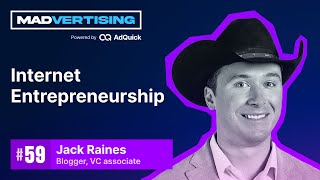
Jack Raines grew Young Money to 65,000 subscribers through Twitter virality and lo-fi cartoons, then moved to venture capital at Slow Ventures. He talks about monetizing newsletters, why AI-free content matters, and how satire works on LinkedIn.
Chapters
Hello listeners, and welcome to the latest episode of the AdQuick Madvertising Podcast, a podcast that explores the intersection of content, creativity, culture, all of the things that you care about. Today we have a special guest. We have Jack Raines. He is a rising star in the world of finance and blogging. He writes at Young Money. You've probably seen his posts with the fun cartoons on all sorts of subjects. From financial to career advice to humor and just life insights. Jack is a smart, incisive human. We really like him. And, um, Jack, thanks for spending the time to talk with us and our users today.
Happy to be here. Thanks for the invite, Adam.
And so Jack, you've had some big life changes coming up. I think it would be fun to like get a level set and go through a little bit of what you're up to because You know, you're such a successful blogger. For people who don't know, Jack has like 65,000 subs. He's just crushing it on the writing front. But I believe you just moved to San Francisco and joined a venture firm.
Yeah. So I'm actually, I'm still in New York right now. Um, I'm moving to SF for like 3 months at the end of February and then coming back to New York for like a month or 2, basically to get all my stuff together and then moving out there for at least a year in the middle of the summer. But yeah, I was, um, It's the, there's a thing in venture capital where like a lot of venture capitalists decide they want to be like a Twitter influencer. I actually reversed the order on that where I was a Twitter influencer and then realized I actually would rather do venture capital than work for a media company. Um, so yeah, I, I applied to a job in New York. I met with one of the partners in SF. He was like, you should move out here and work for me for a little bit. And I was like, yeah, I mean, that seems like a pretty good deal. So I guess I'll just do that. Um, so yeah, moving to San Francisco in 3 weeks.
What neighborhood are you moving to?
Um, I have a sublet set up in the Marina District, and I'll probably end up signing a lease either there or Pac Heights after.
Uh, no, you'll—
that seems like where I should be.
The Marina is your vibe. You will have a really good time there. Um, go to a place called— it has to still be there— a place called Balboa Cafe.
Okay.
Um, And yeah, there's an interesting scene there, to say the least. It's almost like out of a reality TV show. You will see— what does that even mean? You will see some things there. Just go to the bar. You should go to the bar and order a drink and just watch. Okay. Listeners who have been to San Francisco know what's going to happen next. We won't ruin it for Jack.
Cool.
But it's a fun spot.
Now I have something to look forward to. So I'm in. That's going to be first stop when I get there.
So Jack, I'm gonna back up even further. 'Cause you have— Jack is not a marketer by trade, but does such excellent marketing online. And I really love guests who sort of figure out marketing from first principles because they approach it differently than a lot of us who are trained in it classically. And a lot of times they find these, you know, cool hacks or a way to do things that traditional marketers might not think through. And so I think that's awesome when we can, any field where you get people who aren't classically trained in it have a different perspective and we can learn from them. So Jack, you grew your blog from nothing to over, you know, 64,000 subscribers. I'd love to hear some of the things that along the way you learned of building a successful media brand, especially because a lot of media brands are struggling right now. And you sort of did this without Any external help, all on your own, bootstrapped?
Yeah, so like for context, I graduated from business school this past May, so like May 2024. And before that slash during that, my kind of job was I was working for this finance meme page called Liquidity. So I used to work in corporate finance out of undergrad. It was boring.
I hated it.
I got into business school and then decided to quit my job and travel for a little bit before school. But I thought that this meme page guy was interesting. He'd built up like probably had 700,000 followers across Instagram and Twitter. And he had a newsletter with like 100,000 readers. So I just hit him up and asked if, um, if he needed help running the newsletter and he, for some reason replied and then said yes. And I convinced him to pay me like $500 a week just to like edit his newsletter while I was hostel hopping Spain. It was, it was a sick deal. It was like, a 24-year-old's dream. But what blew my mind was he was making like really, really good money from running, literally running a newsletter, just newsletter ads. So it was like, that was my first time seeing how you could directly monetize attention and distribution. Like I didn't like, nothing like this computed in my head as something you could do for a living until I was working for somebody who was doing it. And I started thinking about like, how do I do that? And I'd been writing a blog on Substack called Young Money that had like, I don't know, like 300 subscribers. And I just figured, well, like everybody that is in this kind of finance bubble is pretty active on Twitter. So I probably just need to be tweeting a lot. I mean, that's, I mean, that's how we met. We literally were probably just in each other's replies on Twitter like 3 years ago. Yeah, I was, I was literally just tweeting a lot, like anything that I thought that was relatively interesting. In, uh, like financial markets or just like as a young person going through life. I was just blasting my thoughts out there. If I agreed or disagreed with somebody on Twitter, especially if they had a big following, I would let them know what I thought in the replies. And you just do that over time and people start following you. Um, but like 3 years ago, it was really easy to grow a newsletter on Twitter. Like in my head, I was, I was looking at how Liquidity's newsletter Exact Sum worked as a business. And I was like, Okay, if I could get to like 50,000 subscribers, I could probably just like sell ads on a weekly newsletter and make a couple hundred thousand dollars a year just from that as a side thing. I didn't realize at the time that one, the ad market was very inflated, like 2021, and two, it was really easy to grow a newsletter on social media and it's just harder now. But anytime I had a tweet go, I got very good at making tweets go viral. Like I just got good at Twitter, like writing stuff that people like reading. Anytime a tweet hit like 1,000 likes, I would just put a reply at the bottom like, if you want to read my, like, my best thoughts, they're on my newsletter, blah, blah, blah. And it worked. Like, anytime a tweet blew up, plug the newsletter, I would get like 300 subs. It was literally easy money. And then Elon Musk bought Twitter and it became hard to grow a newsletter on Twitter, and that sucked. So I really missed the peak 2021 days of Twitter. It was a better website then too. It was just more fun. To be on Twitter like 3 years ago than it is now.
But well, the trend of suppressing hyperlinks is one that for sure predates Elon. Oh yeah. Zuck has been throttling our links for a while. And I, and, you know, LinkedIn also, ironically it's called LinkedIn, but they absolutely hate our hyperlinks. Um, and I actually have written on this a few times. I think it's missing the value of being the place you go. That is the signal of the entire internet, which I think, you know, if Twitter frees its links, you know, it's a blue ocean for them to be that again. In addition to, you know, they're still the zeitgeist of what's happening in finance and politics and business and all these places. Um, the people who left obviously don't think that, but you know, it, it, it definitely, you know, if you look at how the country just voted, right? There's these disparate population groups who think, oh, my bubble is right, my bubble is right. But it's, I would like to see all of these social platforms free our hyperlinks. I think it increases their value if you send people to somewhere that is interesting from, you know, your source, it just elevates their value. So yeah. And then you also have kind of a cool shtick in that you make these cool lo-fi cartoons with a lot of your posts. Yeah. And so I think that's one of the more creative things I've seen someone do. And I think especially in finance, like no one, I'd never seen anyone do that before. Like I've seen this guy Wait But Why do it with philosophy. And I thought that was a small stroke of brilliance that you were doing these comics for finance.
Yeah. So I actually copied Tim Urban who writes the Wait But Why blog. Like I always, there were two people when I was like in my early 20s who's like were basically bloggers that I really liked. It was Tim Urban and then Morgan Housel. And I liked how both of them wrote. I really liked how Morgan Housel was like very like conversational and almost casual in how he wrote. Then he was writing about like a kind of a mixture of financial markets and like personal philosophy, like behavioral finance basically. And then Tim Urban would write about anything from like how gravity works to like cryogenic freezing, and he would always have stick figures in his work, and it made me— it made me remember it. And I was like, I've always been a little bit artistically inclined but never like a, like an incredible painter or anything like that. I figured I could draw. I have this like really janky, um, like, like art program on my laptop called FireAlpaca. I just started drawing like stick figure thumbnails for all my pieces, and then people liked them. So I kept doing it. But yeah, it was a stylistic thing because if you just post the article, it'll just have whatever your website thumbnail is. And then everybody else is either doing AI-generated thumbnails or pictures from the internet. That doesn't stand out. But AI is some level of really good, but it all looks like the same type of good. It's like if you saw AI pictures now 4 years ago, you would be like, that's incredible. But now that everybody can generate it, it's not novel. And when it's not novel, it's commoditized. And if you draw objectively like low quality, but kind of funny, like cartoon figures, people appreciate it.
Yeah. There's something to that. It's, it's unmistakably human. Correct. And we, we are drawn to things that are imperfect and human. And that's something that the AI can't really do like you can. Right. Um, even if it's trained on you, it's still, it lacks that je ne sais quoi of doing something with imperfections. I, I wrote a whole post on this and I actually talked about how, you know, the difference between like humans and chimp DNA is like 2% and yeah, there's like a world of difference. Well, if the difference between us and the machines, even if it's better by a few percent, it's just going to be different. And that few percent actually matters a lot more than people think.
Yeah. Yeah. I agree. Well, it's also like, there's some level of people just like knowing this stuff is human. It's like we don't watch robots beat each other in chess, even though chess has been solved as a game. You can, we've been able to beat any human in chess with a computer for decades now, but people like watching people play chess. I think that there's like, if people saw the same piece of art and then you told them that AI made one and that human made another one, they're gonna like the human one more just because it feels real. There's the more tedious and abstract the task, the less the people care. But the more that it's in their face, the more they like knowing there's a human behind it. It's just like, it's weird otherwise. It doesn't feel impressive or real. Like you don't, you don't connect to stuff as well that wasn't made by another version of you.
Yeah. And also it's notable that people at the absolute top of their game choose not to use AI for things. So an example of that. Is in the movie Tenet, Christopher Nolan crashed a real 747 on site. And he could— he uses some CGI in his movies, but he used a real plane for that. And I think the reason isn't just because he likes doing that. The reason is he knows the final product is like— it's just— it's still better, right? And that's not to say he wouldn't use it in the future, but I think it's telling when people at the absolute top of their game, they know when to apply things And I think that that's the difference between any armchair pundit talking about AI and someone who's actually in the arena. They'll, they'll decide, and yet you want them to decide, right? It's not like, oh, AI is going to do everything, or, you know, oh, humans are going to do everything. It's like the actual craftsman is going to decide what to use. Yeah. Um, so let's talk about more human affairs, a subject you like to cover a lot, and that's seems like it won't get out of the zeitgeist is young people and hustle culture. And so you've written thoughts on this, but I'm curious your thoughts here. In your 20s, is it the time to just grind it out, try and save all you can, and build up this small amount of wealth to protect your individual sovereignty? Or is it a time to say, you know what, I'm just going to live on a shoestring budget, travel the world? Is there a balance between these things? And also, I'll ask that question with— I was kind of a weird person and did both. Like, I lived like a wild 20s, but I also, like, grinded and saved money. So, like, I can't answer this question because I did both things. So how do you talk to young people about this?
So I, I also would say that I've, like, I've done a little bit of both. And I actually think, like, my typical advice to young people is do a mixture of both. There's this, it's a thought that I've had more and more and more where there's two extremes, right? There's the like incredibly frugal, like high earner that goes into banking, law, whatever, where they're making by age like 26, $200,000 plus a year where they're crushing it. But like the last 4 years of their life from undergrad, basically like their life is controlled by their job or law school or whatever to go into that. Like you can do that, but there's like, there's a pretty big opportunity cost of that where there's like a lot of fun memories you could have made when you were younger. There's the flip side of that where you decide to go be a ski bum, operate ski lifts, like hostel hop around Europe for like, I met some people who had been doing the hostel thing in Europe. I did it for like on and off for about a year just traveling. And I knew that there was like a set endpoint when I was going to business school where like I would kind of take myself a little bit more seriously. Uh, but you meet people who are like 31 that have been doing, that had just kind of been floating around for years. And that's, that's fun for a year or two, but it would get old. Um, the way that I look at it is, is you shouldn't worry too much about your savings rate in your 20s, assuming that you're either like legitimately investing in your career and that you're going to school or you're taking a low pay— like, you could be, if you're in Los Angeles and you want to be a talent agent, you're taking a low-paying job working at like UTA to like put yourself on a track. Like, if you're like in an apprenticeship role, fine, like don't worry about money that much. Or if you're legitimately investing in fun experiences, whether that's travel or like Joining a startup with friends where the pay is like trash, but you're going to learn a lot from it. Like, there's anything that just feels like it'll be valuable on a personal or professional level is way more important in your 20s than saving money. The way that I put it is, I don't— I think a very poor use of cash when you're 23 or 24 is putting away as much money as possible that you can spend when you're 70 or 80, right? Like, there's the, the actual value you're gonna get from that money is much higher now. Um, but you want to set yourself up in a spot where you're pretty confident that you have high earnings potential as you get in your late 20s and then your 30s. Like, I, when I was in business school, I was making like some money working for Liquidity and then doing a bunch of side stuff, but I didn't save any money at all for about 2 years. Like, I was spending every dollar I made, made sure I had enough to like cover my bills, pay taxes, but there was, there was like no leftover money after taxes at all for 2 years. It was fine. Like, I, like, I make decent money now. I'm not spending as much now that I'm like a normal working human. And I had way more fun during that 2-year period than I would otherwise. So, like, it, you know, it's important to set your career up where you're on the right trajectory, but like, I wouldn't, I don't think people should be counting the dollars as much as a lot of people do when they're like 25 or 26. The trajectory is a lot more important than the actual number your first few years.
Yeah. And we have a lot of creative industry people listening to this podcast. And one thing that I'll say is like the crazy trips that I took and concerts I went to and, you know, adventures that I went on in my 20s, all of that is like an infinite well of inspiration.
Oh yeah.
In your, in your 30s that you can draw back on those experiences, especially if you're in a culture industry. If you're in media, if you're in marketing, like you kind of have to see how people really live. And when I say really live, I mean, you know, the, the, the ski resort is like this, you know, great place, like see humanity outside of a cubicle or a trading room floor. Let's see, you know, go visit different cultures. Like those experiences are worth, like, you can't, you can't get those later. And if you're in a creative field, if you're not just jockeying spreadsheets all day, that those stories are things that you can draw upon, pattern match, build upon forever to create your own, you know, scripts, your own fiction, your own, you know, ads and movies, anything else that you work on in a creative field. Like, you kind of have to live a little. And when I say live a little, I mean like risk. I mean like do some things you shouldn't. Um, you know, don't kill anyone of course, or anything crazy like that, but, but maybe like, you know, when you're traveling somewhere, go across a, you know, that sign that says do not enter here and like go check out abandoned buildings or do, do something to get in trouble.
Well dude, it's not even just people in the creative industry. I mean, I'm like, I'm, I'm technically in finance now. Like I'm, I'm an investor as of 3 weeks ago and there's, there's a lot of benefit, like the pretty much any job that isn't a pure like tedious, just button-pushing job where you have to have like independent thinking and critical thinking, having exposure to a lot of different inputs at a young age is valuable. I mean, I remember reading about Jim Simons who started Renaissance Technologies and made like however many billions of dollars before he died. He attempted to, uh, he attempted to ride on like a moped from Boston to Buenos Aires, and him and his friend ended up getting arrested in Mexico, like southern Mexico, on the way down. And the mayor of the town happened to have like gone to school in Boston and like thought it was funny they were from Boston. They ended up getting bailed out. But like, he was a quant trader. Like, he was the most quantitative finance everything. He still had those experiences too, right? Like, there's the— there's a lot of venues for like creative outputs that aren't necessarily in creative industries where like, like your ability to have a different perspective on an investment opportunity can literally just come from having different inputs when you were younger. If you went to the same schools, had the same kind of training jobs, and like investment banking, private equity, hedge fund as everybody else that did those same things, you're just not going to have that like differentiated perspective. So I think like those, those risk-on different experiences are almost more and more valuable the more like structured of a career path you end up going down, because you can just— you have new thoughts that other people probably won't have going into that.
Yeah. And along those lines, tell me if I'm wrong with this statement. I feel like we have two brands of Zoomers. I feel like we have the Zoomers that are just completely cracked, so good at everything they do, whether it's like coding, whether it's writing, whether it's YouTube videos, and, and they're just like really grabbing everything by the horns. They're going to be okay. They're going to be like leading everything tomorrow. And then we have the other Zoomers who I feel like they're not even like partying and having like a crazy time. They're, they're like a little anxious, a little depressed about everything. They don't go out as much. They're, they're kind of full introverts. And, um, I feel like at least my Zoomer friends are sort of along those lines. And, and I, I wonder what we could do to get more Zoomers, maybe not even to be cracked, but Maybe just like go out more, go to more concerts, get into more trouble. I don't drink anymore, but they— I think when you're young, some drinking is probably okay. Not all the time.
I'm very, I'm very pro-drinking as I am a Zoomer. Technically, 1997 birthday makes me the oldest eligible Zoomer. Um, yeah, big fan of alcohol, very pro that. So I agree.
But do you think like the— am I wrong in saying that the Zoomers have an introvert problem a little bit?
No, I think you're totally right. And I actually think that the kind of, I guess, younger Zoomers, like people who are like early 20s right now, have it worse than people who are late 20s. And maybe it's because, like, I don't know, the age you were when the pandemic hit plays, I think, somewhat of a role. Like, I went— like, I was— I graduated from college before the pandemic happened, so I had 4 years of like a very normal social life experience, which was nice, versus if you're freshman and sophomore year of college, or COVID you don't get those like very crucial, like fundamental foundational social experiences, like meeting your college friends in person, going to college parties, like the, I don't know, fake ID, all like that entire phase of life is like, I think somewhat important for like early social bonds. But there's also been this like just overall like doomerism angst that's been somewhat pervasive in the media from everything from like climate change, to the job market, to inflation, where it's constantly like everything sucks, the world's going to shit, when in reality, especially if you live in America right now, I get everything isn't perfect, but there's never been more opportunities and just like an abundance of wealth and opportunities to make wealth ever. Like, there's never been more chances to meet people, to start businesses, to join companies, to like make friends. We're more connected than ever. Um, but if you buy into the doomerism kind of mindset or thesis, you think everything's this like, like technocratic doom sphere. It's not. So it comes down to the thing that I think that separates the people who are like cracked out or just enjoying themselves more is whether or not you're using technology or getting used by it. Like it's so easy to get sucked in a doom cycle on Instagram and TikTok and Twitter and whatever, where like. You, you just aren't really applying yourself as a person. You're not getting out there being social. You're like, you're locked on the screen but not making good use of the screen time. Like, I'm perpetually addicted to my phone to the point that I have an app that I have to use to like block my social media usage. Otherwise I would just stay on Twitter 5 hours a day. But I think that I've like extracted more value from social media than they've gotten from me through my data. But it's like a very intentional agency thing. Like, you And there you can literally do anything now, but it's, it's difficult to do it because there's so many distractions bombarded at you, like trying to keep you glued to a screen, not doing anything. So it's, it's tough. You just have to, like, you have to use technology to forward your own interests more than you can let it use you by keeping you, like, glued to the screen.
Totally. And that's the distinction. I think if you're, you know, a marketer or an entrepreneur and you're using the internet to connect with your fans and customers and build trust in order to sell them new services and products that you work really hard on that make the world better, then that's a good use of social media. But if you're just doom-scrolling and reading Permabear hypothesis on the end of this or the end of that, then it's a negative use of time. And I just, I find personally, you're right, the more, I use the internet intentionally better. And also an easy thing that I do is I try and not use any social media on my phone. I mostly have it deleted from my phone. And then my social media time is on my workstation when I'm actually working on ads and content and doing things that are actually part of my job. And so taking it off your phone is great because then when you're out with friends and loved ones, then you focus on them. And that's what we're supposed to be doing. Like you're not supposed to. Your attention with the person you're with isn't supposed to be competing with everything that exists in the rest of the world online. Yeah. And so just, just taking that away helps me a lot.
Honestly, the full delete makes sense cuz even when it's like on a timer, you're still somewhat aware in the back of your head that that social media is like on your phone will be accessible soon. It's like if you remove it, I don't know, it's the like James Clear Atomic Habits thing of like basically structuring your environments like Get rid of all the temptations.
Smart. Yeah. The, the other thing that I've done that's helped me, and I used to be a little bit of a doomer and I definitely used to be, uh, suffer a little bit from depression. I don't know to what extent that was from internet usage, but, um, going to the gym regularly has honestly helped every single other aspect of my life, the routine, the energy it gives me. And I find the more I go to the gym, the better I can control my diet, my attention. All these other things are like downstream of this.
Oh, for sure. No, I, I totally agree. You sleep better. You, you're literally better at work if you go to the gym. And like, people will come up with the excuse that they don't have time to go to the gym because of work. You have a much more productive, like, 4 or 5 hour workday if you hit the gym for like 45 minutes to an hour than you do working 8 or 9 hours otherwise. Like, there's just diminishing returns on that time if you're not like physically and mentally Right.
Yeah. So Jack, I have a kind of spicy question for you and you can take this however you want. I think LinkedIn is such a fascinating place.
And I know it's my favorite website. I love it. I love LinkedIn.
I mean, so let's just talk a little bit about it. You know, our friend Trung has written, you know, about the, you know, all the weirdness on LinkedIn. There's a subreddit called LinkedIn Psychos or whatever it is where they post—
LinkedIn Lunatics.
LinkedIn Lunatics. That's the one. That's the one. That's the one. And I find it fascinating because I see normal people share, okay, here's how my startup is doing better in the mix with people posting just odd things that you wouldn't post under your own name to a business network. It just seems like this weird hodgepodge of of things and it's kind of the LinkedIn executive team is sort of nowhere. They don't really talk about like what the purpose of LinkedIn is. So, um, I don't know. What's your like armchair sociological take on what's even going on with LinkedIn?
I mean, LinkedIn is the most cringe platform on the planet, but it's also an absolutely insane business and it is such an underrated, like, I think it's the most valuable social media platform on the planet right now from a user perspective.. And as a business, I mean, it's insane because every company is paying so much money for like LinkedIn Premium, the search, like the search setup for like all their recruiters. The ad targeting is way more B2B focused because it's a professional network. Um, I think it's like business-wise, if you look at, um, if you look at their, if you look at their earnings reports before they got acquired by Microsoft and like even now, just look at their breakout. Occasionally they break out LinkedIn's revenue. And the company prints money. It's like, it's like 10 Twitters back before Elon acquired Twitter. Like, it's more valuable than— I think, I think it makes more money than like Snap, Pinterest, Twitter, and like 3 other big social— Reddit— 3 other big social media platforms combined. Um, but as a user, it's, it's wonderful because there's really only 2 large text-based social media platforms, 3 if you count Reddit, but really Twitter and LinkedIn. LinkedIn has like triple the active user base of Twitter. Um, and nobody's posting on it because it's like a professional network. Like Twitter, you've got a bunch of anon accounts promoting conspiracy theories, pitching stocks, like talking about Luka Dončić getting traded to the Lakers. You've got weird little niche conversations about everything. So the half-life on any like tweet, unless it goes super viral, is like 2 minutes. LinkedIn, you'll see stuff resurface. Even if you have a pretty big, like, LinkedIn network, you'll see stuff resurface that got 10 likes from 2 weeks ago that somebody posted. Nobody's posting on there. So, and everybody has to have a link. It's like, outside of email, LinkedIn is also the most invincible social media network because everybody has to be there. The network effect of it being associated with your job and like anytime you apply to a new job, people are going to check your LinkedIn. Like, unless you are legitimately the man, like running his own hedge fund or whatever, you have to be on LinkedIn. So I say all that to say that like anybody who just wants attention should absolutely be using LinkedIn. You should be using it to grow a blog. You should be using the video features they have on it. You should be using it just to like share your thoughts and get people to follow you because they will. Like I've got like 40,000 followers on LinkedIn now. It's, I've got like 70,000 on Twitter, but the LinkedIn following is just more, way more valuable.
So I, I agree with all of that. Um, I still want to know like why people are cringe on LinkedIn. Have we ever figured out like what's going on with that?
Well, I think there's an AI angle to this where I saw, um, I saw somebody post about this on Twitter the other day about like, why are people AI summarizing my LinkedIn posts and my LinkedIn comments? And I was like, because everybody wants people to follow them on LinkedIn., but most people don't actually have anything to say or don't know how to say it. So LinkedIn content has already been cringe because people have tried to maintain this like tone and voice of like very benign, nice corporate speak. And it just came out in like every post people put out there. This is pre-AI. Now there's like LinkedIn AI tools. Like I get hit up on Twitter probably every 2 or 3 days with somebody who's like, do you want to automate your LinkedIn? And I'm like, I post on LinkedIn for the love of the game. Like, this is not like, if it didn't even matter, I would still keep doing this. I'm just, I just enjoy posting stuff in general. But there's AI tools that people are now using for LinkedIn content that's styled in that LinkedIn tone that we're talking about. So it's like for years, people who wanted people to follow them on LinkedIn were just always posting in way too nice of a tone. It wasn't like, I don't know if you watch SpongeBob at all. But it was, there was like an episode where it was like nice SpongeBob or like calm SpongeBob where he would just go up to everybody and say, hi, how are you? Over and over again. That's like LinkedIn tone. And there's these AI bots that are now doing it where like people who are trying to get more people to follow them on LinkedIn, but don't know what to post, have like an AI bot comments on people's posts or like post their own content. And it just sucks. It's, and it's like, it's funny bad. It's so bad. It's actually entertaining because you know it when you see it. Cause you're like, nobody would ever actually speak like this in real life. They're just putting slop on the newsfeed.
Yeah, it's, it's an interesting experiment. You're, um, I agree with the, what you said about marketing on LinkedIn is obviously a great thing if you're in B2B. Um, I, I, I'm kind of of the mindset where I would rather post to Substack or Twitter. And if, if I didn't have to post for LinkedIn for work, I don't know if you could get me to.
Yeah, I used to feel that way and I've actually grown to love LinkedIn. Like, it's not a—
it's fair. It's fair. It's a different vibe. It's not a purist internet vibe. No. You'd probably be like, we'd all probably be banned if we posted our true thoughts.
Well, it's like on Twitter, I'm sitting there in the comments section, like actively arguing and bickering with like, I don't know, like Assface69 who has 20 followers about something random. And I'll like be like going back and forth just like, throwing punches at this guy. And then on LinkedIn, it's all so nice and sweet. Everybody's like, I could post pure satire and people are like, wow, this is really insightful.
And I'm like, your trolling is unbelievable. It's like next level. I think I've shared some of your posts with friends and we just like marvel at what happens.
Oh my God. Yeah. So there was, so like for context, I really up until the last year or so, my like primary goal was just trying to get as many people to read my newsletter as possible because I was trying trying to pitch a book deal. I was like monetizing my newsletter, like more subs, all things being equal, was like valuable to me. And LinkedIn was a very good vector for growing that. And I was like, how do I grow on LinkedIn without posting cringe content? And the only solution was to post satirical content, making fun of cringe content, and then linking to my newsletter. So like I made my, my, you know, I wouldn't do this now because it's like punching down, but I made my LinkedIn pronouns we/them boys back when like it was pretty edgy and like counterculture to like make fun of the pronouns and bio thing. People loved it though. The we/them boys pro— like I removed it like a year ago because it just wasn't like— it was too easy. Like it wasn't funny. It wasn't fun anymore.
It was so good. And that was memorable. I remember that now that you bring it up.
So I had that and then like I would just put shitposts out there where it was like just giving horrible personal finance advice. Like, like, here's a good way to like save on your per— or save on your personal spending every month. Just go to random hotels around Manhattan and like eat breakfast and dinner there and sign off on people's hotel rooms and leave. Or like, you can actually just keep paying off one credit card with a new credit card and like never have to pay them that money. Like, you'll obviously just— that doesn't work. You'll stop being able to take out credit cards. Um, but they always blew up.
Was it you or Alex that posted the, um, cooking the chicken in— Alex. Okay, that was Alex.
That was a goated post. It was, um, he was talking about saving, saving his company money on a business trip. Instead of going out and expensing dinner, he cooked a rotisserie chicken in the coffee, the coffee maker, coffee pot in his hotel room.
There's some guy on YouTube who actually does that. He goes and cooks, uh, barbecue in hotel rooms. Like, he makes smoked brisket in the bathroom. It's really gross. It's part of, you know, the— there's a whole spectacle of just doing weird things. I don't know if I like this. A lot of it is just making more work for, you know, retail employees, like, to clean stuff up. So I guess if you do it and don't bother anyone, it's fine. But yeah, um, there's a great— there's another great Twitter account called Chef Reacts where he's this TikTok chef that makes fun of people making, like, really gross recipes and, like, Cause there's a whole like genre of not professional chefs, but like amateur chefs who cook really gross things on TikTok and get attention for it. I still won't understand what happens with a lot of the weird social media things, but I think your tactic of satire done creatively is like a timeless archetype. If you want attention online, I think it's really—
always it's, and it'll work on any medium. Like it works on video, it works on text, like you can. Good satire is so nice too, because it attracts the audience that you want to get. The people who are earnestly posting the content that you're making fun of are attracting like definitely a left side of the IQ bell curve audience. But if you're making fun of that content, the people that are following you are the people who are like smart enough to get what you're making fun of and secretly agree with it, even if they themselves wouldn't post it, which is like the people I'd rather hang out with. Like if I, if I wouldn't want to grab a beer with you at the bar, Probably not the person I wanna hang out with on Twitter or LinkedIn either. But if you think the satire is funny, we'd probably have a lot of fun hanging out in person.
So Jack, um, I like to end our podcast interviews with a question about just life advice for young people. And you've had an interesting journey going from solopreneur to a company, but, um, and we kind of talked about life in 20s, but do you wanna leave our audience with parting tips on young people leaving college, just entering their careers, um, you know, how to do well, how to have a great life?
Yeah, I mean, I think that there's, there's a lot of stress coming out of college and thinking you have to have your life figured out right now. And it's tough because you start playing like comparison games with your peers or people that are like ahead of you in their careers on like they're making more money, have higher status jobs, and there's this like pressure to figure everything out at 22. And like, pretty much nobody figures everything out at 22. Like, I have maybe one friend out of my 20 closest friends who just knew what he wanted to do out of college, did it. He's a bond trader for JP Morgan, loves trading bonds. That's all he's ever going to want to do. He's very good at it. That's not, that's not the norm. Like, most people don't know what they want to do. So my, like, my biggest advice is it's very much okay to like pursue your curiosities, even if they aren't incredibly lucrative curiosities when you're just getting started. But like, just tinker with stuff, try different stuff. Like, if you have an idea, lean into it. Um, but I do think that the, the biggest career advice I have, especially early on, is when you do have a pretty strong, like, intuition that you want to do a thing, the best thing you can do is find somebody who's good at it, who you get along with, and go work for them. Like, the— that's basically the premise for how, like, I got my current job. Uh, I'm working for a venture fund called Slow Ventures. And one of the general partners here, Sam, is just like a very sharp guy that I've followed for a while, like a lot. Like, I've admired how he's kind of like done life, essentially. And they were hiring, and we had a Zoom call, and he was like— like, again, I'd applied for a job in New York. I live in New York. He's an SF, and I didn't even know I was like in the running to work for him out there. And he was just like, what do you think of San Francisco? And I ended up flying out there a week later to like meet him for lunch. Like, showed up at his house in a suit, met him for lunch out there. We hung out for like 3 hours. And I was basically— once I realized that he was a guy that I would just learn a lot from, and I thought this industry was interesting, I was kind of all in on it. So I think like early on, the— it's, it's good to try different things. Once you find a thing you want to double down on or lock in on, like, the most valuable thing you can do is essentially try to like find somebody that you can like apprenticeship under for a couple years to like learn the ropes. There's— it just accelerates your learning curve on everything.
I love that. Jack, where can people go to connect with you online?
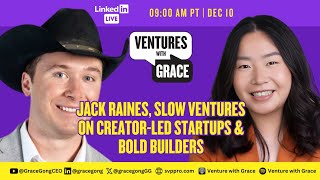
Um, you can find me on Twitter or LinkedIn at Jack Raines. I think I'd be the first Jack Raines to pop up at this point, but if not, I've got a cowboy hat on in my picture. Other than that, jack@youngmoney.co would be my email. And I guess now that I'm an investor too, if you have any startup ideas you want to pitch, jack@slow.co. And then my blog is called Young Money. That's at youngmoney.co. So Jack, Young Money, just look that stuff up. You can find me.
All right. And we will also put some links to find Jack in the episode description. So please connect with him. Thank you, listeners, for staying tuned this week, and we will see you next week for a new episode.
More from Jack
Jack Raines on LinkedIn Trolling, Creating the 5-figure Young Money Newsletter & More