Jack Raines, Slow Ventures on Creator-Led Startups & Bold Builders
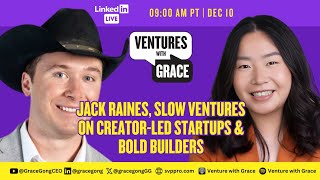
Jack Raines, a venture investor at Slow Ventures, discusses his $60 million creator-focused fund and why he bets on creators who've already built monetized businesses, not just large follower counts. He breaks down platform strategy: YouTube for long-form, TikTok for attention, newsletters for organic growth. He's also writing a book called Young Money about intentional use of your 20s.
Chapters
I clicked. Oh, we're live. Uh, hi Jack, welcome to Venture with Grace.
Humbled and honored to be here.
Oh my God, I'm crying. Uh, so you are such a funny person on the internet. Not that you're not funny in real life.
I appreciate it.
But, um, I want to start with like, you know, um, you kind of like— so I was like listening to your other podcast about like, you know, how you kind of like, uh, I would say like you had the journey of like you wanted to be an investment banker and then you kind of like listening to— oh, well, you were reading about like, um, Derek Thompson.
Yes, I was. Uh, I'm a big Derek Thompson fan. He's great.
Yeah. And then he kind of like turned from like a big shot investor to a, um, writer himself. And then that kind of inspired you to like go back to this like writing journey. Maybe we could talk about like, you know, actually, wow, you were writing for Exact Sum. Actually, I was like getting their Instagram ads. I was like very targeted by them and then I was— I definitely subscribed by the end. So yeah. Wow. Okay. I didn't know that. Okay. Sorry. This is like a shock. But anyway, so maybe we could talk about like, you know, the journey from being a person potentially working in finance to like, you know, becoming a writer. What were some like core lessons that you've learned throughout your career journey?
Well, it's funny, I went full circle and now I work for a venture fund. So everybody on a long enough timeline, everybody becomes a finance bro. No, I mean, the basic setup was like, there's— you grow— I grew up in South Georgia. You grow up in South Georgia and then you want to get out of Georgia and you want to go to like New York or California or D.C. or like a city that like matters. Like you want to go somewhere big and you kind of have a— like speaking about myself, I kind of had a chip on my shoulder. Like, all right, like I went to like random school in Georgia. I want to go to like a bigger city and do more interesting stuff in my life. Uh, how do you do that? And business school happened to be my way in. So when you go to business school, the— everybody that goes to business school is either there to like accelerate their career, or it's like, it's like a very good do-over for people who didn't like what they did from like 22 to 26 and want to like switch it up on the back end of their 20s. And the like obvious steps forward from that are going to be a banker or a consultant. Like half of every MBA graduate goes to like McKinsey or Goldman. That's just like, I'm being slightly facetious, but I think my class was like 44% banking consulting. It's pretty standard across like business school grads. But on the Derek Thompson point, he had like written, he was, for context, Derek Thompson was a staff writer for The Atlantic for a while. Now he's like an independent journalist on Substack. He's, he's a great writer. I'm a big Derek Thompson fan. Jack Raines. He had like a pretty interesting article about like, just like career advice for young people that I read a few years ago. And the main takeaway on it was like, do the job you want to do, not the job you want to tell people you do. And I think that that's like a pretty big trap people fall into, particularly when you're like young and you don't actually know what you want to do. It's like, job that pays well that you can tell people you do that sounds impressive is really important. And I actually do think there's a lot of validity to doing that. Early because it establishes some social credibility. But like, if you spend your whole career just like doing thing that's like cool thing to say you do, you can like wake up and you're 35 and it's like, where'd the last 10 years go?
So for sure, this is an article that you kind of like referred out. So maybe we could talk about like, I guess one of the things that I thought, um, you talk a lot about was the creative element or I guess the writer piece. One thing I thought was really interesting that was not very talked about was I feel like your investing journey at Slow. So Slow is a $63 million fund and then you got—
So Slow, we manage about a billion. I will say we manage about a billion dollars at Slow, but our creator fund is $60 million.
Yeah, um, clarify. Yeah, I, I meant by the Creator Fund. So I guess like, um, one of the most interesting thing is you guys like kind of like pioneer the creator investing that like kind of like owning part of like the creator's equity. Like I guess like purchasing a part of the creator's equity or the YouTube ads money. So I guess like maybe we could dive into like the creator economy in general, like how many percent of people actually are making, call it like 7-figure and above in the creator space? And what would you say is like kind of like the revenue channel that you guys were very bullish about?
Yeah, I mean, the, like the entire venture capital world is like a power law game. I think the creator world is like a power law game within a power law game. Like there's, there's a lot of venture-backed startups that like maybe they don't become unicorns, but they become like $100 million companies and get acquired. Like there's, there's a lot of drop-off points in the venture world where like business doesn't hit like escape velocity, but it's still, at least for like the entrepreneur, a success, right? Like there's everything from like a $5 million to like $500 million company. The creator world, it's pretty much you're either not making much money or you are making like several hundred thousands of millions of dollars. There's not, like there's the middle class of like creators has gotten, I think, like pretty hollowed out, right? Because it's either you're big enough and influential enough that you can charge money for brand deals or you can monetize your audience directly or you're not. Like there's not that many people making $40,000 a year in the creator economy just because like it's either free or like you've gotten to the point that you have leverage. But on your, on your question about like revenue channels, I mean, with us specifically, we actually aren't that interested in like ad revenue, brand deals. It's, it's pretty tough to like build a venture-backable business off of like what's effectively an advertising platform. Creators themselves can make a like shit ton of money doing that. Like if you, I don't know, like I have some buddies who are like creators or influencers that are pulling in like over a million dollars a year between brand deals, speaking gigs, like. Paid community type of stuff. It's like a pretty sick business. Like, they make way more money than I do doing creator stuff. There's not really a venue to like— you can't invest in that though, because it's kind of— they are just purely monetizing their microphone. Um, where it gets interesting is if you can use your, call it, creator influence as like a, like a platform or launch pad for building a business. Where, like, for example, we, we invested in this guy Jonathan Katz Moses Um, call it like 6 or 7 months ago. He's a woodworking creator, half a million followers, subscribers on YouTube. Uh, like all of his content is like making like woodworking at home, like shop stuff. But he's built a business where he manufactures and sells his own tools now too. And his business does like millions of dollars in revenue. He's crushing it. But the, the business and the content are a flywheel where like he has like grown a legit business that's doing really well off the back of the YouTube channels. That's an investable thing. You build a tool business, you can potentially sell a tool business. Like, it's no different from any other type of startup or business. It just— he has a massive distribution advantage. So like, what we really like are the creators who like have a niche and have like very much established a business or businesses within that niche. Because like, at the end of the day, it's hard to like invest in a personality and have exits off of that. But like, You can invest in a personality that has businesses, and those businesses themselves like have exits. It's kind of how we think about it.
Um, 100%. So I have so many questions there. It's like, one is like, um, so I'm like literally just like trying to look at your portfolio because I know that you guys— your— the website itself is kind of like a newsletter you have to sign up and stuff. Um, but okay, so you guys invest in like, I guess like One of the things I'm curious about is, do you identify as a consumer fund that you only invest in, I guess, like the CPG brands, like the wood cutting tool, or I know that you guys also invest in some of the, I guess, like tech-ish focused companies. So I guess, how do you think about the lane that you guys are playing in? What are some metrics that you guys would actually use to evaluate the creators?
Are you— so you're talking for the creator fund specifically or like SLO as a, as a whole?
Why don't we talk about SLO as a whole and then how does a creator fund kind of like playing into that?
Yeah, I mean, for, for SLO in general, we invest like across the board in everything like fintech, consumer, like all, like everything B2B, B2C, B2B2C, like all, every acronym you can come up with, we've probably made investment in the space. It's really just like a bet on like themes plus people plus markets. And like you try to find those inflection points where somebody can build a big business. So like, I say all that to say we don't really discriminate off of like markets that we invest in. Like we're definitely not, we've done consumer deals. We're definitely not a consumer fund. We're definitely not just like a B2B SaaS fund. We're certainly not an AI fund. Yeah, we've been all over the place. On the creator fund specifically, it definitely skews more consumer, but that's because a lot of creators are like, just by default, by like what they're doing, are consumery, right? Like your audience is to skew heavy consumer. Therefore the odds of you like building and selling consumer, like Woodworking Jonathan, consumer guy. We've done a couple other deals that are like, Somewhere in the middle, like we invested in this woman, Taylor Cannon, who's like physical therapist building, basically like building a business on like helping people build out their own physical therapy chains online. And like, that's more B2B. You could argue that's B2B or B2C, right? Like it's a little bit of both. But it really comes down to like, is the consumer of the content like a consumer themselves or like every viewer is somewhat a consumer, but it's a matter of like, are they buying a specific item from the creator or like, is the creator enabling them to like build a business? So like more franchise-ish. So I would say probably like, I would say most creators we talk to skew consumer-y, but like it's certainly not a mandate that we can only do consumer deals from the Creator Fund.
For sure. I wonder, do you guys have like a specific metrics that you use to evaluate their assets. So like, for example, like, does a follower count, or like, does a like count as an engagement ratio, or something actually playing into the creator's kind of like metrics when you are backing them? Or like, what would be the thing that you actually track too?
So it's nuanced. The basic gist is like, follower count matters, but like, growth rate matters more than follower count. Like, there's a lot of creators who hit millions of followers during COVID And then they flatlined since then. Like, we like people that have like 100,000+ followers on whatever platform. That's like, I'm not going to say that's a complete hard rule, but that shows like you have some critical mass of following. But after that, it's very much growth rate, engagement rate, and then, um, like growth rate and engagement rate are the two main things. And like, ideally, if like you're looking to take on investment, you already have like a functional business that's also growing quickly, that's monetized beyond brand deals and ads. So it's not like, oh, you have to have 700,000 followers and growing 40% year over year and your business has to be doing $1.5 million in revenue. Like it's all just very nuanced on what's the opportunity set on the market. Like how fast are you growing? Do we view you as kind of the cult leader face of this thing? Yeah, it's like a lot of different things.
Totally. I wonder when you were thinking about, I guess, like the repetibilities or like the growth rate, it's not like you have to grow like a hockey stick, like, you know, every year you grow by like, I don't know, 200% or something, or how, how does that kind of like play into it?
Ideally, right? Like it's, it's not that different from like startups where like if you're growing quickly, everything's just easier. Right? Like you're constantly getting in front of more people, you're making more money. It's much easier to keep momentum going on existing growth than it is to like restart growth on a thing that flatlined. Like momentum begets momentum. So it's a hockey— all things being equal, hockey stick is good. Like at the end of the day, the good thing is like follower metrics are public. So there's a million tools out there to like track audience growth rate over the last 3 years or whatever. So like we can get a pretty clear read.
On that. Love that. So I guess when you're thinking about your own content creation, so I guess how does being an investor help you evaluate your own content creation? Because you also have like a 63K for newsletter and Twitter is huge as well.
It gives me more stuff to write about, right? I spend my whole day meeting with interesting people, learning about different markets. I have so many more inputs for stuff that can fuel the, like the writing brain versus if you're just doing the same thing, it's kind of monotonous. You don't have as many inputs on that. So yeah, I mean the, that, that's actually the biggest thing, right? Like it's, I think writing output is a function of your input. So you wanna have as many good ideas coming into your head as possible at all times.
I wonder, so like how do you kind of like funnel the knowledge that you have learned? Not fauna, but like, I was like, how do you kind of like collect the things you have learned and then organize them in like some sort of like trends? Because I think the hard piece is like, I think, um, a lot of times like when people ask me what is the newest AI trend, I always typically just say whatever I learned that day from my own podcast. But like, I think it's like really hard to actually see the pattern across like the industry Or like it's harder to retain the knowledge even with a tool. Like I know that you use Granola or, you know, everybody use some sort of like, kind of like note-taking tool. Like how do you kind of like create the mental roadmap for yourself on like kind of retain the things that you've learned that day?
The short answer is you can't retain everything. Like there's, there's too much stuff going on. And like, I think a lot of people use Granola and AI tools as like a crutch to like keep themself from learning the thing. I mean, like, writing is— the thing about just like the learning process in general is the more different inputs you— or the more different ways you expose yourself to the thing, the better you're gonna retain it. So like writing out thoughts on thing that I'm like learning about or curious about matters. And so it's like two things, right? Like I think experimenting with the tools yourself is important, particularly like most of these AI tools are accessible. You should be using them. And then like, Writing out what you're doing with it. Like, I've vibe coded random stuff and written about what I built or how I built it. And like, or when you're looking at different companies, like, whenever I'm like, I work backwards from like, we have a deal memo set up of like, we have certain things like we look for, like from founder backgrounds to the actual metrics of the company, whatever. But instead of just trying to read a bunch of information and figure it out, like, I'm trying to get as much stuff as possible in like a written format as I'm working through it, because I just think you retain information way better as you're writing it. And then you'll like randomly have connections that click in your head, like wires cross. Like I learned about this here, I learned about this here, there's some overlap there and the knowledge compounds. But I think it's like important to like both be messing with the tools and then also, um, like writing about what you're learning.
For sure. What are, I guess like, When you were thinking about, I guess, going back to the creator-based— oh my God, oh my God. Whenever I have an important live, I become very popular. People start calling. But I wonder, so when you were thinking about the creator economy in general or the creator-backed business, I guess, is there a formula that you have seen that worked for various different creators across Globe, like, at what point do they start it, their, you know, wood cutting tool, or like, you know, like, for their audience, like, what kind of, like, engagement should they— how do they even test out if the product actually works? Because I think we also seen, like, Clueless or something like that. So, like, it's, like, it's very well funded, but on the other hand, the, like, I guess the advertisement is also, like, very like it takes a lot of like money and time to actually produce. Like, how do you think about the distribution building part versus like itself?
So Clueless is a weird one, right? Because they are incredibly good at getting attention, but like it's very, um, like short-lived. Like it's like they're constantly chasing next viral trend and it's like, it's just a really tough game and the attention actually isn't that related to the product. Like they sold themselves as cheat on everything, but it's actually a note-taking app. Like they built Granola. That's like, I don't know if you've used Clue.ly. I like downloaded it to use it. Like I used it for a week and it's like, it's fine, but it's not what it was marketed as. The more aligned the creator's content is with the business, the better. And the longer that I get, it's two things, right? Like everything's downstream of genuine interest. Like you can tell creators who like actually like what they're doing. Who are in it for the long run have a higher chance of success because like being a creator actually like kind of sucks in that it is a grind. It takes a while to actually make any money from it. Like it can get monotonous if you're creating in the same niche. So like you just have to be super into your thing or it's not gonna work. So like I think that the stamina is like downstream of just having genuine interest in like what you're doing. And like, and then yeah, it's like genuine interest in like just having alignment between the content of the business. Like if you, like, if you're a woodworking creator and like all of your stuff is like how to build all the stuff in your shop and then, oh wait, you're actually building out your own tools and they're really good and you're using your own stuff because it's like incredibly high quality. It's like pretty easy to sell that. I'm not gonna say it's easy, but like the, the jump from person watching my video who has sincere interest in this thing to like buying my tool. Is like the overlap is going to be really high because like nobody's watching woodworking videos if they're not interested in like doing this, doing the work. So that's the— having like really strong alignment between business and content matters.
I have another question, which is like, do you think people should create like some sort of like digital tool, or like do you think they should create like a physical product? Um, I guess I know it really varies, but like I was looking at like, I think John Yoo Shea launched like a company called Boring Stuff. So it is, I think it is like a accounting company. It does bookkeeping or something. Like I think that's like kind of like very aligned with their audience because I think he is doing a bunch of like creator stuff, like, you know, like interviewing all the creators like Logan Paul or something. And then he launched the business that's kind of like, oh, if you want to be a creator, I guess like you need someone to do the boring stuff. But I think like the thought I had about like that kind of business is like it is a very hard to run business. I know that he has a team or co-founders, but I think one thing is like the— when the people who are listening, they are probably— if they're a creator, if the profile is like a creator related things, maybe, um, it's very hard to actually make a business out of your business. So I think basically what I'm trying to say is if you launch an accounting business, the business won't grow, right? It's like the creator business is just one guy and then not many people actually make it to that huge. I feel like I'm just out of curiosity on what do you think about the service type of business versus the Shopify type of business versus actual SaaS software that's perfect for the creator to start?
Like, it just, like, it all depends, right? Like, the, the easiest way for creator to make money is if you are like face of thing, like selling your time, whether that's like leading paid communities where you have this group of super fans. Like, there are ways to immediately make money off of stuff like that, almost like an advisory consultancy role, but that's not a scalable business. Like, you have to, like, you can, you can probably charge a high ticket price on that, but like you're on a treadmill of you can never sell that thing. The cash flow stops as soon as you stop doing it. The burnout risk is pretty high. The SaaS tool stuff is interesting, but it's again, the only thing that really matters is having incredibly strong alignment between the content and the business. Marques Brownlee had the tech reviewer, like super big. Launched like a wallpaper app. And it was just like, I'm sure he made some money on it, but it's like, you're this like guy who gets like first look at Rivian's new car and like the new iPhone and this and that. And you're launching like a smartphone wallpaper app. Like he probably made a million dollars on it or whatever, but why? Like, and for the size of his platform, he just didn't have like a massive success with it. And it's, it just didn't fit like that. That was the wrong business for his platform. I don't know what the exact right business for his platform should be. I'm not here to like tell a massive YouTuber what to be doing with their audience. But if your thing is like tech reviews and then you're dropping a company from like 2014, like iPhone wallpapers, come on. It just doesn't hit right. So I don't know. I mean, there's no perfect fit on like, should you have like a Shopify storefront, like selling like product on that? Should it be a SaaS thing? Should you sell courses? Should you do consulting? Like all of them could be yeses or nos. It's just like, what's your niche? Like I ran a couple of like courses when I was in grad school where like me and one of my buddies who had a big newsletter, we would like, it was literally a crash course on like how to grow, monetize, and market a newsletter based off of like where the market was in 2022. We were really good at it. Like a lot of people signed up for it. It was some individuals, some people running newsletters for bigger companies. Like it was just like a way of like monetizing our expertise on that thing, which is cool. That's not a scalable thing though. Like you can, you can like have good cash flow and short windows from that, but like that isn't like a thing that Jack Raines can build his brand around. It was like an opportunistic thing. So it all just depends.
By the way, shout out to Yuri. Yuri said it's extremely relatable stuff to hear. Sure. So I wonder, okay, so when you're thinking about like, I guess like for the creator that you guys have worked with, like what would you say is something that like people are all doing these days? Like by that I mean like, is there any particular trends? And for— I know that like some of the— so like there's like, I guess like there's LinkedIn, there's Twitter, there's like TikTok, Instagram, like all these kind of different platforms. Which platform do you think people are starting like funneling their time in and like, or investing in their time in and why?
So I mean, I think YouTube is like the most valuable platform to be on. As a creator, it's like if you look at their market share of like total time watched, it's exploding. Like YouTube is kind of the de facto, which is funny because like I myself don't spend a ton of time on YouTube. I'm more of a like newsletter reading guy, but YouTube's huge. A lot of people have used, love, love using YouTube. It's also, it's algorithmically driven like everything else, but a lot less so than TikTok or Instagram. Like TikTok is a like horrible platform for building, like, I'm not gonna say it's horrible for building an audience, but like you just have so little control over that audience because like it's such an algo game. Instagram's definitely better than TikTok. YouTube's kind of like top tier if you're doing long-form video, like all the content stuff matters. I think newsletters are great. Like I'm a newsletter guy. There's also a lot of newsletters now. Like my open rate is like 40%. It used to be like mid-50s. And I think I write better now than I used to, but it's just a lot of people sign up for a lot. So there's like, there's just so much content out there that it's harder and harder. And like every human has the same number of hours in the day and the number of like content creators and amount of content getting put out has just exploded because like, even before AI, it was super easy to like create and publish content. You just hit a button. And that's why media businesses don't work anymore because like they're competing with free and that's tough. And now everybody has free and is competing with everybody. Some of the interesting stuff, this isn't really creators that like creator, every creator we work with has or have worked with has like kind of different strategies for like how they're growing, where they're posting, blah, blah, blah. One of just the like market-wide things is just the, the just volume of like clipping farms and the UGC content, the entire back end of like manufacturing or like, like advertising that doesn't look like advertising to like blow stuff up on like especially on Instagram and TikTok is just insane to me. Like the whole like clipping farm economy is ridiculous.
Um, I feel you. By the way, hi. Um, speaking of YouTube, Why Grit joined from YouTube. Hi. I wanted to talk about everyone who like comments. So I feel like most people lurk but nobody comments. So like I like the I like to encourage people comments. I wonder when you're thinking about like, I guess like from like the Flywheel perspective. So I know that you have such a big presence on like LinkedIn, Twitter and newsletters. So like maybe if you could talk about like from an idea to like a newsletter to tweet to LinkedIn, like do you have like a funnel on like what to post? Your stuff is like very organic.
It's like, I just impulsively write stuff. Like there's like, there's, there's, I don't, there's no, like, I don't schedule stuff beforehand. There's no like method to the madness. It's just like, this is an idea, send. And I just do that over and over and over again. I honestly think like there's probably some benefit of content scheduling. I just think it's like, it's not raw. Like what's the, like, don't be so performative. Like if you have an idea worth saying, put it out there. Obviously like with like blog posts, I'm more polished and like, I edit them, blah, blah, blah. But like, I've never sat there and like pre-planned a tweet. That's just a stupid use of Twitter. Like people like, like don't, like, I couldn't imagine taking Twitter seriously and a lot of people do and it's just like, why?
How do you grow a Twitter if you're like starting today? What would be like your first like 3 things to post?
Get a time machine and go back to 2020 and 2021 and then just start tweeting a lot. Like the actual truth is it's really hard to grow on. It's, It's not impossible. It was easier to grow on Twitter like 4 or 5 years ago. Twitter, I like Twitter a lot more now than I did a year ago, but it's still very much an algorithm game versus a follower game. So, I mean, the real advice is like, be incredibly interesting and also be interested. I also think Twitter is a site where like, if you have over like 250,000 followers, it's kind of anti-signal. Like you want to, the Twitter's most valuable when like, You are well known within your circle and that's it. Like very few people with a million followers on Twitter are interesting is like my general take on stuff. I actually think the sweet spot is like people with 25,000 followers are the best people to follow because like they're obviously credible enough that they have that, but they're probably within a lane because they haven't gotten that much bigger. Like every good like AI follow or tech follow is like 25,000 followers. Maybe slightly less than that for the more like hedge fund-y finance people. But like all the good takes come from people with like relatively significant but still smallish audiences.
How do you think about like the engagement set of things? So like from a creator perspective, I think when I first like got on LinkedIn in maybe like 20, I think the first time I seriously started posting maybe like 2022 or like '21 or something like I think like I took a Justin Walsh course and then basically I think commenting was a game back then. Like you have to comment on other people's stuff. And I heard about the similar-ish things on Twitter as well. Like you have to be like engaging with a circle of like the 5 people who are growing with you, who have like a similar audience size, and you comment on each other's stuff. But do you think that works on Twitter or like, do you feel like you have to?
I know, I know, I know it used to. I got invited to like 10 of those. I was like in one with like 7 buddies for like a month and then we just kind of stopped doing it. It's It works, but it's like, what's the point? Like, I— like, that totally works. And most of the— like, pretty much every big Twitter account, there's like a whole group of them that have like between 500,000, a couple million followers. They like hack the game and sick, but like, it's just so lame. Like, I just— I like— I, I don't know, like, just like be entertaining or like interesting. Like, you don't— I'm— and maybe this is just me being vain, but I just think it's like I'm just not into that. I don't know. I've had a lot of offers, like, join stuff like that on LinkedIn too. And I'm just like, I just try to be funny on LinkedIn. Hopefully people like my stuff. I don't know. But now people text me all the time, like, yo, you like, like, or respond to my LinkedIn thing? And I'm like, maybe, but I'm not.
No, I got that all the time. Almost every startup person who went to our dinner asked me to repost all their stuff. I was like, I mean, I repost everything. I mean, I will repost. I think I like or comment everything. I don't necessarily repost because sometimes too much repost, it's like a negative signal to LinkedIn, I think.
So I will always gas up a portfolio company, vested interest in that. But like, if random person— I actually think the biggest turnoff is getting like a DM, like, yo, will you share or promote my thing? I'm like, I would rather kill myself, respectfully.
From people who you never mad and stuff, right?
Okay, were you guys on forums when you were younger? Recently I've been looking for more discourse, which is what Twitter was about before. I mean, I like— I spent a decent amount of time on Reddit a few years ago, so yes-ish. I agree that like Twitter was— Twitter in 2021 was like the best website on the planet. It is a shame that like it's no longer what it used to be. Um, yeah, I mean, I, I actually have no idea if Reddit is like still an interesting site or not. Part of me thinks that it got absolutely like destroyed by all the AI companies now using Reddit for like training data where everybody's trying to game it. Like every SEO chaser is like trying to do Reddit now. I don't know. I say all that to say like I have been a forum guy at different times in my life.
What is a forum?
Like, like, like every subreddit is like a forum, just like messaging, messaging board about different topics.
Yeah. Lowkey, like I was in Facebook group. I was in a high school.
Facebook groups are a forum.
Yeah, like I was in high school hacker club and then there is like a lot of famous alumni coming out of that. So it was like people who ran like Berkeley Hackathon or like I think Dave Fonda was in one of the groups. So it was like a lot of like very interesting people I've met on the internet. It was like a different era. But speaking of like writing, so like, you know, honestly, like Zack's newsletter was like pretty amazing because it was like a pre-ChatGPT era. Yep. Can you talk about your process of like actually summarize that financial newsletter pre-ChatGPT?
So the answer is we used GPT, just pre-ChatGPT. We built, we built like a web scraper that could like pull in all the relevant data from different sites. And then we had like an older version of GPT summarize it. Like I've built versions of this since then using Claude code, but we, that are now better. No, we were like pulling everything from TechCrunch. All the sites were like, funding announcements were listed. And then yeah, we would summarize it with GPT-2, whichever model was around back then. So we actually were using ChatGPT just before there was a consumer app.
I was wondering, so what kind of stuff do you— is that just like funding news or what do you summarize on? And then I guess from the growth perspective, I think I saw it on Instagram. That was like the first time I saw the ExactSum ad. Maybe I was like wrong, but like, I guess like I was wondering like, how do you guys think about like the growing a newsletter kind of like what's the formula of like actually growing something?
The short answer is, at least for newsletters, you want it to be organic at first, but like you hit a certain point where you just have to do paid growth. Like newsletters, newsletters are just a, like the entire newsletter growth game is Can you make more money selling ads than you have to spend to acquire new readers with Meta ads? That's actually it. And that's how, like, Morning Brew got massive doing that. They sold for like $75 million. Like, it's— that's how the newsletter game works. We had like an agency, like, I didn't do the Meta ad stuff. We had an agency that did a lot of that. But like, yeah, that's the— that's basically it.
How much does that ad cost? And then like, what app do you Do, like, is that like on Instagram or on like—
we like, like with ExactSum, we ran Instagram ads. I don't know the pricing on that because I wasn't doing any of that, but it's like, I've never run Meta ads for anything, but I know it's a pretty simple process to do. If that may— like, it's not that hard to spin up the like Facebook, um, uh, like spin up like a Facebook ad campaign. You literally just put like how much money you want to spend, what demographics you're targeting,, and then like you upload your ad copy and then boom, it's out there.
Oh my God. That's such an OG kind of like way to do it. But like, I'm sure, I feel like I heard this like from like a thousand different people that's like newsletter, you have to pay ads, but I just didn't know like how, like, I guess like how it was grew from the organic side of things.
So like at the beginning, so, so Liquidity was like the actual social accounts. The guy running them was just really funny and had a massive Instagram and Twitter and we got the first like 150 50,000 or 200,000 readers just like downstream of like Instagram stories, tweets, like LinkedIn posts. Like it was just like being prolific on social media. Once you find the stuff that works, you can accelerate that growth with paid ads. Like the worst thing you can do is start running paid ads before you know if your thing is good. But once you kind of have the, like advertising accelerates the thing that works, it shouldn't replace or like fix a thing that doesn't. That's kind of how I think about it.
Um, when I guess like another question I have was like, I guess like, do you feel like— I follow like some of these like, um, I guess like a funny meme, like Finance Bro accounts on Instagram. So like, do you feel like the video component is like very important these days? Or like, do you feel like people are still, you know, reading? Or like the picture posts are—
nobody reads, nobody knows how to read. Reading is dead. Which is a shame as a soon-to-be published author. Um, nobody reads. I do think we're getting back to like books are a status symbol, which is a whole other thing. Um, but no, everybody watches video. We are— our little reptile brains are addicted to short-form video. Everybody just wants to watch videos and scroll. It makes you feel good. It's like a dopamine hit. Like, video is the only thing that matters in content now. It shouldn't be. It's— I don't like that that's the way the world is, but like, video is king. Like, 85% of time spent online is watching videos.
Um, do you feel like it's short-form videos or like long-form?
Primarily short-form, like TikTok, Instagram. I mean, long-form is totally a thing on YouTube, but like, it's videos or bust.
Um, what is like— do you— what do you think is like a type of like content that will do well in like the tech universe? Because I've seen like lately, I've seen one of my friends started doing the kind of like the what do you do for a living kind of video, but in tech. So it's like, oh, who's like the most cracked people here? And it's like this guy who raised like $400 million and who does blah, blah, blah. It's like the street interview. Do you feel like for short form of content, what kind of content do you feel like kind of lately getting a lot of traction?
Anything that's like sort of day in the life does on video. People just find that interesting. Like, you don't have to literally do the day in the life as like a software engineer at OpenAI or whatever, but like, people just like the walking you through how thing works in short-form video format. On like Twitter or text format, making fun of the current thing always blows up. Like, being like snarky and funny is just guaranteed engagement. Um, so it depends on the medium.
I feel like Twitter is like the hardest game to crack because you actually have to be funny. I think every other platform you can chat, kind of like ChatGPT, the scripts. Like, I've literally seen people's ChatGPT stuff that went kind of semi-viral on like Instagram. Like, I'm pretty sure the script was like ChatGPT. I would literally myself like write the entire script. That's exactly the person's script. And they just like kind of like perform or like being as like an actor in their own video, and then they just like kind of like really like went for it. So like, I feel like that's like a very, um, like interesting observation that like nowadays we're like kind of living a life that like ChatGPT tell us to kind of like live in. It's like so weird to say, but speaking of your book, um, Why don't we talk about like, you know, the writing process of your book and then share a little bit more on like, you know, the book.
Yep. Yep. So the basic highlight on writing a book is that it sucks a lot more than I thought it would. I've written like close to a million words in blog posts over the last, call it 4 years. So book is like 60,000 words. Didn't think it was gonna be that hard. It actually was like pretty hard. I wrote this after turning in the first draft and I thought that I was like done. And then I ended up restructuring and rewriting 85% of the book after this. That, so basically every author has a similar level of like, you think you're done doing thing. No, like there's actually so much left. And that was, that was certainly my experience with it. Um, but the, the basic process was like you have a blank page, you turn in a proposal where like you have some idea of what you wanna write and then you have to turn that blank page into approximately 60,000 words. And for me, the only, like, I really just needed free undisturbed time to work on that. So it was like every Friday afternoon through Sunday evening from, for the most part, from like February through October, I was just writing and it was like, I like it. I, I don't really know how to say it other than I just spent every weekend just like grinding on this thing for like 9 months was pretty much how it worked. And then you like, you get a draft written and then you're like, wow, half of this sucks. And then you need to restructure it. That blows up the whole structure of the book. And it was just this constant exercise of like, I just keep having to move so much stuff around.
Um, I think the problem of like Writing a book is like, from my experience of like writing the books or like to like promoting the books, I think promotion is like such an underserved space. By the way, I can send you a PDF on like the— it was like a— it's called like Book Droppers Guide on Promoting the Book. It was like written by Ryan Hawk and like some other like, uh, love Ryan Hawk. Oh my God, it was like literally something from 10 years ago, but I feel like the promoting a book is like really currently very lean towards like the author's job to actually promoting this stuff. So you want to talk about like the stuff that you wrote in the book and maybe we could talk about like some insights that you kind of like wanted to share from the book as well.
Yeah, I mean the, the first, the first insight is book's gonna come out in August, so everybody should buy like 100 copies. Um, the, but the basic gist is like I, the whole point of the book is like somewhat life advice for 20-somethings, but a little more philosophically, like how to be very intentional with your time in your 20s. There's like so many just external pressures for like young people, like you need to figure out your career now, like you need to like know what you're doing now. And it's just, it forces just like your typical 24-year-old into this either holy shit, I need to like make a lot of money now and figure out exactly what I'm doing and commit to a thing, or people just like panic and flounder. And then you blink and you're like 35 and you spent a decade either doing a thing you weren't that interested in because you were so hell-bent on like winning the thing that you picked at 24, or you just kind of like jumped around and never really committed to anything. But the— I don't know, it's, it's an interesting time because like most humans never really actually had the, the, the luxury of like agency and free will because like you were just kind of trying to stay alive every day. And we are kind of like the first or second generation that actually has the flexibility to like, like pick what we want to do with our lives and then do it. And that whole like figuring that out is just incredibly taxing. So I think the worst mistake you can make is like sacrifice the first 10 to 15 years of adulthood, assuming that once you make some money, you can buy back that time because that's just like not how this game works. So the whole, the whole point of the book is like I'm just trying to like create a framework of like how to really think through this like 10-year period of like early adulthood and make the most out of it based off of like what you want to get out of your life. What stuff can you only do now while you're young? Like, life is very, very stage-specific. There's a certain opportunity set that you only have in this finite window early. How do you like optimize that? Um, and it's like, I don't know, it's something I've thought a lot about. I've kind of jumped around and done a few different things the last call it 5 years. I've just seen a lot of people struggle with what the fuck am I doing? Pardon my French. So I wrote a book about it.
Wow, that's so deep. I feel like it is something that people think about all the time, but think about in no time because I feel like it's all about— it's kind of like I copy your brain, copy your brain kind of vibe. So I feel like a lot of people probably just ask ChatGPT for advice these days.
Yep.
So it's like good to have like some human opinion on stuff.
The problem with asking ChatGPT for advice is like, depending on which kind of ChatGPT you ask, you're gonna get different answers. Like ChatGPT as a basis is gonna give you the most homogenized answer off of like its training data. If you say, imagine that you're a clinical psychologist, it's gonna give you different advice than say, imagine that you're my older brother, right? So I think indexing for asking AI for advice without realizing how AI actually works is actually a really good way to gaslight yourself.
Screwing up. I wonder, as a VC, like, how do you think about your— I guess like, this is a very— sorry, like, I feel like this is like such a different set of questions. But like, when you're thinking about like sourcing, diligencing, winning, and then eventually think about exit, I guess like, Coming from an author/content creator angle, do you feel like you source differently than other investors in your firm?
Yeah. Which is funny, we have several people at Slow who write newsletters, so there is some overlap. I mean, I don't know if I would say that different from Slow, probably different from, call it, other associates at other firms. Having a big newsletter and Twitter following is somewhat helpful because people recognize my face and know who I am. I think it's probably easier for me to get inbound than call it other junior investors at other firms, all things being equal, just because like people have seen me and know who I am and know what I'm doing. And like, that helps, uh, email replies, Twitter DMs, all that. Like, I don't do that much outbound and I don't have to, which is nice. Um, that wouldn't be true in a lot of other positions.
But I guess sourcing through the inbounds, like how do you kind of like source them? Because I feel like I got a bunch of inbounds as well, but I think most of the company that I personally have putting a tiny check-in as an angel investor is like I have to hunt down or I have to meet them face to face. Or maybe it's like I'm biased because I actually ignore a lot of the emails because I'm like, it's very hard to sort through someone who's not selling me their product or something.
Yeah, I mean, it's— I get like a ton of inbound on LinkedIn that I can't respond to because the volume's too high. I mean, it's— the honest answer is like, if you want someone to reply, you should email them, is my general take. If you're gonna do a LinkedIn DM, like, your hook has to be real. You have to sell a story within like 25 words or nobody's gonna pay attention to it. The real truth is stuff that comes from like stuff that gets— stuff that I get inbound from, um, like a trusted source is like, like somebody I think pretty highly of, I take more seriously because it's like, like, for example, I would not refer just random person I know to someone I know at a venture fund for funding unless I thought they were really good. Ideally, I'd put some money in myself, right? They had some skin in the game. Um, but if it's somebody who like I know well that worked with this person, they're like, they're a killer, they're starting a thing, y'all should chat, I'm gonna take that call. Somebody randomly DMing me on LinkedIn saying they're working on some B2B SaaS slop. I'm not like, there's just, I can only talk to so many people. I can only talk to maybe like 10 to 20%, and that's like overdoing it, of the people that come across my plate. So yeah.
Do you have a funnel that has been working for you? And nowadays, what are something that you felt very interested in? In terms of investing?
So I don't know, the, the, the interesting, like, changes a lot depending on what I'm looking at. I mean, the— I don't know, I— it's, it's tough to pick a one thing because it's more of like I'm really just trying to stay up to date on like what's actually— like, everything's AI adjacent. Investing like somebody making a new AI model actually isn't that interesting. Or like, like, like Anthropic is going to win the AI thing. OpenAI, maybe. Sure. Like Anthropic is kind of winning AI right now, right? I think models themselves are going to get commoditized. So like, as models get better and better, what's all the weird, interesting stuff that you can do with them that's like, like their business isn't AI, but it's only possible because of AI. And like just finding weird, interesting applications of that is what I find particularly particularly interesting, but that's like a very almost intentionally vague, broad thing because you'll just like see an idea and it's like, oh, like that's cool, right? There's a few different versions of this. Like we invested in this company Hamlet. They're now like, they publicly announced their stuff a couple of weeks ago and they basically use AI to like transcribe city hall meetings to track like voting records for different councilmen. And you can like sell that. There's a lot of people very interested in like how city councils vote because it determines what real estate development projects get approved and which ones don't. Like, there's like a lot of weird applications of that, but like, it's not like they're doing ChatGPT for real estate, you know what I mean? Like, it's, it's just like AI helps expedite what used to be a really tedious process, and then they can like sell the insights is the thing.
I wonder, so like, I guess like, um, it's really— I'm like, I'm just like looking up the, um, the company that you just mentioned. I think like one of the things about like venture is like people are using a lot of data these days, even in the very early stage. I would say a lot of people, I guess, over-indexing on whether it's pedigree or versus the person's experience. Did they sell a company before, or were they in one of these very hot companies before as a core employee? Do you think this matters as an investor, or do you feel like those are Um, just kind of like almost like negative signal.
You like, you have to be an outlier winner in something. It doesn't really matter. I think that like, if you look at someone who's ex-Stripe right now, I don't know if that's signal because it depends on when they joined. Like, yeah, if you were like employee 11 at Stripe, you're probably like pretty good. If you're employee 150, I don't know. Like same thing with like RAMP or like a lot of these companies, um, SpaceX. So there's, they've gotten so big now it gets a little bit diluted. I mean, the. The thing that actually matters is like, is this person like, have they demonstrated their ability to like be unusually like aggressively good at winning? And what winning looks like can like vary. It's, it's very idiosyncratic, but like, I don't know, like I, there's, there's always the classic like, like overcoming adversity immigrant story, like somebody who comes from another country and still ends up winning at a high level despite starting off in a bad spot is like very impressive. People who have like been athletes like a very high level, very impressive because that you just know that they know how to work. Like people who just like willed reality to bend the way they want it are like, that's the highest signal you can get. And then it's a matter of like, is this a multi-billion dollar idea if it works? Because you have to have like crazy discipline and drive, but like you also have to be working on something that matters. And like there's a lot of really sharp people working on, like, a 10 out of 10 person working on a 5 out of 10 idea isn't a venture outcome, which sucks. There's a lot of those people. One of my hotter takes is, like, too many people start companies and a lot of people should be working for sick companies. Like, I don't know. Like, I consider myself a fairly driven person. If I wasn't doing VC, I think it's much more likely I would want to join an interesting company than start one because, like, I don't think the best use of my abilities is trying to start a thing just for the sake of calling myself a founder. I do think a lot of people start companies when it would actually— their net impact would be higher helping turn something that's working into something that's absolutely crushing it than making another thing that's working, is my hot VC take.
What is a company that you would join today?
That's a good question. I'm a massive Claude Code fan. Yeah, Claude Code fan. I think Anthropic's sick. Like I have a couple buddies who work there. They're cool. Like out of all the labs, I think they're the most like fun and interesting and like they have a point of view. I think having a point of view matters. I think OpenAI is trying to do too much stuff. Like I just think the products they ship are really good. I use like Claude as both like a research tool. I use it as like a built-in editor when I'm writing and like all my little vibe coding is a mix of Claude Code and Cursor. So I think Claude's very cool. I don't know. So yeah, it's easy to say, oh yeah, you joined the $300 billion AI lab. Yeah, I would. Like a lot of people would. But that's the top of mind company that I think is interesting. There's definitely other ideas kind of like back of my head, but that would be like the other thing I would do now if I wasn't doing what I was doing, probably.
I want to be mindful of time. Maybe one real question right now and one mid-fire run. What is one piece of insight that you have gained since you started? You have your creator life, you have your VC life. What would be one thing that you feel like people kind of misunderstood about media or venture in general?
The amount of uncertainty and luck that's involved in all of it. It's just like everybody in the world that I work in is smart. There's no lack of intelligence, but there's the entire, like, everything from a media, like, what goes viral, what gets attention, like, you don't actually know. There's a lot of randomness. There's actually a lot of randomness between what clicks as content and, like, what works as a business where, like, you still have to do the work to, like, prepare, but then randomness actually drives a lot of the tail outcomes. And, like, you know that, you read about how, like, only a certain number of startups get so big, but, like, it's pretty wild to see it happen, like, in real life. And, like, the other thing is, like, I think people try to over-prepare for stuff instead of leaning into like, like I have had to just like dive into stuff so fast, just like learn through the process of doing things like a dozen times this year. And like the ability to just say like, screw it and do things is actually probably the most important thing that matters right now regardless of what you're doing.
For sure. Oh, okay. So one last question. Uh, one minute, Farrah, what's your favorite book?
Favorite book? Um, Greenlights by Matthew McConaughey. I think it's freaking awesome.
Uh, I was gonna say, like, you want to say the name of your book?
Uh, my book is called Young Money. Um, if— I mean, it hasn't come out yet. It's the same as my— if you ever— if you want to read my book, sign up for my Substack, youngmoney.co, because I will be talking about my book shamelessly, um, more in the summer once we actually get closer to launch, because it'll come out in August. But yeah, I mean, that'll probably be my favorite book. I just want to name books that are already published.
Uh, who would you invite to a dinner party?
Who would I invite to a dinner party? Um, it's a good question. I don't know, probably like a, a collection of like professional athletes. I'm like such a sports guy. Like, I don't know, massive LeBron James fan, would love to have dinner with LeBron.
Uh, who would you invite to your Well, who made the biggest impact on your career?
Biggest impact on my career? Um, I don't know yet. Still pretty early in it.
Where can we find you outside of work?
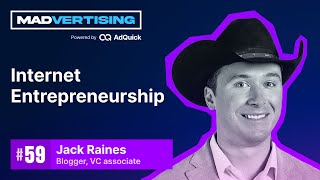
The best place to find me is probably on Twitter, Jack_Raines. I've got a cowboy hat on in all my profile pictures. So Twitter, LinkedIn, shoot me an email at jack@slo.co. I am incredibly reachable online. So Twitter, LinkedIn, email, those are probably the easiest.
Love that. Well, Jack, thank you so much for coming on the show today. It was such a—
Thank you, Grace. Thanks for having me.
Thank you. Let me quickly and
More from Jack
How to Grow a Successful Newsletter and Transition to Venture Capital: Insights from Jack Raines
Jack Raines on LinkedIn Trolling, Creating the 5-figure Young Money Newsletter & More