"Young Money" Writer Going Viral 🔥 (w/ Jack Raines)
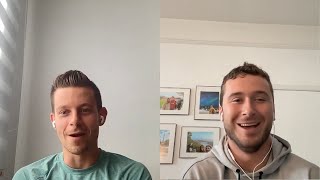
In this YouTube interview, host Mitchell talks with Jack Raines, a former day‑trader turned finance writer and newsletter founder of Young Money. Jack recounts how he turned a $6,000 Roth IRA into $400,000 by trading SPACs during COVID, then lost a large sum and pivoted to writing. He describes his early attempts at freelance finance pieces, the viral resume tweet, and a meme‑style alphabet thread that earned millions of impressions. Jack explains how he built Young Money to over 17,000 subscribers, leveraging Twitter, strategic replies to influencers, and the Beehive platform’s referral system. He details his monetization approach—free content supported by weekly sponsor ads and affiliate deals—while preferring growth over paywalls. The conversation covers his creative workflow (no fixed writing schedule, idea backlog in Notion, writing in the voice he speaks), his philosophy of “doing the thing you’d want to consume,” and his broader escape plan from a conventional MBA‑finance career to a travel‑infused, creator‑focused life. Jack also shares his thoughts on brand partnerships, the value of network effects, and advice for aspiring writers: set constraints, publish consistently, and focus on the overlap between personal interests and audience demand.
Chapters
What is up everyone? Today, super pumped, we have on the show Jack Raines. Jack is a finance writer. He writes for youngmoney.co, which is, uh, an awesome name and brand that he's built for himself. He also has a travel blog and he is a writer for Liquidity Finance. It's like a newsletter and also a meme page. And he's just got an interesting story. So during COVID he made a bunch of money trading and then I think he lost it all or, or some of it. And then he started writing. And some of the people that I like to have on the show take this moment in their journey that they're not satisfied with, and rather than just keep going through the motions, they make this pivotal turn and veer off a different direction. And I think that's exactly what Jack did. So I'm excited to touch more on his journey. And I think there's a lot to learn from his approach to writing and then now how he has monetized that into a business. So without further ado, Jack, welcome to the show. What is up, my friend?
What's up, Mitchell? Happy to be here. I guess if I ever need to give an elevator pitch of who I am or what I've done for the last 2 years. I should probably just take that, that introduction right there. That was perfect.
Did I get it all right?
Yeah, yeah, I know you did well. You did well.
Nice. So I think we initially connected via Twitter, and the other week you, you tweeted out a funny thing about your, your resume. So you're, you're going to, to business school, so you're like, oh, they told me to make a resume. So you made it really funny. I think, yeah, since I deleted it because your phone number was in there, but we could either— I guess just, uh, what is your version of who is with Jack Raines?
Yeah. So the resume thing's funny because I did—
I do—
I do still technically have like my actual resume. I did at one point have a normal job in corporate finance, but it obviously hasn't been updated because I haven't had a normal job or really needed a resume per se for the last year plus. But for my— I am doing my MBA at Columbia University and for my strategy class, we had to submit a copy of our resume because our professor just wanted to like see our backgrounds. So whenever she can incorporate like If we're doing a case on a media company or like a tech startup, anybody who works in those fields, she would probably call on them, ask for their experience. So instead of like touching up my resume to make it look like, oh, like working for a financial media startup, Liquidity, I just basically made like a 2-page bullet point list of pretty much everything I've done over the last year. And some of it was like very, very outlandish. And then I also included a lot of accolades such as waffle eating champion of Tifton, Georgia in like 2012, stuff like that. Um, post— I posted it on Twitter, it kind of blew up, and then I realized my phone number and personal email were on there and I didn't want a bunch of weirdos from Twitter like just spamming my phone. So sadly decided to delete it.
Fair, fair. There are weirdos on Twitter, there are also dope people on Twitter. And so it's just funny, you never know what's going to— what's going to take off. You also had a funny tweet that really took off. That was probably like your most viral tweet about the Alphabet sort of making fun of all these Twitter threads.
Oh yeah, that was insane.
How many impressions did that get?
It hit like 30 million impressions and I think like 30— 130. Yeah, like 430,000 likes. For those who might not be as, as Twitter savvy/addicted as us, there's been this real like, I would call it honestly like a plague or epidemic of people giving basically engagement bait advice on Twitter by posting threads or a lot of tweets linked together where it's like 10 Excel tips you didn't know about or these Google Chrome plugins that should be illegal because they're so useful. And they always get a lot of engagement on Twitter and it's incredibly annoying because the content sucks. So I made a thread where I put basically, if you're reading this, you probably speak English, but did you know every word in English is made out of the same 26 letters Here's 26 letters you have to know. And I just put every single letter of the alphabet with like a really stupid description, like the letter N, this one looks like a sideways Z, the letter Q, this looks like a fat sperm cell, like just random stuff. But yeah, I guess it really resonated with a lot of people who are also tired of that stuff. So it did well. I was, I was pretty shocked, but it was funny.
It did very well. It went very viral. And what I liked about it is also what I liked about the resume thing. And I think it's an indicator of what resonates with your writing and your style, it's like copywriting 101, right? It's like write how we speak. But a lot of people, like for whatever reason, once they get, you know, into an email or writing newsletter or blog, it's like they feel like they have to be all professional. But you, you don't take that approach. You, you write really good content and write about like different finance topics and there's a lot of like good lessons, but it's funny. And so I'm curious, have you, was that always your approach or where did you learn to do that? I guess when I, when I see your blog, My guess is, and I'm curious who your inspirations were, but it feels like there's some like Tim Urban, Wait But Why inspo, 'cause you have these like very simple like sketches that are almost funny too. And then the finance aspect of it, call it like Ramit Sethi or Morgan Housel. And then there's like an aspect of humor too. So I'm just curious, like have you always been into writing or how did you get into it?
I would say I've always like been pretty interested in writing. I didn't write like a ton in college or anything, but I would occasionally write some articles for like my school's business newsletter, newspaper, whatever. And then whenever we had group projects, I usually took over like writing roles just because I was a better writer than a lot of other college kids. But it wasn't like I was out here just churning out blog posts every day when I was an undergrad. It really started ramping up when— and we can go into this a little bit later— but when I was trading stocks a lot, I saw that I got bored one day and Googled how to make money writing about stocks, and I saw Seeking Alpha would pay like, I don't know, $150 an article. And I could churn one out in like 3 hours. So I'm working this remote job, had a lot of downtime, put out like an article a week and like $150. Like, that's good. Like going out drinking money with your friends for like Friday or Saturday. So it was a good way of making use of gap times during the week. While pretty much all my stock recommendations sucked, they sounded good. So I kind of like intuitively figured out, oh, like I must be a decent writer because a lot of people are like, these are getting a lot of traction on Seeking Alpha. But also like, especially looking back 6 months later, most of what I wrote sounded good, but it was kind of BS, which is honestly probably any sell-side report from like a bank analyst too. So maybe that's just how that works. But as far as how I got into like doing my own thing, so last August, like I knew I was going to start business school in New York this year and I made some money trading stocks and didn't really need a job at that point because I had enough money to cover my expenses. So quit my job when they wanted us back in the office and just flew to Barcelona with no real plan to come home. But I wanted to make some extra money while I was traveling, so I'd applied to all these writing roles like Morning Brew. Um, I actually applied for like a part-time role kind of under Morgan Housel at Collaborative Fund and a bunch of other stuff, but I really didn't have like that much writing experience other than Seeking Alpha stuff and a few other little side projects. So I'd seen a lot of people writing on Substack, which is the platform that I used to use. And I figured I'll just start a blog, newsletter, whatever you want to call it, right? For like 3 months, use that as a portfolio of work and then reapply. So about a month in, I end up DMing Liquidity on Twitter because I saw he had a pretty big newsletter. And in my head I'm like, it's big, but it's like not as official of a business. So maybe he would just like, if I hit him up like, yo, you want help with your newsletter? I write a finance blog. This could work well. And it worked. He was looking for to bring somebody on to help with like a lot of the editorial responsibilities. So he was like down with it.
Real quick, for, for people who might not be familiar with, uh, Litquidity, um, he's— it's a very large brand now. Is he fully anonymous? Uh, yeah, just describe what that is.
Yeah, so Litquidity is a really big finance slash Instagram meme page that has like probably 1.5 or like between the newsletter and the social accounts over 1.5 million followers. But he has a newsletter called Exact Sum which has like financial news, it has deal flow from like venture capital mergers and acquisitions. And he basically had this meme page that he started like 5 years ago and then figured out that a newsletter was probably the best channel to monetize it because it's like, obviously you can do like paid Instagram ads and stuff, but it's just the engagement's a lot lower on social media ads than newsletter ads. So he found a very good niche with including like basically the deal flow and all that because it's very useful to people working in finance. And yeah, he basically turned a meme page into like a solid business. So I started like basically helping edit his newsletter and writing some long-form stuff on there. And then I just started to see how the business model works with ads and this and that. And then just having a big mailing list, you have a lot of— there's a lot of opportunity there outside of just like the ads on the newsletter. You can like promote different stuff. You can start your own business ventures and like source it through your audience. So my plan went from, oh, I should be a writer for Morning Brew to, oh, if I get my blog big enough, like it is a business, you know, if you have a, if you have a big enough mailing list, that's like such a valuable asset. So I kind of like changed my trajectory. I'm still working for Liquidity. Love working with him. He's a cool guy. But like on my own stuff, I'm also just building that up and have now started monetizing with ads too.
That's amazing. So really like what you sort of did, like, framework-wise, is you took this thing that you already were interested in or were sort of doing already, which is writing, and you're like, okay, maybe I could turn this into a career. Like, how would I do that? Let's see, like, Morning Brew, how do I get that job? Liquidity looks cool. Okay, well, I need to get a little, like, momentum and actually start doing it for myself first. So you start the newsletter just real quick on Substack, get some momentum, But all of a sudden that turns into like a lot of momentum and you're doing that for yourself. I would imagine that by you do actually doing the thing that gets you, that helps get you the job with Liquidity, and then you're able to sort of write on your own brand as well as sort of capitalize off of the brand of working with Liquidity. And then now all of a sudden you have your own brand and you don't necessarily maybe need that, but you're focusing mainly on your own stuff in addition to working with them. Is that kind of how you thought about it?
Yeah. Yeah. 100%. And it's like. Obviously, like, it's getting the paycheck from liquidity is nice. And then like, I like working with them and doing all that. It's been very useful for me for just kind of learning how this stuff works. And we do some stuff like Beehive, the new platform that I write on, just rolled out a feature where you can like recommend other newsletters on Beehive. So whatever somebody signs up for, Litz newsletter, Exec Sum, it pulls up a list of, oh, like if you read Exec Sum, you might also like Young Money and this and that and that. And I do the same thing on my end too. But it's, it's worked out well growing my own stuff kind of under him too.
Nice. Yeah, I see more and more newsletters using Beehive now. You pretty happy with that platform?
Yeah, it's— I think it's a no-brainer. Best one out there just because Substack still has the biggest brand awareness. But considering Beehive launched beta mode in November and really rolled out in January and they already have built-in referral system for readers, they have a recommendation system with other newsletters. Like the landing page is sweet. The— they've essentially recreated Google Analytics within like Beehive, so you can do everything on site. Like, it's— they have UTM tracking, so you can make like custom links to track audience acquisition. Like, it's just— and the writing platform itself is very straightforward and super user-friendly. So like, I'm not a very techie guy, like, as far as marketing analytics and stuff. So for me, putting everything in-house that's simple for somebody like me to use is great. Like it has everything that I could, I could want.
Sick. Yeah, I've seen some screenshots of it and it looks pretty, pretty, pretty slick. And to be able to see attribution and also to grow from it, most newsletters don't, don't, don't have that. So Beehive, if you guys are listening, get this guy a brand deal. That's a great plug for you.
I do. I do have an affiliate link for new signups so we can, if anybody is in the newsletter game, we can plug that as well.
Let's go. Nice. So One of the things you briefly mentioned was, well, first of all, how old are you? 25. 25. Are you— do you consider yourself a millennial or Gen Z? Where is that?
So it's funny, I actually looked that up on Tuesday. I am Gen Z. I'm one of the— as somebody born in '97, I'm one of the oldest Gen Zers. We have— like, I'm one of the younger people in my MBA class. And our professor made like a joke about like Gen Zers. And this girl sitting next to me said, aren't you a Gen Zer? And I was like, I have no idea. So I'm a Starbucks-loving Gen Zer who's probably gonna get a Java Chip Frappuccino after this.
There you go. Although I'm in Medellín right now, and I went to Starbucks, uh, earlier today, and they write a little funny thing on this. It's like, uh, this one says that, uh, Michelle has pretty eyes. So I'm a millennial, but I might have to spend some more time at Starbucks with you, uh, with you Gen Zers.
It's a great, uh, great international work spot. I've spent— I was, I was similar to you. I was in Buenos Aires for 2 months, and I did a lot of, uh, writing from my neighborhood Starbucks.
Good Wi-Fi. Oh, sick. I think I'm going to Buenos Aires next. So you mentioned that you made— maybe you turned a few thousand dollars into a few hundred thousand dollars trading during COVID Can you quickly talk about that?
Yeah, so I turned $6,000 in my Roth IRA, like a single contribution into $400 grand in about 9 months. So yeah, I was day trading my retirement account while I was working from home, and it's as degenerate as it sounds, but it was, it was a lot of fun, um, essentially. And not to get too into the weeds of it, but I was trading SPACs, and there was a real bubble in the SPAC market. It's, um, essentially an alternative way for companies to go public other than the traditional IPO process. And I was seeing that they were just going nuts and that SPACs also had warrants, which are essentially call options, which in like the most basic sense is a leveraged bet on the price going up a lot. And it was completely detached from fundamentals and reality, but none of that mattered for about a year and a half. So I just was parlaying bet after bet after bet. And because with SPACs, before the deal actually closes and like the new like public company is formed, you can cash out for like $10 a share if you can get it at a low enough price. You have kind of a minimum or a maximum loss that you can take depending on your entry point. So long story short, while it was bubbly, I was just wheeling and dealing and I parlayed like bet after bet after bet, got all the way up to $400K. Market got too saturated. I didn't actually get wrecked when it popped because again, I had my— like, I knew how much I was risking on every trade. But it was after the SPACs stopped really working, I was like looking for other stuff because at $400K, I was there thinking not, oh, you're a 23-year-old with $400,000. I was like, you could be a 23-year-old with $1 million. That would be way cooler. So how do I just— when you're up 6,000%, what's another 150%, right? Like, that's not overly ambitious. It was. So I started looking at companies that used to be SPACs that no longer had that kind of insurance policy floor to see if I could find one that was undervalued that I could just throw all my money in because I thought it would double or triple. And I did. And they had a bad earnings report last August and I lost $157,000 in about 3 minutes and I stopped trading after that.
Oh my gosh, what a roller coaster. So what did you— what's the takeaway there? What did you learn?
One, I'm glad I did it in a Roth IRA because dealing with the tax consequences on the way up and down to that would have been a freaking nightmare. So to anybody who wants to trade, don't. But if you do want to trade anyway, do it with your retirement account. As degenerate as it sounds, because you probably can only risk so much money if you're young because of contribution limits and you don't have to worry about taxes. But the actual takeaway is that I'm glad that like, net, I'm glad I did it. I still made— I took away six figures from like a $6,000 investment. But the best thing that happened to me was losing that money because in hindsight, I don't know if addicted is the right word, but I was almost either obsessed or consumed with the market because you just get in that like making money, making money, making money, like sick arcade game in the worst sense where you keep trying to make the number go up. And I was good at it for a while, which made it even worse. But like it became the kind of dominant focal point of my life. And there's just nothing more boring than somebody whose life is like trading stocks. So my life has been a lot more fun and more interesting since then. And honestly, the, the biggest downside to trading— or like, a lot of people want to go, think they can go full-time because they hit it big on the Robinhood account. It's the only activity where you can put in a ton of hours, be really smart, and lose money because of it. There's other stuff where you might not make money, but you're not going to lose money from it. And I think it makes way more sense to increase your income and just take market returns on index funds. Like, doubling your income from $100K to $100K and then take that 8% annual return than trying to trade a $100,000 portfolio to make 100% return. It's— you get more bang for your buck.
Totally. Yeah. And the peace of mind and sort of the less stress around all of it.
Yeah, it's— I would just— I think I probably took a couple of years off my life. I would like wake up and check the futures overnight. Like, it was so unhealthy. It was messed up.
I'll bet. But yeah, it sounds like it worked well. You got six figures out of it. You got a lifelong lesson. And then you maybe got some good little momentum into your next thing. So the one of the things I was reading one of your blog posts, The Future of You, and you had this quote in there that I really like. You say, and I think a lot of other people might resonate with this as well, you said, around a year ago I found myself entirely disengaged with my work. Beyond that, I saw my path to an unfulfilling career, to get my MBA, work in finance, consulting, uh, banking, make good salary doing things I don't particularly like. To impress people I didn't particularly care about. I needed an escape plan. Can you talk about that time period and how you approached your escape plan? Yeah.
Again, back to the trading thing. I ended up with a lot more money than I should have had at that point in my life. And I also, with business school coming up, I kind of had this like set, like 14— when I was really thinking about this, like early last summer, like 2021, I kind of had this 14-month window where it's like, all right, do you really just want to sit here and basically be like a spreadsheet monkey spreadsheet for the next year, and then you go to business school, and then you'll probably go get another job where you make more money dealing with more spreadsheets, and then eventually you boss people around who are the ones dealing with the spreadsheets. And I was like, wow, that's just incredibly hollow. And we live in a world where you can literally do anything and go anywhere, and this is just like what's become the norm. Like, that sucks so bad. So my initial plan was quite literally to spend the entire last year traveling, going wherever, just seeing and doing a bunch of crazy stuff that I had never done before, and then go to business school and essentially figure it out and just betting on that going to business school at Columbia, I would like find some opportunity that just made sense. I just wouldn't know what that was till I got here, but I was pretty disillusioned to the idea of consulting or banking or the kind of traditional post-MBA stuff. And I was like, okay, I'm just gonna write this travel blog and just keep people in the loop of the stupid stuff I'm doing abroad. And I'm literally just about to have have as much fun as I can for a year. And it's— I don't know if you've read any Tim Ferriss's stuff, but it's honestly fairly similar to— he's written about it in like The 5-Hour or The 4-Hour Workweek, and then just some of his blog posts. But it's like that, like almost existential, like get out and do stuff. Now the writing itself along the way with that and the Young Money stuff actually kind of became that opportunity that I was looking for. You know, I didn't initially set out for to do that, but I basically You know, I've been out of the country for 9 of the last 12 months, like traveling around, went solo to Europe for a while, made some friends, got met over there. We went to Argentina together. I went back there this summer, but the writing kind of became that homeostasis, that constant, because I saw that as like, yeah, sometimes it sucks if you're out on like a Thursday night in Buenos Aires and then you have to go write a blog when you're hungover on Friday. But I viewed writing as a thing that kept me grounded and then also as like the escape plan from ever having to have a job. I don't want again. So it's one of those things where I think a lot of people are scared to make that leap to like, actually, it doesn't even have to be traveling. It could be starting your own business. It could be just moving somewhere different. Like that thing could be anything, but a lot of people, they tell themselves that the timing isn't right or the risk is too big. But I personally think that the biggest risk is just, you know, it's cliché, but never taking a risk, like just getting so settled in that sedentary, what you're supposed to do lifestyle, that one day you wake up and you're 50 and you never did that stuff in your 20s or your 30s, and you don't, you don't get those chances back.
100%. Yeah, it's like no time is going to feel like the exact perfect right time. But I remember for me when I, when I quit the corporate job, I had this feeling of just like right after I, I had actually made the decision and I was going to move to Austin and actively not look for a job for like a couple months. I just had this like, almost like relief or just like confirmation of like, oh yeah, that actually feels right for me. And then I remember going to, like, I would go to all sorts of events in Austin when I first moved there. And I accidentally went to this, like, I didn't really know what it was, but I guess it was like a career fair thing. And so it was like all these people, like, you know, selling themselves to these companies. And I had just like kind of showed up. I was not looking at all for another job at this point. And so like, there was something interesting of of having almost like leverage. Or when I was like, oh yeah, I'm not looking for a job, just like talking to people and like talking about the companies, and it almost made them want me more because I was like saying I was denying them. And I think that the same thing goes with dating, the same thing goes with, uh, it sounds like maybe some of your experiences too. And then for me, I'm curious for you, it's like it just opened up way so many doors that I might not I would've had open if I was just like, you know, stuck in inertia doing the same thing. And for you, it sounds like you're able to, to take the writing stuff more serious, do some fun travel stuff, and then that kind of got you into this, on this brand new highway of, of writing and sharing that with people. And it, and it seems to me really resonate with a lot of people.
Yeah, no, that's, that's, I, I agree with you 100% on that. Like, that's literally just human psychology about— I actually put out, I put out a piece today on like 12 of my favorite books. That was like my blog post. And I'm not to like stray too far away from what we're talking about, but Mark Manson's book Models is like, it's a book on dating, but I found it like a very useful book on psychology in general. And yeah, line in there that essentially like whoever like needs the other person less wins. And it's not in like a manipulating kind of way. It's just like having the ability to walk away from a situation is just very powerful. And it's like you said, like when you don't need a job, people want you. Like, it's— yeah, it is the same way in dating. Like, if you come off as desperate, like, like, girls can detect that. But if you're very confident in yourself, then it's, it's a lot more like appealing and attractive. And yeah, with like the writing stuff, it's like I put myself in a position where there's other stuff that right now would probably pay a little bit more, but I'm not interested in it and don't need it. And it does lead to interesting opportunities. Like, I have people now hitting me up to help with like this or that. And I just say either I don't want to or I don't have time to, or that's just going to kind of distract from my other stuff I'm doing, so I can't take that on. And yeah, it gives you a ton of leverage because you control your time and people kind of sense that like your time is valuable because you're saying no to a lot of stuff.
Yeah. And you're just a doer, right? People see you with your own viral tweets or your own blog that's taken off and other people like really liking it. There's been some, some really good, like, retweets of people being like, oh, this post is really good. What's the newsletter at right now in terms of subs? Like 17K?
Yeah, we're sitting at 17,484 as of today. I've gotten, um, this new— Beehive literally launched it yesterday— this new thing where, like, you can recommend other newsletters. It's— I think it's gonna print. I have, like, I'm looking at it now, I have, like, 15 different newsletters recommending me.. And then I've gotten like 100 subscribers in the last day just from that. And that's like without having to market anything, you know, that's a very good source of passive growth. And it's like it's a network effect. Like I'm also referring a lot of these same newsletters, which is helping them. So it's a win-win for everybody.
Yeah. How did you get initial traction? So you started writing, right? Started doing the Twitter thing at this point that has grown significantly. Do you remember like some of the early things? That, that initially sort of catapulted the growth.
Yeah, I remember, like, I followed a lot of the kind of finance writer people for a while, like Morgan Housel. You mentioned him earlier, but yeah, he's been a big— I don't know if inspiration is the right word, but like, I very much enjoy his style of writing and I've incorporated that a lot in mine. People like him. There's a guy named Nick Majuli who just wrote a book, Just Keep Buying. It's a good read, but he works for Ritholtz Wealth Management and also like has a finance blog. So, and like dozens of other people. I didn't really— it took me a few months to kind of find my flow of like if it was going to be like, like, should you use a Roth IRA, like personal finance tips. And I didn't really like reading that stuff, so I didn't want to write it, you know. Like, it was just— that's a— like, there is a very important spot for financial literacy stuff. I like the Housel approach of just telling stories about like human behavior through the lens of money. That's how I look at it. So I started leaning more into that. And then, you know, you write for 3 or 4 months and I didn't have a huge reader base. It was a few hundred people, but you get a pretty big library of stuff that you've written. So the real turning point for me was October, I think, of last year. Nick Majuli, who he had like 100,000 followers on Twitter at this point, put something out about the downside of actively investing versus passively and kind of the opportunity cost of your time and this and that. And I replied, yeah, I got firsthand experience with this. I lost $157,000 in a day 3 months ago from trading my own stuff, and I've written about it. And I like replied the link to it, and he DM'd me and he was like, dude, this is nuts. Like, do you care if I share this? And I was like, no, like 100% share it. So he didn't just reply to it, he posted like another like just initial tweet with a link to it, like, this story from Jack Raines is nuts, blah blah blah. Like 150 new subs in a day. I had like 500 total. So that's just a ridiculous ROI. And I started to figure out that distribution is just as important as content, as you've probably seen as well, and maybe even more important, honestly. And you don't want to be the guy that's just like— I think when you write, you should share everything that you write, but you don't want to spam DM people all of your stuff just because they have an audience. They get that all the time. Like, I have people shooting me me stuff all the time and it's so annoying. But you do want to, when there is an opportunity to include something you've written that's relevant and adds value to an ongoing conversation, that's where the magic happens. Nick was talking about this issue with active investing. I had an anecdote about when I blew a lot of money doing that. I incorporated in the conversation, he shares it. So I began not necessarily looking for those, but whenever I saw an opportunity where it made sense to include something I wrote with somebody who has a bigger following, I would do it. And that kind of— before, like, I have a decent Twitter audience now, but at this point I had maybe 900 followers. And that kind of established me with a lot of people who were way, like, just in a different ballpark for me entirely. But they read my stuff and liked it. And then a lot of people follow Nick. Nick's sharing this guy's stuff. Oh, let's see what he's talking about. Anyway, that was the initial thing. And then, you know, you're posting on Twitter a lot, interacting with these people, and you just start growing to the point that it's— you have— you just have momentum on your own stuff after you get a couple of thousand followers or whatever, right?
And I think key, like, kind of lesson takeaway is, as I'm hearing that, is you said, you know, you're figuring out your style, right? And you didn't want to do the things you didn't want to read. So it's like Austin Kleon says this too, of like, make the things— make the stuff that you actually want. And so like, your style definitely is different from those, and you're becoming the best at that because you know exactly what you would want to read as a consumer. I think I've heard other writers say a similar thing of just like, that's kind of how you carve out your own style. And you could, you know, imitate some of these other ones to kind of get going, but then add your own twist. And then once you're sharing, it makes everything downstream that much easier because you're not sharing this thing you don't even like. You're commenting and kind of like connecting with the other, you know, other people like, oh yeah, that's actually kind of similar to this. That's kind of helping their— widen their perspective too. And then as far as like, we were chatting a little bit before we press record, as far as like your sponsorship stuff go, how do you look at that? Are you mainly focused on growth and then also monetizing it at the same time? And are you actively taking on more brand deals if there are any brands listening?
First of all, on the brand deals, I am for like, like going into Q4. I have a pretty open calendar right now. I really need to get on that actually Between moving to New York a few weeks ago and just like school starting, I've been pretty busy. But yeah, so I run like a— I have like a primary sponsored by graphic ad copy about like whoever the primary sponsor is that week. So yeah, I try to have either a sponsored ad or something that I'm referencing. It could be a cross-promotion with another newsletter, but one or the other in pretty much every piece at this point. I like leaving all my content free. I don't want it behind a paywall. I want as many people to read it as possible to maximize for growth. While I probably could monetize a little heavier by putting some stuff behind a paywall now, to me it makes sense to make a little bit less money, use the ad model to still make money from it, and just keep growing as quickly as possible because I just, I want everybody reading my stuff.
Yeah, maybe we'll set up a sponsorship with AppSumo for Q4. And another thing too, I would recommend from your end as you're looking at these different brand deals, you're growing quickly. And so like you were saying before, there's the actual newsletter open rates and click-throughs, but there's also the people that just find the web version that is shared on Twitter and other places. And so one of these posts might take off and then it ends up like the brand only paid a little bit for that, but it gets a lot of traction. So what's gotten more popular these last year or so are these hybrid deals where the brand will give a small influencer fee and then they'll also give you an affiliate link. And so, you know, you got the guaranteed fee, but also if it takes off, you get a of the upside, and that kind of like aligns both incentives for, for you as you're growing and it takes off, as well as like the brand. What do they want out of it? They want more exposure, more clicks, etc. So you can start asking for those as well, and that might be helpful for you. Do you have like a dream brand that you would want to work with?
I don't really know. That's a good question. I think there's some that would be really funny to work with, even though I don't know if it's a good fit. Like, I think like as a, as a single dude in New York who uses Hinge, the dating app, I think it would be hysterical to have a Hinge ad on my finance blog. Something like that. Or I think some of them would be like good fits. They're like some travel stuff like Hostelworld or something like that. I'm not necessarily— the finance ones are a very good fit, like whether it's like an ETF provider, wealth management. But some of the ones that are just a little more off the wall, I think, are like very interesting fits with what I write.
Yeah, you pimp out the sponsors, sponsor section. It's the very first thing and you always write a good intro. So yeah, I think that would be funny to have a hinge or something a little less expected. And then the other thing I want to talk about is just your creative process. So we've talked about some of your blog posts. For example, you have this one called The Over-Financialization of Everything. You Can't DCF Your Life. So DCF is discounted cash flow and it's a type of analysis in the finance world. But you applied that to your life and how we maybe overvalue monetization. But there are actually, if you zoom out, there are these other aspects of life that we maybe undervalue along the way. What does your day or week look like where you're, I assume, reading a lot of things and then writing in your own sort of, oh, that's interesting, that's a nugget, I'll store that away. And then are you blocking off set writing times? Like, all right, I got to bang out a blog post right now. And what's that kind of look like for you?
I don't really have set writing times just because I really just have no idea what I'm getting into any given week. And I think that's a byproduct of starting writing when I was hostel hopping in Europe for 4 months. It's like, all right, like I'm on a train for 6 hours. I can write a blog post here. I want to go do this, but I said I'm going to put one out every Monday and Thursday. So it would be like I might on a Sunday afternoon pass up on going to see the Colosseum because I needed to write. Or occasionally it's, well, I've done stuff the last 5 days. And now it's midnight and I haven't written a word. And then I stay up from like midnight to 5 AM to write a piece. Now that I'm in New York and I have a little bit more structured schedule, but it's still the same thing. I just know when I have to hit the publish button. And honestly, having the ads on it, like when you're kind of locked in with a sponsor, I don't want to have to like reschedule those or anything. So it's a pretty good motivator to make sure the stuff gets put out. And I just know like deliverability, open rate is better when you have a consistent send day and like cadence. I just know about how long it takes me to write stuff depending on what I'm writing about, maybe 3 or 4 hours, and then like go back and edit later. And sometimes it's longer than that. It's just creative stuff, you can't really completely block it. But if I'm rolling into Sunday and I have a piece I need to put out Tuesday and I haven't started, like, I won't like make plans for that Sunday to go do stuff with people because I don't want to like time crush it too bad. So I just have a feel for how much I can handle. As far as like how I actually come up with the content, I don't have a process for I'm like, oh, like I need to learn more about stuff like this, potentially write about something like that. It's just a byproduct of like, I read a lot, both like books and just other articles, blogs, stuff online. And then I'm also constantly trying to talk to new people or talk to friends about their opinions on stuff or just stuff that's going on. And you have all these, like when you least expect, like when I'm at the gym or when I'm out with friends or whatever, I'll just I just have an idea like, oh, two things that I saw this week all of a sudden come together in my head. That'd be a good post. I use Notion to basically keep everything organized and I have like a list in Notion of writing ideas. It's like a backlog of like 75 ideas now and just put a little bullet point like we were talking about DCFs in my finance class and then like the day before I'd seen something online about like, is an MBA worth it? It costs this much money. And I was sitting there thinking, I mean, yeah, if you run a a DCF on it, it may or may not be worth it lifetime earnings-wise. But if you look at the, like, when I say network of people, not even in a career way, but just like the— you meet a lot of fun quality people that you're like hanging out with and living with for 2 years. Like, you don't— you can't put a price tag on that. And then that's the idea, like, we over-financialize stuff. You can't just like run a DCF on how you should live your life.
Yeah. And so I think for anyone listening who wants to maybe start any new endeavor, but in particular let's just use writing for an example, What would you recommend? It's like, you know, pick any note-taking app, a piece of paper, or, you know, maybe you want to use Evernote or Notion, whatever, and just start making a list of the things that you're most excited about to write for, and then to write about. And then, you know, as you keep doing it, the other thing that really resonated what you said is you picked a schedule. So like constraints equal creativity. And so, you know, you have to pick, you know, you have to click the publish button on every Sunday and Thursday. You're going to be like, all right, well, I have to think about about what I'm gonna write. So anything else you'd add for anyone just starting out of like, pick a simple constraint and then start jotting down the things that you would actually want to read yourself? And then everyone wants like the secret and the hack, but it's like with a lot of stuff, you just got to do it. You just got to do the thing and you just have to put in the reps and then you get better over time once you have feedback.
I think there's this, this problem where people— it's like, I call it productivity porn, where people like reading about writing or how to write or like how to be more productive. And they never just like get in the trenches and do the damn thing. Like if you want to be a writer, you literally just have to write a lot of stuff and it'll probably take realistically a year to really get traction from it.
If—
and that's if things are going well, it can take longer than that. I— the only thing I would say is have a platform where you can like publish online with a landing page, like a Beehive, a Substack. I wouldn't use really WordPress or Mailchimp because I don't think they're are as user-friendly for somebody just writing their own thing, but just something where you can like put your thoughts on the internet that you can share with people. And you start getting a feel for— if you do it long enough, I— there's this Venn diagram of what you want to write about and like what people want to read about. And if you can catch that overlap— the only way to figure out where that overlap is is by putting a ton of content out there and just seeing what works. If you pick a topic that you in general are interested in, you'll be able to cater it a little towards what also appeals to your readers. Like with me, finance is a very broad topic. I— the way I like writing also appeals with like readers. Like people like my stuff because it's like you said, it's real, it's conversational. I write in the exact same tone that I speak in cadence-wise. I try to layer sarcasm in my stuff because I'm a pretty sarcastic guy. But yeah, you— the only way you figure any of that out is by publishing as much as possible. I think once a week is a doable cadence. For like, I publish twice a week, but I think pretty much anybody, if they were like, like serious about putting stuff out, could do once a week or at least once every 2 weeks. And the more you can put out, the easier it'll be to see what works and what doesn't. But yeah, it's like anything else, starting a business, playing a sport. Like you can read about how to play basketball all day, but you have to actually get out there and dribble and shoot to get good at basketball. Writing and any other skill is the same way for sure.
Writing. I'm learning Spanish right now. I was first researching what are the hacks, how do— where are the shortcuts? And I realized it's like, yo, it's, it's just, yeah, it's just a game of tonnage. So like, you know, they call it 150 hours, whatever. So I just made a spreadsheet. I was like, here's every day over the next 3 months. What if I did 1 hour a day? How long would that take? It's like, oh, what if I did 4 hours a day? It's like, okay, well, at least do 1 hour, maybe some days more. And it's like, I'm just gonna hack away at it. I'm gonna live in a place where where I speak it every day and just try to put in the reps. No shortcuts around it. Sure, yeah, I want to prioritize like the things that will get me there quicker, maybe memorizing, uh, starting with the most— the thousand most popular words, and, you know, insert whatever craft you have. Maybe there are these little things, but at the end of the day, you just need to— you need to put in the work.
I actually— I wrote a piece on the most like efficient way to learn a language because I've been learning Spanish too. Colombia is probably the best country to be in. I— The accent is so much easier there than it is.
Yeah.
Like, like Argentina or Chile or something. But yeah, it literally is memorize the 1,000 most common words, memorize like past, present, future tenses, and then you just have to speak as much as possible with native speakers and then you like slowly build your vocabulary off of that. But once you know the 1,000 most common words, that's about 85% of spoken language. And if you can actually understand the pronunciation you can, you can get the rest of it through context.
Right. And I think what I was, what I learned too is just speaking and doing it is far more valuable than like being perfect with the tenses of like, I'd rather just say like, you know, habla or whatever, don't even worry about the tense or anything. And then just get the point across to communicate from one person to the other versus being like, oh, I can't say that yet 'cause I don't know the exact tense. And you know, how would I How do I conjugate this verb with that one? So yeah, I think that there's definitely a lesson, a through line between writing, language, any of these things that people love to read the productivity porn version of, but never actually dip their feet into the water. So the next thing, maybe the last thing here that we'll talk about, you had a tweet about, how did you phrase it? You said that you met Danny Miranda and that if you could buy a stock in any person, it would be that dude. I also really like Danny's stuff and think he's a great dude. What about him in particular? And then if you had to buy 2 more stocks in people, you've done this quite well with other stocks or warrants rather.
I did.
I did at one point.
I'm also really screwed up. So buyer beware.
Why Danny and who else for your other 2 picks?
It honestly annoys me that I can't remember who put me on Danny's stuff. I don't know if it was like a friend or a Twitter friend or just somebody who like replied with the email one time. I've literally searched my stuff for Danny Miranda to figure out where it came from. Somebody put him on my radar and said, you should get on Danny Miranda's show sometime. You and him seem to have a lot in common. It's kind of like he's like the podcast version of, of your blog, basically. And I was like, oh, that's— never heard of this guy, that's interesting. Look him up on Twitter. We have like the same number of followers. Listen to a couple of his things. Like, we have very similar kind of life outlooks. And then I see that he's published I don't know how many podcast episodes. So like, he's been hustling too. So I was like, oh, this is cool. So I straight up just messaged him on Twitter and I was like, yo, somebody put me on your stuff and said you should meet Danny Miranda. You guys have a lot in common. I was like, you from New York? Because I'm moving out there in a month. And he was like, yeah. Like, he lives in Long Island, becomes to the city a lot. He's like, dude, yeah, let's link up. And he's like send me some of your stuff. I'm interested. So we were both— it was like the Spider-Man meme where we were like, oh, like, we're on the same page here and we're kind of in very similar spots of like, definitely haven't made it. Like, we're not superstars, but we have momentum now. And like, stuff's going well. We're like— ball's very much in our court to make it happen. But like, just the way that he talks about like what he's doing with the podcast and stuff and how just like in the trenches he is with it, he's gonna make it work, you know. Like, everybody has the idea of, oh, like, it's, it's the— it's like every dude's dream to launch a podcast with the homies. But he's like, he's out here doing it. He's had some big name guests, like Sam Parr was on the other day. What's pretty wild to me is he isn't— like, when I say he isn't killing it, it's not like he's making like millions of dollars on this podcast. Like, I was actually shocked by— like, it's doing well and the momentum's like killing but I actually thought he was already like one of the top dogs just because of how well he presents himself, if that makes sense. And I told him that he was like, yeah, I know. I've gotten that from a lot of people. Like, people are shocked that like I'm not at like millions and millions of downloads yet. And I was like, yeah, like you're going to get there though. It's very obvious that his momentum is good and it's, it's that he's in that spot where it's something he's both very good at. Like he's incredibly good at interviewing people. It's, it's a good skill. And he's also super passionate about it. And if you're really good at something that you're passionate about and there's a way to make money from it, which there is in podcasting, you can crush it. So he's— I'd back up the truck, um, to bet on him.
Nice. Yeah, that's a recipe for sure. It's just like you're playing a different game, and, you know, definitely the long game, and over time that, that pays off. Uh, any other people top of mind that stick out that, uh, that you'd buy stock in?
Yeah, I think, um, Kyle Scanlon. We connected like last fall. She got huge making these like— it was like TikToks about macroeconomics, which sounds lame, but she's so both direct and funny and really good at explaining complex stuff to people in their 20s that might not be like in the trenches with econ. Like, I don't know if you like read any of her stuff or watch her videos, but she's one of the best.
Yeah, I have. I think I even complimented her on it because somebody in a writing class I took shared, I think, a Substack that she made. And she's on Twitter @KylaScan, K-Y-L-A-S-C-A-N. Yeah, that's a perfect example of like, you know, people who are— I'm not super familiar with their stuff, but like people who are really good at it and are really interested in the thing. I would say similar to you, similar to Danny, similar to these people who are just like, oh, they're just playing a different game because this is fun for them. And whenever there's something fun that— crap, for, for that individual person, it no longer feels like work. And so they're gonna definitely outperform.
Um, the, the other one is, uh, my boy Tyler Dick. He's actually the CEO of Beehive, which is the platform I ride on. But he's— dude's, uh, he's a killer. He, he used to be at Morning Brew, and he was there— I don't know what his official title was. He was one of the first employees there, but he was essentially— he was like the main reason why they went from 100,000 readers to a couple million. Like their referral system, basically all the backend stuff that like helped their growth other than the content creation itself. He was like the main guy behind that. And when he built Beehive, his plan was literally like, like before this you would have to work with Sailthru and Snowflake and Google Analytics, and it's expensive and clunky having all these different things. So him and his team have built this platform, Beehive, where it's like they basically incorporated all that in one spot and it's like pretty cheap to use. Anytime I have any issue with anything, like DM him or one of their guys and there's a fix or a new feature. Like there's like 7 or 8 people on their team and they've been shipping out new product like every week. Like they— a lot of people were either like nervous to switch from Substack to Beehive or thinking about going from Beehive to Substack because Substack had where you can recommend other newsletters on your thing. And he was like, yeah, give us 2 weeks and we'll have the same thing. And they have it. And instantly organic growth is going through the moon. So I personally think he's like, it's like his passion project. Like he's, he's an assassin on this stuff. And like, honestly, I don't think the dude sleeps, but I'm very confident that Beehive is going to become like— I'm very bullish on the whole creator economy in general of like, like individuals being able to, I don't want to say build brands, but like building up their own audiences that are more valuable than traditional marketing campaigns. And I think that Beehive is going to serve that niche of creators so much better than anyone else that it's going to become like an incredibly valuable platform. So yeah, Kyla and then Tyler would be two people that I would buy stock in if I could.
This was awesome. Really appreciate you coming on the show. People definitely check out your work at youngmoney.com. And follow you on Twitter. It's the handle is Jack_Raines. R-A-I-N-E-S. Yeah, I think biggest takeaway for me and for anyone listening, it's like just make or do the thing that you want to consume. And I think if there's more people doing that and less people just kind of going through the motions, then the world is just a little bit better of a place. And it's fun to read your stuff and to laugh and learn at the same time. I think that's rare, and, and I think your personality sort of shines through in, in the newsletter and your work. So I'm super pumped that we met, and I appreciate you, and certainly we'll be watching your stock rise. So Jack Raines, anything else you want to leave the, the listeners with?
That's all I got, man. I appreciate you having me. This was a lot of fun.
Hell yeah, brother. Awesome, my friend. Well, until next time, appreciate you coming on the show. Adios.
Adios.
More from Jack
How to Grow a Successful Newsletter and Transition to Venture Capital: Insights from Jack Raines
Jack Raines on LinkedIn Trolling, Creating the 5-figure Young Money Newsletter & More