Jack Raines on LinkedIn Trolling, Creating the 5-figure Young Money Newsletter & More
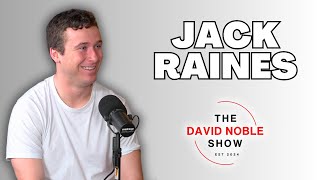
Jack Raines built Young Money, a finance newsletter with tens of thousands of subscribers, by writing constantly and being loud on LinkedIn and Twitter. He made early money on SPAC trades during COVID, then monetized through ads, subscriptions, and a salaried media role, emphasizing that opinionated, authentic content beats traditional entrepreneurship paths.
Chapters
We don't really have an intro yet, so we don't need one. We don't really know the name of this yet.
We don't need that either.
He wants to call it Out of Office. I don't see it. It's not mine.
What would you call it?
He doesn't even know what the fuck—
I have no idea why you're here. Um, I got a text to come here from Atu. Yeah, yeah.
All social network. Yep. Right.
Yeah.
How do you get people to do stuff for you?
You just reach out.
Yeah, exactly. Absolutely. All right, so I'm David Noble. I work at the University of Connecticut. About 6 years ago, I, I raised a large gift from an individual who said entrepreneurship doesn't happen in the business school. How do we get more students into entrepreneurial things so that 5, 10, 20 years later they become entrepreneurs? Simple premise. Um, Atu and Chris were like, 2 of the first kids we started supporting. And, you know, ever since then, we've been moving forward. At some point, 3, 4, 5 years ago, I came up with this idea that like the way entrepreneurship was done is no longer the way it's going to be done. And it's gonna be audience. And it's like, it aligns with the creator economy stuff, but it's like a little different. And so when I use the term creator, I mean people that make things, people that do things, not people that talk about things, you know, like you could be a coder and if you just go off and live in the world and create things, like odds are you're more likely to become an entrepreneur, not guaranteed, but more likely. So how do we find those creators and then how do we help build them? And along that path of inquiry I've come up with a number of different ways to think about it. And like our personal story becomes interwoven with most of our business opportunities. Makes sense now? Yeah. Why you're here?
Yes, it does.
Yeah, pretty cool, right? Yeah. And like nobody teaches this.
Well, no, I think a big part of that is just figuring it out. So I guess I'll do an intro. I can intro myself too.
This is just informal, yeah. But we'll, we'll tell the world who you are.
Cool. I'm Jack Raines. I'm a second year MBA candidate at Columbia Business School. Did my undergrad at Mercer University. Also sometimes good at basketball, not as good as UConn. I've been writing a finance blog called Young Money for like 2.5 years. I've got 50,000 readers now. I'm the editor-in-chief of ExecSum, a big daily financial newsletter with about 300,000 readers. And then along the way I've worked for different venture capital firms, other companies helping them with content marketing, this and that, and basically built my entire career off of writing stuff on the internet.
Why did you start doing that?
Part of it, I got bored during COVID straight up. I think that I've thought back on this a lot.
Why'd you get bored?
Like, because I was working a remote financial analyst job from my bedroom.
So you weren't working 14 hours in your bedroom?
Oh no, I was working like 7 hours a week maybe for a— it's the classic, like moving the mouse to make it look like you're active.
Oh yeah, you gotta race over to like make sure it doesn't go inactive.
Yeah, it's crazy. I actually missed out on the whole— some people would like program their keyboard to make it look like it's active when they're not. That would've been a good trick. But no, I honestly just had a lot of free time. It started from, I was trading stocks during COVID like everybody else. I actually made a lot of money doing that unlike most people in my age cohort. And then I started writing some freelance software.
Why do you think you made a lot of money when others weren't? I'm never gonna let you tell your story. The whole thing is gonna be your story.
No, it's, nah, that's a good point. I think that like a lot of people were just, looking at whatever was like a hot item that other people were making money on and buying it. And I saw that SPACs specifically were interesting because not that many people were talking about them. Like Apollo had a SPAC called Spartan Acquisition. Yeah. And I was in a like a subreddit called SPACs that like me and somebody else started that blew up to like 200,000 followers. And then another group of us made a smaller community with like 200 of us where people had built web scrapers that were going through SEC filings for when companies would, like, trading would halt on a SPAC whenever news came out that they were going to announce a merger, and trading would halt for 15 minutes when the news dropped. So the news would drop, we would get a push notification, quickly look at it, and if it was anything about electric vehicles, weed stocks, sports gambling, or anything that seemed sci-fi and cool, we figured a lot of people would throw money at it. Like, that was the level of diligence to the win end. But because we were seeing it while trading was halted, then you just put like a limit order at $10.90, if it was at like $10 flat before that, you'd probably get filled. 'Cause like I would throw maybe $100,000 at this, which is a lot of money, but there's other bigger investors who'd be throwing millions. So there's enough liquidity. I could probably get filled around that price. But it got even deeper than that. Like Spartan Acquisition, we got a notification they changed their website from oil rigs to windmills. So we figured that they were probably switching to targeting like an EV company. And it was backed by Apollo, which meant that they had a much higher chance than some of these other SPACs that were run by like politicians or athletes. So we figured that, okay, there's probably some kind of electric vehicle or alternative energy startup. It doesn't matter if the company's good, people just need to think it's good and buy it. So I bought like $30,000 in that stock or the warrants, I can't remember. And then like a week and a half later, they announced a deal with Fisker Automotive, like Henrik Fisker EVs, and the stock tripled. And like, We weren't even reacting to the news. We were just anticipating that something like that would be the news.
So when we were young and lawyers, I was a lawyer when I was young. Okay. One day we looked at something and saw Enron Field in Houston. They had a website that was going to be Dyna-G, like they were making the change. Yeah. And, you know, we were laughing because we were Dynegy's lawyers. And like, hey, you guys, like, you just tipped off the world that you're about to buy Enron. Transaction never went through. But like, you know, that was, I wanna say it was like late 2001. And like, you know, I think what's creative there is like, you're just looking at particular things in the world, scanning the world for particular things that are gonna cause human reactions. Based on communities that you know and/or built. So are you more a writer or a community creator?
A writer. I mean, I've published probably 700,000 or 800,000 words across different blog posts and articles at this point. So I, I wouldn't even say, I mean, with the SPAC thing, yeah, at that point, like 3 years ago, probably more community builder. But even then I was like writing stuff on Reddit all the time or Seeking Alpha. Like that was the main outlet. But since then, Between my blog and then other stuff I've written, it's been like writing has been the main thing. Any community that I have is just like people I've met mainly on Twitter. I guess we can still call it Twitter.
Yeah.
And like other sites just through like content or just like interesting people I've met online where like I'm a writer, there's something else, they like my stuff.
Do you get paid to write?
I wouldn't say I get paid to write. I monetize my stuff with ads, so I get paid because I write and enough people read it that I can sell ads on it.
Right. And that, and that's my, That's my question around the community. Like even the writing sort of creates that community, right? 'Cause I mean, I would assume it's not 100% new audience every time you write something.
No.
Like you're trying to bring into your blog, into your newsletter. We were joking around before you walked in and it's like, oh yeah, like go ahead and apply for a media pass if you're a journalist from Hartford Courant. And you'll get it. Yeah. And then be like Young Money blog writer and you may or may not get it, but like you have more readers on Young Money than the Hartford Courant has. Yeah. Right. Like, and, and what I, what I think has happened is like people have been able to build their own communities that want to know what Jack— there are people that want to know what Jack Raines is thinking about. Yeah. Why do you think people care what you're thinking about? Are you smart or is it—
I mean, I think I'm fairly intelligent. But I think beyond just like IQ, I think I communicate ideas better than a lot of people do. And I also think that there's something unique now that wasn't as readily available, like even as recently as 10 years ago, in that you don't really need permission from like a true publication or whatever to share your thoughts. Like 15 years ago, I mean, some people have blogs, but it was really hard to get distribution of your thoughts. If you go pre-internet, it was basically, impossible. Like you basically had to write for New York Times, Wall Street Journal, or like a more local newspaper.
Yeah, there was a linear writing career. Yeah. That included if you ever want to actually get paid, you better publish a book every 3 years, right?
Yeah. And now it's like you can start your own blog and just put your ideas out there and maybe 10 people read it, but they love it. Maybe hundreds of thousands of people read it, but you don't have to go through a traditional channel to get it. I also think that a lot of like more traditional journalists go through a very similar like academic career where they study similar majors and they get a master's in journalism and they go work for media company. So even if they aren't all writing the same thing, they've had very similar backgrounds going into writing. And when you have like all these blogs appearing now and like independent newsletters, you have people who weren't like professionally trained in writing who developed their own voice largely based off of like just writing about what they were interested in or finding their own tone. So you have a lot more like diversity of tone now in all these other independent venues. Like Matt Levine, for example, is probably the best known finance writer, but he wasn't like a career journalist. He was a banker, he was a lawyer, started blogging on the side, and then one of the editors at Bloomberg really liked his stuff and hired him to come write for them. So now he's, I guess he's a journalist, but like that wasn't his background. Like part of what makes him so good is that his, like prior to writing experience was so much different than everybody else's. And I think that the internet's enabled a lot of people to do stuff like that, like have a very untraditional path, become a writer almost on accident, and their voice is different, stands out.
But like, how did you learn to start doing that? Like, do you remember the first time you were like, oh, I'm gonna write this Reddit article?
I remember the first time I wrote something that I was like, this was good. Really?
Yeah. So what was it?
I wrote a blog post about how I lost a ton of money. Like after the SPAC bubble popped, I was just like basically day trading random stocks and got blown up. I lost like $150K in a day and I was 20.
What did that feel like?
That hurt. I just turned 24. Like that's, it would never feel good to lose that. But when your salary's like $60K and you lose like 2.5 times that in a day from hitting the wrong button, it really, makes you rethink some life choices. But I wrote a blog about it and more than just like, oh, this is like the trade that lost the money. I wrote about what was going on in my head, like how I got to the point. There's like no rational actor is going to do something where there's that high of a chance of losing that much money. But I wasn't behaving rationally. I'd gotten so used to making money off of trading stuff that I just wanted to keep watching that number go up. So I wrote a blog about it and like a month later, this guy Nick Maggiulli, who's the CEO at Ritholtz Wealth Management, they're like a big RIA in New York. Josh Brown and Barry Ritholtz started. But Nick had like, he had a pretty big Twitter following, like 100,000 followers and had like probably 20 or 30,000 people reading his blog. And he tweeted something about how you shouldn't like actively trade stocks. And his comparison was like, it could take years to know if you're good or if you're lucky. Like if you're playing basketball, you know within 2 minutes if somebody's good or not. Yeah. It's very obvious if you can shoot, if you can dribble. With stocks, you can just catch a trend, make a lot of money, and then keep trying to trade and blow all of it. Like underperform the market.
—and you look at Paulson, 2006, you know, optimize your trade, get in on Paulson's hedge fund in '06, get out in '09. You think he's the greatest, you know, isolate that 3-year period and you're like, this is the greatest money manager in the history of the world. And then you look at since 2009, right?
And there are a lot of people like that who did well either on the tech bubble or in the area between the tech bubble and the great financial crisis when value stocks outperformed. Or shorted the housing bubble, made a ton of money, and have been calling the last like 15 bubbles that didn't happen. But anyway, like I replied to Nick and was just like, yeah, actually this literally happened to me trying to trade too much. Here's the piece I wrote about it. And he messaged me on Twitter and he was like, dude, this is really good. Like, do you care if I share with my audience? And I was like, go for it. And I got 300, 400 new subscribers that day. And like my total email list was 400 going into that. So he was somebody who I looked at as had made it. Like he was verified on Twitter before everybody could pay to get verified on Twitter, right? Was working on a book deal. Like he had a lot of stuff going for him and he thought it was good. And that was the moment that I was like, okay, I'm a good writer. I just don't have that big of an audience yet. But if I keep writing and just being active and being loud, I'll probably build a decent-sized audience. What do you mean about loud?
Like, I think that's a, a category that you fall into. I would agree. Although you're normally toned here. Thank you. Yeah, I mean, but your writing is loud and I think it pulls people to it. But like when you say that term, what do you mean? And that was intentional.
Yeah, no, the loud part I was really talking about on social media, but also just through the writing itself. One, I think people are so worried about like, either hurting someone's feelings or just being judged by what they write. They try to water it down to broadly appeal to a lot of people. But there's so much stuff out there that's like just these really vague whataboutisms that are trying to sort of apply to everybody and it doesn't really apply to anybody. You need to be opinionated or talk about your experiences, or if you're going to do a very neutral thing, it needs to be really, really good and detailed. And a lot of people are just flat. And even people who are good, like they don't promote their stuff enough. There's hundreds of millions of people on Twitter and on LinkedIn every day, which are the two like biggest text-based social media platforms. People worry about like looking like they're spamming their stuff or this or that. Nobody's gonna see your stuff, especially early when you don't have that many followers. Like nobody, if you have 500 followers on Twitter, nobody's gonna see your blog post. Like you have to constantly be chatting with people on Twitter and on LinkedIn and telling people about it in person. Like, In 2021 when I had like 300 subscribers, I was just backpacking around Europe and whenever I met people in hostels, I would like sign them up to my email list. Right. It was just like, I was just telling everybody about what I was doing. And you kind of have to like tell everybody about what you're doing, especially for the first year or two. I mean, now I wouldn't say I've made it on some grand scale, but I have a big enough audience that like when I post stuff, people see it. But it still took, at least a year and a half of like actively, actively telling everybody about it to hit that point.
So you learned all this in college, obviously, in this workforce preparation.
Yeah. Between like building— Studying finance and Spanish taught me a lot about how to build a blog.
Yeah. And where are you going? Like, what's the big— what's the big picture? Like, when you close your eyes, what do you see? This Jack Raines, the business of Jack Raines.
I swear that changes like every few months, but right now the ideal end point in like 10 years would be obviously still writing my blog, getting that bigger and bigger. And to your point earlier about books, I still think books are like the pinnacle of writing, like publishing a book and having a well-read book is like it. And that opens a lot more doors on, I wouldn't write a book just for the clout or prestige, but if you write a book and it does well, it does unlock a level of clout and prestige.
Yeah, I think not even, having it do too well. Yeah. But it's kind of like running a marathon. Yeah. I ran a marathon too.
I haven't.
I have not won a marathon. I have not done well running a marathon, but I've run two and completed two. And so amongst people that have run a marathon, you're now in that group.
Yeah, there's like a mutual respect.
Yeah, they know what it takes to run 26 miles. Writing a book is similar. Yeah. You know, I think, Publishing a book is a whole nother level on that. I once wrote a book and I realized my target audience was people that didn't read, college students.
Okay, that's true. They, it's just TikTok and Instagram for everything.
Right, and that was part of that evolution. It was about the time they were going and like one of the core pieces was like this anxiety around what job you're gonna get when you're outta college, right? And it was like, Hey, this is just your first job. Yeah. Like, your first job is just your next job. That was the title. 'Cause like, there's gonna be, whether you stay with that company or go somewhere else, there's the next job. If you're in the same job 10 years from now, you totally failed, right? So I think, you know, I know what goes into producing 200 pages of coherence that doesn't totally suck. But like on top of that, to get a successful book that people pick up and read and start sharing, that there is a component to that of, I think it's better as an individual achievement than a clout item. Yeah, right.
Well, I think too, the books are a lot more timeless than a blog. Like even if a book isn't read by, say maybe a couple of thousand people read a book, that book is still out there forever. People reference that book. It's like people know what I've written, but it's very hard to pinpoint like, oh, Jack said this about this in this blog post. But when you've written a book, it's like people point to books like, oh, this was very valuable or useful. So to me, I like writing for the sake of writing, but writing a book would be a kind of, I wouldn't say crowning achievement, but I'd like to write like several books over the course of my life.
So loud is promotion when you say it. Loud is telling people you're here, you're there, standing up, being seen. You know, some of the writing has loud elements, and that's something different that we're talking about. I think some of the writing says, listen to me. Yeah. Where's the audacity come from to say, listen to me? Right. Like, you write a good blog post, but then you say, all right, I'm gonna move this into a monetizable business. That means people are gonna, whether they pay you with time or money, like most college kids would be sitting there horrified. Most adults would be sitting there horrified. Most Columbia business students would be like horrified to do what you do. Where do you think that comes from?
I just, I was never, I don't know. I was never really scared to put my thoughts out there. Like I would say that just as a person, I'm pretty extroverted and opinionated. But like, I don't know. Like I never felt like I was trying to tell somebody how to live their lives, but like I have thoughts about stuff and I think they're valid to put out there. And some people agree with 'em, some people disagree with 'em. And I've had back and forths in my email inbox with people about stuff after I've written it. But I just like— They get mad at you? Yeah, I mean sometimes, like especially if I write something that's very anti-cryptocurrency and somebody whose entire money is in like CumRocketCoin, yeah, they probably weren't happy about that. Yeah. But I don't know, like they can have their opinion too. I just think that, I think more people should be more, I think more people should be more willing to share their opinions on stuff. Like I'm sure you've seen this in college classrooms. I've seen it in undergrad and business school where the second that anything comes up that could be controversial or opinionated, people want to add like 7 disclaimers before they start talking and give a very watered-down answer that you don't even know what they think about the thing. It's like, it's, you know what I mean? Like whenever you're talking about like what a politician might, like what a politician's actions might have to do on the economy or job market or immigration, you can just say what you think about that. Like the fact that people are so unwilling to say what they think about anything is, in my opinion, a big problem. And I've been, pretty open with what I've thought about most things.
So now you teach, right? Like, this is like there. Yeah, you have to assume it's there the entire time. Yeah, class, right? Because it will end up on Barstool. Yeah, right. If you do it, so you're— you have to make a conscious decision that like, I can live with my opinion. Most people don't. Most people come with self-preservation, job preservation. Like, I just don't want to lose my job. Yeah, I don't need to do a great job, I just need to not lose my job. This is a pretty lousy way to go about educating people.
I think, I think most people actually respect self-confidence. And like, there is a line where like, you can't be an asshole, but you can like, if you can have your opinion but you're also very open to hear the other side of it, and you like, you just own your opinion on it, you're willing to have a dialogue with people. I don't nobody holds that against anybody. The only time that people really get screwed over for sharing their opinion is when they've been so passive about it for the entirety of their life or their career, and then they slip up and say something. If you're known as someone who is willing to say what they think about stuff, but you're not an asshole about it, I think you're fine.
Jack Raines, 45, is going to think differently about the world than What are you, 27? 26. 26, right? And like, you're gonna have said things the last 2 years that in 5 years from now you're horrified, in 10 years, in 20 years. And like, the world's even gonna change such that you're not allowed to say those things 20 years from now. But you're out there having said them.
How do you start to tackle the world of changing I think that for me personally, I've never had any issue. I feel differently about stuff now at 26 than I did at 24. For sure. But I like that I wrote all that stuff because it's a timestamp of what I thought at 24. I can't lie to myself. I put that thought out there. It's the same reason why I think people should journal because your memories of what happened, that's not actually what happened. When you write stuff down, you were like, it's like a time machine to see what you actually thought. So I have no issues with the fact that I could look at a lot of things, 180-degree difference in 20 years than I do now. And I don't think people should be judged for having different thoughts 20 years earlier than changing their mind on it. I mean, it doesn't really happen as much now, but there used to be whenever kids were getting drafted to the NFL or whatever, somebody pull up a tweet they put out when they were 13 where they said something crass or rude or immature. And I'm like, they were 13. Everybody has said stupid stuff when they were 13 that they shouldn't be judged by when they're 23.
Not even capable of understanding what they're saying at 13. Exactly. But you're building your career on your words. Yeah. Your words matter? I think so. Yeah? And then do they matter when you write them in 2024? Do they matter in 2028? I think most of them.
I mean, it depends on, I think you can put most writing somewhere on the spectrum of timely to timeless. If you're talking about an opinion on a current event, more timely. If you're talking about stuff just like more philosophical, how you look at life or like decision making, I think that that leans more on the timeless. So I write some of both. I try to lean, especially with my blog, more towards the stuff that like is just more timeless, more human. You know what I mean? Like not, oh, the stock, like their earnings were crazy because like Nvidia's earnings are nuts right now because there's a lot of demand for these chips for all this AI stuff. Like I'm not gonna, there's, everybody's covering that. I'm not gonna write about that. Writing about how— You could have wrote about that in 2019.
Remember we were on that trip and like they told, like they literally said in 2019, they were like, these chips are necessary. We were at NVIDIA and they were like, these chips are necessary for AI. Yeah. Would've been really interesting to write about in 2019.
Yeah. But now everybody's talking about it, right? Like if I'm writing about it now, I'm late. But no, I mean, I look at it like I've written stuff a couple years ago. Like I spent a good bit of time traveling before business school. In school. And I've had people like, I've got a blog that's pinned on my homepage called The Case for Traveling More. And like every, like at least once a month, some like 22, 23-year-old emails me. They're like, I just found this, this is so good. Or they'll message me on LinkedIn, Twitter, find me on Instagram and just like tell me, hey, this is good. Like, or, you know, I'm like thinking about quitting my first job. I wanna take a trip like this, this or that. And that's something that I wrote when I was 24. So, and that's something that like, I think every young person that's trying to figure out, oh, like what stuff do they want to do in their 20s? That's something that's very relevant to them. So a lot of that stuff I think will still, the audience that it's relevant to, like the actual people, maybe stuff that I wrote at 24 won't be as relevant to me at like 35, but it's probably relevant to another 24-year-old kid who is like in the same headspace I was in 2 years ago.
So now you're taking a job, you're keeping the business of Jack Raines going. Some level you're building this pedigree, right? What are you interested in? What are you, what's waking you up in the morning, getting you excited at this point that's, you know, really driving that ambition?
I like, I mean, I still just like writing. That's the core of it. Like I like exploring different ideas, whether it's just stuff that's going through my head, like jumbled thoughts that I wanna put on paper, or like I like keeping up with financial news and markets and what different companies are doing. Like that's part of the reason that I was interested in this job is I briefly tried with my blog to add like a paywall tier where some of the content that was more like what's going on in financial markets was behind a paywall. And then the regular blog posts weren't, it just didn't really like, the conversion rate wasn't that high with my audience. Like I build an audience just sharing my thoughts on whatever and people like that. Only a small percentage of that audience is super, super interested in the finance stuff, but I like writing about that. So when I like, this job opportunity came up, it kind of gave me an outlet to really lean into the finance stuff and also to learn from people who've been working in financial media for a while while still being able to keep my blog for my personal thoughts and stuff. So it's like I'm still building this community around me, but I've also got an outlet now to really lean into the— I love reading about what's going on in finance. I like writing about it. I didn't really have a great outlet for doing that consistently, and now I do. And it also de-risked like career stuff a little bit. You know, I didn't want to be in a point where like my entire livelihood was dependent on selling a good number of ads on my blog. Now that's basically all upside while I've got salary from this other job. So it's like, I think a lot of people, and this is something I've changed my mind on a lot from 2 years ago, I was so in the camp of do your own thing. Like the only point of having a regular job is to get out of that job. Like if you're still stuck in this type of job, you haven't, you just haven't figured out how to make money on your own. I've pulled back from that a little bit in that I think there's a lot of value to having a quote, normal job. But the key is finding something that you're interested in or that benefits you a lot over the long term. And for me, if I could find something that paid where I wanted to get paid that still let me do my own writing on the side and I was doing something that I like, okay, this is a win. I'm getting a good income for doing something that I would frankly I love to do anyway. Like I was trying to do that on my own blog. So I think that like the key is you wanna get something where it doesn't hinder your ability to do your own thing too. Like there's a lot of jobs where I couldn't keep doing my blog or work on a book or anything like that. This isn't one of those.
Do you wanna get past the words on paper? Do you wanna get to the place where you have your TV show? Do you wanna get to the place where you have XYZ media platform? I mean, where do you dream about going? So, I mean, 'cause like you're like, all right, well I got a blog. I love writing. I got a job that I like.
I don't know what it could end up turning into if that's like a podcast or a TV show or whatever. I know that I hate doing all the like admin work, which means I would hate doing the production work. Like I hate selling ads, invoicing this and that, but it was like a necessary evil but I like the writing part. So with any of this other stuff, like if I was working for someone where they want me to do a show, they'll handle all the production stuff. I'd be more interested in that than having to build it all from scratch myself. Like building a blog from scratch, fine. Like all this equipment, like I wouldn't want to have to like buy and deal with this and rent my own studio.
But it's impossible. We've tried a number of times. It's impossible. This is the way to do it. Yeah. Like you just, pay. Yeah, it's the way to do it. You walk in, you get some— somebody handles you research the night before, two days before. Yeah, you know, you get one layer. Hey, do you want to host Jack? This is Jack. Yeah, you know, then you get like, here's more, and then you start diving in. Yeah, you get prepared, right? Like, it doesn't take away the preparation and the, and the parts that you want to do, like the curious nature about people, the curious nature about their journey. Like, that's part of what I bring, right? But like that camera, you know, like there's like 700 versions of that thing. Let somebody else choose that shit. Yeah. Right.
I mean, yeah. So that's like, I would just much rather be working for a company that wanted to like pay me to do a show than do it on my own. And 'cause I do love going on podcasts, talking this and that. I just wouldn't wanna have to run it myself.
Yeah. One of the pieces that I think is like really key to the creatorship methodology is like you build the business. Yeah. And sometimes you have to take on costs. And what you're hoping is those costs increase the revenue, right? I mean, again, comes out of it. So LinkedIn, where did you get your LinkedIn voice? Where did that come from?
Like the satire? Yeah, the satire.
Yeah, of course.
I want to say it started because like I realized it was a good growth method, but I was actually doing that on and off, like before I even started writing. Like I was, I don't know. I just thought that LinkedIn was such a boring cringe thing, but then everybody kind of had to be on there because everybody had a job. So I remember I just started putting stuff that was just blatant satire on there because I thought it was funny. Like it was honestly just a shock value thing. Yeah. I did that a couple of times back in like 2020 or early 2021 and then just stopped 'cause I got bored. 'Cause I had like, it was a normal LinkedIn, like 500 or 600 connections, like all people I went to college with, worked with, whatever. But then in maybe summer 2022, one of my friends was saying that he'd seen LinkedIn had a much higher conversion rate to newsletter signups than Twitter. Yeah. And the open rate was much higher for people who came from LinkedIn. And I was like, interesting. I didn't want to devolve to one of those putting the really vague life advice listicles on LinkedIn, but I figured I could be really funny on LinkedIn shitposting, which is what I did.
What's your favorite shitpost that you did? There's, Like your fa— it doesn't have to be the most successful. It's like the one that you, you're like, yeah, that would, that, that shit's fire.
I think my favorite one was probably, I put out this piece, it actually got removed from LinkedIn for vaccine misinformation. And it was actually the opposite of misinformation. It was very pro-vaccine. Um, but I said that, so like a couple years ago, Mayor Adams was paying people $100 to get the COVID vaccine. I claimed that I'd gotten vaccinated 1,000 times using my different fake IDs to make $100K in 2 weeks. I thought that was hysterical. And it did numbers. Some of the comments were insane. People were coming at you. They were like, oh my God, you're out here keeping vaccines away from underprivileged people. And I was like, how do you even draw that conclusion from this? That's crazy. We have so many vaccines. And then people were like, this is misinformation. I was like, this is pro-vaccine. But then the best part of that is some people will double down on the joke. They'll pick up on it and they'll want to add on to it. So somebody said,, oh wow, this was a great idea, Jack. I did it last week and like now I get cell phone service in the subway or I can see through walls and stuff like this. So like people start adding onto the joke. Then it got LinkedIn removed it for like vaccine misinfo, which really annoyed me. The one that I'm known the most for is this one about claiming that I was like stealing food from like the Times Square Marriott and then just leaving. But the one that got the most traction, which was, it was probably the most well-written one because it was long. Was claiming that I, that Goldman Sachs, to figure out who their last intern was gonna be for their summer associate program, was gonna host a beer mile from like 50 applicants and how I'd been training for months and won it. And it went nuclear cuz people were like, oh, of course Goldman Sachs, like fraternity misogyny. Of course they're gonna do a beer mile. Like where was the female beer mile? And I was like, oh, well they actually did one of those too. Like obviously they would do both. But the whole thing was just like, like I don't see how a rational person could read that and think, oh yeah, this probably happened.. But so many people, I think a lot of people on the internet just go on there looking for reasons to get mad, even if they don't realize it. And if they find anything that gives them an excuse to get angry at it, they will just suspend all logic and rationality and just yell.
I made a comment on Twitter during that snow day and I was like, look, don't let the liberals and the fascists win. Go to school today. Yeah. Like, it's not that bad. Yeah. Like, I went to school when I was a kid and I had like, My friend died trying to go to school. They should cancel it. And I'm like, whoa, kids, people die all the time going to school. Like, people just die. People just die. It's like, I'm not— and like, then someone's like, oh, you're trolling liberals with a public job. I'm like, guy, like, I don't— I can't imagine a universe where I'm not considered liberal. Yeah. Like, maybe not, but, you know, I mean, definitely liberal in the Republican world. Yeah. You know what I mean? Like, come on. And like, I'm like getting this. I'm like, dude, who— what? What? No. You know, then you— the one I like to shitpost is soccer. That's not a real sport. Talking about football.
I've got a lot of European and South American friends.
It's soccer. Yeah.
What do you think about, uh, what do you think?
It's not a real sport. I mean, it's a game. If you try to win, they blow the whistle and you lose. If you try to win sports, you got to try to win, and then it's allowed.
What do you think about the FIFA World Cup being hosted in New York adjacent?
I mean, final, it's like, I think Americans are such poser soccer fans. And I think it's like actually a symptom of the downfall of America that we like this thing now and we pretend like we've been Premier League fans forever.
Like, I see why this pisses a lot of people off.
When I grew up, nobody even knew what the Premier League was 30 years ago. Like, it wasn't even a thing in America, right? And nobody played soccer as a kid our age. Like, those were the kids you made fun of in school, right?
And they get all worked up and like, I'm like, right, like, if you're not big enough for football, not fast enough for basketball.
I'm trying to buy a women's soccer team and like, they're like, can't let this guy buy a women's soccer team. I'm like, still, you know, it's a business opportunity. Yeah. Like, I don't want to buy a pickleball team either. Like, pickleball's not—
that's not a real sport. Pickleball is not a sport. The soccer people are bringing us pickleball.
It's the further, uh, that's such a hot thing, destruction of America. Yeah, pickleball is the next evolution.
I always thought pickleball was people who couldn't make the cut playing tennis but wanted to use the courts.
They— I think they're the people that just want to annoy people that play tennis.
It's true. I mean, they've— I'm not like a tennis master, but I played one year in high school and still like to play. And now every court in Manhattan, and there aren't that many of them, has gone from tennis to—
I think that we can still play some tennis. Yeah, I don't play tennis, but it's a— you can try to win tennis. Like, you don't get kicked. They don't stop the match and like cry and roll around on the field. Oh, look at me, I'm hurt. Come on, come on. You ever watch a hockey game, see a guy get hurt? What does he do? He gets up and like fights somebody, fights someone, or like walks off. Like, you don't— come on, soccer, it's not a thing.
It's European stuff. There's so much money in it over there, though.
It's crazy. Formula One. Another one. What about rugby? Rugby is the ultimate sport. Thank you.
Rugby is the ultimate sport. There's a school rugby team. Phenomenal sport. You know why?
Because like, you— like, here's my other take. If you put a helmet on, you know what I mean? Like, it actually increases the likelihood of catastrophic injury because people do not respect other people when they wear a helmet. Just weaponize everything. Weaponize everything. So you play adult— one of the reasons I don't play adult league hockey anywhere is they'll let like a 16-year-old play, but they have to wear a face mask. Well, if you have a face mask and I don't, what do you do? Your stick's up here. Yeah. Next thing you know, I'm missing an eye. Yeah. Rugby's the ultimate sport. It's the last— and that's why they love it in places like Australia, South Africa. You know, Ireland to some extent. Irish football is a good sport. Yeah. That's a real football. I don't know what Irish football is. Oh man, you got, it's like Gaelic football. Like it's weird, but man, they can kick. So the punters are gonna start coming from Ireland 'cause they can punt the ball 70, 80 yards.
Our college punter was from Australia, which is like the normal import country for punters.
Yeah, Ireland's the new one. Okay. Yeah. Yeah. Football is a good sport. I love football. I never knew anything about basketball when I got into it. College basketball is more a drug than a sport. Yeah. March Madness. Crazy. And like, you watch a game, the momentum, it's just like, have you gone after the shit, the trolls, the commenters? Do you feed that fire?
Sometimes. I mean, if it's just— if I have a very good witty comeback that I can add right below theirs. Yeah. And the best part is most people who read this stuff, like, I think 95% of people know that it's satire. Maybe 4% of people don't know what it is, so they don't touch it. And then 1% of people get angry. And then out of that 95%, 5% of them like want to comment on it. They want to like show they're in on the joke. So do you feel like it's your job on earth?
Because I kind of feel like you're on earth to make that 1% go away.
Yeah. I mean, I wouldn't say like, go away, go away, like kill them. Yeah, yeah.
We're not gonna kill them. No, no, no.
But like expose them for inability to understand satire. And stop commenting, stop virtue signaling on LinkedIn.
Yeah, for sure. Thank you. I mean, it's a thing that someone has to do.
It's a thankless job, so I appreciate that.
Yeah, no, well, I just thanked you, so you got one thank. That's all I need. Yeah, really. No, I mean, but, and we gotta wrap up the podcast and stuff, but, you know, I mean, I think it really, people lose the forest in the trees, Vice versa. Yeah. However that goes. And they just can't think for themselves anymore.
I think more people should treat LinkedIn like a personal blog instead of like a resume. Really? Better site.
Yeah. Why, why not just use a personal blog?
Well, you can do both. You can just blog and then put it on LinkedIn. I don't know. Like if you go through the LinkedIn feed, it's 90%, um, I got promoted, I got a new job, congratulate me. 5% sales bros pitching a pyramid scheme with like a video with like a Maserati. And then Me and a couple of other me's. There's like 4 of us. Alex Cohen, also hysterical. He got featured in Business Insider for claiming that to save the company money, he was cooking rotisserie chicken in the coffee maker in his Hampton Inn hotel room. I mean, that's insane. That's actually— I wish I could come up with something like that. There's a few of us.
So we're really trying to break the model of school. People, people get really worried. When I say stuff like that. Like, I want to break the model. Yeah, it's not linear. Like, why, why would you at 17, 18 years old ask someone to select their career path?
I think we should do what Israel does and put everybody in the military for a couple of years, come back, boom.
Well, the problem with doing that is everyone then has to go fight the war. You can't spend that much money and not fight wars. It's true. So, I mean, but like, can't we do something different?
I think gap years are good for basically everybody. I was like half joking on making everybody, we, we don't need to send like millions of people in the military every year, but like working or just doing, working, volunteering, doing something for a year or two outside of an academic environment, coming back in would be better. And I feel like people feel so like time crunched at 18 or 19, like they have to get their whole life figured out by 22. And then once you get to 25, you realize, oh wait, like what I thought at 22 was actually really dumb. I have a better idea now. I don't think there'd be any issue with like either— it doesn't have to be mandated, just making it more of a norm to like do a gap year. It would benefit a lot of people.
What if we created a test and if like your parents did everything for you, like we send you to the military, and if you're like Type A, super like, I gotta get an A in this class, then we send you like the Amish send their kids out for that thing, right? Like go, go Like, let's send them to Switzerland for like the summer and let them do like, yeah, the festival circuit. Yeah. Like, break the model, right? Yeah. But break the model. 'Cause I mean, I think, you know, you're starting to linearly line people up in a way that produces the outcome that if you have to go to college and you have to go do this and you have to go do that to be successful, the outcome is that. Yeah, right.
I mean, you can spend your whole life just like going from that thing to that thing to that thing to that thing, and then you're like, what was the point? Hey, then you're like 50 and you never actually liked what you did, and that was—
you're waiting for The Bachelor Tuesday at 9 PM. Yeah, that's your life. Can you imagine a life where the funnest thing you do is wait for a TV show?
I will say there was a period in Game of Thrones like We were in the middle of football camp, 2 days, 3 days. Game of Thrones on Sunday was— that was it. That's the only thing getting you through the week.
So only thing getting you through the week because football camp was miserable, right? Because you were living a life that was miserable.
It was horrible.
That's what I'm saying. Yeah. What if your life was great such that you didn't have to— now, Game of Thrones ending, positive, negative?
The last season shouldn't have happened. It was way better if you cut it off there. Disagree. They weren't even— they didn't care about the show.
I disagree. No matter what they did, everybody would've been mad.
The producers were trying to produce the best Star Wars movie. I disagree. It should've been 10 episodes and not 8 or 6 or whatever it was.
Maybe, maybe. But that's the economics of the deal. Everybody was kind of done. But I think it is the only show in the history of TV that successively had a bigger audience all the way through. Yeah. My take, and I've told the producers this, it was a good ending if you just watch it absent everything else. But those of us that were caught up in it, any ending, like The Sopranos, like Friends, like Seinfeld, any ending. Yeah, we don't want it to end. Yeah. So probably the last great, great TV show. They got one coming out in March called Three Body Problem. I recommend you read the book. It's all physics. Okay. They find extraterrestrial life. It's pretty good. Cool. I think the idea that you create things means you're going to put yourself into a different class of person over a 20, 30, 40, 50-year career. I agree. And like, we should teach people to create things, not to create— what I didn't like was the entrepreneurship program that we had built, which was start startup-centric. Yeah. Create an investable startup. But like, whoa, what if you create, we were just talking about a kid, a $250,000 stream of income. Yeah. So now you can start taking big shots.
That's, I think like, I don't, I hate that everything's turned into you have to raise venture capital or it's a failure. 'Cause it's like, I think the inverse is better where like if you don't have to raise venture capital and you own everything and it's bootstrapped, it's way better than raising $20 million in VC money and then you're kind of beholden to those VC investors. Yeah. For 7 to 10 years.
Yeah. And by the way, you can't quit.
Yeah. There's this guy, his name's Peter Levels. I don't know if you've ever heard of him or seen him, but when you were talking about, like, right before we started about people, like, just building interesting stuff, he's this guy who— and you were like, creators aren't just, like, content creators, people creating stuff. He's made, like, 20— I say startups, none of them are VC-backed, but just 20 ideas and, like, 18 of them failed. 2 of them, like Nomad List, he has like an AI thing that he's made that's cool and something else we've done really well. He just like tweets about everything and he keeps his like MRR in his Twitter bio of like every project. Some of them are zero, some of them are $10K, some of them are like $100K. And this dude has just been like nomading around, like just bopping around the world working on the stuff from his laptop. Fascinating dude. Yukon guy, Paul.
He's in Austin, Texas. He lived in Taiwan. He wrote a book, decided to publish it himself. He's been offered many people.
Paul Millard. Yeah, Paul. Wait, was he at UConn?
Paul is the guy that started the UConn Consulting Group.
I'm friends with him. I didn't realize he went to UConn undergrad. Oh, he's great. Austin last spring. Yeah, I know he is.
I make my students read it not because I want them not to get jobs, but because it's an alternative source of information.
Something that I think is interesting about him is it also plays into his favor to not go with a publisher because the whole brand of the book is around like Pathless Path. Like, he's going to sell more copies by keeping it self-published. Definitely.
Um, I think I probably bought more copies of that book than any person in the world. There's a couple books like that.
No, it's, it's fantastic. I don't remember how we met. Like, we were just Twitter buddies.
Yeah, he, he really, um, oh, and he's done a number of things. I'm sure you've seen him where he's like, oh, I over-invested in Twitter, right? And, um, but no, I The— this idea isn't— that's why I make students read it is like, because you can create this thing, you can create this life, you can— you don't need a finance job at UPS or Himco or, you know, Travelers Insurance to be successful.
I think what a lot of people miss on the creator stuff, though, is that having a good, a normal job for a while is good because it can sustain you while you figure the other stuff out. Like, it's much better to have a decent paying job that gives you enough free time to tinker where you don't have to make money. Because if you're fully reliant on your freelancing thing to like pay the bills, it can like, you don't need to be forced to monetize too early. It's the same thing like VC-backed startups. The good thing is you don't have to make money right away if you're growing fast. Like it's, if you have a job, you can almost look at it like the job subsidizes your ability to work on something else until you can replace your job.
This is a UConn podcast. I didn't quit UConn, right? Mm-hmm. I know there's something to creatorship as a, pathway to entrepreneurship. Yeah. Like, that's what I know. I don't know how to develop my voice. So we got together and said, let's just start doing it. Yeah. Right. And so the Yukon one, why would I? I don't need to monetize this, right? Like, you know, this is part of my job. Yeah. Whereas like, there might come a day where someone says, hey, here's this opportunity or here's that opportunity, you know, and that's That's, that's the sort of thing. And quite frankly, like, I get your legitimacy points because I have massive legitimacy. Yeah, I'm the head of entrepreneurship at UConn or, you know, however you want to say it or whatever. I can at least make a logical, defendable claim to something like that. Yeah, that matters in opening doors, right? You know, whereas like the rest of the stuff, it's just kind of Yeah, I, I don't think soccer is real though. I, I think this is like a new phenomenon of just people virtue signaling.
Well, in America they don't want to be criticized.
Yeah, they don't want to be criticized as not liking soccer. Yeah. Yeah. So thanks for joining us, man. I, I think the, um, the soccer thing is really, you know, I'm gonna pay a price for that, probably. That's okay. Yeah, such as life. But yeah, cool. Thank you, man.
More from Jack
How to Grow a Successful Newsletter and Transition to Venture Capital: Insights from Jack Raines