John Andrew Entwistle | The Life Story of Wander.com’s CEO
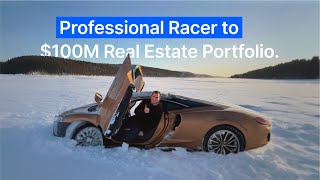
In this extensive interview, John Andrew Entwistle, the founder and CEO of Wander.com and former Thiel Fellow, recounts his journey from a farm childhood in upstate New York to becoming a serial entrepreneur. He describes early fascination with computers, launching his first internet business at 13, and the legal battle with Microsoft over a Minecraft server listing site. He explains his unconventional education—online high school, skipping hundreds of school days, and a series of massive teen parties funded by early earnings. Entwistle highlights his father's influence as a lawyer who worked on high‑profile cases (Madoff, FTX) and served as a mentor during his early ventures. He details founding Coder at 17, the challenges of fundraising (cold‑emailing VCs, securing checks from Founders Fund, Redpoint, and the Thiel Fellowship), and the decision to step down as CEO at 23. The conversation shifts to his passion for racing (Formula Mazda, Baja), a back injury, and his philosophy of “massive good.” He then introduces Wander, a vertically integrated travel platform born from a bad vacation‑rental experience, outlining its ambitious product stack, early investor dynamics, and growth metrics. Throughout, Entwistle reflects on personal values—pride, empathy, high pain tolerance, and a desire to leave a positive legacy—while sharing anecdotes about tattoos, domain acquisition, and his “shovel” nickname. The interview blends narrative storytelling with insights into leadership, fundraising strategy, product vision, and personal motivation.
Chapters
Okay, here we go. Focus. Speed. I am speed. One winner, 42 losers. I eat losers for breakfast. Faster than fast, quicker than quick. I am lightning.
This episode is brought to you by Semi Analysis, the leading research and consulting firm for AI infrastructure and buildouts. They work closely with many hyperscalers, AI labs, hedge funds, and semiconductor companies that you know and respect. From tracking the inference economics of model deployments to every data center and the supply chains for fabs, servers, electrical equipment, and more, Semi Analysis is an expert on the topic. If you want to learn more or work in the industry, visit semi-analysis.com to see their research and purchase their models. Thanks again to Semi Analysis and founder Dylan Patel. The Cannon Project builds founding go-to-market and engineering teams for venture-backed startups in San Francisco, New York. They built founding teams at Ramp, Cursor, Decagon, Rogo, and many more, while selectively investing through their flagship venture fund. With over a decade of experience and trusted partnerships across the top 15 US-based venture firms, The Cannon Project is the premier talent partner for high-slope opportunities in early-stage technology. To learn more, get in touch, or explore roles across a curated list of breakout startups, visit thecannonproject.com. .com.
John Andrew, thank you for your time.
Yeah, I'm so stoked to have you both.
For context on the audience, I guess we interviewed a close friend of yours, Joshua Browder, and through him we're now interviewing you. You're the CEO of Wander.com, previously founded another company, and our Thiel Fellow. Maybe to start, if you want to go as early as you can imagine, or as early as you'd like to go, and paint a bit of a picture on your childhood and upbringing and maybe some core memories you have.
Yeah, so I grew up in New York, north of the city. Actually started my life in upstate New York on a farm. So grew up on a farm, pretty rural, ended up moving around a lot as a kid. I probably moved 8 or 9 times around the New York area. Spent most of my time in Katona. Just fell in love with computers and software at a pretty young age. And the rest is kind of history. Started my first internet company when I was 13, 14, which did well, low 6 figures in revenue, and meant that I had a lot of shenanigans. You give a 13-year-old disposable income and the rest is history. And then, yeah, ended up enrolling in high school online, had an absolute blast exploring, traveling, doing all types of fun stuff. And during that time started Coder. Built Coder from ages 17, 18 through 23, all the way through growth stage Series B, powering millions of software engineers at some of the world's largest companies, and stepped down and started to wander, and now here I am, 27. It's been a great journey.
You're old now.
Yes.
Yeah, let's just double-click on Katona. You're a kid, you've got your dad there, you've got your sister. Do you turn to computers because you have nothing else to do?
How does that come about? Yeah, so my pop was a single dad. He raised my sister and I, and I would obviously always watch him working. I think I became really, really aware, I distinctly remember one evening, 4 or 5 in the morning, waking up, walking downstairs, and seeing him at his computer working. And I think that's where it all clicked for me, that he was basically literally self-sacrificing to provide for my sister and I. So I think it was like, I just want to work like Dad. So it was all this curiosity about technology. I was always tinkering with RC cars and electronics and everything else. And then it went into, okay, John Andrew, you have to be productive. And so I think that's what really led me into entrepreneurship. Entrepreneurship.
To quote you a bit, you said, "The most remarkable man you could have ever imagined, just incredibly hardworking and gave everything to us," about your dad. Are there any qualities that you really, really strive to pull from other than the fact that he worked hard? Was he extremely kind? Was he extremely blunt and straightforward? And maybe how does that transfer to how you eventually export RC cars and other things?
Yeah, I mean, so my pop is a pretty remarkable man. And it's not just like a bias of like, oh, like, I love my dad. You know, when you think about it, like, he sacrificed a ton to like take care of my sister and I. Like, he had his law firm and decided to focus more on me and my sister, downsize it, figure out how he could like organize everything so that he could be at home taking care of us. And I think that's one thing that's super admirable, right? Is someone prioritizing their family over their career while still having an incredible career. But then also, when you're handed a kid like me, that just makes it all a little bit more complicated. You know, it's like, I remember when I was building one of my first companies, we got sued by Microsoft. And I was just like, I was using a pseudonym, and so I was like, okay, well, like, there's all these lawyers. I know a lawyer, my dad, like, CCMA. And so it's like, even like helping me through like that stuff, like, and of course, like, as you build a company, there are so many different pieces. Or like when I said I'm not going to college, I'm gonna move to Austin and start Coder, he's like, sick, let's do it. And like uprooted everything because he wanted to to come and support. So he just gets like a lot of awards. I mean, even I have like stories of when I was a little kid, I wanted more recess time. And so I effectively consolidated all of the children at my elementary school under this idea that the teachers weren't allowed to touch us, which is a great insight. And so I basically staged a sit-in or sit-out or whatever you would describe it at. During recess, so we all just sat down. The bell went off for everyone to go inside, and no one went inside. And then it was like, you guys can't touch us. You can't force us to go inside. So in any event, we end up with this standoff. I'm like the intermediary between the authority, aka the principal. My pop gets called, 'cause it's like, your dad's coming. And I'm like, okay, my dad's coming. So my pop rolls up in his suit, he's coming from the city, and he's like, so what's the problem here? And they're like, your son has orchestrated a sit-in for more recess time. And he's like, okay. "Are they violent?" And the principal's like, "No." He's like, "Okay, good." He walks over, he's like, "So what are your demands?" And there are so many stories like that of my pop serving as this intermediary, this negotiator, having my back as a little kid, which was really awesome.
How old was the recess story?
Gosh, I must have been like, that would've been like second, third grade, second grade maybe. I had a lot of shenanigans.
Do tell the Microsoft one as well. I think we all want to hear that.
Yeah, so I had a bunch of different little online companies from like little game server hosting companies to DDoS mitigation. But one of them, if you're familiar with the game Minecraft, I ran one of the websites that would list all of the top servers. And the way that that website was monetized is that servers would pay us $5,000 a week to basically advertise their server at the top of the list. So that website was called funminecraftservers.com, um, and it had like a million monthly visitors. Like, it was insanely like large scale. Um, and so when Microsoft bought Mojang and bought the Microsoft— the Minecraft trademark, they started going after everyone for all types of various reasons. And we had filed a trademark for funminecraftservers.com, which was conflicting with their trademark. So you ended up in this trademark dispute effectively. So that's the Microsoft story, which when it started, it was just like one or two of their trademark lawyers. But then when I added in my pop, they thought I had secured third-party counsel. So then it was like 14 Microsoft attorneys and then this little kid in his dad's office.
And your dad was still supporting you. He was like, fuck Microsoft, I'm gonna support John Andrew Entwistle.
Yeah, my pop has a long history of supporting my antics and never smothering my flames and taking this childhood curiosity and excitement. I even remember, so I ended up enrolling in high school online because I wanted to travel, I wanted to work on my companies, I wanted to have this freedom. But I also decided that I wanted to be very popular. So I had this conundrum of like, how do I become exceptionally popular and then also not go to school? And so my answer was to throw massive parties. And so, like, a normal kid party is like, okay, 20, 30 kids are gonna show up. My thesis was like, okay, I have disposable income, I can buy pallets of Red Bull, I can buy a tent, I can buy like lasers and DJ equipment, I can set up a website.
How much did you have at this point? How much money were you pulling in at this age?
Oh, I mean, nothing, nothing like too crazy. I mean, like maybe I had like a few hundred grand, something like that.
So you buy pallets, you buy Red Bull.
Yeah, I buy all this stuff.
You're like 14 and you've got—
Yeah, I mean, I was older for this party. I was like maybe 16, 17. We hired the local police department for security. Because my thesis was, is that the police can't shut you down if the police are there. So there were like, there were literally like thousands of kids. The traffic around our small town was bumper to bumper. And the funniest story is, part of it is that Martha Stewart lives in Katona. And she couldn't get to her house because the roads were shut down because of this kid's party. And so the cops, obviously, you know, the real cops get called, but the cops are already there, so that creates all types of confusion. My pop is down at the, you know, at the street talking with the police.
Your pops is okay with this?
Well, my pop again was very supportive of this entrepreneurial spirit. And it was all very safe, to be clear, like no alcohol, student IDs, like we had the police seizing anything. So it was supposed to be like this safe environment. Obviously it was like crazy. Um, and Martha Stewart pulled up and is like, hey, like, you guys need to shut down this party. It was a relatively reasonable request. Um, the news gets to me that Martha Stewart's trying to shut down our party, and so I get on the mic and I'm like, hey everybody. And like, there are thousands of kids, there's a tent. Like, there's a little clip of this on my Instagram. And I'm like, Martha Stewart's trying to shut down this party. And one kid yells, "You know what I have to say to Martha Stewart? Fuck Martha Stewart!" And the whole town starts chanting, "Fuck Martha Stewart!" It was the funniest thing. But yeah, my pop is like incredible. Not just like ethically, and he's obviously brilliant, but just he has always provided an environment for me to reach as far as I could in whatever I wanted to do. And I think that was pretty special. Why do you think that is?
He was a lawyer, went to school, he actually went to college. And then here comes you, the hellhound.
My, you know, it's interesting. And I recommend this to actually a lot of folks. When you're young, you have a certain idea of your parents. And their stories and secrets are stories and secrets. Until you get to our age. And if you actually go back and start to ask them like some of these questions, like, "Hey, did you ever party?" Or like, "What was your, like, did you ever get into shenanigans or the rest?" They would not have told you at 17, 18, but they'll definitely tell you in like your 30s, like when it's like the statute of limitations has passed. And so it was funny, like I recently found out that like my pop, like, loved to skip school in high school. Like, and that's not something your parents would tell you, but like, he would love to skip school, go surfing. He was a whitewater rafting guide while also going to law school. So it's like, to half of the population, he was seen as this, like, very well-to-do lawyer, and the other half, he was like some bum, like, whitewater rafting guide. And so I do think that, like, Does the apple fall far from the tree? Like, I don't know. All I know is that he probably saw a lot of himself in me and like just didn't wanna shut that down.
Yeah, and so when you were fairly young, your father was working on the Madoff case, is that right?
Yeah, yeah, that's true. How was that? Yeah, so my pop has worked on some of the largest class actions in history. And so what does that mean to the listener? Basically, he is hired by the people who lost their money. So he represented the folks who lost their money in Madoff. He ended up recovering it. And recovering means basically that you're this like, you're basically like hunting down tens of millions of, you know, hundreds of millions of dollars, like people's yachts and houses and just all this stolen money and bringing it back. He recently did the FTX case. FTX case, which was cool because that was when I saw all of that happening. I'm like, Dad, like, you need to help these customers. And he obviously, like, hadn't, you know, hadn't seen or been exposed to, like, the whole crypto world before. They ended up recovering, like, 150% of what was originally lost, which was, like, crazy. So basically just seizing everyone's assets.
You were the reason they did the FTX case?
I mean, I don't want to take, like, any type of credit for his accomplishments, but I certainly was very aggressive about it. And then I was like, hey, here are these potential clients, I guess.
I think interesting switch, and one that we noted down, is you skipped, I think, 200 days of school.
Yes.
Touch a bit more on that. Not only did you go to online high school, you essentially didn't go to high school at all. For a large amount of time.
Yeah, it's true.
What were you doing?
It's hilarious. Yeah, so I— my history of schooling is very unique. School has always been very easy for me. I'm super, super fortunate in that. So I always just felt like it was never a challenge, like it was just a complete waste of time. Like I wasn't learning anything. If there was something to learn, it would take me an hour instead of a year. And so I basically like didn't go to middle school. I skipped like hundreds of days. And my pop, you know, like God bless him, negotiated with the school that I would— that whatever score I got on the Regents, which was like the state test in New York, would be my grade for the And I ended up scoring phenomenally well. I just read the textbook to the day before the test, and then I was off to the races. But yeah, I very much did not do a lot of school. I was just like, yeah, I was at home, I was building companies, I was— yeah, it was just an interesting period. But yeah, I was very fortunate.
What inspired you to build some of those early companies? Like, I'd imagine you're growing up in this town of like 2,000 people. How are you like, I'm making hundreds of thousands of dollars online? How are you perceived? What is your sister thinking? How is that all playing out?
Yeah, I mean, my— I don't think that my sister thought it was odd at all. My pop didn't think it was odd. I didn't talk about it with anyone local. Like, my friend group were kids on the internet. Like the kids that I knew in person, I didn't talk about any of that stuff with.
Why was that?
Because it was like totally unrelatable. Like no one was doing any of that stuff. They were all just kids. Like you're not gonna talk to them about like, "Hey, I filed like my taxes." How do you get into it then?
More often than not, people are sort of a function of their environment, especially when very young. Why did you do this stuff?
The thing that, I mean, I broke it down to, it literally just had to have been that like I watched my father provide and I wanted to like work like dad. I think like it had, that has to be the root of it.
Was money driving you or was it the function of just working hard?
What fuels me is pride. Like I have to make like those around me proud. So it's like, I have to make my employees proud, I have to make my shareholders proud, I have to create a work product that makes me proud. And so it's certainly not about money. If it was about money, then I probably would not be working. So it's, yeah, it's mostly just about doing a good job in this world.
Is there anything you're not proud about?
Yeah, I mean, I'm very self-critical. Like, I think I'm very far from perfect in so many ways, but I definitely try to like, to always conduct myself in a great way, to be like kind towards others. Yeah, but I always think that like things can be better. Yeah, I think it's probably like through that lens, like you can be like, oh, you're almost too harsh on yourself, but But yeah, I'm definitely very self-critical.
Do you journal in any sort, meditate?
Yeah, I mean, most of my reflections are very in my head, sort of crafting how I handled a certain situation and then how I wanna be going forward. And also, I mean, it's not, to be clear, who I am today is not just a byproduct of myself. I was fortunate that with Coder, I started that company at 17, 18, I very quickly had a board of like some of the best investors and operators in the world. And so it's like, I got that opportunity to be crafted by them. Or like when I was younger, like business ethics, core ethics, like those were shaped by my father. So I think that, like, candidly speaking, if you took like my personality type and like didn't have such a supportive environment with so many great people, like, I could have gone a completely different direction. And so I'm also like very grateful for that.
Can you tell the first tax story?
Yeah, so I remember, so my pop was like, how much money are you actually like making with this like little company? And I like showed him, he's like, cool, like you have to pay taxes. And so he took me into the city to meet with his his accountant, a firm called Citron Cooperman, and he had a direct friendship with one of the best individuals in the world, a guy named Niles, who started the firm. And they asked me to bring in all of the transactions for this company, but they were all microtransactions, like, and they were all anonymous users. So I walk in with this binder of like 1,000 pages of microtransactions And it's like, you know, like Piggy Magoo bought $15 of like coins. Like, it's like a total like mess. And I remember that my professional services fees, so the cost of the accounting firm, literally wiped out like any profit that we had, like everything. And so I learned a lesson I think most founders learn, which is like lawyers and accountants can suck a lot of the money out of the equation.
Can you talk about the traveling you did when you did high school online? Where were you going? Why did you want to travel?
Yeah, so I mean, I love adventure, and I also, when I was very young, I internalized this idea that death was going to happen, which is a pretty morbid idea for like, I was like 8 or 9 when I really thought about it. And so I have always wanted to make the most out of every single day. I feel so grateful to wake up. I feel so grateful to have the people around me in my life, and I feel like I just never want to waste this gift. And so, like, when it comes to travel and adventure, I think, like, there's so much of the world to be seen, so many people to meet, and, like, new lessons that you can glean, and sights, and animals, and sounds, and smells. And so I was constantly traveling internationally, spent, like, a few months in Korea, A bunch of other places. Most of my travel was around the US, so I've been to all 50 states. And just the adventures and the people that you meet and the chaos that happens along there.
Do tell.
[FOREIGN LANGUAGE] Yeah. So when I was in Korea, my pop was working this large case, and so I was let loose in Seoul. And I had a translator that was provided for me from the company that my pop was working for. And the first day we do all the touristy stuff. And I'm like, okay, cool, like, let's, you know, we'll put that to bed. I'm like, can we get a limo? And also we need girls.
You're what, like 17?
Yeah, exactly. And so the next day he rolls up in this limo, and there's one girl who is another person from the translator company. It's the funniest thing. And I get in, and he's like, "Okay, what do we wanna do?" And I'm like, "Let's go to an amusement park." Again, this is just classic kid in a new place. And so we start driving to this old, broken-down museum park, or amusement park, like it's out of a movie. And I notice that everyone is clapping as we go by. And I'm like, why is everyone clapping? And the guy's like, oh, like, the limo here is typically used when someone gets married. And so they think that you and I, I guess, are married or some like— it was just the funniest thing. But yeah, like, it was all— I think it was like, I think it was just the idea that like, I was self-aware. I was super grateful to be alive and I just wanted to have a really fun time while also being productive in the world. And yeah, it was like a video game basically.
[Speaker:JOHN ANDREW ENTWISTLE] You didn't get lonely at all?
[Speaker:JOSHUA MACHT] No, I mean, I've never really had a problem with being alone or feeling lonely. I think that like, there are certainly times as a founder where you feel very alone, like the whole weight of the company and its success is obviously on your shoulders all the time. But I think I've had that weight from such a young age, you just get used to it.
What's the hardest thing you've been through?
I'd say like, when I was, My early childhood was definitely not like picturesque. And I think that ultimately like that prepared me very well for like the rest of my life. And that's also where like the ideas of like mortality and like this gratefulness, like I think came from, like just waking up every day, like so happy for what I have. And so yeah, as I've gone through life, obviously building companies was difficult. I ended up breaking my back while also building Coder. That was hard, but again, having been armed with harder things earlier made it seem like not a big deal.
A good perspective.
Yeah, totally.
Nice. I know you've done a lot of crazy stuff. Especially relative to the average person as a kid? Do you want to unpack maybe the craziest one?
Yeah, I mean, I have done a lot of fun stuff. I used to race Formula cars when I was a kid, Formula Mazda, Formula 4, so not F1, but the same kind of car, just lower power and not as expensive. I had a bunch of crazy adventures there racing all across the country. Lots of crashes and crazy moments, cars flying over my head at like Sonoma Raceway. I used to race down in Baja, trophy trucks down in Baja. I have so many wild stories from there. I remember once I was— two cool stories. I remember once I was driving through the desert at night and my leg started to hurt. You're doing like 100 miles an hour in the dust, middle of nowhere, and it starts to hurt and it's hurting and I feel like There's something crazy happening with it. So I like pulled the car off. My co-driver's like, what's going on? I looked down and I had this like basically stick that had like at some point during the race, like gone like into my leg, like deep into my leg. I remember like pulling it out, I guess like in the adrenaline of the race, like I didn't know it was in there. Um, and so that was wild. I remember one time I was racing down in Mexico and there was a forest fire, and I saw this guy waving his hands. Like, during Baja, there are hundreds of thousands of spectators, but this was a forest fire. Like, we were in a forest fire, and I'm like, everyone's driving by him, and I'm like, this is not a spectator. Like, this guy needs help. Like, we're in a fire. And so I, like, pull off the racetrack, he runs over, And the car only has 2 seats, so there's like nowhere to sit, right? It's not like a normal car. And so I say like, "Get on the hood and like hold on." Oh my God. And so he is grabbing around the roll bar and we're driving out of this forest fire. And it's maybe like 10, 15 miles until we reach another set of spectators and we drop them off and then we continue the race. We ended up finishing 3rd, which was crazy given that slowdown. But then there was a news article with a photo of him holding onto the car. Um, and he was like this farmer or something who got lost. And it was like, he was out there for like 3 days or something crazy. Um, and we like rescued him and there's like the photo of him with the flames holding onto the car. It's pretty nuts. Um, but yeah, racing down in Baja, Baja is a very difficult race. Um, when did you start doing that? I think, I think my first off-road race, I was like 16, maybe.
Better question is why.
Oh, why? Yeah. I love cars. I love anything related to engineering. I also, there's a lot of parallels in building a startup with like racing. Like you have competitiveness, you have team dynamics, you have a product, AKA your race car, and then you have like your ability to execute. Then you have a bunch of data. Like I just found that whole world super fascinating. And then also like the idea of risk. Like, I've always had a very high risk tolerance, and I think that, you know, probably also drew me to it.
You're clearly very competitive. What compels you to stop your race and help somebody?
Yeah, I mean, I would definitely prioritize someone's life over—
Given that you were unsure, right?
Yeah, I mean, like, I've had so much happen to me in my life. Like, I'm super, super fortunate, but I also think that, like, I've had a lot of like very unfortunate things as well. And like, I wake up every day just like so in love with this world, so in love with the people. Like, I think that like, I mean, it's, I feel like it's hard not to believe in God. Like when you like look out and you see like the ocean and like everything else. And so like, I like, Part of my mission statement is massive good. That is my personal mission statement is massive good. And I never wanna walk by someone who needs help. I never wanna leave someone on the side of the road. And so, I'm always gonna prioritize that over the idea of winning the race, which will probably, candidly, be my downfall as a founder and as a person, is that I always tell my family, I'm probably gonna die early, 'cause I'm gonna see someone who needs the help and that's just how I'm gonna go out.
[Speaker] You moved to Austin, right? You're what, 18? You moved with your co-founders. How do you meet your co-founders?
[Speaker] Yeah, so my co-founders in Coder, we met when we were kids. Kyle was a plugin engineer and Amar was a system administrator. And so that's what I mean when I say that my friends were these internet kids. There was a small collection of these young people building things, and there were two of them. And so that's how we met, and we built all types of random online businesses along the way.
And why'd you pick Austin?
Really could not afford the rent in New York City from an office perspective, and San Francisco was very much the same. And so we ended up in Austin. I'd love to say it was super, thoughtful, but it was very much like Austin seems good and we can afford it.
I know at the time, I think as soon as you raised, you're what, like 18 or 19, and you have to recruit people like double your age, right? How is that?
So we lied about our age at Coder. I remember we all bought, it was my idea, so it wasn't the boy, we bought these button-downs. Phones, because I'm like, we need to look professional, obviously. And so we had this rusty tin shack as our first office. We didn't even have trash cans, so I think the photo online of it has the trash outside of the office. And we had this rusty Coder sign that we had set up. And yeah, basically it was telling people our vision and hiding our age. And to date, most people say, oh, I thought you were 28, 29, as opposed to 30. As opposed to like 17, 18. We probably didn't show our age, or people didn't know how young we were until it was in the fundraise articles.
And you mentioned that the raise was a total grind. Do you wanna unpack that and sort of how you went from cold emailing to getting to Uncapped and Redpoint?
Yeah, so when running Coder, we didn't know anybody. Like, we didn't know any VCs, we didn't know, we just didn't know anyone. And so we had this idea that software development was gonna move to the cloud. We had a product that we believed in, but it needed funding. Like, it was too hard of an idea to bootstrap, at least for us. And so we just, I just started like cold emailing VCs. The first VC that I talked to was Google Ventures, which is pretty epic. And it's because our Google Cloud bill was exploding and our sales rep was kind enough to facilitate the connection, which I think is a really interesting thing that Google Ventures actually probably gets a little bit of a nice funnel through people's Google Cloud spend. We totally screwed that pitch up. Oh my God, it was like the worst pitch ever. And somehow I was fortunate to be able to get in front of a lot of pretty notable firms just through grinding and convincing and doing whatever. And then I screwed up again, like 90% of the pitches. When I met Redpoint, our partner Alex Bard, he is just the most phenomenal person. He's been on my board since I was 19. So he was on the board of Coder and he's also on the board of Wander. And he is also, every good attribute I have is from him or like the other like wonderful people in my life. But yeah, those early rounds were really tough. I mean, we had like a month of runway and I remember like laying in bed stressed out of my mind, this like 18, 19-year-old kid. Like I had like employees and like people that I was providing for and like those people weren't just kids, they were like adults with families and mortgages. And that's still something that like, I think about, like, I think one of the reasons why, like, I'm fortunate to work with such incredible people is that they know that I am thinking about them not just as an employee, but as a person, and a person who has expenses and a family and goals. And, like, you know, to the question about weight, like, I've had that weight on my shoulder since I was, like, 18.
How does that show up in real life in terms of understanding that they're human? Are you paying them more cash? Are you just being kinder to them? And do most CEOs, in your opinion, not do those things right?
I think it's about emotional intelligence. So, like, when you have a young founder and the young founder goes and hires this, call it like mid-30s, you know, year-old individual who has a wife and maybe their first child, that young founder can either internalize what that person is going through, the thought process, can they have a meeting at 9 PM or not, or they can be totally ignorant to it, which to be clear, most young founders I think are. And so that was something that I always tried to focus on was putting myself in the shoes of the people around me and understanding what it was that they were going through, what they needed, and how I could be as good of a CEO as possible given their circumstance. To be clear, the quality of founder and CEO that I am now versus over a decade ago is probably very, very different. But it's certainly something that I always tried for, is just like this level of empathy and understanding.
I think you attributed a lot of your growth to reading books, right? And do you have any books that stand out?
Right behind us. Yeah.
The book that's helped me the most, honestly, I think it's like a pretty corny answer, but I would probably say the Bible. I was raised Christian. I fell away from it, I think like a lot of kids do, and then I came back to it more from like an interest in trying to understand like the history, like these real historical events. And I think that like this idea of like, yeah, like who do you want to be? How do you want to act in this world? I think is like a really big, big question. And so I'd say that that's probably the one that's changed my life the most.
How do you get the nickname "The Shovel"?
That's hilarious. So what you're referring to is a nickname that I developed inside of Coder where no matter what the task was, no matter how terrible it was, that I would get it done.
Did you self-assume that role or people assigned it to you?
I definitely self-assumed it. I'm perfectly happy I have no ego and I would never, no ego about what I'm willing to do or not. And I have no, I would never ask someone to do something I'm unwilling to do. Like I think if you have something you're unwilling to do and you ask someone else to do it, then that's like not the best dynamic, especially as like a leader. And so, and I also didn't want people to work on things that I thought were really sucked, which is a hilarious idea. And so yeah, I would work on like the hardest problems. Like, I remember when we launched, like, I was like, I will be our 24/7 customer support. And so it was like those first days, like, I was up literally 24 hours a day, like, answering support messages and emails and like, you know, doing whatever it took to get it done.
What about the idea of delegation? Say somebody is significantly better than you at something, would you say still do it, say somebody who's really good at customer support, why take pride in doing it yourself rather than say, hey, we can do it.
To be clear, what I'm describing is not like, if you were to ask for startup advice, I don't want anyone to think that this is startup advice, by the way, 'cause we're talking about honestly my mistakes, not like, you know, in my life, not the right way to do it. The correct way now, like, would be, I'm going to launch this product, I know that I'm going to have I have like customer issues and I'm going to need customer support and I'm going to hire a small customer support team and structure them across the globe in a way that the time zones provide 24/7 support, like a very obvious idea. But when you're, you know, 18, it's like I'm launching this product and now I have a bunch of like customer problems and I need to answer them. So I think that like a lot of things in building a company are not intuitive and you learn by doing or you learn by others. Like, those are the only two ways. And I happen to just be a founder that has a lot of scar tissue. Just, yeah, having been building for so long.
You were given advice from Alec Goodall. He said there'd be times when, multiple times in your company, it's gonna feel like it's gonna fail. There are some examples, I guess, to pull that through line and touch on Coder more.
Yeah, so Alec Goodall, was an entrepreneur that I met very early on. He was the first VC-backed founder that I had ever met. To give you an idea of how bad our network was, my pop knew someone who happened to hear about this internet entrepreneur. That's the levels of, you know, that we had to go through versus in Silicon Valley, it's like everyone knows somebody. And I remember when I was pitching him pitching Alec Goodall what we were building at Coder, he, and he may not even remember this, he's like, "Are you sure that you wanna do this?" And I'm like, "What do you mean?" And he's like, "It will be miserable. Building a company is miserable." And what he saw was this 17, 18-year-old kid who was about to go down a life path that is not very easy. And I was like, "Of course, I'm not gonna do anything else." And then he gave me the piece of advice, or just the context, that there will be 2 to 3 times when building your company that it feels like you are going to die, like that the company is going to die, that you are going to fail. And I remember as those events happened in Coder, the first one being that we had a month of runway, you know, there were a few others that I don't want to share on the pod. I remember counting them off in my head, and I remember hitting like 3, and I'm like, wait, we're only 4 years in. Like, is there going to be more than 3? And so yeah, to all the founders out there who are building companies, I'd say that that is something to keep in mind, and you should find solace in, is the idea that like there are going to be multiple times where it feels like you're going to fail, and that's like, that's okay, and you should just keep going.
Do you still view yourself as a shovel?
Yeah, certainly. I mean, so at Wander, I'm a solo founder, which means that like, you know, there's even on those hardest problems, it's like, it's just me at the end of the line. And yeah, at the end of the day, like you do what needs to get done. My grandpa had a great saying, which is, "Have to is a great master." And it's like, if have to, you know, exists, then you gotta get it done.
Can you touch a bit on Founders Fund, Peter Thiel, when he first invested? You spoke to him in that story.
Yeah, so I was introduced to Peter through an individual named Greg Kennedy. Greg Kennedy was one of the most amazing men. He died recently. Just like, he's such an incredible guy. He introduced me to Peter, and Peter called my phone. So I was like, again, very young. And I remember I was so nervous talking to him that I probably wasn't coherent at all. Thankfully, I think that he was— he probably doesn't even remember this. I mean, I'm sure this was just like a 15-minute phone call for him. But thankfully, I think that he must have been used to it, like these young founders who have no idea what's going on. Like, we probably just seemed like a bunch of chickens with our heads cut off running around. He ended up connecting me with the team at Founders Fund who ended up writing a ball check into that round. Founders Fund ended up referring me to the Thiel Fellowship. I wasn't going to apply because I just didn't feel like the program was for me. I didn't feel like I needed the money. I knew I wasn't going to college, obviously. I was building Coder at the time. But they encouraged me to go out and do the interviews and ultimately ended up being a part of it.
It was worth it.
Yeah, I mean, at that point in time, I didn't know anyone like me other than my two co-founders, which I was very fortunate for. And so the idea that there were 20 other kids out there that had, like, that under— like, of course you'd throw a party, of course you'd go racing, like, of course you'd do all these things. Like, you know, like, it made you just feel like not as— yeah, like, to your your earlier question, like alone as an idea.
You stepped down in '21.
Why? So yeah, it's a great question. I had started Coder when I was pretty young. I think that my young adult brain totally formed around that company. And ultimately deciding to step away, having those conversations with your co-founders and thinking about, like, what's best for the company, what's best for the relationship, you know, what's best for that next stage is super hard and super challenging and complicated. But ultimately, I felt like it was the best thing for the company. You know, the company I'd grown it all the way through growth stage, all the way through Series B, we had some pretty massive customers and a pretty clear line of sight. I just felt like my time was up as a CEO. I don't view being a CEO as a right. I think a lot of founders view it as like, I started the company and so it's my right to be the CEO. Again, my goal is to always do whatever I think is best. And if it means I'm the best leader, then that's great. If not, then I'm not going to I don't want to be holding on. And so yeah, I mean, I was very young. I was, even through that journey, I stepped down when I was 23, which is crazy.
And I guess simultaneously you're driving an F4, right? How does that come about? How do you have time for that? There's a million stories there that we have to get into.
Yeah, so I used to race Formula Mazda. I finished second at nationals and then I raced a season in Formula 4. I only did 2 or 3 races in the US Formula 4 series before I ended up breaking my back at Indianapolis Motor Speedway. Which, like, I remember that back break and then Coder, I remember being in my back brace at Coder's office setting up the desks. And like, literally, like, still like on like hydrocodone to like manage the pain. Pain, but I was so focused and motivated on like, I need to get this office set up so that we can like keep building this company. I never thought about racing as like my career. Like I was never this like idealistic kid that was like, oh, I'm gonna be a professional race car driver. I viewed it more as like, I am building a company and that is gonna be what I do. And this is a once in a lifetime opportunity to like have very, very cool story. I do think that the one thing that they don't advertise to kids is like how dangerous it is. And yeah, like I think it's like that accident caused me to now like have like chronic pain for the rest of my life. Like I wake up every day, chronic pain. It's like this battle that's always happening in the background. And again, I think it just like makes you really grateful. Like there's two ways to look at it. You could wake up like, depressed, or you can wake up like very thankful to be able to walk and move and live and all that sort of good stuff.
We've been told by a few people, we backchanneled you in a variety of manners and tried to go as deep as possible. They said to ask you about your family and what you think of family and how much it means to you. Do you have any thoughts on that?
Yeah, I think I feel very fortunate that my family, again, has always been supportive and has always been there in times where it would be very easy to abandon, very easy to kick someone while they're down. And so I don't think that I would be here without them. I mean, to be clear, I don't think that I would be— I don't think I'd be anywhere near where I am without everyone in my life. I'm fully convinced that I am straight just lucky. That's the only explanation that I have. And so yeah, I think that there are some people who aren't so lucky to have a very supportive father or a loving sister or the rest. And so I think that's where finding family outside of your bloodline is super important as well. But yeah, I think having a support ecosystem is critical.
And your sister is now the head of ops at Wander, right? Yeah. She initially did marketing at Coder for you and I started working with her.
So yeah, my sister works at the company. She originally, when I started Coder, worked at Coder as well. She is brilliant. She went to Notre Dame and Johns Hopkins and could definitely have had a more successful career than working for me. When you first start a company, I think a lot of people know this, you literally grab whoever's nearest to you to help with whatever the task is. Like if you have a friend, you grab your friend. If you have a brother or sister, you grab them, whoever is able to handle that circumstance. I just happened to luck out that my pop is a world-renowned brilliant lawyer and my sister is a very, very thoughtful and talented operational leader. To be clear, I have lots of family that unfortunately is not as useful, otherwise I probably would've grabbed them. Along the way. But yeah, I lucked out in that sense.
To, I guess, skip ahead a bit closer to present day, you founded this company called Wander. Talk a bit about what it is. It's a verticalized way to tackle this rent industry.
Yeah, I guess you have to tell the Colorado rental story and sort of how you actually came up with the idea.
Yeah, totally. So after I stepped down from Coder, I rented this cabin out in Colorado get away, think about the world. And the whole experience was just a little bit broken, like kind of your classic bad vacation rental experience. Like, it didn't look like the photos, the beds were uncomfortable, the internet was bad. And that's where the idea for Wander came from. It was this idea that, like, you had this absolutely massive travel industry where you had gross levels of inconsistency, very bad customer support, It was just all very disjointed, fragmented. And my thought process was, my idea was, was there the opportunity to verticalize? The idea for Wander is insane. Like, it is, it is, we are going to create a brand that resonates with consumers. We're going to create a distribution platform that rivals Airbnb, wander.com, the Wander app. And then underneath that, we're gonna create this entire operating system of all of the types of tooling that these homeowners need to operate the homes to a very consistent and quality standard. If you can imagine like a pre-seed founder pitching that to investors, like they would probably stop you at like, how are you even going to get the brand? Like, what are you even going to call this company? Let alone like, oh, you're going to build a booking engine, an experience that's as good as Airbnb, let alone you're going to build like agentic property management software and systems. And oh, you're going to start by owning the properties and then you're going to add third-party inventory over time, like that seems insane. I was very fortunate that Redpoint, who had worked with me before at Coder, knew what I was capable of and believed in me. And so they led our pre-seed. Our first investor was Josh. Josh and Adam Gill kind of compete for who was the first investor. Their checks were very close together.
Who was the first?
I think we went back and checked. I think it was Josh. I think Josh was like 10 seconds before.
Josh for the win.
But yeah, Wander was a crazy idea. It still is a crazy idea. I mean, I remember when we launched, we had 3 locations, and the believers were like, this is so exciting, and the haters were like, there's only 3 locations. And now we'll have like well over 1,000 by end of month, and we've been growing 20, 30% month over month since.
Do you think it applies to your principle of starting with a bad idea and sort of working it until it's good?
Yeah, I mean, I think that Wander, Wander was different in that I wanted something I could work on for the rest of my life. And I wanted something that I believed in and was basically my soul, but in the world, and made people happy and provided value. And I think that That has always been the driver of the output. Like, the output I always want to be that family has that, like, beautiful experience. Like, you have that time with your kids, or you have, like, that great trip with your girlfriends. Like, you have these memories that you're gonna have all the way until the end of your life. And, like, that was the output. That was the piece that I was creating towards. I just happened to have to have built all of this stuff to get to that one happy customer. But now we have literally, like, you know, thousands and thousands and thousands of customers every month who have been feeding back and saying, like, hey, like, we had the greatest trip. Thank you so much for what you've built. I think that's, like, what it's all about. It's like, everything that I have built is in service of, like, just providing a little bit more happiness for folks.
Why did you choose to go at it alone as opposed to having co-founders? I know you had a founding team, but—
Yeah, I mean, to be clear, like, we haven't— yeah, we have an excellent team, so I am very much not alone. In fact, the company— when you start a company, it's like you are the company until like maybe seed stage. After that, the company instantly becomes bigger than you. For whatever reason, like, as humans, we like to look at a company and then we pick the CEO as like this like representation of it. But the reality is the company is so much bigger than I am at this point, and it's thanks to literally hundreds of remarkable people. So I do not take credit for anything good. Anything bad I will take credit for. If you have a bad experience, it's my fault, tell me and I will fix it. But all of the good things that exist in Wander were built by others. I think that regarding having co-founders or not having co-founders, Yeah, I think it just depends on the company and the individual. To be clear, building as a solo founder is harder for sure. And so you just need to be ready for that. And I don't think that it's something that I would normally recommend.
Do you think a bit of the through line working in the travel industry is because you traveled so much during high school and you saw so much of the world and maybe had a good, bad experience, et cetera?
Yeah, totally.
Trying to fix it.
Yeah, I think that when you look at my LinkedIn, You see like enterprise developer tool founder and consumer travel founder. And somehow both companies ended up working. If you know me, then it's very obvious. It's like, this is someone who is passionate about seeing the world, is passionate about others, and it makes a lot more sense.
When did you get your tattoo?
Oh, the Wander tattoo? Yeah, yeah, yeah. As soon as the logo was done.
Really?
Yeah. I always joked, so people were always trying to change the Coder logo. We came up with the logo, and then I'm like, changing the logo is very annoying. Don't change the logo, I like the logo. And so when the Wander logo, when I worked on the Wander logo, and it was something that I loved, and obviously the symbolism of we have this beautiful planet, we're meant to explore it. That's why it's on a spinner, is this idea that you can spin and look in this childhood excitement. And so as soon as the logo was done, I was with my chief of staff, Matt, and I'm like, let's get it, let's go to the tattoo parlor. We're out in the middle of nowhere, working on one of the houses. And so yeah, pulled in, got the tattoo. But again, it is because Wander is my forever company. I think it needs needs to exist.
How much did you pay for the domain?
For the domain? I don't think I'm actually allowed to disclose that. So you'll be upset.
Give us a vague range.
So it was half stock and half cash. And then I set up the agreement to be over a certain length of time. So we didn't have like that upfront burden. The equity is worth far more than the cash. Let's just say that.
Cool. That's funny. When you first started, how do you actually test if people wanted the product you sort of made a waitlist and you put up on Twitter, made a large amount of money in the first month. How'd you go about that? Why'd you do that?
Yeah, so I think that waitlists are super dangerous for startups because it is like the lowest form of friction. It's good to have some signal that what you're building is wanted by others, but in reality, someone putting their email on a waitlist is far lower friction than whatever it is that you're building for however much it costs. And so what I wanted to do was not just have a waitlist, but also have a proof point that people were willing to pay for what we were going to offer into the world. And so we started this thing called the Founding Membership where basically you paid $100, you would get $100 in credits when we launched. So you would actually, it's not like the money would eviscerate, and then you also get a Wander hoodie, and then we would always treat you with love and respect as we grew. And so that group of users, if you are a Wander founding member, just know that I I truly love you, because you were the only source of motivation that I had building the early stages. These people want what we do.
How much are these robes right here Alex wearing?
How much is the robe?
Yeah, are they expensive?
I think they're like $100, something like that.
You mentioned you wanted to host a party with all the founding members.
I do.
Have you done that yet? Yeah, well, so it actually may happen somewhat soon. I don't want to spoil anything, but yes, if you're a founding member, you may end up with with an invite to something at some point later this year.
What about investors?
Yeah, I mean, investors will certainly be allowed to come.
Oh my God, there we go. I love it. And what does your day-to-day look like now? What do you envision Wanderer being in the next 10, 20 years? In one sense, it can be the travel platform. Do you think you can coexist with Airbnb or just obliterate them?
Yeah, so I don't view it as like us versus them at all. I guess at the end of the day, it's about the customer. And just delivering value. And I think, to be clear, lots of customers get value from them, so I don't view it as us versus them in that sense. The vision statement of Wanderer is to build the infrastructure to experience the world. I think that we live on a beautiful planet, and I think that people who go on trips come back with something new and a different perspective, and maybe they made new connections or whatever else. And so that's what I want to build. I just want to make it so that the world is easier and better to explore.
Have you had any moments with Wanderware where you feel like it's going to fail?
Totally.
Yeah?
Yeah, totally. Yeah, nothing is all cupcakes and rainbows, and anyone who tries to pretend that it is, is like— it's like watching a Formula like one race and being like, oh, no one's gonna get hurt. Like, you know, it's like things are very hard. I mean, you have to remember, so when we first started building Coder, or Wander rather, we owned the first initial assets on balance sheet. And I had this crazy idea that we would go as a literal like 12-person company and secure a $100 million investment credit facility from Credit Suisse, so a globally important bank, to go and buy these first few assets. Think about how ridiculous of an idea that is. The scale, the level of sophistication, financial sophistication, all these things you need to have to basically satisfy the requirements of such a large bank. And we did it. We pulled it off. I have the deal tombstone on my desk.
Why do you think you did? Why did they say okay to you?
I think that they saw that I wasn't wrong, like that the economics and the institutionalization of the asset class were very possible. What ended up happening at that same time was you had the fastest rise of interest rates in history from the ZIRP era to 5-6% in the span of months. And that ended up collapsing a 200-300-year-old bank. Overnight. And so imagine John Andrew Entwistle, who is building Wander and just got this $100 million facility, is now faced with the collapse of this bank that's supposed to be like a core piece of— yeah, the bank. And again, we migrated through that, we posted continuous year-over-year growth, We continue to make our customers happy. I think that nothing is easy in building a company. Sometimes you just gotta grind it out, but you wanna do it with a smile. It's about pain tolerance. I have a very high pain tolerance, and then I will have that pain tolerance and smile while I go through it.
[Speaker] I guess in regards to mitigating, the pain you faced, or I guess going about things a better way. Alec has a close friend named Julian Weisser who wanted us to ask you a bit of a unique question in terms of how you actually tackle that, and maybe you can touch on that a bit more.
Hedging.
I'm sorry? Hedging. Hedging progress?
Hedging progress.
Yeah, so my belief— I have a few different core principles when it comes to building companies, but one of the core ideas is is that in the early days, there are lots of different directions that you can go in, and you're not quite sure which one is best. And there's this classic mantra of focus, but in reality, if you focus on something that's bad, then you're focused on what's gonna kill you. So it's actually not the best idea. You wanna be focused on something that's working. And so the question is, in the early days of a startup, how do you ensure that you make progress at all times, knowing that a certain number of your efforts are going to fail. And so that's where the idea of hedging progress kicks in, is you take your 3 to 4 best possibilities and you figure out if there's a way to run them in parallel, then do so. And so what ends up happening is, I'll use an example of like, from like a marketing perspective, like you pick the 3, 4 channels that you think are going to work, you run them in parallel, one of them works, but guess what? Now at least you ended that month with one working marketing channel as opposed to none if you had taken the odds of just focusing on one. Then you focus on that one, to be clear, so you do focus in, but there's all types of examples of hedging progress, from hiring to fundraising to company building, A/B testing. I mean, there's so many different pieces, but I think it's very important.
Outside of Wander, is there anything tangible that you want? Maybe to learn, maybe something tangible, another globe?
I think about my life backwards a lot. In fact, it's actually like how I live my life. I spend more time thinking about the future than I think like enjoying the present, which is not a good thing. I wouldn't recommend it.
How does that play out?
How do I play out? Like my life? Yes. I am buried on the coast of Northern California under a tree with a nice little rock that's that says my name on it, and hopefully some people who love me come and visit. I know you've backed the longevity company.
Are you not aspiring to live forever?
Yeah, I mean, I love this world, and I love my life, and I want to enjoy each and every day as long as I can. I don't think that I'm going to live forever. I think it's more about living out my days as like in a healthy, like having my health for as long as possible. But no, I'm very aware that I'm definitely here temporarily.
What do you want then, I guess, touching back on the previous question?
I want to leave the world like a better place. Like I want people, I want to be a net positive.
Do you want anything tangible?
Like physical items?
Physical, yeah. You've explored a lot. Is there something you still want to explore or something you're yearning to do?
I'd say like, yeah, I mean, I'm still young and like I don't have a family yet, so it's a pretty wholesome answer, but probably a family at some point, yeah.
Nice, cool.
More from John
What John Andrew Entwistle, Founder of Wander is Doing Differently as a Second-Time Founder
Wander CEO: How I built TWO $100M Companies (and beat Airbnb) - John Andrew Entwistle | EP21
Make Yourself at Home, Episode 22 | John Andrew Entwistle, CEO & Founder, Wander