Wander CEO: How I built TWO $100M Companies (and beat Airbnb) - John Andrew Entwistle | EP21
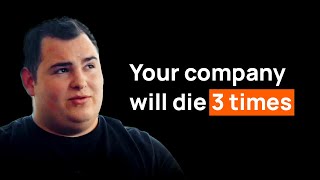
John Andrew Entwistle built Wander by owning the entire rental stack: booking platform, property management, and properties themselves. He raised $140 million across seed and Series A rounds, achieved a 93% customer satisfaction score, and expects founders to survive three near-death moments on the way to building something real.
Chapters
They used to call me like the shovel. If there is something that needs to get done, like a pile of shit that needs to be shoveled or whatever, like I'm going to deal with it. And when you're starting a company as a founder, there are a lot of things that fall into that bucket. Traveling to and from a destination is very stressful. And so we needed a brand that sort of soothed and added the adventure to it. And I personally believe that like deep human connection comes from being exhausted and having accomplished something with a group of people. Welcome to Wander Orford Cliffs. Back to a tree.
Wander Bandon Dunes.
If you can't do this, then you're going to fail at something else that's much harder. There are going to be 3 times in your company where it feels like you are going to die.
What's the worst advice you've ever gotten about building a company?
To like, take a breath, like take it easy, like it doesn't matter.
Did you ever burn out?
Not yet. All right.
So, John, welcome to the podcast, man.
Thanks for having me. Stoked to be here.
So let's, let's, uh, to start off, can you give the introduction about Wander for people that maybe don't know?
Yeah, I think there's like the, the one sentence and then like the paragraph. What's your paragraph? The paragraph is basically what Wander is doing is verticalizing the short-term rental industry. So today what you have is booking platforms, think Airbnb, VRBO. Underneath that you have property managers like Vacasa, Evolve, and then a bunch of others. And then below that you have the actual owners or the asset managers. And what happens is, is that you have all 3 parties trying to coordinate for a single transaction to deliver this great customer experience. And I think as we've all experienced, that doesn't tend to go too well. And so the idea with Wander was, What if you could solve that through this idea of verticalization? Like what if you could own all 3 pieces of that stack? And so the result has been a 93% customer satisfaction score, which is pretty wild. And so yeah, that's effectively what we're building. To say it simply, you can kind of think about it like Airbnb, but we own all the homes.
Interesting. I'm guessing you're familiar with the DoorDash kind of strategy of how they wanted to verticalize.
Yeah, I think the difference in like a DoorDash, or do you mean like their initial strategy or do you mean like when they—
Yeah, initially they were just, they were doing the phone calls themselves and then they would go and kind of order, but then they were like, okay, how do we verticalize, own the whole stack? And then they put themselves in B2B into like restaurants.
Yeah, exactly.
That sounds like what you're doing.
You would, to take it a step further though in that analogy, Wander would be the restaurant.
Nice, okay, that makes sense. So I want to take it back to kind of your childhood, right? 'Cause this isn't the first company you've started. You started one called a Coder. And then before that you had a game server. How old were you when you did your first kind of like thing?
Yeah, I was like 13, 14 when it was like real, you know, like had like a few employees and real revenue and had to pay taxes and all that sort of fun stuff. So yeah, it was like 13, 14.
You paid taxes when you were 13?
Yeah.
Did your parents have to help with that?
Yes. Yeah. So my pop, I remember he was sort of asking me, he's like, you know, what were the revenues or whatever? Just like typical childhood conversations. And he's like, okay. And then he brought me into the city, grew up in New York, to meet with the accountants that, you know, run all that stuff for his business. And everything was microtransactions, right? So it's like, I walk into this very fancy accounting firm with literally binders worth of transactions because they said that they needed to have everything printed out.
Oh, wow.
And so, yeah, that was the experience, was like, you know, thousands of pages of microtransactions.
And this was for the game server? Mm-hmm. Okay.
Yeah, exactly. And I think our accounting fees were more than the actual profits that we made when we did that. And so it was like not a great year. But yeah, that was like, you know, you learn something really young, which is professional services are super expensive, which I think a lot of founders realize.
You just need to make up a new metric, like EBITDA, just have one.
Community adjusted EBITDA.
Oh yeah, before accounting, we gotta create just a good acronym for it.
Yeah, I think at that age everything's very simple, you know? It's like revenue, like how much money do we have in the bank? And then like, what are our expenses? And like, 'cause you're not, obviously it's like bootstrapped, right? It's like you're not reporting it to anyone. And there's all types of metrics and like GAAP accounting and all that sort of stuff, which makes it, yeah, makes it more complicated. But we could have probably raised like a Series A back in the day, which is like funny to think about.
You did end up raising a lot for, I think it was the next company, which was Coder. I think you guys ended up raising something like $40 million.
Yep. Yeah, I think it's like $45.
How old were you?
When I started the company, I was 17, 18.
Did you go to high school?
I did go to high school. I did high school online. Well, I did high school in person. My, like, educational path is, like, a little bit different. Um, so I ended up getting a full ride to two different high schools. Um, I went to one for, like, a year and then ended up doing the rest online.
I actually did all my high school online too. Well, I did three years. Um, and so I started like this marketing agency when I was a little younger. And so I would do like, I'd go to class for 2 days of the week at community college and have like an hour of Zoom class maybe every single week. And then I would just get to like go on road trips or whatever to do like these like brand campaigns for companies.
Yeah, I loved like those, those days were a ton of fun because I was like working on a few different little online companies, doing school online, which the cool thing was is that everything was generally async. Which meant that I could progress at my own pace for the first time. And I mean, I was able to do like a year's worth of schoolwork in like a month.
Nice.
Like it was very enjoyable. And then yeah, that meant that I got to like travel around the world and build these little companies and get into all types of shenanigans, like racing Formula cars and everything else.
You raced Formula cars?
Yeah, I used to race Formula 4. for like a year.
Really?
Where'd you race? Uh, in the US. So it was the US series.
Nice. Nice. Yeah. We know a guy, Arv. We brought him up on the last one too.
F3, right?
F3.
How many Fs? How many of those?
How many are there?
Yeah. F4, F3, F2, and then F1. Yeah.
We went to the track last night. I think I texted you about it. Yeah.
Yeah.
We went to the F1 track last night in Austin, uh, with a bunch of founders and that was actually a lot of fun.
Yeah.
That's why, like when you invited me, I was like really thinking about it. Yeah.
But.
The last time, like, I went karting, I'm like one of those, like, few kids that can actually flip a kart. So I'm like, all right, I'm going to skip this.
Okay, I get it. And so then to talk about Coder, you're in high school when you started it. Yeah. How did you go from 16-year-old, you'd kind of done this, like, business thing before, but then how did you raise $45 million?
Yeah, so—
And what was Coder for context?
Yeah, so Coder is an enterprise development platform. Basically, it moves the development environment where software engineers write code to an organizations' cloud infrastructure. A bunch of big enterprise customers like Palantir, Goldman Sachs, et cetera.
Palantir trusted you guys when you were so young to—
Well, you obviously have to build some really sophisticated software and have certain practices to be able to get them as a customer. And their team is, I mean, truly incredible. Out of the many customers we've worked with, I was blown away by their sophistication. There's a reason why they are who they are in the space. But yeah, so started that company with my co-founders, Kyle and Amar, moved down to Austin and rented a tin shack on the east side, little, like, maybe it was 1,000 square feet. And we had to convince engineers to come and join us, obviously. Like, we wanted to hire a few folks. So it was really funny because when we first got started, we didn't want to show our age, right? Like, which 30-year-olds are going to come and work for these 3 18-year-olds? And so we dress up, have button-ups and all that sort of stuff, try and off you get our age. But yeah, in terms of raising capital, it really wasn't easy. We didn't have LinkedIn or a network. It's not like anyone in our families came from like massive wealth or anything along those lines. And so when we had to go and raise our seed, it was really cold emails and just ridiculous persistence. And, um, and yeah, we ended up, ended up pulling it together.
So what have you learned from raising, especially as someone for, well, you weren't a first-time founder, but it was your first time trying to raise a bunch of money. What do you think was the difference between you and everyone else who had like tried to raise when they were younger and didn't make it?
I'm pretty relentless in terms of getting something done that needs to be done. He like showed up at their houses and he was like, yeah, I'm relentless. Well, I think it's more so like people back in coder days, people don't really call me this anymore, but they used to call me like the shovel, which it's like if there is something that needs to get done, like a pile of shit that needs to be shoveled or whatever, like I'm going to deal with it. Like no matter what it takes, I'm just going to get it done. And when you're starting a company as a founder, there are a lot of things that fall into that bucket. Fundraising is one of them. Things like hiring as well are pretty tedious. You need to put in a ton of work to get that one great person. But those types of things compound pretty dramatically. Like if you're able to accomplish them in the early days, the results later on are pretty significant. And so in terms of what set me apart, I mean, I think it's just persistence. Obviously you have to build a company at the same time and have something that's actually valuable and really being very thoughtful listening to their feedback. I think a lot of founders trying to raise money for terrible ideas and then wonder why they can't raise capital. And so I think that's also a big piece of it as well as understanding where you have idea market fit when it comes to fundraising. So I'd say it's really those dynamics. But I mean, speaking candidly, I haven't enjoyed a weekend in, gosh, like 7 years. And that's just what it takes. And to be clear, I'm not advocating for that hustle, grind mindset, like, oh, like on TikTok or whatever. It's just like, I've always had more work to do than I had time. That just requires certain dedication. It's not that I don't, like, find times to have fun, but normally it's, it's part of some, something work-related.
Like, did you ever burn out?
Not yet.
Um, 7 years, no weekends, you haven't burnt out?
I mean, I think that there are times where I don't feel great. Um, but there's a certain weight that you have to carry on your shoulders as a founder, right? When you don't feel good, you have to keep it high energy and high progress for the rest of the team and for the company. And so it's almost like you don't really have a choice, which is really difficult on founders. A lot of people struggle with depression or otherwise because you have to be at the top of your game all the time, day in, day out. And so there have certainly been times where I didn't feel great, but you still have to kind of power through and figure out how you can get back to feeling yourself. And for me, normally it's like going and spending a few hours on a hike or whatever, and I'm back in the seat. But I'm very lucky in that sense that my recovery time is pretty short.
Interesting. How long has Wander specifically been going on for?
We're about to turn 2 on May 5th.
Only 2?
Yep, 24 months.
I feel like you guys have been around for a lot longer.
No. Yeah, we've gotten a lot done so far, but, but yeah, it's still a young company.
Okay, so let's talk about how it started because you obviously did Coder and then I'm sure it was probably, it probably wasn't the easiest thing to leave that to start another thing.
Yeah.
What made you do that?
Yeah, so I stepped down as CEO of Coder in January 2021. My co-founder stepped into the role, Amar. And originally I was planning on staying at the company, but I got some really, really good advice from someone I respect and admire. I won't share who it is, but basically what he told me was, is that like, he wanted to see me go and start another company versus like staying at Coder because obviously Coder's now on its growth path. And then if I did that, that he would like, he would back it. And so, you know, obviously like it was a really big decision to leave, like your brain forms around the company, right? Like you talk about building something from 17, 18 till, I left when I was 23. And then let's say you become conscious at 16. So the vast majority of your conscious life. And yeah, it was super tough. But going back to the point around what happens when you're burnt out or like you just don't feel great, I recognized that what happened next would be very much up to me. Like my life path would be decided. I could either be, I could be that kid who founded a successful company and just went on to invest in other startups and that was it. Or I could take this period very seriously and try and figure out what was next. And so I spent a week basically reflecting and like, you know, shutting down like those parts of my brain and then was right back in the seat. And it was during that week I went and rented this cabin out in Colorado, middle of nowhere, where I came up with the idea for Wander.
And I was gonna say, how do you go from like, I'm guessing it was like a dev tool initially with Coder to real estate?
Yeah.
Okay. That makes sense.
Yeah. So I mean, I've always had a passion for traveling, like going back to the, the childhood question, spending my high school days traveling around the United States and internationally. I think I spent over half the year on the road, um, which is like my happy place, like going and experiencing new places. And so when I had stepped down from Coder, first thing I did instinctually was just like, I need to get away just somewhere, anywhere. I don't want to talk to anyone. I just need to be alone. And that's really where the idea for Wander came from. Like the place that I had rented, it just didn't really look like the photos. Beds were uncomfortable, internet was bad. Like I think a very typical short-term rental experience. And I began to think about this idea of verticalization. And so the idea got written down in my notebook. I wasn't planning on building it because to your point, it was so different than what I had built previously. But the idea just would not let me sleep at night, like at all. And so I just started writing and I was like, okay, I'm not going to spend the next 8 years of my life building the wrong idea. Like, let's try and kill this thing on paper. And make sure that it's gonna work, or at least it's not gonna fail instantly. And that's, yeah, that's what I did. And it got to the point where I was just like, I couldn't help but start the company. And I was fortunate that all of Coder's investors were keen to work with me again. And my co-founders obviously invested in the company as well. And yeah, and now here we are 2 years later, so.
Yeah, I was, I was gonna ask, how do you, how do you come up with like the framework from like zero to one? Yeah, because it's such different industries. Do you think there's like a template that any founder can use for like if they're jumping to, to a different vertical?
There's an operating framework and it really boils down to thoughtfulness. So when starting the company, I had hundreds of questions. And each one of those questions I wrote down into this, this large document. And then I began to work on the answers to them. And I had to be confident in the answers. And that requires a lot of research and asking people questions otherwise. And typically each answer leads to 4 more questions. And eventually what ends up happening is, is you create this sort of master doc with a bunch of questions and answers that then gets formatted into specific sections. And then all of a sudden you end up with a, a really decent, like, you know, old school almost business plan in terms of how does this company work? How is it going to operate? What are the major risks, et cetera? And so that's, I think, probably the best way to think through starting your company. And then I think from there, step number 2 is to test your thesis, is to see if you have idea market fit, which was sort of the next step with Wander was, just seeing if people liked the idea. And once you have a really strong reaction there, then you have no choice but to, but to try and build the product.
So one thing I've heard is that if you ask, like, there's that concept of like mob testing ideas, right? Like actually tell them, see if they, you can get them to use the product instead of just giving them an idea and asking if they like it. That makes sense for like a dev tool or if I'm building like an app, it's very easy. I build like an MVP with the minimum features and then see if someone actually uses it. But you guys had like a real estate component that isn't just software. So what does an MVP for that look like to test idea market fit?
Yeah, so there's a difference between testing your product, which would be like an MVP, minimal viable product, versus testing the idea. And so in terms of testing the idea, what you're looking for is some type of virality when you share the concept. And so that's what we did when we launched this product was basically just a bunch of tweets to just see if that was something that people were excited by. Like, hey, we're going to build Wander. Here's what it's going to be.
Interesting.
And the reaction was really strong. And I always like to say that effectively the level of idea market fit that you have will determine how strong your product market fit is. And I think that that's something that a lot of folks don't really realize. Now, to be clear, that's not true if your product is non-obvious, which a lot of great products obviously are. But typically what happens in that is that your original idea is actually very bad, but you've pivoted and evolved it over time into something that's actually good. And so I think it kind of stays true even in those circumstances. But what we saw with Wander was everyone was like, yeah, like if you could have a short-term rental and guarantee its quality and consistency and everything else, that'd be great. I would rent it. And everyone felt that way. And there are other good examples in terms of strong idea market fit. Let's use OpenAI, for example. If there was a computer that could do anything you wanted, would you use it? And the answer is yes, everyone. And then the question is, would you pay for it? And how much would you pay for it? And you can see that reaction, obviously, in terms of what they built. Now, huge technical problems in implementation that you have to do to build something like that. And very similar case for Wander. But having a strong initial reaction to the end product idea was something that was really important. But to your point around building an MVP, that's where it was really painful because in order for customers to understand what we were building, we had to build the booking platform, build the brand, build the property management and related automations. And then the the actual asset management piece and go and have the first location. And so when you think about an early stage startup having to build all of that just to see if the reaction is strong, it's a ton of work. Yeah. And like the early team was maybe 5 people and we just didn't, like we just didn't sleep for the first year building it out. But the reaction when we launched was, Well, the first thing we did was we wanted to validate if the idea market fit was actually correct.
Those were the tweets?
Well, that was the founding membership. So we had the tweets, which like had some level of reality. Then we made the landing page and started a waitlist.
Okay.
And it started to accumulate users. And then we wanted to make sure that people were actually willing to pay for it. Because what happens a lot of times with waitlists is that people will sign up for a waitlist because there's no barrier to entry. Yeah. But they're not willing to actually like put money down. And so took a page out of Tesla's book and we're like, okay, we're going to launch this idea of founding memberships. You pay $200, you get a Wander hoodie, you get that money in credits when we launch the platform and you get to skip the waitlist. And we did like $250,000 in founding memberships in the like month and a half between when we turned that on and when we launched the product. And so then I was like, okay, like there's something special here. Like this is very abnormal. Some companies like Tesla, like that's like, that's the type of reaction set that you see. And so when we actually launched the product, we did $250,000 in sales in like the first week. Oh wow.
And with how many properties?
Like 3. And so, how? Just people booking out into the future, which we still have that problem today. Like we still, we, we sell like our bookings outpace the total amount of inventory that we have, which like basically forces us to go and continue to add more.
I was gonna say, 'cause we looked and there's not like a ton of inventory. Yeah, we wanted to.
Yeah. But it's definitely gone up in the last like 4 or 5 months. We were thinking about doing an offsite about a year ago and we're like, okay, let's get a Wander. We've seen these guys on Twitter. Couldn't find any nearby. Where were the first 3?
So that was Bend in Oregon, Anchor Bay, which is outside of San Francisco, and then Tahoe.
Tahoe.
How do you choose the first 3?
How do you choose the first 3?
Was your target demographic like tech, tech bros?
So we definitely wanted to have something outside of San Francisco. We thought that that was important, especially just because that's where a lot of the tech community is, VCs, etc. And we wanted to prove like, hey, that this is, this is culturally relevant. In terms of how we identify locations though, it's really all database. So we have these massive troves of data which show us occupancy, seasonality, rental rates, all the way down to like the zip code and specific address. And then that's where we go and do our underwriting and, and pick a specific, specific house.
Now I'm super curious about the brand because he's, he's a great designer, like, you know, brand builder, creative. Um, but it's very different from building, you know, dev tool gaming, what you were in before. And like, he had told me about Wander. I was like, oh, how's it different from Airbnb, Vrbo, all the sites? Like, 5 seconds on the site and I can already figure out how it's different. And it's like, so how do you, how do you ideate that and then develop it without necessarily, I assume, right, like a direct background in that?
Yeah. So I recognized that a strong brand for this company was going to be critical from day one. And so that's where obviously the name for Wander and getting the domain and getting the like at handles for all the socials came from. And I also knew that that was going to be really critical in terms of our marketing leadership. So Kyle Tibbetts, who's our CMO, he was head of brand at Open Door.
I didn't know that.
And then before that he was at Hotel Tonight and otherwise. And he actually invested in the company in our pre-seed through his fund, Paradox Capital. And I was like, this is like the guy. And so basically convinced him to come on board. And we actually have a pretty long history of investors who end up joining the company, which is like a pretty unique talent inflow. But yeah, he's really remarkable. And it was just something that we knew was important because if If Wander was going to become a multi-billion-dollar important company, which to be clear, we're so far from that, but that's obviously what we're going to try and do. It has to have a brand that's not the bottleneck. And when you think about the idea space more broadly, Wander is going to expand beyond this core idea of verticalizing short-term rentals into the broader idea space of travel generally. That's the mission statement, is the infrastructure to experience the world. We want it so that when you open up your phone, phone, you click on the Wander app and it's like, I want to go to this hotel in New Zealand. And we're like, yep, go for it. One click, car picks you up, plane takes you. Yeah, exactly. And so, and there's like an AI travel agent who like answers all your questions and just like make it super seamless. So you don't need to think. And so we needed a brand that resonated with people and brought that emotion to a very like stressful experience, like traveling, traveling to and from a destination is very stressful. And so we needed a brand that sort of soothed and added the adventure to it.
So about, about brands specifically, one thing that's been interesting to me is that you guys have the handle Wander on everything, including the domain. So wander.com, @wander on Instagram, Twitter, whatever.
Yeah.
What is the process of actually acquiring those?
Yeah. So I don't know if I can say Uh, I mean, yeah, I don't want to, like, I don't know if I can say due to like certain terms of service that the certain platforms have later, right? I'm sorry, you can tell us later.
Yeah, I can tell you later.
Um, it's nothing, it's nothing like illicit or black hat or anything like that. It basically just boils down to like having a conversation with the, the owner and figuring out like an arrangement that works.
Okay. Um, does anyone have equity in Wander like how the Pipe.com guys did?
Yes.
Oh, wow.
Yeah. Wow.
Yeah.
And they've, they've done, they've done very well from that. Far, far better at this point than, um, yeah, than, than the cash.
We need to Google synonyms for Wander so when all the copycats pop up, we have all the domains.
Yeah. I think it's something important. It's also like being an internet kid, like getting the OG handles and otherwise was something that like has always been a part of like entrepreneurship for me and like building these little companies, like even Coder, like Coder is coder.com. Yeah, nice. And so it's just always been something that's been important. Also coming back to persistence, like I'll use domains as an example rather than social handles, like finding who these people are and then getting in contact with them and not just like meaningless contact, like, oh, I sent them an email. It's like, get in meaningful contact with them. Send them a letter, give them a phone call. They don't respond to that? Call their mom. Like, really, like—
Yeah, show up to their house.
Seriously. No, I'm not joking, 'cause there are like, someone said a long time ago, and I think it was related to fundraising, but I've abstracted it to most things when starting a company, is that if you can't do this, then you're gonna fail at something else that's much harder.
Oh, wow.
And it's like, if you can't get the Instagram handle, like, there's gonna be something else that's harder that will end up like putting a nail in the coffin. And to be clear, there are circumstances where it's literally impossible because there's no like active owner, right?
Yeah.
It's just like in the Facebook archives. Yeah. But then the question is like, can I go hang out at some like Equinox in Palo Alto to like meet some Facebook engineer or like— Like, that sounds ridiculous, but wild. Like, that's, that's what you have to do. Like, there's just like, yeah, every company has these stories.
Um, so when you were pitching to investors for Wander, obviously you had a lot of credibility from Coder, but what did you go to them with? Was it just the idea? Did you have the first house already?
Yeah, so it was just the idea, which is honestly a privilege that really only second-time founders have.
Yeah.
But yeah, for me it was the idea and it was really money from everyone who had worked with me previously and understood that if I was starting something, it was gonna, I was gonna give it all that I had.
How much was the first round?
We raised, so we raised over a few different like micro rounds. It all happened pretty quickly. I think like our initial, initial round was maybe $1.5 million. Okay. But the entire pre-seed, seed process ended up adding up to like $8 million. Nice.
Okay. That's over like how long, a year?
Uh, like 3 months.
Over 3 months?
Yeah, I think it was like 3 or 4 months maybe. And it happened very, very quickly.
Did you have a timeline on like if, if this happens or this, we don't hit this inflection point, like, hey, we have to, you know, let's say pivot the idea, go to something else.
Yeah. So when starting the company, I had basically a few different core questions that had to be answered where if they didn't have the correct answers, the company was just going to fail. Were we able to drive our own demand was a big one, right? You have to be able to, in order for this idea to work, the bookings have to come through Wander or a significant portion of them do, right? Like north of 70+%. And so that was something that was really key. Obviously building out the technology platform and otherwise was less of a question. Having a brand that resonated with consumers, making sure they actually wanted to pay for and like the idea. There were multiple questions. Like scalable financing, it was a huge question, right? Like how are you going to own these homes? And like, how are you going to have institutional level financing on them? And then where's the real estate equity going to come from? And then are these homes going to hit a certain yield profile? Like, and then also you have short-term rental regulations. And so are those going to end up being constrictive to your market and scale? So many questions that need to be answered in the early stages of a company. I was actually listening to a podcast by Keith Rabois and Logan at Redpoint. And he noted that in the early stages that it's not intellectually difficult to figure out like why would a company fail. So you have to shift your framework as an investor to like, how can this be successful? And it's interesting because as a founder, I actually shift it the opposite way, which is like, I'm thinking about how this company's going to fail and trying to overcome that. And then to be a great investor, you need to think about how could this company be successful? And so yeah, there were a ton of different checkboxes along the way to our Series A. And that's sort of how I think about it is like, what are the different checkboxes between here and the next milestone? And that goes for pre-seed, seed, Series A. And that's not the process what I was talking to you about in the elevator. Is that Wanderer's basically going through the transition of Series A to Series B right now. Like we're right on the cusp of like hitting really Series B level metrics. And then obviously once you raise your Series B, it's, it's massive expansion. And so there are a bunch of checkboxes that need to be hit to, in my mind, qualify for a really strong Series B.
What are some of those checkpoints?
Basically what you want to do is ensure that you're scaling positively in economics and that you have some, in this macro, it's incredibly important, have a very short-term path to profitability. And so that basically means in a business like Wander, you have to become massively operationally efficient. And that whole process, different levels of reporting, I think we have two audits happening right now, one for wander.com and then the other for the REIT. Like audited financials, board reporting. There's all these different things that are sort of hard requirements in my eyes to be able to stand in front of a growth stage investor and ask for $20, $30, $40 million to say, hey, we want to throw fuel on the fire. Because a lot of founders, what they do is they think about fundraising as survival, which isn't necessarily how you should think about it. You should be thinking about it in terms of how does this accelerate the business? Really, once you get past your Series A, you need to be saying like, okay, if I raise $30, $40 million, like what is the net effect of this? Rather than, oh, this like gets me another 12 months of runway.
Interesting. And then while we're talking about raising, you guys did, I think $32 million from VC and then $100 million from a debt round.
Yep.
Can you explain the difference between a debt round and then just like a general VC round?
Yeah, so this was my first institutional credit facility. It's certainly very complicated. And as you'd imagine, the process and level of diligence that's required is far greater than any type of VC equity that I've ever raised before. I mean, you're talking about a 6-month diligent process where like every single piece of your unit economics and like audited financials, specific reporting, meeting with the team, background checks. I mean, Like, it has to— in order for a bank to create a facility for you that's going to pass credit committee, the level of sophistication is unreal. It has forced us at Wander to, I think, be far more sophisticated than really any other company at our stage. And also for me as a founder to have to grow incredibly quickly because obviously, I have a ton of product and, you know, other experience, but creating a facility like this that has literally thousands of pages of legal docs and reporting requirements and otherwise was new. And so that really boils down to a really great team. And again, a lot of sleepless nights, but yeah, really, really wild process to go through.
Interesting. So you talk about the team a lot. You guys, I think I've seen a lot of people on Twitter post that they've done a company offsite at a Wander. In your initial launch video, you kind of had, there's like the fireplace, you had kind of themed it around like a company offsite or like work from anywhere. What goes into making like a really good company offsite?
Yeah, so we run offsites at Wander a little bit differently. And that's because we do them very intentionally.
Okay.
So the way that we look at it is, is that we have everyone here for let's say like 3 days. And in those 3 days, I want everyone to bond as much as humanly possible. And I personally believe that like deep human connection comes from like being exhausted and having accomplished something with a group of people. Like let's say you and I, like, you know, all of us here were looking to form like some lifelong connection.
Okay.
It'd be like, all right, like let's, I don't know, let's like kayak down the river like for the next like 16 hours.
I'm down.
Exactly, and the point is at the end of those 16 hours, we're gonna be like the best of friends. Now obviously like you can't do that in a company type setting, but what you can do is like start your activities early in the morning, like 8:00 AM breakfast. Okay. And have different adventures like whitewater rafting or UTVing or otherwise. And finish the night with something that allows for, have a great dinner where what we did is everyone had to shift seats every 5 minutes because what happens at these big company dinners is like—
Super interesting.
You just talk with who you're sitting across from. So we had, and the restaurant was like, what the hell is happening? Because as you would imagine, shifting your seat every 5 minutes, it's like you have drinks being left behind and there's all types of stuff. We had the space. Space to ourselves, which was great. But, um, you know, that dinner was 3 hours and the room sounded like there was like just an uproar of like camaraderie and conversation and laughing and all these different pieces because every conversation was net new, like, and everyone sort of was forced to bond with each other. And then after that, you know, we went back and the way we did it is we rented Wanderbandin Beach and then everyone stayed in hotels that were nearby. So that was like the HQ. And after that dinner, we all went back to the house and you had that roaring conversation continue until like 2, 3 in the morning. And so like you had this dynamic where people like got up and were like having breakfast with each other. And then you had all these adventures through the day and then like a roaring conversation at night and then like positive vibes until these like adults are falling asleep talking to one another and like getting to enjoy themselves. And also for Wander, it's doing so in an environment that like we've created, right? And so it's like you're experiencing the product while doing it. But yeah, I think like offsites, you have to be really intentional. And that's only possible if you actually hired correctly. Like if you hired people who are compatible, if you didn't hire people who are compatible, then, you know, bringing them all together is, it's going to be kind of painful.
How do you hire people that are compatible? How do you screen to make sure that the next someone that's 10 hires away fits with someone that was 10 hires ago?
Yeah, so I boil it down to sort of these like shared virtues, which is something that Ben Horowitz talked a lot about in his latest book. I always mix up the order, but I think it's "Who You Are Is What You Do." Okay. And really what you want to understand is like what are the virtues that sort of you align with and what aligns with your business? For me, it's all about really great ethics. Like we look for the type of people that if someone's stuck on the side of the road, like they have to stop, like their heart won't let them drive by. And so like, that's sort of like the first piece for us. And then it comes into like general ability. Like, does this person have the skillset necessary to be successful in this role and at this company? But making sure that they're compatible and have really strong ethics and are the type of people that, you know, you would want to like sit in a car ride with, which is like sort of a framework that I run through is like, would I sit in a car with this person for, 3, 4 hours is super important.
Huh. What's the hiring process at Wander like?
So I believe that people spending 15, 20 minutes with a group of people in this like round circle, um, interviewing framework is super broken.
Okay.
Because if you sit with someone for 20 minutes, you're only going to go 20 minutes deep. And if someone else sits with them for 20 minutes, they're only going to go 20 minutes deep. And so it's like, I can have one person interview with 5 people for 20 minutes and the level of depth only got to 20 minutes. Yeah. And at the end of the day, this person's now interviewing with people for 20 minutes that they're not even going to report to. And so all you've done is just had like a very low confidence rating of people who never got to go deep on the subject.
Yeah.
And so the way that we run it at Wander is whoever the person is going to directly report to, and to be clear, like, I'm sure that other HR leaders and founders have different methods that they're super opinionated with. So I don't want anyone to take this as like me telling people like what the best practice is. This is just how we do it is that whoever the person is going to report to is the person who effectively needs to say, I want to hire this person before they're allowed to interview with anyone else. And that process typically takes 2 to 3 hours of that one manager interviewing that one candidate. And only once the manager is 100% sure that they want to hire that person, then they're allowed to have a gut check. And that gut check would be with me or someone else on the team, just as like a, hey, like, am I just super off here? But at the end of the day, like, I trust my leadership team.
Okay.
And so I want them to have high conviction on who they want to hire rather than like interviewing someone for an hour and passing them on to me. And I wouldn't be like, I don't know, like I would need to spend another 2, 3 hours with this person to like confidently tell you if they're going to be great. And I expect you to do that work rather than de-risking by passing them on to someone else. So that's how we do it. So it's very like— someone in the company doesn't really typically get exposed to too many people. It's really like who they're going to be directly reporting to. And then they'll have a gut check or meet someone else from the team or otherwise.
Got it.
Do B2B experiential companies use you guys?
We have a few, like offsite and otherwise.
Yeah, because I would just pay— I, previous company, we'd run like 100 events a year for brand marketers, and ad tech vendors would pay to sponsor. So this would be around Super Bowl, South by Southwest, CES, anything where there's a brand presence. I would just pay you guys like, let's say, a flat $250K once a month. We do 3 days. If you guys handle all the logistics, curate the experience around one of those major cities, it's totally worth it.
Yeah. So we have a few folks. I mean, we've done multiple events like Hyundai launched their latest car with us. How? What?
How did they launch their latest car with you guys?
Like they launched it at the, at the Cave Creek location. So they like announced it out there and had a bunch of like influencers and bloggers fly in and then like hosted at that location. It's a very like as a percentage of our business, it's small, obviously, but it is something like we find really interesting because it makes Wander culturally relevant, right? To sort of see a high-end commercial and then it's like, oh shit, there's a Wander sign.
Yeah. Okay, I want to wrap it up with a rapid-fire round. Okay, first one's gonna be easy. What's your favorite location?
I would say Bandon Beach.
Bandon Beach, where is that?
That's in Southern Oregon. And the reason for that is, is that it was our second location and it was the first Wander that I actually got to really stay in and enjoy. Our first location was just relentless setup, getting it ready for that first guest. And then, um, but that Abandoned Beach was the first one I actually got to like stay in. And it was right before the company, like the product actually launched to the public.
Got it.
And I remember standing there and obviously having just pulled like super long days and being exhausted and we were in the middle of starting to raise our Series A, which is always stressful. And there was this incredible rainbow with the ocean roaring and this little girl and her dog down on the beach playing together. And to my left, I can look and I can see the Wander sign. And it's like, OK, this is what we're trying to create. The end product is that— like the user is going to have this special feeling, like they're going to be happy. And like, that's something I can dedicate my life to trying to build and trying to deliver. And so that's why it's sort of my like favorite location because for any guest who goes there, if you like stand on that deck, you'll know exactly what I was trying to create. So.
That's powerful. What's the best advice you've ever received that relates to the first 3 months of building a new company?
So I wouldn't say specifically to the first 3 months of your company, but this was really powerful advice that I got, or more of a warning from an entrepreneur named Alec Guttal, who's like one of my, actually continue to admire him, we haven't talked in quite a bit. He told me when starting Coder, and this was before we raised capital and anything else, that there are going to be 3 times in your company where it feels like you are going to die. Like the company, it feels like the company is going to die. And I found that so interesting because like here I was, for context on the stage we were when he told me this, it was myself and my co-founder, I think it was Amar who was in that meeting. And it was just some like local friends, It was like, hey dad, I think we need to go raise capital. Do you know anyone? And it's exactly what you would imagine put together, right? Like, hey, here are some local folks who have actually been with me on my journey since, which is pretty remarkable. And so it's like we're sitting in this dining room and it's like these two 17-year-old, 18-year-old kids pitching this highly complex developer tool product to this group of people who don't fully understand it. And like Alec Goodall gives this advice almost knowing what's going to happen next, right? Like understanding that these kids are going to go and they are going to build this product and they are going to go raise capital. And like, because that's only advice that you get if someone's like, hey, like they're going to go off and do something and I know what journey they're going to go on. And I remember counting in my head with Coder each time I felt like the company was going to fail. And I was like, oh, like that's number 1. Like, I'm like, cool, so I have 2 more of these. And then I remember counting the second one. And like, you know, I never counted the third one yet, so it's like, who knows? And so like that dynamic was super powerful to me because if you understand that there are going to be 3 points in your company where it's like, it feels like it's going to fail, you like kind of feel a little like assured. You're like, oh, I guess that's only one, like 2 more, 2 more left. Like, so yeah, that was the best warning I've gotten.
Okay, what's the worst advice you've ever gotten about building a company?
Probably to like relax, or not necessarily relax, but like, to like take a breath, like take it easy, like it doesn't matter. Like for some reason it's become like trendy to like give that advice. Like I think that the advice of like, hey, you need to take care of yourself mentally, you need to make sure you're in a good headspace, those different things is super important and very valid. But like anytime anyone's like, hey, like you should go to this event, like it's really important, like, you know, XYZ. I've always left with like regret because it's like, you know, as a founder and as an individual person, like what you need to get done. And so like someone else telling you like to change your priorities and like, it's not, it's never productive. So I'd say that's probably the worst advice. Anytime anyone tells you, to do anything and doesn't give the caveat at the end with like, but I have no idea, you shouldn't listen. Because anyone who gives good advice will always end it with that like last piece, which is like, at the end of the day, you have to make the decision, like a little disclaimer, like I have no idea, like you need to make your choice, et cetera. So anyone who gives you advice who doesn't do that, terrible idea. Also anyone who gives you advice but like is, at a similar stage to you or like doesn't have some specific experience is also pretty, pretty dangerous. But it's up to you to evaluate, like, you know, take the advice and then run it through like your brain. And if it doesn't make any sense, then don't do it.
That's really good. And then the last question is, how do you want to be remembered?
My, my goal is for as many people as possible when I die to basically be like, John Andrew was like a pretty, pretty great dude. Like he was always kind. He always did the right thing. He always operated with correct ethics. And he was a net positive on the world. And that if we could undo him existing, like we wouldn't. That's, that's really my goal is to just have as positive an impact as possible.
Awesome. Well, where can people find you online?
Uh, I mean, Wander.com is our site. Uh, I'm on, on Twitter. Um, just John Andrew Entwistle or @jantwistle. But yeah, that's pretty much, that's pretty much it. That's my online presence. Awesome.
Well, thanks so much for coming on. I don't know which camera we're looking at because this is like a new set, but this one, that one.
Thanks, Eric.
Thanks so much for watching. Make sure you leave a like, subscribe, do all the YouTube things. We'll see you next week.
More from John
What John Andrew Entwistle, Founder of Wander is Doing Differently as a Second-Time Founder
Make Yourself at Home, Episode 22 | John Andrew Entwistle, CEO & Founder, Wander