Discussing Entrepreneurship With Jamaul Ford
In this episode of the Black Scout Podcast, host Ezekiel (and Z) interview entrepreneur Jamaul Ford, a second‑generation business owner who has generated roughly $8 million for his own ventures and consulting clients. Jamaul shares his journey from nursing and sports‑science to professional music and consulting, emphasizing how his early exposure to entrepreneurship shaped his ability to spot demand. He outlines a framework that all problems fall into health, wealth, or relationships, and explains how he uses that to design programs. Pricing is discussed through the lens of time‑to‑result: a personal trainer charges less than a surgeon because outcomes differ. Jamaul advocates building systems over trading time for money, describing two‑sided marketplace models such as job boards, and illustrates this with a niche restaurant‑staffing board. He introduces the “five things you can sell” (access, convenience, security, validation, opportunity) as a universal marketing lens, applying it to examples like Uber, Apple Music, and a saxophonist’s subscription service. The conversation moves to strategic planning, using primary‑care physicians as referral partners to scale a men’s health product, and outlines a repeatable outreach cadence. Finally, Jamaul promotes his free community, the Funnel Factory, which provides ready‑made sales funnels that have generated $400 k for members in four months. The episode blends personal anecdotes, practical frameworks, and actionable tactics for entrepreneurs.
Chapters
So if I'm a personal trainer, I may be only be able to charge $500 a month because it's going to take people 3 or 4 months to get those results. If I'm a, uh, per— if I'm a, uh, surgeon, I can charge people $20,000 because they're going to get the results in 30 minutes, right? So it's, it's a big difference. Yeah, I lay on the scale, you got to glow, got to glow.
I'd like to welcome everyone to another episode of the Let's Gather podcast. I'm your host Z, and in this episode I have Jamaul Ford to speak about entrepreneurship. You can find more information about Jamaul Ford by clicking the link in the description below. I'd like to give a content warning for any strong language used in this episode. I hope you understand and enjoy the show.
Hello, first I want to thank you for joining the podcast. And I'd like to welcome you and let you introduce yourself to the audience.
All right. My name is Jamaul Ford. I'm a second-generation entrepreneur. In the past 3 years, I've been able to generate about $8 million for my businesses as well as my consulting business and helping my customers be able to generate revenue for their businesses. So I'm super excited to be here to discuss my story and discuss things that might be able to help anyone out there listening.
Great. So I guess we got first out of was, how is it being a second generation, um, entrepreneur and what lessons did you learn from there?
Yeah, so for me, being a second generation, uh, generational entrepreneur has been really significant in my career. Originally I went to school for nursing and I really pursued that career. I kind of transitioned into strength and conditioning because I really had an affinity for working out as well as I also played football in college. And so it felt more natural to me. I went and got my master's degree in sports science and wellness. As I transitioned from there, getting my master's degree, I wound up working at a hospital. So I worked at that hospital for maybe 5 years in consulting and doing different things for corporate wellness at the particular hospital. But in the back of my mind, I've always known the idea of working for myself, being able to create, uh, revenue streams, understanding supply and demand. It was something that was innate to me, whereas most people have to go and learn those particular things. I grew up learning those things. And so for me, it was easy for me to transition over into creating money and creating businesses for myself. And then once I understood how to generate revenue. I was— a lot of people ask me questions about it. And so that's what kind of got me into doing consulting as well. And so really being a second-generation entrepreneur has been beneficial not only for me, but being beneficial to helping other people that's looking to scale their businesses and looking to find some level of financial freedom for their families.
Got it. So great. So with learning all that, so when people start asking about how to make money, what was it immediately that you wanted to become a consultant or was it like, um, over time you were like, if I'm doing this right now, this could be something bigger?
Well, to be honest with you, Ezekiel, um, really in, in life in general, Um, as well as in business, there's a lot of ups and downs. So things go up and down. Can you— you have a lot of cash flow, you don't have a lot of cash flow. And for me, I was transitioning out of one business and trying to transition into another business. And for me, when I identified that so many people needed my help and needed assistance with understanding how to do those particular things, it kind of made me pause on starting another venture because there were a few things that was going on. The first thing that was going on was there was a major shift in what the economy, especially in the United States, uh, what the economy was looking for, as well as there was a huge push in the AI stream and a huge push in, uh, you know, cryptocurrency, huge push in the metaverse space and things. So for sometimes you got to kind of step back and see what's transpiring and see what the actual community is looking for. Because the one thing about being an entrepreneur is you are a problem solver. You can identify problems that's out there, and you generally come up with solutions for those problems. So For me, it wasn't immediate thought that, hey, I'm gonna become a consultant. And to be honest with you, I'm not a person that's really big on exchanging time for money. I'm really big on building systems, creating workflows that actually automate and work themselves. So for me, the very first thing I did was, as I was transitioning, looking for the next thing that I wanted to pursue, a lot of people started asking me questions. I like, oh man, how do you make money doing this? How do you start this? How do I get more customers, um, for this particular business? And really what I started doing was not only answering those questions, but starting collecting those questions to understand what the common denominator of those questions were. Because I'm not going to just start a business or start doing something just because I want to do it. I need to know that there's a demand or a need in the, in the environment that I'm in for that. So for me, once I have an understanding of, hey, entrepreneurs are looking for assistance, then I say, what is the main problem that they're having issues with? And one key thing about that, Ezekiel, is everyone in the world is having a problem with one of these three things. That's either their health, health, their wealth, or relationships. There's something going on. You can be doing great in two of those things, but like one of them are not— is not going to be exactly where you want it to be, right? So when I look at solving a problem and I say, oh, entrepreneurs need help, and identify what that is, it's probably going to be in health, wealth, or relationships, right? And so that's the framework that I usually look at. Most people Um, when they're starting a business, they're looking to generate more revenue, right? So I look at the questions that they're asking, and once I answer the questions that they're asking, I find the common threads and I create a program that can actually facilitate them getting the results that they're looking for. So to go back to answer your question, consulting was not my first thing that I really wanted to pursue. It wound up coming to me through people that I knew and me actually listening to what people wanted. And so that's kind of what I pursued.
Got it. And I can attest to like the 3 things because when you work so hard, like in school or work, but then you get sick a lot because you're not giving yourself time to rest, right?
Mhm. And it's tricky, I'm gonna be honest with you. Like the thing about school is it's foundationally built off of books, right? And Literature. The problem with things being built off of literature and books, I think they're good reference points, but you also have to look out into society in the environment and see what the environment is telling you is going on, right? Many things that's published in the books that's traditionally used in school are outdated, right? But then at the same time By the time there are new publications and new things in books, things are changed again, right? So I think that there needs to be a balance in that. So I think even when you're in school, you need to be getting active work life experience and taking the things that you're learning in school simultaneously and saying, okay, I'm in school, I'm learning about nursing, I can't be a nurse. But let me put myself in the environment of nursing so that way I can experience it and then come back to school and have the reference points of this literature to understand how to apply it, right? And books and schoolwork should be a foundational piece that you use to scale, um, whatever you're looking to do. So for me, I've always seen it that way. I generally, myself, to be honest with you, I read maybe 2 books a month, or I listen to 2 audiobooks a month. In the morning, I walk like 20,000 steps, and it's usually like 2 hours. And so I listen to an audiobook that's talking about either something new that's coming out or a technique or a thought process that has stood the test of time that I need to know how to apply to what I'm currently doing. So That's just in regards to the statement you made about school and the frustrations of school and not really seeing the results that you're probably looking for. To be honest with you, I have a master's degree in sports science and wellness. I don't even use that. It's not even what I use at this particular time. I literally graduated from getting my master's degree. I had no job, I had nothing. My credit score was terrible. And what was crazy was I was making— I wound up getting a job at the hospital. I think my job at the hospital was paying me $35,000 a year, and this was like maybe 2012, right? But I also am a professional musician, and as a professional musician, I was making like $50,000, and I was only playing like 2 or 3 gigs, like a total of like 10 hours a week. And I couldn't, at that time I couldn't even comprehend how, how am I doing this one thing and it's making me $50K and I'm spending 40 hours over here and it's only making me $35K. And so that disparity like really, really weighed on me until I actually comprehended that I, as a musician, I was going out setting my own market price, whereas working for someone else, they were setting my market price. Right. And I couldn't push through that actual ceiling because I was always going to be stalled by what they thought my value was. And it's better for me to go out into the market and set my own value instead of letting someone else set my value.
Got it. That's a lot to take in. Okay. So to speak on the school, I definitely agree about like books to help you choose like that foundation, because foundations don't really change that much. But then you really need that practice, like that practical practice, to understand what's going on.
Yeah, 100%.
And then with you saying your own market, market price with music, with being musician, is that Does that, um, mindset still influence you right now in terms of how you work with businesses?
Yeah. So yeah, I, I believe that when you're working with businesses and you're trying to figure out what's going to work best, you have to go out in the, in your environment and see what people are needing and then see how much they're willing to pay for it. Right. So there's this one concept of— well, let's, let's put it this way. If I'm— let's say, let's just talk about weight loss as a whole. That's health, right? So weight loss is health. If I'm a personal trainer and I decide, okay, which group of people want to lose weight the most? Is it men between the ages of 35 and 45? Is it women between the ages of 30 and 40? Is it— it could be kids. It can be overweight kids between the ages of 8 and 15, right? Now I know that there's a lot of people that want to lose weight, but those people are— everyone can't be my target audience. There's going to be a certain group of people that's going to resonate with me, who I am, and they're going to look at me and say, this is the person I want to get the answer from, right? Then I I identify who they are, and then I identify how much they're willing to pay me for that particular answer. Now, the interesting thing about that is if I was a plastic surgeon, I can still give people weight loss, right, through lipo, through different types of surgery, and my price point is a lot higher because the time delay for them getting the results is much shorter. So if I'm a personal trainer, I may be only be able to charge $500 a month because it's gonna take people 3 or 4 months to get those results. If I'm a, uh, per— if I'm a, uh, surgeon, I can charge people $20,000 because they're gonna get the results in 30 minutes, right? So it's, it's a big difference. So understanding what you offer, the time delay on the results that you give people, and understanding who the market of people you cater to is. Is very big in regards to understanding how you can price point yourself in the market. What they all say about this, Ezekiel, and you even have this podcast, there's this concept and there's this article called A Thousand True Fans, and it says that you only really need a thousand true fans in order to make a million dollars a year. So you need a thousand people to agree that you have the solution that they're looking for. Right? And now if you agree, get those 1,000 people to pay you $100 apiece, now that's $100,000. You multiply that times 12 months, that's $1.2 million. So generally, if I wanna close at a 10% rate, that means if I'm able to touch 100,000 people through social media, through podcasts, through these mediums, and get 1,000 of those 100,000 people to agree that, hey, they like me, they want to be around me, they want to know more about me, and they want to purchase and invest into my solutions, then I'm off to the races, right? Because, um, they actually believe in me and whatever product that I put out, they're going to be wanting to support me and invest in me myself.
Yeah, I've heard that concept before in terms of like music. Like if an artist has, um, like 20,000 loyal fans compared to being like a megastar, but under, um, a record company, they're gonna make more money because that's their money, not like the record company money.
I'll tell you this, Ezekiel. I have one client. She's an instrumentalist. She's a saxophonist. And she does the typical things that typical artists do, go out and perform. But what we did was instead of her just selling, uh, products and like t-shirts and different things and albums, we actually started a subscription service, a subscription model that's $10 a month. Because when people are enjoying her music in the moment, that's the time when she needs to sell them, right? So we use a QR code while she's performing to allow people to join her fan page. Her fan page is $10 a month. Well, at the end of the year, those people have given her $120 instead of $20 one-off for a CD or $20 for a shirt, right? The other thing I say about that is how music works today is a song is not going to be popular longer than a week. It only has a week lifespan. So I don't believe that people should be putting, um, months and months of time into putting out work. I think that you should have a— create a system of making music and at least put out 2 to 3 songs a month. Instead of trying to sell those songs, put those songs in a community where people are paying a subscription and give them exclusive access to that music. For the first 2 to 3 months, let them feel like they're a part of the creative process. Hey, you guys, I like these songs. I just came out with them. Do you believe I should, um, put these songs out live for sale? So you've already made money on those songs, right? You, after those 3 months, then I put those songs out to actually make money out in the open market. But generally, if I get 5,000 people, 6,000 people to want to be a part of my community, and they're paying me $120, uh, $120 over the course of the year. What, that's like $60,000, $70,000 that I've created off of stuff that I was going to already do in the first place. So it's not really that difficult. So I think frameworks and understanding what society is telling you is super important And being able to take those frameworks and make them work for you.
Got it. And just take a step back. When you say you don't like, um, uh, trading time or like money, you want to do like systems. What kind of systems did you mean at that point?
Cool. So let me, let me, can I answer that question two different ways? I want to answer, I want to address the time and money thing, and then I want to address the systems thing. Right. So there are steps to it. So when you first start, someone says, I need you to flip these burgers. I'm gonna pay you this amount of money an hour to do this job. You don't really need to know any skill set. I'm gonna teach you how to do it. And based on me teaching you how to do it, I believe your value of your time is this amount of money, right? So that's generally Everyone's first integration into the marketplace of having a job. The second level is having a salary position. It's, hey, I'm gonna pay you this amount of money a year. I don't care how many hours you work. I just need you to get this job done over the course of the next 12 months, and I'm gonna pay you this amount of money, right? So that's the second level. The third level is when you start to separate your time from your money. It starts to become, I have— I need this done. Can you build something that can get that project done? So I will give you an example. I need somewhere to live. Can you provide me a place to live? That's real estate, right? So real estate says, hey, you can live in this building. Pay me this a month. I don't have to be at that building. I may show up every once in a while to do maintenance, but I'm gonna make money off of giving you a place to stay. That is sep— starting to separate your time from your money, right? And then there's the idea of selling air, and I call it selling air, but it's really called a two-end user system. So there's supply and then there's demand. And most entrepreneurs, most people look at it to say, there's a, there's a demand and I'm going to give the supply to that demand. Or in their minds, they'll say, hey, I'm want to create supply, then I'mma find demand. An example of that would be, hey, my friend's selling t-shirts, I should also sell t-shirts. Nobody told you that they wanted to buy your t-shirts, right? So it's like, who told you you should sell t-shirts? You need to first go ask people what they want. And then create the supply. Now, for me, how I think about it is if someone says, hey, I wanna buy t-shirts, I'm not gonna make the t-shirts. I'm gonna find the demand of t-shirts and I'm gonna find someone who actually does make t-shirts and I'm gonna put them together and I'm gonna make the money in between. So an example would be, what does Amazon sell? Amazon is a two-end user system. They find people who want products, they find people who sell products, and they create the marketplace for people to do that. What does Uber sell? Uber sells nothing. Uber finds people who needs a ride, they find people with cars, they put 'em together. What does Airbnb sell? Airbnb sells nothing. They find people who need somewhere to stay, they find people with houses, they put 'em together. What does AT&T sell? They sell nothing. They have the phones that they get from the suppliers. They didn't make those phones. The other companies made their phones. They said what AT&T sells is, hey, we have people who— we have this person who wants to talk to somebody. We have this person that wants to be talked to. We're gonna create the network to allow them to communicate. So their overhead is very minimal. They're not having to worry about distribution, supply, all these things. That, that is what you call a two-end user system. Facebook was not a two-end user system, but it became a two-end user system because they started collecting information. So they said, oh, we know this person really likes dogs. This company sells dog products. Let's put them together in our marketplace to connect them. Our overhead is nothing. We're just going to charge the people to market to the other people. That they like dog, that they're dog products, right? So I always feel like two-end user systems is the secret to making money. The easiest two-end user system to create, and is the first one that I tell, I think everyone should create, is a job board. Job boards are the foundation of what a two-end user system is. I have these people who are looking for a job, I have these people who are, who have jobs that's looking for workers. Instead of me thinking, oh, I can't outbid Indeed, I can't outbid, um, all these other companies, I'm going to niche down to something that is more unique. So I'm going to say, hey, I'm going to make a job board exclusively for restaurants. So restaurants know, hey, you're looking for a server, come to my job board because people are already on my job board with the mindset of server. So I'm in New Orleans, huge food, huge food place, right? So first thing I'm going to do is I'm going to go to all the colleges in the area and I'm going to sign up college students who looking for jobs just on my job board to say, hey, look, I know they have limited amount of time, I know they're not necessarily in their career, They're trying to make secondary money. They may wanna work at restaurants, right? 'Cause they're looking for work. Once I get 2,000 to 3,000 kids on this job board that's looking for work, now I'm gonna go to restaurants and say, hey, look, I have this job board with all of these kids who actually are looking for work and they can actually be your supply. I mean, your, your supply of workers. And they're going to sign up because the turnover ratio at restaurants for workers is really big, right? So now what I've done, I have hundreds of restaurants on this job board. I have thousands of students looking for work on this job board. I'm gonna run ads against that because now people who— I don't have to charge either, either entity. Now I can run ads on my job board and make money from people seeing the ads as they're applying for jobs. There's companies who create resumes. There's companies who do all these other things and they're gonna wanna market to these kids. Hey, look, you need someone to help you with creating a better resume? Sign up here. They may pay me $5,000, $6,000 a month to be able to market on my job board because I have people in my space, right? And that's the easiest tool and user system to create. And then from there you can advance and start making more tool and user systems.
Yes. I just, when you're speaking about that, I'm thinking about all my interests and how can I get on board.
Yeah. And, and that's how it goes, Ezekiel. I promise you, like, there's this mindset of opportunity passes you by every day. That is not true. Like, it's, it does pass you up every day, only be, but it doesn't matter because it's not in your frame of reference. Being an entrepreneur. You should create opportunities and businesses based off of what you understand and based off of the people you around, right? Because it's community-based. Why would— why in God's name would I decide to start a skate— a skateboard company? I ain't never stepped foot on a skateboard. I ain't never been to a skateboard park. I don't know anybody that skateboards. But the common thought for people is like, oh, I see this person making $7, $8 million doing skateboard. I should do skateboard too. You don't have that frame of reference to understand skateboard, you know? So why would I do that? But if I understand music, if I understand business, if I understand health and wellness, if I understand these things, now I ask a lot of questions in that space and I start to understand what people need. Example for you, uh, I, for me, I like music, right? So because I like music, 9 times outta 10, everyone in my space, all my friends, They also like music, right? Because that's my ecosystem. So, and if my friends are all complaining about the same thing, then that is my opportunity to create a business based off of what the common issues that people around me are having.
Definitely.
Cool.
Is there anything you wanna talk about before we continue?
No, I, I really— we talked about— I would say yes, there is one thing I would like to say. There's only 5 things you can sell in life. 5 things. That is access, convenience, security, validation, and opportunity. Those are the 5 things that you can sell, whether it be service-based or product-based. So an example, what does Uber sell? They sell convenience, they sell access. What does Uber Eats sell? They sell access, they sell convenience. What does Apple Music sell? They sell access, they sell convenience, right? What does the government sell? They sell security. Hey, this country wants to attack us. I can keep you safe, vote for me. That's security, right? Or people, companies have security systems. Hey, buy my security system, no one's gonna break in your house. Well, guess what? The people who are buying those security systems, 9 times outta 10 live in the neighborhood where nobody would break in their house anyway, right? But they're selling it to 'em, right? What is a VPN? VPN is security, you know? So that is selling security. Validation. Louis Vuitton, Chanel, all major brands, Nike, Jordan, they sell validation. They sell that, hey, I know what's current, I'm at the same level as everyone else, right? And the opportunity— opportunities. Hey, you're trying to do this, I can help you do this at this price. You want to lose weight, I can help you lose weight. You want to make money, I can help you make money. You wanna have better mental clarity? I can help you with better mental clarity. So those are on the only 5 things you can sell. Whatever product you put behind it is what's important. Why did I say that? Because if you understand that there's only 5 things you can sell, then you understand how to market that product, right? So let's say for instance, let's go back to the skateboard thing. Let's say, oh, I'm starting a skateboard company. Well, what— why would people buy my skateboard? They need to buy it either because it's more convenient, they get access to it faster, or my brand validates them in some way. So I have to figure out one of those three aspects to make people want to work with me. Or maybe I have a longboard and my board is safer than other skateboards. Now I'm selling what? Security, right? So once I understand why someone will buy my product over someone else's based on one of those 5 things, when I start to market to people, I'm saying, hey, buy my skateboard, you're gonna fall 30% less. Now they know why they should buy it. Oh, buy my skateboard 'cause Tony Hawk only rides my skateboard. That's validation, right? Oh, buy my skateboard because I'll send it to you in 12 hours. That's access, right? So understanding what the premise of why people are buying your product is super important. And understanding there's only 5 things you can sell, no matter what product or service you put behind it, is super important when it comes to sales and marketing. So I wanted to say that too.
Let's continue.
Okay.
As we continue, I just want to say you have a lot of wealth of knowledge. Uh, thank you again for joining the podcast.
Yeah, I definitely, I'm definitely enjoying myself and, you know, like, I appreciate you having me here.
So in the beginning of your story, you say you made like $8 million, you helped your client get like $8 million. How do you get to a number like that?
Yeah, so it depends, it depends on what their goals are as a business. So you generally will have what's called a strategic plan. A strategic plan is what is gonna be my approach for the next year? What is my gonna be my approach for the next 3 years? What's gonna be my approach for the next 5 years? So it's based off of what their product is, what their goal is, and what their capacity to reach that goal is. So I will give you an example. Let's say I'm working with a health-based business. And maybe this business is doing men's health and they're trying, and they sell men's health-based products and services, and they're trying to make $2 million a year. Their base product maybe costs $250. So if I'm trying to make $2 million a year and my base product is $250, then I probably need to see roughly 10,000 patients a year in order to make that amount of money, right? And you probably be actually over if you see that amount of patients at $250 a patient. So the goal is $2 million. We have a product that's $250, and there's 10,000 people that I need to agree that I can give them the answer. So generally how I would approach that is the first thing I ask myself is, What is this product? How did this product solve solutions for people? So let's say for instance, it's a product that does hair, men's hair growth, right? I'm bald head, so I understand men's hair growth, right? So I need to find 10,000 men that wanna grow their hair and wanna pay me $250 for the service. So first thing I'm gonna do is I want to find one person that's going to make the decision for a lot of people. What does that mean? That means that I don't want to sell in a one-off situation because I'm trying to generate $2 million and I need 10,000 people. And I need someone who already has some level of validation or some level of goodwill in the community of men who don't have hair? Who would this person be? It would probably be their primary care physician, right? Because their primary care physician is the person that they've already trusted with their health in some capacity. And if I get that primary care physician to agree that my hair care product is the best hair care product for men who are trying to grow their hair. Anytime he has a man that needs hair growth comes into his office, he's going to send them to me, right? So let's say this primary care physician has 300 men come to his clinic. Out of those 300 men, maybe 70 of them are having issues with hair growth. Right? And let's say that's the average. If it's 70 men that's typically bald, let's say half of them are gonna agree to work with me. So let's say that's 35. So 35, if I talk to one, so that means if I work with one primary care physician, I can assume that 35 men are gonna come from that primary care physician to my clinic, right? So now it's just math. All of this is just purely math. So if one primary care physician accounts for 35 patients and I need 10,000 patients, then how many primary care physicians do I need to agree to work with me? So that if I had 10, that would be 350, right? If I had 100, that would be 3,000, right? If I had Um, another 100, that would be $6,000. If that was about another 100, that would be $9,000. So I need 300 primary care physicians to agree that my product is the best product. Now what's crazy is if I get 300 primary care physicians to agree to refer to me, I'm gonna make way more than what I thought I was gonna make because The men who are having success with my product are gonna refer other men, right? So I'm working from a minimum. So I'm saying, okay, now I need to find 300 primary care physicians. That is a lot easier than finding 10,000 men, right? So, and the primary care physicians are gonna understand the logistics of my product, of what I do, and validate who I am and, and how I do it. So It's going to be far easier for them to get the man to come work with me than it's going to get for me to get the man to come work with me. If the primary— if that man sees my ad or my information on social media or online, who's the first person he's going to ask if he should do it? It's going to be his primary care physician. So that's who I should be talking to first in the first place, right? And so when he sees my ads, he asks his primary care physician And his primary care physician comes back and validates that he should work with me. And so that would be my strategy. My strategy would be, okay, I need to talk to 300 men, I mean 300 primary care physicians. If I need 300 to agree, I need to reach out to 3,000 of them to get 10% of them to wanna work with me. And that's how I would hit the number based on that. If it was, I would do something that I call perfect repeatable week. A perfect repeatable week is to create a structure of outreach from our team to say, okay, we need to reach out to 3,000 primary care physicians in the next 52 weeks, which is a year. I'm gonna divide 3,000 by 52. So that's probably like maybe 100 primary, well, let's say it's less than 100, but I'm gonna reach out to 100 primary care physicians a week. Let them know who I am, let them know who I do. So I may have 3 team members that's gonna reach out to 30, 35 apiece because I don't want them just to reach out. I want them to nurture relationships as well, right? So that would be my strategy. I would get 3 people to reach out to 35 primary care physicians a week. That's what, 10 calls a day maybe, you know? And then from there I should be able to generate the revenue I'm looking for. Got it.
So I think I'm gonna end right there on that note.
My bad if I went on, Ezekiel. Oh no, you're great.
You're great. Give all the information you can. Cool. So if no more thoughts, where can people find you?
Oh, so you can join my community called the Funnel Factory. If you have a business, it's absolutely free. We give you funnels to be able to get more customers to your products and to your services. We've already had in the past 4 months about $400,000 made between all of the companies who are using our funnels. This is an absolutely free community. Just join, pick the funnel, do a strategy call with us. We're going to pick the funnel that works best for you, implement that funnel, and you'll be off to the races. Cool.
And again, thank you for joining the podcast.
That brings another episode of the Black Scout Podcast to a close. Again, you can find more information about Jamaul Ford by clicking the link in the description below. Hope you continue to have a nice day, and I hope to see you there.
[MUSIC] [MUSIC]
More from Jamaul


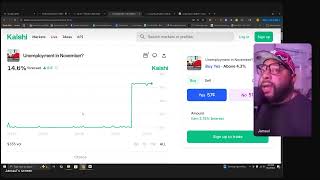
THE HEALTHCARE WAR: Congress vs. Your Wallet | Betting on ACA Future (Kalshi LIVE)
179 Sell to Serve! Why Business is All About Sales & Helping Others with Jamaul Ford

Reframing the Perspective on Business w/ Jamaul Ford, Upgrade Your Online Presence
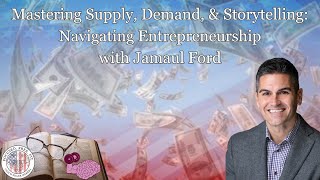
Mastering Supply, Demand, & Storytelling: Navigating Entrepreneurship with Jamaul Ford (Episode 25)