Unlocking Success: Jamaul Ford on Entrepreneurship & Resilience
In this Audacious Living Podcast episode, second‑generation entrepreneur Jamaul "the Maven" Ford shares his philosophy and practical tactics for building and scaling businesses. He frames entrepreneurship as a high‑performance engine, where financial literacy is fuel, consistency is the piston rhythm, empathy is oil, sales mastery is the ignition, and leadership is the driver’s seat. Ford emphasizes that influence stems from relentless consistency and that people buy people, not products. He outlines four foundational lessons he believes every child should learn—finance (profit‑loss literacy), leadership, sales, and marketing—and explains how these translate into real‑world startup tactics such as validating demand, using deposit models, and focusing on micro‑economics. He discusses the importance of niching, community‑centric empathy, and leveraging under‑utilized social platforms like Pinterest for content repurposing. Ford also reflects on failure as a learning opportunity, shares a “MacGyver” mindset, and offers a personal health regimen that illustrates his consistency principle. Finally, he provides his perspective on AI’s role in shifting consulting toward implementation services, predicts a rise in service‑based businesses, and gives actionable advice for aspiring entrepreneurs about energy management, three‑year traction timelines, and relentless daily show‑up. Contact information and resources (JamaulFord.com, My Funnel Factory, social media handles) are provided at the end.
Chapters
Let me say this, and based on what you said, I want to say this. Influence— what people don't realize about influence or influencers or like having influence on others— influence just comes from consistency. Like, it literally is consistency. It's like you won't have influence on anyone unless they can see the consistency in what you're doing. Like, once they see you consistently show up, now you start to have influence. People won't believe you until you're consistent, and that gives you influence. Yeah.
Greetings and salutations. Welcome to the Audacious Living Podcast, where we empower you to live your best audacious life ever. It's always a pleasure to be here sharing insights and inspiration that can help you break through through the barriers that life presents itself and reach even new heights. Now today we're diving into some of the most vital elements that drive entrepreneurship and personal growth. The very components that keep that journey running smoothly and powerfully. And I wanted to, before we get started, again, I want to take a moment to thank our listeners. It's been such a wonderful journey and appreciate you for being on this podcast and joining us on this journey. Your dedication to learning and showing up as yourself is what kind of fuels this community to keep pushing forward. Now I want you to think of entrepreneurship as a high-performance engine. You know, financial literacy is the fuel system. It ensures that you're running efficiently and never running on empty. Consistency is your piston rhythm, that steady motion that keeps progress alive day after day. Empathy serves as your oil. It reduces friction, strengthens connections, and keeps relationships running smoothly. Sales mastery is your ignition system. It sparks a fire that turns effort into results. And leadership, That's the driver's seat where vision, direction, and decision-making steer the entire machine toward success. Now, today's guest knows a thing or two about building engines that perform. Jamaul Ford, better known as Jamaul the Maven, is a second-generation entrepreneur who's generated nearly $9 million in net revenue through his consulting and business ventures. Jamaul's mission is to empower others to scale their businesses and live fulfilling lives by sharing tools and strategies and mindset that make growth possible. His insights on financial literacy, empathy in business, and sales mastery make him the perfect guest for today's conversation. So let's rev things up and dive into our conversation with Jamaul Ford. Enjoy. Hey, Jamaul, thank you for joining me here today on the Audacious Living Podcast. I appreciate you for taking the time to do this, my friend.
Yeah, I'm super excited to be here. I'm super excited to share and just to have conversation and kind of go back and forth with knowledge. So yeah, great. Yeah, thank you so much for having me.
Yeah, I know, and I know, you know, we, we've been trying to connect for a little while, so I'm really glad that we, we finally made it here and we're doing what we got to do. And, you know, here, here on this podcast, you know, we talk always and often encouraging individuals to live their, their best audacious lives. And, you know, um, I think a really good analogy to, to help sort of encompass that, uh, or articulate that rather is, you know, we're all on a pathway, right? We've got this path that we're on and, you know, it's, you know, on that path it's going to have its own obstacles and pitfalls, its challenges. But, you know, we still have to go through those things because on the other side is kind of where the greatness lies. And so the idea is to continue to push ahead to that other side and, you know, and that's when life gets good. And so, you know, you are a very successful entrepreneur in the business space and you several, several years and growing business and scaling business and that, you know, you know, Jamaul, AKA Jamaul the Maven, right? Yeah, that, that's who you are. And so maybe as a starting point, I can get you to, uh, introduce yourself to our audience and talk about the work that you, you do and what's got you to the point that you're at now.
Yeah, so my name is Jamaul Ford. I go by Jamaul the Maven. In the last 3 years, I've helped not only my companies but my consulting companies generate roughly about $9 million, um, just in net revenue. And so I'm a second-generation entrepreneur, so I've grown up in entrepreneurship. And so I'm super excited to be here, super excited to share and just be able to help people be able to scale and grow their businesses.
So, uh, let's, let's start with the, the, the nickname Jamaul Ford, and tell you what kind of inspired that. And, and I guess I'm curious, kind of how does that reflect your, your approach to entrepreneurship?
Yeah, so my two big things— I've always been a person that had the mindset of teach a man to fish. That's always been my mentality, and it's always come from a glass half full mindset. Like, I don't want people to be dependent on me. I don't— I want people, if they work with me, to gain the knowledge to be able to go off on their own, because I know that true legacy go— is through word of mouth and what people say about you and what people say when you're not there, right? And if I make people dependent on me, then there will become a time where they have some level of animosity towards being dependent on me. And so for me, my natural space has always been a teacher. And so if you look up the word maven, maven means teacher. And so For me, it, it not only kind of solidified who I've always been, but it helped me separate my normal self from my teaching self. And so that way when I got to turn it on and off, it's easy to turn it on and off just from that standpoint. It's like, okay, now I gotta get into this mode, you know, in my— generally my, my, uh, clients know, okay, he's, he's about to start educating me now on some things. So yeah, that's where it comes from.
I think for me, I just love the idea of just empowering individuals, right? That's, that's, that's huge, right? We're empowering people to be able to, to, to make whatever moves, changes necessary in their own lives to become successful. And that's kind of what I hear when you talk about teaching others.
Yeah, definitely. I, I just believe that life is about growth and scaling, and at the end of the day, the only things you're going to regret in life is the things that you didn't try. And so you have to go out there and learn, but learn through failure. And always remember, progress is better than perfection because there's never perfection, there's only progress. And that's what life is.
Gotcha, gotcha. Uh, you'd mentioned that you're a second-generation entrepreneur. I'm curious, what kind of early lessons did you learn, uh, growing up and what you saw within your family?
Man, this is— let me tell you something. This is like, you're the first person to ask me this specific question.
Okay.
In this way. And I think that this is really the, the most important question. And I'll answer from what I learned by saying what I believe everyone should learn.
Okay.
I believe that there's 4 things that everyone should teach their kids growing up that will always be a standard no matter what happens in life, no matter AI, no matter what happens. The first thing is finance and is profit loss sheets. Understanding how to read profit loss, understanding what net profit, gross profit is. And I learned that at a very early age, like being able to look at the books, like before there was QuickBooks, like looking at, you know, real hard books. Yeah, real hard books, ledgers, uh, understanding how to balance a checkbook, like, you know, knowing what's in the account when you don't have access to it on your phone, right? And those particular things. So I think that's the first thing that I learned. The second thing that I learned was leadership. And the easiest way to frame leadership that I always tell people, just because you're great at flipping burgers does not mean you're great at teaching other people to flip burgers.
Gotcha.
And so it's super important to understand how to be a leader. And to be a leader, you have to get outside of yourself and see the big picture and be able to reframe the big picture for everyone who's following you. To know what the mission and what the goal is. The third thing is probably the most important thing, and I would say that's sales. Because if you master sales, especially before the age of 18, and that's— is not as easy as it sounds, but if you master sales before the age of 18, you— it's going to be very unlikely for you to not have financial I won't say financial success. I would say it would be very hard for you to not get money like, like that, you know, because you know how to sell things and you understand the psychology of people. Yeah, do you think? Yeah. So the fourth one is marketing. And so when it comes to marketing, once you understand sales and you sell something 10 times and you start to really understand the fears, the frustrations, and the desires of the people you're selling to, then you understand how to put that particular message out in mass, right? Like, you understand how to— okay, now that I've gotten enough feedback from people, now whenever I go run social media ads, I put content out, or I do these things, I know the exact messaging I need to get people through the door to be interested in my product or service.
And I think what's really interesting is that, uh, you know, you clearly identified 4 key strategies and having and, and seeing that at an early age as a, you know, young person growing up, that's huge. Because I mean, I would imagine although you saw them, that you didn't sort of understand what they were fully or how important they would end up being, right? They were just— yeah, what it was.
I'll say this, I really didn't. Like, even growing up, my grandfather would tell me OPM, other people's money. I had no clue what he meant when he was telling me those things. And as it wasn't probably— topic was like 25, 26 where it really clicked to me. But now me, it's weird because now me understanding where my mindset was at that time and knowing how long it took me to trigger to understand it, now my nieces, my niece and nephew, when I teach them these things, I actually give them practical things to apply it. So they'll go out and they'll sell things to their classmates. They'll see, oh, they're— and they know how to look for it. They'll be in class and they'll be like, every time I'm in class, about 10 people don't have pencils. Okay, let me buy bulk pencils so that way whenever people need a pencil, I can sell them a pencil for 50 cents. You know what I mean? So they understand how to see it. And so now they're getting practical experience compared to me not really getting practical experience until my 20s, right? So yeah, gotcha.
Got you, got you. Really curious about, uh, some of the growth strategies that you, you, you use to help startups go from zero to beyond, if you will. Um, are there any sort of key ones or that, that are kind of like go-tos as a starting point? Or how much of it's, how much of it's really, uh, about that specific business or some general stuff that, you know, all businesses should be doing?
Yeah, that's, that's once again That's a great question. You asked some great questions. I ain't gonna lie to you, these are really good questions.
Thank you.
So I'll say the first thing is just the basics of microeconomics. And I think that people don't really understand like game theory and, uh, supply and demand and those things. But understanding the foundation of what microeconomics really means.
Okay.
And understanding supply and demand. And I think you always start with supply and demand. You have to make sure that there's a high enough demand for your product before you actually put it out in the market. You— and the metaphor I give is when you're on the river and you're pedaling the boat, you don't want to be pedaling against the current. You want to be— you want to let the current carry you and you're just using the paddles to guide yourself, right? And so if there's a high demand, it's less energy on your end to have to actually get the boat up and going, right? Um, compared to you fighting against the current. So it always starts with supply and demand, making sure before you put a product out there, you start a waiting list, you start a, uh, a signup sheet, and you want to know exactly what price point you want to be at, the amount of money you need to get started, and then start to take deposits. So I'll give you an example. If you're a person and you're coming off of hard times, maybe I, I'll give an example. Let's say someone's just getting out of jail, right? And it's hard to get a job, but I'm in that position. I have to be in a realm where people don't care about my past, right? So I might start a grass cutting business because people don't really ask those questions, right? So in order for me to start a grass cutting business, I need to know how much I'm gonna charge per yard. So let's say I'm gonna charge $50 per yard. Let's say in order to get a riding lawnmower, in order to get a regular lawnmower and a weed eater, it may cost me $2,000. That means that if it's $2,000 and I'm charging $50 a yard, I'm gonna roughly need maybe 20. I think that's 20 people, not— I think it's like 20, 20, somewhere around 20, 25 people to give me a deposit of $50 to go and buy the supplies. And when they give me the deposit of, of $50, then I'm gonna go buy it, but I won't buy it until I get the money to buy it. And I'm like, that way I know the demand's there. I already have recurring customers and now I'm set up to get word of mouth if I do a good job with the grass cutting, right?
And gotcha.
Those are the general setups you want to know. How much money you need to start?
Yeah.
How much money you hope to profit? How much is gonna cost you in gas? How much is gonna cost you in just different things to know where you are? So that's just an example I would give.
Yeah. Yeah, yeah, yeah. And actually, as I was thinking through, it's actually 40 yards I got to do with $50 to get to that $2,000.
That's right. Yeah, that's 40. It's 40.
I did the math wrong from my head as I think about it. But no, I get your point, right? And it's understanding, um, what— so it's almost, it's almost like, um, uh, um, not putting the cart in front of the horse, so to speak, right? In order to get here, I need this, and what's needed to get me from, you know, point A to point B. Um, and, and look, are there times where you take a risk and maybe you, you front the $2,000 up front with the expectation that, you know, I'm gonna do 40 yards or something like that to get me the, the money to cover my lot, my expenses. Sure, those things happen, but then there's other times where, um, yeah, you definitely need to do this to do that kind of a deal.
And so, well, I would say this, and, and that's— and I think that's where my methodology kind of switches. Like, I really believe people buy people. People don't buy products or services. They can get their grass cut from anybody. They're going to choose you because of your demeanor and who you are. And you have to be willing to go out there and talk to people. Yes. And I think people get so caught up on the back end, like operations. Let me buy this, let me set this up, let me do all of this. And they don't focus on the front end, like going out and talking to people. You can't have a business without people. You need people to have a business, right?
Right.
And so I discourage people. From going buy the supplies before they have the customers because you need the experience of talking to people. Cutting the grass is easy. Talking to people and convincing them that you're their best option is the hard part, right? And when, if, if I am doing a good job, I can hire someone else to cut the grass.
Sure.
It's gonna be harder for me to hire somebody to go out there and sell my products and services. So it's better for you to go out there and sell the products and services first before you get the supplies. But I can understand, I, I think that I just do it that way because I feel like so many people go get supply first. Yep.
Yep.
Yeah. Yeah.
But again, and again, and it's, it's, you know, we've seen both examples of both work, right? And so it's, it's not about one is right and what's wrong. You gotta do this, you gotta do that way. It's, it's, you know, it's, it's I mean, look, we're talking about audaciousness, right? It's taking that risk and figuring out, okay, maybe I do this. And so, yeah, I think that's part of— but the point though is understanding that that is a tactic, and as opposed to there's others.
Definitely, definitely.
I'd love— look, I, I've always believed that, you know, in our— in, um, the biggest lessons, um, that we learn, you know, come from our missteps, our setbacks, call them failures, if you will. I'm curious if you have an example or story of something that, you know, you— you— it didn't go as planned, but you walked it with this incredible lesson that you now put into practice, or maybe you teach others it.
Yeah, I mean, to me, nothing really never ever goes as planned. I don't— I don't necessarily have a— I'm not rigid in my— in my ideal. Like, I'm very numbers-based. So an example would be I probably— I'll probably say, just to give you an example of maybe, um, what you're talking about. When I was in— when I was working in corporate wellness, I have my master's degree in kinesiology and human performance. When I was working in corporate wellness, I had this opportunity to get a contract with an apartment complex. It was a amazingly nice apartment complex. It had 1,200 units and they had just had a, uh, gym that was like an Anytime Fitness that was attached to it. And the Anytime Fitness shut down and they didn't really have anybody running the gym. So they reached out to me and was like, hey, you can run the gym and you know what I'm saying, but we're not gonna charge you for the gym, but people come in, you know, you pretty much like the personal trainer, but it's your facility, you can run it. For me, I wanted them to give me an allowance of like $5 per unit, right, to make sure that I had, uh, expenses running. And so, but in that situation didn't work out. But what I did was in that moment I realized that I came up with the concept of I wanted one person to make the decision for a lot of people. Okay, right. And so while that strategy didn't work out, I want to say 2 years later, me and my ex started a clinic. And when we started the clinic, we were doing speech and hearing services, and it was just for adults. And then, but there was such a shortage of people that was actually getting services from us. So what we wound up doing was I was like, well, maybe at schools there's a lot of kids who need— because I remember when I was like in first grade, they would do hearing tests, right? And so I was like, well, maybe we can talk to the schools and see if we can— because if they have a lot of kids that need hearing tests, we're going to find more kids that need hearing aids, right?
Right.
Well, come to find out, there was one nurse to every 500 kids, and it was like a huge thing. And so what happened was every school we talked to, they would agree, and then we would have 900 new patients, we would have 700 new patients. But it was Doing that came from the concept of me not having success of understanding I want to do personal training at apartment complexes because if they agree, then I have this whole unit. So it, it all stacks up on itself, like, you know, and so that's why I don't necessarily see failure as setback. I see it as what do I take from it? What do I keep? How do I reimagine this, right? Yeah.
Mm-hmm. No, and I, I, I actually wholeheartedly agree with you on that. Like failure isn't a setback, it's an opportunity to, to— I mean, like, like, so, you know, I've talked to tons of people about just the idea of failing, and I've always said, look, man, you know, one of two things can happen. You're going to succeed, which is what you wanted, so you're happy about that. Or you're not going to succeed, okay? But in that not succeeding, what do you walk away with? You walk away with how not to do it, right? You walk away with how to do things better, and perhaps how to do it the right way, even that potential. And so the second time attempt at it, you, you're better equipped better armed versus the first time trying for the first time and having no clue without any guidance or direction. And so I, I, I, I share the similar sentiment with you on just on failure in general.
Yeah, I, I would say I have this concept I call MacGyver mentality. And sometimes when I talk to people, depending on how old they are, they don't even know who MacGyver is.
But you know, I'm with you, I'm with you.
MacGyver would have a quarter, a toothpick, and some bubble gum and make a bomb, right? And, and he'll just use what he had. It wasn't like he had this ideal of, I'm gonna have everything I need right now. The biggest question that no one ever asked themselves is, and just based off of what you're saying, do— did MacGyver think he had success or not? Like, you know what I'm saying? Because he just used what he had. So what success— like, what was the measure by which he decided if it was successful, right? He didn't have what he needed, he still made it work. What would have happened if he tried to put it together and it didn't work? Would have been a failure, or would it just be him using what he had to try to make something happen, right?
Right.
And then now he knows. So I, you know, I just believe that success and failure is internal. It's an internal thought also, which is also, which is very interesting, humility and humiliation are both also the same. And those words are very close. Whereas someone, you generally hear someone external say, oh, they're so humble, right? And then, but on the flip side, you're the only person internally that can feel humiliation from something that happens. So if you don't have success, you might feel humiliation, but no one's putting that on you. You might be internally putting that on yourself, no different than you putting failure on yourself internally. So yeah, I hope that makes sense. But you know, those things is so close together, and success and failure are so close together, right? So you gotta always understand that those internal feelings that you have to deal with.
So I, I've often— I've said, and I share with people that when it comes to, uh, um, uh, criticisms and compliments, I think they're very similar as well too, right? You know, you know, you know, criticisms— I don't believe criticisms should go to people's hearts. Right? But I don't think confidence should go to people's heads, right? And the same kind of thing, they're coming from the same place, right? The same type of energy that they're creating. And so I— yeah, loud and clear on that. Loud and clear.
You know what's funny? I'll say this. In, in African-American culture, we have this weird thing where we'll give a compliment in a, in a, in a, uh, in a, uh, like kind of in a, in a trash-talking way. Like, you know, saying it to people, like maybe somebody graduates, it's like Boy, we did not believe you was gonna graduate. Boy, we so happy. You know, it's like this thing where I'm celebrating you, but I'm also like, you know, and I think for us in some weird way it builds resilience because it's like, yeah, you compliment me, but at the same time you still let me know you didn't really believe in me, right?
Whatever.
But I find that interesting. So yeah.
No, I've definitely seen that for sure, without question. Um, one of the things that you talk about are the importance around community building and empathy. And, uh, I think those are two, uh, uh, well, first of all, interesting when we talk about building business because it's more about others and not about the business itself. I wonder if you can expand on why, why, why those things are important for, for, for long-term success.
I think in my personal experience and who I am and what I've done in my culture of where I've grown up, I think that, that successful businesses first start with understanding the needs of the people, not with a profit or not trying to make a profit, but genuinely seeing a need out in the community and deciding, hey, I'm going to help fulfill or help people with this. And then once you do that, and then once you get the recognition, it'll be a lot easier to have a successful or profitable business from operating from a place of empathy and understanding of the needs of others.
Got you. And, and I, and I think, yeah, again, I just, I just think it's, it's, it's, it's fascinating because business is about the business, right? And that's when you go into and you're, you're thinking about, you know, your profit and loss margin, you're thinking about the bottom line, you think about all these things. But now with what you're suggesting is, no, no, well, think about outside of you, right, to get that success. And that's, that's a, a slightly different focus, a different shift, if you will.
Yeah. And I think that different play— different people say it different ways. Like an example, a big word you hear in entrepreneurship now is niching or niching down, right? Uh, because it's, it's such an, it's such a thing like, hey, you want to have a target audience. But the truth is you don't want to sell your product to everybody. You want to find the people who really, really need your product or will really connect with your product. And that niching down helps you show empathy. It like, it, it helps you like know the specific people that can really benefit and you can talk directly to those people. Like an example for me, I sell software. Like most of the time I do consulting, but then also I usually have software. Why do I sell software? Well, software has a long term, so it's like most of the time if someone integrates in the software and they like it, they're probably not gonna leave the software. And as long as you keep it updated, it's gonna be there. And the second thing is that most of the time the businesses that I work with who are just starting up are African American businesses, are people in, in a certain space, don't necessarily have the best quality software or tools or the things that they need to get started. And so for me, I, you, I don't just offer software at a flat rate. I have a scale-up methodology that allows people to be able to get what they need when they need it, not just bulk packages, like, you know what I'm saying? Um, and I think that that really helps. And it, you know, it, it comes through conversation. It doesn't come from you pick and choose what you think you need. There's no like, okay, you're starting here, and then when you think you need something else, you reach out, you say, hey, look, I'm doing this, this is the issues that I'm having, this, this, this, and this. Okay, well, based on that, we, we think you should use this because it's gonna help you with this. So there's a, a level of education that's coming with the upgrade of software. That doesn't have you buying something that you would never use, right?
So yeah, yeah, no, that's— I think that's a great approach. Um, you know, earlier you had mentioned about the importance of being able to talk, go there, talk to people, and, and be able to help grow your business. And, uh, I, I would, I would sort of— that would fall under, for me, that under that, that sort of brand or marketing umbrella, if you will, right? These are things that you do. Um, so when we get in the marketing conversation, there's this thing called social media that's really blown up in a way, you know, how businesses reach out to people and talk to people and and do business now. I wonder if you sort of could talk about just sort of the impact on social media when it comes to, to business, because it had— the landscape has changed a lot.
It definitely has, and it's going to continue changing, and there— it's going to constantly evolve. And I think that you want to be open to what's being said, and you want to be open to all spaces. An example would be, for me, a great example would be many people think about like what we call maybe the Big Four, the Big Five, uh, Instagram, Facebook, TikTok, um, Twitter, Instagram, TikTok, uh, Facebook, Twitter, and maybe LinkedIn, right? But a lot of people don't think about Pinterest. A lot of people don't think about, uh, Snapchat. A lot of people don't think about, um, just these other social platforms that people are going to to get answers. There, people, you will be surprised, there's over 70 million searches on Pinterest a day. And if you have a product that can show well on Pinterest, it might be beneficial. An example would be if I do a YouTube video about the benefits, like if I'm a therapist and I'm trying to help people with ADHD or something like that, and I do a video and I say, hey, here's, here's a set of, uh, flashcards that can help you deal with or manage ADHD. Not only do I put those flashcards on YouTube, but I might also link that YouTube video on Pinterest with the flashcards because people go on Pinterest for those types of tools. And now people that's looking for it will not only see my video on YouTube, they will also get the cards and they will learn more about me and then they might wanna work with me. And so I think that sometimes in this space we believe that it's too saturated, there's too many people in the space and I'm fighting against others. The truth is You may be limiting yourself from just being on certain platforms and really understanding what you can do, how you could present yourself on, I wouldn't say lesser used platforms cuz they're used, they're just used a different way. Right. So yeah.
And, and really, you know what, what, what I'm hearing is, is sort of thinking off that beaten path, if you will. Right. Like there's traditional stuff, you have the big four out there, but there's other aspects and other directions that also could be taken into account.
Absolutely. I'll say this, like, take Pinterest. Like, let's say I'm a, I'm a, um, a wellness, a mental wellness person, and I have trouble making videos. So I don't make a lot of reels, I don't make a lot of shorts, I don't make a lot of YouTube videos, but I do daily mantras, I do daily meditations, I do daily affirmations. I can, even though I post that daily affirmation on YouTube or maybe Instagram or something, I would be doing myself a disservice not to post that on Pinterest. Because if I post it on Pinterest, people will start to follow me for that, because those are the things that people look for on Pinterest. And I can show up every— if I have 365 affirmations, I can show up every single day on Pinterest, even though I may not be able to show up every single day via video, right?
Gotcha.
Um, and so I might be able to build more consistency on that platform where it's not requiring me to be front-facing or show my face or those things, right? Um, so yeah, it's always important to know what platforms require what energy output you have. Yeah. What, like, you, you can consistently show up every day and do, and that's comfortable for you, and what platform caters itself to that amount of energy. Even me doing this podcast, I don't do a ton of YouTube videos solo. But doing podcasts allowed me to show up consistently on YouTube in a way that makes sense for me. Right. So yeah.
And then also too, I think, and I think the Pinterest conversation is an interesting one because you can, you can repurpose your content. So of course Pinterest is because they're images generally, right? They're not video. They're just images. Right. So, so, so, you know, if, if, so, okay, let's, let's say I'm promoting my podcast. Right. And so, yeah, I'll, I'll take clips and I'll put them on IG and YouTube and that kind of stuff. If people want to see the video. But maybe I take a quote from Jamaul Ford and say, hey, this is what we talked about on the Audacious Living Podcast, right? And if you want more, here's your gear. If you want to hear it all, here's where you go, kind of a thing. So it's repurposing, thinking differently and repurposing that content is what I'm hearing from you.
Yes. And there, there, people will be surprised there's even a video section on Pinterest. And I will say this, this is what's crazy. And this is what people never really realize. I like to think that every, every platform has an ego. Like, just like human beings have an ego, like human beings like to hear their name, I think platforms like to hear their name too. So the more you say YouTube, or this is the best way to use YouTube, this is the best way to do this, the more YouTube is going to push your video, you know what I'm saying? Because they, they know you're talking about their platform. The algorithm dictates that you're talking about their platform. So the more you do that and then you show up, hey look, um, this is on Pinterest, this, this, this, this, and this, then Pinterest is gonna push your content. Hey, this is the best way to use Instagram when you doing this. That's why you find so many videos of that. If it's not like your normal niche, whether it's funny comedy or whatever, then the other videos you probably gonna see is people actually talking about the platform itself.
Got you.
You know, in their, in their profession, like how, like putting their profession in the platform. Together. And I always feel like that's the easiest way to show up on a platform when you don't really know what to talk about. Just talk about the platform, just talk about the platform and how it works for your business, and it's probably gonna get a little bit of traction.
Got you. Um, I think something that we, as we're talking social media and the trends and the growth and sort of things of that nature, uh, it's hard not to talk about AI and what that's done in a very short window of time and, and and sort of the, the, the opportunities, um, that it presents. Uh, I, I know you're not sort of an AI specialist, if you will, but I'm wondering what your thoughts on how you think AI, uh, can influence how, you know, business, you know, redefine success.
Yeah. So I think it's super important to frame AI for what it is, right? And how things move today are a lot faster than what they were.
Sure.
So in the early '90s, the internet existed. People had no clue what the internet was. It was just some weird thing, right? It was like, what is the internet? Um, you fast forward to today, we have a good understanding of what the internet is, right? And there were early players in the internet such as Amazon, such as these other places that had a vague understanding of what the internet could be, and they adapted very quickly, right? Fast forward maybe to the mid, uh, 2000s, there were regulations and certain things put on the internet because the internet was too broad, right? It was like, oh, this is crazy wild. We need to regulate this a little bit. Now you look at AI because of things being expedited, you see those same things happen in AI. People don't quite understand the full grasp of what AI can do. You're using it, um, in a certain space and then you're— but then they're regulating it because they're, oh, this is too much for people. This is this, this, and this. So I think that understanding AI in, in, in the right way is super important. Not using it— how can I put it— use it in the way that you're not a consumer. You want to use AI in a way that you are a provider of AI. Like an example, because, because The thing about it is even if you're consuming AI and you're still reselling it, you're not getting the bulk of the money. An example, let's say I'm a person that does dropshipping from Alibaba or something like that, right? I maybe I'm dropshipping tennis shoes and I'm buying the shoes for $50 and I'm selling them for $150. Yeah, I might be looking at maybe a $70, uh, profit margin after shipping and everything. But the person that's the originator of the tennis shoe, even though they only charging me $50, based on their overhead cost of what it costs them to make the shoe, based on the amount of people that are also reselling those same shoes, they're probably making a lot more money than me. Like, you know what I'm saying? Right. As the reseller of the shoe. So it's more about like, don't look at the people who are using AI to go out to make money. Look at the people who are creating AI, like they are creating AI mechanisms. Like, I'm using AI to create— I'm creating AI for people to buy from me, you know. And I think that's the frame, because I think that that's how people should have looked at the internet, you know.
So, yep, no, it makes sense. It makes sense. Um, when you start thinking about exciting opportunities moving forward, you know, in the coming year and beyond, what sort of things do you see for entrepreneurs?
Yeah, so I definitely believe service-based, um, businesses are going to be very, very big. Product is very tough because of the T-Moos, because of the Amazons, because of those things, right? Even a lot of, um, normal shopping centers, you see a lot of empty slots where they used to sell clothes, clothing and things, right? So service-based things will become a lot more of what businesses do. Also, consulting or doing consulting will not be a thing because you have AI. AI can generally tell you if you ask the right questions. AI is going to guide you and tell you what you should do, the more information you give it, right? So you have to—
you—
I've always given away information and sold implementation. Like, it's more like this is the— because people can get information from anywhere, but can they implement it, right? Like, do they have the necessary skills to implement it. So for me, even with my software, I, the reason people will use my software over other people's is because if you need assistance, I have virtual assistants that I sell as well. So I have a few pest control businesses and those pest control businesses don't have secretaries. Oh, well, I'll give you 20 hours of a virtual assistant to be your secretary to help you get out of the bottleneck, right? So it's not just software. It's software and service in those things. So it's like, you know, understanding what people really need.
Got you. Got you. Uh, if, if there is a, a piece of advice that you give to an aspiring entrepreneur listening today, what would it be?
I would tell people two, two things. Look at your energy consumption and your energy output and figure out what you can sustain doing every single day. Don't choose to do something and then find yourself burning out after a period of time because there's a time gap that needs to happen with whatever you decide to do. I would assume it— when you start an entrepreneurial journey, just assume it's gonna take you 3 years to actually get the traction that you're possibly looking for and then figure out how you can consistently show up. What— based on that, How can I consistently show up every single day for 3 years? What is the output I can do for 3 years? And my last statement goes right into that, is to be relentlessly consistent. You have to be relentlessly consistent. It's like no matter what happens, I can show up and do this every single day. I, I'll tell you my personal story. In the last year, I maybe lost 110 pounds in the last year. And for me it was okay. Like I, I went to the gym every single day. I worked out every single day, but it was still a gap in output to input, right? So I was like, what can I consistently show up and do every day? I don't want to be dependent on the gym. So what I did was I said, I can walk, I can walk no matter what, right? And so when I first started, I could probably only walk maybe a half a mile. And so I said, okay, Cool. I'm gonna show up and walk a half a mile every single day. Guess what? I lost 20 pounds. Guess what I did? I took a 20-pound weight vest and I put that 20-pound weight vest right back on me and I started walking more. Well, guess what? I was able to walk a mile with that 20-pound weight vest. Guess what happened? I lost another 20 pounds. I bought a 40-pound weight vest and I walk with that today. I walk, um, I think every day I walk about 30,000 steps, about 15 miles.
Every day.
I wake up at 5:30 in the morning and I walk to like 8:30, 9:00, and I wear 80-pound weight vest and I walk it. It's not fast, it's not— I'm not overexerting myself. I'm not like trying to— I'm regular walking. And for me, it, it works. It's just like I can consistently show up and walk every day no matter what's going on. There's been days when it's raining, I'm gonna take a rain jacket I'm gonna walk. The, the postman does it, right? So yeah, so yeah, so that's what I mean.
Yeah, no, I like that strategy, just being very— it really does ties back to consistency, right? And what can I do on a consistent basis, which I'm hearing from you loud and clear.
Let me say this, and based on what you said, I want to say this. Influence— what people don't realize about influence or influencers, or like having influence on others Influence just comes from consistency. Like it literally is consistency. Yeah. It's like you won't have influence on anyone unless they can see the consistency in what you're doing. Like once they see you consistently show up, now you start to have influence. People won't believe you until you're consistent. And that gives you influence. Yeah.
Yeah. Nah, I got it. I got it. That's, that's, well, look, I, I, I, I think the, the, the strategies and insights that you shared have, have been awesome. And, and what I really like about it is very practical. Right? It's not too complex, it's, it's very straightforward, and I think that's what it needs to be. And so I'm, I'm glad that you're able to share some of your, your lessons learned, if you will. Uh, for individuals who want to connect with you directly or learn more about your work or work with you, uh, where could we send them?
Yeah, so you can go to JamaulFord.com, J-A-M-A-U-L-F-O-R-D.com. You can schedule a one-on-one consultation, you can join My Funnel Factory, which is an online community where you get free funnels and free tools to— if you add a— if you're just starting your business. Um, you can also find me on Instagram at Jamaul the Maven. You can find me on Facebook at Jamaul Ford or Jamaul the Maven. Jamaul the Maven on Twitter. Jamaul the Maven on TikTok. It's all— it's all the same. And Jamaul Ford on LinkedIn. So yeah, um, pretty straightforward.
Very nice. Well, I appreciate you doing that. What we'll do is we'll make sure the, the contact details have all shown up so, so people can connect with you directly. Jamaul Ford, as I thank you, thank you for doing this. It's been a great chat, like I said, and, uh, all the best, my friend.
Yes, thanks so much for having me. Talk soon.
Good. Back we are here on the podcast. You know, what an incredible conversation with Jamaul Ford. You know, one of the biggest takeaways from today's discussion is that consistency really is the engine's heartbeat. When we commit to showing up every single day, we create momentum that drives lasting success. I especially loved how Jamaul emphasized the practical side of financial literacy and leadership, not just knowing the theory but applying it. That's so, so key. And that's how you tune your engine for performance and build a legacy that lasts. If you'd like to connect with Jamaul directly, you can visit him at JamaulFord.com where you can schedule a conversation or to have a consultation or join his online community. He's also offering some free funnels and startup tools for new entrepreneurs. So I would definitely encourage you to check that out. You'll find all the details in the show notes, including a link to his Funnel Factory community, a powerful resource hub for anyone looking to launch, scale, or sharpen their business systems. You know, as we wrap up, remember, your business and life are like that engine we talked about earlier. Your fuel system is financial literacy, your piston rhythm is consistency, your oil is empathy, your ignition is sales mastery, and your driver's seat is leadership. When all those parts work together, you'll move farther, faster, and more powerfully toward your goals. Thank you for joining us on this episode of the Audacious Living Podcast. If you've enjoyed today's conversation, please like, follow, subscribe, or share this episode to help our community grow. Again, without you, there, there would be no way that we continue to do this. So I really extend my appreciation. And until next time, you know, keep your engine tuned, your vision clear, and drive audaciously as possible. Because when you lead with courage and purpose, there's no road that can conquer you. Until next time, stay safe, be kind, show love to one another, and be audacious.
Driven by purpose, fueled by passion, my words got power, my thoughts have action, motivation Stay gracious, that's greatness.
Be audacious.
Be audacious.
More from Jamaul



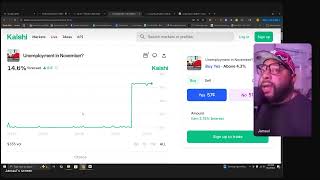
THE HEALTHCARE WAR: Congress vs. Your Wallet | Betting on ACA Future (Kalshi LIVE)
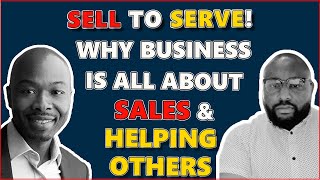
179 Sell to Serve! Why Business is All About Sales & Helping Others with Jamaul Ford

Reframing the Perspective on Business w/ Jamaul Ford, Upgrade Your Online Presence
Mastering Supply, Demand, & Storytelling: Navigating Entrepreneurship with Jamaul Ford (Episode 25)