What Makes SOCIAL MEDIA Content Go VIRAL | Jamaul Ford

Jamaul Ford breaks down viral content strategy: shares, not likes, drive virality. He introduces "valuetainment" (value plus entertainment) and explains why you need different packaging for each platform. Price points matter too: under $15 on TikTok, $300-$400 on LinkedIn.
Chapters
This holiday, BMW has reunited 3 members of the family at the BMW Road Home Sales Event. The agile X3, engineered for any adventure. The plug-in hybrid X5, commanding the streets with unmatched presence. And the all-electric i4, charging into the future with impeccable performance. Hurry in to find what powers your journey at the BMW Road Home Sales Event. BMW, the ultimate driving machine. Visit Valley BMW Center today for attractive lease and finance offers.
Do you know the number one thing that surprises engaged couples? Take a guess. The sheer amount of decisions they have to make while planning a wedding. Indoors or outdoors? How many guests? Are kids invited? Controversial. Which cake flavor? Seriously, how do you even begin to figure out what's right for you? That's where Zola comes in. Zola has everything you need to make every wedding decision a piece of cake. From choosing your dream wedding venue and vendors to deciding how to best spend your budget. With tons of customizable wedding websites, save the dates, and invites, every detail will feel like you. Zola will even help you choose the gifts, experiences, and cash funds you really want. The next thing you know, you've planned your whole wedding all in one place. From getting engaged to getting married, Zola has everything you need to plan your wedding in one place. Start planning at Zola.com. That's Zola.com.
I call it valuetainment. Now, what people consider to be valuetainment on Instagram is different than what they consider to be valuetainment on LinkedIn, right? So that's just different wrapping paper. That's all it is. Same gift, different wrapping paper. Warning, this is a public service announcement. This is the Walk in Victory podcast. Here we have conversations that provides insight on how you can craft and design your future from the inside out. If that's not you, then tune into another bleeping podcast. Everyone else, enjoy the show. And here's our host.
Good afternoon, good day, good evening. I don't know what time you listening or where you listening from. It's your boy, your host, Narod Tillman, and you are with me for another episode of Walk in Victory. Speaking of victory walks, um, if you're in, if you're in business, period, you need to have a digital, uh, digital footprint. And there's a lot of things that you need to do in order for your business to be found. But one of the things is understanding the difference between, um, a website, a landing page, and a funnel. When I first got into digital marketing and taking my digital marketing class, I mean, they were talking about funnels and I was like, what the heck is a funnel? And by the time I finished, and I remember going to my team and I'm like, oh man, we got this wrong. We need, we need a funnel. And nobody really knew what I was talking about. You know, that, that was. It's not disheartening because that's, if you're the leader of the team, you can show, but it was something that was new to me. Then it was, it's something that a lot of people still don't really fully get and or understand even how to optimize the funnel so that, um, there's no leaks in the funnel. And, and the funnel is just that, what you, what you think of a funnel cone or, or something. And, and at the top of that funnel. Is, is certain content. Middle funnel, certain types of content. And the bottom of the funnel is where you really get your juice at. And it's a difference between saying, oh, he's a basketball player, and oh, he plays for the NBA, because basketball is so broad. And it's, does he play in the rec league? Does he play in Europe? Does she play in college? Does she play in the WNBA? And until you start to get specific in the funnel, that's when You find your juice and why are funnels important? Um, funnels are not just important. And I want to say this before I bring the guests on, but I, I, I tap on ads all day, even though I know they're going to retarget me and I'm going to get more stuff that I'm probably not interested in seeing. But I tap on ads all day to see if this person is, is really optimizing the funnel or if they're really taking advantage. And I don't mind sometimes, especially if it's something I'm interested in, if they do the funnel right, giving up my name and email address. But most people are effing the funnels up. The first thing they do is ask you for a credit card. It's like, that's not. That's not the way that, that's not the way that it, it goes. And they're losing, you lose valuable customer potential if you don't optimize your funnels properly. And today you're going to get your pens and your papers out. And you know, we sit you at the feet of the masters. Um, we got Jamaul Ford from New Orleans and we're going to get nerdy about funnels. How are you, sir?
How you doing today?
I'm doing great. Thank you for jumping on with me today, man.
Be honest, man. I'm glad that you had me, man. I'm excited to talk about this. I'm excited to get into it.
Yeah.
So if you don't mind telling the audience a little bit about yourself before we dive into our conversation.
Yeah. So my name is Jamaul Ford. I'm a second-generation entrepreneur. In the last 3 years, I've helped my, not only my business, but a lot of my clients' businesses generate roughly about $8 million. And so for me, I'm always excited to grow and help scale other people's businesses. So I'm excited to be here.
So when, when you talk about growing businesses, what specifically did you focus in on over the last 3 years?
Yeah, so. Over the past 3 years, really, for other people, really, it was really big on understanding what they were selling and understanding if what they were selling was what the market actually wanted. That was the biggest thing for me foundationally. Like I always say, supply and demand is the first part of microeconomics. And what people generally always get wrong is they try to create supply before they figure out if there's a demand. For what they're actually doing. So for me, especially with my businesses, I've always done that because I kind of grew up in an environment. My mom was an entrepreneur. She owned multiple businesses. I seen her scale multiple businesses. She still has a daycare. She has 11 rental properties. She has had a trucking business at one time and just a lot of other things. So for me, when it came to me doing different things, supply and demand was just a natural thing. But for other people, I realized They'll see a friend that has a t-shirt company and they're like, oh, I wanna start a t-shirt company. Nobody told you they wanted to buy your t-shirts, so why are you even doing that? So for me, the very first part was like making sure people understood supply and demand. And then once they knew that they had a demand, now let's create the infrastructure to build and systematize the way you would make money with that actual demand.
So when, when you were When I hear people say, you know, digital marketing doesn't work or social selling doesn't work, what would you, what would be your response to that?
That, that's a lie. That's what I would say. But, uh, but you know what, I'm gonna be honest with you. You know why people, and I've never said this, but the reason why social sales don't work for people. Cause they look at social sales the wrong way. There's this thing called Dunbar's numbers. Dunbar's numbers says there's 150 people that you're connected to in life at one particular time. When you meet someone new and they reach the Dunbar number, someone else reaches out. How do you actually get out of the Dunbar numbers? So how do you get someone in those numbers? You have to have 7 hours of content that they can consume. 11 different interactions and in 4 different locations. And once you hit that with one particular person, now they become a part of your inner circle. Someone can come to you and say, oh, Beyoncé's dog died. They're going to be people crying on the street about Beyoncé's dog dying, but they ain't never met Beyoncé in their life. But some kind of way, they've listened to so much Beyoncé's content, they've interacted about Beyoncé so much that they feel like They're— she's a part of their life. That means that if Beyoncé is going to sell something, they're going to buy anything that Beyoncé actually sells. So I say that to say, when you look at content, you got to look at it from something that people are going to binge, like not just watch one piece of content. And the problem becomes people wait so long to get started with creating content that they put so much pressure on that first, second, and third piece of content. And when people don't interact with that content the way they want, they give up. Oh, this is not working. No, you have to make volume. You have to do it in volume. You have to make sure, because people are going to say, oh, I like what he said there. Let me see some more of his videos. Oh, I like what they did this. Now they're binging your stuff, right? And now they're like, hey, I want more from this person. What do they have to offer me to give me value? And so, yeah, that's the biggest reason I feel like people are kind of looking at social content and also marketing online the wrong way.
Yeah. So that, that is true because, you know, what, what, what people consider vanity metrics, right? The vanity metrics are the likes, shares, and subscribes. So if you, if, if I'm looking at something that you're doing and involved in Jamaul Ford and I'm like, wow, I just said the same thing. And I, I hate when people say that. I just said the same thing. And then T.D. Jakes said it and everybody said, well, you're not T.D. Jakes. So yeah, when he said that, it has more, more, more impact. But that doesn't mean that you can't, you can't have impact on an audience. You may not have a, a huge impact. On a large-scale audience. When we talk about having impact through social content, why is it important to really find your tribe and not necessarily look at everybody as somebody, some people that will be interested in?
Well, two big reasons. The first reason, I'm gonna give you a big picture perspective, and then I'm gonna focus in on it. The big picture perspective is There's this article that came out in like 2007, 2008. It's called A Thousand True Fans, and it states that if you get a thousand super fans, you can have success in anything. So imagine if you get a thousand people to give you $100 a month, that's $1.2 million, right? There's 8 billion people in the world. You cannot tell me that over 3 million of those people are not going to agree with you. The key is you got to find those 3 million and then whittle it down to those thousand that's going to want to listen to everything you say. So audience size—
whatever the adventure, there's a BMW engineered to take it on. The X3 delivers a striking design with agile performance. The 100% electric i4 packed with pure electric energy. Or the plug-in hybrid X5, an impressive versatile SUV granting control on every journey. Choose what powers your next adventure during the BMW Road Home Sales Event. BMW, the ultimate driving machine. Hurry in for exceptional offers through January 2nd. Visit BMWUSA.com for details.
Do you know the number one thing that surprises engaged couples? Take a guess. The sheer amount of decisions they have to make while planning a wedding. Indoors or outdoors? How many guests? Are kids invited? Controversial: which cake flavor? Seriously, how do you even begin to figure out what's right for you? That's where Zola comes in. Zola has everything you need to make every wedding decision a piece of cake, from choosing your dream wedding venue and vendors to deciding how to best spend your budget. With tons of customizable wedding websites, save the dates, and invites, every detail will feel like you. Zola will even help you choose the gifts, experiences, and cash funds you really want. The next thing you know, you've planned your whole wedding all in one place. From getting engaged to getting married, Zola has everything you need to plan your wedding in one place. Start planning at zola.com. That's Z-O-L-A dot com.
Is not what's important, and you don't judge your audience by someone else's audience. Success is a metric that we gauge by other people, but success is based on what your maximum output is and what you're able to give to the community. Which brings me to my second point that I wanted to make. Having a unique tribe and having a niche is very important because if you have a niche, you're able to target a unique group of people. An example would be, I'm looking for people who are looking to get their grass cut. That's a general thing, right? But maybe it might be people who are looking to get their grass cut a specific way because they have Bermuda grass compared to what everyone else has. Now, if I'm online making content exclusively about cutting Bermuda grass, there's over 1,000 people who have Bermuda grass, right? I just gotta find those people. And then once they see my content, they go like, hey, he's really talking to me. He has the products, he has the services that I need because no one else is talking about Bermuda grass. And I know if I buy it from him, he's given me so much value already that whatever product he's going to sell me is going to additionally give me value, right? So that's why it's important to find your tribe online and to not be afraid to niche down.
Early on when I first started the podcast, we, you know, you know, I get, you get these inboxes and saying, oh man, we can help you grow your audience, real listeners. And, and you know, you really, you're like, ah man, you know what? Because my numbers are low, let me really do it. But what happens is because that audience was coming from a place that I, that really wasn't where my truth is, I was. The algorithms are now spinning out in ways that I would never get heard or never be found by people that I can really impact. And that was from ego because the ego wants to look at the stats, although you know you're using this to get your numbers inflated and stuff like that. So the ego say, oh man, look, look how many people are listening or look how many people. And you know, but now you don't really know who's really listening, who's really being impacted juxtaposed to what the machine is doing. And even in, in the music industry, record companies, they, they, they would, for certain artists and having a budget where they would spin out, they would buy, buy a certain amount of records just to give it a boost. That's what they call it. Oh, we're going to give it a boost.
Right?
And they buy a, a whole lot of records. And then after then they can see what your true selves, because they know they can distinguish the difference between your true selves and what it is that the machine put behind them. But when, when you do that in the digital age or the digital space, the algorithms no longer point to the community. So I had to really put my ego aside. And say, all right, let me grind, do better on the backend because it's not really the content sometimes that you put out. You put out great content, but if you're not doing everything on the backend, they have to really grind, put everything on the backend. One, two, be consistent with when I put out, what I'm doing, what I'm saying, making sure everything is uniform, making sure I'm on enough platforms so that, and then not be afraid of getting on people's nerves. So once. A person gets past those things, they can, they're really, they believe it or not, you're on your way. One, you wake up in the morning and boom, you'll have an audience, right? Your audience will grow. You're work, work, working with people and helping them walk out from that mindset of, oh, that's just Jamaul Ford. We can, we can grow it faster if we just pay for, for bots. We get bots to push you. How, how, how do you talk a person like my older self off the, off the let's get the bots roof?
Well, there's a few ways, and I, I don't want to get too deep because I can go on and on about this stuff because I love this stuff, right? But I want to make sure I give a clear answer. So one thing I'll say about it is the metric that I judge all of my content by is the shares. Because shares is what make things viral, right? And so it's never the likes, it's never the comments, it's how many times it's being shared amongst the group of people. And so for me, I always look at it, I say, okay, who— how many times has this video has been shared? Oh, it's been shared 5 to 6 times. If they've shared it to Instagram groups, then that means everyone that's a part of that group is now going to start to see my content in their timeline, right? And then if I'm running ads, they're going to also start seeing my ads. So to be honest with you, and the biggest thing that I've done to get myself out of that mind frame is actually I've turned off likes. You can turn off likes on Instagram. You can turn off likes, not just your likes, but the likes of other people. Like I, on my Instagram, when I'm scrolling, I can see the like button that I can like it. But I don't see how many other people have liked it. The reason why is because it gives me a genuine opportunity to say, do I like this content or don't I like this content? It's not this mindset of I'm supposed to like this because everyone else likes it, right? And so for me, I think that having a true genuine opinion and locking into what you really like as a person outside of business and then trying to flip that into business is great. Last thing I'll say about it is this: one strategy that I always use is I have a close-knit group of people that I'm really close with. I know that they share the same mindset as me, they have the same ideals as me, and they have the same business mindset as me. Why is this important? Because any business you start is because you're solving a problem. And you're solving the problem that you see around you. If it's a problem that you see, it's a problem that the people around you see as well, right? So when I make content, I have those people that I've already identified that have that problem. I send it to them and I say, hey, share this to your community. So now instead of me sharing it to my 9,000 followers on Instagram, now these people have 1,000 and I get 10 people to share my content. Now 20,000 people have seen my content compared to just the 9,000 that follow me. So for me, the key thing is to make your content and get your tribe to share your content out there and not just put all the pressure on you to share your content.
In my intro, I talked about the importance of learning the difference between landing pages, websites, full websites, and, and funnels. Can you explain to the, to the audience what, what are the fundamental differences between those things and why knowing the differences are important?
So it's important because it's ultimately what you're trying to convey to your audience, right? And so a general website is you're letting people know, hey, these are all the services, these are all the services I offer, these are all the products I offer, this is why you should work with me, this is why, this is all the people who have worked with me. And you know, you're giving them all that information up front on a website. When it comes to a landing page, most of the time you're giving a person one thing to do, right, on that landing page. It's either, hey, buy this one particular product, subscribe to this one particular thing, or do this one particular action. So it's more of a narrowed idea, right? From when, when it comes to a landing page, at least a landing page that's within a funnel structure. So there's two ways that I think about landing pages and funnels. I think about funnels as movies, right? So imagine the movie Rocky comes out. When Rocky comes out, they spent all this money on this actual movie, and what they do is they take that movie and they cut it up into pieces and they give you commercials, right? Those commercials are the highlights of the movie, right? My content has to be the highlights of what I'm selling because ultimately, if I'm able to sell someone on the highlights, then they're gonna love the movie. So when I make content, I'm thinking highlights, I'm thinking commercial, like what is going to get the person into my funnel. And so once they watch my commercial and they're in the funnel, I've already given them value up front. The very first thing I always ask for is email, because when they clicked on it, I've given them enough value to ask them for something. I'm not asking them to buy anything. I'm asking them for their email address, right? Like, hey, look, I wanna know more about you. Can you give me my email? Can you give you my, can you give me your email address? Once I have their email address, that immediately helps me with my actual KPIs in getting them to the closing table at a cheaper cost through email marketing, right? But from that standpoint, that first commercial, I've sold them on the idea. Of what I'm doing. I've gotten their email address. Now I'm gonna— that second commercial is a little bit longer than that first commercial, right? So now I'm still giving them the highlights, but I'm giving them a little bit more depth. And then after that, I'm telling them who else has watched the movie and loved the movie. That's my testimonials, right? So I'm giving them a little bit more depth, a little bit more testimonials of who else has agreed that, hey, they love this movie. Now by that time, 3 commercials and 2 commercials in, either you sold or you not sold on this, right? So now I'm at the position where I can ask you to make a transaction.
This holiday, BMW has reunited 3 members of the family at the BMW Road Home sales event. The agile X3, engineered for any adventure. The plug-in hybrid X5, commanding the streets with unmatched presence. And the all-electric i4, charging into the future with impeccable performance. Hurry in to find what powers your journey at the BMW Road Home Sales Event. BMW, the ultimate driving machine. Visit Valley BMW Center today for attractive lease and finance offers.
Do you know the number one thing that surprises engaged couples? Take a guess. The sheer amount of decisions they have to make while planning a wedding. Indoors or outdoors, How many guests? Are kids invited? Controversial. Which cake flavor? Seriously, how do you even begin to figure out what's right for you? That's where Zola comes in. Zola has everything you need to make every wedding decision a piece of cake. From choosing your dream wedding venue and vendors to deciding how to best spend your budget. With tons of customizable wedding websites, save the dates, and invites, every detail will feel like you. Zola will even help you choose the gifts, experiences, and cash funds you really want. The next thing you know, you've planned your whole wedding all in one place. From getting engaged to getting married, Zola has everything you need to plan your wedding in one place. Start planning at Zola.com. That's Z-O-L-A.com.
In some capacity. Now based on what you're selling, it's important to ask what type of transaction you're actually asking them to do. So for me, my transactions are not gonna be over $1,200 when it comes to social media marketing, because when someone is trying to buy something over $1,200, even if, if it's $1,200, I'm not selling it on Instagram at all. I'm, I'm probably selling it more towards YouTube because they need more information. In order to make a transaction like that, right? So these are like more YouTube funnels when it, it comes to that price point of selling something. But you gotta know what KPIs, what parameters you have to hit based on what transaction you're trying to make. So quick, just quick numbers. I just always like to tell people this. I'm not going to sell something over $50, uh, I'm on TikTok. Oh, if it's on TikTok, it's gonna be $15 and under unless I'm on TikTok Live and I'm on there for 4 hours and I might be able to sell something worth a little bit more. When it comes to Instagram, I'm not gonna sell anything worth over $125, right? Because anything over $125, they're just gonna go to YouTube and try to find more information, or they're gonna go to Amazon and try to buy it off of Amazon. So anything under $125, I'm there. You can sell something at a higher price point a little bit more On Facebook, but not that much. And then LinkedIn, you can sell something in the $300 to $400 range because the market of people who are on that platform and they're more professional and are looking for professional services and they understand professional things cost a little bit more than $50, right? So understanding your platform, understanding who you're talking to, why they're listening, and what's gonna make them go down your funnel is also important as well.
And I'm glad that you, that you broke up the price points per platform because it's the, you understand who's on the platform, you understand the audience on the platform. But the thing that's important for people to understand is you don't have to make a new video for each platform.
No. No.
And I think that that's what people get confused at. Not at all.
If they think, yeah. Go ahead.
No, go ahead. You, you the expert.
Yeah, yeah. No, no. For me, I think that it's important that the framing of, of how you frame the content on the platform, right? So like information, there's this thing I like to use the term, I call it valutainment, right? So I got to give value and I have to entertain simultaneously. So I call it valutainment. Now, What people consider to be valutainment on Instagram is different than what they consider to be valutainment on LinkedIn, right? So that's just different wrapping paper. That's all it is. Same gift, different wrapping paper. So I may put a, I may be able to put this podcast on LinkedIn because it's a more professional, people are going to be willing to listen a little bit more, but I may have to take it and put like a funny quote at the top. And they're gonna be, oh, what is it? Give them a little bit more intrigue with the actual title to make them wanna listen because now they're getting intrigued from what, how I framed it, right? I may be able to put this whole podcast on YouTube because people are there for longer periods of time. Same content, just different frameworks, different packaging for whatever platform I'm putting it on.
And, and that's important that people, so it's Digital marketing as a whole, yes, you may be having a problem, uh, but because you, you may be choosing the wrong platform. Then you have people that hop from platform to platform because they heard someone on a podcast to say, oh, TikTok is the way to go, or oh, Facebook is the way to go. Oh, that don't work anymore. Oh, this is the way. Things, everything works. It's how much time are you willing to put in it?
It all works.
It all like, I'm, I believe in my, my theory was building one platform at a time. So on my Walking Victory Facebook page, we have close to 2,000 people that follow the page. Then I have the ministry page, One Ministries Network. We have 10,000 followers on the page, but I've been doing ministry way longer than I've been doing this. So I have more, I'm known more for that. So we got 10,000 people, but I don't, if I was to put a proposal together, I wouldn't tell a potential sponsor, oh, I have over 12,000 followers on Facebook because that would be disingenuous. I have combined with this and that, which are two separate entities, over 12,000 followers, but there's two, different messaging. These messages don't, um, they can interconnect, but I don't interconnect them and I don't do that for a purpose. On same thing with Instagram. So when I started to say, all right, I'm gonna commit to, um, Instagram, I was able to build up the Walk in Victory, all these, and I'm still in the process. So if you're listening, follow our Walk in Victory Instagram page. Oh, we're at 380. And I was like, wow, I feel good about that. But that's really 380 authentic people that was not on my personal— on my personal or the ministry Instagram page, which is a totally separate entity, right? But it's important to segment. If you have a barbershop and a daycare, that you segment your audience because you don't want the barbershop people looking at the daycare provision stuff. Why is segmentation, and how do you help, um, people to understand to segment their personal audience or their personal friends and families from their business audience, and all, all of these funnels or all of these bowls need to be separate because it helps to do what?
Yeah, so segmentation is important because it actually helps you Well, in the first part, it helps you like really have an audience that you know is really focused in on this particular product, this particular service, or this particular ideal compared to your total audience that may be scattered everywhere, right? As far as your personal page is concerned, I always do share personal, my, all my content on my personal page because I always think about it. There's this theory called the Eiffel Tower Theory. And the Eiffel Tower Theory is when someone goes to visit the Eiffel Tower, they spend roughly $250, right? To visit. I mean, they spend roughly $250 around the Eiffel Tower, but it only costs $20 to go up and down the Eiffel Tower. Why do they spend $250? Because the Eiffel Tower has shops, trinkets, food, hotel. They have all these things around the Eiffel Tower that people buy either before they go up the Eiffel Tower or after they come down. So for me, I am the Eiffel Tower, right? When I make content and people like what I'm doing, they want to know what else I'm selling. And so they're going to buy the things around the Eiffel Tower. The people— there are people who have already agreed that they like the Eiffel Tower. That is my core audience. But I wanna have other areas where I can segment them too, to get them what they're actually looking for. Everybody doesn't want food whenever they're going to see the Eiffel Tower. Some people just wanna go to sleep. They want a hotel. Some people wanna go to the gift shop, right? But me being the Eiffel Tower, I'm the reason they came in the first place, right? So I still do share all my content to my main audience, but I do have other funnels, other areas where they go, they kind of. Segment off to, to get more specific information. Last thing I'll say about that is I think that people still undervalue YouTube a lot because, and when you look at numbers, people think they're all relative, but YouTube is significant because if you share something on Facebook and you get 2 or 3 likes and you get like 100 views You're like, that's not good. When you're on YouTube and you get 500 views, people say that's not good. No, that's 500 views. Okay, that's 500 people that seen your stuff. And so we generally look at it relative to the platform, but we have to look at it as real people. And YouTube, the algorithm of YouTube helps you to allow you to more people just to see your stuff. Like you would, you would think that 1,000 people seeing your video on YouTube is not good. That's amazing, right? Because when you look at 1,000 people on Instagram, you're like, oh, 1,000 people. Why? Well, if 1,000 people on Instagram is good, then why 1,000 people on, on YouTube isn't good, right? So is, and YouTube's algorithm is more utilized to get more people to see your stuff. So how I always think about it, once again, is everything is— like I said before, everything is the commercial. So if I'm making content, because most of my products are $1,000, $1,200, if not more, right? So for me, all of my commercials are on Instagram, they're on Facebook, they're on TikTok. The movie is on YouTube, right? That's the movie, because that's where you're going to get the main feature, because I know I gotta give you a lot more information in order to buy what I'm selling. So I'm not going to show you something on Instagram and immediately expect you to spend $1,000. I'm gonna show you something on Instagram to wanna get you more intrigued to leave Instagram to go see more about it on YouTube. Right. And that's the mindset, like for me, I, and you said something when we first started the podcast that really impacted me, and it, it, it really is, is really important for people to understand. I'm really big on the idea of reverse engineering how someone got somewhere, right? So, and, and that's the word you should always use when it comes to business. They're having success. Let me reverse engineer how they had success. So let me use the example of a car dealership. A car dealership will put an ad on Instagram. You may see the car, they're going to show you this beautiful picture of the car, right? They do not ex— like, in what world do they expect you to go to that ad on Instagram and immediately buy a car? That's not the purpose of them showing you that picture on Instagram, right? At all. That's not what they're trying to do. There's the one thing that everyone does, no matter who you are, if you're within the age ranges of like 45 and under, are even 50 and under, you know, to a certain degree. If you're looking to buy a car, everyone goes on YouTube. Everyone goes on YouTube, researches the car, gets more information about the car, because before they go to that car lot, they want to be as informed as possible about that car, right? So people don't go from lot to lot to lot to lot anymore. People already know what brand of car they want. They know who has the best price, and they know all the features of the car. That's already done before they get there. So as a car dealership, you have to understand what happened before they got to the car lot, right? They, you know, they already went on YouTube. You know, they seen your ad on Instagram. You know, they already know information about the car. So now you're just there answering questions, troubleshooting their the things that their fears, the things that they're worried about with the car. But if they're actually, when they come in the door and they ask you about a specific car, they already did the research on the car. Now it's for you to tell them, hey, you don't have to worry about this car. This car is great. You got to sell them on their desires and their dreams for that car and get their frustrations and fears out the window. And that's how any funnel works. Because I know we started this conversation about funnels. When someone clicks, your responsibility in the copy is to sell them on their desires, sell them on their dreams, and remove their fears and frustration. That's what all that copy is supposed to do, you know. And that's the main purpose of a funnel. Hey, I give you value through video, you go, you click on it, you give me your email address. Now you go to my copy page. My copy is saying, hey, are you tired of constantly having to cut your own grass and have, you know, I'm, I'm, I'm using what we call trigger words because I want you to know I have empathy. I empathize with what you're going through and what's happening, and I know what your goals are, and I can help you with your goals. Last thing I'll say is this, and I think this is very important. My dad's a pastor. My dad's been a pastor for like 20 years, and you know, when you're grow up in a ministry, you understand ministry is service and it's helping people. And in order to help people, you have to also understand what their needs are. And you have to understand in business and in funnels and these particular systems that you're helping people. You need to understand that it's not just about selling, it's about giving people something that is valuable, that's really going to help them, and it's really going to change their And that's super important to not— to see business— to— I wouldn't say everyone should see their business as ministry, but I always approach it from that standpoint that, hey, I'm helping people, I'm trying to give people value in some capacity, and I'm trying to make their lives better. And I feel like as long as I know that my value system and my products and my services' value systems are aligned with that, then everything's gonna work out.
And that's why we at Walk in Victory like to sit you at the feet of the masters. We like to lead with value, get real tangible information that if you listen to this conversation that you can actually start applying to. But that's not it. All of Jamaul Ford's information is in the description. And we need you to go get that clarity call, go get, um, go check out what he's doing, reverse engineer it. but most of all, sit down and talk to him about your products, goods, your services, your business.
You don't have to go at it alone.
And if you're afraid to invest in coaching, then you shouldn't be in business. My last question for you, Jamaul Ford, is what books have impacted and influenced you? It doesn't have to be nonfiction or self-help. It could be any type of book that has ever impacted you, influenced you, that you would say, hey man, you need to read this book.
I'm a book reader, so that's, that's a, that's a great question. I will say for this particular, there's no one book, but I will say one book that I have never mentioned that I think is a great book is, I would say, The Motive. I can't remember who the author of The Motive is, but The Motive is a book that really dives into why you're doing what you're doing and if you're doing it for the right reasons. And you have to make sure that you're doing things for the right reason before you even start a journey. I will also say, just to give another book, Crucial Conversations. I'm a huge Crucial Conversations person. It's one of the greatest books of all time, just from the standpoint of understanding how to talk to people, how to come to common ground with people. And how to make sure that it's always a win-win situation and someone else isn't getting the short end of the stick.
Your value to us is not Zelles, Venmos, and Cash Apps. Your value is likes and subscriptions. If you listen to this podcast, hit that like button, hit that subscribe button, go and tell somebody else about it. If you're on a platform that you can leave a review, leave a 5-star review. Uh, shout us out. Go on our landing page of our website, walkinvictory.me. All of Jamaul's information is there. Follow him on social, his social platform. Let him go from 9,000 on Instagram to 9,001. Let that one, let that two be you. But most of all, don't walk with your head down. Don't walk making excuses. Don't walk not understanding how to build because we have all the resources here for you. Join us. Jamaul Ford is a part now of our Walk in Victory family and let us together walk in victory. Peace!
This holiday, BMW has reunited three members of the family at the BMW Road Home sales event. The agile X3, engineered for any adventure. The plug-in hybrid X5, commanding the streets with unmatched presence. And the all-electric i4, charging into the future with impeccable performance. Hurry in to find what powers your journey at the BMW Road Home Sales Event. BMW, the ultimate driving machine. Visit the Valley BMW Center today for attractive lease and finance offers.
Kroger Delivery makes it easy to do your holiday shopping in a jingle.
There might be a lot on your to-do list, but thanks to Kroger Delivery, you can get everything you need delivered straight to your door at the same great prices you'd find in store. Our refrigerated trucks always ensure that your groceries arrive fresh. And right now you can save $20 on your first order of $75 or more and get free delivery with a Boost membership. Restrictions apply. See site for details.
Kroger.
Fresh for everyone.
More from Jamaul


THE HEALTHCARE WAR: Congress vs. Your Wallet | Betting on ACA Future (Kalshi LIVE)
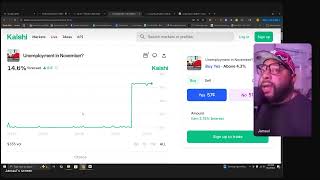
179 Sell to Serve! Why Business is All About Sales & Helping Others with Jamaul Ford
Reframing the Perspective on Business w/ Jamaul Ford, Upgrade Your Online Presence
Mastering Supply, Demand, & Storytelling: Navigating Entrepreneurship with Jamaul Ford (Episode 25)