Episode 127 Continually Improving Lead Generation with Jamaul Ford
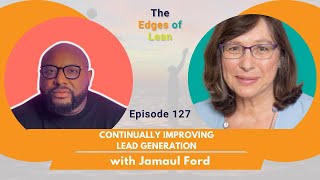
Jamaul Ford, who has generated $8 million in revenue across his ventures, walks through lead generation using the PDCA cycle. He covers four channels: warm referrals, cold outreach, content, and paid ads. He shows how to use AI to turn customer frustrations into pitch angles and emphasizes reaching out to prospects daily to build volume.
Chapters
Continuous improvement comes in lots of different flavors and styles. I'm Bella Engelbach, and I'm inviting you to journey with me to the edges of Lean. Episode 127: Continually Improving Lead Generation with Jamaul Ford. You took that big plunge and you started your own business. Maybe you already have a customer or two. But what comes next? Jamaul Ford is a second-generation entrepreneur with some great ideas about what you already know from Lean and continuous improvement about learning cycles for finding and connecting with customers. Let's hear what he has to say. Jamaul Ford, welcome to The Edges of Lean.
Bella, thanks so much for having me. I'm super excited to be here.
I'm excited to have you. Hey, Jamaul, introduce yourself to everybody.
So, I'm Jamaul Ford. I'm a second-generation entrepreneur. In the past 3 years, I've been able to generate roughly about $8 million from my companies and also companies that I've done consulting work for. Uh, we've been able to handle lead generation, be able to bring about 30,000 either patients or customers to these particular businesses. And I'm super excited to be here to be able to share some strategies and some insights on lead generation to to hopefully help other people be able to get clients to their businesses.
So when you say you're a second-generation entrepreneur, is that your mom, your dad? Tell us about that.
Yeah, so my mom is a daycare owner. So she's been owning her daycare, I wanna say since 1992. And she's also had a clothing store. She's also been a partner in a sugarcane hauling business where she owned trucks. They did a lot of facilitation and onboarding of people, getting them to be able to drive the trucks and be able to make money within a 3-month span. Generally, sugarcane here is a 3-month span of making money. She's also been a store owner for teachers who are trying to get like supplies for students and things like that. So I've come up in entrepreneurship also. She owns like about 11 rental properties. I own roughly 8 rental properties. So she's inspired me a good bit in my life and I've learned a lot from her. So this entrepreneurial journey has been relatively easy transition for me where some people are trying to get adapted to what entrepreneurship is and the idea of being a technician and being an entrepreneur and trying to change hats. I've watched my mother changed hats for years. So for me, in transitioning, it's really, it's been relatively easy.
So, yes, that sounds like she, she's really like one of those serial entrepreneurs, you know, just, just start a business, you know, start another business. And I know so many people who listen to this show are people who are working in, in a company or working for, for, you know, a consulting company or something like that. And they, they love this idea of starting their own business and becoming an entrepreneur. But a lot of people, when they do that, they kind of hit a brick wall, right? Because there's so many pieces of the business now that you're responsible for that, you know, the other people did in the past. And so when you're working with people, are you working with a lot of people who, who are like that, who were sort of coming out of a different environment, excited about an idea, but, you know, struggle, struggle to make it really work?
Yeah. For me, I work with a lot of startups, so I work with a lot of people who are trying their best to figure out exactly, first of all, how to get people to their products. And so for me, I always try my best to first pull them back a little bit, make sure that we have an understanding of what their vision is, what their mission is, what their unique value proposition is, like as in what they bring to the table that no one else brings to the table for their business. And then once we're able to establish these things, then we're able to identify their ideal avatar or who's their unique customer that their actual product or service fits. And then we're able to actually scale that. So it's actually a step-by-step process and we have to take it slow with startup entrepreneurs because you hear so many stories of people having success overnight and we get it and we are super excited about hearing that story. But I always like to tell people If you have a business and you have a celebrity market your business, can you handle a celebrity going online and saying, hey, follow this business? Because it may be overwhelming the amount of requests you get for services or requests you get for products. So you want to establish yourself in the market and have a strong foundation to be able to support that when it comes.
You know what, that Famous Amos cookies problem, right? With You know, suddenly everybody wants all your cookies or your consulting or whatever it is and you're not able to manage the demand. But you know, I think for a lot of people it's about even like generating demand. And I'm really fascinated by what you said, kind of like, you know, where you start with the process. 'Cause I do think people, you know, go into it, I'm thinking like on Shark Tank, right? So people go into it because they have an idea. You're like, here's my idea, it's, you know, It's a thing that people are going to love. Or in the case of someone who's doing, say, Lean or continuous improvement consulting, you know, I'm going to consult to, you know, a certain business, a certain business type that is, you know, similar to the business that I came from. But then when reality hits, they— what I think what you're saying is they haven't really determined what is the purpose of their business or what's the core of their business. So how do they do that?
Yeah. So for me, I always like to see why someone got into the business in the first place. We all may be working at the same company. We probably all have the same title, but the reason I chose the profession and the reason someone else chose the profession can be totally different. And I always feel like when you're doing your first entrepreneurial project, it needs to be something relatively close to you in regards to something that you identify with personally. Whether it be a problem, whether it be something you experienced in the past, whether it's something that you really seen someone else experience in the past and that you have a good passion for. Because I feel like when you actually have something that you have a unique passion for, it allows you to push through those tough times that typical entrepreneurs experience, um, and it becomes natural. Willpower for me has always been one of the key things to highlight when it comes to entrepreneurship, because sometimes we have the willpower to push through things that come naturally to us, but we don't have the willpower to push through things that's hard. Primary example, I would say 70% of startup entrepreneurs or even entrepreneurs who are in the mid-tier, they hate dealing with finances, they hate balancing the books, they hate looking at the books, tweaking the books. And so they typically put it off all the time. And so for me, I've helped people even establish ways of dealing with that in the natural course of being an entrepreneur, because if you're having success, you have to bring on staff members, you have to bring on a team, and you have to know what the numbers are, what your margins are of actual profit and what you're bringing in. So I would always tell people to start with what you're really passionate about. Let's make sure that your company's mission statement is also resonating with your personal values, and then that your personal values are also reflective in your business values as well.
Okay. So how do you— so, so, you know, let's, let's just say you're working with somebody and they, you know, they have this, this idea, you know, for some kind of a business, but they're not clear on, on their purpose or their, you know, what their internal values are. How do you hold them back? Right. Jamaul, how do you hold them back and, and, and, and help them to get that work done first?
Yeah. So for me, the very first thing is I have to bring a certain level of realism to the project, to what they're doing. So I always like to start with demand before we create the supply. So for me, I listen to what they wanna bring to the table. Let's say, let's give the example, let's say someone wants to do consulting for dentistry, like a dentist's office, based on their experience at dentist offices. So what we're going to do is we're going to first start off with making sure that we have a good pitch of what they're offering is, what they're bringing to the table, and why the dentist needs their services. We're not going to worry about fulfillment. Fulfillment is furthest away from what we're doing. I don't want to think about logistics of fulfillment. I wanna first establish what the problem that we're solving is. Once we establish that, once we're able to pitch that to people in an effective way, the next thing we are gonna do is we're going to reach out to 50 dentist offices and figure out, is this something that they're really interested in? Those first 5 you're gonna reach out to are gonna be like pulling teeth because it's gonna be—
Literally.
Yeah, it's gonna be, right, right. Literally, it's gonna be so tough because You're, you're gonna feel awkward about putting yourself out there. They're gonna be asking you a lot of questions that you maybe didn't think about whenever you first got into the experience, but that's great. Even if when you receive nos, you just gotta understand that you're getting closer to yeses. The most important thing is to never run away from nos, understand why you got the no, and make the adjustments to getting a yes.
So I just want to put this like into our lean continuous improvement language. So what we're saying is you have a goal, right? You have a problem that you want to solve. The problem that you want to solve is the problem of how do I make this thing into a business, right? But in any lean work, we know you're not going to get to the goal right away. What you have to do is start out by figuring out what do you need to learn? And that means you're going to have to run some experiments. And what you're saying is, start running these experiments. Don't worry about, you know, if you sell some consulting, because you may not. But what you're going to do is you're going to gain so much knowledge, right? About— and every single learning cycle, you're going to do a little plan, do, check, act. You're going to plan your call, your conversation. You're going to do it. You're going to think about what happened, learn from it, and then do the next one a little bit differently so that you You're gathering all of that information. So what you're really saying to all of us lean folks is do your learning cycles, do your PDCA cycles before you worry about, you know, how am I actually going to deliver whatever the, the, the thing is, because you don't know yet what the thing is, right? I mean, that's—
Right. The businesses that I've had the most success with are not doing what they originally thought they were going to be doing. Like they have no, they just, not what they thought it was going to be. But the reason why they're having success is because they're listening to the customers and they're listening to what the customers are actually doing. So I really believe Plan, Do, Check, Act is 100% the way that people should be going about it, because I think that when you do the work and then you check to make sure, then you make those adjustments and then you act and you move forward with those adjustments that you're making. You're setting yourself up for success. And even more so, you have to always remember that when things go awry, you should always fall back to that model to make sure that you're able to reconnect with your audience and still give them what they're looking for.
Yeah, because things are gonna change, right?
All the time.
That's life. Things, things, things keep changing. So can you give me an example? So let's, let's take our imaginary dental consultant, right? Like what would that first call look, sound like? What, you know, what, what would, what might they be He's saying, yeah, so the first call is establishing relationship, establishing some level of rapport.
So it's not immediately offering your services. It's first understanding more about the business, understanding what the needs of the business is, and then making them comfortable with who you are as a person, because it's very unlikely that they're going to actually give you their services off the bat. Imagine striking lightning in the bottle 30 times. That's essentially what you would be trying to do by getting every call to be an agreeable call. And that means that when I call somebody, they're looking for a consultant. They really know what their needs are. They have established and actually resonated with the problems they have in their business, and they're actively looking. When we reach out, we don't know if they're looking or not. We're just calling, getting an understanding. So what that call would sound like is, how you doing, Tuck's Dentistry? My name is Jamaul Ford. I was reaching out. I seen your website online and I seen the services that you're offering, and I want to know a little bit more about some of the services that you're offering. Then they would tell me a little bit about their services that they're offering. Then from there I would say, well, I noticed that you're offering teeth cleaning and you're also offering root canals. Do you have a lot of people coming in for root canals? And then they're gonna get into the actual, you know, like what things that people are doing. So I'm getting them comfortable talking about their business, right? And then from there, if it's the receptionist that I'm talking to, maybe I might ask them to transition over to the manager or to the person who actually makes decisions from that particular standpoint. And also, so what, now that I'm actually talking to the person that's in charge, Then from there, I'm asking more questions about their services, just trying to get a feel for it and trying to resonate with that. From there, I will let them know that, hey, look, I noticed that this service that you're offering, there are a lot of other people in your area that's not offering this service, and I would love to find a way to work with you to actually push this service, cuz I believe this is a great need in the area. Can I send you more information about myself? And the possible opportunity that I see with this offering in the community. So I've offered them information, not only information about me, but information of where I see them sitting in the market, right? So I've already given them value before I've even asked them for finances. And for me, I'm from Louisiana, so I would tell— we are a huge eating place, like we are very culinary. So for me, I always sometimes go places. I like people to see me when I go there. I'm also a person that's really big on the 5 senses. So I always like to make sure I'm very presentable. I always like to make sure that I, I'm smelling as good as possible, right? And also, I also like to bring a dessert. So if it's breakfast, I might bring donuts, um, because that layers that, that actually gets people to put down their reluctance to talk to me. You right. Or the gatekeeper is more reluctant to let me talk to the manager because I've brought them some level. Maybe they didn't get to have breakfast that morning. I bought breakfast for everybody. They're like, oh, you wanna talk to the manager? Yeah, we'll give you the manager. Give us the donuts. Right. And so, you know, if it's the afternoon, I may bring cupcakes or cookies or something. And then from there, sometimes I even come with like a handout of a report or an assessment that I've seen. In the area based on the other competitors, the other competitors that's in the area. And then from there, I give them that information and try to get feedback from them a couple days after to make sure that they had a chance to look over.
Wow. So I'm thinking just in terms of, you know, this, this imaginary situation, you know, one of the things that, that really frustrates people in the Lean community is when they go to the doctor or the dentist and they end up waiting a long time because a lot of our work is about, you know, making things more efficient and more effective. And so I think the temptation, it would be to go in and say, boy, you know, I was sitting in your office for 45 minutes before you saw me. But that would just set people right off, right? People will be very, you know, I don't want to hear that. But if you got into those conversations with them, you might then be able to, you know, have a conversation about, you know, does, you know, where they would admit to you, hey, you know, it's really difficult for us when we have people sitting in the waiting room. You know, we don't want to have a lot of people sitting in the waiting room.
I know.
And You know, that would be then an opportunity to talk about, you know, well, you know, ways that you could offer to help them with that problem. But they need to be able to, you know, not feel that they're being attacked right at the beginning, which is, you know, 'cause I think, and I know, you know, and I know all of you are listening are really great kind people, but I know we also get very frustrated with that kind of stuff. And you know, when, yeah.
Let me give you a perfect example based off of what you're talking about. And this goes away from our dentist experience. This is a real, experience actually happened to me last week. So I have a client that I actually help. She has a business and it's a part-time business, and she actually works for the city of Austin, Texas. And so working for the city of Austin, Texas, they were, had an opportunity. They were hosting Fourth of July event and they were putting things together for the particular event. And they had a sponsor, uh, alcohol sponsor that they were looking to bring in, but they were not able to get things taken care of in time to have that alcohol sponsor be a part of the actual event. She was talking to me about it outside of her actual business, and I told her, well, maybe she can host an event after and still partner with the alcohol company. She then stated, oh, I think that's a great idea. Let me talk to my boss about it. So she spoke to her boss about it, and her boss was all for doing the plan. So After the, her boss was up for doing the plan, her boss put us in a 3-way conversation, um, via text message and she's introduced me to her boss and then her boss immediately text back and said, oh no, they actually agreed to do another event with another company. It's still a part of what we're doing, but they're doing something else. For me, I say I knew, me analyzing the situation, I knew that whatever plan was put in place, it had not been thoroughly hatched out. Like, all the facets of the plan weren't fully detailed because this was something that just really came on the radar. And so for me, I then text back and said, it's unfortunate that they are going this other route, but I would love to also assist in this other route that they're going. And I immediately gave ideas on what I felt would fit based on what they decided to do. Her boss was just floored because he, in his mind, he thought he was telling me no. But for me, it was just, I just seen that, hey, look, the opportunity that I thought was there is not there, but I would love to assist you in what you're trying to do. And from there, they then stated, well, look, we're gonna have you do the whole thing next year. Just because I opened up the engagement and I opened up conversation And they understood my vision and what I would bring to the table. And then they were like, we're gonna book you to do the whole event next year. So just by understanding and listening and not just focusing on what I'm pitching and understanding what the needs of the client is, I'm able to fit what I do to the client. And I feel like that's super important. Uh, we get so worried about our pitch that we don't think about the needs of the people who we're actually servicing.
Right. And that, and that's, that's the core of everything, right? If you're gonna do something, it needs to be something that the customer or the client really needs that really solves the problem for them. Yeah. Yeah. So this kind of takes us, and I think you've already been talking about this concept of, of lead generation. So when someone's starting a business, lead generation, particularly, you know, if you haven't been involved in marketing before, it sounds like this really horrible scary thing to do. So when you say, say lead generation, what does that mean to you?
For me, it means 4 things. There's only 4 ways to get leads for your business. That will be warm leads. That will be people you know, or the people that you know know. There, there's this saying that says you're only 6 people away from knowing everyone in the world. You just gotta make the right connections, right? The second way is the way that everyone fears the most, which is cold call, cold email, cold outreach. And so when we think about lead generation, that's the number one thing that people think about. The third one is making content and being out on social media and being out on the internet. And I always like to tell people, in order to be found, you have to be findable. So you have to actually put out content. Put things out there to let people know who you are and what you're doing. The last way is running ads or running some kind of marketing campaign. Those are the only 4 ways you're going to actually find clients. And so based on where your business is, you figure out which one works best for you.
So, and then when, when, what makes something actually a lead? At what point do you say this is a lead versus not being a lead? I mean, that's a—
okay, that's a great, that's a, that's a great question. I've had leads that were eventually weren't leads that came back to being leads. In my experience, it's just because of the quality of work that the companies that I was either partnering with at that time or working with, then based on word of mouth, they were like, oh, I was waiting on you to call me back. And it was like, in my mind I'm thinking, you told me no, right? So, you know, or whatever. But I would say What qualifies as a lead is mutual interest in the services that's being provided and getting that level of interest to be shown from that other person. So you can do this a multitude of ways. In, when you're doing a startup business and you don't have fulfillment in place, so maybe you have a bakery, maybe you have a whatever business it is, or consulting, and you do not have fulfillment prepared. I always like to tell people to start off with a waiting list, start off with a form that people can fill out that asks them intriguing questions that allows them to know that you can help them. So in the consulting space, I would first start with warm leads. In any business, I'm starting with warm leads. I'm gonna go on my 4 major lists that I have of leads. That is social media. Everyone who follows you on social media, in some way they've already agreed that they're interested in you as a person. You now just have to tell 'em what you do. Everyone phone number that you've ever collected, hey, you have their phone number, you can reach out to them and let them know what you're doing. And last, emails, any emails that you've collected over the years. What you do is you make a declaration of what you're doing. You don't start off selling your services. You say, hey, look, my name is Jamaul Ford. I've been in the consulting space for a number of years. I'm venturing out. I'm looking to start consulting for people outside of the healthcare space. And if you know anyone that will be interested in my services, please let me know. Your immediate circle is gonna respond to that message, and then you can start conversation and ha— ask them the right questions to get their mind working on who might be interested in, in your services. From there, if I get 5 people that know someone that's interested, my cousin's a doctor, or my uncle's been in practice for some years. I then next say, would you mind starting a group text message with me and your uncle, or me and your friend to introduce me to your friend? And now I'm connecting with them from someone that they already know. So it makes it a more comfortable conversation. Doctors know other doctors, you know, people in fields know one another. So even if I connect with that person and I have conversation and they don't need my services, Then I will ask them, do they know someone that would need my services? But in a way that's not their competition, cuz they're not trying to make their competition have success. They're trying to essentially just make sure that their business is having success. So I would then tell the doctor, if I know that they're not interested, but hey, look, I know you attend conferences and different things like that. Do you know anyone that's attended conferences with you in the past from different cities or states that may need this type of service that I'm offering? And from there I get them to put me in a group text message with that doctor and that, you know, and so it goes on and on with warm leads. And if you're selling a high-ticket item or high-ticket service, you shouldn't shy away from this way of connecting because you only really need roughly about 10 to 12 actual customers to agree that your services are the best for them. So if you reach out to 300 people and you get 200 responses and you get 10 of those people to actually say, hey, I wanna use your services, and maybe your services are $5,000 a month for your consulting firm. Well, that's $50,000 a month. You're off to a great start, right? And it might be something based on what you're fulfilling because it might only be you. So you, you may only have the capacity to do fulfillment for 10 people. Right? So it's super important just to do the volume. Everything is a volume game with warm leads.
And I like the way that you, like, you started the whole thing. You're very clear in that first conversation what you're asking for, and you're making an ask. You're not saying like, well, you know, I've decided to move into this area of consulting and then kind of let the conversation drop. You're moving on to, you know, who do you know might, you know, might be interested in that? Who do you know? So you're making an ask. You know, like always be closing, but you're, you're, you're, you're always, you're always asking another question.
Can I, I would like to say this about that too, Bella. Many times people don't know what they need until you've shown them what they need. And when you're asking people, you don't want to do the hard ask. The hard ask when you initially meet someone is going to fail you, boy, like 80% of the time. You wanna have a soft ask, and within that soft ask, you wanna spark additional conversation. So an example, do you know someone that would need my services? This person may be struggling, like you, you didn't give them the things that the person would look like. These people may be trying to find more customers or more clients for their business. These people may be getting, maybe trying their best to get more awareness of their brand or their company. This person may be trying to get assistance with fulfillment for their company. Now that I'm giving them these points of tension for the potential customer that I'm looking for, when they're having actual conversations with their friends and family that meet this and they're complaining about certain things and it triggers in their mind, they're like, I met someone that can help you, right? But if I tell them I do consulting and I just say, do you know someone that I need that can need my assistance? They have no clue who they're looking for. So I have to give them who they're looking for. Also, we can over-romanticize what success looks like as a business. So an example, if we go back to that dentistry, that dentist is trying to find success. He sees other dentists doing social media posts. He sees other dentists doing all these fascinating things. So when he's commute, when he's trying to get more people to come to his office, he's believing that this is what he needs to do in order to get people to come through the door. And that's not necessarily wrong, but the goal is to get people through the door. So even when I get people who are reaching out to me, they're like, oh, I wanna do 30 social media posts a day. Why? Why?
Why?
I need more customers. Exactly. That's exactly what you need. Whatever you decided to do is 'cause you needed more customers. I can help you get more customers. So let's start there, right? And so from consulting standpoint, you gotta know the language, the tension statements of your potential client. That's why people focus so much on niching down, because niching down allows you to understand the problems of your potential customer. One thing, and this is a tip for consultants that I like to give, there's this GPT prompt that I love to use. And the GPT prompt is, I would like— this is it, but I'm gonna give you the summary. This is not it verbatim, but if anyone wants to take this down, just take this down. I want you to do some customer research for me. I would like you to find customers in this field, and I would like you to let me know what their 10 frustrations, what are their 10 desires, what are their 10 fears, and what are their 10 dreams when it comes to their business. And then that, and then that GPT prompt is going to then, and I would tell it, put it in the spreadsheet form for me. And then it's gonna pop up this spreadsheet form. It's gonna have a column that says fears, Desires, dreams, and frustrations. And, and each one is gonna tell me what the frustrations, what the fears, what the dreams are of people in this niche. Now, when I do my pitches, when I do my, uh, marketing, I use these tension statements to allow me to resonate with my niche market.
Wow. So you, you're using Adaptive Intelligence, artificial intelligence in a way that's actually useful, right?
Yeah, it's a, it's a tool. I, I never feel, I feel like sometimes people would like to let it do the work for them, but that's not the point of it. The point of it is a tool that allows you to be able to be better at what you're doing because there's a human element that's always needed when you're trying to get someone to agree to work with you. And in consulting, you don't wanna find yourself undervaluing your services because you're limited in the amount of clients that you're getting. And so I feel like when you bring that human element in it, you can actually get the amount of money that you're looking to make.
But you're using, you're just using this tool as a way to help you funnel and focus. And, and again, test, test the statements that, that work, that I use at the end.
That statement that I, that statement that I said, Bella, I use that statement for Not only cold calling, I also use it for Facebook ads. Like I'll get those tension statements and understand what they are for Facebook ads. I'll get them for social media posts. I'll get them for any facet when I have to do outreach to someone. I get it for email campaigns because when someone reads an email and they see an email from a random person, you gotta catch their attention relatively quick. You have to catch their atten— uh, attention with the title of the email. And within the fir— if they, if you catch their attention with the title of the email, within 2 lines of that email, you gotta resonate with them. You gotta touch a pain point. I would always tell people, when you think about the pain point that you're trying to touch for a potential customer, think about that toothache that you have at 11:00 PM at night when there's no dentist open. And you would pay someone any amount of money to pull the tooth out of your mouth. That is what you wanna strike with your potential customer so that way they know that you can help them with whatever they have going on. Wow.
Wow. Yeah. And, and it's, and, and it's about then, you know, narrowing down again, using your PD, PDCA cycles to narrow down, get down to the things where, where that one customer Yeah. Oh yeah. Yeah. I need Jamaul Ford. I, I, I need—
I would tell you this and, and this may help you, uh, but help the people listening understand. My original venture was a speech and hearing clinic and with the speech and hearing, but it was just a hearing clinic. And at the time we were just servicing older adults who needed hearing aids and it was just like, okay, let's see who needs hearing aids. And it was a pretty saturated market. 'Cause here, obviously Costco and Sam's are a big player in the hearing aid market. And so it's hard to get people to decide to go to private than going to hearing aid market. And so for me, one time I asked myself the question, I said, "Well, when I was a kid, they used to do hearing tests at local schools. Maybe we can just go out and help local schools with doing hearing tests." And so we started reaching out to local schools And we found out that there was 1 nurse to every 500 kids at a school. And the nurse, while we were familiar getting hearing tests when we were in kindergarten and first grade, it's actually the responsibility of the nurse to do the hearing test every other year on the kids. So every, every odd grade. And so it became a huge market for us. We were seeing servicing 20,000 patients a year in doing just hearing screens because it was required by the state. The state needed the hearing screens to be done on the kids. It was definitely underserviced because the nurses did not have the ability to do that level of fulfillment. And we were able to come in and actually create a system to do that fulfillment for them.
And that must have been like really emotionally satisfying too, right, Jamaul Ford?
Yeah.
Because if you had a kid who was not doing well in school because they couldn't hear what was going on, And you were able to get, get the hearing tested, and you could change a kid's life by doing that.
We had one student, a school contacted us and said, we want to get this student an IEP. An IEP is an individualized educational plan, and this allows a school to be able to push a kid further into the system without them passing. And so we said, well, let us come in and do the assessment on the kid. When we came in and did the assessment on the kid, the kid only spoke Spanish. Luckily, we had a Spanish interpreter on our staff, and the Spanish interpreter came. And come to find out, the kid had came over with his family when he was a kid, and he had fell out of a truck, and he had actually scraped his eye, and he was actually blind in one eye, and he was deaf in one ear. The school did not have a Spanish interpreter, so no one at the school even knew he was experiencing this. So for us, we came back, we were able to get him a hearing aid, be able to get him the glasses that he needed, and eventually he didn't even need the individual because we were able to service him and get him what he needed in order to be able to actually pass with the standard plan that every other student had. And that mother was so elated that we were able to help her actual kid with just getting through school. So it's It's definitely fulfilling to have these things, and I think even more so, it goes back to my earlier statement of whatever you decide to do in entrepreneurship, you wanna have it resonate with you really close because it's gonna help you push through those tough times, and then you're gonna see the reward from helping people in particular spaces. It's important to make money, but I always feel like there's a difference between success and benefits. And you never wanna mix up the benefits of business with what true success of business is.
That's beautiful. I love that. Hey, Jamaul Ford, how can people find you? I bet there's lots of ways.
There's a ton of ways to find me. So you can find me on Instagram at Jamaul the Maven. You can also find me on Twitter at Jamaul the Maven. I host an online school community called the Funnel Factory. The Funnel Factory is a community that we give funnels absolutely free to people to allow them to be able to market their product and be able to market their services and get people into their actual sales funnel and market to make sure that they're nourishing that actual relationship with that potential customer. Lastly, I also have a free course called the 3K Maven Challenge, and this challenge allows you to be able to put together A system to make $3,000 a day in 48— so this, this is a 48-hour course and we help break down the structure of what a business looks like, figure out how to master your business, and then help you make $3,000 a day. $2,788 is $1 million a year if you're making $2,788 a day. So this system allows you to be able to take this course and understand what it means to make $2,788 a day. In your niche.
Holy cow. Wow. That's great. That's great. So there's a, a lot of different ways to find you. Hey, Jamaul Ford, what is your one piece of advice for a young person starting out?
So my one piece of advice is to be resiliently consistent.
So resiliently consistent.
Resiliently consistent. In entrepreneurship, it's very hard to have consistency when you're not seeing the success. That you're looking for. Even more so, it's hard to overcome objections in entrepreneurship. So for me, I feel like you have to be resilient in your outreach. You have to be resilient in your actual telling people of what you do and how you do it, and you have to be consistent with it. I feel like it's important to put a consistency schedule together so that way you're not relying on your personal you're not relying on your personal to get you through doing it every day. You wanna put together a schedule to say, okay, I'm gonna reach out to 10 people every single day about what I'm doing, whether I have success, whether I don't have success, I'm just gonna chip away at it. And over time I'm gonna have success. 10 people a day may not sound like a lot, but when you multiply 10 times 365, You cannot tell me that you're not gonna find 10 to 15 to 20 people who are in need of your services. You're gonna get better through volume and consistency of pitching who you are and what you do, and you're gonna find the right people for your business. You just have to be resilient. You have to be consistent in entrepreneurship in order to have success.
Oh, wow. I love that. Consistently resilient. Or resiliently consistent.
Consistent, yeah, however you want to put it.
Keep it up, however you want to put it, that's great. Hey, Jamaul Ford, I have really enjoyed this conversation. Thank you so much for traveling with me to the edges of Lean.
Thanks so much, Bela, thank you for having me.
This is Bela Ankerbach, and I'd like to thank Jamaul Ford for being my guest at the Edges of Lean. What did you learn from this conversation? What ideas did it spark? We would love to hear from you. Meet Jamaul at JamaulTheMaven.com or on LinkedIn. Find me on LinkedIn or at LeanForHumans.com, or join me at the Lean Coaching Summit in Indianapolis in July 2024, or comment wherever you watch or listen. Don't forget to subscribe and check out all my friends in the Lean Communicators community at LeanCommunicators.com, where you will find lots of great new content every week. The Edges of Lean is written and produced by Bella Engelbach, with support from Podcast Inc. This is a Lean for Humans production.
More from Jamaul


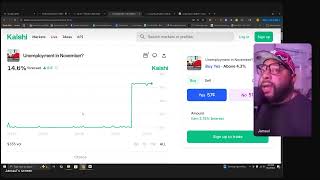
THE HEALTHCARE WAR: Congress vs. Your Wallet | Betting on ACA Future (Kalshi LIVE)
179 Sell to Serve! Why Business is All About Sales & Helping Others with Jamaul Ford

Reframing the Perspective on Business w/ Jamaul Ford, Upgrade Your Online Presence
Mastering Supply, Demand, & Storytelling: Navigating Entrepreneurship with Jamaul Ford (Episode 25)