Famous Interview with Joe Dimino Featuring Successful Entrepreneur Jamaul Ford
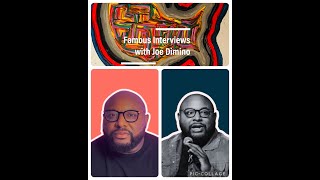
Jamaul Ford grew up in New Orleans watching his mother run four businesses, then scaled a speech and hearing center into a top-60 fastest-growing U.S. company. He sees the pandemic as an opportunity for entrepreneurs and now teaches client acquisition and negotiation through brandmaven.io.
Chapters
It's great to meet you, man. I'd love to begin our conversation with— we're coming up on the 4-year anniversary of this pandemic, and if we go back to when it began, how did you get through the pandemic and how did it subsequently change you?
Yeah, so obviously 2020 was a crazy year, right, for a lot of us. And for me, I'm coming from New Orleans, and being in New Orleans, I'm very familiar with huge tragedy, especially with Hurricane Katrina. You know, right? And so with experiencing Hurricane Katrina and seeing like the overall devastation of that, um, for me, I seen a lot of things. So this wasn't really my first experience with something— obviously it's everybody's first experience with something of that magnitude, right? But experiencing something on that scale, I was somewhat familiar with that just from being from the city. And so I seen a lot of things. The first things I seen was like community coming together in here in New Orleans and people trying to figure out what's wrong. And I seen a lot of sadness and I seen a lot of people just trying to figure out what was next. But the second thing I seen was a lot of people taking opportunity and a lot of people recognizing opportunity. Uh, most of the time in business when things typically happen like that, take, uh, Hurricane Katrina or the 2008, uh, market crash and those things. Uh, from those particular ashes of those situations, a lot of people actually recognize opportunity and seize opportunity. So I really believe that the pandemic was the opportunity for people across the world to take opportunities that they did not have before and be able to take attention that they didn't have before because everyone was inside. No, no one really knew what to do with their time. We were all scared, but there was a huge attention shift that happened with the pandemic. And if you had a business or you were doing anything, you re— it was like the one time in history you— that you would actually have the ability to get everybody across the world's attention and having them identify what you do, whether it be being a musician, whether it be being business, whether it be artistry, really the— it was like a culmination of, uh, technology and society and people looking for things to do, people looking for community to come together, and us being able to seize it. And so if you seen it that way, you seen the huge opportunity that the pandemic actually gave a lot of people.
So you've been a very successful entrepreneur in your career, but if I put you in front of a bunch of third grade students right now and one of the kids looked up to you and it's career day and they say, hey, what do you do for a living? How would you answer that child?
That's a great question. Third graders are very curious and third graders are, um, for me being an entrepreneur, I always tell people you want to have the curiosity of a child. So that's a great question, Joe. So me, if I was talking to a third grader, what I would tell them is I help other adults be able to find success in whatever they're trying to do. Obviously, I do business consulting. I do a lot of other things, but ultimately what I would tell them is, um, I'm a dream— I help people, uh, get their dreams, uh, you know, whatever they dream, whatever they want to do, I help them find success in that. And so I enjoy helping businesses. I'm a second-generation entrepreneur. Um, I watched my mother, um, own multiple businesses and have success in those businesses. I've had businesses and had success in business. And so now, even with what I'm doing now, I try to help other businesses just have that same amount of success that I've had.
So what did you wanna be in the third grade? What was your dream?
Man, I'm not gonna lie to you. In the third grade, I really wanted to be, ironically, I wanted to be a nurse, which sounds really weird, but I think it was really becoming from a place of wanting to help people, right? Because, um, My dad's a pastor and my dad has a church, and I remember growing up he used to always drive the van and pick up people for church, and it was always my responsibility, even when I was 4 years old, to help the older people get on the van. And so helping others has always been a part of my life. And so I think even at that particular time, with my limited knowledge and understanding of the world, I knew I wanted to help others. And nursing was the very first thing I seen. I even went to college for nursing, and then I wound up getting my degree in sports science and wellness. And then it kind of— then I wound up working at a hospital because I was still helping people, right? And then I realized the, the culmination of the knowledge that I had from the business of, um, the medical field and watching my mother in business and watching just these things and understanding what business does, that I can actually take my unique background story and help other people in finding and having success in their dreams.
So who's been kind of a hero or an inspiration for you in your career path?
Well, I would say my mother, to be honest with you. I mean, my mother has a, a very unique background. I remember, and these is just stories, um, that, you know, I know of her her journey. She was a, um, when she was 15 years old, she got her first job. And, you know, her first job was actually shoveling, working at the sewer plant. Like, she was working at the sewer plant, like, doing those things, working around grown men. But, you know, she was just trying to make extra money and doing those things. And then ultimately, she— I think she wound up getting a job at Sonic or something like that. And then Over time, she really loved kids. She really loved and enjoyed working with kids, and she opened up a daycare center. And I watched in 1992, she opened that daycare center, and then she, um, wound up helping my uncle with his, um, his company that hauls sugarcane. You know, I'm in Louisiana, so sugarcane is a really big industry here, and she owned like 7, 8 trucks doing that, haul the sugarcane. And then Transferring into, um, owning rental property and then having a, um, also having a store selling, um, teaching materials for teachers. Um, because I grew up in a very small community and there were not a lot of resources. And I think these are the things that really— seeing her see problems and not really complain about them, but always trying to find a solution. And for me, that's what entrepreneurship is about, like seeing a problem and wanting to solve that problem, um, yourself and not depending on others. So I would say she, she has been my hero and the person that I've looked to in my life, you know, um, and so give me inspiration to do what I do today.
So when we look at America, you know, we have all these sports heroes and these great stories of individuals and teams, but But it's the same thing in business. What, what, what entrepreneur or what business model do you admire the most? And maybe somebody you'd like to run into and talk to.
Well, you mean someone that I could directly talk to on a regular basis or someone maybe pie in the sky? Yeah.
So maybe both pie in the sky and maybe somebody on a regular basis.
Yeah. Okay. So yeah, I would say, um, pie in the sky, I think it always changes. I think it really changes based on where you are in your career. And what you're looking at. I mean, for many of us, if you're entrepreneur, the very first thing you probably read was like a Rich Dad Poor Dad, right? And like, oh, okay, this is a different concept, this is a different idea, but from Robert. And then maybe as time goes, you start to see, um, there's a book called E-Myth that teaches you a little bit more about, um, entrepreneurship and being a technician and being an entrepreneur. And then all of a sudden you see people like Gary Vee out there who's like Hey, you know, attention is super important in, um, using the internet and using social media. For me today, I would actually tell you the person that I look to that I don't know is a guy by the name of Daniel Priestley from, um, he's from, um, I believe he's from Australia. He lives in Britain now and he has, I think, uh, built about like 13 businesses or so and each one has generated at least $10 million a month, um, just from that and understanding the blueprints. And understanding what it takes to have businesses that have success, understanding the difference between what a lifestyle business is and what a performance business is, and ultimately how to build team, how to build community, and how to, um, make all those things come together to have success in business. On a personal level, I've been blessed enough to know a lot of successful entrepreneurs and have a lot of, uh, contemporaries who have success in entrepreneurship. Um, one mentor that I've had, uh, recently in the past couple years Um, is Dr. Eric George, who has— who is a hand surgeon, and he, um, I think he's worth like $500 million today here in Louisiana. He has like a pineapple farm, he has like a concierge, um, uh, hospital he owns. He also is a hand surgeon. He, uh, has a lot of hotels that he owns here in the area. So he's someone that I've had conversations with, that I've listened to and had a great, um, understanding of business from. Though I don't talk to him all the time, but I mean, I've gotten a lot of insights from and watching his career.
So what is the drive for you every day to get up, to be a successful businessman yourself, to help other people find their dreams? What is all of that inspiration for you every day?
So for me, I want to help people. I want to help people achieve their dreams. One great thing about being an entrepreneur myself and having success in entrepreneurship and wanting to help others, I feel like helping entrepreneurs is the easiest way to help others because entrepreneurs typically know or have a dream or know what they're looking for. Many times everyday people, we— they go through life and they don't really know what they're looking for. They're kind of like going through the motions, and so it's kind of hard to help you know, um, regular people from time to time. But I think that entrepreneurs, they're more, uh, susceptible from, uh, to receive help from the outside because they understand that they have a goal and, um, they maybe don't have all the answers to the goal, and they understand that they're on a journey and they're willing to learn as they're on the journey.
So yeah, so What's been one of your favorite success stories of helping people and helping them get to their dream?
Okay. Yeah, I have a few of those. So for myself, I would say, um, my last venture, um, was working, um, alongside, uh, High Level Speech and Hearing Center. And, um, that particular venture I think started in 2016. And, um, as of 2022, I believe ICIC rated it as one of the top 60 fastest growing companies, um, in the country, uh, generating about $5 to $6 million a year, um, in revenue, um, and steadily growing. And, um, I would say even from the standpoint of even today, my mother's daycare, I remember when the pandemic— this goes back to your first question— when the pandemic started, I had so much time on my hands that I was like and I was helping other people. And, you know, you're sitting at home and you're like working from home, and then I see my mom and I was like— and she was from time to time, she'll talk about a daycare. I'm like, send me, send me over, uh, the documents, what you got going on with the daycare and stuff. And I think at the time she was maybe generating like maybe, um, maybe $150,000, $200,000 a year with a daycare. But then I was able to notice a few things that she could shift around and actually double her revenue. And so, you know, just being able to kind of give back to the person that helped me get back to where, you know, where I was and understanding that platform and able to bring new technologies to what she was doing because she had been doing it one way for so long, not realizing that was other things that, you know, can actually scale the business. So those are just two quick stories I would tell you that I've enjoyed, you know, um, being on those journeys.
So you obviously have dreams that that, that have come true and that you're going after. What are you the proudest of that you've done in your career so far?
I, the proudest things that I've done in my career is really helping community from the standpoint of health. Um, really, um, I have a master's degree in kinesiology and human performance and, um, wellness. And so when I, even when I worked at the hospital, I helped, uh, with building, uh, cancer recovery programs and, uh, Parkinson's disease programs and those particular things for the hospital. Fast forward, even with my work, um, when I was working with HighLevel, um, being able to understand that there were kids in the community that needed speech and hearing services and they were not getting those services and being able to find a way to scale getting those services out into the community. So it may not, it may sound, um, different, but for me, many times people don't understand the correlation between being able to help community and be able to have success making money at scale. And so sometimes, um, there's like, there's this stigma in the industry where, oh, I, if I want to make a lot of money, I have to help doctors, I have to help lawyers. I have to be a doctor, I have to be a lawyer in order to make the amount of money that I want to make in business. And that's not necessarily true. It's a matter of understanding basic, uh, microeconomics, supply and demand. What's the demand? Understanding how to supply that demand and understanding what people put— the value that people put on that demand when it comes to community. So if there's— going back to the example— if there's a huge demand for speech services in the community, then how can I not only provide speech services for the community, but how can I systematically approach it to be able to make the money that I want to make but still help the community? And so really, I, I find that's been the thing that's really been uh, great for me because, you know, I haven't had to, um, adjust my values as a person or adjust the way I see the world in order to have success.
So at the end of the day, everyone has a perception of you— family, friends, clients— but you run the show. What's your perception of you? Who do you think you are?
I— for me, Jamaul Ford is the person that is really empathetic. I'm very empathetic. I'm a great listener. I feel like, um, I try my best to understand others. Um, I try my best to be a good friend as best as I can. Sometimes that means I can't be a friend direct. Sometimes being a good friend is distance, and it sounds weird, but sometimes that is, uh, that, you know. And I feel like I'm a person that's always going to strive to achieve my dreams. I understand that this is— how can I put it? This is my time here on the earth, and I have to do with it what I feel is best. I have to make the most impact with that particular time. And so for me, I want to use that time helping others. And not to get too deep into it, but I will say this. Um, I think the United States has been, um, here maybe like 400 or 500 years. People don't really realize that the Roman Empire was 1,600 years, and the Roman— it was BC and AD. People don't really think about that. And if you really think about that time, who do you know from that time that made a significant impact on the world? Maybe Marcus Aurelius, but outside of that there's not a lot of people that are remembered, that their legacy goes past that time. So let— sometimes legacy can be a fallacy in regards to how we see it. Oh, I want to leave an impact on the world hundreds and hundreds of years from now. That's somewhat impossible, like, you know, from the standpoint of how the world has worked today. So if you really look at it from that perspective, you say, this is my time here on the earth. I have to do what I feel is best with that particular time and have an impact that I'm happy with. And not— don't live your life for others, but more or less you can give your life to helping others. And at the end of the day, I always feel like at the end of life you're only going to regret the things that you didn't try. And so for me, I live my life understanding that all the time. and I try to embody that. And I feel like ultimately that's who I am in a nutshell.
Yeah. That's what Mark Twain said. He said he didn't regret what he did. He regret what he, what he didn't do. So yeah.
Yeah.
So if anyone wants to hire you, reach out, learn more about you, anything about your world, where can they go?
Yeah. So you can go to brandmaven.io, B-R-A-N-D M-A-V-E-N dot I-O. And, um, I list my service is there. I will be launching a community, uh, relatively, relatively, I think within the 2 weeks, and this is going to be called Smart Thinking, and it's a community that helps, um, businesses with productivity, helping them understand how to be more productive and also helping everyday people be productive. I have courses that will be offered in there, um, getting your first 5 clients in 24 hours, getting your first 100 clients in 90 days. Um, also for regular people, um, how to negotiate a pay raise. These are all skills that I, I want to give out to the world, help them understand. And they're very quick things, they're very quick lessons, things that you can listen to in your car as you're going back and forth. So be on the lookout for that. I'll definitely, um, offer a link that way you can sign up and be on the waiting list for that platform. But, um, you can also find me on Instagram at Jamaul Ford, J-A-M-A-U-L T-H-E-M-A-U-L Ford, the same, um, on Twitter, the same on Facebook.
Right on, Jamaul Ford. This has been fascinating. Thank you, sir. Thank you for your story. Thank you for your time. I love the passion and drive, man. It's wonderful.
Thank you, Joe. I really appreciate you having me on your platform, and these famous interviews are amazing. And thank you so much.
Thank you, man. I appreciate it. Send my love to New Orleans.
Yes, likewise. Thank you, sir.
Cheers. Thank
More from Jamaul


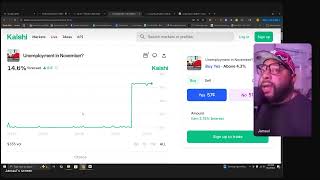
THE HEALTHCARE WAR: Congress vs. Your Wallet | Betting on ACA Future (Kalshi LIVE)
179 Sell to Serve! Why Business is All About Sales & Helping Others with Jamaul Ford

Reframing the Perspective on Business w/ Jamaul Ford, Upgrade Your Online Presence
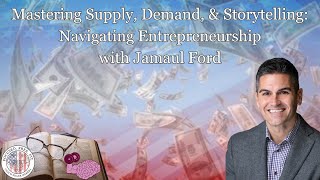
Mastering Supply, Demand, & Storytelling: Navigating Entrepreneurship with Jamaul Ford (Episode 25)