The Most Innovative Strategies for Healthcare and Patient Engagement - Jamaul Ford
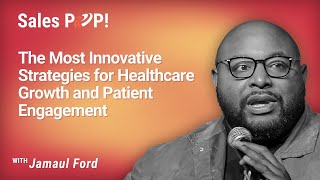
In this Expert Insight interview, host John Golden talks with healthcare strategist Jamaul Ford about transforming the traditional model of patient care. Ford explains how separating "time" from "profit" allows providers to focus on ancillary, continuous services that keep patients engaged between appointments, rather than relying solely on one‑off visits. He illustrates the concept with examples from dentistry and speech‑hearing clinics, emphasizing that patients need ongoing guidance, subscriptions, and communication to prevent issues like cavities. The conversation highlights the emotional disconnect many patients feel when care is episodic, and how building multi‑channel relationships—through emails, texts, newsletters, and social media—creates a stronger bond. Ford introduces his WealthList program, a provider portal that generates patient leads, matches them with providers sharing similar values, and supports the creation of productized ancillary services. He shares metrics (over 10,000 leads in two months) and a statistic that effective relationships require 7 hours of communication, 11 interactions, and presence in four locations. The interview also touches on the role of technology and AI in enhancing patient portals and future communication tools. Throughout, both speakers stress that emotional validation and consistent engagement, not just clinical skill, drive patient loyalty and revenue growth.
Chapters
All right. Hello and welcome to another Expert Insight interview. My name is John Golden from SalesPOP! Online Sales Magazine and Pipeliner CRM, joining you as usual from San Diego. And today, I'm delighted to be joined from New Orleans in Louisiana by Jamaul Ford. How you doing, Jamaul?
I'm doing great today. Thanks for having me, John.
Yeah, no, absolutely, absolutely. And Jamaul is a force in strategic planning and innovative marketing. His expertise spans across community outreach, health leadership, organizational infrastructure, and strategic planning. Your vast experience at High Level Speech and Hearing Center equipped you with a keen eye for growth, significantly benefiting clients and pavements— and clients and patients. And you were, uh, and High Level Hearing was awarded one of the top fastest growing companies by ICICI in 2002. You offer a program Wealth List, which is an all-encompassing program designed to empower healthcare professionals to achieve substantial, uh, patient growth while creating new rev— new revenue streams through innovative product— productized services. And what we're gonna talk about today is separating time and profit in healthcare. So, um, Jamaul Ford, let's get straight into it. So just explain to our viewers and listeners, time and profit, they would— it seems like they will go hand in hand. So how do you separate the two?
Yeah, that's a great question. I think, especially in the provider industry, there's a huge misconception in regards to physically seeing patients and getting revenue from seeing patients. Um, and it spans across other, um, areas as well. Um, so for me and my team, it was super important to have people understand that there's also ancillary services that people need beyond obviously being seen initially, um, that we can actually offer to patients to help them increase their quality of life. So an example I will give you is if you go to a dentist, most of the time a dentist will tell you you have maybe 2 cavities, and you need to come back in a couple months. Well, what you were doing in between your dentist visits is the reason you have those cavities. And so for us, we always go to the dentist and say, hey, look, you need to offer some additional things in between services for the patients to make sure that they don't have cavities when they come back. They're responsible for going to the store and identifying what toothpaste work, what toothbrush work. Maybe as the dentist you should offer toothpaste, toothbrush, you should offer a monthly subscription that can help increase the quality of health that, that person has. Um, and also that helps you maintain a quality relationship with that patient throughout the year. And so that's a little bit of the work we do. We do it in many different Spectrums, we do it in speech and hearing, we do it in therapy, we do it in primary care. And so we really try to build something that's catered to your infrastructure and your entity and what you enjoy doing to help the quality of life for your patients.
Yeah, and I think that's, uh, that's fascinating, Jamaul Ford, because, um, one, one of the things I think that people find a lot about healthcare today, whether it's dentistry, whether it's just regular healthcare or whatever, is the— is this feeling of being disconnected, right? As you say, is we visit the doctor or we visit the dentist when we need something. And in between, we generally have no communication. We've no guidance. We're left on our own. And even worse, if you do go to the doctor and then you have to go see a specialist or you have to go here, you always— the whole sense of everything being disconnected and you kind of being on your own. And that's the biggest complaint I always hear from people is that they often feel like they're on their own, like they go in to see the dentist, going to see the doctor, but then they're on their own.
John, I 100% agree with you on that. Really what started this program for me was in 2018, we were seeing a ton of patients. We maybe were seeing 5,000 to 6,000 patients a year in our clinic. And what wound up happening was we were doing initial services, and then we would identify patients who needed continuous services. And we had such a hard time getting them to come in for continuous services. And at that time, we had fired our third manager, and it really plagued me. And so for me, I was like ramming my head. I was like, man, what do we need to do? What can we do to make this better? And, um, a couple months had passed, and I get a call from my primary care physician, and they're like, Jamaul Ford, you need to come in, uh, for your annual. And I'm like, no, I'll come in next month. And then I'm still working, trying to grow my clinic, and the next month. All right, they call me and say, no, I'll come in the next month. And then, um, the following month they call me again and I'm like, oh wait, um, since I've been focusing so much on this, my personal health has started to suffer, right? And I don't want to go to the doctor because I know they're going to tell me something that I don't want to hear. So I'm like avoiding it because I have a negative connotation towards going to the doctor. And that's because I don't have a relationship with my doctor outside that annual visit. And once that revelation came to me, I realized that I needed to completely change the way I approached getting patients to come in and continuing to have an impact on our patients' lives outside of those evaluations that happen annually or biannually. Yeah, so I agree with you on that, John.
Yeah, and it's interesting that you say that because I actually had a conversation a couple of years ago with my dentist, and I said to him, I said to him, he asked me about my attitude towards coming to the dentist, and I said, well, I hate it. And he was going, well, why? And I said, because the minute I walk through the door, I revert to being like 8 years old, and I know I'm going to get lectured. You're going to tell me I'm not doing this, I'm not doing that. And I said, it all might be It's all great advice and I understand what you do. And I said, but from my side of the table, I'm just like, I feel like I'm an adult and I'm being talked down to as a child, right? Even though I know you're not doing that deliberately. And I think to your point, it's because we only go when something's up. We're already defensive going in the door. We know we're going to— we haven't— no way we've done everything 100%. And I do think it's exactly what you're talking about. If we had guidance, if we had services in between, where we feel like, okay, okay, this is supportive, as opposed to, here you go, you didn't do it, did you? You didn't look after yourself.
John, I will say this, one of the biggest misconceptions for providers is, I need more patients, I need to see more patients. And based on what you're saying, John, there is a huge gap um, when it comes to providers and patients, um, that actually resembles what microeconomics and supply and demand really entails. Whenever there's a demand, you should give a supply for that demand. And so what generally happens is a provider will say, we'll see 10 patients a day, 7 of those patients have cavities, and but in that, in that provider's mind, they believe, oh, I need to find more patients. With WealthList, we help providers understand those 7 patients need continuous care and not just annual care. So if you put in ancillary services that can provide continuous care, that not only increase the profits of your actual clinic, but it helps foster a better relationship with that patient in your clinic to where when they come in, there's not a negative connotation towards you and your staff in your clinic. And we believe that the more you communicate with a patient, the more you communicate with their family, the better the relationship is.
Yeah. And that's it. And I think that's a really important point that you made too, about always needing more patients, because the fact is, so maybe maybe I'll come in for my annual medical checkup or my dentistry or whatever, and then you say, okay, see you in 6 months or a year. Do I come back in 6 months or whatever? No, I'll probably come back in a year and a half, right? So it's more to the point is that you need to make me— you need to have a relationship, as you said, with me where I'll actually want to come back as opposed to want to postpone it.
So there's an interesting stat out there, John, that actually talks about relationships between people. And the stat says that you need to have 7 hours of communication with someone, you need to have 11 interactions, and they need to see you in 4 different locations in order to foster a quality relationship. That 1 hour that you see that patient does not foster a quality relationship. So you do not go from being, um, strangers to being acquaintances in a 1-hour annual appointment. So many times people believe that this means, oh, I need to see the patient on a regular basis. No, you can send emails to the patients, you can text message the patients, you have multiple ways of interacting with patients. You can put things out on social media, you can have newsletters, you can have a lot of different things. And the more you engage these patients, the more they start seeing you more as an acquaintance or someone that's trying to help them than someone that's really telling them something they don't want to hear.
Yeah, and, and like you said, I mean, you come in for your hour, but you don't even see the dentist or the doctor for that hour anyway. You see somebody else first, they do your vitals, whatever. Maybe, uh, maybe the PA comes in for a bit, and then you finally get— and at the end of the day, maybe you get 15 minutes with the actual doctor, if at all. And again, that's, it's super That can be super frustrating. But to your point, you can leverage technology nowadays. And I think that's one of the things I have seen some health practices start to leverage, have your patient portal and all of that. Unfortunately, it looks like it's designed by drunken toddlers, but usability, but at least I guess it's a step in the right direction.
Yeah, I definitely see the things growing, especially with AI today. Especially with, um, people wanting to engage beyond actually physically coming in. I think, um, during the time where we were kind of indoors, people are more familiar with virtual interactions. And so I believe that in the healthcare industry, it is something that is slowly, um, maturing. And, um, because it's slowly maturing, we are trying to find our way as far as giving quality healthcare and also engaging our patients in a way that they want to be engaged. So I think that over the next year or two, especially with AI, there will be a lot more advances in communications with healthcare and with patients between those doctors and those patients.
Yeah, and I guess the thing, uh, Jamaul Ford, basically what at the essence of kind of what you're saying is it's almost like by treating us as patients, even that word or whatever, we become a number or a whatever. It's, it's the idea is treating us as individuals and building individual relationships. And, and like I said, that doesn't have to be going in to see your doctor every week and talking personal stuff or whatever. It just means somehow having that connection and me feeling like you're really there to help me and you're there to help me as much when I'm not there as when I am there.
Yes, and, and that's, and that's a fact. I definitely believe that, um, a patient-doctor, um, a patient-doctor relationship does not have to be just medical, and it does not have to be super in-depth and personal. Um, I believe it can be a relationship. I want to know how your family's doing. I want to know how's life going for you. I want to know Um, how's work going? Is work being affected by your health? Because all these things coincide. Because if you're coming in for a health issue, um, I definitely want to make sure that your lifestyle is reflective of the health that you actually want to have. And that goes beyond the charts that you see from that patient based on whatever test you run for that patient. So communication is key. Having a quality relationship with your patients is key. And I think that that would— that is what makes a patient feel like this person really cares about me. And I'm just not a number to this person.
Yeah. And then, and as you mentioned, you can do so many things in between and using technology, using AI and that. Here's a typical one, right? You go and see your doctor and they say, okay, I need you to get bloodwork and you go get bloodwork and there you go, the results. And then they say, oh yeah, you need to work on this, you need to work on that. Go back, get your blood done in 6 months again and talk to me, right? In between that 6 months, you don't hear anything. In fact, even if you don't get it done, but wouldn't it be great if they, if there was a thing, you know, they were reaching out whether through technology or whatever saying, you know, are you staying on your diet? How much exercise did you do this week? Stuff like that where you go, okay, like we're working together on this.
Yeah, that's, that is the thing that is really missing. And for us as providers and people in the industry, it's been such a thing to where we've been focusing on seeing more patients, seeing more patients, making sure I'm helping more patients. But the help for patients goes beyond them physically coming into the building. There's a lot of other things that's needed for that patient, and it is a community thing. It is a partnership thing between the doctor and the patient to make sure that that patient's health is being taken care of and they're having success. Because if I come into the doctor and the doctor tells me, hey Jamaul, you have high blood pressure, then a year later the doctor comes in and says, Jamaul, your blood pressure has gotten worse even though you're— you think I want to come back to the doctor that third year? Absolutely not. I don't want to come back to the doctor. But if I have that engagement with the doctor in between, he's telling me, hey Jamaul Ford, I seen this article, check out this article about blood pressure and things you can do in your everyday life to decrease blood pressure. As the doctor, he knows the things that are affecting my blood pressure. Hey Jamaul Ford, check out this article that actually tells you healthy things to eat at lunch when you're on the road and you can't cook from home. All these things play a major factor into the next time I'm coming into that doctor's office, me being like, man, thank you so much, Doc, for giving me that article. That article was great. And now the conversation actually shifts from being stale to being something that is more engaging and more relaxing and more delightful, both for the provider and also for the patient as well.
Yeah. And it becomes more like that, almost like that personal trainer relationship where they're holding you accountable but in a positive way. And they say, you know, keep doing this. Yeah, that's great, keep using these tools, keep doing whatever. And, or here's, as you said, here's something new. But I definitely think that— I think that's— you're absolutely 100% correct. That's the thing that's missing, is that just that sense of you have somebody who's supporting you all the way.
John, I definitely agree with that. I really believe that from a standpoint of having that relationship with the patient, making sure that patient is getting that care, It's, it's really a revolutionary thing, and we can definitely, um, find smart ways, strategic ways to actually make sure that we're not only utilizing our time but utilizing technology to enhance that actual relationship. Even beyond the medical field, in other, um, things, um, I believe that people want to feel a certain way, and you want people to feel a certain way about your product. When you come out with a product, you want that product to, um, have an emotional effect on someone. You want them to be happy, or you want them to feel safe, or you want them to feel, uh, that they're getting access to something that they didn't have access to before, or you want them to feel validation. From that, there's a lot of different ways that people feel those emotions. So you have to have a relationship with your customer in order for them— for you to understand what gives them that feeling. So an example would be, let's say I am, um, uh, Louis Vuitton. I'm a company that sells, um, clothing. My thing is I'm selling validation because people buy this to feel validated. Different people feel validated for different reasons. That's why it's important to have a target audience.
Yeah.
Once I understand who my target audience is, What makes them feel validated? Okay, let me make sure that when I'm engaging that audience, they're feeling the right validation that's for them to make them want to buy my product. And that's why it's so important to have communication even in the medical field beyond an annual appointment, because you want to make sure your patients are constantly feeling the same way. Happiness— there's like, when someone says they're happy, John, that can mean a lot of different things. What makes you happy and what makes me happy is two different things. It can be— my, my idea of happiness can be peace of mind. Your idea of happiness can be joy or love or something like that, right? So when I'm trying to sell a product or trying to service someone, if I understand what makes this person happy then I can make sure that my engagement reflects what will make that person happy.
Yeah, and, and it's like, just like with, just like with products, uh, you know, the medical field is the same. We have a lot of choices nowadays. Switching is easier than ever. I could switch, I could switch my doctor in the morning. I just do whatever, sign a few forms online, all my records transferred over, I'm gone. So I think that's what, uh, people need to understand, that yeah, it's very easy to switch products, it's very easy to switch providers. And the reason why people people would switch to save a dollar if they have no emotional connection to the place or the product.
The great thing about that, John, is the fact that whether it's the product or services, the thing that makes someone believe that you're great actually has nothing to do with the technical skill at all. Like when you go to your doctor, and you say he's a great doctor, it really has nothing to do with what he did. It's how he made you feel when you were at the appointment. You all connected at a value level, at a foundational level that made you feel comfortable with him, and you felt comfortable with his services. When you don't feel that level of comfort, you're going to switch over. Um, and that's even with products. If I don't feel comfortable with the product, I'm going to switch over. There are a lot of companies out there that has products, whether it be intellectual property or media or software, that you will have difficulties with the product. But because of customer service, because of the response time, because of those things, you're not going to switch over because they're making you feel like they care about you. And so I think that, um, in my— in the field that I work in, in healthcare, it has to become a standard just like it is in other industries to care about people beyond them actually physically being in the building.
Yeah, I know. I think you're 100% there, Jamaul Ford, and I think anybody who listens and works with you and understands this, I think there's a fantastic opportunity. Part of it is, I think, even in the health services field, I think the expectations of the customer, i.e., the patients, is pretty low a lot of the times because based on their historical experiences. So whatever you can do to improve that, to build that relation, to, to make that emotional connection, to support, you're going to stand out.
Definitely. And I will say this, John, um, for us, um, with the Wealth List program, um, we have really decided— we've understood that patient lead generation is super important for a lot of providers. And so we've actually— we're going to be launching our provider portal probably in February. And we've— I want to say in the past 2 months we've gotten over 10,000 leads, um, for patients that actually need services through B2B communication. For us, it's super important that we partner these actual patients and these entities with providers that make them feel a certain way. And so But that we also understand with Wealthless that those patients feeling a certain way does not happen just with the initial visit. It has to be continuous care, has to be continuous communication. And that is why it's super important for us to understand the patients, get a sense of what they're looking for, and partner them with the right providers. So there's a lot of opportunity for us, um, and with providers that want to work with us. But we want to make sure we're not just going to give providers leads to give them leads. We're listening to the patients, we're listening to what they're saying, and we want to partner them with providers that have the same values that they have. So yes.
Yeah, absolutely. Well, listen, thanks. Thanks, Jamaul Ford. This has been very, very enlightening. Thank you for sharing this with our audience. All of Jamaul Ford's information is going to be below this video. But before we go, please do tell people a little bit more about the business.
Yes, so Wealthlist is a program that allows providers to connect with patients and also a bespoke service that allows providers to build a continuous ancillary product that helps them maintain the relationship with patients throughout the year. We hope that over time that relationship fosters into something that's great And we know that this is gonna increase the revenue for providers and also make patients feel like the providers really care. If you're looking to learn more as from the provider standpoint about WealthList, you can go to wealth-list.com and you can get more information. We'll have a signup form if you're interested in learning more and potentially getting patient leads from us and learning about our ancillary services. And I, once again, I appreciate you having me on, John. And, um, you know, it was great.
Yeah, I know, it's a pleasure, it's all mine. And maybe one day I'll actually go to the dentist and feel my age rather than feel like 8 years old.
Yes, I definitely— well, well, you know, like I say, I mean, we all want to feel that way because— and we want to feel like we can go to the dentist with them when we're not having a major issue in our mouth. So I definitely agree with you that on with that on Giants. I agree with you on that.
So, all right, well, listen, thanks again, Jamaul Ford. Thank you for watching, listening, and we will see you all again soon. Thank you.
Have a great day. Thank you.
More from Jamaul



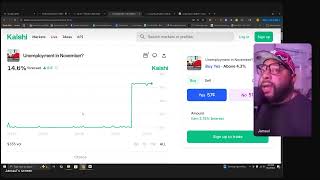
THE HEALTHCARE WAR: Congress vs. Your Wallet | Betting on ACA Future (Kalshi LIVE)

179 Sell to Serve! Why Business is All About Sales & Helping Others with Jamaul Ford


Reframing the Perspective on Business w/ Jamaul Ford, Upgrade Your Online Presence

Mastering Supply, Demand, & Storytelling: Navigating Entrepreneurship with Jamaul Ford (Episode 25)