Unlock Your Funnel Success! | Coffee Hour with Jamaul Ford 🚀☕️
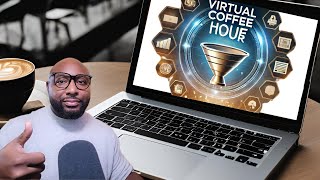
In this Coffee Hour session, Jamaul Ford walks viewers through the Funnel Factory’s Ads Graphic Collection, a suite of Canva‑based templates for Facebook ads covering workshops, one‑on‑one coaching, packages, group coaching, memberships, freebies, mini‑offers, and order bumps. He emphasizes the third step of funnel building—running ads—while stressing the importance of "selling the goal" rather than technical features, and framing offers around time, cost, and satisfaction. The bulk of the video consists of a rapid‑fire Q&A where Jamaul offers concrete, actionable advice on: email marketing tactics to keep customers engaged; using LinkedIn to attract B2B clients; starting a podcast or YouTube channel for brand building; boosting social media interaction through community‑focused engagement; creating urgency with FOMO and limited slots; storytelling to make a brand relatable; increasing webinar attendance via personal networks; creative QR‑code uses for instant contact; low‑budget high‑quality content creation (podcasting); and handling negative reviews with a positive, conversational approach. Throughout, he provides examples (e.g., grass‑cutting service) and encourages viewers to customize templates, collect feedback, and continuously engage their audience.
Chapters
All right, you guys, welcome back to the Funnel Factory. I'm kind of on the road today, but I'm super excited to bring this Coffee Hour to you. It's super important that we're able to still meet every week to go over and discuss the issues or the things that you guys are trying to overcome with your funnels and with your products and services. So I definitely want to go through resources that we have in the Funnel Factory first and then transition over to the questions that you guys ask every week. Once again, keep submitting your questions. I really enjoy answering the questions. If you need anything, free, feel free to DM me in the community or message me on social media. So let's get started. Okay, you guys. So today we're going to be going over the ads graphic collection that's in the Funnel Factory. The reason I want to go over this is because if you're selling a product or service, I think the third step in the process is always starting to run ads. Now, you never want to run ads until you do your warm outreach and then you start doing social social media posts. And this is really because just like we do with our copy, we always want to be selling the goal and never selling the technical aspects of what we do. The way you know how to sell the goal is actually understanding and getting feedback from your potential clients and the clients that you have, whether it be with the products that you serve them or actually sold them or the services you've offered them. So third step in lead generation is always running ads. So I wanted to show you that the Funnel Factory actually has pretty much whatever templates you need when it comes to Facebook ads. So we'll go over these really quickly. If you have any questions, feel free to leave a message by scanning the QR code on the actual question section, which is gonna be in the next part that we go over. So we're right here. You'll see that we have all of our ads collections here. We have our workshop ads, our one-on-one sessions, our one-on-one packages. Our group coaching ads, our membership templates, our freebie templates, our mini offer templates, and our bump order. So we're going to go over each one of these for you guys. So right here, this is our workshop ads. Remember, all of our templates are Canva templates, so it makes it super easy for you to modify them and make them your own brand look that you're trying to give when it comes to targeting your actual audience and things like that. So they're very simple workshop ads. You have a picture here, you can change this picture out to yourself, you can change this picture out to someone else, whatever you decide, but pretty much you're putting the introduction, the name of your product or service, a little brief statement about it, and then you're adding pictures of it, either product or service. You're putting the price here, and they're pretty straightforward when it comes to using these. You can— this one here, you can change the name in the back to whatever you're offering, change the picture, change the name. They're all fairly straightforward. Same thing here, adding the picture of your product or services or program or digital product. And just putting the name here. I always like to make sure that I am, just like I do in my sales copy on my landing pages, always sell the goal on my ads. Like, get grass cut in 5 minutes or less. Like, just really telling people what you're offering them. Remember, offer is super important. Time, cost, and satisfaction, all the major things you want to consider when you're putting together an offer. There's a huge difference between a personal trainer charging $500 for 8 months of result and getting the results in 8 months compared to a plastic surgeon charging $20,000 and giving you results in 10 minutes, right? So always remember that the cost and the time of the results are super important when putting the actual, when putting it together and selling the actual goal that you're trying to sell to people in your ad. Same thing here. Like I said, once again, this is our workshop template. Really easy. And then if you even make a template in like a brand template, which, you know, obviously Funnel Factory has a brand template, but also, you know, Brand Maven has a template as well. We'll take a template, flip it over, and then I'll even show you, like, it's super easy just to convert it over to a different template. You build your templates out in Canva, it makes it super easy to adjust the aesthetic of a actual product. Here's our one-on-one ad coaching templates, pretty much exactly the same. This is really marketing consulting sessions overall, and I think they're great. I think they're amazing. I think they aesthetically look a little different than what you would typically find on Facebook. So I think that you should consider using these. Let me share the tab really quick. So these are for one-on-one, um, consulting sessions, and I think that they really look aesthetically pleasing, especially that I don't see these too much on Facebook. Remember, you can change the picture to your picture, make people know who you are and really sell yourself with the one-on-one ads. This is the package ad. So like if you're selling one-on-one packages for coaching, consulting, different things like that, really just letting people know what they're getting. I'm letting them know if it's a new offer, but they're all aesthetically pretty much the same, a little different. So even if you want to swap them out and use them for different things, than what I actually labeled them for, you can definitely do this. This is group coaching package. Yeah. And just like identifying what people are getting in the packages are super important as well. So you'll see all of that in, in each one of these. So definitely explore this area, explore this section of the Funnel Factory. We have all the templates you would ever need when it comes to running Facebook ads. And I think ultimately, if you look at that, you will be able to Identify your target audience, use the copy strategy that we have in the Funnel Factory to write the copy for the graphic ads, and you'll be off to the races. So let's go to our actual question section, and I'll get there, and we'll answer— because this was so quick today, we'll actually answer maybe like 6 or 7 questions today. So we'll, we'll get through those, and I'm excited to have more time to actually answer your question. So here we go. We'll start off with the first question. I'm having trouble keeping my customers engaged. What are some effective strategies for using email marketing to boost engagement for my small business? So I think it's really important to understand where you're actually getting these customers from. So an example would be, did you meet them out and about when you doing casual things? Such as shopping at the store or just at church or something like that? Or did you find these people on social media? Or did you find these people through mutual friends? Because I think all of that plays a major part in regards to how you engage them and what information they need to eventually stay attached to your small business. Also, it's important to understand, have you already sold them and you're trying to make them recurring revenue? Are you starting to get to the point where you can sell them on a product? So I will answer this question from two standpoints. I will answer this question from a standpoint of where you found them at and then if you sold to them or not. So when it comes to email marketing, you have to collect information, you have to get them into the funnel. So the first thing I would do is make sure that they're signing up, you have an automation to get them in the funnel. The next thing is to remember that you want to give value in these emails and you want to give value from the perspective of the issues they may be having. So tension statements always play a major part in this, making sure that you understand the stressors that your potential clients or potential customers have and why your product or service is the best solution for them. So remembering, an example is grass cutting. I'm having trouble finding someone cutting my grass. Person who cuts my grass currently has my grass uneven. The person that currently cuts my grass now typically leaves my grass with dead spots such as yellow spots in my grass. These are all major issues that someone who's looking for someone to cut their grass may have. So in your emails, you want to always make sure that you're giving solutions to these problems to make yourself look like the thought leader and making people know that, hey, you can solve their problems. Really being able to engage and interact with your clients to collect as much information as possible, then making sure in your emails that you're giving them the answers to those questions and showing you're the professional will ultimately get them to continue being engaged with your content and ultimately being ultimately become a buyer of your product. So I hope that answers your question. The next question we have is, how can I utilize LinkedIn to attract more B2B clients for my consultancy? So yeah, LinkedIn is a very interesting platform. I think that a lot of people who are in LinkedIn are trying to also sell product or sell services. So it really depends on who you're looking at targeting. Most of the time, if you are a small consulting agent and you're trying to target small consulting agents, you not only want to give information on LinkedIn, but you also want to share the success of other people you've been working with on LinkedIn. I think that sharing your experiences and sharing your services and products and success from a professional standpoint can be huge when it comes to getting more people to want to work with you based on your LinkedIn LinkedIn is one of those platforms where if I'm going to work with someone, I'm going to look at their whole actual profile. I'm going to see what their work is, what awards they won, all those things. Please, all those things play a major part in regards to me deciding if I want to hire somebody to do some services with me or not. So always keep that in mind. Should I start a podcast to build brand and what key topics should I focus on in my initial episode? So should you build, should you start a podcast to build your brand? I would. If you have no other content out there right now, I would definitely put out content and put that on YouTube because YouTube is a place where people are engaged for a longer period of time. So if you have a more complex product or service, you can hold their attention because they're there for their attention to be held for a longer period of time on YouTube. So I think that if you're trying to educate people on who you are, you're trying to actually build up your brand, making a podcast, putting it on YouTube would be great. You don't need a ton of listeners. If you have 200 views, 300 views, 400 views, they just have to be the right views, the right people looking at your content. There's people out there that get 50,000, 60,000, 70,000 views, and they're the wrong people, and they're not getting any sales. So remember, putting out quality content about your product or services, or just giving people answers to problems that they typically have can go a long way in this particular process. Because the topics, once again, you want to listen to your audience, listen to your customers, figure out what issues they have, and use your podcast to bring and offer solutions for those particular things within the podcast episodes. The next question we have is, my brand social media engagement is low, what strategies can I use to increase interaction? It kind of goes back to the previous answer that we have, re-engaging your audience, figuring out what their needs are, what the problems are, looking at the comments below Taking out, cutting those comments below, making, making them a part of the post and tagging the person that left that comment below goes a long way into actually getting more engagement, making people feel a part. You don't want to be a person that's always like trying to teach to people. You want to be a person that's definitely making it more collaborative, making people know that you see them, that you're interacting with them, and that you want to answer their questions. So I think that goes a long way with social media. Remember, social media is not you media. It's like, let's make it social, let's make it collective, let's make it something that we're all doing. So remember that when it comes to social. The next question we have is, how can I instill a sense of urgency in my marketing campaigns? This is a good question. I think a lot of the previous questions have kind of repeated a little bit, but this is a great question. So FOMO. FOMO is obviously a thing that we want people to have a sense of urgency. When it comes to buying our product or services. I think it's from what perspective that you're selling. If you actually have an urgent product, something that they need to get right now. So I think product plays a major part in regards to how you institute FOMO in your products or services. If it's a limited time offer, if it's a reservation, reserving a certain amount of spots is important as well. So example, I'll go back to grass cutting. If I'm cutting grass, How I'm going to put FOMO in there is I'm going to say, hey, I only got 10 slots left this week for a grass cutting. If you need your grass cut, feel free to reach out. I only have a couple of spots left. If you've shown quality work and people watch that work up until that point and they know they need their grass cut and they want you to do it, that will give them a sense of urgency to book those particular slots as soon as possible. How can I use storytelling to make my brand more relatable to my customers? So I think Once again, when it comes to storytelling, first you want to tell your story, how you got into whatever you're doing, whether the product or the service, and what made you start that journey. I think that's the most important part to get people to be attached to what you're doing, telling your story. And then once you tell your story, then you can start telling other stories, the stories of people who had success with your products or services, the stories of trials and tribulations you've overcome, the stories of the actual product or service, the story of the equipment or the things that you're using to do the product. And service. So I think the first place to start to be relatable is to tell your personal story because people relate to other people. So that's how I would actually start. My webinar attendance is low. How can I increase participation? I'm going to make this super easy, super quick. If you're doing a webinar, contact your friends and family who actually support you and get them to share that on their social media page and let them know what your ideal customer looks like. Tell them the questions that they should hear from a person that may actually make them want to be a part of the webinar. So an example of that would be, you know, are you having trouble with keeping your grass low? Are you having trouble with pesticides eating up your flowers? Things like that. And if you tell your friends and family that as they're going throughout their day and they hear someone saying these certain phrases, they will then chime in and say, hey, I have a friend who does amazing, amazing horticulturalist, which is a person who handles grass and Plants and Things, I think it would be great if you actually attended the webinar because he can answer a lot of those questions for you. So that's kind of my strategy. I would just start bringing more people in to push out the information about your webinar. What are creative ways to use QR codes in my marketing strategy? Clients— I'm really big on understanding that people are not going to keep my card, but if I'm able to make a QR code become a contact in their phone, I use a QR code to have them be able to immediately send me an email. I have a QR code immediately be able to send them a text message. That really goes really big into not only getting contact information but starting interaction as soon as possible. That would be the most creative way I would use a QR code. And if you want more information about it, just DM me because I really believe that there's— it's a little bit kind of complex to explain in this, in this particular section, but I can definitely give you strategies on how to use those QR codes for that. What are some Low budget friendly ways to create high quality content for my business? Yeah, I would actually do a podcast because I think that, um, being able to share information, being able to bring other people in, be able to do it virtually with digital products allows you to be able to make content that looks of a higher quality but doesn't cost you a ton of money or a ton of time in putting out that content. I would definitely just start with a podcast. What's the best way to handle negative feedback or reviews online? This is an amazing question. So I always feel like we are so fearful of rejection that we can't handle negative reviews. I'm very big on glass half full mindset. So when I see a negative review on an ad or a negative review on a post that I have, I reply to that in the most positive way I can. If someone's saying, oh, your product sucks, I don't like the way this looks, I come back and I say, hey, well, tell me more about your thoughts about this. Like, what, what aspects of it are that you don't like? And this helps you figure out if there's somebody just trolling or this is someone who actually knows what they're talking about. Because ironically, if you're running an ad, the more comments that's underneath the ad, the more Facebook is actually going to push out that ad. So me, I like to spark conversation and positive and negative feedback, um, on content that I'm putting out there, or reviews online, or even when it comes to Google reviews. I like to make sure that I'm, I'm sparking conversation. That way, if other people see the negative review, And there's more conversation behind it. They can figure out, is this something that this person is personally dealing with, or is this something about the product itself that doesn't really work? So I would definitely just engage it. Don't run away from it. Go towards it and engage it so that way you can learn more. The customer, potential customer can learn more, and the person who wrote the bad review can learn more. So that's just my thoughts. Okay, y'all. Well, that's coffee hour for today. If y'all have any questions, feel free to reach out. I would love to hear from y'all. And yeah, till next time, have a great day.
More from Jamaul

THE HEALTHCARE WAR: Congress vs. Your Wallet | Betting on ACA Future (Kalshi LIVE)
179 Sell to Serve! Why Business is All About Sales & Helping Others with Jamaul Ford

Reframing the Perspective on Business w/ Jamaul Ford, Upgrade Your Online Presence
Mastering Supply, Demand, & Storytelling: Navigating Entrepreneurship with Jamaul Ford (Episode 25)