01 Acquiring knowledge is addictive
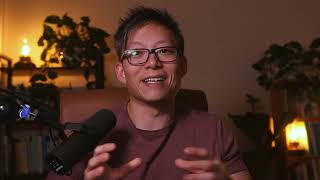
James Lim explains why people get stuck consuming information instead of acting on it. The problem: easy access to content and dopamine hits from learning create "mental obesity." The fix: match every hour of research with an hour of practice, and start executing even in small ways like voice notes or paragraphs.
Chapters
Going to keep the edit pretty open and pretty raw. So you have to bear with me for this one. You want to learn a new thing or start a new project or start a new business, you have to go through a few stages. And one of the first ones is learning about it and acquiring more knowledge. But we reach a point where we keep acquiring more knowledge and it doesn't stop, we just keep doing it and then we find ourselves not taking action. So this is a problem I come across with lots and lots of clients. This is one of the most common, one of the most common problems. So in this video, which is a bit of a different style, I'm just going to be free talking for this. I'm just going to go over what those problems are, what the symptoms are, and what we do to solve it to actually get people taking action. So I think some of you will find this useful. What tends to happen is clients usually find themselves in this cycle where they're really excited about this new thing, they're learning about this new topic, and they are just gathering more information, but not executing. What happens is you end up with this imbalance, this kind of balance of knowledge going up, up and up. And this other side execution just doesn't move. And so you end up with this big gap between the two. And I call it the widening gap between knowledge and action in. And just bear with me, I'm just looking at some notes on the side that I've made. Now. What tends to happen is we keep going up and up on this side of the scale and we feel like we're doing lots and lots of useful work, but this side just doesn't improve. And what happens over time, you look at what you've done and you realize you haven't actually made any tangible progress. And it's quite frustrating. You keep gravitating back to this kind of. This first side, what I tend to call this, it's quite an aggressive term, but I call this mental obesity. And the reason I do that is similar to kind of food consumption. There's an element of the consumption that we actually need. So we need to eat to stay alive. We also need to acquire a certain level of knowledge to be able to do what we're trying to do, or to enter this new field or start a new project or business. But the problem is we often reach that point and then go way beyond it unnecessarily, and then we don't act on it. So it's eating and then getting to the point where you're Eating your maintenance amount of food, but then you start to exceed it and then you start getting fat, right? And so this concept is similar. We have the same thing going on in our heads. We consume more and more knowledge and then we reach a point where we've got enough knowledge to start executing, but we don't do it. And we sit there, we watch more YouTube videos, how to do this, how to perfect this and don't get up off the sofa and go and do it. And this is a really big problem and something I see so often, pretty much on a daily basis with a lot of clients. And we have to do a lot of work to change how we approach it. So why does this happen? So I've got a theory. It's my hypothesis that over the last few years, with the growth of social media and YouTube and just generally the Internet and access to information, the level of difficulty to get hold of that information has gone to practically zero, right? You can even say you can ask Siri or you can ask Google and it's only a few kind of taps away to actually get that knowledge. And we have access to the most amount of information we've ever, ever had available to us. And so it's really easy and we can get the highest of quality of information. So clearly it's going to be tempting, right? And historically, Even just maybe 10, 20 years ago, the level of access was pretty difficult. Like you'd have to go to a library or you'd have to be in the education system or have access to a person, a specialist in that field. Whereas now we can get that access really easily. And that's where I believe the foundation of the problem has come from. We've got this really tempting carrot over here where we just keep wanting to consume more and more of this information, learn about it. But that's the key, right? We're learning about it, we're not actually experiencing it. So I like to call this phase, phase one, research mode. Think to yourself, how often are you spending in this, in this mode? Most people that come to me, they find themselves in it every day at some point on YouTube, looking up how to tutorials and things like that. Now we've also got this other force on us so that that's going on inside us. We just desire to read and listen and watch and learn about the world and kind of be curious. We've got this other side which is what's going on, the production side of all of this social media and YouTube stuff. We have to think what's going on there, they, especially with advertising, they're incentivized to make content that is incredibly engaging. And what is that? It's sparking that curiosity, making it intriguing and doing all of that. And they're paid billions and billions of dollars to capture our attention. And we see that on TikTok and YouTube and Netflix scrolling away and we just can't get enough. So we've got this really powerful force, this desire for us to learn more about the world. It's really easy to access and the other side getting more and more optimized and really good at delivering that. So it's like junk food. This kind of processed sugar stuff has been refined to make us not want to put it down and just. We just keep eating. So that's like the setup. So that's phase one. And I like to talk about this other side, phase two, which is all about the execution, taking action, performing and dealing with the associated emotions we experience as a result of performing and executing. It's pretty hard if you think about it. If you've ever had to present, you'll know what it feels like, right. When you're in that research mode, you can go and Google in your room, in your little cave and, and bash away, find things out, make your presentation nice. As soon as you step out on the stage and you have to do it a different story, right. And you can even practice in your room and you might find it pretty easy. But then when you have to deliver it in front of people, the execution side, it's different, isn't it? Why is it different? You've been practicing it well because you've got all of these associated emotions involved. The self doubt, am I good enough for doing this? What are people going to think of me when I'm presenting? What if I mess up? And yeah, and. Yeah, and generally it's around this idea of kind of judgment. So. And what happens is. Yeah, that's another area I often deal with which is presenting. So many clients have a really big issue and these two things are usually mapped together. People who dislike this idea of presenting yourself. So that can be in like either pure presentation or creating content or publishing something. That side of it evokes all of these horrible emotions that we, that we feel. And it's much easier to go back to this kind of safe and comfortable place of staying at your computer and researching and looking up new ideas and doing all of that. So every time we think about this execution side, we've got all of these associated emotions going on and we want to Keep jumping back. Okay, so we have this cycle of performing and executing phase two, but we, we constantly want to jump back to phase one. And our brain likes to play a trick in us. It likes to make us think that we're doing some kind of useful work because we are doing something and it feels. And our brains are turning over and doing, and it feels like we're doing some useful work. And that's the trap, because you are thinking and you are doing stuff and you have to lay things out when you're researching. And you can sometimes get caught in this trap where you log that as being productive. Like the same thing with eating. If you convince yourself, if you think about it, eating is a good thing for your survival. Eating donuts and sweets and chocolate, it's the same thing, the same mechanism. You are technically eating, so you're technically helping your survival. But obviously, once you go past that point, you're now eating to excess. Same thing with knowledge, you're consuming to excess. And worse still, we also feel a reward. So with this kind of usefulness, we get that hit of dopamine and then we. It feels like a reward in some way, but just remember, it's a trap. When you've gone past the point of necessity. I like to think about this like playing basketball and throwing ball at hoop. You, you need to learn how to throw the ball in the hoop, but you also need to practice it. Now you can go on YouTube and look up the best throwing techniques and you can do that infinitely. Like you can look up loads of different teachers, coaches, methods and biomechanics and all of this. But there will be a point where you need to put it down and you need to go out and practice throwing. It's the same thing. In the physical world, it's pretty obvious that we need to do something physical and that there's a big difference between sitting at the computer and theorizing about how to throw a ball or hit a ball or any other sport versus going out there and doing it. But in the knowledge space and in the mental space, it's not so obvious. Because researching, reading, and making notes about things, it is nearly the same as writing about the thing and publishing it. They're nearly the same thing. You're doing the same thing. Compiling notes where you still have to write in a Word document, and then writing your piece about it is still writing in a Word document. So they're much closer. So it's not so obvious. And that's how we can fall into that trap so easily. So it's really easy to end up in this cycle. And that's why I see it so often. And these traps we just keep falling into time and time again. What happens over years, it accumulates just like fat accumulates on your body. You don't realize it because day to day you feel like it's not doing any harm. Just like the extra donut or the extra chocolate bar is not doing any harm to you in the long term. Feels like that. But over years this gap just widens. Just you drift away from your ideal weight. And so we become less practiced at this phase two side of things. And so we want to avoid it more and more because we just become more sensitive to it. And we just. We get so familiar with phase one, this research mode and. Or eating your junk food, but eating your mental junk food. In a sense, we just want to stay there. Yeah. And this downward spiral so pretty quickly. Right. And can happen. You just need to imagine the mental version of what happens in the physical form. If you keep eating junk food and you don't take control of it, it doesn't do so much harm in a day or in a week or even a month. But after six months, yeah, you start to see some problems there. Same thing with the mental side. And it becomes very difficult to resolve. Okay, so what do we need to do? So this is talking about the solution now. We need to close the gap. We need to figure out a way to. To make it more even. The only way to do that is to start increasing exposure to your phase two activities. The first thing you can do is look at all the activities in what you're trying to do and identify what is phase one and what is phase two. Now, if you're quite new to the new thing that you're learning or the new business that you're starting, most of the things will probably be phase one. But actually look at what it is. Right. And see. Okay. Actually, let's go through these lists of things. Passively watching a course. Phase one. Right. Reading about things, doing some research online on YouTube. Phase one. Right. And be clear about that. Don't try and confuse it with what you really know is phase two. It should be pretty obvious when you actually corner yourself and think about it, you will see so many more things are in phase one and you haven't actually looked at anything on phase two. Then. Yeah. Now just to give you a few examples of what things are phase two, anything to do with synthesizing your ideas and actually writing them down. Articulation, let's say you're creating content, actually editing the video or shooting the video like I am. Now, that's execution. Now this is a even. This is a new style of video that I'm, that I'm doing now. This is my phase too. What else? Well, writing your content, so actually putting it into a Word document or creating some artwork. Right. Rather than looking at just the techniques about how to do things, think about execute it, the execution and taking action. In sports, there is always this side of how to do it, right? The tutorial side, the instruction. Then there is the practice of what you've just been taught. We need to start thinking about that in whatever you're doing. Now what you can do, once you know what a phase one and what phase two things, we then need to say we need to treat it like a game and say we need to focus really on the phase two things. Now, in reality, you will continue doing phase one, right? It would just be really difficult to stop doing phase one because it's interesting and you're probably pretty good at it and used to it. But you can nearly, you can put nearly all of your focus on phase two because you're, it's underdeveloped, you're probably not very well practiced at it, and it will need all of your energy. Now the key here is to focus on building up your exposure. Now you can do that in two ways. In time or in kind of number of attempts. So let's say you're. You're throwing a ball at a hoop, right? Right. You can either say, how long are you on the practice court? Right. So as long as you're going out on the practice court and you've got a ball in your hand, it's likely that you're probably going to be throwing it, right? Or you can look at number of throws. Same thing with hitting a ball or doing anything like that or kicking a ball in the mental space. Let's look at the same thing. So how many times have you, how many words have you written? Are you sitting there and actually writing words in your Word document? Are you shooting videos? You can set aside time. So maybe one hour a week or even two hours a week on that thing and actually be in the face and ensure it is a phase two skill you are practicing. Could be shooting one video a week, creating content, publishing one blog article a week. Those are phase two practices. And if you do anything else, just think about the score system. You don't score any points with that. You only score points every time you do something in phase two. This is a really good way to get you focused and to stop that kind of self delusion. Some rules of thumb, this is quite hard, but I would generally say doing it one for one, having for every hour you do some research, do one hour of phase two skills, right? Because obviously I'm bearing in mind that you won't be able to stop this phase one thing. You will concentrate all on phase two. You won't be able to stop this and this will be really hard. But at least match it hour for hour throwing a ball. Okay, you can watch something for half an hour, but then you have to go and practice for half an hour, right? You can do it one day research, one day practice, one week on, one week off. Now ideally, like I said, if you really can focus on phase two, you probably have enough information to, to develop your abilities in whatever you're doing already. Even if you just sat there and just worked in phase two. I think that's the misconception a lot of people have. Now in a future video, I will be going over how do you know whether you've, you've done enough research and you've acquired enough knowledge? I'll be going through that later. Okay. Yeah, anyway, I just wanted to go, to go over that and yeah, some points with people I actually work with, what do they really struggle with? The biggest things are that cycle of finding themselves, researching again. It looks like it feels like we're doing useful work, but it's not. And that's why I always say, is that, come on, let's be real about this. Is that a phase one skill or is that a phase one activity or not? Oftentimes people say that is a phase one thing. Okay, what's a phase two thing? Now lastly, phase two, Phase two skills. Think of it like a spectrum. There are going to be hard things that you do and easier things that you can do. Presenting on a stage and signing up for a TED Talk when you've never done a presentation is probably not a good idea as an easy phase two thing, right? But writing a paragraph in a word document, synthesizing what you've learned, that's a phase two skill. Writing that and then explaining it to your mum is a phase two skill, right? Presenting you can do it to your best friend, anything like that. And then you can, you essentially look at creating from easy to difficult, lots of phase two activities and then slowly work your way up. And that's something that I work with when I'm working with clients and we essentially draw out that spectrum and Figure out ways to work our way up it slowly. Now, you want to find that spot where it's hard. It feels like a stretch and uncomfortable, but it doesn't completely overwhelm you. And you can do it. I think that's key. And then what happens is you kind of stay in that window as you practice that one. You find where that is. Hey, I can do that. I can write there. I could leave a voice note from my mum or a voice note from my friend explaining this new concept I learned and presenting it. Yeah, I can do that. Do that a few more times. Then you can do it to your two best friends. Right. And so on. And then you work your way up. And before you know it, you end up up here. And in all of that time, you're slowly increasing your phase two skills. Okay, anyway, that is enough of my rant. And this came off the back of working with some clients, particularly over the last few weeks, who all shared this same problem. And it was specifically about this. Anyway, I'm on a bit of a mission to help people with this mental obesity. I think it's a really big problem and it's only getting worse. Get started on it now and you will slowly be able to improve that phase two, and you'll find that balance. And it will feel good. It will feel good. Okay, hope you found that useful. And I'll see you in the next video.
More from James




The mental system I ALWAYS use to transform myself. Warning: Simple, not easy.


Why you lost your confidence and how to get it back - Thrive and Decay: [Full training]



5 PAINFUL truths to improve your life (you're probably not ready to hear them)


Why you always feel conflicted when making important decisions [Three Monkey Framework]