02 Letting go is the hardest part
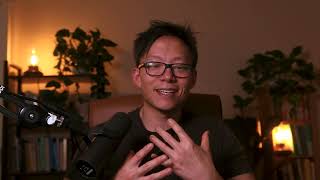
A solo self-help monologue (video transcript) in which the speaker argues that failing to let go of relationships, jobs, projects, and beliefs prevents progress toward major life goals. The speaker uses personal and client examples and three core cost categories (energy, time, financial, and ongoing mental burden), offers vivid analogies (garden, fires/oxygen pipe, hiking/backpack, outgrowing clothes), and recommends reflective strategies: call out burdens, audit and remove ‘dead weight,’ and prioritize the direction you want to go to open new opportunities. Tone is practical and motivational.
Chapters
Painful truth. You're going to really struggle to achieve any of your big life goals if you're not willing to let go. We're constantly holding on to things that are simply not serving us. Relationships, jobs, projects, beliefs. So if you struggled letting go of any of these or anything else, my hope is by the end of this video, you might find it a tiny bit easier to do and it might just give you the push that you've always needed. I'm going to try and keep this video as brief as I can. I'm going to go over a few things. First thing is a few personal examples. I'm going through and have been through some client examples. Why not? Letting go is holding you back so badly and a way to reframe it so that you can see it in a new way and be more likely to want to do it right. That's the key. We want to try and get you to naturally want to let go. So a few personal examples. Letting go has been a bit of a topical conversation internally for me at least recently because I've had to let go of a really big project. I've spent a lot of money on it, I spent a lot of time on it, and I really wanted to. Wanted it to work, but it just simply hasn't worked. It just simply hasn't gone that way. So I had to make the call and cut it. And it was very painful, but I realized that it needed to be done. It was consuming a lot of my mental capacity and these are topics I'll cover later. But yeah, it was just the right thing to do. I also experienced this with my job. I was in a corporate job career for nearly 10 years and it just felt wrong four or five years in. It just didn't feel like the right direction at that time. But I just stayed with it for a lot longer and it was. It really felt like it was suffocating me in some way. And that was like a really painful experience. And I lost a lot of my confidence. I lost just a lot of my conviction. And I felt like the skill sets and strengths I had were just deteriorating. Yeah, not a great place. And I've also had a lot of trouble with letting go about letting go of the ideas and beliefs I have now that I've been working on that very hard over the last kind of five, ten years or so. And it's been really effective. So I kind of want to share some of these concepts with you. The other thing is clients, I get this request a lot because obviously I've Been through it. And I see this a lot with clients when I'm working with them, we're usually looking to take them to the next level in some fashion. We're trying to move career, build a business, take the business to the next level. And we really see how not letting go creates this bottleneck for whatever they're trying to do. And we cannot, we cannot unlock it until we can let go. And I was going through this with a couple of clients very recently over the last few weeks, and it has been very topical and it has been so clear how destructive holding on to things that are not serving you is. So why is not letting go holding you back so badly? What is the cost? I think this is the thing that we don't think about. When I have these conversations with people, when we spin it in this way, you start to realize how bad it actually is. So it comes in three, three areas. Particularly, there's an energy cost, right? So it's. You're having to split a lot of your energy onto things that you already know are not working for you. So imagine you've got a kind of garden and you've got some flowers that are basically already dead, right. Or they're on their way out and you keep watering them, but you've got a limited amount of water and feed. So you keep feeding these things. Now you've got other things that need feeding, but you keep feeding these things that are just not working for you and you're spending all of your energy on that. And what else is there? Time. We haven't split your time as well, and they're all very closely linked. You will see all these costs of links. So over your week you might kind of running, running around, doing all of these various things. And if they're actual projects, yeah, your time and energy are going to go into that. It also incurs a financial costs, usually. And my personal project was costing me a lot of money as well, and it was very difficult to let it go. And I had to make the call at the time. There's also an ongoing. Just a general mental cost. You've got these things that are circling around in your head and they're essentially toxifying your brain and you can feel it. And sometimes you wake up at night and you're thinking about those things that are causing you problems at night. It's taking away from the places that you want to go. Imagine a bit like the garden. Imagine you've got multiple fires and you've got this kind of pipe for oxygen for the fires, and you have to split this one pipe, and you have to share the oxygen for all of these fires. Now, all of these fires, they're not exactly strong yet. You're trying to, like, fan them and build them up, but you're not certain about any of them even. So you choose to split the available oxygen, and then you're paying attention to all the different fires at the same time. This accumulates, and this essentially becomes or feels like a burden to you and your mind. That's essentially the cost. You start carrying all of this stuff with you, even though you know it's. It's not actually helping you get to the next level. So by not letting go, you're essentially robbing yourself. When you've got a direction that you know you want to go or you need to go, you're stealing from. From that, from the opportunity to push that forward. You're taking from that and giving it to these other areas that are not serving you right. You're fanning these flames that you know are not good for you. And the first thing is to be aware. You actually have to call yourself out. So just take a moment now and start reflecting about some of those things that you're doing that are not serving you right. And they're either not making you feel good, or they're not. They're not helping you become the person you want to be, right? Or allowing you to take the route that you want to take. I'll give you another analogy here, and I find these analogies quite useful. These are all ones that have, in various forms, worked for clients. Imagine you're gone. You've gone hiking, and you want to get up as high as possible. As you go up, you see some useful sticks, right? And you see some useful tools on the side of the path. So you pick them up and put them in your backpack. You keep doing this, right? And what happens is your backpack starts getting heavier and heavier. Now, there comes a point where it now starts to affect your ability to climb, and that is where it becomes a problem. Now, this is where we have some internal conflict sometimes, because holding on to things at the beginning can sometimes serve you. Having that tool in your backpack could be quite useful. But when you want to start really readjusting your life in a big way, it will be like scaling up this mountain. You do need to keep fairly lean. And this is a problem I've definitely seen with clients in particular, because they're usually coming to me at a point in their lives where they really want to take some massive Action. And we just cannot carry any dead weight. So we have to really focus on going through the backpack and getting rid of things that we don't need up until that point. That hoarding mentality can sometimes serve you, so we have to unlearn that, and that's why it's really important. So if you want to scale to that next level in some way in your life, sometimes you do have to go through the backpack and take those things out. You are robbing yourself of the likelihood you will achieve those big things. So going back to the first point, this is why it is so difficult to achieve your big life goals. They're hard enough as it is. And then we are essentially choosing to make it harder by not letting go and holding on to things that we know are just weighing us down. So what can you do? Sometimes we need to take the backpack off, go through the items inside the backpack one by one and slowly think, is this actually going to help me get to where I need to go? If it is not, we sometimes have to consider getting rid of it. Now, I would highly suggest you, you really reflect about this and get rid of those things, right? Think about where you want to go and the person you want to become. Do those things that you're not, that you're holding on to, need to be in that person's life, the person you want to become, or do they exist in the place that you want to go most of the time? Not now. This applies in all areas, right? Definitely. Projects. So if you're running various side projects that you thought were going to be useful or really interesting, you actually need to reflect on that and say to yourself, is that true? Is it as interesting as I thought it was going to be or not? Relationships, people, this is social. Friends, partners, everything. Are they helping you in your life? Are they getting you? Are they bringing you what you want that relationship to bring you in some way? If they are not, they are likely not serving you and therefore potentially being burdensome on your life. You need to reconsider that and think about, do they need to still be a part of your life? And this is the same thing for, really people who were in your life 10, 20 years ago, and you're both in completely different places holding on to an idea or a way of life that you no longer are in. And you might think that's such a bad thing to do, to let go. In that sense, growing is all about change, right? Now, imagine being a baby and you put a set of clothes on. You know what? I'm going to say you continuously outgrow those clothes. You get comfortable in a certain set of clothes but due to your growth those clothes become uncomfortable and then you start needing something else. Now you don't know whether these new clothes are going to be a good fit or comfortable. But you have to try. You have to get out of the existing clothes because they're going to cause irritation and cause problems for you. It will not enable your growth and if anything it will keep you smaller. It just actually reminded me I actually had this as a problem where I, I wanted to stay in kids size shoes because they had cooler styles and they were cheaper. And so I stayed in these, these kids shoes way beyond when my foot had grown beyond it and then my foot had started to, to bend itself into the shape of it and now I've got to live with that. It's really annoying. But that's the extent of staying in a situation even when you are growing through it. So really think about that. And then the last thing is just thinking about the lost opportunity. Right? This is a killer. Doors will open for you if you, if you keep exploring and you keep further and you keep climbing. You can't do that when you are burdened and held down by all of these old ways of thinking. Holding onto things stops you from finding and discovering new opportunities and the doors that could be opened. This is a thing that's quite difficult to comprehend because if you don't see it, you don't know it exists. But it doesn't mean that it doesn't exist. That's a kind of really difficult concept to grasp because it's difficult to feel a loss when you don't know that loss exists. But all I can say is that it's worth reflecting on. When I think about if I'd held on to my life beforehand, I definitely wouldn't have experienced anything that I get to experience now. And the level of joy and satisfaction I get from the work I do now versus where I was before. Now we can only really go on that gut instinct of does it feel burdensome? Should we be be letting go of this? Does it feel right? The next point is the lost opportunity. Now lost opportunities are quite a difficult thing to wrap your head around. It's something I struggled with because if you can't see it, it's hard to feel a loss, right? But when you're holding onto something, you can, it's tangible if you lose it. So this is one of those really asymmetric situations where the thing that you can't see is the bigger loss, and it's costing you a lot more. I just urge you to reflect about that as a concept and think about all of the doors that you never get to open because you're not willing to let go. You're holding on to things that are holding you back. They're keeping you back in this state. It will be like staying in those baby clothes forever. It only causes irritation and friction and problems, and it doesn't allow you to grow. So anyway, I will wrap up there. That's enough for today. I've gone on a nice little rant there. I'll see you in the next video.
More from James




The mental system I ALWAYS use to transform myself. Warning: Simple, not easy.


Why you lost your confidence and how to get it back - Thrive and Decay: [Full training]



5 PAINFUL truths to improve your life (you're probably not ready to hear them)


Why you always feel conflicted when making important decisions [Three Monkey Framework]