Figure out your life direction systematically using core values [Full training module]
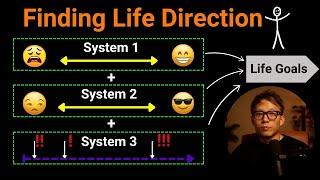
James Lim teaches you to find your core values through systematic exercises: scoring what engages you, listing what you won't compromise on, and mining your memories for patterns. Use these values as filters for decisions to cut through fatigue and build a life that actually fits.
Chapters
In this course, we're going to discover what your core values are. Now, it's quite interesting because this is also a hidden decision maker tool. It's something that will help you make big decisions in your life very quickly and very efficiently, which is really helpful. So values, what are they? Have you ever thought about what that word means? Deeply? Because I tell you my experience, honestly, I never really thought about them. I didn't even know what they were. I was on autopilot most of my life. I just focus on what society, family and culture expected of me. Never really questioned it. Now tell you a little story. I want you to imagine trying to book a dream holiday without knowing where you want to go. Right? This is a dream holiday or showing up at an airport and trying to decide what would be an amazing trip. Now, it can work for some people, but what does this instinctively make you feel like? Like probably pretty stressful, overwhelming. Too many options. And there are upsides to nearly all destinations around the world. And there are adverts and commercials for various destinations there to convince you to come. People will bump into you and tell you where you should go. You pick one and you fly to the destination. So I want you to imagine you've just bought this really expensive plane ticket to this destination that just kind of happened to be front of mind, only to discover it's everything you dislike about vacation experiences and the reality for many, you actually end up sticking to what you always do because it's safe and you want to avoid that as a risk. Many will go to places you've always been before when you know it could be better. Now, you may not be in this camp, but I just want you to imagine this as a concept. Not knowing the kind of holidays you tend to enjoy more is like navigating life without your core values. It can be overwhelming. A feeling like you have too many choices available to you and it causes decision fatigue and stress from trying to reach an answer. So if you're looking at all of those cities around the world in the airport and you're trying to make a decision, it's incredibly difficult. And you're walking down one of the corridors and you're seeing all these different kind of adverts of all these different countries, it can often make you feel lost or directionless. Especially when you've got all of these different voices coming at you too. You can end up having a lack of fulfillment in your existing choices. So there's a need for a filter to simplify your decisions. Now, I want you to think going Back to deciding on a holiday destination. There are so many countries to go to. What type of holiday do you want? What experience do you want? There are infinite options. How does this make you feel when you look at this? So life chaos, like planning a holiday, life can feel overwhelming too. Too many options. Lifestyle, hobbies, career, businesses. The result is often stressful, frustrating, and usually ends up in some procrastination. Without clarity, decision making can become paralyzing. And your values are a way to filter out the noise. Values are like holiday filters, helping you narrow down what truly matters. Now, if you get to plan out your dream holiday, you want a way to narrow down your choices so it can be truly your dream. Like, how do you define what your dream is? So what do we do? We apply filters so you can start crafting your dream holiday. It is like the ultimate search filter. Search filters help you prioritise, focus and make quick decisions. Just as you filter out destinations, values help you filter out life choices. So I want you to imagine you have a criteria for your holidays. You love beaches, street food, mountains, and avoiding the cold. So you apply these filters and the overwhelming list will likely narrow down to a few really nice destinations that are likely to meet your criteria. Now, my experience was totally not like this. I was on autopilot, living by what others expected. Choosing my career was based mainly on what others told me when I was younger, from everywhere, my whole environment, you know, it was all about what was stable, what would make me money. And I didn't really dig deep for myself. I, I thought I did actually. But we'll come on to that. Just like ending up in a cold, isolated country when you simply. Or what did I write here? Simply wanted a beach. I ended up in a place I wasn't enjoying in so many aspects. So by meeting a basic criteria, you can be excited about your trip. Yeah. Can you imagine if you start to have these, say four or five criteria for your holiday, it doesn't have to be super stringent. Just have to meet these basic core needs and suddenly you get really excited and there are still options available. Now for me, clarity came when I began questioning my values. Remember, they are like just your search filters. When you start thinking about what, oh, what do I really like, what would I really like for my dream holiday? That is the equivalent of what your values are. So without values, it's like booking the holiday without knowing what you enjoy. Without close connection with your values, there's a feeling of dissatisfaction. Yeah. Like if I ask you what your dream holiday is and you can't even come up with a loose criteria of what that might be. Be very difficult, often disconnected. Struggle with decisions because you don't know what matters to you. And there's a continual regret and guilt from past decisions because you, you've maybe made some decisions and it just hasn't sat aligned with who you are and what you like. When you are closely connected with your values, imagine a destination that meets things you love doing. Imagine you get to explore, you get to go up mountains, it's nice and warm, lots of beaches and filled with street food and lots of culture. When you get connected and live by your values, there's usually a high level of fulfillment and satisfaction. So when you get to live a life that are connected with your, that is connected with your values, it can feel very satisfying because it's all the things that, that bring you that joy. You have much higher clarity in decision making because it becomes much clearer, is this thing going to make me feel better in the long term or not? You get to make quick decisions and less decision fatigue, so it happens quicker when you get presented. You know it. If you only like the hot and someone presents you with Antarctica right now, that would be fantastic for people who really like the cold and like ice and snow, but not for someone who wants, who wants to go out in their swimwear and swim in the, you know, a nice, warm, warm water on a beach. It gives you the improved ability to create boundaries and say no. So I'll give you a quick reflection here. Think of a recent decision. Did it align with your holiday preferences? So if you have a set of preferences, does it align? What values were present or missing in that decision? What influenced you? What factors guided you to making that decision? What was the thing, things that pushed you over the edge to make that decision. What happens when you violate your own values? So we're just going to kind of work around this term for now just to let you build an exposure to it, because it was really helpful for me and it's been helpful when I've worked with clients. So when you violate your own values, you often will feel bad, you'll often feel some shame and some guilt, and you struggle to reconcile your own behavior, right? So you reflect back on your own behavior and it just does not feel good, it does not feel right. And it's like an internal, internal dialogue going on and you feel dissatisfied and empty. I'll just touch on an example. If you are really, if you are really big on fairness and someone gives you some money and they've overpaid and you know they've overpaid. Let's say it's fairness and honesty, a duo. They've overpaid you and you don't raise it and you accept that money and you know that it was not fair. Right? The transaction is now not fair and you didn't raise it to take the extra money. How does that make you feel? Now? If you really care about fairness and honesty, that will probably make you feel very, very uncomfortable. So how do we figure out what your filters are? Different exercises to quickly discover them. Now this is going to get really fun. Values and preferences vary widely. Kind of like holiday preferences. Beaches, mountains, water, snow. We need approaches from multiple directions and we will systematically work through them. They will help reveal your values. I've got a bunch of exercises here. Now I will kind of take you through this. The most effective ways to mine your values. So we'll look at some preferences, significant events in your life, non negotiables, timelines, irritations and frustrations, and your dislikes. So first we will start with what matters to you. What is most important to you now in life? What things are just important? What principles do you want to live by? For example, the fairness and the honesty. It also may be hard work, conscientiousness. When you think of your future, what do you feel you need to prioritize? It may be future stability, resources to build a business, a reputation to show love to people close to you. What brings you joy? Maybe experiences with family and friends. What makes you feel most alive? So what are you doing when you feel most alive? What do you feel very strongly toward? Some of these questions can be really difficult. When I've worked with clients with this, sometimes they really struggle pulling up deeper feelings, thoughts. So I've got the next few exercises will definitely help you with this. If you are in this camp. Here's another question. And slowly they will get deeper and deeper. What do you stand up for? In what situations do you feel compelled to make a stand? So when something is happening and it's, it's making you feel you're experiencing increasing levels of pain and you want to get involved and make a stand, what is that thing? That is a very good signal. What beliefs or principles are non negotiable to you? So when something happens, you just think to yourself, no, no, I'm not letting that happen. Those things. Again, very, very, very good signals. Think about those things. What principles would you defend at your personal cost? So if something is happening in front of you, what would you do that would Cost you to defend that principle. Again, another strong signal for something you care about. Because again, the idea is that we're trying to. We're trying to extract what is important to you. And you will be surprised at how different these are for everyone. It was, it was one of my. It was nearly an experiment I really wanted to find answers to because I wanted to know whether people's values were the same or not. And having worked with hundreds of clients now you really see that they're actually pretty different. Very, very different. Think about moments where you felt strongly in life, generally where you spoke up or you took action. What do you want more of in your life and what don't you. So here are some examples. Things that are important to me. So it could be now, these are examples I've picked from clients. There's a nice big spread here. Being in nature can be really important. So I've had some clients where they are not in nature because they're in an office job for 12 hours a day. We realize this is not, this is not okay. Need to find a way to be more in nature. Attention to detail. So that's like an interesting value there. Someone likes being not high level, right? Not big picture thing. They want to be really detailed and get things accurately. So things like punctuation and details and drawings and things like that. They absolutely love that thing. It's really important and they get a kick out of it. Performing to a high level and feeling some good stress. Some people want a very stress free life. Some people like that little sweet spot. And I'm probably one of these people where there's a little bit of pressure on you to perform well and it extracts great performance out of you. Now I know I like that. I tend to work with people who have that particular value. Some people like to think deeply about things or do exciting and novel activities. Ability to always learn and grow. That's a good one. The opposite. Things I don't want to have in my life, I don't like. Now on the flip side to the previous one. High pressure situations. No, I don't want too many of those. Monotony. I don't want to be doing the same thing over and over again without any scope of, you know, with no novelty, nothing new, nothing to learn. Again, these are examples from clients. So being in environments where I'm disrespected, this is a surprisingly quite common one where people have felt very disrespected in their work environments. Being someone where I only have ideas and never building on them. So obviously I mentioned this earlier. This was me and I really hated this. I never wanted to be like this. Having no free time to hang out with friends. So just have a quick look around these. No opportunities for growth. Now we've got some worksheets to help you build this out yourself. Sometimes it can feel difficult to identify values you feel strongly about. So again, this is from practice inexperience for me. When I've worked with people, I've given some of these exercises and they've really struggled to extract them. Some people have been really good at it and they are usually people who've maybe read about this in the past and have done a little bit of work and they can bring it to the surface and it's quite fun. I. Others need a bit more coaxing into it. So I've got some. I've got some really fun exercises coming up next. To reveal your strongest values, we must go deeper. Life irritations. This is an interesting one. What frustrates you? Irritations and frustrations. Moments where you feel frustrated. Sorry you felt frustrated, irritated, or strongly disagreed that it could be in personal life, work, or broader societal issues. What irritates you about it and why? What would make it better? Are you compelled to do something about it? Why is this effective? Well, we get irritated when something that matters to us is violated. So it's a bit like the inverse of finding stuff that you really want. It's looking at stuff where someone breaks a value of yours that you don't know and therefore it irritates you when someone leaves a room in a mess and you value tidiness. Yeah. How would that feel? So imagine your desk is perfectly organized or you, you set up the meeting room and it's really neat and someone comes in, makes a mess and then leaves it that way. Probably. Well, that obviously also probably covers disrespect too. Now, when someone is late. Yeah, that could be fine. We see this a lot. So if someone is late, if you are also late, sometimes you don't mind. Right. But if you value being very timely and very on time, that can be incredibly frustrating. So that's an example of where different people have different values around that. You should ask people. You can find out that some people value timeliness and some people don't, and that's okay. Quick thought. Think about a recent frustration you've had. Why did it frustrate you? What value did it cross? Okay, next up, mining your past. This is a really, really good exercise. Why explore your past? So why your past is useful. For value identification, this is one of the most useful exercises we will do. Memories. They're a really powerful tool. Your brain sifts through thousands and thousands of experiences and then leaves certain memories there. The strongest ones, joyful moments, often point to core values. So you will remember these really emotionally impactful events. And moments will often get recorded and marked. You'll feel it. They're based on real experiences. Now, memories do get distorted quite severely. However, this is a good place to start. They're not completely made up. Yeah. So if you think about hypothetical situations, you could just make up the idea that you'd love it. But not until you experience it do you understand the real constraints of it. So this exercise is a great one. I call it Engagement and Joy and Moments. So think back to a time when you were totally engaged with an activity. Think back to times when you were experiencing joy. Personal achievements, work projects, hobbies, interactions. What were you doing? Who with, why and where? What made it so engaging or joyful? Now, don't worry, I've got some templates and worksheets to take you through this and I'll actually be doing a like a live worksheet session where we'll go through this together. But just reflect on these questions. This was so helpful for me to identify what I really like to do. So here are a few tips. Really relive these moments. It's really powerful to relive these. Focus on how it made you feel, whether it was positive or negative. Good moments in bad environments. Yeah, sometimes you can find the good in the bad. They're actually really powerful, by the way, because if you're going through, if you're having a bad experience and you, you have a good moment within the bad experience for your memory to be, to record that it was a good moment, it's saying something. How would you score out of 10? So think of these moments. Think of the score you would give it. What would you say about that experience? Now, I used to think about this all the time. Joy. So we've got this little chart here. Now again, I've got these worksheets which will you. Can you get to use these to help you score it and just look for your own patterns? How much? So think of an experience. How much joy was it? How fun was it? How happy were you when you were doing it? Now you can also think of some anti joy situations. Did it suck the joy out of you? Did it make you miserable? Was it not fun? How not fun was it then? The other, the other kind of variable here Is engagement similar chart. We want to track both of them. By the way, were you totally absorbed? Were you in the flow where you lost track of time or did it feel really tedious? Now I remember many activities in my life and many at my old job where if things would feel really tedious, I'd get bored and I'd be watching the clock. And that's in many jobs. Even when I was, you know, working while I was at school and studying, I remember working in a supermarket and you're just watching the minutes go past and it was really tough. Completely. Converse is being totally absorbed where time flies. I remember when I was building stuff in the garage or I was teaching people something, time would fly. Loved it. Score each area, be quick and use intuition. Right. You will usually find this. When I've done this exercise with clients, we would go through it sometimes live just to get them started and get them score what's your score? And they'd be like oh I love that. That was like a nine, nine and a half. And we'd be debating whether it's a nine, nine and a half dot. That doesn't matter. You could clearly see that. And when you see I've got an interactive spreadsheet by the way where it will color your scores so you get to see. I had a few clients where they, you know, they thought I won't be able to find any patterns. We didn't. We just worked through the exercise. We found all these moments in their life. Put that. And you could see all the reds and all of the greens. So all the greens with a very high engagement. Joy. All the reds are very low. Engagement. Enjoy. I felt really engaged when I was leading my team for our biggest project. It was really intense but it brought the best out of me. Engagement 10 I love bringing the team together and it felt like a well oiled machine. Joy 9. So this was taken from a client. My efforts were really appreciated by all involved too which made a huge difference. It was a really proud moment of mine. Another example, meticulously going through documents looking for errors. Do you see my error here? I'm trying to decide whether I did that on purpose. Let's just say I did. Constantly looking for distractions. Clock watching. Engagement A2 it felt like it was sucking my soul. Joy 2 Very low. My work wasn't even appreciated and I couldn't even see and I couldn't see the use of it. And I felt like this. Have you ever felt like that with certain moments or tasks? I totally felt like that. So here's a sneak peek of the template. And this is what you get to score here. So you get to score these things. Just fill in these, give it a score. I've got some prompters. Just work through this. It's a really fun worksheet and I'll be doing a live a video recording of this, of how to fill it out. So some tips. Relive the moments in as much detail as possible. Use the following to help you rebuild the experience. Okay, so if you're struggling with this, just think about this. What were you doing? The activity, where were you? The room, the location, the environment. Were you in an office? Were you in a room? Were you presenting? What items or props were you using? Were you on a whiteboard? Did you have sticky notes? Who were you with? Was it one on one with someone? Or were you in a group or a team? Sometimes it can be harder. So we're just going to move on now. Again, remember, I will go through the templates and worksheets later. Sometimes it can be hard to remember these moments. So this is something I realized when I worked with some clients where they, on the spot, they really struggle to think of some of these things. And even with the homework, we've got another exercise here to help you dig a bit deeper into your history timelines. So I want you to think about this. We can think in five year increments, but why? Because we need a system to extract some of these memories over your life. We can use this very chronological system here we go through distinct phases in our life. This process can help you discover hidden moments that you just are buried in your, in your mind. This is a systematic way to do it. So let's say somewhere around 12 years old you remember doing a creative build project. That's just something that I went through. Maybe in your mid teens you started a part time job. What moments can you recall from that? In your late 20s you go through a big job change. How was that? What kind of moments were there when you were wrapping up in your previous job or starting a new job? Were there any particular moments in that period? So think about these little sections and you can change these moments. Again, I've got some templates for this to help you fill this out. Think about key achievements, challenges and turning points. When I, so when I was struggling with doing my values work, I, you know, I did this and it revealed some cool moments that I'd forgotten. Some good and some bad. Right. But it helps separate what's important to you. Describe the event to relive it. What do you remember about it? What was your level of engagement and joy? What impact did it have on you and who influenced you? Was there someone in that period that influenced you? How did it, how did that impact you? Reflect on the previous exercises. What does this tell you? So reflect on all of those exercises now. I would highly recommend you go through this video again just to recap yourself, right? If you go and follow this process with depth, you will see patterns will begin to emerge. I can nearly promise you because I've seen this with hundreds of people when we've done this work. Something I really love is someone will. About three weeks in, I'll get a message and it will be. I've just had a bit of a revelation of what I need to do. That's one of my favorite messages. But I must warn you, you've got to put the work in here. It is one of those cliched moments where you really have to, you really have to put some energy into this, but it will give you a very high return. Consolidating your value map. So once you've brought all these thoughts and moments to the surface, we want to start putting them together. We want to list your top values discovered through these exercises. What matters to you the most. And again, you've got all these positive ones and you've got these negative ones. So you can start feeling the push and pull here. Rank these values by importance to your life. Write a brief statement about each. So values could be. So here's an example with a client. Nature, animals. I'm not sure which to start. So I put a note in here because it was quite a funny story actually because she didn't know which animals she wanted to. To go off there, ended up picking up the wrong animal to start with when it was right under her nose. So, yeah, there's a quite a funny story about that. She thrives doing hard work, so enjoys finding challenging work and then seeing that work make a difference. But her current situation, she was in a corporate 9 to 5, working for an energy firm. Lots of office work, very high intensity, very stressful people chasing her. There's lots of, lots of things on the line. Very, very frantic and very unhappy. So it was quite a different situation compared to her values. Now a lot of people say to me now this is not in the client work. This is more like in networks and friends. You can't have it all, right? But the, but the reality, and this is something I just generally see now with clients is it's not about having it all it's about finding some of your criteria and at least thinking about that so you can get directionally, you can improve it by a percentage so you can at least capture some of your most important values. Because it is, it can be a really horrible existence when you're not meeting any of your values. If you like beaches and you like warm weather and you're stuck in torrential rain, in minus, in freezing conditions with no sunlight, it can be very difficult to find joy when it was just a plane ticket away. So she was very unfilled and dissatisfied. Repeat this process frequently. I really urge you to work on these values a lot. And the fun thing is now we've been through it, you can just think about this on a daily basis. Yeah. Think about those moments and from now forward, you can think about moments. So we've done this theory. Now into action. Thinking about your answer is one thing. Articulating it in tangible words will take this to the next level for sure. So I've got some guided worksheets, level one to three. I've tried to order them easy to hard. I spent quite a bit of time trying to make this. So, you know, I've tried to blast through a lot of this theory in fairly quick fashion because I want you to get into the exercises. I just want you to open a document to work through them. I'm going to make some videos and I'll talk you through each of these documents to go from the level one to three. Level one should be really easy to tackle. They are systematically built. Sorry? They systematically build your internal values map. It's so important. Just fill them in and you have your answers. Right. So you don't have to worry about laying this out. I've already laid it out for you. Level one, what matters most to you. So that's what it's all about. Yeah. So there'll be some questions in that. Level two, it's about your past experiences and value mining. Yep. Historically. And level three is all about your timelines and then mapping your values. So here they are. You'll see these in the resources section and I'll be doing some walkthroughs. So now go to your Level 1 worksheet and get started. Your journey begins now. Your values will be the filter you need. I can promise you if you get this right, it is such a nice feeling. When you are really clear about your values, then you can use them to navigate towards a life that truly fulfills you. Now I'll just share that a big part of mine was this idea of teaching and passing on information and it was something that kept getting peppered throughout my life and I didn't see it. Even my mum tells me that she always thought I'd be a good teacher I just never saw myself as a teacher in terms of in a school. She was totally right, you know I went down the engineering way but I would be teaching I'd always ascend into some kind of coaching role in anything I did. If it was sports I'd end up wanting to help newcomers or kids. When I used to work in the. I used to build things in the garage and the little kids down the street would come in and watch me do it and I try and help and explain how they're doing it and it's always happened throughout my life I just didn't notice it until I started going back through my history. That's an example. Anyway, I'll see you in the next one.
More from James




The mental system I ALWAYS use to transform myself. Warning: Simple, not easy.


Why you lost your confidence and how to get it back - Thrive and Decay: [Full training]



5 PAINFUL truths to improve your life (you're probably not ready to hear them)


Why you always feel conflicted when making important decisions [Three Monkey Framework]