Foolproof method to tackle your ambitious but overwhelming goals (Full system)
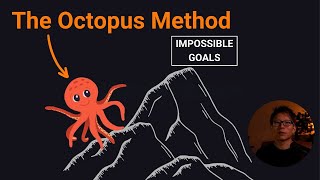
James Lim breaks down tackling big goals through the Ollie the Octopus method: start with one tiny, low-risk "tentacle" to gather data, make a micro action plan, and execute within a week. A client named Fran used conversations as her first tentacle to shift from corporate work to conservation.
Chapters
So this is you. You have an idea, but then you get overwhelmed. You freeze, unable to move. You overthink and go around in circles. At this point, you're at the bottom of this mountain, focusing on getting to the top. We've all been there in some, in some way looking at the, the, you know, the, the end goal, and it's just. It feels overwhelming. I mean, I'm just looking at this, thinking about this live, and it is overwhelming. It can make us feel overwhelmed, particularly when it's new and you've not done it. Remember, unfamiliarity leads to anxious feelings. The brain doesn't like it. All we think about is the need to get to the top or to the other side. So we're going to go back to this chart here. We are looking at this distraction point. We're trying to find where this point is too high, you become too overwhelmed. This is the area that we're trying to focus on. So here we are again. You know, how do I do this? Hands or feet? Ah, damn it. So far. Should I run across one step and come back so many steps. What should I do first? Our sensitivity to overwhelm is maxed out here. What we're saying is when we get to the, the end, we get so overwhelmed quickly because it's so unfamiliar, right? The brain is just screaming at you to do, to, to, to avoid it. So anything that reminds us about doing it causes us to get triggered easily. And remember, this is not some kind of failing or some kind of bug in the system. It's by design. Your brain is trying to keep you away from doing anything it perceives as being dangerous. This is all new. The reality is there is a bit of a genuine risk, right? Because it, because you don't know. You don't know what you're venturing into. So we're going to show you how to, how to. How to exploit your brain and actually do this in the right way. You make this worse by approaching this in a certain situation with no structure. When you go to a situation and you don't present an approach to your brain that appears safe in any way, it's thinking, no way. You cannot convince me. There's no system, no process, so just a chaotic mess. So that causes you to feel even more anxious and overwhelmed. So what can we do about it? The idea here is we want to try and reduce the overwhelming feeling and create order and structure. Step one, how to make your first steps feel easy. I'm introducing you to a concept I like to call Ollie the Octopus. This is a client favourite. So I want you to imagine we've got an octopus here. His name is Ollie. He encounters an obstacle. He's wondering about his day and he has this little obstacle in front of him and he's trying to get over it. And what does he do? What's the word? Maneuvers his tentacles across one at a time and then slowly levers himself over to the other side. Hooray, he's made it. So what's going on here? Why have I used this? Ollie has used. It's a way to move forward and get over an obstacle without risk. It's systematic. We're going to break this down, but first I want you to imagine an octopus moving like this. So just to. Just to remind you, it goes one tentacle first, two tentacles kind of goes over. The body is still kind of on the. On the front side of it. And then as it goes across it, then there. So just remember that. Now, you might be wondering, am I just making this up or is this actually what they do? Do they really move like this? So I want you to look at this. So we've got an octopus who is. Who's put in this box and there's a door here. Now I want you to watch what happens. You've got these tentacles, it's just swinging around. Watch what happens. Focus on the tentacle. Can you see on that little image that's outside the box, what do you see? One tentacle figuring out what's going on. Then the other tentacles and then the body. And then there we go on the other side. This is what an octopus does and it really does this. I. I went down a YouTube hole when I was doing a lot of research on this. Yeah, it is pretty amazing that they really, really do do this. You. I'll permit you to do some, some, some, some research on octopus videos. Not to procrastinate too much, but go and have a look and you'll see that this is how they do it. It is amazing. It's very systematic. What are they doing exactly? Let's break this down because this is going to help you build a system for yourself. One tentacle first. It's low risk, but it is gathering data. Then you see progression. The second tentacle, as it has one tentacle to kind of lift the door and the second one to kind of help its way over. Meanwhile, the rest of the body is remaining safe. All the tentacles are here and the head and the brain and the whole body is here. So if anything goes wrong here, it can still survive. And eventually it goes over. But here at this point, this, there is a combination of safety and progress. This is really important to recognize because this is where a lot of people go wrong. They either stay in safety mode and don't make any progress, or they try and jump completely without remaining safe. Both, I would say, are usually suboptimal. You want to try and create a situation like this. Now there is an element of commitment eventually. So what are the lessons? They don't jump in. They move steadily, constantly moving. And they are data gatherers. They use their tentacles to feel around constantly. Learning only takes place when the tentacle reaches out. Notice they're always moving. The octopus is not, is not on the other side of the box. Think ruminating about what it should do, right? Look, you could see it was trying to constantly move around all the time. Minimum exposure, maximum data. So you're looking for this kind of ratio, right? You're trying to keep as safe as possible while gathering as much data as possible. There's this balance. So when one tentacle can't gather any more data, it starts to use second one. A negative experience, in this case, it would still survive. The net result, it allows the octopus to explore new paths and opportunities while keeping potential risk down, maximizing chance of success. And it moves at a very quick pace. If you've ever watched one move around, it just constantly does this until it gets to where it wants to go. How can we adopt an octopus approach? So first thing, step one, think of your progress as a tentacle. So you're looking to try and gather some data. What's the smallest, safest thing you can do that gets you a little bit closer to your goal? And usually the first step is kind of a data gathering situation. But in a practical sense, the trick, be cautious and small, not overwhelming. In practice, this could be reaching out into your network to have a conversation with. Let's say you're trying to switch career or you're looking at new opportunities speaking to someone in that domain. Step two, create a micro action plan. Keep it really simple. So it might be outreach. Get in touch with these people and then have that conversation and then see what you'd like to do after you've gathered some of that data. Step three, execute that first tentacle quickly. So once you've created that plan, go out and do it. I'll talk about how long things take and how quickly you should do things. At the end of this module, your goal is to gather data and to start learning real world feedback. You actually remember the octopus is not sitting in its room watching YouTube videos. Right. About how to get escape a box. It is just moving the tentacles around, escaping, trying to escape the box. Okay. So you have to engage with the real world. So here's a client example. We'll call her Fran. Career transition from corporate role to conservation. Struggled to see success without qualifications or credentials. Felt totally paralyzed. We focused on the first tentacle conversations with people in industry. This is a very common first tentacle I've had for lots of career changes. We just start to have conversations with real people. A lot of people have preconceptions about what these industries, you know, what you need to get into industries. The reason I usually do this with so many people is because all of those, all of those preconceptions are often. Many are wrong, many are wrong, what credentials you need, what you need to get in, what qualities you need, et cetera. Okay. The goal here was to gather data, quickly dispel these preconceptions which I just mentioned. And this was like qualifications. Did you need to go to university to study four years to have the right qualifications to get into it? We found out that was not necessary. Keep safe, little to lose and done quietly. Just want to touch on these. Safe. What does that mean? Well, we didn't want to rock the boat with her current situation, so we didn't want to announce it to her work or on social media or anything like that because it puts a lot of pressure on. So there's very little to lose. Well, if you have a conversation, you know, what have you got to lose? That. Yeah, there was no kind of invested energy there. We just had to find a way to have some conversations and done quietly, keeping the spotlight offer. She felt very prone to just feeling that pressure. So we, we did it in what I call stealth mode, which I will talk about later. This was, this was really important. It's something that works really, really well for me. It opened doors to opportunities and next steps. I mean, this was such an exciting. This client I'm talking about here. It was such an exciting period because it really, really opened up doors for her. And then this happened. This has happened so many times actually with other people. And it is so exciting because so many preconceptions were blown out of the door and we saw new ways to enter and we could create new strategies. Fast forwarding. She's actually now in the space and has made that career transition, which is awesome because we really didn't think it was possible. Well, she didn't think it's possible. Okay, so back to the octopus. The worksheet. If you are struggling making the first few steps, I've created a simple to use template to guide you through the thought process. So we'll talk about how to, how to kind of ideate how to create these first tentacle steps. It's quite difficult. We'll kind of work through it. Check it out in the resources section. Again. We've got the, we've got the different versions here. I'll show you that in a minute. Questions to ask yourself. What are things you can do as the first tentacles? Can you make this any safer? Right. Remember how Ollie keeps its body safe and just throws one or two tentacles across the other side? Can you come up with more alternatives for a first tentacle move? Ideation will help you create new better ways. Then if that works, what is your set of what is your second tentacle? Right. It could be another conversation. It could be speaking to a company rather than person. It's a company looking for some work experience. What is your third tentacle? Key points. An octopus makes progress by using one tentacle at a time. They never jump in. They are always kind of creepers. First tentacle is critical. It's used to gather data with limited risk. The first tentacle is usually if you're really exploring something completely new, the first tentacle is so important and it's actually quite difficult. So you do need to really think about this. I really recommend having little brainstorming sessions and coming up with different ways to have to gather some new data that you've not seen before. And usually involved with real, real world feedback in some way, but is still low risk. Octopus builds on this by sending more tentacles one by one. And it only learns when a tentacle reaches out. Very important. Do not just sit there and ruminate about stuff and strategize. You actually do need to execute. Always moving. They're efficient. They're looking for maximum data, minimum risk. Even with a negative experience, it can still survive. So even if you get rejected in some way because it's such low, such a low risk activity, you survive. And that also helps you with the positive rocks and we talked about for beliefs, you start to realize, oh, it's actually safe for me to throw first tentacles out. So you need to follow a similar approach. That's always a first tentacle. And I love talking with clients about this and especially long term we talk about, okay, you know, a client will contact me and say I've got some first tentacles. Can you just sanity check them with me and tell me what you think sometimes they've just done it autonomously and they've just told me, I figured out a first tentacle for my next, you know, for my next island hop. And it worked. And that is a great. That's a great message to hear. So, going back to the worksheets, here it is. We've got a little kind of template to fill in. You just got to open a document and just fill in the boxes. Template talks you through creating first tentacles, how to develop them and so on. And it keeps on going, helps you keep it into this very tight little box and it becomes your own instruction manual that you can use. And then here's a cheat sheet. This will continually. I took a snapshot of this. This will be continually developed as I continue working with clients and I'll keep adding first tentacles that they have used. So if you're here, you're thinking about ollie octopus. This is what we want to think about. What can you do to start getting your way across the rope? So here's some examples. Possible bridge tentacles. Stand at the edge, get like, just get used to the height. Get familiar with the rope. So put your feet on there. Left foot, right foot. Get used. Yep, get used to the height. Now you can also, if you remember the previous module, we had a little trainer rope. So you're standing on a rope, balancing over here. That's another good first tentacle. Client stats and observations. This was one of the most effective concepts that resonated strongly with many people. One people found it quite nice because it was quite a playful and very memorable analogy to use. The octopus, you can see this is actually what it does. Now. We always talk about how things have evolved over time. The octopus does this. It's not because it's a fun thing to do, right? It's done this because it's a really good way to survive. It needs to explore, but it needs to do it safely without dying. This is an evolved trait. So we are literally tapping the natural world, mapping this to us for exactly what we need to do, which is to explore new paths while keeping safe. And this hits the objective, we said at the very beginning of this module, of not being overwhelmed or feeling anxious and the risk of kind of survival. Those who immediately worked on ideas for tentacles had high success rates. As soon as we discussed this concept, they just went away and worked on it. And they. Most people got quite excited about working on first tentacle moves, coming up with ideas. It worked. We would. We were working it in session and also they were very good at it. Away during kind of homework periods. The key was they got started on it immediately. I nearly threw everything out the window for other than that. And just say, let's work on first tentacle moves. The more safe you can make that first tentacle move, the less friction you will feel at the edge. Very important. Quick execution is vital. Once you come up with the first tentacle, create a minimum, a minimal tentacle plan, then execute it. Like as soon as the octopus realize, okay, I'm gonna move my tentacles around, stick the tentacle through, and then it just does it. Right. There's like, there's no gap between thought and action. Now as a, as a human, unfortunately, we've got a brain that likes to think first. And if you're here, you're probably someone who already thinks too much. So we need to work the opposite way and try and figure out a way to quickly execute. Now when I'm working live with people, I would say, okay, this is your first tentacle move. Let's get it done in the next couple of days. So timescales when concept execution was less than a week, progress was really fast. I noticed this. There were a set of clients who were really good at once. They. They just needed to help with the structure and figuring out and brainstorming what first tentacle was. Then we. They were able to do it very quickly when it was. When they did it within a week and they didn't procrastinate too much around it. Just go on with it. Fantastic results. I noticed there was a second camp which would make constant excuses to not do it. And it was much, much more friction. We, for most of them, we eventually got them to make the move. And we'll talk about a later module about excuses. It comes in much later in this course. We were able to overcome it eventually, but. But there was a lot of friction and we did a lot of work to get them to do it. It's also correlated with the domains that you're working in and just historically personally, how much fear you've had around it. Personal stats. I still use this after years of knowing it. One of the most valuable concepts I've ever kind of come up with and used. I absolutely love it. If you're listening to this in late 2023, I've been doing this with learning to dance recently. The more fear I feel, the more I lean into this. It's a learned behavior. I'm always mindful about risk. Emotional safety is vital. I'm actually a bit of a wimp, right. I'm not as courageous as a lot of people think, the difference is people look at the outcomes and see how many things I've been able to explore. I think of myself as Oli the Octopus. I've just had a very effective system to keep the risk down so I don't get overwhelmed and anxious, but I'm able to explore. And this comes back down to this safety and the survival instinct. And that's what I call emotional safety for me, really vital. I've got some friends who are really easy. You know, they can explore new things. Really, they're very brave and very courageous and they can just get on and do it. That's not me, and that's why I've come up with all these systems. So just think, what would Ollie do? What is one tentacle you could. You could create. This is the narrative I use regularly. Come on, James, think about one tentacle you can come up with here. Yeah, and sometimes I do have to sit there and I will say that and sit there and be stuck for a while, but I'll eventually come up with an idea. Time scales, one to two days, typically for execution where we are. So we are all here. We've identified and created possible first tentacle action plans. That's where we should be. So language level up. When attempting your challenges, use the following language. Ollie the octopus. Low risk, data gathering. Tentacles first. Tentacle moves, maximum data, minimum risk. I want you to think about that when you are trying to figure out a first step. Just think about Ollie the Octopus. Okay? This gives us, from a technical perspective, our traction point here. This gets us started. Once we're here, we could focus on the next set of problems, but here, this is the most important part. Next up, deciding exactly what to do first.
More from James




The mental system I ALWAYS use to transform myself. Warning: Simple, not easy.


Why you lost your confidence and how to get it back - Thrive and Decay: [Full training]



5 PAINFUL truths to improve your life (you're probably not ready to hear them)


Why you always feel conflicted when making important decisions [Three Monkey Framework]