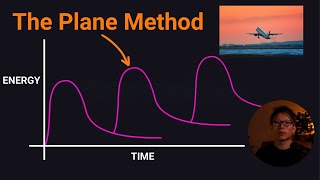
A short instructional YouTube talk (presented by James Lim) that introduces the "front-loaded energy curves" framework for juggling multiple goals. The speaker uses a plane takeoff analogy to show that starting new projects requires a high, front-loaded perceived effort that falls as habits form, and recommends staggering project 'takeoffs' so peaks of effort don't overlap and cause burnout.
Chapters
How do successful people seem to juggle multiple projects? So this is something, you know, I used to wonder. I looked around and some people I knew, they had multiple business, multiple businesses and they had very good health and fitness and they just seemed to have everything together. And I was kind of thinking, how on earth are they doing that? I can't even get one thing off the ground. So many exploit the system I'm about to show you. But before that, a quick question for you. How many people are in the air right now and we're talking on planes around the world. Have a little think about that. Take a few seconds to guess. Throw me a number. 1.5 million people, approximately. It would look like this times a thousand. Lots of people in the air. Sometimes I think about this. It's pretty crazy. But we don't get them all in the air at the same time, do we? These are the planes that take off. We take them off. 162 passengers on board a plane, one by one. Most meaningful projects are life quests. And this is now talking about you. They demand significant effort, focus and concentration. Most people go wrong by trying to do too many things at once. It would be like trying to get the one and a half million people in the air all at the same time. It's not possible. You know, there are not enough runways around the world to do that. I know in, in London, in the uk, I think it's Heathrow. Every minute a new plane goes off, leaves a Runway. So it's like a conveyor belt into the sky. Now this is the principle we're going to be using here. So how do we achieve multiple goals? I call this kind of system here front loaded energy curves. This is something that was introduced to me by a mentor of mine and I actually held a lot of resistance to this internally. It's a bit of a being honest here. I actually was very reluctant to accept what he was saying to me, this point. But over the next year or so after this, this is quite a few years ago, I learned the hard way what happens when you don't do this. So let's explain this. The energy curve. We sometimes think, okay, I just need to put a load of willpower into this. If I spend 100% of my energy on this, I'll never work another project. So that's the problem. That's one of the problems we experience. You know, if I need to get this plane off the ground, this, this project, when am I going to focus on my fitness? When am I going to focus on my Social life. When am I going to focus on this other project, my work? And the other. The other alternative is, okay, I'll do two minutes a day or five minutes a day. And you'll think, well, that's never going to get this project off the ground. And I'd say that they'll also be right. You come to a conclusion that I'll just ramp up, but it just continues over time. And so what you will say is ramping up means I'll have less space to do other things later. So there's this finite amount of energy you need or your willpower to work on it. So if you focus on, say, your fitness, that's the only thing you'll be focusing on. But the reality is quite different. Now, this is from my experience, and when I mapped this to clients, we found the same thing happened. I'd say it's fairly reliable, but you can try it and follow this concept yourself and you see whether it works. The idea here is when you start something new, the amount of perceived effort you have to put in is very high. It rises very rapidly. At the beginning, it feels like it's the only thing that you can focus on. What happens is the initial period comes here and the amount of energy input you need to put in is very high. So you end up with this very steep rise and then a peak. And what happens is, over time, as you get used to it and you start understanding what you're doing and things become more familiar and you start to build habits. What happens is a lot of the reason it feels so difficult is it's all consciously driven. You're having to think very specifically about what to do. As those actions start to transfer into your unconscious side of your mind, ie, it feels like second nature. The perceived effort starts to fall away. It drops. So you end up with this lump at the beginning, and then over time, it slowly subsides as it beds into your habit. It doesn't go to zero because you still have to think a little bit about it, but it drops significantly. So here, this is where the habit formation period comes in. So just to give you an example, when you've started a new job, the amount of cognitive load that you experience is really high at the beginning. You don't know who to ask for, what, where the departments are, how the systems of the business work. So you're trying to do your job and you can't even. It's very difficult to do because you have to focus on all the other things. They're all conscious. What happens after maybe one or two months you understand all of those things and they all bed into your subconscious and, and then you can focus on what you need to do. So the load drops away. So what happens? So this is essentially what the effort feels like. It's very front loaded. But most people, they get to the top. And if you're working on your own project, if you're working in a job, you are forced to go through this curve and then you experience it. But when you're working on your own projects, you can stop this at any time and this is a failure point. So most people get to the top, they experience this immense amount of effort and they think this is not sustainable. And so they fall just before the effort curve starts to fade away and say, ah, that was exhausting and completely unsustainable. This bit is always hard. Your brain is a prediction engine. So if you keep going to this peak and falling, the last thing your brain remembers is just this, it just thinks that it's going to be this forever. It's extrapolating. And the more times you experience it, the more you embed that belief. But if you just hang in there, keep doing what you're doing, it beds in. So with the job example, you start to know who to phone for, what department where everything is, how all the systems work. Eventually you don't have to think about it anymore and then you can fall down the front loaded energy curve, get to a place where it doesn't require so much energy. Habits starts to embed in your mind, you become things, become unconscious processes. Effort experienced drops significantly. Now mapping this to what we showed you earlier, the plane analogy, this is the bit that we're talking about. If you've ever been on a plane, hopefully you have you experienced this. Everyone is focusing in this period of time. It's pretty, pretty intense. And if you, if you're not a very good flyer, it's even worse. Even as a passenger, you're, you're having to concentrate even though you're not flying the plane. But the pilots, air traffic control, Runway, everything is focused on getting the plane off the ground. Very intensive work mapping these two charts. You've got this period and this period. Now how does this work with multiple goals? Like how does this all relate to? The idea is we've got this takeoff window and what we want to do is we want to give it all of the focus and we line up the next plane to take off. When the first plane is on track. Once it's maybe getting to above the clouds, then you can take off, you can focus on the next one. So what it looks like is this, if you want to be really efficient with this, you give your project your first plane or project one that period, you look for signals of things starting to bed in and then you can start stacking your next plane or getting your next plane ready for takeoff. Project staggering like this. Now in reality, of course, it doesn't go to zero, so it does accumulate. But what happens is it's much more manageable because the peaks of energy, so this is, and when we talk about energy, we're talking about that perceived effort. And if you, if you get to over 100, that's when you just feel exhausted emotionally, physically. So yeah, it looks like this, this is a framework you can attempt to follow. And I'll tell you how to do, how to build this into with your, with your real activities shortly.