How to change your beliefs Pt.1 - The Practical method
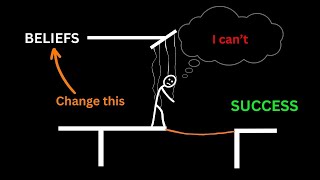
James Lim explains how to change beliefs by treating your brain as a prediction engine that learns from experience. He uses a conveyor belt metaphor to show how past experiences shape what you believe, then shows how small intentional actions with fast feedback can create new beliefs. A client named Helen used this to overcome years of inactivity.
Questions this video answers
"Helen" (pseudonym used by the speaker).
About three pounds (≈ $3–$4).
Chapters
So at that point, all you can think of is the risk and what's going to happen if things go wrong. And so you start to ruminate and the thoughts just get louder and louder and it makes you feel even more uncomfortable until it's just all you can think about. You essentially become stuck in this situation and you become a scarecrow. And this can. This can go on for years, years and years and years. And unfortunately, I get to see this far more than I'd like to. Puppets. This is what I like to think about. The role beliefs play in our life. They can govern our movement and our action in the world. Like a puppet, your beliefs can make you do things and can also stop you from doing things. You are the puppet. Beliefs take hold of you, controlling you like a puppet. If nothing changes, this continues. If you don't change the system, you will be manipulated like a puppet. We need a way to break the cycle. There's kind of no choice if you want to change. What if it's possible to hijack this whole setup? This is where action over thought comes in. We need just enough willingness to initiate. It's difficult to change your situation by thinking alone, so we're going to approach it slightly differently. Crossing the belief gap. Your brain is this prediction engine. It's like a machine. And I want you to just hold this concept for a moment. Your brain predicts based on past experiences. You have a backlog, a whole catalogue of these past experiences that you've been through. Your present experience soon becomes your past experience. Just for a visual here, imagine you've got this rock. This can be a rock or an experience in your life. What we're saying here is this is today's experience and you can see the past. You've had these past experiences going here. And just think of these like boxes on a conveyor belt. So you've got this, future experiences coming up. So what happens is this happens so that present experience eventually becomes a past experience. So you can only imagine this is going on in your brain. So just hold this concept for a moment. Your past experience. If there's been no evidence of progress, that is what your brain has logged. And each day it adds more to the evidence stack. You change nothing. The conveyor belt just keeps moving. If you've got empty boxes, you're going to keep having empty boxes. This is why you get stuck, because now you've got a whole catalog. Imagine a warehouse full of these boxes. Empty boxes. I had a client who we'll call Helen, in a position where she'd been really struggling with things, had really poor health and was overweight for where she wanted to be. She tried lots of different things and she got to the point where she really struggled to leave her house, let alone go to the gym. Yep. She tried therapy, counseling, lots of self help. Her children had even got involved as well and tried to help. A big problem here was she was afraid about others judging her. It lasted kind of over. I think it was nearly 20 years actually now thinking about it, she totally lost hope that she could change. We'll come back to her shortly. She was in a really, really bad way when we started working together. She had these really, really powerful beliefs inside her. It really, really followed that, that idea of these, these, these experiences that came through and there was a lot of friction that we had to overcome. Now we'll come back to her later. What's the way out? So this is, this is what we used to help her get out of that position and to completely reframe and actually get the results because she ended up losing a lot of weight and she started getting very active and there was a very good outcome. We'll go through shortly. So solution Action based mindset why we all know we need to take action. But why is it so useful? Action can break this cycle. It's an opportunity to influence the future. Experience, interaction and real world feedback. We come back to this diagram here. We want to change this experience here. We have the power to change that. It's really the only thing that we can change right now. Once we do that, then we can start changing these. When these come into play, you want to take action in the approximate direction of your goal. Feedback will be directionally correct. You can then feed your brain with new information to predict with and your brain can draw an updated picture. It's an opportunity to seed new experiences into your brain which becomes your new past experiences. So you can just change what's in the box. Intentional action with appropriate feedback and it results in a completely new picture. Your brain will start to predict new outcomes because you've now got different things in the box. This allows you to create new narratives. If you've got the same boxes going through the conveyor belt, your brain just hasn't. Like what can it create? It's just getting the same thing again again. Now you've changed things and you've got new things in the boxes, new colors of boxes. You have a chance to create new narratives. This allows us to start telling ourselves new stories which can lead to the formation of new beliefs. Now this is not a given. It just makes it a hell of a lot easier to create those new beliefs. I'll give you a personal example. When I was in a corporate job for nearly 10 years, I always wondered could I make money outside of my job? I had no experience. There was just no evidence because obviously the days were just going past working this job and I couldn't imagine how I could possibly make. I just hadn't made. I hadn't even made like a pound or a dollar by doing anything. So I had no confidence. It was very overwhelming and anxiety inducing. I'd heard a lot of people talk about how, how good my cooking is. Now I. It's one of my hobbies. I really, really enjoy cooking. I'm not sure if I enjoy cooking so much that I actually like the eating. So I like eating nice food. So I had to learn to cook good food to eat nice food. And I had quite a few people telling me that, that I should sell it and it would do really well. In those kind of conversations, those informal conversations, it get me very excited. But deep down there's always this question of how are you going to make a business out of this? And how people won't really pay, you know, people won't really pay you for it anyway. Fast tracking. We came up with ways to potentially monetize this and here's a little diagram of it. We ended up fast tracking things quite significantly. We ended up finding a way to serve at a local food event with just a little gazebo and some, some food. Then we ended up creating this which we went on to go to a local food festival and then eventually to. Well, I'll continue the story later. It was really interesting. I remember selling one of the first items for very small amount of money. So it was about, yeah, three pounds, two or three pounds or about three or four dollars. And it was one of the most amazing things where I finally saw this situation where I could create something and someone would actually give me money for it. That was one of the seeded beliefs in my, in my journey and it allowed me to completely shift my mindset. There was this moment where, yeah, someone actually took, you know, gave me money for something I created. And it was, it's actually pretty life changing now I will go through the framework I use to get there later. So what does this look like going back to the action based mindset? We've actually done this before, like learning how to walk or ride a bike. What happens is we don't really think about things. If you think back to How a baby learns, they start taking small actions first, then you start seeing feedback. You take bigger actions, bigger feedback, and what happens is over time, your beliefs start to go in that trajectory. One of the problems is belief can be a lagging indicator. Why? Because your brain is comparing new data to old data and you've got a large amount of this old data that maybe you can't do something. So you need to put a lot of new data in to affect the prediction engine. So you've got lots of these empty boxes or boxes with a certain message that validate and justifies the old belief. So I want you to imagine this, a giant box. You've got a rock here. This is your experience rock. You throw it in. It can be positive or negative, but we'll assume it's a negative experience in place. So we'll put that as a red experience. Now you've got all of these bad experiences that you've had, right days where you've not been able to do anything and you're stuck in that same position. And maybe some of them are also imagined experiences. So you've just got a whole collection of these. This is you right now standing at the edge thinking, I've never walked across a rope bridge. I don't believe I can do it. What could possibly change this loop? Now, if you keep going in the same direction, you're obviously going to think the same thing. You're going to keep stacking more and more of these red rocks in your box. This is just one tiny variation in which you could do it, because most people would try and try and out think this, this, this, this situation and say, okay, I just need to figure out a way to walk across the rope. Good for those people who can do it. For everyone else, we might need different ways. Some lateral thinking here. What is it about the rope that we need to change our beliefs on? Well, it's quite a few aspects. There's the heights thing. There's actually walking along a rope. There is walking on something different other than concrete. So here we are finding a way to maybe just get used to walking on a rope. Why is this useful? Well, it's not actually walking the real rope, but it's something similar and it's directionally correct. It can seed something different. You're providing your brain something new. Now, it's not to say you will form a belief that you can magically walk across the rope immediately, but you are seeding a new idea into your brain. What could happen with it. Every day you're trying to overpower and outwit this problem here. But your brain is trying to protect you and keeps you on the bridge. But now you're thinking, what if you imagine the rope thing, the little trainer thing on the real rope, Is that a possible? Sorry, Is that a possibility? And what happens is you start doing this and suddenly you start seeding potentially new experiences here. And the interesting thing is, is what you're looking for is not to get rid of the red rocks. At least this is the way I like to think about it. You're not trying to get rid of them. What you're going to do is try and overwhelm them. You're going to use overwhelm to your advantage. If you're really practiced at being overwhelmed, we're going to flip it on its head. And now we create more and more of these big positive rocks. It will outweigh the red rocks. And so now here what you're seeing is mainly green. So what are we saying here? I really like this as a comparison, that when you're walking through a forest, like a really overgrown forest, you may have a path that has been established. We naturally want to gravitate to the path that has already been established. To create a new path. We must attempt to walk a new path. And slowly that path starts to form a clearing. It's the same thing here, and it's the same thing that goes on in the brain. The brain starts to rewire and it kind of does the same thing. You start to fire new neurons and your brain starts to reorient itself to what is possible. Now you're feeding it new data again. There's no guarantee that you will establish a path at all or quickly. But by giving it new data, by wandering through from the, from the, from the usual path, you create new opportunities. Going back to beliefs, one of the things we have to be mindful of is that they are incredibly fragile, particularly at the beginning. They need to be nurtured and cared for. So if you imagine trying to grow a plant here, look how, look how delicate it appears. Now we maybe intuitively know we need to be quite careful around this. We need to not trample on it, and we have to make sure it's placed in there nicely. Belief formation is quite difficult. Having to design systems for people to do this has made me really respect this process, how difficult it is. These positive rocks, they are so vital. You have to, you know, you really. If you get experiments too vastly wrong, you end up adding more negative rocks to it. It's not to put you off this. It's just that's why you don't want to be really reckless with your attempts. So don't make things so difficult at the beginning that you can't do it and it justifies or invalidates the existing beliefs. What we're trying to do is change things here. So we create positive rocks and we keep them really small so you can do them. You're likely to succeed. And they're quick, so you stack quickly and not too heavy. It will feel fragile until a significant number of rocks are in the box. So just like a fire, if you're lighting a fire, if you've ever tried this again, this is something I was very surprised that it's very difficult. You have to be, you have to give it a lot of care and attention. It has to be the only thing you're focusing on at the time. And it is very delicate. It's a very delicate process. But once it's, once it's going, it's fairly, it's much easier to keep going. What are the ingredients for a high probability belief change? You want high levels of control, so you dictate what happens. You want a high probability of success, ie, it's likely to work, you need to give it a fast feedback loop. You want to see results quickly and these ingredients allow you to update your mental process, your prediction engine, your brain in the fastest, most efficient manner. So in the next module, I'll cover a complete step by step guide on how to do this.
More from James




The mental system I ALWAYS use to transform myself. Warning: Simple, not easy.


Why you lost your confidence and how to get it back - Thrive and Decay: [Full training]



5 PAINFUL truths to improve your life (you're probably not ready to hear them)


Why you always feel conflicted when making important decisions [Three Monkey Framework]