How to make executing your goals easy and without overwhelm (Full system)
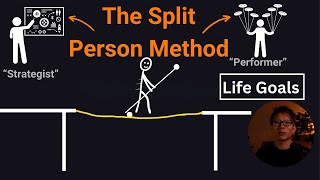
James Lim splits goal execution into two roles: a strategist who plans during calm moments, and a performer who acts under pressure. The strategist creates ultra-simple rules like "open a blank document and press keys" for writing or "walk past the treats aisle" at the grocery store. Test 3-5 rules per bottleneck until one sticks.
Chapters
So as we get closer to execution, the fear increases. So as you get here you start to. It just goes exponential at this point and you feel very, very powerful emotions. We need a system to keep us moving forward despite this. So we're going to create, we're going to look at this system. It's called simple rules. This makes staying disciplined a hell of a lot easier. Clarity at the jump point is everything. What's happening here, problem in the moment, at the very edge, your head becomes foggy and we touched on that before. You experience sudden overwhelm at a jump point. Your plan feels too complicated. Everything seems to start to break down here. Creating over complicated plans that overwhelm you. Expecting the clarity you have now will be the same at execution point. Copying a system from someone else, expecting it to be easy just because they've said it's easy. Sorry. Why do you struggle to move here? Intellectualizing your behaviors doesn't work. This is all about experiential. So when you're here and you're facing the edge and you're looking here, emotions flood your system and we are all prone to this. It doesn't matter how well read you are, you often cannot think clearly. This module is all about this particular problem. We expect to be able to think clearly at the jump point, but that's the fallacy. We can't you freeze or adopt undesirable behaviors instead of the plan. So I want you to think about this. You are a performer. Most think performance is only for kind of athletes, musicians and others. People you see on tv. We see the nerves and anxiety that they experience. Not all the time. And one of the big questions here is can they execute when it matters? Now this is an important point. Culturally we kind of understand that they're all dealing with some kind of mental game, right? So it's going to be very difficult. If you've ever watched any type of high level sport when they're playing to win some kind of World cup or anything like that, we all appreciate the stress and anxiety they feel at the top. When we execute anything, we are also performing and feel similar emotions. The fears, sweaty palms, nervousness and overwhelm. So it's actually much more relatable than you might realize. I'm going to use an example here. We'll call him Jake. He wanted to create a. He wanted to create content and build a personal brand around the stuff that he was interested in. He had great ideas and really wanted to share with people and build community. But he was crippled by his own fear of judgment and self doubt. He was in total paralysis. He tried to make content but kept freezing at his desk. Writing ideas, thinking of ideas, but not making any progress, not being able to articulate or write anything down. He couldn't even pick the camera up. Now, interestingly, we'll come back to him, but Jake was involved in, in acting in the past as a part time actor and had a lot of interest in this kind of stuff. Had made kind of fun videos for himself when he was younger. But at this point he wasn't able to perform. It was, he found it very, very challenging. Now we will come back to him and how we resolved his situation later. Coming back to the performer, the top performers follow systems. So here we've got Roger Federer in his, in his heyday. When they get on stage, they execute with simple rules. This helps you keep moving despite how you feel. So they're not, they're often not intellectualizing everything, they're not processing everything. They have simple rules to follow. Now we can create a similar effect. And just to double down on this, most of the strategy and the planning and everything is done in training, right? It's done away from the stage, away from the court, until it is. Until you've got very few things to think about when you're actually performing. You want the minimum there because they know they're going to be experiencing all of these emotions, how to deal with it. We have to accept you are performing. You need to enter this mental state. It's a process of preparation at the beginning, all of the training that you see for people in the sport world and then they go shift into performance mode. So just to break this down, preparation, intellectual, can think and can strategize. So you have that capacity there. You can do a lot of thinking, you can do a lot of planning and you can take your time. The performance side, it's very emotional and you're at the mercy to the whole experience, right? You don't really know how it's going to happen and when you're now coming back to the, the cliff edge. When you're at the cliff edge, you don't really know exactly what emotions you're going to feel and how strong they're going to feel. So we want to prepare and then here we want to accept that we're going to be in performance mode and how we can manage that. Knowing the state you're in will help with solutions. Preparation and performance, split them into two immediately. I like to call this the strategist and the performer concept. So you've got this strategist side of you. Planning on a whiteboard. Develops plans for the performer. Highly skilled at planning. A good thinker can figure things out. Must consider performers working conditions. A good job for the strategist is ensuring the performer can perform. Now, the performer, he got his little mask here, so he has to go on stage, does what the plan says, experiences performance, nerves affected by environment and the weather. Provides feedback to the strategist about the plan. A good job is executing what the plan says. And that's it. Yeah, not thinking too much about the plan, but executing. So very, very kind of, kind of two, two, two sides of this. You've got this away planning and then you've got present plan. Sorry, present execution. This exists in real life. We see this air traffic control, this stuff is going on where developing the plans, helping with the strategy, the maps, same thing over and then performer over here, driving the car, flying the plane. And here we've got people radioing in what needs to be done to the performer. Firefighting drills, doing all of the drills and the practice here and then performing. So that when they go into the building, they know exactly what to do and all of the rules. They have rules and procedures set in place because they know it's going to be very difficult to manage. They're going to have to be spending all of their energy managing their emotions in that point, and they just need to be following the task. Same thing here. Strategist off court, performing on stage. We must internalize these two characters and build a strong and healthy relationship. So the mistake we make here so often, away from the edge. The strategist, because there's no risk here, makes complex plans that look good on paper because they start to. They start to think, oh, if I make a good plan, I'm a planner, I'm going to make the best plan. I can only considers how they feel now because they're relaxed, they're in an office. So when you're walking about and you're having these amazing ideas about what you're going to do with your life, you come up with these amazing grand plans and forgetting that it's not you who has to perform it, it's this person here. Little empathy for the performer, incentivized to make a plan with big goals. Because after all, they're measured on how good their plans are, right? Annoyed at performer for not executing the plan, they make this big grand plan and they wonder why the performer wasn't able to perform. Often not questioning how effective the plan was. Now we've covered this in previous modules. When you're highly motivated, the strategist is highly motivated, creates these amazing big goals, Lots of, lots of, lots of milestones to hit. Very high expectations. And not considering that this person has to go out and do it later punishes the performer when they don't actually execute to the level of the plan. This is not all on the strategist. The performer also experiences a whole set of things when performing. Often gets overwhelmed by a complex plan. Will try but gets stressed, makes errors due to the difficulty. Often gets frustrated and sometimes just avoids a plan altogether out of frustration and sometimes bites back at the strategist. Will often then just distract themselves with YouTube and scrolling because they're just like this plan is just way too complicated. This is a recipe for a very toxic relationship between the two. There's an opportunity to show genuine and practical self compassion here. So hopefully you've seen we've attempted to split the mind into two so a strategist side and a performer side. We've now got a recipe for a very not a very pleasant relationship. It's very easy for it not to be pleasant and to be shouting blame at each other. So we've actually got the opportunity to flip it all on its head now. Now we can start thinking a different way. The strategist says to the performer, look, I've got your back. I've added these tweaks based on your feedback last time. We're going to make it a little bit easier for you to execute. Try this version. Let me know how you get on performer. Start saying, I appreciate what you did there. For making it easier. I'll try again. I think those updates will help. I'll let you know what works and what doesn't based on this new plan. So you can see you can this. This relationship between the two can be wildly different. One can be quite abusive to each other and the other one can be really supportive. And I want you to think about this internally for you. Now. I see a lot of people with a very, very strong strategist and just completely bullying and abusing the performer. And then the performer just says to hell with this. I'm just gonna go and do my own thing. Right at the execution point, your brain has reduced capacity to think. Your emotions will flood your system and that's okay. You'll experience overwhelm, mental fog, anxiety and stress at the jump point. Again, that's okay. You'll be much less effective at the jump point. This is your execution state. You must start learning what this is. Be compassionate. You can practice genuine compassion. People talk about being kind to themselves. And I'm not given practical examples of how you can. How you can. How you can execute this in real life. This is an example of it. Treat the performer kindly. So what to do? Don't fight. Work with it. You are performing. This is a process strategist planning. Then you pass it on to the performer. Assume your emotions will. Sorry. Assume your emotions will flood your system at the execution point. This is flipping on its head. It's just reframing what is going on. Assume you will be much less effective at the jump point. Create a system that moves you in this reality. So because you are less effective at jump point, create systems that allow for this. One of the big problems is people. Do people assume they are going to be as effective away from the jump point as they are at the jump point? Showing compassion to yourself. So we've shown this. Now the idea here is imagine you're on the boat and you're planning this amazing journey across an ocean. And in your head you've got this vision of sunny weather with a nice gentle breeze blowing you. And you can row in any. In any weather. The reality is very different. You end up going through these storms. You need to know what you can do to help this boat cope with those situations. So once you think about this little graph here to try and really hammer this home, your usefulness and effectiveness on the Y axis. This is what you think. This is how effective you think you're going to be. And this is the reality. Yeah. So you're much less effective than you are. This happens for me. This happens for me still on a daily basis. Right. So I think of an amazing script I'm going to write. Then when I actually open the Word document, I've got these great ideas. And then when I open the Word document to type something out, my. My fingers can't seem to move. And it's like all of the words just fall out of I. They just disappear. I get the mental fog. I can't even string sentences together and I'm like, what on earth is going on here? The performer is trying to perform and is struggling. But that's okay. What you need, everything must be designed for the person executing. This is one of the fundamental flaws. People do not think about who is executing the plan because we live in one head. We think, well, it's all the same. However, I feel away from it while I'm planning is the same person as the person executing. It's not. It's very different. That's why I've tried to use this kind of analogy here to help you separate those two. Because it can help you think this through and create better, more effective plans. You must make them easy to execute. No ambiguity. No ambiguity. They have to be really clear. I want you to imagine you give someone a map to navigate their way through a forest. The same thing you're like, oh, I'm going to go here, here, here. Go through these checkpoints is the fastest route. As long as you do this and you cross a river here and then you make it across this ravine. But then you know when you're going out into the forest, into the jungle and actually doing that, you know you're going to get lost. You're going to feel really stressed and anxious because things are not exactly what they seem. You feel like you're late. It's physically challenging. Same thing here. So you need the map to be ultra clear. No distraction. You need to allow them to be fully focused on the mission. Here we want to imagine this person is here. We want to help this person. They're here, they're not up here. Give this person a break. So this is compassion. This is practical self compassion here. If you do not design plans that are designed for this person here, you're not actually being. You're not showing self compassion to yourself. A lot of literature out there talks about being compassionate, but again, they don't. They often don't show you exactly the actions and behaviors you must take to demonstrate it. This is an example. Simple rules. So with the map thing, you want to have it super simple. So when you. When you get to the clearing, turn left. That's it. Right. Nothing. No. Go these degrees to the left. Take seven steps here, take a jump here. If you make it too complicated, it overwhelms the performer. The simple rules designed for performance mode helps focus on performance. If you give very simple rules, it allows the person to just execute and focus on executing it well. Give your brain some help. Make it easy so you don't have to use mental resources of trying to figure something out on the fly. Design simple rules in the preparation stage. Don't design them while you are performing. Try and design them away to make it easy for you. Pass simple rules to performance emotional state. So you do it in preparation. Then you pass it to the performance emotional state. You may have heard this kiss. Keep it simple, stupid. It's an interesting history on this. The need to simplify aircraft for repair. Repairability. The people repairing needed it to be Done under pressure very quickly. So they needed it to be yet quick and easily actionable. Cannot deal with over complicated systems. So the idea here was, you know, these guys and girls were the performers. They needed the design up front and the repairability instructions to be really simple so that. So that they can just focus on executing, not trying to figure stuff out on the fly. Concern at the edge. Then you go and read, and then you design your plan. Put right foot here, put your left foot here. And then you take your plan and take it to the execution point. You have very simple rules, and then you execute. Here's some guidance for how to create simple rules. So we understand the concept simple rules. Now we are going to implement them. They must be clear and precise actions. Very, very high clarity. Put your left hand on the rope here. Low mental effort. They must be. The instructions must be very, very easy. It must solve a bottleneck in your plan. So highly focused on a specific thing moves you in the direction of your goals. So it's a critical action that is moving you where you want to go. So on the bridge scenario, we want to gain a few feet or meters along the bridge. So we know we can give them actions of placing your hand here and placing your feet here. Because we know that it's going in the right direction. It acts as a catalyst for a series of behaviors. What we're saying here is once you say, put your left hand here and your right hand here, it is likely that it is going to continue after that. Left hand here, right hand here. Well, then we'll keep doing that. So simple rule usually helps you start the process. Here are some very specific guidance on how to create how to construct simple rules for yourself. The rule wording should be really concise, not some kind of verbose long paragraph. It's usually about less than 12 words. Does not describe or explain the problem. You're not trying to activate the performer's mental state. You're just trying to keep it really simple. Say, do this. The reasoning and the why should have been done in a preparation stage. So you should have done that away from the performance stage. The rule results in a desired behavior. So when you say, let's say we're trying to cross the bridge, the problem is we're not gaining physical distance to toward our goal to the other side. We have this system of making our hands placing one in front of the other and your feet one in front of the other, across the rope bridge. So we know the rule is going to result in this desired behavior of moving forward so I'm going to give you some practical examples now. Example 1. You want to write more critical action to see words on the page. Yeah. That's all you need to do. If you're getting words on the page, you're writing. So the bottleneck is you have too many ideas and you get overwhelmed by all of the ideas. Your simple rule is open a blank word document and press keys. This might be a bit, you might find this a bit funny, but this is one of my personal rules. Why does this work? Well, sometimes I have plenty of ideas about videos I'm going to make and it just gets overwhelming. But I know that as long as I open a word document, just to be clear, I get overwhelmed and therefore I don't do anything about it, I don't write. So a simple rule is if I get the word document open, and as long as I, my, my hands and my fingers are pressing keys, I'm not going to press any random keys. It is, I know I'm going to start creating words. And that is a very simple rule for me. If the performer we trust, the performer can perform in some way. So you just need to give a nice simple signal. There's no thinking in this. Open the word document and press keys. Yeah. And I've actually done this for a handful of writers in various forms of this and it's worked quite well. Other ones we've had is click the bullet point button and start typing with bullet points. And it usually gets them going. Example two, you want to work out more critical action to be outside walking bottleneck. Too much effort to get started. Your simple rule, put your workout clothes. In this scenario, we're looking at what triggers the performer to start performing in the whole series of actions. So even though the simple rule is not literally the working out, it triggers off a chain of behaviors. Once they put their workout clothes on, put their running shoes on, put a running top on and shorts on, that is enough to trigger the next series of actions. They're less likely to go back to bed in your running shoes. The reason this works is it's so simple. And when you're resisting getting started because it's too much effort, the simple rule neutralizes that because this is a fairly low effort task. If you think put work up clothes, get my car keys, I need to go and drive, you know, to a park or whatever, that can get very overwhelming very quickly. Example three, you want to reduce high sugar foods. So I've done this personally and done this with a number of clients. Critical action have no high sugar snacks in the house. Bottleneck Buying chocolate and treats when shopping. So when they go to the do their groceries. Very easy to go and buy chocolates. Now simple rule is to walk past the treats aisle while doing your groceries. Now you may have heard variations of this. It's there for a good reason. Because it's quite simple. Simple rule tips. They look easy but they actually require a fair amount of thought. That's why it's very useful to separate these two people. The strategist and the performer. You actually need to think about this. So the elegance is in its simplicity. But it requires a lot of thought. You need to because. Because this requires you to think what causes me to buy the chocolate, all of the sweets and treats, the candy. It's usually because I mindlessly walk down each aisle and then I just end up going down the aisle and all of the advertising and all of the height of the chocolates and all of the end dial things are designed to attract you. So as you mindlessly wander through the, you know, through the shop catches your attention. So we have a rule to counter all of that and we say when we get to aisle eight, we walk past it. Now it doesn't work for everyone. I mean this specific rule is only one. You have to decide what your rule is. Tips. Yep. Okay, back to tips. What simple rule will drive your desired behavior? Experiment with different rules. You have to do this a lot and see which stick. You can actually have Quite a bit of fun with this. I quite enjoy working with clients generating simple rules. But because they are so specifically tailored to them and it becomes and they often don't work for other people the same rule they are usually require variance. You can become quite playful with this. Just, just recognize that you won't be, you know, you won't be really good at this. First time round. It took me a while to figure out the writing one that of how simple it needed to be was I just needed to press the keys. I did doubt whether pressing the keys would result in good quality writing. I didn't need to worry about that because the performer won't let me write rubbish. Right. Pressing keys I can't see just a bunch of letters on a page. They end up being formed. I just needed that trigger. Okay here. Yeah. The elegance is in the simplicity. So help this person here. Please remind you this is how to show yourself some self compassion. I'll give you a quick personal example. Another one I've not mentioned yet. I think I may have mentioned it in another module. Cold showers I really dislike cold water. All of my friends know that. And they laugh at me and they chuck water on me. This is a strong negative belief for me. It always has been for the whole of my life. My brain would get really foggy at the thought of it. I'd intellectualize it. I'd focus on the detail. Oh, how long do I need to be under the cold water? How cold? And then watching Andrew Huberman and all these various. What is it? The Iceman on YouTube and just watching all of these videos and thinking, okay, I need to do it right. I'm going to do it perfect. These amount of minutes, this temperature. Then I'd think, am I feeling it all in the meanwhile? I wasn't actually doing it. The critical action is I have to have the cold water running and me underneath it. That's the only way to mark, you know, to score this, not how many videos I've watched about other people doing it. The simple rule is, when I was in the shower, I still do this. I did one. Whenever you're hearing this now, I was so before filming this this morning, and we're going into the winter season here in the UK and same thing again. I slammed it cold and it was horrendous. But I could feel the friction in my head saying, you know, it's starting to get cold now. Do you really need to be exposed to cold weather? Sorry, more cold. Maybe you're gonna get sick and catch a cold. Intellectualizing and trying to escape. So I just look at the lever and then slam the lever to cold. That's it. And it works every time. So some simple rules and that are getting a bit more advanced here. Look for the biggest bottlenecks in your behaviors where you have correct intention but failing to execute. Focus on creating and experimenting with simple rules. These will all these will get you the biggest gains. So look for the biggest bottlenecks in your behaviors. Okay, what to do? I will go through this in a worksheet. So the worksheet will help you create with a template your own simple rules. It systematically takes you through the thinking process. Now, first, state what your goal is. State. Two, state what critical action is required to make it happen. Three, identify your bottleneck. Four, generate micro actions you could take that will get you started. Five, identify one item on that list that will facilitate this critical action. Six, create simple rule. So I want you to imagine this. Your critical action is here. You need to get it. You turn it into a simple rule. And then the simple rule is, what is able to get through the bottleneck, it comes out. So key points about this at the jump point. Use experience. Mental fog. Fear, emotions flood your body and your mind. You need a system that works despite this happening. A lot of people try and eradicate this bit, right? You can try that. You see what the results are. I like to approach it with a different perspective. And this one I've just seen results. Two versions of you. The strategist and the performer. The strategist. You must help performer to perform. That's your goal. Not to create the best plans to help the performer perform. This is why people end up with beautiful to do lists and amazing whiteboards with all of these mind maps and everything, right? And then the performer looks at it and goes, oh my days. How am I going to do this? Performer help the strategist to deliver the plan. Your goal is to take the plan and try your best and then to give really good feedback to the strategist. The execution relies on both. As a team, your simple rules must be concise, no explanation and a very easy action. So I've got a worksheet here. This will help take you through how to think and then end up with a nice simple rule you can execute. I love building these. Right. It is not easy to start with. You will have to work at this. If you have trouble with this, get in touch with me. I've got a cheat sheet with examples of simple rules and thought processes clients have been through. And I will continue to add to this client stats and observations. Most have had a history of not appreciate, not appreciating this distinct effect at the jump point. Right? How we suddenly emotions really flood our system. We get this incredible amount of mental fog as we try and take a step forward. Like I was saying, when I open a Word document and I try and type a script that I was just thinking about while I was walking. Right in the stratus mode. Suddenly, even though I know all of this, the emotions flood my body and then suddenly my fingers freeze. Okay? That's how powerful it is. Still happens to me. Same thing. Even when recording videos. Limited recognition and respect for the emotional flood. Please. If anything, if you want to leave this module and you and you, you don't do anything else. I want you to at least appreciate how much this emotional flood we must respect it. Repeated attempts at plans that are too complicated. Please do not be one of those people who creates these really elegant plans. All of these flowcharts and things like this that they can't execute because the performer gets overwhelmed by it. Your goal Is not to try and make a really elaborate plan. Your goal is to help the performer perform. That's it. Confusion, guilt, shame, and low self worth due to the inability to execute. So a lot of people who've created these amazing plans and then give themselves a really, really hard time because they were, they weren't able to execute. But it was nothing to do with the performer. It was because the strategist created a plan that was way too complicated. Very high positive response to simple rule system. This is one of the reasons why I enjoy doing this so much is as soon as I started working with people, clients, strategists and performer mindsets, we were able to create simple systems that worked and it allowed their performer to just do it. And it was often for people, it was, it was life changing because they had never experienced this. As they got more intellectual and they got more, you know, as we go old, as we get older, we usually have jobs and roles that are more inclined to being a better strategist, not a better performer, better strategist. And so what does that do? We have a tendency to then create more elaborate plans that make the performer have a harder time. When I was able to get on board with people, it was, it was rebalancing the system. So we saw very, very quick results. So, yeah, results within two weeks of finding appropriate rule. Really enjoyed this feedback. Was great. Now you're working by yourself here. You will have to have your best go at trying to do it. But even just knowing this will hopefully make it easy. You must practice this. Three to five rules tested per bottleneck. Assume many won't be effective. So, you know, I said earlier, see what sticks? Yep, you have to try these rules. So I tried one where I would walk past the treats aisle. So I've used this one on myself and I would pick a small, you know, smaller, smaller packs didn't work for me. I'd end up getting caught out with all of the really attractive packaging on the shelves. The cold shower, I would say, okay, find a method that works for you. Find an optimal method that works for you. I ended up on the, you know, down a YouTube hole and I just realized, okay, I just need to find a way to slam. Ah. The other one is exactly what temperature I needed to have the dial at. Put it there. I just spent ages looking at the dial, trying to figure out while I was in the. Under the hot water kind of thinking. So anyway, back to clients here. Three to five tested per bottleneck. Yeah, this is what we noticed. We'd have to try quite a few. So week by week, we would usually try a couple of rules and see which one sticks. After about a month, people become very good at figuring out what simple rules are likely to work first time. So we would see that after at least a couple of months. Okay. Personal stats. Took me so long to realize this. I was bashing my head against a brick wall for so long, I just couldn't understand why my perfect plans weren't working. And in fact, the more elaborate my plans were, the worse it got. High levels of shame and feeling of inadequacy. Yeah, because what happened is I would make these such complicated plans with all of these comments and descriptions and linking things. I felt worse because I thought I was doing a better job. I convinced myself I was doing a better job. But really, the performer just showed up, looked at the whiteboard, and was like, oh no. What. What is this mess? And I. I'm already freaking out already. And now I need to process all of this stuff. I was humbled by the difficulty in thinking clearly at the jump point when you're actually there. It's so difficult to process stuff when I'm about. When I'm trying to write. It is so difficult. All of those ideas that came to me so easily when I was walking in the park, it's like I can't articulate it. And it's so difficult to think. So respect that, Please has become a game game of coming up with new rules that are simpler and easier to perform over time. You just turn, you gamify this and you say, how good can I be at making simpler and easier simple rules for my. My performer? So we reframe the objective of the strategist. Figuring out which ones stick is a challenge, but over time and results, it has. Has become fun and people become faster at it. And I've become really fast at this now. Still don't do it perfectly. When I work on new hobbies, on new activities, I notice I have to throw multiple rules at a wall to see what sticks. They end up being quite quirky and weird and unusual rules, and they're ones I'm quite proud of. Like the slamming the thing there, the writing one. When I've worked with writers, I. I've shared that one, and a lot of people have resonated with that, and they use it for their own. I had the same one with editing, video editing in Premiere Pro. That used to freak me out a lot because editing is such a big body of work. All I needed to do was click the Premiere pro app and see the sequences in there, and I get started, but it was so overwhelming. I get triggered so easily. So where we are. Okay, we have done a lot now. We've created simple rules for the performer version of yourself to follow. So we have really pieced this all together now. Got a plan. They're ready. Next. Next up, we're approaching the end now. Last minute excuses. So this is it where you're here and then you run away. This is a really big one. And this is something that I see near, like, 99% of clients I've worked with. We have to deal with this. So, yeah, look forward to working through this with you in the next one. See you then.
More from James




The mental system I ALWAYS use to transform myself. Warning: Simple, not easy.


Why you lost your confidence and how to get it back - Thrive and Decay: [Full training]



5 PAINFUL truths to improve your life (you're probably not ready to hear them)


Why you always feel conflicted when making important decisions [Three Monkey Framework]