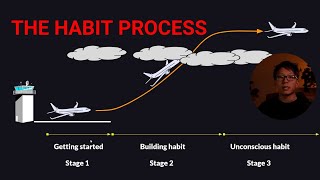
James Lim breaks down starting goals using an airplane takeoff model: the initial burst of energy, climbing through turbulence, and reaching autopilot. Most people burn out or quit halfway because they misjudge how much energy they have or what the goal actually costs. He walks through diagnostic questions to size up your goal before you begin.
Chapters
How to structure your plan for success. Problem. You run out of steam after a few days or weeks and then you give up because it feels unsustainable. You're unsure how hard to push for how long, so you end up not committing at all. And you have these half hearted attempts which are always doomed to fail, especially if you're trying something quite difficult. You experience burnout with little to show for your efforts. So you try and then you, you realize it's too much and then you stop and then you just added another red rock to your box. So we're going to do this right? I want you to imagine this taking a plane off. You've got three stages. Stage one, stage two, stage three. So take off the climb and cruise altitude with your project or your goal. Getting started, building the habit and then it becoming an unconscious habit. Three stages. This is what it's like to get a goal started. Very difficult to get started here. Needs a lot of fuel. Very difficult through the climb here. Lots of turbulence. But then it becomes easier once where the sun is shining at cruise altitude. I think it's quite a nice analogy here. Success usually requires a level of input energy. Now if you've ever seen Ninja warriors, you may have seen this. You need to figure out you can't just walk up to the wall and jump and make it. You need to give a really, really good attempt and you know these people are ready to receive you on the other side. You need to coordinate because you don't want to waste your attempts. Now this is what we're focusing on. I see so many times people make attempts where they could have made it work, they just did not approach it the right way. It would be like starting right next to the wall and not taking a running jump at it. Many fail when they were on the verge of success. They were so close, but they just didn't make the. Didn't stick long enough when it was just about to work. Or they started to feel fear when they got into the clouds. When we know in this scenario the clouds are a good sign. They're a sign that you're nearly there. What happens is every time you fail and you crash, you add one more of these experiences, these red rocks into the box. So you can't afford to keep doing that because that will make your belief even stronger in a negative direction. Important factors. What is required to give yourself a good shot at your goal? I spend a lot of time with clients working through this, setting ourselves up so we have a good chance of success. What do you have available in terms of energy, time. What do you need to change to give you the space needed so we can go through it systematically, very quickly. How big is the plane? How big is the project? You're trying to get off? You want to just improve your water drinking, taking an exam or starting a whole new business. They're very different and the preparation will be different. What will you sacrifice for a successful takeoff? You might need to extend the Runway. You know, give more time. Cancel more plans. Okay, Needs more time. Show compassion to yourself. Expect more effort will be required for bigger planes like this. The climb what obstacles will you encounter? You probably need energy to spare during this phase. You will encounter curveballs. You'll have questions that you need to answer to avoid unnecessary failure. There are always reasons to a question. Go to module 4 for the plain section for detailed explanations of how to set yourself up for success. There is so much on about this. There are so many simple changes that people could make to the way they approach their goals that would dramatically increase the chance of success. You must go to that section because I go through it. I just don't have time here. Step by step guides on creating. There's nearly a framework of how to create a successful takeoff for yourself to make all that effort worthwhile. The most common traps clients fall into a comprehensive workthrough. Imagine it's like your flight checklist that a pilot would have check sheet. Sorry, cheat sheets with real examples of planes people take off. So I'll give examples of what types of planes people have so you can size them up for yourself. Plane size is subjective and specific to a person. Okay.