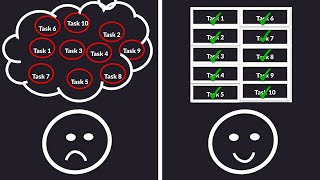
James Lim breaks projects into tasks ordered from easiest to hardest, like video-game levels or bike gears. Start with what you can do now, adjust as you go, and celebrate small wins to build momentum and kill overwhelm.
Chapters
Have you ever found yourself feeling completely overwhelmed and unsure of where to start on a goal? Just a thought of engaging with your goal can trigger your overwhelm, can give you a sense of unease and a feeling of resistance, which stops you from making any progress. In today's video, I'm going to share with you a simple yet powerful tool that can help you tackle even the most overwhelming and daunting of projects. If this is you, you're not alone. These feelings are common when working on anything meaningful to you and as a coach, helping people achieve their potential. And it's one of the biggest problems I'm presented with. But there's a simple solution that can help you break down those overwhelming tasks into manageable chunks. I call it the difficulty spectrum. So what exactly is it? It's a systematic way of organizing tasks in order of difficulty, from easiest to hardest. By breaking down a project into its component parts and placing them on a line or difficulty spectrum, you can better understand which task to focus on first and how to allocate your time and energy. When tackling new and unfamiliar challenges, we often instinctively attempt to dive in or at least mentally imagining jumping to actions we think we need to do. But this intuitive behaviour often backfires as we don't know what tasks we should attempt first. And what makes it worse. Due to our need for instant gratification and quick results, we often identify tasks that would result in rapid progress and at first glance appear straightforward, but are actually really hard due to their real complexity or difficulty. And we have nothing to compare them to. So. So we have a pile of undefined tasks of variable difficulty and an instinct to pick the more difficult ones. No wonder you freeze. If this has happened to you before, you know what it feels like. And every time you approach a similar situation, the anticipation can fill you with dread. So how do we make it work for us? If you've ever played a computer game, you'll see how this concept has been perfectly optimized. When you play a game for the first time, you often have to select a difficulty setting. There's often a prompt to get indicate which one suits you. Beginner often. In addition, there is always a level one, a level for someone new to the game. It has tasks and challenges to match someone's ability and to introduce them to the game. Reducing the friction to start a game would be useless if the player never starts it. This enables the player to gain familiarity and slowly increase the skill level as their experience increases. And when they've completed a level, the next level, which stretches Your new skill set is waiting. By creating our own difficulty spectrum, we can create our own game levels for our lives. With a little thought, we can make our progression and actions seamless. The key is to make the first levels as easy as possible so you feel the least resistance to starting. We procrastinate often because we're afraid of something. And many of these reasons are due to uncertainty or unfamiliarity of what's to be done. We then catastrophize the imagined experience and reflect on how we've felt in past situations as this is the only evidence we've got. This creates a deep rooted belief that any meaningful goal we create can't actually be started. But we've never had a system to follow that helps ease us in. We can completely break this cycle by using a pre designed system. By breaking this task down into their smallest components, we give ourselves the greatest chance to get moving and stay moving. Now, this idea isn't just confined to the digital world. We do this in other areas of our lives too. Imagine going on a bike ride in the mountains. If you've got a single gear bike, you know you're in for a challenge. You'll probably get overwhelmed or it will simply be too much for you to manage. Even a thought of it might put you off from going. Now this is why bikes have gears. On a bike, your gears allow you to continue to make progress despite the any changes in terrain. When you go up steep hills, you shift to a lower gear. And when you're on flat ground or going downhill, you choose a higher gear. We can do the same thing with our projects or tasks or lives. By consciously assigning tasks along the spectrum, we create our very own gears to select from. You can then choose the tasks that you feel you can manage without getting overwhelmed. And if you're struggling to get started, you can always start with the easiest tasks. But here's the thing. Just knowing about this concept or the difficulty spectrum isn't enough. If you really want to make this tool work for you, you need to understand exactly how to use it. So here's a step by step guide with five clear, actionable steps to implement the difficulty spectrum on your next project. Step 1 Write down all the tasks involved in the project you're working on. This could be a list of steps required to complete the project or a brainstorm of all the possible tasks that could be involved. Step 2 Organize the task in order of difficulty, starting with the EAS easiest task and work your way up to the hardest. Now, difficulty can be determined by a number of factors, such as the amount of time or effort required, perhaps the level of skill required, or the complexity of the task. Use your intuition here. Assign what feels right and don't spend too long thinking about it as you can always change it. Step 3 Use the difficulty spectrum to determine which task to focus on first. If you're feeling overwhelmed or unmotivated, start with the tasks that are easier or more enjoyable, and as you make progress and build momentum, you can tackle the harder tasks later. Step 4 Remember that the difficulty spectrum is not set in stone, and as you work through the project, you may find the same tasks are easier or harder than you initially thought. Don't be afraid to adjust the spectrum as needed to reflect your current understanding of the project. Step 5 Finally, be sure to celebrate your progress along the way. Completing even the smallest task is a significant accomplishment. Take Beezer's Mini Wins and evidence that you are capable of making progress. Now you actually have to go and do it. By following this guide, you'll have a tool that will enable you to make the progress you've always wanted to on even the most daunting projects. So that's it for today's video. If you found it helpful, subscribe.