How to overcome your fear of failure (A PRACTICAL guide, no BS)
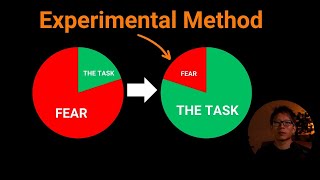
This YouTube talk (James Lim) explains why people develop a fear of failure—rooted in childhood and education that penalize mistakes—and introduces a Mode 1 (structured, performance-focused) vs Mode 2 (exploratory) framework. It shows how fear consumes emotional capacity needed for new tasks, then gives practical tactics: low-stakes experiments, reframing failures as data, drills (e.g., presentations, rope-bridge, ball-throwing), and iterative experimentation (analogy to SpaceX) to rebuild failure tolerance and take action.
Chapters
How to overcome fear of failure. This is an important one. The problems that you're experiencing, you can't shake the feeling that failure is bad. You try and lean into it, but you stay stuck. And your belief around failure is really deep rooted inside you. You want to fail fast, your intention is good, but you feel paralyzed and can't act on it. So these are common mistakes. I see far too much reading about failure and the reasons why and lots of podcasts. Now naturally we will need to do a bit of digging here, but I think a big problem is people replacing exposure to failure with just a theory side, the avoidance of failure, which makes you more sensitive to it. So the more you stay away from it, the more, the more intimidating it is every time you get exposure. Ruminating and beating yourself up without being proactive. Talking about the benefits of failure but not exposing yourself. So kind of all talk and no action objectives. In this module we want to understand how fear of failure came about because this will help us change some of these deep rooted beliefs around failure. Ability to take action where the fear would stop you, and some drills and exercises to help with your failure tolerance. Where does the fear of failure come from? So we didn't start out this way. We were born curious and exploratory and willing to fail. From actually naturally resilient to failure. We were as children or babies, even openness to new experience and learning. And there was an absence of fear of mistakes. This is a clue. When we try and walk, we're curious and we just try and the fear doesn't seem to be there. But then we enter a new period in life during kind of childhood development where during growing up, failure is now signaled very negatively. Unconscious planting is not okay to fail. Education work, even just the color these red pens signals bad education systems, prioritizes grades and high achievement. And to do that we penalize mistakes. And when you receive undesirable grades, it feels painful, right? Your brain sees this as a threat to your survival because it is in a way, in a cultural way, in an attempt to keep you alive, you experience this emotional pain. This is the fear you feel, the journey toward improvement. So improving yourself, especially kind of working your way through the education system requires us to refine our skills in some way. It was inevitable a fear of the failure would be a byproduct. So you can see here a little picture of, of prey running away from the predator. Fear is not all bad. It sharpens focus and fuels preparation. This is what allows the prey to escape the fear. The fear acts As a guard against complacency. When you've got deadlines approaching, you might leave it to the last minute, but you still get it done. The fear is serving you well when there are predefined paths with clear checkpoints. We've got a little route map for a mountain here. It's fairly clear. There's either. It's either a yes or no or pass or fail where striving for perfection is praised. So if you kind of come off the track, it's good to get. It's good to be signaled that you're off track and come back on. I'd like to think of this as Mode 1. Just remember that for a moment. Achieving excellence reigns supreme during this period. Education, sports, military, work, career Mode Fear of failure guides you to success. It's actually prompting you to excel in this area and it gives you the necessary skills to do so. We've honed and refined Mode 1 skills over decades. Not accepting failure has helped us create really take our skills to the next level and build quite an impressive world. Failure is not really an option for a lot of these things. If you want to win years in mode one, it solidifies fear of failure keeps you sticking to known defined paths. It isn't arbitrary, well intentioned to keep us tethered to what's historically worked. So you've got systems and frameworks to follow. If you fail, it means that you're falling off track and it keeps you and the fear, fear of veering off track keeps you on track. It's a safer route to survival and success provided you are in these environments. But now you want to explore new paths and new opportunities and new ideas can Uncharted territories, paths less clear and where the boundaries are undefined. You're now in a different realm, which I like to call mode 2. The skills and strategies that once served you well now hold you back. It's a barricade or an invisible force preventing you from progressing. So these Mode 1 skills applied in a Mode 2 environment has a very different effect because you're looking for established approaches, right? A very clear path. It's all about avoiding risk. So you're trying to stay safe, stay on track. You're looking for benchmarks to hit, right? So you imagine this checkpoint up a mountain. You're trying to get there. You've got the map. You just. The more perfect you can be, the better. But Mode 2 doesn't have these things. So you end up in a kind of a interesting mental spiral. A simple, straightforward action. In mode 2 may feel impossibly hard for you. Now, this is what I observe with a lot of people, is people who've excelled really well in Mode 1 periods of their life, maybe they've gone through the education system, they're doing really well in a career because there was a defined ladder to climb. So even just the concept of exploring is really hard because that was never a concept for them. So what happens here is the green bit is the task. The orange bit is what you expend in terms of your emotional energy on just overcoming the fear, because you've programmed yourself to have a lot of this fear because it's what has served you so well up until now. So you essentially have this emotional saturation, this mental fog, and you're not even focusing on the task. So you've got that little bit allocated there. The goal is to reduce the orange section, to reduce the fear, so you have more capacity for the task. What we want here, we want most of your energy on the task and just a healthy amount of fear, just to make sure you don't do anything silly. How do we get here? We're not taught how to fail or how to manage and evolve this fear. Let's just talk about this. The catch 22, the paradox of failure. How can I learn how to fail when the dread of failing stops me from trying? This is the problem. People get to the point where they. They say to themselves, I, you know, I know I need to fail, but how can I learn how to fail when I can't? It can't even do the first one. So this is what happens. We come back to our friend at the bridge. Emotional saturation. The fear of failure here is everything. Then that's why you can't. You find your feet can't move and you feel stuck, even though it is a fairly simple instruction. So you say, no, not today, and you run backwards and you go back to your familiar territory here. What I hear from clients, I can't shake the feeling that failure means I'm inadequate in some way. How can I do it without the overwhelming feeling of dread? I'm just scared of failing. We often make it worse, too. It compounds. You'll be presenting your work at the end of the week. I've had this recently with a couple of clients where they were hit with a curveball like this and we had to figure out a way to resolve it when forced to move. The stakes are high. So if you've not done much presenting, you've been avoiding the failure, you've been Avoiding practicing or failing, feeling like you look stupid. The problem is eventually at some point that skill will be asked of you. And now you have to do it in front of everyone. See, the alarms, bells are ringing, and at this point you have a lot to lose. We already fear failure, and now things are at stake. Your job could be at stake. Your brains desperately want to get away. We don't move until the world moves us. This is the example of the presentation thing. We don't practice it. We don't want to fear failure in front of our colleagues or our friends or our partners, anyone who we can practice with. So we end up waiting until the world present asks us to present. So now the stakes are very high. Now we have a problem here. This is a very real problem. You already had an issue with just getting across the rope. Now you have a spotlight on you. So we can now translate this, this, this graph from exposure to just fear of failure. Exposure at this point. This is, this, is this example here where you have to present in front of a big audience and you've not practiced. It's like here on this, on this graph. It's horrendous. Too much overwhelming, anxious. And that's why you, you know, you might start sweating and you wake up in the middle of the night because we've not been able to improve you. We really want to be over here somewhere. But now we're here, saturated and in a lot of emotional pain. It's very difficult to override without changing something. How can we work through this? Here's some kind of more practical steps tool for operating mode 2. We need to reframe how you see everything here. I want you to imagine this. You look at this ball and then you pick it up. Imagine you've never thrown before. What do you expect to happen if you throw it? Maybe I'll try. No one's watching. You try and you miss. There's no consequence at this point. So you might say, okay, it needed a bit more attempt. Two, you throw again. It's too far, a bit too much this time. Hundreds of attempts and eventually maybe getting it through. In this scenario, it's much easier to not see this as failure. We can get it gives us an opportunity to get curious. We try repeating the process. What's the key here? It's setting up a situation where there is very low stakes. It's the opposite of being standing in front of a room of 100 people. How can we transfer this to our situation? So we're here, we're trying to figure out how to cross this rope bridge and this is all you can think about. What could we do? That would be a low stake step. So we used this as an example before, no one is watching and we'll give it a try. There are many low stakes approaches. You could do lots of things here. This is all about experimentation. We can start reframing change. Change exposes you to what you don't know and are unfamiliar with. What we can do is we can start running experiments to find out more. An experiment provides insight into the unknown. So you're trying to make this change and you don't know much about it. We can start thinking, okay, we can start running experiments here. It help you gather data to learn about what lies ahead. If you remember being at school and you have to run these chemistry experiments, it's the same concept, you don't know what's going to happen. And we're just told to run these experiments. We want to gather data. You create a hypothesis, a guess to get an outcome. If we want to find out if a path is viable, we can run an experiment. The outcome gives us data about the path and then we take action and observe the effects. Failure is one type of outcome. It's simply a label. I want you to just process that for a minute. Failure is just one type of outcome. We often associate it with inadequacy and self worth. Yet many other people, and I'm in this camp now, we just reframe it as data, something to use to run the next experiment. So when it happens, it's just an outcome. And we say, ah, interesting. Okay, what can I use from that? What can that failure tell me to change the experiment slightly. Successful people learn this reframe really, really early. Now I've not actually put this in here, but if you followed things like SpaceX, Elon, Musk launching rockets and landing them back on the ground, the first, I think it was like the first eight or nine attempts the rockets blew up. But look how far they've got with that. And you compare that with other attempts from other institutions, even NASA. Less willingness to fail. Look at which companies are making more progress. The willingness to fail breeds more progress because you have data that you can take away and that you can refine experiments. Sorry. Experimentation is one of the truest types of learning. It's the application of knowledge to the real world. So you take this theory, you then try and build it into something and then you apply it into the real world and you see what happens. It gives you an insight that's Nearly impossible to acquire any other way. Yeah, and we know this because you've already tried. You've already tried reading books. You've not applied yourself. And so you can't actually learn much from that. Going back to this point, the hypoth, this is the hypothesis. What do you expect to happen? I throw it. Maybe you think that you're going to get in, or maybe you think you're not strong enough to get it in and you don't. Then we go through this point, ah, I need to throw it harder. You, you are seeing data from this. The ball needed a harder push to get, to get it closer to the hoop. What is a successful experiment, getting it in the hoop? Most people would. Most people might think that. Or is it finding out how hard you need to throw it next time? This is how we can start reframing things so we have insight here. Okay, I need to throw it harder. You throw it harder. Then the next one is, oh, too hard. It's possible to throw it too hard, and so on. And eventually you can understand how to get it closer and closer. Now, how can you apply this to your life? Think of this as you are running a series of experiments, life experiments. You've done this your whole life already. Remember this? Walking, riding a bike, driving a car. If you do, somewhere along the line, we just lost this practice. It's a real shame, but it's just a lost practice. We can restart this approach. As an adult, we fear things more, unfortunately. But as an adult, we can also strategize for ourselves. We, we can start thinking, how can I, how can I get to this point where the task is mostly what I'm thinking about and fear is less? And now we start to build our library of tools for you to do this. Ollie the octopus doesn't have to fear failure because the risk is so low. We're throwing one tentacle across, having low stakes experiments with the rope and focusing your efforts at the very beginning, doing failure right now.
More from James




The mental system I ALWAYS use to transform myself. Warning: Simple, not easy.


Why you lost your confidence and how to get it back - Thrive and Decay: [Full training]



5 PAINFUL truths to improve your life (you're probably not ready to hear them)


Why you always feel conflicted when making important decisions [Three Monkey Framework]