James Lim explains how to use pain as a motivator for change by making your current situation more uncomfortable than the effort of changing. He covers mental narratives, future-tracing, and a rope-bridge metaphor for moving past avoidance, plus references worksheets and templates from his paid course.
Chapters
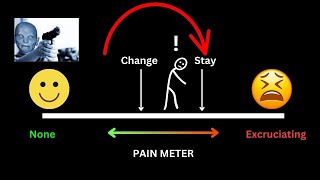
In this video, we're going to go over why you find it so hard to change, how pain is the key to getting you to move and how you can use pain to drive you the problem. You don't understand why you don't take any action. You think you're motivated, so why aren't you able to move? And you want to be motivated by positive factors only. First, a question with your life situation. Where are you right now? How much pain emotionally are you in? Are you pretty comfortable? Or do you really need to get out of this situation? Have a moment to think about that. Back to our friend on the bridge. We've got the concrete bridge over here, which is safe and firm underfoot, stability and represents certainty. You have to make these next steps in your life and it's depicted here by this precarious rope bridge. This is what our change is and this is what we need to navigate to reach our goals and dreams. Over here, we can stay over here where it's safe, but if we want to change, we have to go this way. So what's going on here? If we've got this pain scale over here, we've got no pain on the left and excruciating pain on the right. Now, if we plot change and stay over here, our brain will always want to stay away from this side of the chart. It always wants to go this way. Your brain will choose whichever keeps you away from pain. Pain is a survival instinct. It is a signal telling you which way to go. It's simply away from pain. If staying is further over this side, we will always choose to go this way. So we have a problem here because if staying is over here and it represents comfort and change is more painful, we will always gravitate towards going this way. This is also why we have lots of vices, like watching more YouTube, going on Netflix, scrolling on social media. This actually makes staying more comfortable because it numbs the pain. It works against you by making staying where you are more tolerable. It's also the same with going on holiday. When you escape, you want to remain, and then this change becomes more challenging. So what do we need to do? We need to find a way to make staying more painful. And then if we can move staying to this side, we work in sync with how our brain likes to operate. And our brain wants to go to the left where no pain is. And it becomes easier to then choose to change. So how can we do this? We need to create narratives in our mind that make it worse to stay over here. So when we have our backs against the wall or threat of our survival, we are more likely to move. That is why when there's a threat of losing your job or losing your clients or you're about to run out of money, you start to move. So how can we do this, given our situation now? If you are relatively comfortable, we have to find a way to boost the pain. And we can do that by imagining a future on your current trajectory. And you can start imagining where you will end up. Your brain will naturally extrapolate this and start imagining this future. This is why I post lots of content about talking about harsh truths and because it's important you reflect about these. So if things aren't going to change, where will your life take you? Will you be in a better position or will you be miserable? If you're in a toxic situation at work, what will happen if you stay there? How would that affect your ability to survive long term? You need to help your brain see how your current trajectory will reduce your chance of survival. Now, I use this picture here. I absolutely hate this picture, by the way. This is a visual of what would be required to get us to attempt to navigate this rope bridge. So if you think if you need to escape a toxic situation that could be in your personal life, in your career, or it's the pain of regret of not having tried and pursuing the idea or change you want to make in your life, how painful would it be if you didn't even try? You need to create these narratives and stories in your mind until you can make the pain of staying more painful than the pain of change. And then you're more likely to move. If you go to Module two in the course, I cover a deep dive into motivation drivers you're not aware of step by step on how to build your motivation stack and examples of client examples of client motivation stacks and my motivation stacks. Some of them have been particularly useful. An in session Tears were shed. This is how much pain we can create. Walkthroughs on how to increase pain to motivate and worksheets templates and cheat sheets with real examples of how to create these. See you in the next one.