overcoming my decision paralysis. Step by step approach
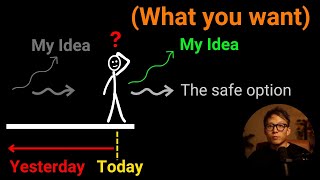
James Lim overcame decision paralysis about posting rough videos by starting in a safe community, committing to his values, and prioritizing done over perfect. He ran small experiments with unedited Loom-style videos, collected feedback, and iterated on thumbnails. The result: more coaching inquiries and better client matches.
Chapters
I'm going to walk you through how I managed my own decision paralysis. And it's quite funny because it's all about making videos like this. But I want to take you through the step by step process in how I manage this because this has actually held me back for quite some time for an interesting reason. So this all came about because I want to share more unedited thoughts with people and it's been quite tricky. For some reason I felt a lot of friction to that. And I think a big part of it is because I'm quite used to sending out a certain format of video. And that's kind of from my short form and a lot from my recent YouTube videos. I've seen these whiteboard style videos work before, these kind of very rough style ones. And for some reason I've just been really struggling doing it. And I think I've been questioning whether it would damage my YouTube account or anything like this. Now that could well be the case. But it stopped me from finding out an answer to this question of can I figure out a way to do this unedited style? And it was blocking me. In the meantime, I wasn't getting certain videos out and I'm still working on some of my other normal format videos, which is, which is fine. But I needed, I know I needed to create some kind of small experiment to break this cycle. And this is quite important. This is something I always do. So the first step is to try and find a safe starting point. And I thought I can open this out to my. In the community and for anyone is watching this. So it's up here. Why? Because I'm trying to look for somewhere where I feel kind of psychologically safe. Because there's always some kind of form of fear of judgment in some way, some kind of feedback. And you know, even though I've been, I've done like well over a thousand videos, you still have this mechanism running in the back of your mind. It happens at different levels. I really noticed this when I started to blow up on short form. Your standards start to drift higher and higher, so it just chases you. Anyway, I created this narrative which I totally believe in. And it was all about. It's based on the logical reason why it makes sense for me to do this so that I have something to lean back on all the time. And it's aligned with my values. So I actually wrote this post out. It's about posting raw coaching insights, experiment in speed and value. And so this is to kind of send to the community, but it's also a message to myself about why I need to do this. So I'm nearly talking to myself at the same time. So it's all about saying that there's lots of things that I can probably share with people that will be helpful and trying to polish everything up is impeding on me doing that. So the idea is I believe in sharing things fast, I believe in experimentation, and I believe in helping. So I wrote this and start to get some feedback that this would be a good idea. So anyway, I posted this before I even had exact idea of what that first video would be because I hadn't been through my notes or anything. The point of this is it forces me to put my foot over the start line. I'm more committed. It's a bit like having a lead on a dog and you're kind of like pulling yourself by kind of doing that. And it's crazy. People ask me, do I just not have an issue with posting content? On the contrary, this happens to me still. The only difference is I have systems like this to help me take action when I still feel this way with perfectionism and all of this. Anyway, let's go to the next point. Shifting my focus to completion. So here my mindset at this point was just complete the experiment. My goal is to complete the experiment. It's not about perfecting the content. The goal is to try a different format. So it would be kind of talking like this on a screen share without editing the video. So I'm doing this in loom right now. So it's going to be a straight run video. So what I did is now I'm kind of committed because I've got. Because I saw a few people had liked this post and I thought, okay, well, I need to do it now. So I checked my notes and started to kind of copy and paste it into a document. And the idea here is I was solely focused on execution, producing the core message in the document. And it's weird because I'm literally doing that again right now and I could still feel myself. So this is really important because a lot of people I work with, lots of clients, and they kind of tell me they have these. This voice in their head kind of constantly telling them and berating them about that it needs to be better. I still have this stuff. It's, it's. It's really, you know, it makes me think twice, many times. And it's just so interesting that it still happens. It just happens at different levels. So here I still question things midway, but kept reminding myself the point is to share something unedited. Now, again, I want to really be transparent about how I was feeling. I posted it. Now, this is the post I actually did. So it was this one coaching insight. So you can see it looks exactly the same as this one, unedited. I've not done any color. I've not kind of cut it or anything like this. And I did it and I posted this and I actually posted the video. It's only 10 minutes long. This one's going to be similar, I think. And my brain was saying, is this actually a good idea? Now, on the surface, I know looking at the logical reasons that I wrote in my narrative, it is a good idea. It's clearly, you know, it's an attempt to be helpful. But my brain is still saying these messages in the back of my mind, okay? And I reminded myself I was sticking to my values of helpfulness, being efficient and experimentation. And I always say this to myself, if even one person finds this helpful, it will be worth it. I've tried to say that since the beginning. I started when I was on TikTok, and I really, really remember that. There's a really interesting story when I nearly gave up actually making content. And then I got this really random message from someone which it still. It's like the. I don't know what it called, what you call it. It's got the opposite of haunting. It's one of the messages that I cannot get out of my head because it has affected me in a good way for seven years or so. Anyway, I'll come back to that. You can maybe sense that that's. I'm feeling quite strongly about that. Anyway, the feedback that shifted things. So I originally got some content that people felt like this was more of a conversation, not a lecture, which was interesting. I can see how that could look this way for sure. Even like, now I'm talking. And this is probably how I would talk on a zoom call with even a client. It's not so much how I would talk in my usual YouTube videos or Instagram videos or anything like that. And this is quite important because this was the seed of. Of the feedback that would then help me make next steps. And I. I got the urge to say this is a green light to put it on YouTube, even though part of my brain was screaming at me, telling me, you can't put this kind of content on YouTube. It's just not YouTube ready. Now, again, I am very aware that there are many different styles of YouTube, but this is the voice that was in my head. And so I did, I put it out on YouTube and I made this. It was a really rough go and I made a really dodgy thumbnail to start with because it was late. And I'll tell you the feedback in a minute because I got some critical feedback too. But then I got some interesting feedback here which was really nice. And this is from YouTube that they like this video style because they got sick of these movie star productivity self help videos that's been so popular at the moment, it's so true. And that they find it annoying and they completely switch off. This was a really meaningful, meaningful comment for me because bear in mind, I've got these two voices in my head. I've got one saying, this is a good idea, this is a good idea, you should, you should do it, you should do it. And this other voice telling me, this is not the YouTube way, this is not the YouTube way. You can't do it this way. You need to edit it, you need to polish it up and do all this stuff. So I was right on the fence. So here. Hearing little comments like this actually shifts that perspective quite a lot. And I try and team myself up to be in this position, but you are exposed to both sides. You are exposed to the negative and the positive. So this is quite tricky. This was not the first comment because I actually got the critical comments first, which whilst it was actually quite positive, there were a couple of stinging points in there which they mentioned and totally valid, which was you need to, you need to edit better or you need to put better thumbnails. It's actually totally fair point because the problem with YouTube being so competitive anyway, what I did. So I posted this pretty rough thumbnail and I'm not sure what I was thinking at the time. I was just thinking, just get something out. It really wasn't great. Anyway, I read this feedback and in the morning I woke up and I thought, oh, damn it, I need to change this pretty quickly. So I modified it and made it look a bit more like my normal thumbnails and I was a lot more happy. So in the end I felt like I found a good balance of what was right and what was wrong. So I kind of got a minimum. I met the minimum, which is really important. Now if some of you are familiar with this, this should ring a bell with the Ollie the Octopus concept that I've talked about. Go and check my video out if you've not seen it a while ago. It's all about gently placing one tentacle across the light Remember, I couldn't do the video to start with and so I had to find a way to do something that felt safe. And you know, fortunately we've got a community so I can use that. I can test things, I can put, put things in a, put put ideas in a situation where they could get some feedback that would fuel me to go, can I go to the next thing? Anyway, so now I feel like I've got two tentacles. Somehow I've managed to get that video on YouTube. I tell you what the crazy thing is, I've had a lot of coaching inquiries, one to one coaching inquiries directly from that video. Now a good handful from that specific video because I've asked people, which surprised me and it was, it was one of the most resonant videos. So key lessons. Actions reduce uncertainty So I wasn't sure whether it was a good idea to post this style of video, but I thought I'd do it anyway and I'm really pleased I did. Now I've done this one again. We'll see how this one goes. Anyway, it kind of doesn't matter. I'm gonna continue this experiment. I'm gonna try different variations of these style, very loose videos, plus my normal videos and we'll see. But I'm just pleased that I've been able to unlock this style because it was a mental block for me for all those reasons I mentioned before. And the crazy thing is doing that has unlocked even more capability and more exposure for my business. And I've had probably even better quality of clients, so it's met the audience even better. So yeah, second lesson. Start small scale later. I started small. I tried to do it in the, I posted in the community. And you can have different versions of this. You could post it to a small forum or if you're working in a community, if, if you're in a, in a photography group or something like that, you could post it to them to see what they think and you might get some good feedback to say. And really we're trying to see whether we can take those two voices. You've got the one voice that's saying it's a logical good idea and then this, this other voice telling you for some reason, it's just telling you to not do it for various reasons. And I'll go into this another video. This will go into for too long otherwise. Okay, and the last one, this discomfort, I can assure you throughout this whole process. Even though what if you're in the community and you're reading and you're watching this from the community. I wrote that with quite a lot of conviction because the logical, logical narrative was actually strong. It does not change the emotional impact and experience I was going through as I was executing it. This is something I find fascinating and I talk about this with a lot of clients because they, they often ask me, do you not have that fear anymore? Or anything like that. And I'm like, no, I can't. I constantly do. It's just the trick is to find ways to manage it and to keep moving through it. You've got to kind of design solutions for you that works. So these are the ways I do it for this one. The last one is it's all about these experiments. Get the experiments and get real world data. I have been bang on about this for so long and I. It's all I ever say. I had a whole bunch of clients today and it was the same. It was the same narrative today. It's. We can't really make a decision. You got to go out into the world. You got to. You got to act here. We create a small experiment and then we get more data and then we have. We can make more informed decisions. So just think about something you're working on. If you're stuck with trying to make a decision or whether you go A or B, think about what you can actually do and take action on. That will give you more data anyway. You will probably see more videos like this because of that first experiment that I've run until I get enough feedback. That is a terrible idea, but I'm nearly convinced. Okay, see you in the next one.
More from James




The mental system I ALWAYS use to transform myself. Warning: Simple, not easy.


Why you lost your confidence and how to get it back - Thrive and Decay: [Full training]



5 PAINFUL truths to improve your life (you're probably not ready to hear them)


Why you always feel conflicted when making important decisions [Three Monkey Framework]