Upgrade yourself to Version 2.0 - Use confidence loops [Clip]
Coach-style talk by James Lim explaining how to reach 'Version 2.0' through incremental 'confidence loops'—small, measurable version steps (1.1→1.2→…→2.0), rapid feedback, and mapping micro-programs (aligners/grades). The speaker gives concrete examples across fitness, business, social life, and content creation, shares personal transformation stories (physique, overcoming fear of recording), and references worksheets, templates, and client examples as practical tools.
Chapters
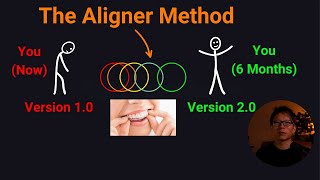
So here's a step by step approach to achieving version two. So we're going to focus on the how. Remember this person here is often low confidence, self doubt, limiting beliefs because you probably already tried to do a transition and it's not, it's not, you've not been able to make it work. It's all about process. Okay, just as you see this, we're going to show you. So we're going to transition to this visual now, version one to version two. How do we do this change? So we take small steps, right? Rather than going to version 2 in one go, we go to version 1.1, we go to version 1.2 and then 1.3, 1.4 and it's a gradual change and eventually we reach version two over here. This happens all the time in all areas of society, even in the tech space. Now it's quite interesting, while I'm filming this, the new iPhone has just been released. You can see this, this evolution from version one all the way up to 16. Remember this, we're not going to do it in one jump because it makes us feel overwhelmed. So the concept here, it's not just about small steps. The complete change is often too much for your brain to handle. It's just too much to cope with. It can't see, it can't extrapolate this change. And change just doesn't happen like that. What we're going to do is we're going to, we're going to work with your brain and we're going to apply gradual change here and also apply rapid feedback. Why is this important? So imagine you go here, you've completed version one and you completed version two. What happens to your brain at this point? You start to think, maybe I could do this. If I've done two version iterations, maybe I could make it to version three. 1.3, 1.4, 1.5. Just like this. In real life there are lots of milestones and roadmaps, right? So these are like milestones. You see this? These are places you can climb as you go up. We turn it into this, it's really important. And then we eventually can get to version two. And at this point you can say, yeah, I am version 1.5, without a doubt because I'm here and I'm still climbing and I'll get to version 2. So when I'm working with clients, I will often, I will often remind them where they are in their version transition because they often doubt themselves when they're at level 1.3. Things are not working as fast as they want them to be. At version 1.3, we remind them that they have been stuck at version one for years and years and years. And we've rapidly moved in weeks from version 1.1 to 1.2 to 1.3. And we're just going to look at the results and we remind them and we say, can you see the path? And then they start getting motivated and they feel more confident and they start moving forward again. But this, this dialogue is quite important. So while you're working, this is, you know, if you're going to be working on this by yourself, you need to go through this process to help bolster you up. I do this all the time when I'm going through a transition here and I'm trying to move from one version to the next. Sometimes I would doubt myself and then I need to go back and remind myself, where have I come from? In this case, I AM A version 1.4, right? I just need to keep moving. I've moved 1.1, 1.2, 1.3.4. I just get to 1.5. Look at your milestones and it's mapped to version 2 and you're good. Now, how do we create our own maps? This is one of the hard things. In established systems, you will see routes already laid out. Now, I'll talk about this in a moment. But in life, we have to create our own maps. Here's a little hint. How are these created? What's going on here? These are aligners. Invisalign. You get a bunch of aligners to help mold your teeth to the end product. So you start. They are designed for these shifts so you will wear, let's say you have 10 different aligners. The first one will shift you from literally version one to version 1.1. And then you will make those changes. And eventually you will see and. And also, really importantly, you see your teeth start to change, and when they feel comfortable, you move to the next version. So what is the system here? We identify versions between the start and the end milestones, you put them in, they're tangible and motivating. I'll give you some examples in a moment. It's an immediate goal for you to focus on, which makes it so much easier. You can just focus on your feet as you walk up, let's say, this mountain. You just need to get here. Now, with aligners, if you were to wear the, you know, aligner set 10, it wouldn't fit, for example, and it will be extremely painful. So you need to Fit, you need to put the right one in for the. For the next iteration and the next change. They are real wins. You see the result. So if you're climbing up a mountain, when you go from base camp to the first checkpoint, you're there, you're. You can see how many meters you've ascended. And your brain extrapolates. If we keep doing this, we can work our way up in other areas. This happens all the time. In sports and music, you have belts. In martial arts, you'll have grades in music. You know, grades one, grades two, grades three to grade eight. Why you don't jump straight to black belt. You go up through the grades and then when you do and when you achieve which one there is usually. I used to do judo when I was a kid, and I remember working my way up through the colors. It was really motivating. But if there was only one step, it'd just be too overwhelming because you just wouldn't know how to get there. Okay, some examples. So there are loads of examples everywhere. Running, covering increasing amount of miles. So I had a client where she was nowhere near running, right. She really wanted to get fit. And so we started with really short walks, and we would do it in the darkness so people. So she couldn't be seen in the morning because she was quite anxious. We set a goal of just leaving the house for five minutes in the dark and just walking around outside her house and then coming in. And then we slowly created these things. And then eventually we got to the point where she was doing miles. And it was incredible. It was the first time her family had ever seen her start moving again. It was. It was really cool. Weightlifting, increasing the amount of weight. Now I remember when I first started lifting weights, I was using little plastic dumbbells in. When I was at. When I was studying at university, me and a friend, we were on one of those big Bosu balls because we didn't have a bench. We're doing it in our dorm rooms and, you know, lifting these plastic weights. And they were kind of, what is it, two or three kilos or four or five pounds each. And you start there, and then you have this vision of where you're going to go. And it's quite easy with that one because you've got. Literally the numbers are on the dumbbells and the weights. But I remember they were so light, it was just like holding bags of sugar. Business increasing revenue, Social increasing friends. So some people will say, you know, I have this a lot with clients. You know, I want to build A new social network, you know, I wish I had more friends. You don't start at the end. Well, you have that as a goal. But then we start creating a framework and a program to get there. An example would be, okay, how can we meet the first new person? And it may well be trying to hit a new person a month. Creating content. Speaking ON camera this is a really common one. Obviously, I went through this with my journey, and we will be going through this later. And you may have seen this in other courses, too, that I've done, mapping out your versions. So this is what we're trying to do here. We're trying to slowly shift you from version one to version two. We can start to map this out. Think about a timeline. What does your version 1.1 look like? What must you do for you to become version 1.1? You choose your change. Think of each stage like a new aligner or grade. Anytime I try and make a, you know, try and make a version change, I really think about breaking it down like this, creating your own program of change. You know, this is one of the things that's really difficult. I'm going to continue working on this until I can figure out a really good solution to give to you all. But in the meantime, we'll do our best. The idea is we create these mini programs. Ideally, I would always suggest if you're trying to work in a new domain, you want to try and find an established program. If you go to gymnastics, for example, it's so optimized for progression. You just need to start going to the beginners class, right? And then you will just ascend through the progression. And then a few years later, out you pop the other side. Really good at gymnastics. Yeah. But a lot of changes we do as adults, they are, you know, we have to do them by ourselves, and there are often not very clear paths, so. So we have to learn the skill of building our own programs. So this is why when you go through, for example, the education system, it's already mapped out. This is something I struggled with when I realized I was really good at following other people's structures. But then when it came to creating my own and governing my own destiny, I didn't know how to do it. So this is where I got stuck for, like five or 10 years. This is what, you know, I try and help people solve these days. It's hard. The important thing is you just want to approximate, right? You don't have to be really detailed. Just approximate the stages to start with, because you will become More knowledgeable as you go. And I'll give you an example in a moment. Just use it to get started. Map out version 1.1, 1.2. Just to get you started. As long as your direction incorrect, you're pretty good. Here's a personal example. So I did a physique change. I wasn't supposed to show you the end point, but this is what I look like. How did I achieve that change? A lot of people wondered. I really did not like myself at that point. I. Yeah, I really disliked how I looked and I built a program for myself because I. This is not without trying. I spent years trying to change this and that was how I looked. And I remember when I built this program out, I really hated how I looked. I'd kind of hit a mental place where I just needed to make this change. I was not feeling healthy mentally. I was not in a good way physically. And anyway, I started to lose weight and I could see the numbers starting to fall ever so slightly on the scales. It was really hard, but I already started to feel better and I could start seeing changes at this point. The weight was dropping and I was starting to get some visual feedback at this point. And so I set these things so I would weigh myself quite regularly to track this because you sometimes you can't see things as fast as you can on the numbers and vice versa, actually. And then there was one point I was really feeling the heat. It was really difficult to make this transition. I wasn't. I wasn't ready to give up. But it was definitely feeling hard. But I also knew at some point it would be noticeable and I'd actually baked in this idea that eventually would be noticeable and what would happen. And I started getting some comments for some from. From some close friends and the amount of extra motivation it gave me was insane. I actually didn't tell this. There's one particular friend that mentioned it and I remember it just lit a fire up my ass like so much. I felt really good about myself and it really pushed me to go from here all the way to here. And I eventually kind of got to this level. Now I'm not totally there right now because it was pretty extreme, but I just wanted to know whether I could do it and got to the version two. And now I've got pretty. I'm pretty high confidence that I can make these changes anywhere I want at any time. It's. This was the first time I did it and I'd spent about eight years trying to battle with this and I did it Sustainably, because I was still eating out when I wanted to. And it was a really nice kind of harmony with my physique and my weight. Now, I'll just give you another example. Content creation. I went from this. Yeah, you can see it was awful. I'll explain this in a moment. And eventually getting to this. What was my journey like? I was scared of speaking, you know, if you've been to. If you've taken some of my other courses. I talked about having my YouTube channel in 2006 and being too frightened to post for nearly 14 years, right? So I built a program. It was the only way because, remember, I tried to beat this for over 10 years and I couldn't do it. I kept watching all these YouTubers. You know, there's some YouTubers who weren't even born when I created my YouTube account and wanted to create content. Right. Every day passed and I wasn't able to do it. So I'd had enough. And once I'd figured out these systems are working for me, I built my own little mini program. So what I started doing was I started speaking to myself in the car, and I rigged my phone up to record me while I'm driving. So I can't look at the camera. It was just filming me. And I just talk away because I'm okay to talk in the car by myself or with people. And then slowly, you know, there were quite a few micro steps in here. Then once I got used to having the camera on, so I used to get really afraid of seeing the red recording light. It's kind of crazy on a camera. It would freak me out like crazy. And then eventually I got to the point where I posted my first TikTok video. And this was, you know, one of them. Here you can see. I can see the nerves in the. In the screenshot. And then I got comfortable publishing videos. And then it was a case of optimizing content, upgrading production quality. And you can see the change here, you know, to the point of here. And I'd say, you know, I was feeling really confident by the time I got to this level. And it was very consistent. And I'd done over four or five hundred videos by that point. Bear in mind where I came from, 14 years of fear. And I had to do these drills to get me to speak in front of a camera lens because I was so afraid of the red recording light. So a question people will ask me is, did I have this fully mapped out? Did I know all of that? Because how do you know what you don't know. Well, I'll answer that. No, I didn't. I only had an idea about the first few versions and I knew if I get to here, I had a loose idea of what happened. I knew there would be a stage where I might want to get a new camera, I might want to optimize my content, but I had no idea how it's going to turn out. So it just became clear after I got to around version 1.3 and I knew this. So I would just sit at my desk, so I have my phone here and I would just lean against some books. I didn't even have a mobile stand at the time. And just leant it against the, you know, the pile of books I was talking about. And. Yeah, and I just recorded it. I used a little mic. No, it wasn't even a mic, I was just using a phone audio. Then I used just standard headphone speakers with the mic on the wire to speak to, then slowly upgraded from there. It became a lot clearer what I needed once I'd reached version 1.3. So hopefully you understand this as a concept. So to help me map this out, I've got loads of. I've got some nice little worksheets. They are guided. We start from level one and then we work your way up. They are templated too, so it will. Because creating programs for yourself is quite hard. So I've also got some bonus template programs and you can see here, here and there's some cheat sheets, examples from clients. And over the next few months I'm going to add a whole bunch of new examples from live clients I've worked with. So this is not just theory, this is in practice, what we. What we laid out. And if you've got any requests for specific ones, I'll help map these out and give you as examples because I've got hundreds. So let me know.
More from James




The mental system I ALWAYS use to transform myself. Warning: Simple, not easy.


Why you lost your confidence and how to get it back - Thrive and Decay: [Full training]



5 PAINFUL truths to improve your life (you're probably not ready to hear them)


Why you always feel conflicted when making important decisions [Three Monkey Framework]