When you're doing everything but your main goal - productive avoidance [Coaching notes]
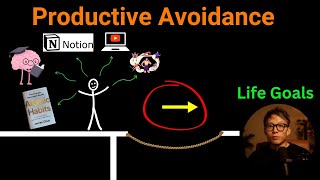
James Lim explains productive avoidance: when you perfect your fitness routine or productivity system instead of doing the work that matters. An artist kept taking courses until she focused on making art; a writer bought tools but never wrote. The fix is small, concrete actions on your main goal first.
Chapters
A lot of clients come to me because they have a feeling, a sense of lack of progress in some way and it's causing them to feel pretty unhappy and unfulfilled and just this general feeling of being stuck. When we do an audit of their current life and what they've been up to, we often find out that they have been working on lots of things and it's in the region of lifestyle. So fitness, organization of their work systems, trying to set up new routines, sleep, productivity. The important thing though is that there's some kind of main problem and there's a main goal that they want to head towards and that hasn't moved, that hasn't actually been touched in any way. So what's happening here, it's a bit like dealing with an elephant in the room. And so we've got lots of these unrelated habits, working out, productivity hacks, all of this taking courses and doing lots of education based stuff and it creates this false sense of momentum. So instead of doing the really hard thing like applying for new jobs, if you're looking for a new career, building, building their businesses out, working on sales and marketing, or launching a project or an idea that you've been dreaming of for ages, you end up not doing any of those things. So that thing is not moving forward and you are not focusing on these other things, these kind of, what do you call it, peripheral things. The problem is your brain fully knows all of this at all times. It's the thing that matters the most. It's the thing that you're desperately trying to move forward, you really want to move forward and it's not moving. So no surprise that you're going to feel like a sense of lack of progress because the thing that's the highest priority in your mind is not moving. It's actually right that you're feeling this way. And so you will. Oh yeah. Just a little note here that I tend to observe. We see this because when I'm in the early discussions with clients, they will talk about in roundabout ways how unhappy they are with this current situation and how much better they would feel if the main thing was resolved. Like that's the, that's the key thing. These other things are important, but not, you know, it's not bothering them. At this deep core level we have to really tease this out. It's not easy, I can promise you that when I'm having these conversations, it's extremely difficult because there's a lot of resistance. I observe a lot of resistance for people to nearly accept, admit and Then accept what is going on here. But the problem is, over time, this avoidance, and it's internal, right? If you're dealing with this yourself and you're not having a conversation with someone, it becomes its own habitual pattern. So the more you avoid this, you actually become really skillful at avoiding. And then this dodging, continuous dodging, becomes automatic. Another symptom I see is when people work on one thing, let's say it's fitness, then they'll work on nutrition, then they'll work on productivity. And all of these things can take up a lifetime, right? They can take years to get better and you can nearly. You can't really get it to 100%. But if you're improving these things, you're spending all this time and you're not feeling a significant change, it is worth questioning. And onto this bit, here's some questions to reflect. Because we don't know for sure, you may well need to work on these things. If you are not meeting a baseline level of these things, it can be difficult to move on the main thing. But from observation, a lot of people have already done quite a bit of work in these areas and have tried, but the main one is remaining at zero. So a few questions to ask yourself. Am I working on the thing that truly moves the needle? What's the one habit that's directly tied to this main goal? Am I gaining momentum within the goal, or am I just kind of standing around the edges? I'll give you an example. This kind of came up because I've had a couple of clients more recently, and we've been talking about this, and one of them is in the art space and we were looking at creating, creating content. And that was the main thing that was not getting done. And so there was a lot of work going on around that. So working on productivity systems, working out on finances, working out on food, all of this kind of stuff, which is all important, right? But we were not moving the key objective. And so we really focused on that. And I could definitely notice a lot of resistance to doing that. But now they're doing it right and it changes everything. You can see when they actually start making, they finally start making progress on the thing that matters and actually start producing things. So there's an output, you see that, it's like a glow comes out of them. The same thing I had with a writer, and this is a while ago, who was avoiding writing for so long and was working on all these other habits, taking writing courses, just doing everything, productivity, setting up notion, setting up obsidian, all of this kind of stuff, but was not writing and not publishing. And so we had to corner this idea or corner the person's brain to figure out what was causing so much pain. And it was the lack of actually doing the thing right, the writing. Now, you would be surprised with how many people have this problem and how difficult it is, even when I'm on board to do this, because it's a difficult conversation because there is so much kickback. There is so much kickback. But I always know, at least for the majority of people, where they have already got things mostly to baseline. Remember, that's a caveat that when they start working on it, everything changes. And you actually then have a purpose for all of these peripheral things. When you start working on your main thing and you actually move it from 0 to at least 1 or 2%, you see the full relevance and context of why things like nutrition, fitness, sleep, all of this stuff, why all matters because it's now serving the main thing for you. If you get those things better, if you have more energy, you can now work on this thing more. Right. Whereas a lot of people work their way around, which is they're trying to prepare for this big day when you can start working on this thing. But remember, your brain is nearly disincentivized to keep doing those other things because this other thing is so scary. Yeah. So it's all the. It's all the wrong way around. Okay. Anyway, I won't go for that. I won't go on that for too long. So, yeah, ask those questions. And the other thing here is be really cautious about staying in unrelated areas. The reason I'm saying this is because there is a logical case. There is a good reason why you might want to work on these other things. If you are not at baseline level, it can make working on the main thing really difficult, for sure. And so I've definitely had clients where we've had to do that work for. But if you have remained in these unrelated areas for a ridiculous amount of time, I'm talking multiple years, I was one of these people. Right. Check yourself and see whether it is possible that you just have not found a way to approach the main goal. When, when you get there, then you can focus on taking smaller steps and building momentum within that domain, within the goal, not in these unrelated areas. Take them down into really small manageable chunks. So, for example, is rather than necessarily preparing everything for the business, is there one small piece of the business that you could make a little bit of tangible progress to you can stagger it up like that. What a lot of people do is they will try and pick other areas in the hope that that momentum will transfer across. Sometimes it does, and I actually do use this with some certain clients. But we have to be really careful with it because otherwise you end up resolving all of the other areas, which, for the most part, if you're looking at an ambitious goal, is going to be easier. So when you fix your fitness, you may then try and solve your nutrition, and then you may resolve your finances, and then you resolve your productivity. The problem is that some of these things can take months, if not years. So that means you will sit on the sidelines and not be able to work on your main thing for a couple of years. How would you feel about that? You know, when I asked that question, people, some people who really care about their thing would get quite upset about that. I'm like, this is. This is your choice. So, yeah, I mean, this is. This is really your choice. Now, I know this is very difficult because even when I'm working with someone, I can see how difficult it is. And I have to, you know, we have to pull out all of the tricks out of the hat to help someone start taking the action on the most difficult thing. Anyway, this is one of my long rants and hope some of that was useful. Okay, see you in the next one.
More from James




The mental system I ALWAYS use to transform myself. Warning: Simple, not easy.


Why you lost your confidence and how to get it back - Thrive and Decay: [Full training]



5 PAINFUL truths to improve your life (you're probably not ready to hear them)


Why you always feel conflicted when making important decisions [Three Monkey Framework]