Why do you find taking action SO hard? The 6 key problems
James Lim breaks down six reasons you don't take action: discomfort with change, low confidence, overwhelm, distractions, weak plans, and overcomplicated steps. He traces the cycle from research to anxiety to avoidance, then shows how purpose, mindset shifts, and simple systems actually work.
Chapters
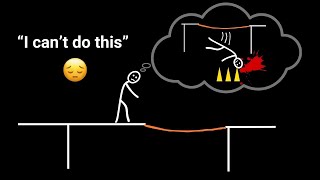
Why is taking action so hard? Okay, module one, what's the problem? Bit of a deep dive here and why? The inability to take action is getting worse. So there's six key problems and then an elephant in the room which I'll go over at the end. The first one is discomfort and pain. Second one is lack of belief and confidence. Third is overwhelm and mental fogginess. Fourth is distractions and lack of focus. Five is brittle and self destructing plans. And six, over complicating over complicated steps and last minute excuses. Okay, so problem one, discomfort and pain. Taking action often involves something new. Change is unfamiliar and it makes it uncomfortable. New experiences, it's very easy to get overwhelmed by them. Uncertainty about what's going to happen causes us to get anxious easily. Our brains just don't like these experiences and it comes across as pain and discomfort. What happens, we start to avoid. So we're trying to escape the situation. We create excuses to justify not doing it. We seek familiar and sometimes they can be bad things. We go back to old habits because it's comfortable and this keeps. This holds us in the same situation as we've always been in. Problem two, lack of belief and confidence. You don't believe it will work. You don't believe you can do it. You've tried to think positively about it and it's just not working. What does this lead to? More stagnancy. So continuing to feel stuck. Rumination and overthinking and loss of hope. And all of this definitely doesn't do anything good for your confidence levels. Okay, four, distractions and lack of focus. Constantly distracted by life. The life noise that keeps popping up. You get drawn to shiny objects. So these are kind of new ideas and other areas to explore. And it's easy to prioritize the wrong activities. Things that are kind of demanding your attention now but are not important for your long term goals. What does this lead to? A chaotic mind. You're just jumping from one thing to the next and you can often feel like you're busy. But you look at your progress, you're like, I haven't actually got anywhere. Chaotic life. Lots of half completed tasks is something I hear a lot from clients. No progress on the things, on the thing that. On the things that matter. Problem five, brittle and self destructing plans. Constantly breaking your own plans. And you know what's likely to lead you to success? Creating plans that don't progress you. So that can often involve lots of extra research. And it gets quite complicated as to why we do this. But yeah, we. This is very common. Making plans that are too difficult. So having too high an expectation yourself, which can make you feel overwhelmed, what does this lead to? Accumulation of unnecessary failed attempts. And this is particularly bad for your confidence, right? Because like imagine if you keep failing plans, what. That's what your brain's going to conclude from that. But most of the plans I see people do, it was not because they were not adequate. It's because the plan was set up badly. Pseudo work, so more research, no tangible progress and burnout because you're essentially working on plans are not actually moving you forward. Number six, overcomplicated plans and last minute excuses. So this is where you create plans that are so convoluted and so many, maybe so many steps so complicated that you just get completely overwhelmed and you shut down. You struggle to execute on the steps you yourself created. Maybe it's because you had too big an expectation of yourself here and you create last minute excuses to get out of starting. So often if it feels really daunting, you'll do anything to get out of it. What does this lead to? Constant state of feeling overwhelmed, which is not pleasant at all. I've been there. Increased avoidance and reduced self worth and confidence. We often say, I know what to do, why can't I do it? The theme trying to solve this. Most people are looking in the wrong place. So your focus on what you need to fix here is in the wrong place. What happens is you end up building the wrong approach. So you double down on the things that are actually not going to work for you. And I see this time and time again. So most people focus on what needs to be done. So you keep, say, for example, you keep reading the same types of books about the strategy of what needs to be done, make more sales calls or put yourself out there, do things like that, or think about being a successful person looking at the end point. So it's a bit of a joke here, but of the idea of step one, believe in yourself to just do it and three, success. And you just get there somehow. The reality is you've got to face this bridge, you've got to find a way across it and you have to deal with this mental state that we have at exactly the point where we need to kind of jump off the edge. There's fear, uncertainty, self doubt, lack of confidence, imposter syndrome, overwhelm, anxiety. These are all the things that we think about, the stress. So your plans have little consideration for your emotion at that point and the path you specifically need to take. Because it depends on to what extent those emotions are affecting you. You try to start, but you feel unsure about yourself. The planned steps, for some reason, they're just ineffective. You just end up standing at the edge of the bridge. And that's what it feels like. It all feels too much to deal with. That's the overwhelm. These are symptoms of an unaddressed problem. And it's often an emotional one, one you are not solving for because you're reading more books about the steps that you need to take. But you know, these are like to get the results, but not how to deal with. With the fear of stepping onto the rope in this case. So we need to take a shift from the logic system to the emotional system. But what are your consequences of continuing as you are? Well, you increase the feeling of inadequacy here. More self doubt, frustration. And you often end up feeling stupid. This causes chronic avoidance, procrastination and instant gratification. And so you end up doing this even though, you know, even though a lot of this was unnecessary. You end up training this into your, into your system. Long term effects. You constantly doubt yourself. Anxiousness, just thinking about taking action. I see that like every day now from people. Sensitivity to overall increases. So you essentially get. The more time goes on and you're not doing anything, the more overwhelmed or the easier is for you to get overwhelmed. Severe procrastination habits and the feeling of being incapable. You feel like you've let yourself down again. And we talked about this right at the very beginning. But this can often lead to an addiction to acquiring more and more knowledge. Constantly kind of looking, seeking out distractions. You essentially start to adopt this excuse, identity. Do you want to be known for that? The person who's constantly making excuses. Some people may already feel that of you. Deterioration of ability to take any action. Unfortunately, this is a reality for a lot of people. When I have to start with people, it's sometimes so difficult to take even the smallest actions. It ends up in this downward spiral. So here's a little diagram of it. So you have these, you know, your ideas, you start researching, you try to start. You've got this insufficient action plan, by the way. You get overwhelmed, stress, anxiety, you start to criticize yourself. You have, then you avoid it. And then you go back to research and then you go around and all of this leads to no action. We need to get you over this side. Most people, a lot of people actually never make it across here. Right. Some people kind of hope it's going to happen. But for the projects and things in their life that matter often don't make it there. So yeah, you get increases in sensitivity to overwhelm self doubt, anxiety, stress, procrastination. Okay. And then a noticeable drop in confidence. Mental fitness, ability to figure things out. That's a really important skill. Ability to start. So what's the solution? We need to give you some purpose and motivation, fuel. This will help kind of rev you up so that you're ready to tackle the rope. That's quite important. Adopting an effective mindset. So start to change how your the way you're thinking at the point, at this point. And this would be about beliefs. Practical and accessible action plan. So something that you feel that you can do right? Not just running across the bridge first time, all the way across. Something that's manageable. Make the process as easy as possible. Again, the safer and more accessible we can make it, the less resistance your brain puts up. And a system to help you stick to the plan so you don't stray off of it. This will arm you with tools for the rest of your life. And that's one of the kind of byproducts I've seen. Obviously it's been something I continue to use kind of 10 years later and with all of my clients continuing to talk about how useful this is in any situation they come across. This will allow you to go wherever you want. So if you can learn to tackle this bit, it means that you can jump from island to island forever like this. And then often saying I never thought I'd be here. That's one of the greatest things I like to hear people saying. I say, you know, when we spent all this time working on crossing this one, it has enabled me to cross to wherever I want to go. Okay, so key points. Taking action is hard because it requires us to face discomfort and pain and our brains just. We just do not like that. Change involves new experiences, uncertainty and it's unfamiliar. This makes us uncomfortable. Our brains make it feel hard in an attempt to keep us safe. This presents itself as avoidance excuses and bad but comfortable habits. Lack of belief makes it difficult to see how you could succeed. Your brain again disapproves. If you can't see how you can succeed across. It just thinks you're going to fall, right. So it will pull you away from it. We are bombarded with lots of distractions which pulls our attention away from the goal. We have a tendency to create action plans that are doomed to fail. Mental traps because we may be over motivated and creating these brittle plans. We over complicate plans and make last minute excuses, okay?
More from James




The mental system I ALWAYS use to transform myself. Warning: Simple, not easy.


Why you lost your confidence and how to get it back - Thrive and Decay: [Full training]



5 PAINFUL truths to improve your life (you're probably not ready to hear them)


Why you always feel conflicted when making important decisions [Three Monkey Framework]