Exit the Matrix With Me Experiment: You Can't Fix Money Problems with More Money
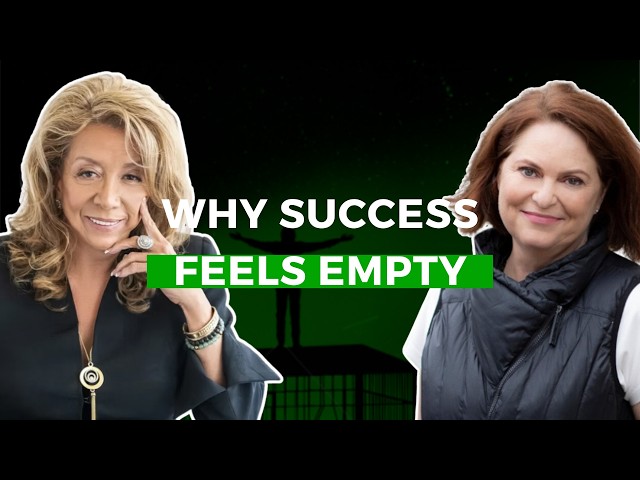
Dame Doria Cordova, founder of Money & You business school, argues that money only solves money problems and cannot create true abundance. She built the program with Robert Kiyosaki to shift people from scarcity to sufficiency mindset. Cordova uses Ho'oponopono, a Hawaiian practice, to help graduates resolve conflicts and clear negative energy.
Chapters
Welcome to Exit the Matrix Stories of Success with your host Jane Slack-Smith, where we celebrate the incredible journeys of individuals who've transcended their limitations and achieved extraordinary success.
Hello, it's Jane Slack-Smith here, and I am back with another incredible interview with another incredible person who I have to say I've been girling on for quite a while now, and that is Dame Doria Cordova. Hi, how are you going, Doria?
I'm doing good. Always so excited to talk to my Aussies. You know, I spent nearly 10 years there. I had my, my own car. I'm the only one that I know of that used to drive all the way from South Australia all the way up the coast, all the way to the Sunshine Coast. And sometimes I used to do it in the back way and go through some of the most beautiful ever national parks that very few Australians have seen. I'm like, oh my God, it's like a place from another planet. It's so exquisite. The only thing missing are the fairies. They're there. They're there.
You would have driven through Dubbo. I'm a Dubbo girl. So, you know, it is a great— Outback Australia is a magic of its own. And to have someone like yourself, you know, based in California, And, you know, someone who's traveled the world and brought their gifts to the world and their education to spend so much time in Australia. I know that you've got some stories to share about some of your amazing graduates there, but, you know, let's just go back to what this is all about. And, you know, I'm in this book writing experiment at the moment, and I've been really tugging on this thread of what is it to live a life of abundance and create that abundance in your life in all aspects and align to your heart. And then, you know, once you have, you know, that sense of wholeness and completeness, then living in what I call God mode or living in that, that experience where you're making a bigger contribution to the world. And what I love about what you've done, like, you know, you've been cracking this spot since 1979. You've got over 250,000 graduates. You've had 85 countries that you've affected. You've obviously been given a Dame Order, which we'll go into it later. But just some of the people, you know, you've worked with, you co-authored for nearly 10 years with Rich Dad Poor Dad series, Robert Kiyosaki.
I actually, I didn't do that. It's even better. The story is even better. He was my business partner for 9 years and we made him famous first in Australia and New Zealand and Singapore, which was the gateway for Sharon Lechter to be able to sell the Rich Dad Poor Dad. And I'll tell this story later, but yes.
Oh, I love that. I had the pleasure of interviewing Kim Kiyosaki on my podcast, Your Property Success, about 8 years ago. And yeah, and I had the pleasure of meeting them when they were here in Australia. But you know, you've got Jack Canfield, Tony Robbins, these people are kind of graduates of your program, Money and You. And you don't just do that, you know, you've probably started, that transformational business. You're boarding self-development and business and entrepreneurship together before anyone spoke about it. And obviously, you know, being part of, you know, the, the structure of the people that you— a network that you get to deal with. You also have the Transformational Leadership Council. So no one better to speak to than someone who's been doing this for decades, but affecting change for decades. And I just want to acknowledge you for what you've done and, you know, the transformation that it's not just the, I don't know, the 250,000 people, it's the tens and hundreds of people that they're affected by. And, you know, this intergenerational change that, that really creates, I think, what we want in the world, which is people to actually acknowledge where they come from, who they are, and what's their best, most, you know, amazing way that they can make the contribution. So thank you for agreeing to talk to me.
Of course, it's an honor.
Well, let's just go back to, first of all, what, what drove you in the beginning? What were you seeing? And, you know, to really start this kind of initiative way back when, and, you know, how has that developed over time?
Well, it was just— let me just say, I grew up in Chile. I'll do the very short story. I grew up in Chile at 12 years old, 1962. The United States had a calling for immigrants, and everybody was welcome with open arms, and they needed a lot of workers. And my mother had remarried to my stepdad, who had lost his father's fortune. Him and his brother went— like many people that inherit money, go through it very quickly. And we just pretty much had— we came to the United States from that particular that particular, you know, idea of being immigrants. But I actually took a drop in our financial situation because Mama was very successful as a hair salon owner. So we came to Los Angeles, grew up like a regular teenager in California, Los Angeles. And then right before I was going to be married— in those days, in 1968, you got married at 18 years old. It was, it was a, everybody got married very young.
Yeah.
And, um, and then my boyfriend was killed a month before we were gonna be married. And it was just this pivoting. It was so horrific, you know? And of course I've done all the healing now around it, and it was the best thing that ever happened to me. But trust me, inside of me, there's an 18-year-old that will never heal. It's, she, I just embrace her. I love her and I allowed her to feel however she feels, but I have an inner family that takes care of her because that was, that was so horrific for an 18-year-old to go through. Like even when I see it in the news that somebody young dies around that age, I always think, how come they never mention the girlfriend or the boyfriend? Because somebody is crying at home over the loss of their beloved. Right. And it's interesting.
My husband is an artist and he just did a piece for the Anzac Day Memorial. You know, day. And it was called— it was her— She Was Left in the Trenches Too. And it was a woman in World War I that was, you know, it was an image of her in military combat. And it was about the women who lost the men. Like, no one really talked about those that were left behind. So yeah, it's so poignant what you talk about because you don't think about the decades of what could have been, the sliding door moments.
Exactly. And it was so— that began to shape, uh, and my life. And then without knowing it, you know, we're so fertile at 18 years old. I wasn't with him that much, uh, you know, we're going to be married and all this. And, uh, and I was pregnant without realizing it until a few months later. And I lost the baby on the day after his birthday because I was so distraught And then my whole life changed. And I closed down emotionally completely because it was so painful. Not only had I lost him, now I lost the baby, which I really was not prepared to have. But my mother was happy to take care of whatever grandchild I was ever going to have. And it was like this, oh my God, I don't want to feel anything. So I was a super overachiever. And by 24 years old, I was a professional court reporter. I was looking at becoming an attorney. I was paid super well. I was an official court reporter in the criminal court systems of Los Angeles, later Hawaii. I was completely shut down, but I was a very unhappy young girl. So through us— the next story, I won't go into it because it's so long, we would take hours, but it's a magnificent story that I ran away from Los Angeles to Hawaii, and a year later A year and a half later, I had an enlightenment experience in this beautiful place called Hanalei Bay, Kauai. And it's like, if you go to my Facebook, you will see at different times I put pictures on there of Hanalei, particularly if you go back to the month of August. I, we were there and I put this beautiful pictures of where I literally found myself.. And so now I, I have this epiphany that I was not put on planet Earth to be a party girl. I have a job to do, except I have no idea what that means. And then through a series of circumstances, I ended up doing the first one of the most famous transformational trainings in the world called EST, which is the predecessor of Landmark Education.
Yeah.
Okay. And then there in that training, I discover this brilliant thing, which is that I have control over nothing. By then I had had 13 additional friends die. I had— there was the Vietnam War, there was people jumping off bridges, you know, leaders were dying, people were just being shot. And Martin Luther King and John Robert Kennedy died on the same year as my boyfriend. It was just— it was worse or as bad as it is right now in the United States. And there was so much confusion. And what ended up happening to me was like I was so out of control, I just didn't know what to do. And then I was given this realization that I had control over one thing only, and that was my consciousness.
So can I just go back to this, this enlightening moment? I know it's probably a very long story because You know, there's a lot of people that I, I would like to reach who are sitting there going, you know, I haven't had that divine spark, I haven't had that drop, I haven't had that person who's coming to my life that has inspired me, I haven't had that calling, or, you know, God didn't appear to me, or whatever. How did, how did that appear to you, and you being ready to see it?
Because obviously you were a very hurt young I was not ready to see it, right? I was not. I was actually— I became sober though, like the month prior to that, because I had been partying. We partied in the '70s, that's what we did. And I had been partying pretty hard for probably, uh, since 18 years old. There were 8 years when my heart was completely closed down. And so I now find myself sober for the first time in for a month while I'm sailing in this beautiful yacht with a beautiful boyfriend. And we were, um, we were anchored in this beautiful bay. If you Google it later, Hanalei Bay is like the one of the most glorious places on the planet, right? And there was this mountain with this little cloud on the top that looked like a little hat on top of it. And then it was high noon and I tanning. You know, in those days you put oil on. Darker you were, the better you were. It was like to be dark was to be rich, right? If you could afford to lie down on the beach, you were rich. And, uh, and then all of a sudden I just kind of left my body. I was looking at the water, I was looking at the mountain, I was looking at my boyfriend who was so beautiful, and my roommate who had come to hang out with us for a few days in this other island, Susie. And Susie was gorgeous. And I, all of a sudden, my heart just kind of like opened up for the first time in 8 years. And I literally left my body. And, and it's, it's very hard to explain, except that I thought I was dying because I was going back, back, back, back. And then when I got to the womb stage, I went into this, whoa, into this the sun and the moon and beyond that. And then I became— I had a oneness experience, which, which just transformed me instantly. And then, and then I came back in because I wasn't dying. I was just having this experience. And my heart hurts so much because my, my heart chakra opened up for the first time. And I thought I was having a heart attack.
Yeah.
So I was holding my heart and I started screaming and yelling and I was changed. People thought that I had gotten a facial surgery at 26 years old. Now they do. In 1976, you did not get facial surgeries. And it was like I changed so much and I just shifted completely. And it was from there that I began to look for my purpose, except I didn't say that. This is really important for people to understand that many times we don't have the language for what's happening to us. So it's really important for us to be very aware of just the— what's happening around us, the footprints, the, you know, just what is showing up in front of you. For you to be able to know that there's a shift that has happened. And, and now I can talk about it, but then it was just like, oh, I better now start looking for this thing. And so when I did the S Training and I discovered that the only control I had was over my consciousness, and I've been doing it for almost 50 years— next year it will be 50 years that I've been working on myself. And it was like this profound shift. And then of course I met Buckminster Fuller and a year and a half later, or yeah, about a year and a half later, I ran into the first business school for entrepreneurs of his kind, which is the work that I've been doing for 47 years.
You know what, what really strikes me about that story is with a lot of the interviews that I've had, there's, there's a number of threads that keep coming up, and I've ignored them to some extent, going, it's not interesting. But your, um, your experience of having that out-of-body experience, going back to that, like, individuation of, of your essence and being part of the whole— there's 3 people that I've spoken to just recently, um, Julie Schroeder, Jo Payne, and Lisa Turner, who actually had near-death experiences and had that experience of— or had researched it or done work in it, but had that, that experience of wholeness. And this, you know, there's something bigger here, and wanting to live their life to feel that again, and then finding different mechanisms to be able to do it. But it comes down to, from what I can get from the threads, is that self-awareness. It's, it's not the outside validation, it's not the The doodads, in Rich Dad Poor Dad's words, the doodads, et cetera, it is having that, you know, I am the creator of my own life and there's been experiences that may not have been my choices, but they've served me in some way. And how can I then go on to the next stage? And I had an experience recently with one of my mentors where we were doing a calibration into silence, and I burst into tears because I felt my soul say yes. You know, this is— the answer is yes. Like, yes, I choose me. I choose my soul. I choose my destiny and the way I am. And you know, you can have these big experiences, but for a lot of people in their life, you know, driving kids to school, you're caught, trying, doing the corporate ladder. I think there is an opportunity to to wonder, what is there about life that I'm missing? I don't feel whole. They have this little ache. They don't have the big revelation. They have this little ache. And with the work that you've done and all the people you've worked with, how, how is that first step from that, oh, there's a lack of separation from wholeness or completeness, or there's something within telling me, yearning me to have more How do they take the first step to saying, you know, maybe doing a course like what you mentioned, but what is it that can fulfill me?
Well, for most people, they are not going to be inspired to change until they suffer. Most people, because we've been having the Money and You program, the business school for entrepreneurs came first, and then the Money and You program was created as a leftover program because people couldn't attend a business school for 6 weeks then. So they went ahead and went to a program. They wanted a shorter program, which actually allowed me to have my job. And so in those days, they did a 5-day program called Money and You. And the same as with me, it wasn't until I experienced so much pain that I had to go look for something. So what most humans do when they're just comfortable, especially when they're just comfortable with You know, they're happy. They have their house. They have their home. You know, they have their cars and their profession and all this and that. But then there is— so most people were pretty happy. It wasn't until— and I write about it in the Money and You book. And it turned out to be 3 volumes. So through the volumes, I speak about that the awakening of people didn't start really happening Well, it kind of started in the '60s. It really kind of kicked in in the '70s. But then we went backwards a little bit in the '80s.
Right.
Because, you know, greed is good came in. And then people kind of forgot all these things. The '90s kind of came in. But one of the things that we found when we have the biggest money in new programs is when there is something really terrific or horrific happening. For like, for instance, in '89, I think it was '88, '89. Perth, Australia had a huge breakdown in real estate. So we used to do programs in all the major cities. And in Perth, we used to have these programs with 100 people, and there would be 90 people in real estate, mostly men, that were sobbing like little babies that had lost everything. And now they were ready to learn something new. Because one of the things that happens when you make all the money in the world is that you find that money only solves money problems. I want everybody to hear this. Money only solves money problems. Your problems do not go away. You, you have what I call rich people problems. And some of the rich people problems are even worse than, than people who have very little sometimes, but are very connected to community. They don't have that much. So what they have, they pull things together. They, they go to the beach together. They have picnics together. They can't afford to go to expensive restaurants. They all pile up in one car and, and keep each other company. That level, sometimes those people are much happier because my brain melted. Look, I could understand that rich people, millionaires, could be unhappy. I saw them. I was a middle-class girl, middle class, okay? I didn't meet rich people until my early 20s, and then in court, in the court system. Then, of course, attorneys and the people that were coming through. I started meeting a lot of millionaires, and I was thinking, boy, these guys sure are messed up, you know. I said, oh, maybe they're just a certain group of people. Then in the '80s, in the '80s and/or the '90s, the '90s, when I began to meet billionaires in Singapore, Malaysia, and those countries, and they were unhappy, now that melted my brain. Wow. It was like, I remember talking to one of my billionaire friends who's I just said, do you get how much a billion dollars is? I mean, her company still brings in revenues of a billion US dollars a year, okay, in the jewelry, in that department. And she— I said, do you get— and she has many companies, right? She's now retired, but her family continues with the work. I said, do you get how much a $1,000 billion is, is 1,000 million. I mean, what could you possibly not be able to buy? It's like, so, and then that was more and more of a confirmation that is happening within. And so we have many people that attend Money You. We have billionaires, especially in the Asia Pacific region. In America, we have one or two that come and go and all this and that, but nothing like in Asia. And their billionaire friends send them to Money and You so that they can get it together, so that they can duplicate themselves, so they can leverage themselves. Because a lot of people that grow businesses, their challenge is duplicating themselves. Yeah. Because they don't trust. They think that somebody is going to run with all the product and services. They can't lawyer up enough. They can't have contracts enough. I mean, all we have to do is look at some of the billionaires in the news every single weak and see how miserable they are. And you go, you know, it's like, so we now know. It's like, we now know. So now people are more open in the last 20 years, 25 years since coaching and mindset work has taken off. That's like people knowing that money is not it. So a lot of the young people that I meet, it's like, I'd rather just go to the beach. I mean, we know that money is not going to make you happy. I've seen it with my parents. I'm super rich and I could care less. It's like, so now you have a whole new wave. And this is what I like to teach people is that you really need to look at the big picture all the time. You have to be a futurist. You have to look at what's coming in the future. You have to look at what has happened. And Australia, I mean, if I may speak about it, it has to be one of my favorite besides Hawaii. Well, Hawaii is part of the United States, but not really.
It's like, it has a different vibe.
Yeah. Besides Hawaii, Australia is my favorite ever, ever, ever on the planet, except for you snakes. I adore everything about us. And Australia has every thing that to be the number one nation on the planet, the natural resources. I mean, you have everything. You're small. You are— you have everything, right? And so now you take a look at humans. And now you see the division and you see the biggest challenge that we're having today is the lack of clarity of what is a fact and what is an opinion. If anybody gets anything out of this conversation, do not base your life, your business, your children's education, your children's life, your family's life on what is a fact or what is an opinion. And that goes on both ways because I straddle right in the middle when it comes to health. I am totally a holistic girl. But I also believe in vaccines. Please forgive me for that. But I mean, I come from a place when there were no vaccines for polio, no vaccines for— my best little friend died when I was 6 years old from diphtheria. You just need to see one child die from diphtheria and you're going to freaking vaccinate your child. Why you would take—
Let me just take you back to the incredible words you said, there's that money solves money problems, but there's more problems. So you talked about these billionaires and these people who have, you know, wealth abundance, but they're not living abundantly. Can, can you just draw that out for me? Because I mean, we're talking about, you know, creating a life of wholeness, completeness, abundance, so you can then go and live with purpose and do other things. How do you, in the Money and You program or in, you know, the educations that you've been in, how do you draw that, expose, you know, the, the you problems?
Basically, we live in a world of scarcity. So our number one, our work is based on the teaching of four masters put all together by a fifth master, Marshall Thurber, who created these programs. And so Buckminster Fuller was the first person that spoke truth to my heart when he said that the world by the early '70s had enough, more than enough, more than sufficient resources for feeding everyone, enough water, enough electricity, enough energy for the whole world, the biggest problems in the world to be solved. So we live in a universe of scarcity. So money does not solve the essence of scarcity. So what Money and You does, what our programs do, is that people move into the experience of sufficiency. And sufficiency is an experience of what is enough for me as a human. Now, if the hungry dog is constantly constantly running you. And then, of course, we have all these things that then replace happiness. Social media is one of them, alcohol, drugs, you name it, right? Sex, porno. Now we have pornography, which has added a whole other dimension. So all those things is a relief and an alleviation of feeling less than and feeling that scarcity. So when you make humans aware of that hungry dog and like, oh, what is enough for me? And you begin to take that apart immediately, the universe almost moves in providence. It's the, as the poem Commitment says, providence moves to, into what is it that is enough for you, for your family? What is enough? Because if we don't have health, then we want to have health. If we don't have money, we want to have money. We don't have a relationship, we want to have it. Some people do. So now when you become aware and you begin to ask yourself the question, what is enough? Then see, Tony Robbins, who is one of our students, he did Money and You in 1983 when he was only 23 years old. I love one of the things that he has put on the map, which is the quality of your life is dependent on the quality of the questions that you ask yourself. So when you begin to ask yourself empowering questions and questions that take you to a place of discovery, it is, it is, that is what's happening on the planet now that you have a million coaches You have people who are, and this takes us to some of our most famous Money and You graduates. I mean, when we went, when I took Kiyosaki to Australia in 1985, when I chose him to be my partner, and the first place that we went to was Melbourne. We had our first, uh, Melbourne Money and You was in 1985. It was the first year. And it didn't take long for us to expand to, of course, Sydney, and from there to South Australia, then of course to Brisbane, and then of course Perth. And then we had all this Money and You going. Well, we have over 16,000 graduates, and we have people that, you know, Maury and his late brother Reuben of Spotlight Stores, you know, when they did Money and You and attended our business school for entrepreneurs, they were bringing revenues of $6 million. I haven't looked it up, but The last I look, the Spotlight still works very well.
Spotlights in every suburb. Yeah, in every capital.
And you have the Reach— oh, and they're global now, right? So you have the Reach Foundation with Jim Steinz, Jim Steinz, your famous footballer in Victoria. You have Andrew Walsh, one of your greatest— I may call him a humanitarian who created— he received the Order of Australia. He became famous for creating a program in the '80s called One Day in Prison, when they took all these young men into spending one day in prison with these bad old dudes that told them what prison life was like. Many of them never committed another crime. You have Susan Barton, the Lighthouse Foundation. So now, what started happening in Money You when these people are now experiencing sufficiency, and that they can commit their lives to doing something that's going to alleviate the pain of another. Many of them went into Australia. I don't know whether this is a fact still, but Australia used to be a top country in the world for teen suicides and teen, um, uh, every atrocity that you can think of for teens. And the Miami graduates went, we can't let that happen to our youth. It was actually— I haven't looked it up, so please forgive me. I mean, part of the solution—
I hope it's transformed. So that's why I don't know about that.
Well, go to Susan Wharton. The Lighthouse Foundation will tell you. The foundation will tell you. And now you have these people who are putting— their wealth, their energy into contributing. And they are teaching the young and the youth at risk on how to create a sustainable life for themselves, no matter what their circumstances are. And that's the greatest gift that you can bring someone. And here I acknowledge you, because Jane, with you doing what you're doing, you're bringing all these different experts and masters in their field And saying you're shining a light and you're saying, look, look what they've done. You can do it too, because they just need to take one message from me and all your guests for their lives to transform.
I completely agree with that. And I want to just bring you back to something that you said, which is most people are in scarcity. There seems to be a nil-sum game. It's like if I get this, they don't get it. Or they have this, I don't have it. This is comparison, external comparison. And when you become self-referential and you do whatever it is that calls to you to allow you to have this awareness of who you are and your gifts and your skills and your mission, your purpose, you know, there's that transformation. So you're saying people go from scarcity to enoughism. So it's not about abundance and, and opulence and, and over, you know, enoughness. It's just about what do I need to be sufficient for, for my needs. And it's not like I need to be eating, you know, mince every night. It's, you know, my needs are, you know, I'd like to have holidays, I'm imagining, and go out and, you know, have, have a life and have nice clothes or whatever that is. But it's what's enough for me and if I can call in that, there is a— some type of universal alignment that says, okay, let's fulfill this for you, because anything extra is what's going to create difference in other people's lives and impact. Is that— am I getting that right?
Yes, you are. And the thing is that you need to understand that most humans do not want to be rich. This is an illusion out there. They don't care Most people are happy having a beautiful profession, having their family around them, having health, having a beautiful home, having— even if it's a simple home, but they can, you know, have pretty curtains, they can have a nice car, they can have nice education, they can have healthcare for their family. Most people do not want to be rich, but because of social media and because of all of these things out there, that is like babies with a little mobile on top. It's like, oh, you know, everybody wants to be rich. No, they don't. No, they don't. People want to have sufficiency because they see that being rich is not the answer anyway. Now, is it fun? Absolutely. When you can afford anything, when you can do whatever you want, you can buy whatever car you want, whatever, you can do whatever you want. But to be honest with you, It depends on what part of the world you live in too. I mean, I have a, a buddy who is a billionaire, and in a million years he would never ever, uh, buy his own airplane. It costs a fortune. And, and I have friends who are millionaires, and it costs them a fortune, but they love to say, oh, my plane is waiting for me, and they just want to be able to say that. And it's like But you also know, I know those people, and some of them are very empty inside. Nothing changed for them. So now they have to have this, they have to have that. Like we have a saying in America, you know, the bigger the tires, the biggest, the bigger the insecurity, right? You see those huge tires and those guys, you know, in Texas they have guns, racks and all that. So now what you want to do is You got to come back to planet Earth. Okay, let's go to planet Earth, to regular people, especially in Australia. You guys do not spend all your Christmas holidays, your New Year's holiday working around the clock the way that Singaporeans do, many people in Malaysia and Americans. And so you guys have a life.
We cut out with the first Christmas parties, the end of November, and we come back in February. Like, I think that that's our kind of, you know, you might be at work, you get to take a couple of weeks off, you might be at work, but no one's really back at work until, you know, 1st of February. And it's like, okay, we do lose, I think, about 10 weeks a year of kind of holiday feel.
But that's healthy because you guys are going to the park. You're like Europeans. My beloved is German and, you know, he has to take a walk every day. He has to have fun every day. For a little while. I'm much more of a, you know, workhorse. But I understand it. But so you have to understand that when you— what is it that you really want? Why don't we just bring this back home? If I may ask your audience, what is it that you want? What is it that makes you happy? Really, really, are you going to work your whole adult life until you're too tired to be able to enjoy it? Just so that you can have, you know, $100 million in the bank. It's like, why not invest wisely? Why not make sure that you have what you need? And then that gives you an experience of abundance. That— what is it that works for you? So just because your brother may be rich, or maybe your other brother is what we call resource poor, You don't have to go with either one. This is why it's called Money and You. You know, another Australian was my beautiful Tony Nash. You know Booktopedia? You remember that Booktopedia? It was one of the companies that actually bigger than Amazon, right? In regards to book, right?
I was going to say, I bought books from there.
Yeah, that's a Mania and You graduate, business school graduate. And, um, and he had a big learning experience. Um, his company went public and then the board took over. The typical, typical, uh, any business can go through experience. And there were certain people that made him really wrong. And Tony is the most lovely man. But he has resilience. And one of the things you need to know that even if, even if you're not wealthy, you need to know that the true definition of wealth is access. So when somebody like Tony goes through a learning experience and looks like, oh, it's the end of the world for him, he'll be back. Why? Because he has access. He has access to resources. He has access to investment, access to people that will get behind him, access to people that understand that when you have a certain level of money, that you are going to go through learning experiences. So pick your lane. Pick your lane. And before you know it, I'm 75, no surgery, no injectables, none. This is me from the good life. All right. So, but I also have very good habits. All right. I don't, I stopped drinking in 1988 at 38 years old. Alcohol gives you wrinkles. Destroys your organs. You want to look like me, you can't drink.
Okay.
After 40, 45, up to 45, you can have all the fun you want. After that, your body cannot handle it.
Oh my goodness. I gave up alcohol at 53. I hope I can catch up to get rid of it.
That's good. No, no. The body, the liver especially, really regenerates itself. So now what you have here is you have Before you know it, I mean, I remember as if it were yesterday that I was 35 years old. So life goes by really fast. So for me, I think that people are really attracted to our work and, and so many people don't know who I am. And by choice, I chose this. And the only reason I did the book is because I'm on my way out of from the profitable business. So I created a huge economic engine, that things that I can sell, languages and programs, that it's more than enough for the rest of my lives. But then I'm now creating the North American, a second economic engine, and I'm going through all the fun like a new business person, learning all the marketing differences, all the things. But I'm having fun because I have an endgame. Which is going to be when I'm 80 on November 14th, uh, 2029, I will just be doing philanthropy and working with my foundation, but I already know what I'm going to be doing there. So now I have this few years and I can work as hard as I want or not as hard as I want. Now I have a choice, but that's because I am here. I already created my economic engine. So we also, part of the challenge that people are having around money and business is that we are in a gigapreneur economy. So all these people think that they can go from gig to gig to gig. That's not how it works. You have to have an economic engine. And that is what our business schools, our Money and You programs, and all the people that I mentioned— I think Brad Sugars, who Australian, as Action Coach, Money and You Business School graduate of all our programs, Bruce Campbell, that has one of the biggest coaching companies, businesses. In Australia, another Money You Business School, all of our curriculum graduate, all these boys and girls, they have learned that creating an economic engine that can be sold is true wealth.
Mm-hmm.
And everything else is a gigapreneur.
Hello, just a quick message. I hope you're enjoying this podcast bonus session. Now, if you have heard this interview, then you're probably sitting in there going, what is this all about? Well, this is all about my Exit the Matrix experiment. Now, I decided to write a book because I'm really interested in how do we go from the existence that we have now to exiting the matrix and living with intention from our hearts, following our heart's desires, but also creating abundance in all areas of our lives. And hence, whilst I've been researching this book, I thought, this is a really solitary journey. I want people to come on this journey with me. And hence I've got this very special group. Now come and join me. The first month for founders is free. And if you decide to stay, fantastic. So what I'm doing is I'm interviewing incredible people. I'm getting insights about what's this awakening that people are getting, you know, what's this what's the exit the matrix kind of sliding door moment for them? Now, I've obviously run this podcast for over a year now, and I have more than 30 stories, but I'm also interested in those people who are in this transformational space who are actually not just awakening themselves and they're awakening others. What is the mechanism? As Bashar talks about it, it's the permission slip. Are they going through astrology or meditation or yoga or breathwork? Are they just going within and getting a sense of what's really going on. So that's what all the Exit the Matrix experience is about. I'm going to let you get back to the interview, but if you want to join me, go to exitthematrix.today/etmwithme, which stands for Exit the Matrix with Me. So that's exitthematrix.today/etmwithme. Sign up. I'd love for you to come along. I'm creating courses. There's currently courses in there around 4 gratitude. There's more courses to come. I'm creating custom GPTs on how you can exit the matrix and helping you uncover what lies beneath your subconscious and holding you back, and also other custom GPTs that I'm sure you're going to love. And most of the speakers are actually really motivating me. So I'm creating courses, I'm creating ebooks, I'm creating experiments you can try, I'm creating tools that you can use. And I'm also writing a book. So at some stage I'll get to writing the book. At this moment, it's just all about the research. And I hope you choose to join me because I'm really excited about this experiment. So I'll get back to the interview now. Enjoy yourself. And as always, here's to your success. It's interesting. You mentioned one of the comments that Tony Robbins speaks of. I was 28 and I went to visit a friend who was working in New Zealand and I'm waiting for her to finish work and I picked up Rich Dad Poor Dad and I was sitting in a park in Wellington, New Zealand and I'm reading this book and there was one statement that he said is that, does your money work for you or do you work for your money? And at that time I was a mining engineer, I was earning, you know, I'd come from a poor family, had more money than I'd ever known living, you know, the high life, putting my sister through school, giving my parents their first overseas holiday. You know, just, I was enjoying everything. And then I realized that I was living on credit. So every month I had to turn up to work again to earn the money. And that was the turning point for me. And then met my now beloved Todd 27 years ago. And he was like, there's this thing in property. And we went down the property path. And created that economic engine. And then, you know, I created other businesses like that. But, you know, it's interesting that, you know, Rich Dad Poor Dad has had an incredible influence on so many people in the world. I imagine you still hear those type of stories, do you?
Oh my God. When people find out that Rich Dad Poor Dad is based on Money and You, I will go to events and I will have dozens of people that want to thank me because that was the book that got started. And that is, this was the deal with Kiyosaki. So when he was pretty much, he was working his way through life, so to speak. And he had been around us. He did Money and You, I believe in '82. And then he came to do an event with Buckminster Fuller and ended up doing the business school. He fell in love with the work. I think he did it in '81, and then he fell in love with all the work. And he and I promoted the Money and You, promoted Money and You in Honolulu. And he joined the instructor's training program. And when Marshall Thurber and Bobby DePorter went on to do other things, the co-founders of my work, and I inherited the work in 1985, I needed a Marine. I needed somebody that was going to do exactly as I needed it done because I was not about to waste time with people that were going to be questioning all of this. And he's so fabulous. He's a great marketer. And what happened with Robert was that we made a commitment that we were going to make him rich and famous, and he was going to go ahead and promote Money and You, and we're going to make Money and You a household name. It didn't quite work out that way. And for whatever reason, he didn't do that. But he actually— him and Sharon, who Sharon wrote the foreword to my Money and You trilogy. It actually happened. It actually happened because now we have many people that just come to Money and You from that. And because it's true, because the essence of what you learn, what, what you just quoted, that's from Money and You. He did not create any of that. None of that.
He's a rich dad, poor dad. The Rich Dad, Poor Dad story was fiction, right?
Well, it depends. It depends who you ask.
I think he's, yeah, I think he's a little bit. Now, can I just say, Sharon, can I, um, I just want to call— Sharon's last name is— I've only ever read— I read 4 or 5 books at a time, and you know, I, I have always been an avid reader. The only book I've ever read twice that touched me to such an extent, and I would read it every year, is Outwitting the Devil by Napoleon Hill. And her interpretation on Audible, like I can listen, I can get on a plane, 20-hour flight, and I will put on Outwitting the Devil and listen to that and then listen to her intersect into it and go, okay, let's put this into the present moment. Because obviously that book from Napoleon Hill in 1929 was only published in the last 20 or 30 years. I have to say that is the same Sharon, right? Yes.
No, but Sharon is the one. Look, Robert has very good luck. So Sharon and I have a little joke and we probably are not going to do it, but we have a little joke that we're going to write a book in the 19 years about Robert Kiyosaki that you want to know. And it's just a joke that we have because I was business partner with him for 9 years. We prepared him. For Sharon. And in the book, in Volume 1, you will hear, you will read the beautiful story about how Sharon ended up doing Money and You. And it was when she did Money and You in Singapore that she decided to be partners with Robert. And then she was the one that had all the publishing contact. She's the one that introduced him to Donald Trump. She's the one that opened up all the doors. He's very lucky that way. Very, very lucky. And so But, but Robert, part of why sometimes I take credit for Robert is because we really had to work very hard on his mindset and his willingness to be able to receive and create that which he wanted. And so, so the, the book that it's sometimes, hopefully, we'll sit down one of these days and talk it over. I'd love to write a book that is called The 17 Years He Didn't Tell You About. Which was all the inner work.
We all have that, though, don't we? We have these stories that we don't want to share because there is work. It's not like this. Not everyone has a sudden transformation.
And real estate, if your deservability is low, if you don't have the ability to be able to receive, you are going to sabotage it. You're going to do all kinds of stuff. You're going to buy at the wrong time. Look, everybody knows buy low, sell high. It's incredible to me when people all buy when the market is the highest, when real estate is the highest. You know, and, and so that's the opposite of what the Masters teach, right? So what happens is that as human beings, we— it's a constant watching our consciousness. It's that self-mastery is a daily discipline. If you really want to be rich and happy, which is the name of the first book that we did for Robert that you can still find on Amazon, it's called If You Want to Be Rich and Happy, Don't Go to School. We published that book for him, and that is a book that is questioning educational systems, and that comes from Buckminster Fuller, that comes from Marshall Thurber, that comes from Money You, the business school for entrepreneurs, which is we have created an alternative parallel educational system that is now grown worldwide by many, many people that now is a $30 billion a month industry. All the programs, all the apps, all the education, all the real estate courses, all of that. Calm, a little app called Calm, has $6 billion US in revenues. There's $6 billion have been paid for a little app that's going to bring people peace and mindfulness. Mindfulness health is a trillion-dollar industry. It's the highest industry besides oil and gas. The things that military, you know, the things that governments run. So that's how much people wanna change.
You know, you, you talked about being on the edge of holistic health and, and you know, compliance. I, I found myself recently there. My son's in the last year. I only have one, my husband and I only have one child and he's in his last year of school and he's kind of watched our real estate, uh, experience. He's been a bit of a hustler in reselling shoes, buying old shoes, cleaning them, selling them. He's had his little business, you know, he's been making money since he's 15, and, you know, he's doing his economics and his business courses at school, and we just thought, you know, he'll do business. His parents are both entrepreneurs, and, um, you know, he'll go into business. And he, he challenged me recently because he said, I thought that I had to work, go to uni, work really hard, go to school, work really hard to make a million dollars so I could affect change for millions of people. Like I thought that was my role. He said, I'm sitting here now thinking, if I just lived a simple life, fully expressed, and I was generous in soul and spirit with the people I interacted with, and I didn't go to school, and I didn't come out with a $70,000 debt, but I experienced life in so many different aspects and just turned up fully for the people that I was there with and present, would that be a good life? And as a mum going, oh my gosh, I really think that the discipline of uni and putting a kid into like a structure so that they can learn to learn while their brain's still being developed is good, but I can't disagree with that. And so we kind of navigate this world of the matrix that we're in and with societal or generational or cultural requirements. And then we kind of have this other side, which is that more holistic side. I'd love to hear your thoughts on that.
So what was the question? I love that.
The question is, we, we kind of— we are in this society, this matrix, right, of what has been constructed around us, which is what Napoleon Hill talks about in Outwitting the Devil. But then we have this kind of, oh, there's something more, like, what is my real heart's desire? Is enough enough? You know, those kind of, you know, questions of, do I really need to comply to what society says I have to do? The traditional school selling methods, for instance?
Well, the challenge is that people see too much failure, and you guys have a little better system in Australia than we do in America. But, you know, an average person that has a profession that now they may not even be able to fulfill, they come out with a quarter of a million dollar debt already, already come out. So right now, okay, so let's say an attorney, right? You, you're planning to be an attorney. Right now, if you graduate from law school and you do not understand AI, you're not going to be hired. Pretty much all law firms are just hiring these people that understand AI research, and they're doing the work of attorneys, and they're doing the work of paralegals, which is— all they're doing is doing the research. They're putting it together, right? So right there, you have all that's going out the window. There's all the people that have been copywriters and all these other things. So there's a wonderful man by the name of Peter Swain. You can Google him, and you should have him in your broadcast. I'll introduce you to him. But Peter Swain is a brilliant guy. He was at the beginning of many of the tech stuff, and he's an AI expert. And he has this whole thing that pretty much in 3 to 5 years, there's all these jobs that will be obsolete. So you have somebody young that's looking at all of that and they're going, what? Why should I spend all that time, money, and energy on something that is not even relevant to me anymore? And so now that's what I'm saying. The environment is now giving us, and it's given us these hints. That's what we have to understand the big picture because I have a program called Money and You Distinctions, moneyandyoudistinctions.com. And it's a simple little program. I think it's still at $300. They want to put it higher. And, and it's 3 hours, 4 hours. And then I go into all these details on— it's almost like the mindset of an entrepreneur that what you need to understand, all the different stages that businesses go through. How to understand the world, how to— I talk about scarcity, sufficiency versus abundance, and making decisions that are based on facts as opposed to opinion. So now we need to have almost like a— and this is why mindset and coaching and all of this is becoming like everybody and their brother is a coach, because people want it. People want to be coached. People are hiring those people. You might make fun of it, but I'm really happy about it because that means is that people know that they need support in order to cut through all the, the, the, the busyness and the, and the noise so they can hear themselves. But the basics are you need to meditate. Those are the basics. Uh, you need to cut down on things that make you high, including sugar. You know, I mean, sugar, a lot of people that come out of AA, you know, they, they need to have sugars, donuts and coffee and all these things because your sugar, that's what alcohol has, a lot of sugar in it. You have to go a little bit more holistic in how you eat. You know, you can't expect to live a long life if you're going to be eating red meat that hasn't been taken care of by by holistic means. You guys have a lot of health. You have a lot of healthy food in Australia and New Zealand. And you also don't, right? And now what you want to do is you want to begin to make choices that are based on the quality of your life. And that's what a lot of the young people— I hang out with a lot of young people. Everybody that I meet that's pretty young, they go, oh my God, my grandmother is nothing like you. I want to be like you when I'm 75. I have this whole following of young people, and they just think that I'm really vibrant and cool. And what makes me vibrant and cool is my open mind. Yeah, because I want to learn from them. I hear them with no judgment, with no judgment. Do they want to go to school? Do they not want to go to school? They're in a place. And do you know that the brain doesn't fully develop— the aspect of the brain of being able to tell right and wrong doesn't fully develop until we're 30 years old.
Yeah, it takes ages. It's interesting. I've been fortunate enough to be a finalist in a number of AI inaugural Australian awards and being kind of at the forefront of application of that. And I was listening to a talk yesterday from Scott Galloway and from New York Stein Stern School of Business, and you know, he has Section, et cetera. And he was talking to the chief scientist for Microsoft. Now they both have boys who are going from school to university, and they were talking about the future of work and, you know, what jobs would be there in the future. And it was interesting that they then right at the end had this, you know, parent moment where they're saying, I just want my kids to be able to connect to people, be able to talk to people. And Scott keeps his kids outside until they've talked to one stranger a day, so that, you know, even going up and saying, "Can I pat your dog?" 'Cause he said the engagement of looking someone in the eye and doing that, and maybe studying philosophy and the arts and not studying, you know, the big things that seem to get the jobs. But one of the things that he said that really that struck me was along the lines of what you said, is that there's a lot of boys in particular who are getting into gaming and they're sitting in their rooms and then they're getting a job that's online and then there's porn and then there's all this online thing and they wake up at 30 and go, I have no friends and social connections. And that connection that I think AI could rep, there's a lot of people in therapy and using AI as therapy and there's a whole conversation about that. But the youth that I'm seeing seem to be almost at that next stage of going, you know, I wanna find myself. I don't want to play by the games. And I find that really refreshing as a parent, challenging, but refreshing because, I mean, you spend a lot of time with young people. Are we at that next, you know, you talked about the '70s and '80s come down. Are we at that next stage where the youth are are kind of going, I kind of don't want what mom and dad did.
Yeah, yeah, clearly, because there are so many things that are not working in the world, and young people are very smart. I was— we were very smart too. You know, I was 22, 25 when we were protesting. Like, people are still upset about identity, about the government having access to your to all your information, I'm like, oh my God, I was protesting about that in the '70s. That ship sailed in the '70s. Give it up. It's like, go pick another fight. That's not— it went 50 years ago. I was fighting for that, for us not to have that. That's done. So it's like, that's where I think that emotional intelligence and just intelligence period, it needs to be enhanced and interact with— I feel like the best advantage that somebody young has, anybody has really, is to understand business, understand entrepreneurship, understand even if they're not the biggest entrepreneurs themselves, they can be part of an entrepreneurial team and to understand that there is no choice. About self-mastery. There's no choice anymore. It's not like, oh, I think I'm going to learn about myself. No, I don't think I will. Okay, that's fine. But you're not going to be a happy person. And for me, at my age, it's very hard for me to see children and young people taking their lives. I mean, I cry sometimes when I hear about a child taking their lives. I'm like, when I grew up, not in my mind, not in anybody's mind that I knew would have ever crossed our minds because we had access to talking, to connecting. You were sad, somebody held you and all this and that. So when, when children feel so isolated, there's something really wrong here. But what we have to do is not make the world wrong. We have to encourage people We need to create environments and create situations where our children, our young people, our youth, our, you know, up-and-coming everything feel safe expressing their own gifts. Because all the rules have gone out, except I still tell them self-respect, honor, you know, and integrity. And sometimes I use a word that nobody likes, which is duty. You know, it's like, I still, I show my age then, because I feel like We have a duty to take care of the world. It's not, it's not a choice. It's a duty. If we don't, we're not going to have a planet to be in. So I feel that the youth, the young, and a lot of people are feeling that. And you have to go within, read all the books that we mentioned. A great book by Sharon Lechter also is Exit Rich, creating an economic engine around your life purpose. Read my Money and You book. You know, we have 3 volumes.
You've got a book coming out. You've already written a lot of books, but you've got a book coming out the end of 2025, right?
In October. October. And what's it called? It's called Money and You. And it's actually— it's— that's all you have to look at. I can show you a picture if you like. But it's absolutely— it's absolutely the most—
We'll put the links down below because Respect your time. I know you've got something to go to, and I'm just gonna pick up on it because, um, here it is.
Look at this real quick.
Look at you. Amazing. Okay.
Yeah.
Sharon Lecter again. Um, because you've been in the past, right? As well, haven't you?
Well, she and I have so much, we are such different people and we have so much in common because when you are, we are like ex-business partners.
Yeah.
Because we're ex-business partners-in-law. Because we had the same business partners. And they had the same one. And, you know, I remember Kim Kiyosaki when she was a marketing person, when we met her. I was there when Robin met her at Friday's restaurant. I was best girl at their wedding. Oh, wow. We have a whole family thing there going on.
I want to— I don't— I, I want to bring you to this very special meditation, and fridayswithdoria.com is where you're going to get it. If you're in our app in Exit the Matrix with me, you know I've got it, this as a very special meditation that Michael, um, our magician, talked to us about and, and something he practices. Because it strikes me that there's, there's simplicity in these Could you just give me the backstory to this meditation? Because I mean, you know the person who created it, right?
Well, no, she curated it. Ho'oponopono is a Hawaiian practice where the families get together when there is conflict. And the tribes, the families would get together for thousands of years and do Ho'oponopono together. They would move in together and for 2, 3 days, a week, whatever it took. For them to do a Ho'oponopono, which means to make things right. And then Ho'oponopono was a Hawaiian tradition kept secret until the '60s, early '70s. And Morna Simeona, who passed away in 1996, I believe, Morna Simeona was a kahuna, a teacher of the secrets, full-on, 100% Hawaiian. And she was given by the I, by the I Am, she was given that she needed to bring Ho'oponopono out to the world. So she made it into this beautiful prayer, which is the one that I learned from her in November 1984. And it's a beautiful prayer that we do, and it's like— and it's cutting akakords. It's these cords that we create amongst each other in the spiritual realms that are very strong. And then what happened was there was a wonderful man, Dr. Hugh Ling, who was standing next to her when I learned from her in November 1984. And Dr. Hugh Ling continued with the work even after Morna left. And beautiful Joe Vitale found Ho'oponopono somewhere when looking for him. And then I can only guess, and I wish I had asked, Dr. Hewling, we also call him Dr. Aihaly Akala. Dr. Hewling was also called Dr. Aihaly Akala. I wish I had asked him whether he simplified it for Joe, for the world, with those 4 sentences so that it will be more palatable to the audiences. So it was turned into, I'm sorry, please forgive me, I love you, right? And, uh, and the other one that I always forget. Um, thank you. Well, when you say the word ho'oponopono, that's what it is. That's the essence of all of those things. And so I learned directly from her and I don't teach it. I don't certify nothing. What I basically do once a month, I used to do it for just my friends. And then after COVID, I began to do it And through my Fridays with Doria platform that was created during COVID to support all the Money You graduates and their friends, because everybody was so scared. And we did, we started doing them, I think once or twice a month. And now we do it once a month. And there's a few of us that show up and sometimes there's a lot of people, sometimes there's very few people, but it's not a commercial endeavor for me at all. And I always tell everyone that they're keeping me company while my beloved and I do the prayer. And the prayer is this beautiful cutting of cords, but it begins to— and I'm going to knock on wood. I'm still superstitious. Um, I am the only person in the industry for 46 years that doesn't get into lawsuits. Nobody sues me. I only sued one person in New Zealand. Who did identity theft of money and you. And the, what we call the district attorney, the prosecuting attorney of Auckland called me and says, if you file a suit against this man for identity theft, I'll be able to put him in jail. Otherwise it's going to be very difficult. And he had stolen 40 million New Zealand dollars. And people say, well, how much is that in US? I said, who cares? It's $40 million that he stole from all these people by them selling their houses to this man, and then they lost their houses. Most of them were middle class and even lower than middle class. The only asset they had was their home, and this guy stole it from them. He broke every rule in my book. So he's the only person— it took me a fortune, 3 years. He ended up in jail. It's the only time I did so many ho'oponopono around that. And never again. So I don't go to attorneys. I don't— my attorneys are not on fast dial. They are there to do the deal ahead of time, to do exit agreements. And that's why I don't get into it. But I also know it's Ho'oponopono because Ho'oponopono cleanses and begins to release all that energy that people have sometimes of like this belief that the more, the more famous you're going to get, the more that people are going to attack you. In what universe? Why?
Who said that?
No, people don't attack me. Even in social media, I have conversations with people. And if somebody writes something really nasty, I take it down, but then I direct message them and I say, what was it about me that you decided to attack? What happened? And they go, oh, I'm sorry. I didn't know that you were such a nice person. I'm just angry at the government. And I'm like, okay, thank you. And so now when you practice Ho'oponopono in life, you do Ho'oponopono every day. You go look at it.
It's bigger than just the 4 sentences. Is that right?
No, you just say Ho'oponopono.
Oh, you just say Ho'oponopono. That's it.
Yes, those are the 4 sentences, right?
It's interesting, I was at a beautiful event this week called Chop and Chat, and I had that 12, uh, 12, you know, women of influence together. And we were, you know, this incredible organization, Second Bite and Fair Share, and they've come together, they take food and they create food for people who can't afford it. And so basically it's pulling food in from the grocery stores and from the restaurants. And, you know, every day 5,000 meals go out. And so we're all standing there, everyone has, you know, uh, I guess a degree of success. And the conversation went to imposter syndrome, and every single one woman there was like, they're going to find me out. And so you've just called out this, if I'm famous, I'm going to, you know, or rich, I'm going to be pulled down. It's amazing how many stories, no matter where you are in life or where people think they're unsuccessful, just listening to everyone saying they're going, I have imposter syndrome, or, you know, I— and I think that something as simple as this that allows people to cut the ties that, that are holding them back from being their fully expressed self is so beautiful. So I'm going to be signing up to— well, I already have signed up. I've seen you this beautiful, um, meditation before, but Fridayswithdoria.com. Now it's around about 10 AM on Saturday morning, I think. So people go to that. I'll be signing up and listening to it. But you know what you bring to the world and what you have brought to the world. I could speak to you for hours, like absolute hours. And I'm so grateful that you managed in your very tight time frame to be able to fit this conversation in. But the insights that you've brought in the, I guess what's landing for me is that you've been through your own stories and you've been through this whole awareness stage of yourself and you had an incredible awakening spiritual experience. But it allowed you to accept that there was a path, there was a duty, there was a bigger cause. And then you navigated to find it. It wasn't done as, you know, I'm going to do something, you know, extraordinary. You put yourself into a position and you were open, as you are now, to experience life fully and take the opportunities and connect to these people. And you've influenced the biggest names that are, you know, stepping in front of hundreds of millions of people, from that one, you know, girl who had that tragedy story and the, the, you know, the immigrant story to be able to create all of this and have such an effect on life. So I truly acknowledge you. You do deserve to be acknowledged as Dame Doria Cordova. Like, you know, I'm so— you know, the humanitarian works and the things that you've done since. But just these concepts of the enoughness, the sufficiency, and the effect that you've had on people throughout the world. I just truly acknowledge you and thank you from the bottom of my heart first. For speaking and sharing today.
Thank you so much, and thank you for you leveraging your resources. See, you are giving people access, and that's the greatest gift that you can give a human being. Is— I found this out and it made me cry when I first heard about it. The greatest gift that you can give a human being is the gift of themselves. That when you create an environment, when you create programs and podcast, a book, whatever it is that you create. One thing is giving a helping hand to those that are resource poor. There are no poor people in the world, only resource poor. Okay. So yes, of course we feed, we feed those that need it. And then for the rest of the population, what we want to do is we want to create systems, environments, tools, and vehicles for them to find themselves. And then from there, that person will be able to help themselves and uplift all of humanity's financial and mental and spiritual awareness. It's an uplifting, it's elevating all of us together. It's not going to happen by governments. It's not going to happen by you marrying somebody rich. It's not going to happen by all these other illusions that we have. And for whatever reason, I was given this knowledge in my 20s and I didn't believe it. So I became like Buckminster Fuller says, all of us are human experiments. Every single human being is an experiment. You are an experiment. I'm an experiment. And I have now shown that when you apply these principles, that you can choose the life that you desire. We live in a very simple home, but what a home. It's 180 degrees oceanfront in San Diego, 12 minutes away from the airport. I've been living here since 1986. I bought it in 1989. It's worth a fortune. It doesn't matter. I'm not going to sell it. Right. So it's like, great. I look great on paper, but guess what? This is my home. And I have the opportunity to live in a big castle up in the hills that has too many snakes for me, up in another area in San Diego, too far from the airport, too many animals, too much for the gardener. And so when you experience sufficiency, you begin to get very clear, like it is a clear yes and no, but it's a process. It's not going to happen overnight. Like I tell my young people, your life purpose doesn't show up in a big sign that says, this is your life purpose. It wasn't until I was about 33 years old. I had been doing my work, this work for about 4 years, 5 years. I was leading it for about 4 years. And I look back and I went, oh my God, I'm living my job. I'm living my life purpose.
Yeah.
Oh my God. But I didn't go, oh, this is my life purpose. No, I just put one foot in front of the other, in front of the other, and discovered it. And, and that's, it's not so much that I'm wise now because of my age. I was lucky. I was blessed. I talk about it in the book. The people that I was surrounded, that just kept nudging me the way that I'm nudging you right now, all of you, whoever needs to hear this. We're nudging you to go towards what is happening inside. And that happens. You can only hear with this.
Well, there's a truth bomb for us. So there's no, nothing else to say from my heart to yours. Thank you so much for the gift of, of you and, uh, what you've shared today. And I'm encouraging people to go and, and, um, check out the Money and You book because it'll be out October 2025. And obviously it's going to be an incredible book that people will be rereading in the future.
They'll love the stories. Aloha.
Goodbye. Aloha. Thank you so much. And to everyone else, here's to your success.
Bye-bye, Penelope! Thank you for listening to Exit the Matrix Stories of Success. Make sure you subscribe to future episodes at www.exitthematrix.io. Until next time, here's to your success!






