Jane Slack-Smith: Unlocking Financial Abundance & AI for Social Selling | LLD Show Season 2: Eps 2
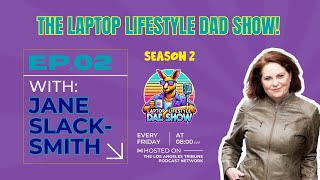
Jane Slack-Smith, an Australian entrepreneur who went from explosives engineer to abundance coach, explains her "problem deconstruction" process that combines heart-brain coherence with AI tools like custom GPT assistants to personalize marketing and automate content without replacing human connection.
Chapters
Well, g'day legends, coming to you live from beautiful Tasmania here in Australia. It's season 2, episode 2 of the Laptop Lifestyle Dad Show, proudly hosted on the Los Angeles Tribune Podcast Network. And I'm your host, Jeff Ross, the Caffeinated Kangaroo, here to help you bounce into mastery of AI and social selling. Quick fun fact, did you know 91% of businesses know about AI, but most are too overwhelmed to even think about starting to use it. If that's you, don't stress, you're in the right place. The mission of this show is to empower and equip moms and dads and entrepreneurs to leverage AI, master social selling, and build a business that creates freedom, connection, and purpose. Now, today's guest is an extra special one. I've had the privilege of meeting fabulous Jane Slack-Smith through the LA Tribune Podcast Network. And let me tell you, this Aussie is as fun and as crazy as they come in a best possible way, of course. Jane's here been helping everyday people achieve extraordinary results for over 20 years now. And she's a true master at crafting abundance, turning dreams into actionable plans and helping you to reach your full potential. So get ready. For this awesome conversation full of laughter, insights, and actionable gold. Go grab your cuppa, settle in, and let's go get this episode started. So g'day, Jane, how are you? It's so much a pleasure to bring you on for this interview today.
I'm so excited to be the second guest on the second season. So yes, thank you. Bring it on. It looks like we're going to have some fun.
I reckon. I look at, I just love getting to know you through the LA Tribune. It's, it's been a fun and exciting environment, hasn't it?
Yeah, it's interesting. You know, you get these opportunities every now and then and, you know, if it's not a hell yes, it's a no. And as soon as this came up, I was like, hell yes, let's just jump on this. I don't know where it's going to take us. And just the caliber of people is one thing, but on the other side, everyone is out to lift everyone up.
Yeah.
There's no competition. There's no, I mean, gosh, you've got me here on your podcast as a guest, right? And so it, there's no, um, negative juju that's going on there. It's like, come on guys, let's, let's get in here together and make this the best we can and help people.
And I think that comes from Michael Silvers and Karen Hall and their heart and the way that they lead. And I just love the servant-hearted leadership. And I came across a saying today that collaboration, when it's done right, elevates us. And that's really what's happening here, isn't it?
Yeah, it is. And I think that's the, I mean, that's always been my outlook in, so I've had a number of companies and, you know, I never saw myself in competition to other people in the same industry. So, you know, I was an explosives engineer in the mining industry for 15 years, blew a lot of things up around the world, and then, you know, used the risk assessment techniques to create a property investment portfolio, taught my friends and family. And I thought I need more friends. And so I became a mortgage broker and started a mortgage broking practice. And at all times I was sitting there going, going to these events and people like, oh, I'm not going to tell you where I get my clients. I'm like, let me tell you what I do. I better give you some tips. And, you know, I was, I was very thankful. You know, I've always been one of those people that would rather ask for forgiveness than permission. And so when I was starting the mortgage broking business, I wrote down, and this is a tip for people, grab your pen and paper because you can do this anywhere. I wrote down 30 questions that I needed to know about starting a business. And this was everything from where do you get your clients? Who do you aggregate through? Back then, what fax machine do you have? What phone plan? You know, how do you, how do you process the client journey from discovery call through to completion, everything. And then I found the top 30 brokers. I'm like, oh, look, I'm kind of thinking about starting a business. And they're like, yeah, love, I'll help you. And I started asking the questions. We get to about question 20 and they're like, wait a second. I think I've just given you all my intellectual property. I'm like, okay, that's cool. I'm out. And so I ended up with best practice before I to the business because I knew what the best in the business were doing.
That's a brilliant story. And thank you for sharing. Like we're just getting straight to the gold. I love it. And I actually love to get to know you a bit better. So what I find in these interviews is a great opportunity for us to hear, share our hero's journey story. You know, like I think we're all selling one thing at the end of the day, and that's transformation, you know, taking someone from a before state to an after state. So. I'd love to unpack your story. What did Suxville look like? Awesome Town looks pretty good. So how did you get to Awesome Town and, and you know, what were the steps that were required to get there?
Look, it, it's, um, such a great question because like, I really, I really want to say that, you know, there was some very difficult times that were challenging, but you know, I, I was very fortunate. I grew up poor on a farm. My dad was a farm laborer. My mum was a nurse. You know, she got injured at work. So, you know, she had to take on a different industry. We never knew we were poor. We just knew that we couldn't have everything. And, you know, looking back on it now, sometimes, like, my dad would not have breakfast at home. He'd have breakfast on the farm in my grandparents' place or my uncle's place because we didn't have the food. But we never knew that. And so I grew, I grew up rich in love and this beautiful environment, but I think the number one absolute gift my parents gave me was my mum used to say to my sister and I every night, you are Jane Slack-Smith, you can do anything but fly, and with God's help you can fly. Yeah. And then dad used to say, just do, just do whatever you want. You can be a garbage collector if you want, but just be the best one. You know, really put your effort into you being the, the, the full potential. And so I grew up thinking that anything was possible. And so I would try things and other people go, I can't believe you got that. And I'm like, oh, okay. I just didn't even think that I wouldn't. And so as much as I'd like to say it was Suxville, you know, there were challenges. Absolutely. And work hard. You know, I was the first female to work in underground coal mines in New South Wales. Legislation changed in 1989. I turned up, 300 men went on strike refusing to work with me.
Wow.
There were challenges, but I like to think that, you know, if we put together a curriculum vitae, a resume in life, We're putting together resilience resume as well. And these things just go to be character building, but more to the point of neuroscience, you know, we've got a, a, an, the, our amygdala basically gets information as going, is this a stress response? 3 seconds later it goes to our prefrontal cortex and it goes, let me go through the story box of stories to see if I've had any experience of this. And if there's a heightened emotion, it goes to the top of the book and it goes up there and it says, oh my God, this is how I respond. And so I think that how you respond, you know, it creates for you that kind of highway that your brain can go to go, you know what, I got through this, it's gonna be okay. Sucks, you know, and I had a brain tumor in 2019 and you know, they'd kind of drilled up, pulled it out and went out and, and I used some, um, mental, mental kind of, uh, imagery to create a perfect surgery. And even the surgeon was saying, you know, that was the easiest I've ever done. I went in there and, and the blood moved away and I cut out the tumor and I came back. And he said, I'm such a good surgeon. I'm like, no, I did that. I did visualizations for a week imagining that. He's like, no, I did it. I'm in recovery on morphine arguing with the brain surgeon. So, you know, I would like to say that there are, there are challenges, but I, I've always seen those as opportunities to either learn or to navigate differently and, and go into my creative state and go, okay, this is how I would normally do this. What if I took myself out of the situation, became the observer and said, what if? And that's what I'd like to do.
What, so just repeat that again. So you take yourself out of the situation. As an observer and look at it as what if, uh, that's very powerful.
So, and I learned that, uh, an actual technique, like it sounds a little woo woo. And let's think of it, woo is window of opportunity, right? So 200 years ago, the wow of, you know, quantum physics and neuroscience was woo. So I'm good with the woo. I know the woo becomes the wow.
What's the strength finder one? It's, uh, wow, winning others over.
Yeah, there you go. And so, um, I, I went through, uh, I was trained up, I was flown to Colorado to become a, uh, fatality investigation investigator when I was in the, in the mining industry because just in case something goes wrong, right? And so one of the things they taught us is what they teach, um, to police in investigation, and that is when you're asking someone to a question or about a situation, you go back to not the accident, but you go back to, tell me about the day before, you know, yeah, how did you sleep? What did you eat? How did you feel? What was going on? Duh duh duh duh duh. And then you ask them to do a 10,000-foot view. Like if you, just before that person stepped off the, the jetty onto the boat and fell in between, just go 10,000 foot up. What do you see? I'm like, oh, I see this other boat coming and was creating a wake. And you go, ah, and you get a bigger perspective. And so, you know, I'm not Mother Teresa, like I get into my stuff, but when I'm very trying to be conscious and, uh, conscious of what's going on and I'm in a situation, I step back and go, okay, if I observe this and take the emotions out, because I know thoughts and feelings aren't real, they're just made up by my brain from past experiences. And I sit back and I go, How, how could I creatively create the outcome that I'd like from this? And then things come up.
That's interesting. That's very interesting. So let's, let's translate that into some like business and marketing terms. Like I think it's really good to have this conversation around the 10,000-foot view, right? Especially for our, like our customers that we're working with to understand the, the, you know, just get out of the narrow laser-focused narrow view. To have a look at the wider perspective. So I'd love to unpack that a bit deeper. How do you sort of translate that sort of coaching into your marketing and your business?
Yeah. And I know you do this too with incredible skill and integrity in that ideal client analysis. And I, uh, started, you know, I went into mortgage broking. I went into property, uh, investing education. And online courses, et cetera. So, you know, I did that for, you know, well up until 2020. And then I was getting clients that were, you know, we'd go from the 16,566 suburbs in Australia down to the 3 suburbs that match their criteria, down to the streets that had the renters in them. And I just set up alerts that were like, when the typical property, 3-bedroom brick house on 600 square meters comes up, we'll do a review. If it's right, you go and buy it. And so there was one client and this came up for her and I was like, yep, I've done the review. You go and put the offer in. Here's the offer and negotiation plan. You're up. And, um, and she's, she said, oh, it just doesn't feel right. I was like, you kind of paid me a lot of money to mentor you through this process and, uh, it's pretty right, but you know, I can't make the decision for you. And it just, it hit me. I said, what else doesn't feel right? She said, oh, this incredible job I've been waiting for. This has come up. Mm, doesn't feel right. And I thought, mm, there's something going on. And I looked around and, and I just, I couldn't work it out. And I had done a course through Copenhagen Business School, neuromarketing. So I knew that our brain was like telling us and telling our clients things. And I, and I'd always advertise from integrity of the aspiration rather than the fear, because I didn't wanna be a fearmonger of you're gonna die poor. I wanted people to aspire about what one or two properties could do for them in creating their financial abundance. And so I went down this other track and I went down this track and started working with William Whitecloud, who wrote The Magician's Way and around, you know, basically ancient wisdom, spiritual text. Equates the Bible and the Sufis and everyone basically, and he brings it all together into how you create. And, and I learned through him this, this beautiful process of tapping into my intuition and being able to be in the present, not in the past where I'm, I'm not, I'm not enough because I've got experience where I didn't really perform or things fell over or in the future worrying about, you know, I'm not worthy because I've got my visions are too big for me. I'm here in the present. I'm tapping into innocence. Presence in my heart and I'm sitting there going, how can I be of service? And so I have this process that's called, I stole William's Metamyth and with his permission grew it using AI, the Megamyth. And so we have this process where we tap into intuition. We sit there in our hearts going, what is the problem that my client is experiencing? And we've all done, you know, how do we make them know, like, and trust us and all that kind of stuff. You know, we've been through the textbook kind of digital marketing things like you and I've experienced, but it's that heart, right?
Yeah.
And so what are they, what's their problem? And so, you know, we intuitively with the client, I would step in that circle and, and, and intuit that with them. And what are they seeking? What, you know, what are the, what are the quiet whispers that they say to themselves when no one else is listening and their brain's going, I can't do this. Like, what's going coming up? And then, um, and then how do I empathetically turn up like the person who's just sitting next to them in the cafe and goes, geez, mate, looks like you're having a bad, bad day. Like, what's going on? And then there's the authority that says, actually, I have experienced that, or I understand that, or I've seen someone have that need for a transformation. This is how I, I can assist you. So we have that kind of structure, and then I put it into an AI, a custom GPT, and I get into the buying beliefs. What's their buying beliefs? You know, why now? Why do they want to buy this? Why from me? Why them? And so I navigate that and then go through the, you know, the fears, pains, and desires aspects. What's their tick points? You know, where are they? What do they watch? What do they consume? Who do they listen to? And then we go back into the beliefs, which is around the, well, what's the unmentioned belief that they're not even willing to tell themselves? So not just not enough, you know, not worthy, not capable, don't have the power, don't have the capacity, whatever that is that comes up. And then I step back into an intuitive, I know this is a long answer, sorry.
No, it's beautiful.
I step back into an intuitive process with them and do what's called a problem deconstruction. So there's a auto-association. So I'm stepping into the shoes of my ideal client, who I now know is 55-year-old Rita, who lives with her husband, has got grown kids. She's worried about whether she's going to retire on enough. She's looking down at her kids growing up, worried about their future. And she's sitting here going, what can I do? Like, I know exactly that she's waking up at 2 o'clock in the morning and going, actually, I've been climbing this ladder up the corporate ladder all this time, and I think I put the ladder against the wrong wall. Like, I know what waking up. And then, so I step in this problem deconstruction and it's like, what is she thinking? And what is she feeling? And what's that mean about her? What's that mean about the others? And what's that mean about the world? And often what comes up is the world's unsafe. The world punishes people who, you know, can't make a contribution. And we get down to that limiting belief.
Yeah, especially here in Australia where you have the tall poppy syndrome too on the opposite side of that.
Yeah, exactly. And so we get down to the limiting belief and from there, now whenever I go to talk to a client, I've got a 60-second process. If I ever come onto a podcast or I ever go to write something down, I've got this 20 seconds of how do they feel once they've had my transformation? And I step into my heart and I'm like, my God, you know, they're not waking up in the middle of the night. They have certainty. They have confidence. They have clarity. And then I step into a circle. We're just defining a circle. So everything else that's noise gets out of it. And I step into that and I go, what happens if they don't take up my offer? And it's like, they're going to be waking up at 2 o'clock in the morning. They have an uncertain future. They're worried, could be relationship problems. And I feel that and I feel the pain of it. And then I step into a circle of how I feel when I create the transformation with them. And I'm like, love that up. And then I go into a talk like this and I go, how can I love up? You know, your, your listeners and, um, and I'm in that mindset.
Yeah, that's beautiful. Very much alignment with what we teach at the Laptop Lifestyle Dads community. And, and, um, see, the big thing here is, is we're standing against is like spammy Tammys and direct pitch Peters. And, you know, and I understand why people do that.
What did you say? Spammy Tammys?
Spammy Tammys and direct pitch Peters.
Oh, I love it.
And, uh, so I understand why people did it because I used to do it.
It's for everyone.
Yeah, I used to do it, right? So, It's like you scare people away because you're, you know, it's just in your face and it's like sell, sell, sell. And, but if you can come back into the heart and not make it about you, but make it about your customer and how you can solve their problems and, but understand them so empathetically, like the detail, the neuroscience level that you just described, it now no longer becomes sales, it becomes service.
Yeah, absolutely.
And I love the fact that you just, what you just unpacked there was a bit of a framework. So can we just go back through that framework for our listeners? You know, just our listeners here are at that beginner sort of intermediate level on this stage. So what are some of the tips that they can help to discern how to get inside their customer's head and understand them at that empathetic deep level?
Yeah, it's a good question because I've always had a mentor. And so when I started the mortgage broking business, my mentor Rolf said to me, you can count the apples on the tree, but you can't count the seeds in the apple.
Wow.
And what, what that meant as a newbie, and you know, I paid him a percentage of my commissions and I rang him 10 times a day for the first 6 months and then 5 times a day and then By the year 10, I was ringing him once, maybe every 6 months.
I beg all my students to do the same thing. I wish they would do it.
Yeah, right. And so, but what that meant was if I turn up in my heart in service and, and I know, you know, you are, you are very much aligned to this with the way that you think as well. Then if a person comes to me and says, which I've had for a number of my companies, Um, you know, I need you to do this and I know it's not in their interest. I want to buy your course and I'm like, I'm not selling you my course. And any other mortgage broker or a property spruiker would be selling me their stuff. Like, if you don't sell it to me, I'm gonna buy it from somewhere else. I'm like, like with integrity, I, I give you my blessings. I'm gonna give you the questions to ask them because they need to answer this because I can't see how this is in your greater good. And, you know, I've, I've seen the apple and I've turned them away and they send 5 seeds to me and they go, I went and got stuffed up with someone else, but, you know, Jane told me the truth and then I've got 5 more clients. So I think if as a person starting out in business and in any business, it is very, very tempting to follow the numbers, especially when there's a financial crunch. That you're experiencing. And if you've thrown your bit, your job in and gone, this is it. Like, I know that there, there is pressure on you to take anything, but what I've found is that if you, if you have that vision of what you want to create and your orientation, I have a morning orientation process. I'm happy to take your, your listeners through as well, but I have an orientation of being of service and being in my heart and also receiving. Money is an energetic exchange and we receive and we give and the energy flows. And so when I'm in that and I'm stepping in and I'm thinking, okay, how do I know who my ideal client is? And if you just think about walking in their shoes, so just close your eyes for a moment. And if you don't know your ideal client, you haven't done all of that, just step in and go, think of someone who you may have sold to in the past, or you would like to sell to because you know you could service them, and step into their shoes and just take on the moment of, you know, what's it like when they wake up in the morning? What are they worried about? You know, what's happening at breakfast? Are the kids screaming? Are the dogs doing this? So they don't have enough money to send the kids to school with, with, for a lunch order or You know, what's going on for your ideal client? And as they get to work, are they late? Are they frustrated? Well, do they coffee or tea? Think, you know, make it up. Use your imagination. Step into innocence in no sense. Set the intention that you're going to be of service and ask or divine essentially who they are. Be in innocence, make no sense, don't need to know how this is happening and make it up. Imagination. And if you do that and then use your intuition, those 4 I's, you're going to know your client better than they do. I get that when I, you know, run webinars or make offers. I'm answering their objections before they've even thought of it. And they're like, how did you get in my brain? Like, how did you know? Have you been through that too? And, um, and so it allows you from the beginning to just to, to just try to put aside the financial and put aside not, not just the financial. We know that there's also, um, a reputational kind of, I've told everyone I'm starting a business, but I haven't got my first client. Like we know that once you put a stake out there and your, your wife or your husband's there going, told you so, and it's been 6 months. Like we know that pain. But, you know, so you really feel that everything's riding on it. But if you take yourself out of it and be of service, even if you say no to that first client, know from your morning, know from your orientation of what you're creating and what you visualize and how you're putting that memory into your memory story box your brain goes to by putting a high emotion to it. Because the brain cannot tell the difference of time. So it doesn't know if what you are telling it is a future story or a past story, and you are in there going, I have, you know, a flow of ideal clients who I can serve and be of service to, who pay me accordingly to my worth and what the value I give them. And you are in that.
So I love affirmations. Yeah. I've hit something there. What did I hit?
Well, I think everyone's kind of read The Secret, right? And we all sit there going, I want to be rich. I want to be rich. I want to be rich. Yeah.
Surface level to it for sure. The Secret doesn't go into the depthness of it all and give you essentially the how component. I find it goes into the why and the what, but it gives you no how.
Yeah. And I think with affirmations also, your subconscious, so you, you know, you've got your unconscious and you've got your superconscious where, you know, innovation and, and, um, Intuition comes from, and you've got your self-conscious, but then you have the subconscious and all of that feeds the subconscious and whichever message it gets the most powerful, the subconscious hears. And so if your subconscious is hearing, I want to be rich. No, I'm going to be clever about this. I am rich. I am rich. It's going, why is she saying I am rich? Oh, she must be poor. Whereas you, if you're sitting there with this full intention of going, you know, I have a lifestyle in a beautiful home that allows me to have time with my family and friends, make a commitment to spending, you know, making an impact in my community. And, you know, I'm fully enriched and living a life of purpose. Then your subconscious goes, oh, I can remember that.
Okay, so if that's not an affirmation, what is that?
So what that is, is a, I guess what it, it is, it is a, cuz you can have a negative vision and I think what affirmations often do are they're negative visions, they're reinforcing something that you're not, you know, I wanna be beautiful. I wanna, I wanna date a gorgeous person. You know, it's, it's not about having a fulfilling relationship. So it's like, I wanna be rich without saying what the richness will bring you.
Yeah, I get that.
And, and, and not, you know, the process I go through is I create a vision of what I want and I'm very clear of what I want, but then I'm very realistic. I also. Every morning I take one of my choices and I look at the current reality. I'm like, well, where am I? Because if you ignore where you are, then this is just a little bit of a lie, right? And it's like, well, you know, I wanna have the beautiful home and I'm, I'm renting here in some hovel. Then you've gotta say, look, this is where I am. And you don't get rid of, you don't need any inner child work and get rid of your belief busting. They're just part of you. You put it in the backpack and go, Okay, well, let's go on this journey together. And what I try to do then is I balance them against each other. So if I'm in my vision of this beautiful company or business or relationship or wealth or whatever it is that I am, and I'm here, I look from here down there and I, and I like, what's the bridge? What's just the first step?
I love that question.
What's the bridge? And that first step, rather than the whole, like, I need to have it plotted out, I'm gonna, as because you miss synchronicities, coincidences, angel gifts, you know.
I love to start messy and figure it out as you go sometimes. And I just, as you're talking, I'm thinking, yeah, look, I actually do that anyway these days. Like, um, I just haven't got the vocabulary to articulate it as clearly as you do. Um, but I'm sitting here, well, look, I use power of prayer, you know, and I found power of breath prayer and those type of things is really cool.
Tools.
And then I use, um, like not necessarily affirmations as what you've described from the book of the, you know, The Secret, but, uh, and the law of attraction to me, like I get into it, I understand it, but for me, I call it the law of vibration, the law of energy. Like where, where's my vibration at? Where's my energy at? Like if I'm always chasing the dollar, then my actions are going to be responsible for that type of thing, right? But if I'm in my heart and I'm just, you know, in that serving from that energy, that vibrations, well then I start to attract that type of vibration back to me. So we can attract, you know, whether positive or negative energy, whatever you want to call it. And I think that, you know, if I'm in that state of mind, like I can even in my house, you know, when Sarah and I have had a bit of an argument, you can sense the energy, you can sense the, the environment, and then the kids start getting into that and then that negative toxic energy and and then it just spirals. But if you could flip it, you'd be present to it, be aware of it and flip it, you can pause it and change it straight away. And so I call it the law of vibration.
It's true. And I mean, the ancient text, the Kabbalah talks about the law of vibration and wealth, for instance, you know, has a high and a low vibration. You know, the ultimate enlightenment is just be above that. And, but we're all seeking that and we've all been through that experience where your partner comes home and they've had a terrible day and they shut the door and you go, oh God, okay. And the kids are battin' down the hatches and you're like, okay, I'm gonna have to— It's palpable.
You can sense it. Palpable.
Yeah, exactly. The, the energetic exchange. And you know, being in your heart, you know, they found in 1990 You know, we've been doing heart transplants since 1960. 1990, they found that there's 40,000 neuro cells, brain cells in our heart, and we can create a heart-brain coherence so that we actually, and the benefits of that is that you can be more creative. They've tested for up to 6 hours after the white blood cell count is so much higher, you're immune, you're healthier, but You can actually measure the magnetic field of your heart up to 2 meters.
Wow.
Your brain is 1 centimeter. So you are actually driven by your heart and they've done transplants of hearts and people are like, why do I like KFC? Why am I scared of dogs? And because the heart actually has a memory.
That's fascinating. Wow.
And so if you think about being in your heart and you're thinking you're projecting, how you are, then, you know, the fact that I go into coffee shops and people go, oh gosh, someone has just, you know, paid for an extra coffee. Do you want it for free? Like happens to me daily. Not that I get a free coffee every day, but I'm always, I'm, if I'm orientated from being from the heart and the heart brain coherence and the HeartMath Institute's been studying this for the last 30 years, I believe. It's easy. It's like your breathwork with prayer. Hand on heart kind of helps us.
Yeah. Yeah.
Breathe through our other brain. So hand on heart, simple 3-minute exercise. And all you have to do is, you know, breathe in for 5, out for 5, just to get into that relaxed state. So you're not, you're in your parasympathetic, you're not into that flight, fight, fawn, or faint. And think of 1 of 4 things, something that you're grateful for, something you appreciate, something you're compassionate for, something you care for. I will sit there and for 3 minutes, 3 times a day for 3 minutes for 72 hours will actually create the neuroconnection and make it a highway rather than a path. So you can drop into your heart very quickly after that and radiate vibration of love.
And I can now, now I'm sitting here reflecting, I've just had like a history-making week. Like the milestones that have just happened this week has just been phenomenal. Like doors have opened up left, right, and center. And now like it's starting to make a little bit of logical sense.
Yeah.
Yeah. Because it's been in that heart space and operating out of that energy and it's been pretty cool. And you know, I've been doing that for a while. Like, you know, there's a lag effect, of course.
Well, and when you pray, you pray, right?
Yes.
You're in that state.
It's beautiful. Anyway, we could talk about this topic all day long, I think. But, um, you know, this is an AI conversation as well, a bit of marketing. So You know, our mantra is actually AI plus our heart equals our superpower. So we've been talking a little bit, a lot, a lot about the heart and the brain and the neuroscience. Let's switch gears and let's go to the AI side of the conversation.
Oh, I love this. Okay.
I know you're one geek, one geek to another. So what are some of the tips that you can give?
It used to be Excel spreadsheets, now it's AI.
Sorry, what was that just again? I cut you off.
I said it used to be Excel spreadsheets, now it's AI.
I've got a friend of mine who used to love her spreadsheets and now she loves Trello. And she says if Trello was a man, she would marry him. Loves her organization. But I go far, and that's probably another joke too, is I go far as saying that AI saved my marriage. You know, as far as content marketing goes and all that, I'm dyslexic, I can't spell, I left school at year 9, my grammar's atrocious, and I used to have all those limiting beliefs. but AI has helped me to put those to bed and, and move on. But see, I used to create some pretty awesome stories and pretty awesome content, but my grammar and spelling would be atrocious. So my wife would be working in the massage clinic and wait for her to get, come home and, and I'd give her the content. I'd say, Sarah, edit this, proof this, you know, please. And then that would ensure a few arguments behind that because she's tired and grumpy and I want that out sooner rather than later. It was like, I want, I want my way. And, um, anyway, so we used to have a few arguments around that and get a bit frustrated. And I can understand why looking back on the other side of it now, I was pretty demanding. But then, so now I've learned how to master AI. Sarah's now freed up with all this energy and our marriage is a lot happier and we're communicating a lot better now. So I'd say I'd go as far as saying AI saved my marriage.
I love it. I love it.
So we could probably talk about this topic for quite a few times as well, but for our listeners here, what are some of the tips that we can give them to help them to start to leverage AI, be empowered to embrace it, to yeah, get involved with it?
Look, I mean, as you know, it's, it's one of those things you can go deep into and then you go on holidays for 5 days and all of a sudden it seems that 5 years worth of stuff has happened because it happens so fast and there's so many breakthroughs. And I'm in, I'm in 2 AI masterminds and have been for over 2 years now. Like we were at the birthday of OpenAI. It's been 2 years old and, you know, it kind of started and then by Christmas time we're writing, you know, pirate ditties in 2022 for the Christmas cards by January '23, I was running masterclasses on AI and I'd used Jasper and everything before that. And I mean, obviously it's been around for many years. Everyone who's got Siri has got, had it for 10 years. But the thing with AI, and I think the enabling opportunity is like, for instance, I've just created an AI avatar and I've just been a finalist in the Australian AI Awards. And, um, they, that for propertychat.ai. Essentially, I worked with 2 or 3 Silicon Valley startups around how do I get my 20 years of knowledge, my book and my podcasts and my articles and everything in a platform where I own it and I've got the intellectual property, but you know, I've got an opportunity to share it with people and they can look at my $3,000 courses that I won't sell for $3,000. They can actually just use all the modules and stuff. And you know, that was gonna cost $20,000 to $80,000 and then found a platform that's $29 a month that does it all and more. And so now people can go and video me and have a chat to me 24/7 about everything in my mind. My podcast, Exit the Matrix, they've got— I've uploaded all the episodes for all of my speakers and people can go in there and give me inspiration. You know, I've had a relationship issue, I've had whatever, give me inspiration, a physical health issue. So AI can, you know, not replace us, but it can allow us to communicate to our audience in a way that when we can't be there all the time. And, you know, but just simply, you know, I think ChatGPT is probably the most familiar people are, you know, there's Claude and there's other things.
It's the most mainstream one, yes.
And so you go into ChatGPT and, you know, I, I just did a 5-city workshop tour across Australia teaching people how to create their custom GPT marketing assistant. And between Sydney and Melbourne, before I got to Adelaide and Perth, I had to rewrite the whole thing because it had just changed. And so, and now I'm doing it. And so it works. So it changes so quickly and there's all of these things, but my advice would be just to start and, you know, The absolute starting point is to just go, and I use it as a brainstorming device. I used to, you know, go on conferences or talks and things and I'd come back and go, we're going to do this, we're going to do that, we're going to do this. And then my poor PA would go, okay, Jane, and I'd go down some track for 3 or 4 weeks and go, no, this is not going to work. Now I just jump into ChatGPT and I've pretty much seasoned it with all my business stuff. I custom one, but you don't have to do that. And go into it and I go, what do you think about, you know, writing every, everyone an individualized Christmas ditty for Christmas, you know, this year rather than sending Christmas cards? And I'll go, yeah, Jane, sounds kind of cool and a little dorky, but you know, you know that, you know, 35% of people are going to open up your, your emails and everyone opens up a Christmas card when it's mailed to them. Like, do you want to talk to them or do you want to show them how smart you are and you're coming from your ego and so how clever you are?
I love the stats.
And I go, oh, Oh, Sassy Jane, bugger, I could have like spent 2 days in doing that. That would have been fun. So you tell it what you want it to be. I want you to be a marketing assistant. I want you to help me. My son's just entered year 12 and he was just doing a VCE exam in business management. And I uploaded the entire curriculum and the last 5 exams and said, please act as a tutor and ask questions of Max and every 5 questions tell him that he's going really well. And then because he won't listen to mum, but I'm just saying, well, we die for recognition, don't we? Give him feedback.
Yep.
Um, and, and, you know, constructive criticism and source the documents where you're getting the answers from. And, uh, and of course I've served it up to him like, guess what, Mummy made? And he's like, nah, I don't want your stuff.
Yeah, it's because you, it's because you did it. If his best mate did it, he'd be all over it.
Exactly. If I'd said like, you know, some famous person had created and I spent $1,000 on it, he'd be like, Give it to me. So, um, so with AI, you know, say what you want it to be. And I had run a workshop and like the workshops and masterclasses that you run. And at the end of it, I was sitting there going, everyone understands imposter syndrome now, nailed it. And I'm getting all these beautiful comments. And this lady said to me, she said, Jane, I've got dyslexia. I'm going to have to go back and listen to this masterclass 2 or 3 times because, um, missing the key points and I know it's important and I know in my gut I need to know this, but I'm missing it. And I was so touched. I said, can you give me 5 minutes? And like, there's this whole Zoom room of 50 people and she's like, yeah. I'm like, actually, I'm just gonna, I'm just gonna do this live. And I shared my screen and said, I'm gonna build a custom GPT and show you how to do it live. It's like, if I was going to explain something to someone who has dyslexia, What would be my expert status? And like, oh, you'd be a learning aid, a teacher's aide. Far enough. I was like, okay, so now could you act as a teacher's aide? If you were a teacher's aide teaching someone who had dyslexia, what do you do? Always talk to the age group as if they're 9. Okay. So could you act as a teaching aide and please have all your answers as if the person's 9 and go through whatever they upload, PDF, transcripts, whatever, and give the key summary points, the key takeaways, and the key actionables. And she burst into tears. I'm like, oh, here it is. Now you've got a, you've got a, um, Comprehension Companion. I burst into tears. The whole room burst into tears.
That's such a cool story.
It's public right now. Anyone can use the Comprehension Companion. And people come to me and go, I don't have dyslexia, but I use it all the time.
Love it. That's a beautiful story and it just shows how you can be enabled and empowered by AI. And it's not a replacement, but it's a beautiful tool to be leveraged. And I love that. That's a beautiful story. Wow. Love it.
Cool.
I'm actually a little bit speechless. I don't know where to go from there.
I tell you what, I mean, just another AI kind of, tool. There's, the thing is that, you know, my first camera, my first SLR camera, I thought I was pretty fancy. Got a very fancy camera, went home to the farm and Dad said, you know, uh, do you wanna get up at 5:30 in the morning with me and take a photo for me? And I was like, oh yeah, okay. And, uh, we went out and the center pivot irrigation had gone overnight and the water had solidified on this fence. And as the sun came up, the water came through the ice and there was like a thousand fairies were just dancing on this, on this fence. And I took the photo and I was like, oh, dad, that's nice. And he, I said, is there any other photos you want? And he went, look, in about 10 minutes' time, there's gonna be some, some spring lambs come over this hill and they're gonna be flopping around in the sunlight. And I was like, oh, let's go take that. And I took the photo. I was like, how long have you been thinking you were taking these photos? It's like, oh, 20 years. I was like, take the camera, press P for panic. It's all yours. And so he took photos and he's won awards around the world for his photos. But then there was the question about DSLR. Should I go to digital? He's like, it's not real. It's not real. No, I'm keeping to film. It's not real. And I'm never going to do it. And those people who win awards with digital camera photos, they're not real. I was like, well, I've now got a DSLR, Dad. Let me show you the DSLR. I was like, see this, how you can actually see the image and you don't have to take 500 pictures and hope that you, when you produce it, you got the right one. He's like, kind of handy. I'm like, you don't have to edit anything. And he's like, hmm, yeah, this helps me get the image that I want. Think of AI in the same way, right? Is the sense that we can be scared of it and say, you know, it's going to put everyone out of business. People who did things authentically, or you can look at it and you go, if you use it as a tool and you're in the beginning with the input and you're at the end with the output and you're editing it, all it does is enable you to get things done faster and probably with everyone else.
Yeah, I love that. Both two beautiful stories and the big key theme that came out for me that, and for our listeners too, please tune into this. Is when you are teaching something, like show, don't tell, like show people what's possible. And that's what just jumped out for me in both those stories is, is in both examples, you got both students, if you will. And so you worked out what their challenges were and how to get there, but then you showed them that, you know, we hear about the learn, do, teach model all the time. And, and I find that's what, you know, I do with some of my best coaching is, is that fly on the wall, over your shoulder experience. This is how I do it. And this is how you can too. And I find that's beautiful.
You know, it's interesting and I really appreciate you summarizing that because I didn't realize until you said that, that in both of those examples, both of those people didn't know they had a problem that could be answered.
Very powerful.
And, and it was just the Wait a second, I think I can help you.
But you didn't come back from a space of trying to shame and condemn them or make them feel dumb or, or anything like that. It was like, it was inspiring because it was about empowering them and, and hey, I've got something that could probably help you. And that came from that servant-hearted leadership. And that's where that, I really, I feel like when we're in our genius zone and when we're in our heart, that's what it's all about, right? It's about how could I partner with you? To, to help you to go to that next level. This is how we do it. It's beautiful.
Yeah. And, and you know what the other thing, and here's a tip, um, for people who are new in business is that no may mean not yet. No may mean no, but it means nothing in the end. If you make it mean something, then it will, it will demoralize you and it will slowly eat away your heart and your vision. And everything you want to do.
Up in your own head.
Yeah, if you just take those nos as either a not yet or as a I'm not the right person, then it doesn't mean anything.
That's it. I always say like a no is they don't know enough yet. So it's not necessarily a no as in N-O, it's they don't know enough yet. So as in K-N-O-W. And so they need to go away. So bless them and release them. And it's not the right timing.
And that's that fishing, doesn't it?
Yep. Yep. Bless and release them. And it might not be the right timing and they need to go do whatever they need to do in life to be able to come to that realization themselves. And they come back to you. Great. If they don't, you know, you've at least helped plant the seed.
It's funny. I, um, I was on the front cover of Money Magazine in Australia, 2007, long time ago. And I was saying to my husband, hold the horses, we are gonna have to put in a second phone line in the house. I was running the, the mortgage broking business from the bedroom, you know, it's gonna, the phone's gonna run off the hook. And he is like, darling, let's handle the success when it comes. And I was, bless him. And so I was like, okay, the phone did not run off the hook. But in 2015, a lady came to my office and she'd torn the article out and said, when I knew I needed to speak to someone about property, I knew it'd be you. So we're not working on the same timelines. Yes.
Unfortunately, I've had to learn that one myself. It's all in God's timing, right?
Exactly. Exactly. So it's just like you put it out there and it comes back to you.
Yeah. No, I love it. Cool. Well, I'm sure that you and I could talk underwater with a mouthful of marbles. Uh, but it's probably time to close this interview up, but we'll have to get you back for a second one. So. If there's one piece of advice or insight that you'd like to leave our audience with to inspire them on their journey to abundance, what would that be?
I, I think the most powerful thing I could say is that, and I, and I've done hundreds of vision calls of what people want to create in the world, and I've participated in helping people create the most amazing things. Is that, and I, and I have this exercise that I do, which is essentially if you wake up tomorrow and, uh, unfortunately your family's not there, it's just you, and there's enough power and water and food to keep you going forever. Do you need that Louis Vuitton pair of shoes? Do you need the red car? Do you need the big house? Like, what truly do you need? What are you actually doing and creating and wanting that is just so that other people validate you and you, or getting permission from people. And a lot of people are seeking permission because they always had permission. You know, they had to ask for permission from their father or their mother or their guardian or, you know, someone. There's no one giving you permission anymore. Give yourself permission. So when you are self-referential and you know that within you have all the things that you need to actually create the life that you want and have the purpose and the impact and the legacy that you want. When you have that within and you don't look for permission anymore and you don't look for comparison and you just be the best possible version of what you can be, then hallelujah, you get to the winning side.
That's a mic drop moment right there. Thank you, Jane. Appreciate you. I absolutely love this interview. It's been a lot of fun. We definitely will have to get you back, but, um, I better close up and we better move on and get on with our days. But so guys, that's been an incredible conversation today with the one and only Jane Slack-Smith. Jane, thank you so much for sharing your wisdom, insights, and practical steps to help our audience step into a life of abundance. Your perspectives are on breaking free from old patterns and leveraging tools in the AI space are just truly inspiring. Thank you for those amazing stories. I, I, I'm touched myself. So now for those of you who are listening or watching, uh, this is just the beginning of season 2. We've got an amazing lineup of guests coming your way, including Steve Ramona, Dane Doria-Cordova from Money and You, Austin Armstrong from Syllabi, and the legendary Rex Sykes, just to name a few. So make sure you subscribe or follow us on YouTube, Spotify, Apple Podcasts, and you can also find us on the LA Tribune Podcast Network. We're here to help you to leverage AI, master social selling, and build a business and a life that you love. Stay caffeinated, stay legendary, and thank you for being a part of the Laptop Lifestyle Dad Show community. And Jane, just before we go, I have one last thing to leave you with. And I did prep you for this and it's a dad joke. Okay.
I'm ready.
I'm ready.
I'm ready.
Well, I won't be caroling at the psych ward again. It turns out, do you hear what I hear? Isn't a very good idea to sing in the psych ward.
And with that, it's good night.
I love the dad jokes more for my own humor because it's the cringes.
I feel I have to laugh, but I'm internally going, ooh, that's a classic dad joke. Is this done at all? When you have that response, right?
You got the, you got the cringe, you got the feel like you have to laugh. It's like the whole, the whole package.
Uh, I'm so glad it was you delivering that and not me. Thank you.
Well, on that note, let's call this a wrap. Thank you very much for your time.
Bye for now.






