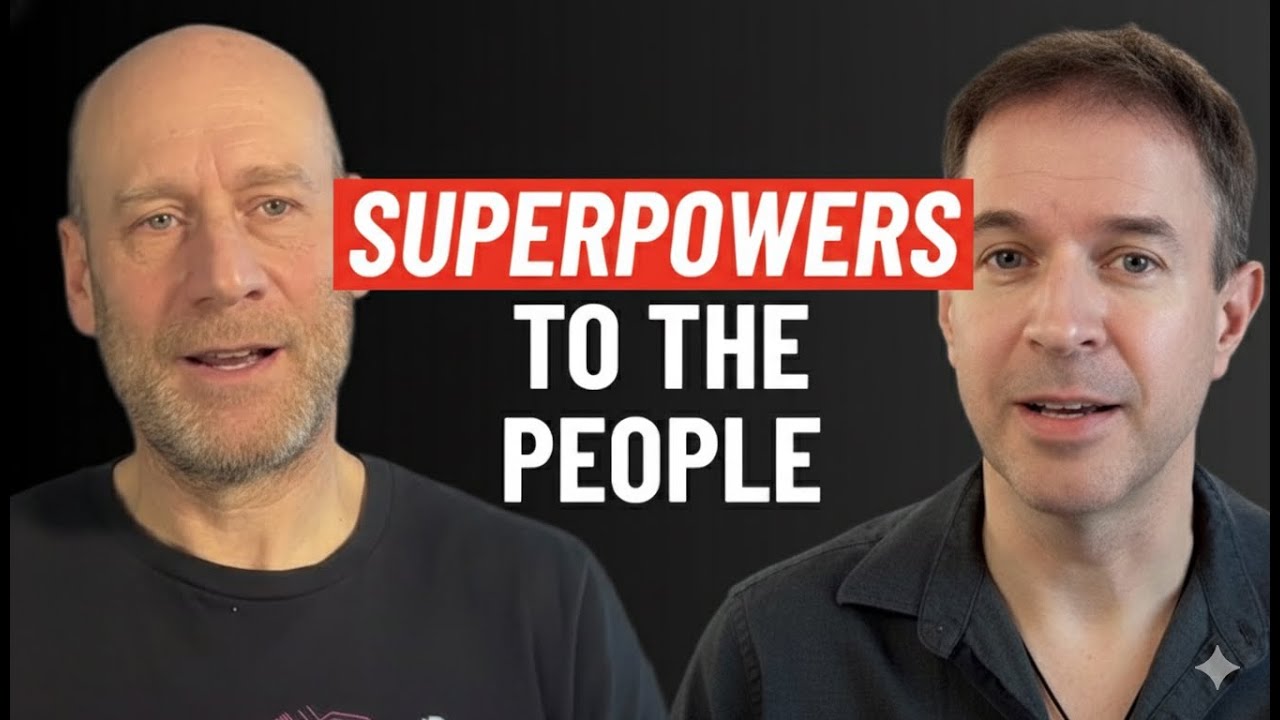
Firefighters, Seniors, Airlines — Why They're All Training This Way Now Jeremy Dalton x Jason Jerald
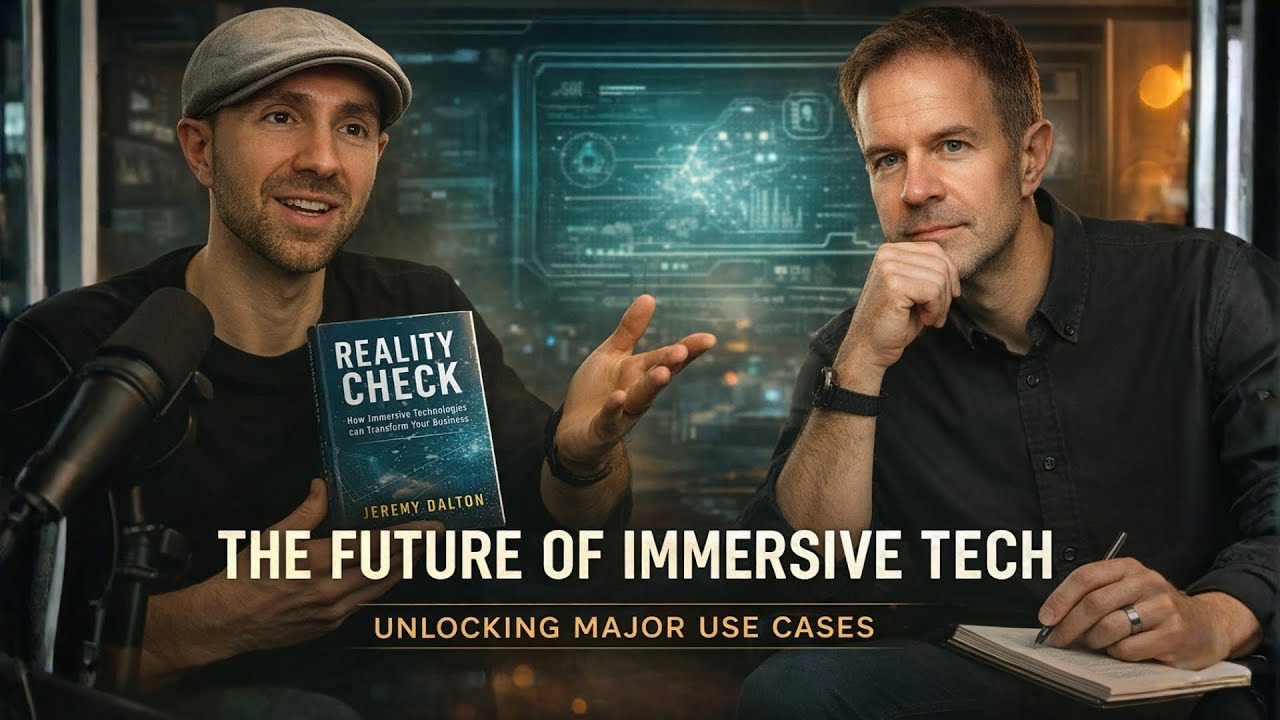
This content was created by Jason Jerald. This content was uploaded by Jason Jerald. This is a YouTube podcast episode titled "Firefighters, Seniors, Airlines — Why They're All Training This Way Now Jeremy Dalton x Jason Jerald" (published 2025-12-19). It is an English interview-style conversation on the Impactful Realities podcast hosted by Dr. Jason Jerald with guest Jeremy Dalton, plus an opening announcer. They discuss real-world XR/VR use cases and measured impacts across industries — aviation training (American Airlines’ VR crew training and reduction from 25%→2% physical simulator requirement), public-speaking/soft-skills training (Vodafone / Virtual Speech), firefighting training with omnidirectional treadmills (Hessen, Germany), remote collaboration in construction (AF Gruppen), senior community adoption (Thrive) and PwC’s immersive practice. The episode covers technology convergence with AI, adoption barriers framed as CECE (cost, education, content, experience), an implementation workflow (discover, design, develop, deploy, debrief), and several quantitative findings (e.g., 58% greater perceived closeness in VR vs. video calls; 20% higher exhaustion; Thrive seniors’ high usage rates). Metadata: YouTube content, thumbnail provided, recorded/posted 2025-12-19.
Chapters
This is Impactful Realities. This podcast is for those who thrive in chaos and engineer breakthroughs. We're talking high-pressure industries, high-stakes decisions, building cutting-edge solutions for the world's most dangerous, demanding, and high-stakes environments to create new realities that defy limits and reshape industries. Here is your host, Dr. Jason Jerald.
Today we have Jeremy Dalton. One of the leaders in the XR space. Most notably, he has written this book that I've been reading through that is just a vast number of use cases that I'm just geeking out on the numbers and such of what is the true impact of what these different use cases of the technology, XR technology can do. Just fascinating. And so a whole lot to talk about. But before we get into some of those use cases, Jeremy, I'd love to sort of hear your story because I know when you created that team at PwC, it just didn't happen overnight. You had told me that was, there were challenges with that. And so maybe a sort of brief story of your hero's journey so that others can understand those challenges and that how you need to keep persisting to be able to reach your ambitions.
Yeah, absolutely. And I really appreciate that you invited me onto the podcast, Jason. And hi to everyone listening. I appreciate your time. So it was a real challenge trying to get this team set up and running because PwC, as many might know, is primarily a professional services company. And so they have a tax team, an audit team, a business recovery team, and so on. And they do have a technology team, but virtual reality was very far from the mind when I was trying to start this up back in 2013. And so it definitely was not an overnight success. It took me many years of campaigning and many years of being told no, or more accurately ignored, until eventually 5 years later in 2017, I found myself in the right place at the right time, and having persevered through all of that, effectively made my own luck and managed to secure a sponsor to establish PwC's first dedicated immersive team globally. And that was a very special moment. I'm very, very proud of that and for the team that came together to help me build that department out. So I think I know what you mean by that, but could you expand on that a bit? Yeah, sure. So a lot of people talk about individuals being lucky, lucky enough to be in the right place at the right time or to find the right sponsor at the right moment. And yes, there is always elements of luck, but you can certainly increase your chances of having such lucky so-called moments by persevering, by continuing to knock on doors, by continuing to pound the battle drums regarding virtual reality or anything else you're excited about. And the more you do that, the greater the chances are that you will, the stars will align and you will find yourself in front of an open door. And that basically has been my journey and my experience in building PwC's immersive tech practice.
Yeah, if you try 10,000 things, then you're probably going to get lucky on a few of those things. But if you try a couple, maybe, but much less likely. So not only are you learning from each time you fail forward or whatever, but yeah, just a fact of playing the numbers game. In fact, they say Einstein failed 10,000 times, right? But that was like intentional failure and all that. But what's great about nowadays is like, it's so much easier to mess up and fail, right? Like, it's easier to reach out to people, to network with them, to, you know, ask questions on a podcast or, you know, get someone in a meeting. You don't have to physically travel to them to, you know, for them to tell you you're wrong. You can learn pretty immediately. Or with their technology, you can, you know, get feedback of, you know, well, if you're a developer, you can get feedback of, hey, you have 15 errors here. Okay, great. I just failed 15 times instead of getting frustrated.
Yeah. And I would say it doesn't quite take the sting out of it. Failure and rejection still feels painful, particularly when you are so passionate and excited about something and you can't figure out why everybody else doesn't share that same enthusiasm. But, you know, and particularly actually, I find myself feeling that sense over the last couple of years for the immersive industry as people have moved their attention solely towards AI. I've felt that once again, you know, there's this lack of alignment between what I, or maybe we in the industry, are excited about and what we know is really valuable and what the market is pushing for and really wants right now. No doubt we will come to a more balanced perspective And I think we're already seeing some corrections happening in the market there because unfortunately, as amazing as artificial intelligence is, it really has sucked the energy and all the oxygen out of the room regarding any other emerging tech when we really should be thinking about all of these different ones and how they work together.
Yeah.
You know, I heard someone say recently that what is the shortcut to success, right? And the shortcut was do the hard things. But based on what you're saying, maybe there's more in that. Not just do the hard things, but fail, right? Don't, you know, feel that sting even though it can be pretty painful. And then I also liked what you said about, you know, just because XR isn't all the hype it was, you know, 5, 10 years ago. I don't, I think that's sort of healthy, right? Because there's more, you know, a little bit of questioning.
Yeah.
Where is the value, right? So there's, you know, people aren't just throwing money at startups that are doing VR, right? Like you gotta have that solid story. You're gonna be getting some tough feedback and such, but that's gonna help you have a really strong use case and, you know, give you advice or, you know, AI is more, you know, where things are at now. But okay, well great. How can we, you know, integrate AI with XR and, you know, how can we learn from all those things?
And you're right, hype is incredibly dangerous and it doesn't matter whether it's virtual reality, artificial intelligence, or quantum computing. raising hype in the market around any technology to a point that is unsustainable and to a point where the technology can't reach that level of expectation. That's a recipe for disaster. And that's what we saw in the metaverse era, which was a terrible time for the virtual reality, augmented reality, immersive industry. I think a lot of people A lot of people made a decent amount of money in that time, but the amount of damage that it did to the industry, I think it was a net negative as a whole for us in the industry. And I don't look back at that time fondly. And that was a result of the overhyped nature of the metaverse. It was very much like the emperor's new clothes. You know, we were presenting this this incredible, amazing, world-changing solution or way of working, way of living, playing, socializing. And really, there was very little there to justify such a step change in hype. So hopefully we have learned our lesson now and will not pursue such lofty heights with the technology and build it in a more sustainable way.
Yeah. And that's consistent with the podcast is impactful realities. Where is that real, like, solid impact. I remember going to a conference, I think it was when Facebook had changed to Meta, right? And people finally just, you know, the people close to the technology, they're a little bit more resistant to the hype at times, but people had given up. It's like, okay, the hype's here, we can't stop it. And so I remember, you know, people wearing shirts that were like, you know, embrace the XR, you know, and metaverse, embrace the hype. Yeah, it kind of became a joke, but yeah, it was exciting times. But yeah, also Finding where is it just that awesome fit where we can have that significant impact. And that's why I love your book because it has like real numbers and real use cases. And I'm sure there were a lot of failures as well, but you can learn from those use cases of, wow, where is it like really sign— like where are you getting that real return on all the time and effort and money that you're putting into things? Where is it? What are those examples that we can learn from?
Yeah, I'd say there are a lot of case studies now in the XR industry, and more and more we are seeing evidence of the value of convergence of use cases. So we're starting to see AI being integrated into virtual reality and augmented reality solutions. Now, there are not enough examples of really conclusive quantitative data-backed case studies of convergence use cases yet. No doubt those will come over the next 12 to 24 months. But if you look at the book, you can see examples of so many different industries that have been using this technology for years and years and have derived significant value that can be quantified in numbers. And provided as proof that the investment in the technology has provided returns. I mean, one off the top of my head is American Airlines. So they saw the value of virtual reality early on. They implemented a 12-room virtual reality dedicated crew training center, and they had a bunch of 14 screens at the front where instructors could see everyone that was doing all 12 attendees. What's that?
Is that correct? These were virtual screens in the virtual world?
They were physical screens. So the instructor was sitting there in this center and they were able to see the— yes, they were able to see the virtual reality view of each of the individuals on those screens, but they were also able to see them externally, you know, as a, from a physical camera perspective.
So you're saying the 14 screens were the different perspectives of 14 simultaneous users. Is that correct?
Yeah, exactly. And they saw some really great results from that. There are a lot of numbers you can read. And one that I remember is there was a drop from 25% to 2% of people that now needed to retrain in a physical simulator. So the physical simulator obviously gives you a more high fidelity experience in the sense that you can actually, you can, you could, the entire physical cockpit and, or more accurately, the plane itself, the aisles and where the crew hang out in between the classes, that was all modeled, but you didn't need to use that anymore, or at least the requirement dropped from 25% to 2%.
So I know flight simulators, they've been around forever since like the 1930s simplified versions. It sort of is the precursor to modern day. VR, but I wasn't aware of like physical— are you saying like you had like physical mockups for the flight attendants to like to practice? Is that how it used to work?
That's how it always has been in the aviation industry. But of course, there are massive problems with that because you can't scale that solution up. You can't run 100 people through that in a single half-day exercise, whereas You have this 12-room VR specialist training center, and yes, you can. What about changing the different plane models? You want to go from a 777 to an A380, for example. You have to have all of those physical mockups there with you. But in virtual reality, click of the instructor's button and you can load any variant of plane that you want without having to physically hold the asset on Um, on the, uh, the ground, uh, where you are.
And did you— and so the traditional way of doing it, do you have like actors, like, I don't know, a, a, a customer, you know, kind of getting a little feisty or what kind of things are they, are they practicing for?
So in, in the, in the American Airlines example, they're very much doing hard skills, practical skills, anything where you have to use your hands to operate machinery. But the stuff you're talking about is the second area of strength when it comes to virtual reality training, and that is in the soft skills or the human skills development. So absolutely, there are loads of examples that show you how you can be a better public speaker, how you can be a better sales representative. I mean, another example in the book is Vodafone, and they used a vendor called Virtual Speech. And Virtual Speech has been around for absolutely ages, a British company that does soft skills training specifically in virtual reality. They've incorporated artificial intelligence now into their solutions, which is really interesting. And Vodafone, it was about 36 minutes, the average time spent in virtual reality by their employees, and they saw a 91% approval rating from that. So 91% said that they want to see more of this training going on. So it was a very positive experience overall.
Could you kind of describe what specifically they were doing in that Vodafone experience?
So in the Vodafone case study that I cover in Reality Check, they were very much practicing public speaking. So engagements where they needed to communicate company information in a very efficient way, in a very effective way, in an impactful way. And so they used it for that purpose.
Yeah, I've seen some different ver— not, you know, the Vodafone, but other examples of that. And I've also, you know, done Toastmasters and those sorts of things myself. And yes, maybe once a week you get up and you talk for 3 minutes, right? Then you gotta wait for the next week. If you're lucky, if there's not too many people, you get to practice in front of an audience. And then also I've seen examples where you can, you know, the crowd isn't so friendly, right? And it's, you sort of get this visceral response of it doesn't seem bad, but you're actually in the situation, then, you know, you lock up or whatever. You can simulate those tough situations.
That's the key thing with virtual reality, right? You want to be able to force yourself to have that visceral reaction to simulate it without having to go through the hassle of gathering a whole crowd for you and to practice your talk, you know, and being able to do that on demand while still having that visceral reaction, that really is one of the key strengths of virtual reality as a technology.
I remember the example I saw in the early days of an example of, you know, public speaking is that, you know, the hard mode was no one was looking at you in the eye. They were, you know, looking at their laptop or their phone or whatever. And one person was sleeping. Then the ultimate test was when someone stood up, screamed, and ran out of the room. If you can get through that, then you can go through any public speaking, I suppose, facing your worst fears.
Exactly.
And back to the American Airlines, you stated 25%. Am I understanding that correctly? 25% use It went from 25% to 2%. There was much less need for the actual—
For the physical simulators. Yeah. So previously there was a 25% requirement. So 25% of people had to go through the physical simulators, but after implementing the virtual reality experience, that requirement dropped to 2%, which shows the confidence that you gain and the learning that is instilled through the use of these simulated, fully virtual environments.
Yeah. So it seems like that's gotta be like, not knowing the numbers, but that's gotta be one of the most expensive parts, right? You have to have the physical simulation. You have to, you know, people have to, you know, queue up or schedule a certain time.
Yeah.
You have to maintain it. You don't have the throughput. In other words, you can't get as many people through it as you could in virtual reality, and you're not necessarily You're not necessarily spending money directly there, but you're definitely losing time. And therefore indirectly, yes, you know, it is, it's an inefficient use of resources.
And you stated 14 screens implying 14 simultaneous users. Were they like collaborating or they were kind of independently using the system or how did that work?
I can't remember myself, but if If memory serves me correct, they weren't, it wasn't a collaborative experience. It was very much a sole training application that the instructor was able to view individually each person going through their own training.
So the win there is for it to not, you don't send one person at a time. You could send, you know, basically you're multiplying your throughput by 14, in addition, not having to have the physical setup and all that.
Exactly. And if you consider the amount of space required to run a virtual reality experience, let's say 2 by 2 meters or 3 by 3 meters, you can get a lot of people through that training in far less space than if you had to host and manage and maintain all of these different physical mockups.
Yeah. And then I can imagine, so that's what we've heard. The bottleneck can be the instructor, right? Because one instructor, maybe they need to go back and review a few things, but they don't need to be with, you know, the trainee every step of the way. So that's a major win there. And so I can imagine in the future that even scaling up beyond 14. I mean, I guess you probably, maybe you want the instructor, you know, you don't want to scale it too much if he's trying to manage a million people. Maybe that's a challenge. But then again, with AI, maybe it can spot some of the help with some of that feedback.
Well, that's exactly what I was gonna say. Well, I was just in Dubai last week and I was speaking at an education conference there. And one of the conclusions that we came to, I was on a panel and it was the fact that we are going to need AI systems to start stepping up or stepping onto the plate to be able to manage the overview of each of the students' progress. And then the teacher there, teacher is one level above, seeing what all the results are coming through from the AI agents and is then able to take all the data and take their guidance to say, these 10 students are absolutely fine, for example, these 5 need to keep an eye on them. And these 2 are absolutely like not getting it. They are They barely have any understanding beyond the very basics. They need a lot of help and personal tutoring. So that enables a much more efficient use of resources for a very small amount of human instructors or teachers in this case. And I think we will see something very similar in the aviation industry and in other industries and their learning and development teams.
Yeah, I think that's definitely the future moving forward of, you know, whether it's AR or VR or, you know, whatever form it might be. Of what is that interface to get that, you know, to talk. Right now we can speak into our phones or whatever, but when you have that, you know, access to real-world data, what the camera's seeing, and, you know, there's just so much potential there of combining these different technologies together. We recently had Ori Inbar on one of our podcasts and he even was so bold to claim that AI needs AR to survive, right? Because The AI interface is okay nowadays, but it's pretty much a single or maybe dual modality of typing or speaking. But when we can put together, integrate the full part of the human and the environment around you, sensing both your behaviors and the behaviors of others and the state of the world and such, that is where it's really going to take off.
Well, I think it depends on the use case because not every application of the technology is in context with your physical environment. So if you're in a factory and you're trying to deal with the maintenance of the machines on the factory floor there, then yeah, I can see some real advantages in having that real-time contextual view through augmented reality glasses, for example, assisted of course by AI and being able to filter out what's going on, pull some data from the cloud, display it in front of you, highlight issues, highlight potential issues that may occur in the future based on historical data, all this sort of stuff. But if you are, let's say, trying to conduct a training program like the American Airlines example, like the Vodafone public speaking example, you don't want to be necessarily in the world around you. You want to be on an A380. You want to be in front of a crowd of 1,000 people. So in that case, the context changes from the physical world to very much a completely different world, a virtual world, and therefore you need a different set of technologies for that. And of course, text-based applications, I think, will always remain. There's no need to necessarily put everything into an augmented reality view when it doesn't need to be there. Yeah.
Yeah. Sometimes the real world without technology is a great place to be. We don't necessarily want it everywhere.
Yeah, we definitely don't want to inundate augmented reality views with tons of windows and data, that's for sure.
Sometimes, yeah, real person interaction is better than, you know, even getting on a Zoom call or being in a VR space. Now, with that being said, there are some cases like you, I know in your book you talk about the Nowhere a Norway Air Gruppen remote collaboration. And so that being a great example of where these technologies can be good for the sort of human-human.
Yeah. So AF Gruppen is a construction and engineering company in Norway, and they've been using virtual reality for a number of years now. They used it in particular in the application that I mentioned in Reality Check for remote collaboration. So working together with with distant teams on a project that they want to align on and understand, you know, what is going on with that project? How far have we progressed with it? What does it look like right now? Are we on track? Answering all those sorts of questions. And what really struck me about that one is that the majority of people who engaged in that virtual reality experience had no experience in VR before. So it was about 56%. that had zero VR experience, but within— and AF Gruppen introduced these 15-minute introductory sessions. So, it only took 15 minutes to then develop enough confidence to be able to use that solution in a way that produced some real value, saved costs, saved time, saved CO2 emissions from reduced travel, all this sort of stuff. And I've seen that personally. So, at PwC, We ran programs with our leaders around the world where we were distributing hundreds of headsets to, you know, over 50 countries around the world. And the majority of these individuals had never tried virtual reality before. So, we were running remote onboarding sessions using video conferencing software. And then, once they knew enough to put on the headset and enter into virtual reality, we met them there and showed them how to use the virtual reality software. So, it was like a dual a dual-mode introduction to the hardware and then the software.
Yeah, I think that emphasizes the importance of the good design, of the good user experience, right? If you focus on that versus where is the button sort of thing, then XR has, right, if done well, you just, it's just like the real world. I mean, sure, maybe you need to push a button, but that's primarily the only difference. And so just Able to, you know, you don't have to learn how to use a desktop if you never used a desktop before.
Yeah. And you really hit the nail on the head there regarding experience. That in my view is the major blocker of adoption of this technology. So if you think about all the key blockers, you can combine it into a framework called CECE, C-E-C-E, and that's cost, education, Content, and experience. Now, cost is fairly self-explanatory. Education doesn't refer to the level of education in society, but it refers to people's understanding of how powerful and impactful this technology can be and what its strengths are. And there's still much to do there. Then when it comes to content, of course, this is more of a consumer issue than a business issue. Still remains an issue for business, but business, if the return on investment is there and the business case is there, they'll simply build their own software. So now we're left with experience, user experience, how easy, how seamless, how smooth and intuitive is it to use the hardware, to use the application of the software? And unfortunately, the answer is right now that it's not incredibly intuitive, or it's not as intuitive as a smartphone that we're now used to. after many, many years of being familiarized with that tech. Now, no doubt that will come as we move towards more smart glasses that are more familiar form factors. That will start to become an easier lift for people to be able to put on their face versus a chunky headset that is uncomfortable, disconnects them from the real world. So these challenges will start to be resolved. And they already have been over many years and they'll continue to do so.
I'd say another important, especially like in the training space, right, of that experience being so essential of getting it right. Once you take away the technology, then you got to go perform in the real world. That experience in VR needs to match closely with the real world. Otherwise, you're going to be, you know, trying to push a button on a controller, right? If, you know, that's the complication, you get good at that, then, okay, well, wait a second, that doesn't actually map to the real world. And so, yeah, how do those experiences line up so that you have that alignment to the real world and the real world?
Absolutely. And you'll know this better than me, Jason, but we're starting to see some academic evidence pop up around the, or supporting this idea that what you do in virtual reality can translate to real life experiences. And vice versa, what you do in real life can translate into virtual reality.
Yeah. Yeah. I believe that's called in the, you know, sort of academic world is external validity is, you know, you do some study in a lab, then, okay, does that actually apply to the real world? And so that's sort of a great fit here of, are you getting those real-world results? Yep.
Okay.
So moving on to a couple other, I did, there's There must be 200 use cases or case studies in your book. It's just, it's phenomenal. But we obviously can't go through all of those. But one of those was firefighting training in Germany. Could you expand upon that a bit?
Yeah, this was one that I personally got to experience myself and it was super exciting. So this was in the Hessen region of Germany. And they have invested quite heavily in not just virtual reality headsets, but also omnidirectional treadmills. So, for those who don't know, an omnidirectional treadmill is similar to what it sounds. It's a treadmill that can move on 2 axes. So, you can go forward and backward, just like you would do on a normal treadmill, but you can also go left and right too. So, and this particular one that they were using in Germany was by a company called Omnifinity out of Sweden, and it was about 5 by 5 meters, and it kind of looked like a pizza. So, and it had, if you imagine it being cut up into slices, and each slice had a bunch of roller pins or roller cylinders. That got bigger and bigger towards the edge of the slice. So every time you try and walk to the edge of this pizza, this omnidirectional treadmill, the rollers would roll you back to the center, thus creating an unlimited potential walking area in the virtual world in quite a constrained or much smaller footprint in the physical world, this 5 by 5 meter space. So really, that was quite amazing because that firefighting training to occur in a very huge sort of physical simulation where you were trying to simulate an entire train tunnel. And the idea was, and I spoke to some of the firefighting commanders in charge of training and the implementation of this solution, and they said, yeah, it's actually quite disruptive to shut down a train line so that we can bring all our firefighters in and train in the real world. This is fantastic because we can put the headset on and we can get on the omnidirectional treadmill, and then all of a sudden we are in the tunnel and we're walking through the train carriages and there's fires going on and we're identifying where the smoke's coming from. So again, similar to the American Airlines example, they were able to avoid having to have physical infrastructure and travel costs and all the rest of it by using these this dual technology of virtual reality and omnidirectional treadmill.
So we work with firefighters as well and, you know, other forms of public safety and emergency response and such. And our sponsor here in the United States, National Institute of Standards and Technology, those slides, this is not our numbers. Those slides are saying an average typical live-action training for first responders is $50,000 per day. And so you don't get an opportunity to do that all the time, right? But they might only have one of those facilities in the state that, you know, your station, your team may be able to do that, you know, once a year if they're lucky. And so, yeah, with VR you could do that, you know, every day and completely change up the scenario, not just have one, you know, fixed building, you know, physical building of kind of the same thing that, you know, the same scenario. I know another example is you sort of have this, uh, flagship experience, I think called In My Shows. Is that correct? About how that went?
In My Shows, yeah.
Than what you were expecting?
Yeah. So that was really quite special. This was commissioned by our head of people at PwC as a way to tackle unconscious bias. And they said, do you think virtual reality could be interesting as a solution for this? And we thought, yeah, absolutely. So to cut a long story short, we used volumetric capture to record in 3 dimensions, real-life actors and actresses, and built this narrative script off the experiences contributed very kindly by our multicultural business network and produced an experience that was so emotionally impactful and effective that it turned from being a purely internal tool to a product that ended up being sold to numerous markets around the world. We were running training programs and building localized solutions in Australia, in the United States for different industries, in the UK. It was really quite amazing and quite special because it proved to me how much value you can get from introducing virtual reality versus Just, you know, doing an eLearn on a screen.
Yeah. Yeah. I remember seeing a very early, it was using, you know, 360 video with real actors of, you know, intercultural meetings. And it was just, it was the way they put it together was just hilarious, but so true how different cultures can think so differently of, you know, why aren't we breaking for lunch versus, you know, another culture, we need to get things done. Let's get straight to the point. And just these, These things that are kind of funny, but remember them because they're funny and because they can be true, not to stereotype cultures and such. But yeah, we do all think very differently and we need to be, have effective meetings and partnerships and such. We need to understand how other people think. Speaking of how other people think, this was a big surprise to me. was that the older audience, the usage of VR, I always thought of VR as like up and coming for these, you have digital natives and I joke there's virtual reality or XR natives, right? That they're thinking completely differently. But when this surprising result of real usage by the older population, could you expand upon that?
Yeah, sure. So this was a community that I met probably a couple of years ago now, and it was called Thrive. And they really do some wonderful things. They bring the aging adults community together. Their members comprise mostly 60 to 90-year-olds, some younger, but clearly a different generation from what people would stereotypically think are the main users of virtual reality technology. And I was really struck by their passion for the technology and their desire to use it frequently. So I conducted a survey with the community and ended up getting responses from 150 to 200 of them. And I asked, well, the first question I asked them is how often do you use virtual reality? And what I found was quite fascinating, actually. I found, and I've got the numbers here, I found that 57% of them used virtual reality every day and 27% used it 3 to 4 times a week. So, in other words, more than 3 quarters of the community used it 3 to 4 times a week, at least. Which is really quite incredible. And then I asked them the question, okay, well, how long are your VR sessions on average? And the majority of them, 52%, said 1 to 2 hours. Now that is pretty much the life of the battery life of a headset, right? But some of them were going further than that and clearly using battery packs or plugging straight into a wall because We had 20% saying 3 to 5 hours, 6% saying over 5 hours. So more than a quarter and nearly a third were going for 2 to 5 hours plus in virtual reality. And the reason being, the reason why we're seeing such fascinating stats and such deep usage by this community of aging adults is because Virtual reality solves a real problem for them. It solves the lack of human connection, which I think is fascinating itself because everyone thinks that virtual reality is this lonesome, isolating technology, but when, and it can be, but when used in the right way, it can absolutely have the opposite impact where it can bring people together. And it doesn't have to be just young people. It can be people of all ages bringing them together. So yeah, definitely check out the Thrive community. They're a wonderful bunch, and I think they're an underrepresented or underserved community, an underestimated community when it comes to virtual reality adoption.
So I'm curious because my mother, you know, fits— my mother and father, you know, they know what I do, so they know about virtual reality. I've shown them and such, but they certainly don't use it every day. So I'm curious of this community, why it's so high. If there are a certain type of people or maybe they're provided access where, you know, my parents don't have access. What are your thoughts of, you know, what is it specifically about this community? Why it's so high? Or, you know, do you think the entire community, if they had access, would be that high?
It's run very well. There are regular events to keep people interested. Excuses to meet, wonderful community events. You know, there's trivia nights, there's Shakespearean shows that they put on for each other. There is Christmas celebrations, choirs. So, so many things that you would see in the physical world that are not possible because the community members live too far away. Perhaps some of them are not in good enough health to be able to make that trip. For others, it's too far of, too much of a financial commitment. And so you can see all these reasons that make it very difficult to meet face-to-face, and that virtual reality fills that need really beautifully. And I think that's the key lesson really. If you can meet face-to-face, then absolutely that is the preferred way of doing things. That is the golden scenario. But if you can't meet face-to-face, then virtual reality remains a very compelling medium and one that is stronger than video conferencing for many reasons. And, you know, we did a study on that, but we can go into that in a bit if you'd like.
Yeah, for sure. But I would just first want to emphasize, you know, you talked about your CC model, cost, education, content, experience. And so obviously you gotta have a good experience there. Maybe the content is actually the other people, right, that are represented in whatever way. And you know, you gotta make it, you know, cost affordable and all that. But the point is understanding your target audience and their pain points. They want to be social. It's just difficult for them to be social in, you know, real-world situations. And so you're solving that. You don't just throw the technology and it automatically is a success. You have to Worry about all the CC.
100%. Absolutely right.
Yeah. So I'd love to hear more about what you were just saying about, you know, slightly different applications.
Yeah. So when it comes to virtual reality versus video conferencing, it's, we did a study with the University of Münster in Germany and a client of ours, which was the Ministry of Internal Affairs in Lower Saxony, also in Germany. And this was an independent study conducted by the University of Münster. We wanted to try and figure out the answer to the question, is virtual reality beneficial in any way, in some ways, or what? And if so, what ways compared to video conferencing for remote collaboration? So for working together with colleagues that are not there physically with you. And we found some really interesting results. And the key one that I want to highlight here is a 58% increase in the sense of closeness between colleagues when they meet in virtual reality versus over a video conferencing call. And I think that is really eye-opening, really fascinating, and shows you the value of this technology again to connect humanity. Contrary to the Thrive example where we have society coming together, I guess this was another facet of that in the business world and showing that happening. The one thing I will caution though is that there's no such thing as a free lunch. And we did find out of all of the positive stats, we found one negative stat regarding the use of virtual reality compared to video conferencing. And that was a 20% increase in the sense of exhaustion. So how tired you feel after a session in virtual reality versus a similar length session in using video conferencing technology. So I think that's really interesting to think about as you start to pull an agenda together that involves both VR and video conferencing, perhaps.
Yeah, always trade-offs for sure. No matter, You have to look at the pros and cons. I'm curious what specifically is meant, you mean by exhaustion?
It means physical exhaustion. So just feeling tired, not as energetic to perform in a business meeting context.
Do you think that's because you're kind of using more of your body? Maybe you're moving around a little bit more versus sitting in a a chair just looking at a screen?
I think there is an active component to it for sure. And we theorized on this with the University of Münster as well, but also a more mental component to it or a passive component to it where you are being immersed in this completely different world. It's kind of like a sensory overload to an extent. Or at least overload is the wrong word. I'd say it's an increase, a sensory increase compared to you sitting in your office space, looking at a screen with a bunch of people on it. There's far more to take in. There's far more to look around and see. There's far more things to be aware of. People moving in that corner there, someone putting an object on a table in that corner there. You being teleported to the plenary session of the conference, you know, all these things happening that your brain needs to digest. And I think that takes a little bit more energy from you.
Yeah, I know when I get sensory overload of traveling to a different country or whatever, that's very different, you know, than anything I've— everywhere I've been is, it's so exciting. It's like I can't sleep. But as a result of all that excitement, you're pretty darn tired, right? It catches up to you real quickly. So maybe it's similar in some ways. Or another, you know, they used to call, I don't know if they do this any, call it this anymore, but they used to call it gorilla arm where your arm would get exhausted. Because again, going back to the experience, if your interface is up here and you're having to do this all the time, you know, after 20 minutes you're like, okay, I'm done with, you know, I'm done. I'm, this shouldn't be a workout here.
Yeah, we still have, you know, much, much more to discover and pinpoint when it comes to optimizations regarding user experience of the tech.
Absolutely. Okay, so that's a lot of use cases. Definitely check out more use cases, case studies in Jeremy's book, Reality Check. Highly, highly recommend it. I'm about halfway through and I'm sort of getting that information overload, not sensory overload, but there's just So much good information in this book. Going beyond the case studies, I thought maybe we could talk about how, you know, what are those phases when you're actually building these things? And then also, I like your point that, you know, this isn't just some cookie-cutter thing that you, you know, you throw the template at something. You have to take it on a custom case-by-case basis of, you know, what are the pain points, for example? But then also, what are the metrics? Because what the metrics are for one project might be different than it is for another project.
Yeah, absolutely. So a lot of organizations, when they consider implementing XR technology, they think very much about the development phase, which makes sense. I think this is the phase that most people understand in the largest way. So building the software, right? You need the software to be able to run the solution. But they forget that there are actually many phases before that and after that to make it a successful solution. So, to the point you were mentioning before, you can't just throw technology at the wall and expect it to stick, right? There are things you have to do in advance, and there are things you have to do after and as maintenance. So, if we think about the 5 Ds of XR implementation, we have discover, Design, develop, deploy, and debrief. Starting from the beginning, discovery is all about understanding the value of the technology. So, this is the action that mitigates the education challenge that we talked about earlier. And it involves having firsthand experiences with the technology, keeping up to date with the latest updates in the industry, how technology is being used by different organizations and different industries in different parts of the world. And then once you have a good idea or education or understanding of the technology, you can start to see where the use cases might apply in your organization. That's when you move on to the second phase, which is designing such a solution. And when we think about designing software, We want to think not just about the user experience itself of the interface and how you work this application, but we also want to think further along to the stage after development, which is deployment. So how is this solution going to be introduced into your organization? Is it going to be— does it require people to come to a central location to try it? Are you going to ship headsets to individuals and ask for them to be returned? Are you going to have a multi-hub model where people go to their nearest location, but there's more than one? So there are many different ways of distributing VR. In fact, there's a use case in Belgium, and we can talk about this in a bit. It's a really interesting one. I got to see this firsthand too. The local government of Flanders introducing virtual reality 1,200 headsets to 70,000 students there. It was really impressive. And they did that using a model that I haven't mentioned now, which is a rotational model. So it goes to one school for one week of their curriculum, then it gets— headsets get shipped to another school for their curriculum during that week. So no individual school is holding headsets throughout the whole year, but the entire year's schedule is being managed from the beginning and it's being run like a very efficient machine. I thought that was really fantastic.
That seems maybe similar to traveling exhibits you see in museums and such, except the audience is school. So yeah, using an old school model, but applying it in a modern way.
Yeah. And if you can imagine that running multiple times in parallel, so it's not just one set of headsets on one route throughout the year, but it's maybe 5 to 10 sets of headsets on all of their different routes throughout the year. So that was really fascinating. And that's part of your your design stage, thinking about how you're going to deploy it. So, taking that into account at design. And then development is self-explanatory, building the software. Deployment, actually putting this into practice, and then, and all the change management processes that come with that, getting people familiar, onboarding them. And then finally, debrief. This is a really important one, and it's the first one that gets cut whenever budgets get cut in an organization or on a project. But it's so incredibly important. This is the analysis of the currently running solution to understand, is it working? You know, is it producing the return on investment we were expecting? Is it meeting the KPIs, the key performance indicators that we set? You know, how, when we measure it, what are we seeing? How long are users staying there? So this is leading on to your second question now, but how do we How do we measure these results, right? And that changes in each industry. I don't know what you've seen, Jason, but I've seen all sorts of different measures being used depending on what the application is. Could be anything from how long have you spent viewing this experience, if it's a marketing activation, through to have certain stage gates been achieved in learning and development to how far have we increased or how far have we reduced error rates on this wiring diagram? And you can imagine this list just gets endless and endless because every industry has their own functions. Every function has their own activities. Every activity has their own KPIs. So if we were to create a list of return on investment KPIs, it would be never-ending.
Yeah. So yeah, we work with the ROI Institute and they sort of analyze like traditional training, right? And in the real world, it's no different. It's like the metrics are very, you know, use case dependent, right? You don't just apply some cookie cutter template to it. And so using those same concepts of analyzing the ROI, because the nice thing about ROI is you can, even though they're very different, use cases and implementations and, you know, how do you get to the metrics? There's that common value of, you know, a number is, you know, money is a universal number, that ROI. What is the percentage of, you know, what do you get back from it? And so connecting all those things together, right? In both the post-analysis, then, you know, you're not going to project it perfectly, but trying to project upfront, hey, you know, by interviewing people and, you know, estimating cost savings, you know, whatever that might be in your case, How can that, you know, what is the ROI we might expect? And then actually evaluate that ROI because anyone can explain the ROI.
Exactly. We can theorize as much as we want, but really that debrief stage, that actual, the measurement that gets done to see how does our actual ROI compare to expectations of an ROI, incredibly important. It is the sort of thing that informs the next phase of the project. And that next phase could be we cut the whole thing. It could be we spend even more money and we double up on our investment to scale it up. Or it could be somewhere in between where we're like, okay, this can stay as a local solution for now. Maybe we'll introduce it to another team, but we want to see it pivot in a slightly different direction because this particular environment or context didn't quite work.
Yeah. And so that's what we've seen. That's why we're moving is exactly what you're saying is more towards that. That what you're calling debrief here is so many people, they don't just cut it. They never plan that from the beginning. And it's like, how are you going to learn what worked? What didn't work? What should you proceed with? And then you can't justify getting additional feeding if you— sorry, additional funding. If you can't justify to the decision makers, you know, what is the bottom line? You know, okay, I get sort of what you're arguing the impact is, but what is the real impact in a measurable way? Then the project's probably going to die. You're just not going to—
Absolutely right. If you can't produce hard numbers showing the value of the pilot program that you implemented, then you'll never be taken seriously to push this out even further in the organization. Yeah.
And so doing that from the beginning, they may not be asking for that upfront, but you know they're going to be asking for it in the end. So being proactive, of saying, no, we got to include the debrief, as you're calling it, the debrief here. Let's do that analysis so we can make wise decisions at the end. Or even if it's a simple pilot, right? If the answer is this wasn't worth doing, that's as valuable as knowing that it is worth doing because, you know, you can move on to the next project if it turns out it wasn't a fit.
And the reason why I say think about all of this at the design stage is because when you were designing the software, You can implement things, or you can plan to implement things that assist you in those stages. So, let's say in debrief, we want to know how long people have spent in this experience. So, at the design stage, we're going to implement some sort of timer function that sends data to our cloud-based record system that then tells us how long they've spent so that we can analyze it, so we can produce the numbers that we need, so we can get the investment for the next phase.
Yeah. Another way to think about it is designing the experience, you know, designing what are we implementing here, right? Defining what it's going to be is to identify those highest risks, right? Because you don't know all the answers upfront, obviously, especially when it comes to creating new worlds. And so if you can say, you know, we're focused on these 3 things to identify very quickly, get to that debrief as soon as possible, you know, before spending, you know, spending your entire budget. And that will allow you to decide, okay, now we can figure out, you know, is this worth pursuing and focus on the more important things. But let's identify those biggest risks first and get answers there so we can decide if we want to proceed forward.
Okay.
So this is perhaps the most important thing for our audience. These, you know, case studies definitely get the book here. But Jeremy, you're starting the XRHQ. Which my understanding is about more, a whole lot more case studies of how XR and AI activity, what people are doing out there in the world that we can all learn from. Could you talk a little bit about that?
Yeah, absolutely. So when I wrote Reality Check, part of the reason I wrote it was off the back of the conversations I was having with business executives at the time who had no idea about how this technology was being used in the world. And those who did have a little bit of an idea thought that it was mainly for entertainment and video gaming, which of course it is so much more than that. I mean, I'm a gamer myself and I enjoy playing virtual reality games as much as the next person, but that doesn't take away from the real value that the technology has in business. So what I wanted to do with Reality Check was put in a number of case studies there from different industries and different countries and show the quantitative returns that you can get from using this technology in different ways. But of course, I'm limited by how much I can put in a book. So, the XRHQ is the evolution of this thinking. It is a free-to-access database of XR, AI, and other emerging tech case studies. that is fully searchable and multi-filterable. So in other words, you can go in there and see and say, I want to see all the virtual reality applications in pharmaceutical, in the pharmaceutical industry in India. And you can get all of those results there in front of you. Equivalently, you can search for artificial intelligence applications in the United States that are in the state of Ohio, for example. So it's a great way to showcase all of the innovation going on in the different parts of the world that is categorized by industry, by technology, and by country. And so I'm very excited to be able to release that in Q1 2026. And it's an AI-powered platform. So I've got a system that is constantly scanning the internet 24/7, looking for applications of emerging technology, scraping that data, analyzing it, and if relevant, putting it into the database for you to access and informing you that yes, this just got added, this new use case of augmented reality in the UK, for example, in the banking world. So, you know, you can view through that history at your own leisure or do a very specific search on that. But my hope is that it will help not only the XR industry, but also the AI industry and will actually bring these industries together. Because one of the things I think we suffer from in virtual reality is that we tend to be quite a passionate but closed ecosystem. We see many of the same faces at the conferences. We're all equally excited, but we need, yes, exactly. We need more new blood in here. And we also need both outside technology advocates to understand the advantages and benefits that come from convergence of these technologies. And so, yes, you can see a load of examples on XR HQ of how virtual reality and AI is being combined, of how drones and augmented reality are being combined. And I think this will inspire both communities on each side, the XR community and the non-XR world, to think about how these solutions come together.
Yeah, we can all learn from each other. People focusing on very different things. You know, this is especially exciting to me because our mission at my company, Next Gen Interactions, is to help identify and solve for the world's most impactful use cases. So you're doing my job here. You're like solving this for me by helping identify these impactful things that we can, you know, help make the world a better place. So thank you for that. I've already signed up, so hopefully I'm, you know, near the top of that list that I'm the first to hear about it. But I know others can as well. What is a way for people to stay informed about XRHK?
So if you go to xrhq.com, you will find a box you can put your email into and you can sign up for early access there. I will be releasing early access to the platform in Q1 2026. So somewhere between January and March, you'll be able to use the platform. You'll be able to search through it. And again, my aim really is to have this as a a free-to-use platform. So once we have enough users on there and enough interest, there will be a business case to go to different vendors of technology solutions in the VR and the AI space who can then pay if they want to, to feature their case study near the top of searches. So that's the aim with commercialization. Now, I would like this to be and open and free-to-use tools. So I'm really pushing in that direction. All right.
I'm really looking forward to this because it's been hard to find those use cases. That's one reason I love your book so much is people, you know, talk about all these things, but, you know, okay, how are people actually using it in a way that's effective and getting results? And so this is so much what our community needs, not just our community, but the communities that, you know, are, as you know, VR-type people. technology, those that we're serving, right? That's for them to help understanding, understand where is it, you know, where are those really good fits. Okay. Well, thank you, Jeremy. This was great information. And again, for our audience, go to xrhq.com. We'll include that in the show notes as well as a link to Jeremy's book. Reality Tech.
Thanks so much, Jason. It's been a real pleasure, and for those listening, I've really enjoyed it. Thank you for your time.
Impactful reality context requires more than a conversation. It takes action, research, and collective wisdom. If it made you think, we'd love to hear your insights in the comments or contact us directly to shape the future together. Don't just subscribe; pass the torch. Put it forward. Send it to the next one in your. circle who manifests things that matter. The builder who dreams big and innovates towards more impactful realities. The Jerald Show with Jason Jerald.
More from Jason

The Contrarian Technocrat: The Founder Profile Behind Billion-Dollar Companies | Garnet S. Heraman

Human + AI: Designing Experiences That Actually Change Behavior -Howard Rose x Jason Jerald


This will change how we train - AI and storytelling tells us how | Joseph Van Harken x Jason Jerald

The man who invented tomorrow’s tech — yesterday | Richard Marks x Jason Jerald