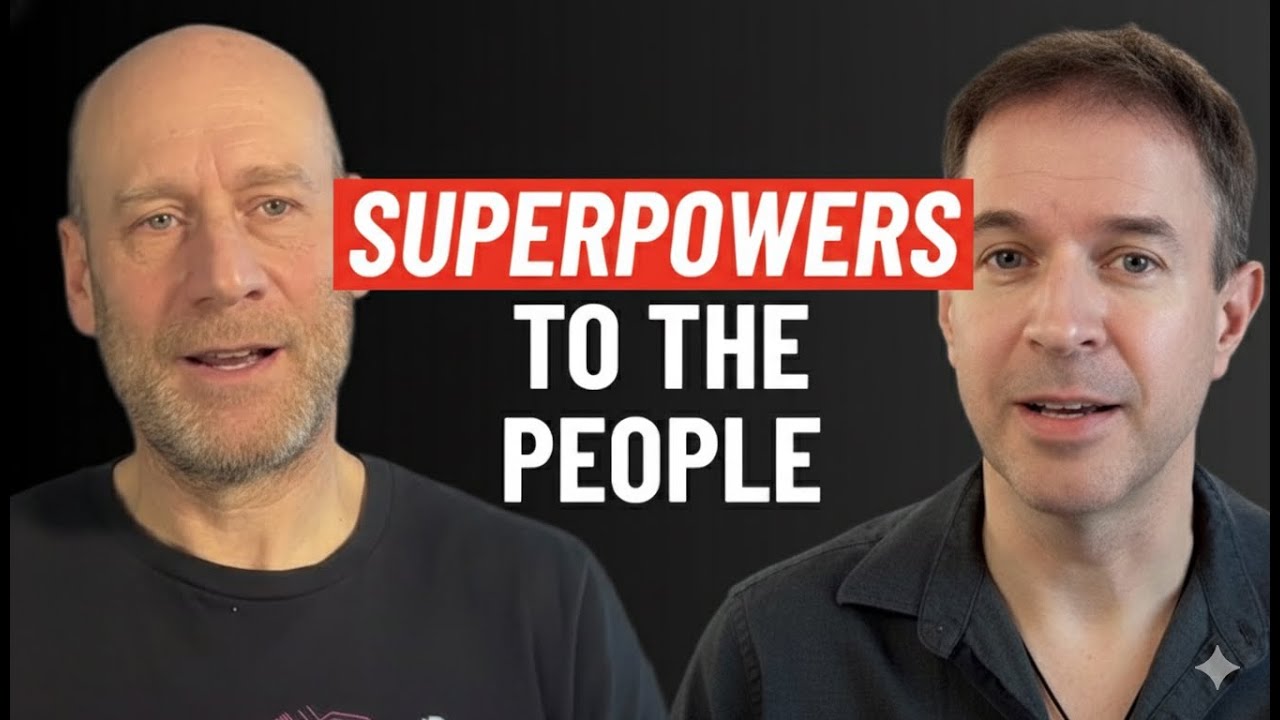
This will change how we train - AI and storytelling tells us how | Joseph Van Harken x Jason Jerald
Joseph Van Harken, a journalist turned XR entrepreneur, discusses ProfAI, an AI system that converts hour-long lectures into short instructional videos with autogenerated slides. He uses EEG data to measure student attention and memory, and argues that AI should serve clear educational purposes while humans maintain editorial control.
Chapters
This is Impactful Realities. This podcast is for those at the front line of innovation who thrive in chaos and engineer breakthroughs. We're talking high-pressure industries, high-stakes decisions. We go deep with leaders designing AI-driven virtual and augmented realities and building cutting-edge solutions for the world's most dangerous, demanding, and high-stakes environments. If you're ready to uncover what it really takes to create new realities that defy limits and reshape industries, Then listen carefully as if the future depends on it, because it does. Here is your host, Dr. Jason Jerald.
I'm really excited to have Joseph here. I first met Joseph about, about 3 years ago, of all places, in Morocco. But that was not just wandering the desert in Morocco and randomly running into Joe. We were speaking at a conference that was really fascinating, like any conference, of not just listening to Joe, but the many other great speakers there. And yeah, Joe and I have been talking with each other since, and just every time I speak with Joe, he's just a master storyteller. And I just, he's so engaging, but I also get insight from him of how these technologies fit together. One reason why he's such a great storyteller is because he's a journalist originally by trade, but he's also working with emerging technologies and has worked with companies like CNN, National Geographic, MTV, and more recently, he was co-founder of some XR companies like The Third Coast Digital Solutions, Third Eye XR, and Mindspring. He is now Innovator in Residence at Grand Valley State University. And Joe, I'd love to kind of hear your kind of idea of how you're fitting these technologies together with storytelling and a little bit of your story of how you got to where you are today.
Part of my obsession has always been around storytelling and how do we craft good, compelling stories? And then the other side is about technology and emerging tech, but pushing beyond the new, cool, shiny new toy concept of it, which is always exciting. But really looking at what aspects of this new technology are there that could help make storytelling more efficient or effective, right? And then storytelling I use in a very broad sense because, you know, as I've applied it in my journalist career to literal storytelling, right? The concept of telling stories goes beyond just entertainment or information dissemination, right? And it's how we do business. It's how we relate to each other. It's how we teach and create learning experiences. Right? I think it's just wired into us from the days back in the cave where we'd sit around a campfire and share what happened in the day. But if you think about it, by sharing that information, that's what allows us as a species to advance through different things that we learn, right? Don't go, you know, in that direction or you'll get eaten by a bear, right? Now that, that kind of fast forward to modern day and the concept of a professor giving an hour-long lecture.
Right.
For example, right? A lot of the information in that format is still wrapped in some form of storytelling, right? You need to capture the attention and interest of your student in order for that student to learn. So really it spans beyond and even on the journalist side, right? And people think, you know, have many thoughts, I'm sure, that come to their head when they think journalists, right? But I've always looked at it and really leaned into that. Quote, what is that famous quote that journalists are writing the first page of history more or less, right? And, and so what is really history? It's, it's really a, you know, set of information that we as humans can learn from and, and hopefully learn from, right? And to not repeat any, any mistakes. So even as a journalist and storytelling through journalism, I'd always thought that part of the hat that I was wearing was in public education, right? Especially if you're trying to keep out the op-ed side of journalism, right? Which often gets confused from actual reporting these days. But yeah, so I've always just been on the front line of emerging technology, and I've been fortunate enough to live through a pretty exciting time in that. I was an undergrad in the early '90s, right when the internet was starting, right? And I always share the anecdote of '93, I think it was, Because the first professor I had told us to turn in their papers, our papers, email. And at the time we were like, oh, that's stupid email. Why would we do that? I'm going to walk across campus and slide my hard copy paper under your door like I always do. Right. Until I realized that if I sent it via email, then I could work all the way up to 11:59 PM. And when I hit send, it's there and I don't have to walk across a frozen tundra in the winter in February to turn in my paper on time. Right. That kind of started to give me the idea that, hey, maybe technology can be more efficient, can make us more effective, right? And have an impact on our lives and the problems we solve every day. So that was kind of the first hook into that addiction to the mix between storytelling and emerging tech.
I like that word addiction.
Yes.
That's, yeah, I'm guilty of that as well. I sort of, in my journey, I originally, you know, my interest was The technology—it's so cool. But then I started to realize, as you know, I got older and such. I still love the technology. I'm still, you know, as as nerd as you can get. But really, what is the impact of that technology? Hence impactful realities. And I loved—I mean, you know—storytelling. Where does it come from? Right? That well, there's a purpose for it. That's how we evolved. Of it saves you from getting eaten by the bear. If you know, you hear these stories and learn some. some lesson? And then how does that apply nowadays to, you know, what is the ultimate impact other than getting you super engaged, which certainly has its own value, but is that really having a difference in the world? Certainly in education, keeping your students engaged and such is gonna be pretty important for their success. So yeah, I love how you're talking about those higher level things of what is the meaning for all of this.
No, absolutely. I mean, I think that a word you said in there is extremely important and really kind of informs or motivates, um, uh, The concept of impact, right? Which is purpose. And because that's what all of this is about. What's the why, right? Why are we doing something? Why does something happen that way, right? That curiosity, that question really drives everything, I think, in the world, right? We have to be curious in order to learn. And when we learn, then we can derive impactful solutions to problems, right? Every day we're faced with thousands of problems. And that's more than half our job, I think, of humans is quickly and efficiently solving these problems so we can get to a point in the day where we can relax.
Yeah. And I know everyone sort of gets that concept of start with why, but it's so much easier said than done, right? Because especially as, you know, technologists, it's easy to go back to the technology. It took me the longest time. People would ask me why, and the only answer for the longest time I could come up with is because it's so cool. But that wasn't a great answer.
So, But it's better than, uh, my always go-to when I don't have an answer is why not?
Well, that's a good answer too. Yeah. And well, I don't know, what do you mean? You know, that my favorite answer is it depends.
Right. It always depends. Yeah.
As I've gotten more clear on that, you know, in my life, in my career, then it's, you know, it drives me much more. Although, you know, the cool factor drives me as well, but you know, it's beyond that now. Now we can have both.
No, exactly. From the video production world or the TV production world, we always have a fun saying. Well, it's not so fun. I'm sure the animal rights folks won't like it, but we call it drowning your kittens. So if you're editing a show, for example, and you really love a scene, but it doesn't advance the story or it doesn't have a specific purpose in the context of, um, of, of the show you're creating, then you have to lose it. Right. And it's, it feels like you have to drown your kittens and I know that's not Not so nice to say, but the concept is there. It's like, you know, the same thing with the new cool, shiny new toy in technology, right? It's, um, it might be the coolest thing on the planet. And, but it doesn't help solve the problem and it doesn't help make us more, more efficient and effective of what we're trying to do. So that, you know, I've always gotten to the same place many times, right? Whenever I'm working on, on something, but I always try and use that purpose as the, um, As the guide star, right, to whatever it is we're doing. If we stray too far from that, then we're putting work and effort in a wrong direction that we're never going to get the ROI on. So just put that to the side and maybe we'll figure out some other way to give that cool shiny thing purpose, but not for this project.
Yeah.
I'm sure you—
so that I would love to hear your thoughts and I know we've had conversations, but sharing with our audience and each time I hear it from you, it's like, you know, said in a new way, because, you know, how does these technologies such as AI and XR, maybe specifically with your ProfAI that you're working on, how that AI works with storytelling to make that more efficient, more engaging and such to the students. So ultimately they stay engaged and are learning more and able to apply that knowledge.
Sure. I mean, I think we've, we've gotten extremely lucky these past couple of years with, with the advent of LLMs, right? Specifically, you know, talk about efficiency and effectiveness. That's really at the core of what the LLM models are, right? We're not there yet where they are actual thinking and autonomous and everything. I know there's a lot of buzz about AGI and we're getting close to that, right? But, you know, the way I always kind of discuss it with people or share with people is that it's, you know, LLMs are basically a big suggestion engine, right? It's the autocomplete when you're doing a text on your phone, but they're just really good at it and at finding the most efficient and effective next letter for this sequence of things, right? So in terms of, you know, how we leverage that, if we're staying within the concept of LLMs, LLMs, when we're referencing AI, because as you know, AI is much bigger than just ChatGPT, right? But how it's being applied in the, you know, through the masses right now, through industry, through our daily lives, it's Pretty much that, and that really is a tool that allows us to be much more efficient and effective communicators, right? And and sharing those stories. I mean, I'm a trained journalist and storyteller for almost thirty years now, and I still whenever I write something up, whether it's an email or a paper or something, I still put it through one of the LLMs to say, "Hey, is this the best way I can be telling this?" Story or sharing this information, right? So it helps me refine how I communicate and what you know how we can do it. And what's really cool too is that it's moving to different modalities as well, right? Not just spitting back an essay for you, but it could really repurpose things and follow the rules that you say instead of this big long hour-long. Video or script, break that down, chunk it up, and it will know that format, right? And be able to put that out. I'm giving a little foreshadowing to kind of what I'm working on now, but it really is that taking that tool to give us the power to do other things that we're not normally good at, right? And again, have a better impact at accomplishing our goals.
Yeah. And I know you have some examples and, uh, maybe some slides we could share on that as well. But yeah, I'd love to hear that, hear more about it, but also about automated content generation and can you trust it? Does your audience, you know, they hear that, then they get upset or are they happy with it? And I know, uh, previously you had mentioned it was surprising that your audience, in this case students, were actually very happy that it, they didn't have a problem with it. some of it being automatically generated.
Yeah, it's, it's, it's funny because now that I'm in a university setting, right, I get— have the opportunity to work with college-age students. And, you know, they're very discerning, which is great. And they, they're constantly flooded with new technology, right? Everybody now has a smartphone and everybody's connected and just going all the time. I think the awareness of of the greater world is much different for this generation than it was for ours, right? But that also makes them more critical and discerning at what they should trust, for example, right? And I remember I was teaching a class in the fall semester of 2023 when ChatGPT was first launching and everything. And, you know, the students had that, oh, what is this? I don't know. Can't trust it. The authority figures are saying it's bad. You know, we can't use it because we'll cheat on tests or we'll cheat on essays, right? So in that first semester there, it was very shunned, right? And then fast forward to the next semester, and how kind of ProfAI came to be was I was on a field trip visit to the University of Michigan with my innovation team at Grand Valley, as well as some of our business school professors, right? And we were going to University of Michigan to check out their brand new virtual production studio, which is gorgeous, by the way. I'm sure you would love it. And one of the business professors, as we were waiting to get Into the studio, we were checking out a new fancy podcast studio that that they had. So that professor was talking to to the guide, asking a bunch of different questions about how it works. You know how much effort it is to create a podcast. And I was overhearing this, and you know struck up a conversation with him after. It's like you know I think I understand what you're you're trying to do. Basically, what he wanted to do is take his hour-long lectures, but then break them down into five-minute chunks because you know as a good professor, he's trying. to understand his audience or his students and meet them where he thinks that they, their preferences in terms of learning. Right. And especially coming out of COVID a lot of this generation now prefers the YouTube style videos, or they're, they're not afraid of this kind of format, right? Like a Zoom kind of format, right, of learning. So he was trying to figure out how to do that. He tried it on his own with his own webcams. He's not a video producer. So Those were okay, but the quality wasn't great and it was kind of distracting. And as I was listening to him ask a bunch of questions to, to our guide, you know, my video production brain was, was doing some calculations and saying, okay, yeah, it's probably more efficient than if he was doing it on his own, but it would still require an instructional designer to look at his original script, break it down into an instructionally sound format for 5-minute videos. He would still need to physically be in the booth to record the sessions and do multiple takes. And then there would still need to be someone else that takes all that info, edits it all together into something that makes sense, right? So really we're still looking at a 2 to 3 week process involving, you know, 3 people and, and some budget involved in that, right? So at the same time, I had been doing some research into AI avatars and really going down the deepfake rabbit hole, right? And I noticed one model that Microsoft had, but But they weren't releasing yet. I was I was really bummed about, but it seemed like the the AI avatar cloning tech was was getting to the point where it was really hard to tell between the real person and the cloned person. So I was like, huh, okay. How can we use this not in a bad way, but how can we use it in a way to be more effective? Right. So when we came back, I kind of reconnected with a business school professor, and. Pitched a concept at him for a potential solution, which was we would clone him and then take his hour-long lecture notes, upload them into an LLM, tell the LLM to break it down into these instructionally sound scripts, and then have his avatar deliver the lesson as if they're the presenter, right? And then auto-generate a slide deck that is contextually relevant, put it all together. And he was down to follow me on that experiment. So we spent the spring of 2024 kind of taking one of his summer class curriculum and converting it to this style. And he used it in the summer with his class as a supplement, right? Not, not as a replacement, but as a supplement. And then we did a survey with the students afterwards. We interviewed them. We were expecting to get some negative because we're using AI, but when we were designing the solution, we were mindful of that, made sure to build in different checkpoints where the human would still be in control of the integrity of the content, right? So for example, after he gets done uploading his content and it spits it back, before it can go to the next phase, he still has to go through and edit it or approve it, right? Same thing with the final outputs as well, to make sure that it is capturing the essence of where his hard work has gone in terms of preparing the material. And teaching what he wants to teach, right? I think that's key in the whole in the whole kind of argument here. But long and short, the surveys came back and really surprised us, both from the engagement rates of the students with the the material. Everybody was watching all of the videos all the way through, which was a big change from past videos that he had attempted before. And and more importantly, they were not. It was not a negative for them that he used AI in this workflow. Instead, a lot said that they had more respect for him, that he was trying to embrace new technology in order to help them more efficiently and have a bigger, again, impact on them and their learning experience. So coming out of that, we said, okay, that's great news. So we're trying to right now have some students working on streamlining this into a standalone product that makes So as you talk to Joe here, maybe we could bring up that video to see the—
just, I was just amazed at the quality of not being able to tell the difference of the AI-generated speaking, lecturing versus the actual speaking.
Sure. So what I'll show here is, is one of the first examples of the experiment that we did with, with the professor. If you start playing it. Then you can see the quality of the avatar now has gotten to the point where it's hard to tell if that's really human or not.
That influence their level of discretion, and we'll conclude our discussion on managerial discretion. Our goal— This is the actual AI-generated content, or this is the original content?
You tell me. So this part in the slide really kind of stands it out too with the mannerisms And the ability to, to bring in some of that human—
Personal attributes influence strategic decision-making. The personal attributes of managers significantly impact their level of discretion. These attributes include tolerance for ambiguity, commitment to firm outcomes, interpersonal skills, aspiration level, and self-confidence. First, let's look at tolerance for ambiguity. Managers who can effectively pro—
So you can tell it's not an Academy Award-winning video, but in terms of a learning video, the instructional design is sound. The bullet points are contextual to what he's talking about. And it's a human, or it feels like a human that's telling you this information, right?
We, I'm curious. When he was doing those hand motions, is the AI able to do those hand motions? Is it at that point yet, or was that the original content where he can do those hand motions?
Yep. Nope. Um, that's, that's the AI. So part of the process is, is you, um, uh, you shoot with the real person, um, in a green screen type setting. And you, you know, what we learned along the way is you, you have 'em do some gesturing, um, but nothing too specific. There was, I remember there was one take where he was Counting off numbers like one, two, third example, kind of three, right? And using his fingers like this. But then the AI isn't smart enough yet to know that hey, that's not relevant. It was just randomly, you know, build in that gesture. So I think what's going on is the AI is looking at the training material or this, you know, video footage that we use to train the model on him specifically. You know, what are some general gestures that then I can apply in a flow of retelling something, right? So. So we got to the point where, okay, we minimize nothing too crazy out there, right? But we gave some, and really, if you think about it, it's very similar to basic media training that an on-air television reporter would get, right? There's a certain way they teach you to put your hands and to nod or to not nod, right? Those kinds of things. So.
So I'm curious there, if the original content is doing that, I can imagine maybe the virtual, the AI lecture could be actually more interesting than the person himself. You could sort of enhance them and make them more engaging.
You, you could for sure. And, and, you know, the AI doesn't have bad days, right? So it's, it's always on. And, uh, so that's a benefit. So—
Is that where long fingers, like in the, uh, ChatGPT images?
Oh yeah. Nothing to that extreme, which is great. No, I mean, it is really genuinely realistic now, right? Yeah. And, uh, what I always remind people is this is the worst it's gonna be.
Right. Yeah, it's only getting better. Even if we're not, in this case, I mean, that is just, that's amazing. Like that, that's AI generated.
No, absolutely. And, and, and that's kind of one of those trigger points for me, right? If it's, if it's usable now and I have, um, very high confidence that it will only get better, then it's hit that threshold where, okay, now this part of the emerging tech is applicable, right? Another thing I always try and, um, keep, keep in the back of my, my brain when I'm thinking about these things is, What is the practical and tactical approach of applying this technology to a real-world situation?
Okay. So I have a real-world example. Maybe first, I'd love for our listeners to comment on this. Your students were okay with it being AI-generated. So I'd love to hear, you know, our audiences, maybe there's some students here, but it's also probably a very different audience. So hear your thoughts is, you know, do you have ethical concerns with that? Are you okay? with that? What are your concerns? And then also I'll throw out there, I've been meaning to put together a course based on my book, right? Man, to find the time to do that is pretty tough. So I'm curious if people would actually be okay if I created a course that's AI generated based on my book, based on my personality and such. Would you be interested in doing that if otherwise I wasn't, you know, have the time to put together, you know, could take hundreds of hours to put together that content. So I'd be very curious about that. And I'd also say that maybe it'd be more engaging and more interesting than me sitting there blabbing my mouth. Maybe it'd be actually more engaging than me personally being there. So please comment on that if anyone would be interested in something like that. And if there's enough response, maybe that's something I could better make a higher priority.
Yeah, I think you really bring up a great point to how It ties back to impact, right? When you mentioned you don't have the time to do that, right? And that gets back to the beginning of the story of when, when he was in the podcast booth trying to figure out, okay, will, will using a system like this make it more efficient for me to create these kinds of things? Right. Because that, that was really the hook in this whole thing. The purpose, the why, right, is why, why go down this path? Absolutely. I mean, for, for that summer curriculum, we produced about 60 videos for his class over a couple weeks, right? And it was just me, not even really me, right? So didn't need him at all. If you go ahead and play the next video that is me, I kind of give that summary or that synopsis up top. And then towards the middle, there's a little Easter egg of where, where this has even greater potential in terms of making us more effective at reaching more people.
Yeah. And as Lucas is bringing that up, I also want to emphasize there that, you know, time, right? If you want to take this all the way to the ROI analysis, are these things worth doing? I mean, AI is great. In that, in some cases, the quality isn't there, but it's looking like the quality in this case is there. But, you know, it's often said that the most, the greatest expense is employees, right? Paying for their time. And so if we can save those employees time, right, can be a very large ROI in some cases, and then they can focus on more important higher-level tasks versus, you know, talking to a camera for hours at a time preparing those course materials and such, it really frees up their time to focus on more important things, whether that's family or that's their, you know, the purpose that they're really focused on with their work.
Absolutely. So if we bring up the video of me, I kind of at the top give that explanation of the efficiencies and the time savings, right, involved and the ROI, the potential for ROI. But then about halfway through, there's kind of an Easter egg. of getting a hint of where we can be going with this technology in order to give us the superpowers to reach more people. With AI advancing so fast, it's important we stay up to date on the benefits and risks. One way we can benefit is in scaling video course production. For example, gone are the days where you have to coordinate schedules with the talent to come in for a voiceover read. Or a studio shoot. Once you have an AI digital twin like me, you can have me say anything at any time without needing me physically. For example, I'll restate that, and instead of physically, I'll say in person. Ready? Once you have an AI digital twin like me, you can have me say anything at any time without needing me in person. Oh, and want to hear that in a different language? Say Mandarin. Let's try it.
一旦你拥有像我这样的人工智能数字乱声,你可以随时让我说任何。All right, so Joe is already a superhuman. He knows yeah all these languages.
You know again there's there's a little bit of robotic sound to it, especially if if you know me well. But if you don't know me well, I mean that that could pass as a real person. And and again that was a year ago about this time a year ago. Now it's gotten to the point where that AI avatar is even better. It feels more real, but now you can chat with it live. So almost like the concept of the Notebook LLM, right? Where that's kind of like RAG in a box, right? You can put in a whole bunch of information around one subject matter. You can give that to the live AR and they can be an expert in a certain subject, right? And then you can have a live conversation like we're having now. But with that AI avatar, so I'm looking forward to the days when I can send that to my Zoom meetings instead, and people will really think it's me.
Yeah, we'll just be a bunch of AI agents talking to each other, and then all we got to do is go look at the summary notes.
Right, right. Absolutely. Absolutely. That we'd just be on a beach drinking Coronas, right? But no, I do want to kind of stress in all of this, right? Because one of the key things that we did learn and really helped kind of motivate the students to respond positively is that we were very. cognizant of building in those human checkpoints along the way and making sure that the humans were in control of the content at the end of the day, right? To maintain that integrity, to make sure that we're using AI as a tool for us and not a tool to control us, right?
And I think that would be a great experiment of having, I don't know if they're at the point of being, you know, that quality being interactive yet, but I could interview an AI agent here here on the podcast, and then we could see if I'm able to, you know, as a human, make sure we're staying on topic versus the AI agent, um, you know, taking over, maybe being doing a better job. Heck, maybe I should have the AI agent interview me.
Oh, that would be fun. I mean, we've all seen those YouTube videos of 2 AI agents talking to each other, right? And going off forever. But it would be interesting to have an AI interview a human, almost flip the script a little bit, That could be really interesting. Yeah, for sure. I mean, where I'd say it still struggles in the live, at least from the video perspective, is understanding the nuances in the timing of the exchange of when someone's talking or who's talking.
Yeah, the delays can be a little bit disorienting.
Delays, processing, just the ability to read body language too, right? Um, uh, you know, if I'm, if I'm talking about something and I'm seeing you and I see you kind of have a puzzled look on your face, that'll be a trigger to me to know that, oh, he's, he's not getting what I'm saying. Right. So I might rephrase the way I'm talking or the concept in a different way until I get another visual body language cue from you that the light bulb's going off. And so I'd say it struggles there a little bit, but where I am seeing some progress in that realm is in the podcasting that are automated where it's 2 AIs talking back and forth. Right. So there's, there's potential. Again, this is the worst it's going to be right now.
Yeah, absolutely. So I'm really excited to see how this is going to be integrated with AR and VR. But to be honest, I think just kind of porting what we have of a talking AI head into AR/VR, I'm not really— I mean, it's pretty darn cool, but I'm not sure if that's really better of going through all that trouble than just on a screen. But what I do think is the potential there is once it starts, of course, becoming interactive But then the AI can learn from things in a virtual, a completely virtual environment. You know everything about the world, right? You know where the other characters are, you know what objects are in the room. Basically, you know the context that it's taking. And then you can start doing things like analyzing body language, right? Which is sort of a controversial topic of, you know, can you read people's body language? And my understanding is the answer is, well, it very much depends on the context. And so when you're making these claims, you know, I itch my nose. Is that because you know I smell something fishy, or is it because my nose itches? Right. But you start putting those cues together, and suddenly they start meaning something. But if I itch my nose in context of what's going on in the room, or you know how you're acting, or you know whatever it might be, then suddenly that can become important to train both humans but also to train AI. Right. So using it as a tool, same way that we're you know Nvidia's. Training AI through, you know, AI agents in the virtual world to learn versus the humans. It's just fascinating where all this might go.
No, absolutely. I mean, the concept of synthetic data, I mean, that was a big deal, right? Because the big scare was that we're running out of data, quality data.
Yeah.
But then the—
We need a lot of data.
The next advancements were quickly kind of over to let's refine how we create synthetic data so that synthetic data is good data that we could use to train, right? So there could be a little break in the levee there and we can still keep trudging forward in this grand experiment, right?
So let's go beyond, you know, we're talking about body language and, you know, whether you have controllers or true hands and, you know, different people in the environment and then the content of that environment. But what I haven't— I've seen some of this, right, of looking at brain signals like EEG within, you You know, that's additional input that could be very interesting beyond what sort of everyone's doing now is, you know, just analyzing speech in isolation, right? But once you start integrating these and taking into account these different modalities, that to me starts becoming a lot more interesting and going beyond what, you know, sort of everyone's doing now that's more obvious. So I'd love to hear what you're working on with Nervanix of actually reading those brain signals Sure.
Really. So Nervonics is a company that basically leverages EEG to understand different mind states, right? So they capture raw EEG data about a subject as the subject is experiencing some kind of content or learning experience on a computer, right? And then we record that screen of what that subject is doing while at the same time we're capturing their raw EEG data from their brains directly, right? Then the processing happens in the cloud. Processing after that is taking that raw EEG data and breaking it down into meaningful neurometrics. Right now we call it AMEE. We capture or we process attention, memory, emotion, and then engagement. Engagement's a little bit different because it's not based on an individual, it's based on a group of people. How is the engagement of a group of people with a specific course or piece of content, right? And the original idea was coming from the kind of focus group scenario, right? Where everybody's familiar with focus groups for like television commercials, right? You have a new Super Bowl ad, you're spending millions on it, and I want to make sure it's the best it can possibly be. So I'm going to focus group it first, right? The challenge for focus group has always been it's ultimately subjective, right? Where we're asking questions, we're, you know, getting people to respond based on how they feel. And again, you know, that bad day concept, maybe they had a bad day, we're were late, the subway, you know, missed the subway or whatever, right? So they're in a bad mood. So that's going to affect how they respond to the content, right? Yeah. So the original approach for Nervonics was how do we push beyond subjectivity and get to some empirical data, right? That matches directly with their experience and what they were doing. So that was the initial thesis coming out of it. But then kind of where I've been looking is, okay, what does that mean? How can that go further and helping define You know, what is more effective, right? For example, right before COVID we did a big study with Citibank that was working on a new HR course that they wanted to release to 30,000 of their employees, right? And so that's one of those Super Bowl ad scenarios where they're spending a lot of time, energy, money creating this course. So we, we got a sample of their workforce, put them through the course, and the original instructional designers made some predictions that at this point in the course, the attention should go up, or at this point, emotion should be down, right? And then after we captured the data and processed it, we were able to give a report back saying, oh, you kind of missed the mark in this area. You might want to look at that part of the course to refine it a little bit. And then by the time, you know, you iterate, you iterate, you iterate, and then you get to a place where your confidence level is high that this will be an impactful course and it's ready for release, right? Obviously then COVID hit and we kind kind of had to backtrack a little bit. And since then, AI has come into play and then you've seen what it can do with something like the ProfAI product with the AI avatars. So kind of the new area where I'm kind of linking things together a little bit is, okay, if we could put students through this study and understand what is the best way for the students to learn, then we can potentially use a tool like ProfAI to repurpose syllabus or course material and deliver it in a way that's best for the student to learn, right?
Yeah. And that gets to, you know, what does it all mean, right? Because learning by itself, right? Knowledge by itself isn't what's powerful. It's how you apply that. And so that's kind of, you know, what we focus on is what does it ultimately mean, right? And so the HR example, right? Let's say they're more Well, okay, great. They're more engaged, but what does that really mean? You know, as far as higher level, right? Are they changing their actual behavior in the real world? But then going beyond that, right? Okay. What is the behavior of that change in behavior? Right. And so one example that's used for sort of the, you know, the return on investment analysis is if you're more engaged, you're going to have less turnover. So very relevant to what you were saying about HR and turnover can be very expensive, right? That can cost, you know, 50% of an annual salary every time you lose a person. So if you're you know, say losing, you know, only losing 10 people per year, there's half a million right there, right? And so, yeah, if you can even make a small dent in that, some things that sound straightforward like engagement that it's not obvious, okay, what does that mean for the bottom line, actually can be very important.
No, absolutely. It's, uh, it's all about measurable metrics, right? And whether it's you're, you're going to measure the ROI eventually, right? And, and, and the impact, or, or it's just the, uh, kind of interview questions that we ask the students after the summer class, right? Um, and their opinions If they were concerned with AI being used, right? Either way, you know, where I think the holy grail is in a lot of this is trying to strip out the subjectivity, even though I just gave a subjective example, but it's really drilling down to what is the empirical data that's involved here? And then how can we measure that and apply it, like you said? So I think, you know, speaking of controversial topics that you mentioned before, you know, going in this direction has brought up the concern from the learning community that learning styles Are a myth, right? That they don't exist. So it's very controversial. Yeah, very controversial. Initially, I was kind of bummed. You know, when I heard that that's the the common common interpretation now. But but of course, I had to ask the the next question. So okay, but why? Well, why is that a myth, right? I want to understand how you're coming to that conclusion. And you know, a lot of the answers I got so far was there there wasn't necessarily specific reason that debunks it directly, but it was more that. You know, it's just that there's no empirical data to support it, right? Yeah. So, so really that's where I'm thinking, you know, a place where the EEG analysis could fill that gap a little bit and provide some of those direct measurable empirical data to create those connections and support different theories, right?
Absolutely. There's, there's so many things in this world that, you know, people strongly believe, people in the field, but can be very difficult to prove. Right? Whether it's you know discrimination, whether it's learning styles, or you know neurolinguistic programming going a lot deeper into beyond just learning styles, right? But it's so controversial. How do you prove these things? The hypnosis and stuff that you can say is you know just implied and it's more subjective. But with things like virtual reality right now, you can take all those things and measure them in different ways and actually put them in context and only change one. single factor, not, you know, just taking these averages, every situation being different. And then suddenly you start getting data that is, okay, we just changed one person, you know, I don't know, the gender, right? And do people, you know, behave differently? And you just can't argue, no, it was because of some other factor. No, we only changed that one factor.
Absolutely. I mean, going into this virtual world, like you said, where everything's measurable, right? I mean, and then now with the direction that AI is going, we have a way to efficiently crunch those too, right? And, and mine it, create meaning from them. So, so really, yeah, I mean, if, if you can think about like how, how this could all come together, right? As a student gets baseline, we understand their preferences, their learning style, what, what, what their, um, is more impactful for them. And, um, and then, you know, they go to a class and there's a, a, an hour-long lecture that it's based on. Yeah. But they can also, you know, turn the dial and get a podcast version of that or get the 5-minute video version of that, the series of that, right? Or get an interactive, you know, exercise version of that, right? So it's really, you know, training the AI in a way that will allow that human student to consume the information in whatever is best for them at that time that will help them understand the material as quickly as possible and as effectively as possible and apply it as effectively as possible. Right, exactly. Exactly. Yeah. Okay.
Well, I know we are running out of time. I'm especially, well, I'm excited about all this stuff, but the EEG data, right? I haven't really thought too much about that of integrating, you know, with other things we're looking at. And so, yeah, That's just additional data. That's a very different modality. And so you're gonna get so much different information versus just, you know, keep feeding it more of the same. So fascinating work here, Joe. Yeah, I'd love to, obviously I'm gonna continue this conversation with you, but is there anything you'd like specifically for our audience that you'd like to point out? We certainly can, you know, provide those, those resources, those links in our show notes so that they can access these things, but is there anything else you'd like to convey to our Hmm.
I don't know. That's a great question. I guess it's just, you know, more about, gosh, I don't even know. There's so many questions and so many stories to share that I'm not sure where, you know, I mean, we haven't even touched on XR at all.
That's one of my challenges is you get me started talking about this and yeah, I don't, normally I'm a pretty introverted sort of shy person, but when I get excited about something, I could talk for days about this.
Yeah. I mean, at the end of the day, I think it kind of boils back to experience, right? And how we experience the world and then share that information. And I think with the emerging tech, specifically in AI, that's really helping us as humans become much more efficient at that and have a much bigger impact on whatever it is we're doing. Right? So I think we're just at the beginning of this cycle. I mean, I mentioned earlier that my career started at the advent of the internet, right? And here I am 30 years later, and we have a new epoch starting, and that's AI. And the big difference that I've kind of noticed with this wave versus the internet wave is that, yes, AI allows us to create more efficiencies and more impact, but it also allows us to do things that we couldn't normally do. It goes beyond just efficiencies and really empowers us as humans, gives us those superpowers that, you know, I have a business school professor now that's an A+ video producer, you know, never did it before. So kind of what's next with that, right, is the big question.
That's what gets me excited too, right? I mean, unfortunately, I have so many projects that get me excited, but they're just not time in a person's day to be able to do everything I want to do. Right. And so, yeah, that's what I look for is what are those most impactful projects instead of just taking anything on. Right. It's not just about, you know, who's willing to pay and, you know, who's, you know, the best rate or whatever, but no, why are we doing this? What is the impact we can have on the world and what is the why? And is it going to be, you know, go beyond just something short-term?
Right. And humans have to stay involved at defining what that meaning is, right?
Yeah. That could be a our biggest, biggest challenge, biggest problem moving forward is making sure we're going in the right direction of where we want humanity to go versus where some digital creation needs to go.
Exactly. Exactly. Now, I know, you know, we haven't, we haven't dug into a lot in the pure science field, but, you know, that's a whole separate episode probably, right? But I think just for the day-to-day lives and how we interact with each other, especially in the teaching and learning scenario, we're in for a few special years coming up here.
Right. Or disruption for sure.
Absolutely. Yeah. I mean, this is, this has been awesome. Thank you again so much for having me. I feel like we could go on and on for, do a full like Joe Rogan or Lex Fridman style, just 3 hours.
We could have a cameraman follow you around for like days at a time. And I'm sure people would, Yeah, they, they stay engaged.
Yeah. I don't know. Our next one, we should go back to Morocco and do one of these in person, but from—
Oh, that would be amazing.
Some foreign soil.
Yeah. Yeah. We, we should do that. Okay. Well, thanks again, Joe. And, um, yeah, comment in the show notes what you liked about this episode, what you did not, and what you'd like to hear more of.
The Impactful Reality Podcast requires more than a conversation. It takes action. Research, and collective wisdom. If it made you think, we'd love to hear your insights in the comments, or contact us directly to shape the future together. Don't just subscribe, pass the torch, put it forward, send it to the next one in your circle who manifests things that matter, the builder who dreams big and innovates towards more impactful realities.
More from Jason

The Contrarian Technocrat: The Founder Profile Behind Billion-Dollar Companies | Garnet S. Heraman

Human + AI: Designing Experiences That Actually Change Behavior -Howard Rose x Jason Jerald

Firefighters, Seniors, Airlines — Why They're All Training This Way Now Jeremy Dalton x Jason Jerald


The man who invented tomorrow’s tech — yesterday | Richard Marks x Jason Jerald