Superpowers to the people | Ori Inbar x Jason Jerald
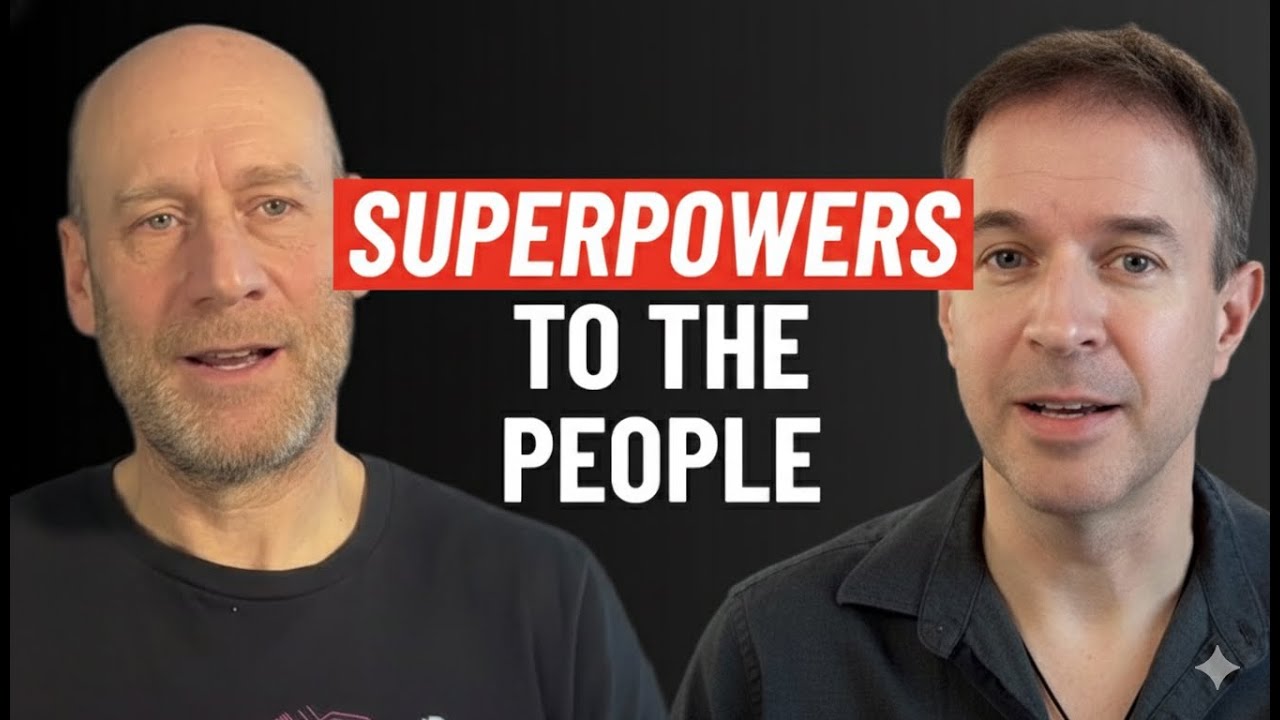
In this Impactful Realities episode, host Dr. Jason Jerald interviews XR pioneer Ori Inbar, co‑founder of Augmento, Super Ventures, and the AWE conference. Inbar recounts his 2007 epiphany about augmented reality, the creation of Augmento (later acquired by Apple and feeding into ARKit), and the evolution of AWE from a 300‑person meetup to the world’s largest XR conference. He explains how AI is both improving XR (cheaper, faster computer‑vision, 3D content creation) and why XR is the ideal interface for AI, citing examples like Ray‑Ban Meta glasses and the need for real‑world data captured via headsets. The conversation turns to recent hardware advances—consumer headsets finally exposing camera feeds—unlocking richer computer‑vision applications. Looking ahead, Inbar declares 2024‑2025 the “Year of the XR Master Builder,” urging creators to build content for every audience rather than chase a single killer app. He highlights that 71% of the $35 billion XR market is enterprise, with top verticals (manufacturing, retail, defense, built environment, healthcare, oil & gas) and core use cases (training, digital twins, remote assistance, design). The discussion then covers funding trends: the rise and fall of .VR hype, the post‑Vision Pro resurgence, AI‑infused pitches, and a shift from XR‑hardcore investors to vertically‑focused capital. Inbar advises startups to secure early customer validation before fundraising, aim for ARR milestones (>$1 M) to cross Series A, and leverage niche‑first strategies (e.g., a Formula 1 VR experience) to prove market demand. The episode ends with a call for continued education of investors about the symbiotic AI‑XR relationship.
Chapters
This is Impactful Realities. This podcast is for those at the front line of innovation who thrive in chaos and engineer breakthroughs. We're talking high-pressure industries, high-stakes decisions. We go deep with leaders designing AI-driven virtual and augmented realities and building cutting-edge solutions for the world's most dangerous, demanding, and high-stakes environments. If you're ready to uncover what it really takes to create new realities that defy limits and reshape industries, Then listen carefully as if the future depends on it, because it does. Here is your host, Dr. Jason Jerald.
Today, we have the legend Ori Inbar. He has founded multiple organizations, uh, such as companies like Augmento, Super Ventures, and AWE that I'm sure many of our listeners are already aware of. In fact, that conference is coming up Real soon now, and I'm going to be there. Ori's obviously going to be there. You gotta see his keynotes. They are just some of the best keynotes I've ever, ever heard. Ori is also advisor and board member of different AR startups, and so he works with a lot of those companies. So you will definitely want to be at AWE and talk to him if you're a startup yourself, as well as if you're further along. At AWE, they've had over 5,000 companies and over 50,000 attendees over the years. I think about 15 years or so now they've been around. So they're definitely not new to this. I most recently saw Ori in person at the Industrial Immersive Conference in Houston, Texas, where he gave the keynote. And of course, it was as good as his keynotes always are. And that's one reason I definitely wanted to have him speaking today on the podcast. And so we're going to jump right in here. And Ori, if you kind of want to give maybe a very brief background of yourself, your journey, and AWE before we get into some of the more specific topics, that would be great.
Sounds good. So good to be here, Jason. It was really good to see you in person at Industrial Immersive. You know what, my background is in software development, management, marketing, but in 2007, I pretty much had this epiphany. I discovered augmented reality and realized this is the new interface for us to interact not just with computing but with the world. So it became my mission to bring it to everyone because it was hidden in just a few labs around the world and nobody's heard about it at that time. So I started Augmento, one of the first venture-backed AR startups that developed games and some hardcore tech. That company was later acquired by Apple in 2015, and the team, the hardcore team became the foundation for the ARKit team. So that was kind of a nice contribution. But back then in 2009 and '10, it felt so lonely. In augmented reality that we felt we have to kind of put together some event just so we can get together and help each other, kind of give each other energy and help kind of move this industry forward. So with 3 other co-founders, we started AWE initially as a very small conference, 300 people in the room talking about ideas and concepts. And from there, it grew along with the industry. I always like to think it's sort of a reflection of the state of the industry and it grew to what it is today, you know, the largest conference for XR with 5,000, 6,000 attendees in the US and also in Europe and Asia and, you know, 250, 300 exhibitors in the expo hall. So it's really the place to be where kind of the whole industry comes together to advance us towards our future. And in 2016, when kind of the .VR era, as I like to call it, when there was so much hype around VR following the Oculus acquisition by Facebook, decided it's time to start a fund dedicated to investing in early-stage AR startups called Super Ventures. And I kind of described it as sort of an activist investor where it wasn't only kind of a financial focus, but really helping move this industry and educate a lot of the other investors that were kind of trying to figure out what all this, well, what was all this hype about? And yeah, and then, you know, throughout these years, I've been advising literally over 1,000 AR and VR startups, mentoring, doing sort of accelerators in person and online in various forms. which has been a very rewarding experience for me just to see how, you know, we help move these companies from very early stages to becoming successful companies that have significant impact on the market.
Great. You know, talking about the hype, you know, really just exploding in 2016, I think part of that hype is connecting humans with technology like no other technology. can do. And now that we're moving, you know, AI is, you know, the big thing right now. There's all that potential of not just AI being by itself and maybe typing on a keyboard or speaking through it through voice, but what if we can better, more directly connect through that technology? And AR specifically, maybe even more so than VR, seems that it has that capability to be that interface, right? So that we can more naturally and intuitively interact with these super crazy advanced technologies so we can really connect as humans. So what are your thoughts about the bridge or the connection between AI and XR?
That's the biggest topic right now, right? And on one hand, I think us people in the XR industry have been impacted significantly by the fact that All the attention in the last 2 years has gone to AI and also a lot of the investments. Investors are completely blinded by anything that is AI and same businesses, enterprises. So it's kind of our imperative to explain and to convey this message that there's no AI without XR. But if you take a step back, I mean, AI is definitely making XR better, cheaper, faster. We've seen how it improves all sorts of computer vision and AR and VR algorithms. We've seen how it's making it easier to create 3D content, which was one of the biggest burdens for this industry. And we're seeing that it's really kind of helping XR get better and reducing a lot of the costs of the projects around it. But if you look at the flip side, something I think everyone in our industry recognizes, but not so much outside of it, is that XR is the ideal interface for AI because prompts, like you said, it's kind of boring. The fun of interacting with a bot via text, is kind of wearing off and no one wants to find ChatGPT under their Christmas tree, right? So I think we're starting to see that XR is really the ultimate interface for AI. And one of the best examples is the Ray-Ban Meta Glasses, right? Where that was actually the only XR product category that had a Super Bowl Commercial, right? So that kind of shows the appeal to the mass market. And although it doesn't have a display yet, it has a lot of the other elements that are needed in a spatial experience where you just look at things, you interact with them in a natural way using voice, and it kind of takes the power of AI and brings it to you via that device. But we're also looking at avatars and all sorts of other interfaces where XR is really the best way to interact with AI. And to take it a step further, I think that it's more than that because if you think about AI in the last few years, it's been kind of ingesting the entire content on the internet, right? There's no more to go, right? They've basically reached the edge of the internet. And if AI models want to keep getting smarter, they need access to real-world data. And the only way to get real-world data in an efficient way is via XR, with your headsets, with your mobile devices. As people interact with their real life, either in enterprise environments or on regular life or consumer side, that's how you get— access to real-world data, and you keep getting smarter and more relevant to people because real-world data is where AI can really become smarter. So I would say that XR will actually save AI and will help it get smarter. And again, that message is something that I think everyone in the industry needs to continue to convey to everyone out there, to investors, to enterprises, to other developers that may not see it yet.
Yeah, one of the things I'm most excited that's happening on the technical side of XR is the hardware providers, manufacturers are now finally starting to provide access to those camera feeds in the consumer devices. That is a game changer. I mean, we've been wanting that. We've been so frustrated by that as builders in XR and AR is that's like where the real power is, right? When you're able to computer vision, right? That side of AI is just where it really can get to that potential of whether it's just highlighting objects in the scene or recognizing what's going on versus having to guess because you have no idea what the users are looking at.
Absolutely. And you know what? It's been a similar cycle when smartphones came out. The iPhone came out initially, There was no access to the camera. So a lot of the mobile AR, like the first mobile AR applications, actually had to hack the phone to get access to the camera. And actually, there was a letter in 2009 that a bunch of us entrepreneurs sent to Apple, kind of an open letter, not really a physical letter. And it basically demanded access to the camera because how can you augment reality if you don't have access to the actual reality? It's essential. And I think we're going through the same cycle now. Initially, there was a lot of concern around privacy. Meta and Apple kind of were trying to avoid getting into that problematic area, but I think they now realize that it's essential. Without it, there's no real use of augmented reality or mixed reality on headsets like the Vision Pro or the Meta Quest. So it's now being opened. And I think this is now, this is the time where we're going to start to see really interesting things happening on these headsets.
I love that concept of that letter, not just the concept, but actually doing that. I remember one of your sort of slogans for the conference was power to the people. And so that goes to show that we actually do have, you know, at least influence over these large mega corporations.
It was superpowers to the people, yes.
Oh, superpowers to the people, even better. Okay. So with what you're saying here, I think a question especially important to those leaders on the call of what we're going to be focusing on the next 5 years. What are your suggestions of what to focus on over the next 5 years to push, you know, these companies and these products forward?
So, you know, if we look at the state of the industry right now, you could, you know, start counting it from 1968 or maybe since 2010, where the industry really kind of started to mature. It's been a long time and we've had ups and downs and kind of a roller coaster ride. But I think we're at the point now, starting last year, I would think is really the point where we turned the page, where the technology is good enough. The hardware is good enough for almost any use case we need today. The tools have matured so we can build things. And with AI, like we said before, it's making a lot of the hardcore uplifting much, much easier. So this is the time to start building things. And we kind of coined this year for, especially for, is that the main theme for AWE, is the year of the XR master builder because that's what we need right now. There's no limits right now. There's no more barriers or excuses. Now we need to build content for every single person on Earth.
Yeah.
And it's not about looking for the killer app. Just if you know an audience, you know a vertical, you have a passion for a certain area, find how spatial computing can help make it better for this audience? And there's a few really cool examples, maybe more on the consumer side, but also on the enterprise side. There's a guy called Simon. He's a web designer from Eastern Europe, huge fan of Formula 1. And when he saw the Vision Pro come out, he said, this is an opportunity to create an experience that is a lot more interesting for Formula 1 fans like himself. So he put together a team. It was kind of his first XR project ever, but he understood exactly what people like him need, right, with this. Because up until now, people were just watching it on TV. You can switch kind of views, but it's clumsy. It's 2D. It's not really taking advantage of what a Formula 1 race can really give you and created that experience. And then we started to see people are saying, hey, I'm going to buy the $3,500 headset just for this app alone. And that gives you kind of the sense of what it means when you find a niche. It doesn't have to be huge, but a niche that you understand so well that you build this spatial experience for, that will help us kind of conquer the mainstream, you know, because the more we kind of provide these solutions that are irreplaceable by anything else, the more we can get, you know, more people to use it, more funds will come into this industry, and it will be kind of a virtuous cycle where we continue to grow and, you know, provide even better hardware and better solutions for everyone out there.
Yeah, if you really know your audience really well and their specific needs, it's much easier to add value to that specific niche versus that wider audience. And a lot of, you know, in the media and such, these technologies are all talking about games and such. What I really appreciated, one of the statistics you gave in your Industrial Immersive keynote was that enterprise is 71% of the XR market, which I don't think people realize, right? There's Lots of users on the consumer side, but $3,500 is maybe tough for a teenage kid, but an enterprise, if you're adding that true value, you're getting something out of it, $3,500 isn't that much, and thus it's sort of easier to justify in that space. So it kind of makes sense that the revenue's going to be higher. But yeah, could you talk a little bit about that of enterprise versus the consumer markets?
Certainly. I mean, if we look at the overall XR market today, It's about $35 billion. And like you said, 71% is now going to enterprise projects. That includes, by the way, both hardware and software. I mean, there's still a lot of lucrative opportunities for consumers, whether it's VR games on the Meta Quest or whether it's mobile AR for social, for shopping, for all sorts of things on the AR side. But startups that are looking for short-term revenue that are really solving an immediate problem that enterprises just need, then that's the place to be. And if you look at what are like the key verticals where this is happening, I would say that it's the top, let's say the top 6, First, it's manufacturing with a strong focus on automotive and aerospace where they've been always kind of the innovators adopting technologies early because they always need to improve their margins, productivity, and reducing costs. So that's where you see most of the revenue going for XR projects. The second is probably retail and e-commerce. So this is more kind of along the marketing applications, whether it's on mobile, AR, or on VR headsets. Then you have defense and military. That's probably been a sector that's been one of the first to adopt it starting in the '60s and the '70s, and there's still a very significant sector. sector. And then it's what's known as built environment. So architecture, construction, and engineering, and real estate, and facility management, everything that has to do with built environments. That's a really big sector. And then after that, you see healthcare, pharma, wellness, which is again one of the sectors that started using it 20 or 30 years ago and are now kind of getting to a point where it's becoming more mature. And then the 6th area is probably oil and gas, where it's not as big as the others, but you see some really interesting use cases taking place in those companies. So that's kind of on the vertical side. And if you look at what are the main use cases that you're using, I think it's no surprise that training is the number one use case right now that is applicable to every single industry out there. It's reducing the cost, it's getting better results, better retaining of knowledge, and it's especially critical right now when upskilling is so important for workforces out there. Especially in the age of AI. Then you have digital twins, which has emerged as one of the leading use cases with improved scanning and modeling techniques and devices. It's the perfect way to kind of create a mirror of your factory or your facilities, or maybe it's kind of an outdoor landscape. And use it for simulations, for inspections, for maintenance, for lots of things that it's becoming kind of an essential thing for pretty much every enterprise out there that has physical facilities. And then we have, especially on the AR side, you have the remote assistance for maintenance or for all sorts of other cases, which is still very popular, even with the heads-up display glasses, right? Like Google Glass or—
Yeah.
RealWear or Vuzix glasses. And then design, especially with VR and mixed reality, is a really big use case. So of course, there's thousands of use cases right now, but I would say these are probably the leading ones that you see in the enterprise.
Yeah. So one of the nice things on the enterprise side is you can get these contracts to achieve a specific goal, whether it's training or it's to improve your manufacturing. improve upon those efficiencies. And then that funding can help you, you know, if it's the right funding and fits with what you're moving towards, what your goals are, then that can help provide that funding to further develop your product, which is a little bit harder on the consumer side, right? You sort of need those larger amounts of money. But yeah, maybe you could discuss sort of that, the, you know, the trade-offs of the different routes of, you know, going directly for raising money versus contracts in order to build yourself up that maybe then you eventually, that helps support that product that you want to put out in the world.
Yeah, I mean, it's definitely a chicken and egg kind of problem that every startup is facing. I think, you know, the starting point is like we said before, you know, if you know an industry so well, you probably also have some really good connections in that industry. And there's some examples of startups that came from pharma, for example. So they knew exactly what are the problems that they can solve with AR or VR. And then even before building it, you just go to these customers and you say, what if you got this kind of thing to solve this problem? Would you pay for it? And If they, again, if they understand this industry well, these companies well, the answer will be yes in many cases. And that gives you, first of all, the bet of investing in a solution is a lot more realizable. So, and in many cases, you could also get some initial money to build a pilot. So creating a prototype if they know you, if they really see that you understand their problem. So usually it's always better to come to an investor when you already have a customer that says, yes, this is going to help me, whether it's, even if it's on paper, it's good. But of course, it's better if you have some kind of prototype that is already demonstrating that it's solving a problem and that your target customers would be willing to pay for it, right? So I think that's always preferable. In some cases, you know, where you have like a star founder, Maybe with a few exits in their bag, it's sometimes easier to raise and get started that way. But that's, you know, not for the rest of us, right?
Yeah. Now, given sort of, you know, now that we're talking about raising money, what are you— I mean, there's the obvious trend, right? Obviously AI. I mean, everyone sort of knows that's where the money's going now. But could you go in a little bit further detail of what trends you've been seeing and Specifically, if there's trends in the XR space that relate to that?
Yeah, obviously, you know, this year, 2025, has been very tough for any fundraising across the world, by the way, in any sector. And it's of course also impacting XR. But, you know, if you look back, like I said before, you know, the .VR era, Starting 2015, '16, '17, and maybe the peak was around 2018 where people would just throw money at everything that had VR in it. Then was the 2020 pandemic era where everything kind of collapsed, but right after that, 2022 was another peak year for investments across the board for anything that had to do with virtual technology, with IT in general. And then after that kind of initial hype subsided, especially when Meta kind of converted to Meta— when Facebook converted to Meta and kind of there was all this hype around metaverse that collapsed a year later, a lot of the funding disappeared and AI of course made it even worse. But what I saw in the second half of '24, Kind of around the time where the Vision Pro was launched is that all of a sudden there's interest. People see, hey, it's actually a real thing. Journalists started to talk about XR in a much more positive way, and also investors did the same. And there was this great example of Andreessen Horowitz, probably the most influential investor or VC in the world, and they've been basically promoting the idea that XR is one of the most underrated markets and that the time is now, that they're seeing a lot of potential with this. And they actually reinforce it with a 2025 report on big tech, on big ideas in tech, where they continue this theme that this is really the time to get into XR. Because especially with everything that has to do with real-world data, kind of like we discussed before, the connection with AI. So that's kind of on the positive side, but again, it's tough. I mean, I know I talk with a lot of startups that are struggling to raise. I would say the fundamentals are still the same. So it's not, you can't rely on hype. You have to show that you're solving real problems for real people on the enterprise. If it's on the consumer side, again, show that you understand a certain niche, a certain audience, a certain passion so well that you create something that people will flock to. And that's how you can succeed in raising. But something that I've seen many startups do in the last year, and I think it's smart, is add a lot more AI to their pitches. In some cases, you see an XR company that all of a sudden is an AI company, and I don't blame them. That's a fair way to make sure that you get noticed by investors, right? And I think, again, the more we all convey this message that there's no AI without XR, I think the more we'll see investments come into these great XR startups.
Yeah, and I think that's rightfully so of focusing on AI, right? Because there's not just putting it in there because it will raise interest, but I mean, there's just so much potential when you combine these 2 things together, like you've been saying about the interface, but in other ways as well. So let's just collecting that real-world information. It's just, it's mind-blowing of the way things are moving so quickly. And when we mix XR with that AI, it's just going to even be more so. I'm curious what you've seen more specifically, narrowing down a bit of going to Series A, maybe Series B versus initial seed funding. Have you noticed trends in that? Like how many of these startups are making it that far where they're starting to prove themselves with with bringing in revenue and such.
Yeah, actually, I think I would encourage everybody to take a look at the Artillery Intelligence report that just came out, I think, 2 weeks ago about the funding landscape for XR. I think it's really important for everyone to kind of learn and understand how that works. It's a bit gloomy in a sense of what I just described, that a lot of the funding has dried up. And you see some big investments. If you look at '24 or maybe starting '23, '24, big investments in later stage companies, even Magic Leap closed a big round, Infinite Reality and some other really big rounds, which kind of skew a bit the overall amount of funding that is going into XR because the smaller companies, the early-stage companies are finding it a lot harder to raise. And in the middle ground, you do see some good investments, companies that have kind of crossed the Series A stage and they're showing revenue of over a million-dollar In ARR, you know, kind of annual recurring revenue. So they're able to kind of cross that stage of, yes, this is now a company that is on a growth path and they're able to continue to raise because again, just showing value to their customers. So it's kind of, I don't know if there's like a clear winner in these stages that is easy to point to. Like I said, it's all about the fundamentals. I mean, you cannot rely on hype. You have to rely on really solving a real-world problem.
Yeah. Yeah, the hype doesn't last. And so in some ways it's easier to do that, but then you can get yourself in trouble if you can't deliver after that. So clearly you see the value of, you know, AI and XR mixing those together as far as raising money and such. Do you see like investors understanding that or is that what they're sort of, obviously they want to see, are they getting value out of this? They don't, you know, really care about necessarily the underlying technology, but I'm curious as far as, is that sort of an education of that you need to convey how to put these together? Are those investors sort of intuitively understanding that or are they looking for other things specifically? that you've seen trends as far as funding companies?
Yeah, you know, investors are people, right? So they kind of look out there and whatever is shiny is attracting their investments. But, you know, we definitely see kind of a strong group of XR hardcore investors that have been following this for, you know, probably from 2015 and have been investing in dozens and dozens of companies in this space. So they get it. There is a little bit of a fatigue because they've seen so many companies that are saying, we're the YouTube of XR, or we are the Canva of XR. So you hear a lot of that and very few actually were able to cross the threshold and become kind of to grow. So that's happening, but they're still very educated about the space. They recognize where interesting startups are coming out to the market. But I think that maybe the most interesting trend that I've seen with investors in the last couple of years is that most of the investments are actually not coming from the XR hardcore investors, but from vertically focused investors. So, you know, you have like investors in pharma that they're seeing startups that are really, they really get the pharma market and know how to deliver value to that, and they're investing in this XR startup, right? So, or you see that in healthcare or you see that in manufacturing, right? So again, companies that have been born out of a certain vertical with a lot of inside knowledge of what they need are getting investors from that same vertical to invest in those companies. And I think for me, that's the best sign that We have matured to a point where it's not just, you know, a niche technology, it's something that is delivering value across the board. And investors, a wide range of investors are into it.
Yeah, it's applying to those that don't necessarily understand XR or think it's cool or whatever. It's actually delivering. Okay, with that, thank you, Ori, so much for your time. Your insight is always valuable. I think you're probably closer with all the different startups and industry than maybe ever anyone on the planet. So I'm sure our listeners are getting value out of this in a similar way that I've gotten value. So thank you again, Ori, and I'll see you at AWE.
Thank you, Jason. It's been awesome to chat with you. See you all.
The Impactful Reality Podcast requires more than a conversation. It takes action, research, and collective wisdom. If it made you think, we'd love to hear your insights in the comments, or contact us directly to shape the future together. Don't just subscribe, pass the torch, put it forward, send it to the next one in your circle who manifests things that matter, the builder who dreams big and innovates towards more impactful realities.
More from Jason

The Contrarian Technocrat: The Founder Profile Behind Billion-Dollar Companies | Garnet S. Heraman

Human + AI: Designing Experiences That Actually Change Behavior -Howard Rose x Jason Jerald

Firefighters, Seniors, Airlines — Why They're All Training This Way Now Jeremy Dalton x Jason Jerald

This will change how we train - AI and storytelling tells us how | Joseph Van Harken x Jason Jerald

The man who invented tomorrow’s tech — yesterday | Richard Marks x Jason Jerald