Unlocking the future | Benjamin Lok x Jason Jerald

Benjamin Lok, co-founder of Shadow Health, talks about building a virtual-patient platform, moving from academic research to startup, and measuring real health outcomes beyond satisfaction scores. He shares how a slide-deck MVP secured contracts before any code existed, and describes a colorectal cancer screening project that caught early cancer in an advisory board member.
Chapters
This is Impactful Realities. This podcast is for those at the front line of innovation who thrive in chaos and engineer breakthroughs. We're talking high-pressure industries, high-stakes decisions. We go deep with leaders designing AI-driven virtual and augmented realities and building cutting-edge solutions for the world's most dangerous, demanding, and high-stakes environments. If you're ready to uncover what it really takes to create new realities that defy limits and reshape industries, Then listen carefully as if the future depends on it, because it does. Here is your host, Dr. Jason Jerald.
Today we have an amazing guest named Benjamin Locke. I've known for over 20 years now. I think we met first back in 2001 when I was starting graduate school at the University of North Carolina and he was just finishing up. And in fact, I helped him, uh, Very minutely, a little bit on one on his research, and I remember being in the environment he had created, which it was tracked hands like that we have now. That's pretty pretty amazing. He was doing this over twenty years ago, and I just remember you were able to interact with the small little world he had created to evaluate different conditions. But it's just that I felt I for one of the first times I just felt that immense sense of. presence, like I was really there. And it was just sort of surreal. I've got to say, I was, you know, partially sleep deprived, so maybe that was part of it. But I think it was just that I never had had tracked hands and be able to interact with physical objects like he had created. And so pretty spectacular. That was over 20 years ago when he had done that. Ben had continued on and went to the University of Florida, where he is now professor of computer science. But he's done so much more than that. He, um, is very involved in the startup communities, a lot of that based on his experience with a co-founder of the company Shadow Health, which was very successful being acquired by, I believe it was, correct me if I'm wrong, Ben, was that Elsevier?
Elsevier, yes, in 2020.
And my understanding is it's, so it was for nursing education of how to talk with patients, and it's in over I think you told me, if I remember correctly, in a majority of nursing programs in the United States and Canada.
Yeah, about 1/3 of the students in the US and Canada use Shadow Health and now Elsevier products as part of their curriculum. So it would take up, you know, an entire class uses it in their—
And so that is one of the reasons I'm so excited to have Ben out here because he's, you know, academics is certainly important, but he understands the pros and cons of academics and of industry and how they can fit together, although sometimes they are very different approaches. So he's able to see things from very different perspectives. So that's sort of my, my story of how I know Ben. But I would kind of love your story, your version of the story, Ben, of your journey to get where you're at today.
Well, I appreciate having the opportunity to come on and talk, and hopefully this is going to be— I think what you said is, hey, can you be valuable to our audience? And to me, that's one of the things I'm really hoping will come out of this. But my VR journey started in In, I think, 1992, I was visiting my home country of Malaysia, and we went to an arcade up in a resort, and there was there a virtual reality game called Dactyl Nightmare. It was one of the first location-based entertainment companies, and they had a system there. And of course, because the Malaysian ringgit was 4 to 1 to the US dollar, I could actually afford to play this VR game, even though I didn't have a whole lot of resources, but I got to play that. And it's the first time I put on a head mount and was, for like 2 minutes, I just remember feeling I was somewhere else. And that was just something that I can't believe that that was even possible, right? So that goes through going through obviously undergrad and then graduate school where it's like, well, there are people who get paid to actually try to create these environments and try to study how people respond to these environments. I thought, that's amazing. But during that time, it was actually in graduate school, we had to do a lot of demos. Jason, you probably remember we often had high schools that came by. And I remember one of the high schools that came by was a predominantly Black high school. Right. And so these students came in and what we did at that time, we had a demo where you had to look over a pit. And so you were put on a head mount, you look over and there's a 20-foot drop in front of you. And of course, people tended to respond very strongly to this, right? And I know that Oculus had this as one of their initial demos. But anyways, I remember working with this high school and one of the demos that we had, we actually had you put on gloves with sensors on it so we could actually track your hands. This was a Pohemus flock of birds or something like that, sensors on there. And you had to carry the whole sensor pack on the back of you and everything. But anyway, so you put this thing on, and I remember that the avatar that we provided people was gray. Like, it was clearly non-human. But I remember the student looked at their avatar and goes, I'm not white. And I always remember that. I was like, and I, you know, I was just doing the demo. It wasn't even my demo. And I was like, well, you know, this is really, you know, I tried to give it some response, but the point of the story is I noticed that he didn't comment about the environment. Like him seeing a human shape was really interesting to him, right? And that human shape was supposed to represent him and it didn't look like what he expected. And that really had an impact on me. I was like, whoa, what's going on here? So I really spent my career and moving forward is to say, I think when humans see other virtual characters on screen, like when you see them in movies or you see them in video games, and because we have such a big portion of our brains allocated to interacting with other humans, there's something interesting there I'd like to possibly study and really explore. What can we do with the stimuli that we can now create and provide humans, right? We can create these virtual characters that have human characteristics, that sound human, that look human-ish.
Right.
But we know they're not really human, right? How can we use these characters to change us as people? Can we make us better people? So that's really dominated my career for the 20-something, 21 years I've been at the University of Florida has really been taking a look at how can we use these characters to hopefully do good by having them interact with people. Part of that is, like you said, about 6, 7 years in, we saw that these characters, if you talk to them, we could actually train you to be a better communicator.
Yeah.
That was pretty cool. Like, what? Talking to a bunch of pixels could make you better at talking to another human? That's actually non-intuitive if you think about it for a second from that perspective, right? But not that intuitive to, let's say, the simulator people. Simulator people think about that quite a bit. But anyway, so, but we found out that that was, that there was some scientific backing behind that idea. And so we started a company, 3 people. I would've said, I'm not a business person. I didn't know anything about starting a business. It just sounded like that would be interesting. But what happened was just a really great journey of 10 years plus where we learned what the market really needed and really thought about how are we delivering value beyond interesting academic results, but really valuable things from a business side. And so, we were able to take the company and really grow that and take the idea. And for me, very joyfully be able to have a lot of impact with a lot of people, right? We're talking about hundreds of thousands of users that are going to see millions of people, patients, hopefully a lot of people even on this that are listening to this talk because Elsevier is taking this company, the idea internationally. So hopefully the audience that is listening to this, I hope that, and there's a good likelihood that many of you actually have had better care because The staff you've worked with have been trained by this technology. So I'm going to hit pause there, but that's just kind of a brief journey of where my— of how I got to really thinking about virtual characters and how they can be valuable to us. But more broadly, and why I think this is an interesting conversation I want to have, is how can we think about technology not just to make technology, quote unquote, cool and do cool things, but really think about how that's coming back around full circle to people's lives and really delivering value? Yeah. If we can make the case better there, I think we can, one, work on more interesting problems, but then two, actually have greater impact because we have a clear connection between the cool tech, XR and AI, to delivering what people find valuable in their day-to-day lives. And of course, we hope to do that for the social good, right? We want to do things that are socially beneficial. At least that's what I've committed my career.
doing. Oh, there's so many ways we could go with this. This is great. Uh, I think the overlying theme I'm hearing though is that, and I sort of have a similar, similar journey of initially been interested in the technology, but it's cool because it's, it's just so cool and it's just, I love it. It's like, and, but what I've realized through the years is, yes, that's great that I'm in love with that, but really what's more important a step up from that, that next level is how can we solve for those most impactful things? How can we make a difference? And, you know, nothing wrong with playing games, and games can certainly have impact, but really what my interest has evolved into of how can we have an effect and cause change in the real world, not just these virtual worlds. And that's part of the point of this podcast is Impactful Realities is not just about impactful, you know, augmented, mixed augmented realities. It's about the realities that we're creating with the real world, right? Of how do we perceive the world and how can we change the world, right? Especially as the analog world that we've evolved in and the digital world comes together and suddenly physicality has intelligence, right?
Yeah.
As we continue on, we have the ability as a society to create that, create that physical reality. And so I don't know where that's going, but I'd like to play a part in shaping that as much as I can. So I think that's really the emphasis here, because like I said, we could go many directions with that. But I would love to further get your input, Ben, about those questions that we can ask of those technical projects. How can we have the most significant outcomes and how can we come to understand what those needs are? And also, I want to emphasize that, you know, even though Ben has a technical background, every time I talk with him, I actually get the most insight from sort of the business side of things, right? Because he's been in that startup world and working with, you know, some amazing individuals. His advice as it applies to what is the big picture here we're trying to accomplish. So, I would love to sort of go down that route. Maybe you have some examples how that might work or some overall thoughts of how do you sort of identify what's important?
Yeah. So, I'll start with an example, and maybe we can pull away some hopefully lessons learned, right? And Jason knows this about me, but I do have a sort of a sense of humor that can be— takes a while to try to get at. But The point I'm going to raise is really thinking about humbling yourself to audiences as you transition from, let's say, academia to the market. I wasn't humble, right? When we started, I really thought I knew how people would find value in my idea. So I'll tell you this story. So when we first started thinking about commercializing the concept of virtual patients, and that's again the product that— the project that came out of my research lab. We still do virtual patients research in my lab. We were thinking we had to disclose it to the university, and the university connected me with a local entrepreneur. His name was David Messias. And first time I met David, I gave him the very standard set of demos. Jason, you probably have seen dozens and dozens of university demos, which is, you know, you had a graduate student who— postdoc at the time who Teed up the usual demo, very flashy, tries to show you how cool something new and novel and cutting edge is. And I remember David again was very cordial about it. He liked what he saw. And then he asked me, again, these are virtual patients that you're creating. He goes, hey, are these the most important virtual patients to create? And I go, I don't know whether you're aware of this about me, David, but I happen to probably be the world expert in virtual patients. I've gotten lots of papers. I've gotten all these grants. Trust me, these are important. He goes, oh, okay. So you asked people whether these were the hardest things to teach or these are the things that are causing the most problems in society and that's why you're tackling them. And I go, I don't know whether you caught the first part of my answer, but I really know what I'm talking about here. I know more than anybody else here. I can point you to all these academic metrics of citations and grant funding and papers and all this, all these awards. But I say that because I was wrong, right? I really didn't have the right answer for it. And I was just masking my inability to answer that question, which is, I knew what was interesting scientifically. I'll give you an example. Virtual patients, you can have them simulate a cranial nerve injury. That's something that's in your head. And so you can have something where one character's eye is unable to move and the other eye can look around. All right? So you got one eye that can move, one eye that's looking straight ahead. Scientifically, that's really interesting, right? You can simulate something that humans can't simulate. We got funding. You can create a curriculum around it. That's really cool. We got NIH grants for that. It was fantastic.
Right?
But was cranial nerve the number one or even the top 5 things that some nursing professor needed to teach their students? I did not know the answer to that. Now, luckily, it is actually high up there. It's not maybe the top 3, but it's high up there. But I didn't know the answer to that question. And so the reason I tell that story is, now let's take some parables from that story, is that we had to spend the first 3 to 4 years of the formation of the company trying to really understand whether we had Really, do we understand what are the most valuable virtual patients that we could create for our care, for our customers, our users, right? And so, but when I was in the role of just being an academic and I'd gotten all these academic metrics of success, I had a perception that I knew. But whenever I really had to validate it from the market, which is to say, are people going to buy this thing? I didn't really know. And I think that that's one of the first things that I wanted to bring up here is really saying, how well do you really know the value of the projects that you're working on? Because you can get all these proxy metrics that can actually distract you that academia loves to give us, right? Again, I've been a professor for over 2 decades at the University of Florida, which, you know, and I've been a research-heavy professor for a very long time. That means a lot of NSF, NIH. Funded projects. So getting things funded, I would say I'm familiar with how to do that. And you can get convinced by getting a lot of money to do work and to get papers accepted and published that the metrics you're tracking are really, really great and they will transition seamlessly to the market. And what I would, you know, hopefully is one of the themes that will come out of this conversation is I had a very important conversation with my postdoc advisor. His name's Larry Hodges, who had previously started a company called Virtually Better that does VR for phobia therapy in Atlanta. And Dr. Hodges, I called him up and I said, hey, there's this David guy who wants to start a company. And Dr. Hodges said, what do you think? I said, what do you think I should do? And he said, I give you 2 choices, Ben. You can have 100% of $0, Or a small percentage of something potentially big. And I go, what do you mean? He goes, Dan, you are the most dangerous person to this company 'cause you think you know what you're doing. And to be honest, from a business perspective and from understanding the market, you really don't. I've been in VR for a long time. I've got all these things. He goes, I understand that. And that's the danger is that you are not gonna listen to anybody, especially your customers, especially the market for what's valuable to them. And you're gonna kill your company. You're the most dangerous person, so you need to shut up. And he can tell me this because he was my advisor, right? So he could just specifically say, you need to shut up and you need to listen and just park your ego because you don't know. Like, if you don't recognize that you don't know, you're in trouble. And so that was really critical. I remember where I was. I was standing outside an elevator about to get on. I didn't want to get on because then I'd lose the reception to Larry. But it was a very profound conversation because, you know, I'm not a huge math person, but 100% of zero versus a small percentage of something potentially big, those are 2 different numbers, right? And so, that was to me, hopefully, what the emphasis part is really thinking about. How am I humble? Like, how well do I know? Why do I think I know what the market needs? And then, am I putting stuff in front of me so where I can actually start to learn that? And for me, luckily, I had the person I was talking to, David, who actually became the CEO of the company and co-founder. And he's the one who really helped us identify those But I was able to sit down next to him and go, man, I'd watch him learn how to talk to customers, watch him learn how to ask them for help to help us deliver what they need. And I just remember that and going, wow, this is not like any academic conversation in academia I'd ever been to, though we were talking to professors. So, we had to, you know, it was an environment that I thought I understood, but it really wasn't. And so, I learned, I think, very quickly, and, um, I was very grateful for the advice to, to make sure that we don't over— don't, don't go over your skis on how much you think you know about what the market needs. And are you putting stuff in front of you? And it could be a, you know, 3 months, 6 months, could be a year of conversations to really understand where's the market gonna find value. And even that's like version 1, like we ended up 3, 4 versions in by the time we, we finished the company. But I just wanted to put that out there as a first hopefully valuable point from this conversation is to make sure that you humble yourself to the market pretty early on to make sure that you don't bring in and say, hey, this cool thing that I've got that is very whiz-bangy, that's really great, but what are you going to do after the first 15 minutes? You know, when your users are 15 minutes into it and the whiz-bang is kind of worn off, You've got to have some substance there, right? And so the substance and value delivery, and to me, that's, that's the part I'm very passionate about, helping other people work through their process and try to identify where that is.
Wow. That's really— yeah, just making, making me think of sort of one of the things you said, or the way I interpreted it, is the smarter you are, the smarter you think you are, Yeah. The more risk and the more danger you have, especially in the commercial world. So that, uh, yeah, that, wow. That's got me thinking.
I mean, when I think back about, and, and the other, that, well, the other thing and the other way you can take that, Jason, is I had a Larry Hodges to call, right? It's like I had somebody that I could call that could talk to me in that way that I, again, he was, he's a very friendly guy. Have you ever met Larry? He's like the most jovial, nicest guy, right? So when he tells you to shut up, I mean, he, He does it tongue in cheek, but there's a strong message there, right?
Yeah.
So, but I had Larry to call because I was very fortunate to have him as a close friend and advisor.
Yeah.
And so, the other thing to think about when you are hearing like these conversations or you, you listen to podcasts is do you have the team around you that you can call that can talk to you in that way? And the reality is, it's not like I planned it to have Larry there. I'm just very fortunate. So, it's not that there was this 5-year game plan that I had, that all the stars aligned and everything, but There were people like Larry, like David Messias, like Fred Brooks, my PhD advisor, who came from industry himself. They all play a role. So that's the other thing that I often talk to people who are thinking about, hey, I've got this idea, what do you think? I'm like, well, that's really great, but do you have the Rolodex? Now I call it contact list because a lot of the students I teach today don't know what a Rolodex is.
Yeah.
So what's your contact list? of people that you can turn to that can give you that? It's, it's, it's, it's advice that you need to hear, right? That you don't even know you need. Do they care enough about you that they're going to give it to you? Do you have that? Do you have that group? And if not, how can you start building that group? And are you somebody people want to help? So I, that's, you know, before people get into it, before they start telling me their idea, I was like, hold on a second. I want to hear your idea. That's cool. But You need— this is so critical because you might think it's a solo venture, but it's never a solo venture. And that to me is something that is like, it's just like building a foundation for a house. If you don't have a foundation, you can build a pretty house, but if it's sitting on top of, you know, a shifting foundation, it's gonna crack. I know that because that's what happened to our house that I'm living in.
So, you know, Dr. Brooks, I mean, he was so friendly, but he was not shy in stating his opinions when he disagreed with you. But he's also so humble that he'd also admit when he was wrong. In fact, I think one of his sayings was something to the effect of, state something boldly, because if it's bold and it's specific, you can actually test it, and it may be wrong, but at least if it's vague, then you can't test it. But also, Dr. Brooks is this— our listeners may not know him, but he's a super genius in just so many fields. He's impacted so many things. I really like his— my favorite book is his Design of Design versus The Mythical Man-Month that he's— I mean, they're both great books, but I love the Design of Design books because it's so sort of multidisciplinary of just so many fields he had an impact on. But it wasn't by accident that he, you know, was super impactful upon, you know, his students in the world. But if you look at who his advisor was, was Howard Aiken, right? The creator of the world's first digital computer, right? And so even he had, you know, someone to turn to and talk to these things about, as well as, you know, everyone, the higher-ups at IBM and such. And I think that's one of the things that has made him so great, that he had those mentors that he was able to talk with. And then also, I heard it really, um, maybe relevant here. I heard someone say the other day the difference between perception and perspective. And the way they sort of described it was perception is your own perception of the world, right? We all have biases, how we grew Or what we study in school or whatever it might be. But his point was perspectives is the ability to see other people's perspectives and not be attached to the way you see the world, even if you disagree with them, at least sort of hearing them out of how they perceive the world. And that seems really important when you're talking with your target audience or your client or whoever it might be. And my sort of interpretation in that when you're a startup and you're doing a pitch, that idea that you're pitching is likely not to be even going to be what you actually build and, you know, go big with.
Yeah.
And so my understanding, and I'd love to get your input on this, Ben, because I know you do, you know, go talk, you talk with a lot of startups, you work with startups, even invest in startups. Of your opinion of what's important to look for there, that it may not be their idea, it's more Are they open-minded? Are they willing to listen? Are they able to see things from different perspectives?
Absolutely. You know, so trying to draw, because to your point, I've been fortunate to get involved with helping a lot of startups, both professors who are starting up companies or students who are starting companies or just, you know, 4 folks in a garage. Which I actually spent earlier today with 4 folks in a garage looking at their latest tech demo of what they had. So, I really see, you know, I thoroughly enjoy spending time with these folks because they're so excited and they're very self-driven. So, what are their strengths? Their self-motivation is just through the roof, right? Everybody's there because they want to. They've coalesce around a vision that they share, and they are willing to go— they're buying small pieces off whatever website they can find to try to hobble together some solution. And that's super exciting. That's fantastic, right? So, those are the strengths. These folks are crazy problem solvers, MacGyver solvers. But again, MacGyver, a lot of folks might not be watching that show. It might be an outdated reference, but just be able to try to solve the problem any which way you can, right? So, I think that that is the strength. Of a lot of folks. Now, the challenging part is how can we channel that strength but not be tied to the thing that you create? Like, your identity can't be tied to that, right? Because if you get tied to the project, you're going to try to convince everybody else this new hammer that you're building, it's like the best hammer ever. But the problem is like everybody around you might be trying to get ice off their windshield and a hammer I don't care how cool the hammer is, all the features it's got, it's just not going to be a good fit. But if you spend your whole time talking about hammers, like, so one simple thing that NSF I-Corps and the Lean Startup method often talks about is when you're doing interviews, what percentage of the time are you talking about people's problems? What time, how much are you talking about your own idea? If you talk to people, what are the Things that I tend to work on with startups is to really start to shift them from saying, here's my idea, to like, no, no, no, you need to hit me with the first, like, 80% of your time with me should be what the problems that you're hearing are, right? Because, and again, I understand secret sauce. I understand that you, you know, you've got some perspective or perception of what you think you should do, but you need to get, I wanna hear the perspectives of all these stakeholders on how they see the problem. And transitioning people and whether they're willing to make that transition. And part of that is the identity tie. That's why I started off with that. If they've written code or they've built some structure or they've soldered together something and they're not willing to be confronted with the data that what they've created, great, very cool, but value is not the most effective way to get there. That's really, really problematic, right? And so, hopefully that we flipped it to the counter-positive of that, right? So, which is to say, hey, I think one of the really useful things is to surround yourself with people who are super motivated, they're well-aligned, but they share the passion to listen and be open to changing direction because their sole goal is not impressing you with how cool the tech that they built is and impressing you with that. They want to impress you with how much value they're delivering.
Yeah.
impress you with the number of people that they have positive lives that they've impacted, right? So just like, again, this, the startup, which they're so early stage, so it doesn't really much matter. But they said, the person who started, he said, you know what? I can't think of a better way to save more lives than doing this startup. I can save, I think conservatively, if we hit this out of the park and we go international, in the thousands of lives. That's much more than I could do anything else. That's why I'm doing this. I'm like, great. So, there's so many ways to solve that problem, not just this one solution that you've first come up with. But are you some, you know, that's to me the good signs of folks of, are they working on the value versus the identity of, I'm a computer scientist, I can program really beautiful code. Look at this thing that I've built that runs on your phone. It can do this, this, and this. That, that, that can't be what the identity is tied to. Yeah.
You know, I had a— maybe not as far back as you, but back when I was pitching sort of— and so obvious in hindsight sometimes. That's the power of insight, right? It's like, of course, that's the way it is after you really get it. But yeah, and what I learned is you don't start with the solution. You don't start with the technology. Your investors or whoever you're pitching to, they don't care. They care about solving their problems. And so the realization there was Duh. Like, we don't— the first slide isn't— they happen to be virtual reality, but the first slide is not about virtual reality or even about training in general. And so the realization there was they don't care, right? If you use an AI, VR, whatever, they care if your problem's being solved. And so we did— we, in the next version of that pitch deck, we didn't even mention the technology till like slide number 8, right? We gave the story, we gave the why, we gave, you know, Mm-hmm. the problem that we were working to solve towards.
Yeah, yeah, it's— but it's— I think the challenging part, especially if you've got technology people in the company, is we are told in academia when we get our degrees, for example, right? So, I'm a computer science professor, so I teach students topics like HCI and UX design and virtual reality. That's the courses I teach at the University of Florida. But if you take a look at a computer science undergrad, When you come in here, we start you on Programming Fundamentals 1 and 2, right? And so, what's the message that you get? The value you're getting from your degree is knowing how to program, right? Only really late in people's career, the academic parts, if you take an HCI course or UX design course, do we ask you, what should you be building?
Right.
Right? Not, but we spend, you spend 90, 95% of your academic time learning how to build something, right? You learn how to use data structures, you learn what algorithms are, you learn what an operating system. So we teach you all this stuff you build, like how to build this, how to build that. Well, naturally students, and I don't think my institution is unique that way, but most students get the message that the value that they bring to a team must be the code that they create or the stuff that they build, right? Because that's what you've been teaching me how to do. So isn't that why I'm getting paid a lot of money? No, nobody pays you money because you know algorithms. They pay you money because they're trying to make money, right? So that's the challenging part. So I don't blame technology students or people who are recent grads that come in thinking that they get their identities tied to the code that they create. However, you're gonna have to work with people. My suggestion is, and that should be one of the vetting questions when you're thinking about when you're starting up your team, like, do you have people who have enough meta-awareness of their own strengths and weaknesses and can disengage their identity from things that can only be anchors to the startup? Because the difference between a startup and a business, right? The startup is searching for a business model. A business is executing a business model. When you're a startup, you don't know your business model.
You're trying to find that.
If your identity's tied to your code, how can that give you the flexibility to explore your business model? You can't, because you're committing to one, right? And so, that's where it's really, really challenging. And some of the first things that I try to talk whenever I start working with companies, and it's like, hey, where— again, I'm not asking you to pivot every 2 weeks. That's not what we're saying either. I mean, it needs to be data-driven, and it needs to be driven by the market and all that. I do want folks to not be saying, I created X and X must be the thing that creates a ton of value when you don't know whether, you know, there's so many unknowns still.
Yeah. So that seems so much more important moving into the future, right? Because AI is getting really good at writing that low-level code or solving those low-level problems. But the humanity aspect of it, right, of what should we be focusing on and why are we focused on that? Although you can argue our AI is getting good at that in some cases. As well. But yeah, it seems like that needs to be a shift in academics, right? Of not— sure, you need to know the low-level stuff, but that more important thing is to be able to drive the technologies instead of just, you know, create those technologies because AI is going to be what's creating those low-level solutions.
Yeah. And a good analogy for that one might be like computational thinking versus programming, right? So I haven't written a line of code in a while, at least 10 years, right? But if I were to hear a problem being thrown out there, like having a device follow a line on the floor, I know to ask, is the line always straight? Or does it curve? If it curves, what's the greatest angle you plan on curving? How much does it go? It's the computational thinking That is really, really important to foster and to hopefully we evaluate that. And I don't think we do that enough in academia, but it's really shifting away from the correctness of the code to are we teaching students how to ask the right questions? Because we want them to ask those questions whenever they're listening to somebody describe the problems. They should be able to start coming up with some of these questions, but because they understand computational thinking. Right? Because you're going to have to translate this problem to something solvable by a computer, at least in the world that we're talking about, XR, AI. It's got to be that, and that world is constantly changing. Like you said, AI adds capabilities. That's really cool. However, we're going to have to listen to people, translate, and then do the translation. And that to me is the critical part of what we need to be doing. And that's also where maybe, you know, when you talk about from a value delivery, it's to To be able to do that and then also be able to explain why that becomes valuable to your customer.
And I think that— One way to sort of paradigm or model to follow to be able to get to what are those important, you know, what you're trying to solve for and what are the metrics is Kirkpatrick's 4 levels of evaluation created originally to evaluate training. And in fact, Ben and I had an interesting conversation years ago. I think it was at the IEEE VR, virtual reality conference, where he suggested I look into this. And I looked into it and said, wow, this is what we need. In fact, that's one of the things we do now is, you know, trying to measure that impact. And yeah, maybe if you could talk about those different levels, right? Actually starting backwards. So, to summarize real quick, is there's different levels. The first level is sort of the reaction, like, do your users like it? That's more at the UX level. There's the learning. Did they actually learn something? But then, okay, if they learn it, knowledge without applying it isn't very useful, right? That doesn't mean anything. So, does it actually change their behavior? And then on top of that, of course, is what are your outcomes or what is your impact on the world or on your company or on your customers. And then you can go even beyond that. We're working with the ROI Institute. The next level beyond that follows that model but looks at, okay, what is actually the return on investment? But yeah, maybe, Ben, you could talk about how that sort of the Kirkpatrick evaluation, how that relates to what you're talking here about starting with what's important. That is, you don't start at the reaction level, level 1. You work backwards. Like, you know—
Yeah.
do in business, we hear here over and over again, but we don't necessarily follow that advice.
Yeah. So maybe we'll do an example and just go through one example and follow it through. And it should be some example that I think a lot of your listeners probably are very familiar with, which is you take a class at the university, you go to take some class, okay? And then at the end of the class, they usually ask you, did you like the professor? And then the professor was hilarious and gave everybody A's, you gave that person a 5. If that person was not, or that person caught people cheating, or that person gave hard tests, they're like, oh, No, that's bad. I think we'd all agree that, and the research does show, reactions are terrible metrics to really base any sort of decisions on, right? Like, should you give this professor a raise? Should it be based on whether students like this professor? That's level 1. It's the reaction side, okay? Level 2 is the learning side. So what we could do there is I could give you an exam at the beginning of class, And you don't know anything. And by the end of class, I give you that same exam and you score much higher. So you did the beginning class, you score 20, and then at the end of class you score a 95. And then I go, look at this, I did my job because you learned all this stuff. Jason, you get an A. And then you also, you know, and everybody, I can show all this learning that supposedly happened. Of course, I designed the tests and I designed all the content. So lo and behold, people do better, right? And this, if you've done any sort of Continuing education credits. This is right down that line too, right? Now, what Kirkpatrick is saying, that's level 1, level 2, that's the reaction, that's the learning. These are not the important levels. We should actually start working backwards from the higher levels, which is the behavior. So if you took a class, this is what I tell my students, by the way. I say, if you're using the things from my class 3 years from now, I want you to email my dean and let him know. that this class is actually impacting you today. So I want you to create a Google Calendar event for 3 years in the future. From— I do this on the last day of class. Go, go create a Google Calendar event for 3 years from today. So today is February 14th, 2025. Go February 14th, 2028. And just say, am I using anything from Professor Locke's class today? Because if I am, if I'm behaving because of this thing I took, not just that I liked it, not just because I passed a test that he could create, but I'm actually using something I learned from the Class today, I go. I want you to email my dean and tell him that I need a raise because I I think that that's more important to be evaluated on that than whether you like me today because I might actually give you things you might not like today because you don't even know that you should like it, right? This guy is being a you know being too hard. I'm spending too much time. Why is he making me do all this and that? But then three years into your job, you're like, oh my goodness! Thank goodness I went through that because yeah, I. I was annoyed about it because I— but I didn't know what I know now. This is actually helping me get a promotion or to keep my job or whatever that is, right? So, that's an example of behaviors. And so, that's an example of a way to measure behaviors. Now, it'll take 3 years. And, you know, but that's an example of trying to think about, hey, that— and then not only just say, are you using this for work? But has it resulted in any sort of outcomes like a promotion? Has it resulted in a pay raise? Has it resulted in your company being able to help save more lives? Whatever those things are, like, I want you to let academia know. And if I'm not, you should fire me. If no, you should also send a note like, I'm not using any of Ben's stuff at all. Tell them, say, this guy is terrible. Don't offer this class. This guy needs to get let go because he's not doing— I'm not using any of his stuff.
Right.
But if we never hold ourselves accountable, that sounds scary. Like, all of a sudden, all of us tense up a little bit, right?
Whenever I say that, because You're like, well, hold on.
That means if students don't use my stuff, I'll get fired? Like, in the business world, yes. If you download an app and that app ain't helping you, guess what? You're not using the app. And, but I designed a really pretty— nobody cares, dude. Like, and if we don't start to think novel ways to hold ourselves accountable, we're never going to get that measurement back. We're never going to get that market signal back, right? A lot of you probably that are listening probably have finished your education or are in the process of it. How many times have you ever been asked by your prior education institutes, how well did we do? Other than we want money, they'll always ask you that question, right? Hey, donate to the alumni fund. But how many times do they ask you, okay, this class that you took, valuable?
Yeah.
Well, like what value did it deliver to you? The problem is, again, some places do. Some places are starting to do this. Some places do some of this tracking. I don't want to say nobody does that. I mean, there are some people who are really forcing themselves, and there are some domains that have really made some changes. I'll give you an example. Nursing actually made a huge change several years ago. I think there was a very important paper out of University of Kansas that evaluated how ready were their nurses to start working in a hospital. And they found out that it's like an average of 6 months of onboarding because you could get a nursing degree, but not be 6 months. You needed 6 more months of training at the company's expense to be ready, right? And so if you don't start tracking these things, academia and the things that they, I think, stress can start to become less relevant to society. And we start to already see that in some fields and some domains. And I think AI is going to bring that more into focus quicker. So that's why at some level, I want to encourage us to ask the tough questions. Because in the business world, if you're not trying to work to fire yourself, somebody else will, right? Somebody else is trying to innovate in some way to— so again, for example, at Shadow Health, if we built a piece of software and we sold this to the university of someplace, Right. If we're not trying to put that piece of product out of business ourselves because we're creating a version 2 or version 3, somebody else is going to do that and they're going to take away our business. It just— that's just, that's just what, you know, a competitive marketplace looks like. So if we don't ask ourselves these tough questions, somebody else will come along and do it. So we might feel good in the short term because, oh, everybody loves us, we're so great. And then all of a sudden they call— we call them up next, next semester, going to use our product? Like, we found somebody else. Oh, I thought you loved this. Like, yeah, we did, but we're going to go— we're going this other direction.
So that comes— that brings up the really tough question. And I know you've had some great advice to me, by the way. Ben is an advisor to my company, largely based off that initial conversation of, oh yeah, we should be tracking and projecting and doing all these things we should be doing versus, you know, what are the easy things? And so starting with the end in mind, right, what are those outcomes? That's a lot easier said than done. And that's why most people do start with, okay, let's build it, then let's evaluate the UX, and then let's, you know, let's see if they learn something, and then, you know, let's make it perfect. Then you finally measure it in the end. But what are your thoughts of how to get creative and taking on that really challenging thing of trying to, you know, project? And nothing guarantees success, but at least able to, you know, predict Through leading indicators or whatever it might be of, are we working on the right problem? And does our approach, you know, does it have a good chance of solving those problems?
You know, that's going to be so case-specific as one can imagine, but I'll give you a concrete example just so it might hopefully get us to think creatively. You might be able to apply the same process to whatever problems you are thinking of, or you've got some area that you're trying to explore. Okay. And a lot of folks ask us whenever we talk about the Shadow Health story, again, started in 2010. David had finally came to me and my postdoc, his name is Aaron Catranza, who became the CTO of the company and David CEO. And I was just a fly on the wall that got to learn from both of them because I would want to make sure David and Aaron get the flowers, that they're the reason why Shadow Health became as large as it is. It was my invention that I pioneered at it, But they're the ones who built the business side and they did an amazing job. Anyways, but to your question about making sure that you are asking the right questions. Okay, hold on. So this is the pause and probably re-edit. What was the question again that I did to build up?
How can you like best—
Yeah, got it. Okay.
Know, or at least a good idea if you're moving in the right direction, you're working backwards.
Yeah. Yeah. So, I'll give— there are 2 sort of pivotal moments from the initial parts of where David went around. And here's the best part. A lot of people, especially technology people, they struggle with, how much do I need to build before I can start showing people stuff, before I can get the data, the feedback? The answer is zero, in my mind. For most projects that I hear, it's zero. Like, people spend way too much time building. And so, again, the first pivot was, okay, so whenever I was working on all these projects at the University of Florida, we had a lot of medical collaborators, right? We got NIH funding. That means a lot of MDs, College of Medicine, the surgery department there or oncology departments, these high-profile, very, people would say, wow, that's really important stuff. When we look at how many College of Medicines were there? How many universities offered that? I remember David, he spent many months just looking at the market and he came back and he goes, I know you've been working with MDs and College of Medicine, but we could have 100% of the market and be out of business. There are 10 times the number of nursing students than medical students. And nursing students and nursing institutions are much more They're much hungrier to work and be partners with technology collaborators versus the, prove it to me that you can help my medical students. It was like, oh, hey, listen, this, you know, they're very positive. They're very like lean-in type people and institutions that I've always found nursing students and nursing professors and places to be. But so David says, we got to go off medicine and go to nursing as our first market. And matter of fact, we stayed in that same market for 10+ years and they're still in that market. They never changed. We thought it was the first one that we would dabble in, build a runway, and that'd help us build other ones, but it ended up being plenty big. Okay. The second piece of information was, well, how much do we need to start building before we can convince these nursing professors that they should buy this thing that they hadn't seen before? We're talking about 2010, 2011 now timeframe, right? How can we convince these folks who are very smart, but they're very busy, they got their own thing. I need your students to spend money on my idea. Yeah. That's really what we're asking them for, right? It's like, okay, I know you're busy, but we've got this thing that I want your students to spend money on. Distill it down, right? And anyways, so what David really said, you know, and so then the thing is, well, okay, do we build version 1? Do we do like, what is an MVP? See, I think a lot of other people hear the term MVP, minimum viable product. You've probably heard that term thrown around a lot, but I don't think people really understand what the V in MVP is. And they think M means stripped down, and it doesn't, right? MVP means you get feedback from the market. Okay? Now, if you think about our piece of software, this idea of virtual characters that you can talk to and things like that, what is an MVP there? You might say, well, I've got to build some software, blah, blah, blah. No, the MVP was a PowerPoint deck with enough slides in there for us to learn what a nursing professor would say, I'm going to sign a contract. Let me say that again. It was the minimum set of slides that a nursing professor, we could show that to them and some percentage, not obviously 100, but some percentage of the people we show would say, I will sign a contract. So yes, that way— are you saying, Ben, you— wait, wait, you had people signing contracts without a finished product? Yes, that's exactly right. We had built some— we had pitched an idea to them, said that, and they said, well, they're not giving us money today. They're saying if you build this thing, we will use it come like the fall semester. Okay. We actually had 6 contracts in hand before that fall semester started. So that means we had 6 We got initial feedback, which was— and David is obviously somebody with skills that I personally don't have, who can convince people to do that, to give a signed contract that says, if you build this thing that you showed us, we will buy it. And I mean, the total scope of it, we're talking about, we had like 150 students and times $200, I think was the initial price point. So, you know, that's the scale of the amount of money. We're not talking about— But it gave a signal from the market that even in PowerPoint form, with no working code that they could go through and demo and try out, they really could. Now, just let's make this very practical for the bunch of technology people. So yeah, we did not have a piece of working code.
Uh-oh.
Well, how would they know whether they need it? No, no, no. We were tackling a problem so valuable to them. They were willing to sign a contract. Not everybody, actually a very small percentage, but there was like early adopters that were willing to say, that thing that you put in front of me, that's compelling enough that I will say yes. And it was the iteration of that— I don't want to call it pitch deck. It was more of a, is this problem valuable enough? And that to me was just like, it blew my mind because as somebody who tied my identity to the code we could create. He came back with contracts with no code. I'm like, wait a second, how is that possible? Because it didn't— he was iterating his message and he was trying to learn from people. At what point can I give you some hope? It's like you're selling this hope, right? Like, there's enough hope here. And that would be something that I would give to, you know, a challenge for every listener on to this podcast. It's like, what would somebody come in And offer you, and you'd say, that is so compelling. I would, I, yeah, I, if you can, if you, you know, legal contract, if you create what you said you're gonna create within some tolerance, yeah, I would. And we all have that. Like, I'll give you an example. I got 3 teenagers that are about to start driving. You told me, hey, I can build some software that you can download on your phone and it'll help them be a better driver or it'll something. I'd be like, sign me up, right? Because I've got 3 kids about to start driving all within 16 months of each other. It's the insurance alone. Or if you told me that not only would it help them keep them safe, but it'll lower the insurance by 25%, I'd be like, yeah, you can sign me up. I don't care. Of course, if you don't create it, I'm not going to buy it. But there is something for each one of us that falls within that category. And it's the journey of a startup, especially early on, to not talk about your idea, but be searching for that message so that you can say, yes, how well does our tech fit? And if it doesn't, how do we change or modify our technology stack to be able to address that gap, which is so painful to our customers that they're willing to say, On a hope and a prayer that, yes, please, I hope you can build this because if you do, I'm willing to put my name down on the dotted line. So to me, that was just such a transformational and humbling experience because I thought it was my brain that was super valuable and it wasn't. It was David's ears that listened to these people and could iterate on what people were saying that really helped us shape what that first version was.
Yeah, I remember once it doesn't just help in the early stages, right? So the MVP, uh, to summarize, is a slide deck, which is pretty funny, you know, coming from a, you know, technical background. But it also, um, I remember you saying how like, but because you, you, your team had asked those tough questions and gave that really compelling solution, it wasn't just before it was built, but you were telling me like how easily it sold. And even though I'm sure you got, you know, amazing salespeople, that they didn't have to necessarily be salespeople because the product would sell itself because you were, you were solving a really compelling problem that people just couldn't say no to.
Well, I'll tell you, there's sort of 2 phases to the value proposition, and maybe that's also really important, right? So when we first started, the, again, the research showed that, that I did at the university, that talking to these virtual characters can impact your communication skills. And that's a really interesting science question, right? Like, again, I mentioned earlier, talking to a bunch of pixels on the screen can make you better talking to a real human, right? If I give you right feedback, if I give you, you know, some after-action reviews, all these things, it actually can improve your skills. That's pretty cool. And when we go around telling people, hey, we've got this platform that can really improve communication skills, everybody was like, man, that is amazing. How much does it cost? And then we'd say whatever number it was, and they're like, oof, that's a lot of money. And our students, they don't have, you know, it's like, what do you have them buy all these expensive books?
Hmm.
And that became our first sort of barrier. So everybody was on board with our mission, right? Like, hey, this is really, really great. And so we were able to move some people, like those early adopters that are like, hey, this is really interesting. Get these virtual characters that you talk to. It's really gonna be innovative. I can get an innovation grant from my university to try this thing. There was enough people here and there that were willing to be early adopters, right? So you can think about same thing with whether it's AI or XR, all the people who went out and bought it just because that they find it really cool and they like showing it to other people and moving on. But where the company was really able to grow was because there were just a lot of objections to the cost. for communication skills. Because from a value delivery, is it valuable for these professors to increase communication skills? Yes. But whenever the rubber meets the road, when you actually have to ask for resources for it, that, you know, it's like, is that the number one thing that they will spend money on, right? The other way to think about this, Jason, we've talked about this before, is what are they going to fire from their current set of tools to hire you?
Right.
And were you making a compelling enough case? Because it, I mean, at some point it didn't, like we tried playing with pricing and didn't really change too, too much, right? There are some pricing sensitivities, but there's not too much. At some point we recognized even if we charged like a dollar, we would still run into some of these same barriers. It really was not the absolute value of the price, right? But what we learned, and part of it's not just what we learned, but David also spent a lot of time building relationships with national organizations of nursing professors, for example, is that nursing schools were struggling to provide enough experiential hours in hospital. Right. And so if you have us—
if you—
so what that means very practically, if you're at a university and you've got, let's say, 250 nursing students, they were required by some of the state licensing boards to put in a certain number of hours Rounding at a hospital. That was a logistically super— it's every single person, every single university we had talked to, that was difficult. It's hard, hard, hard, right? And not only that, it was very expensive, but the national board was moving towards simulation, being able to play a percentage of those hours. So it's a recognition that simply just walking around a hospital is not always the best use of anybody's time, especially early on in their training, right? So early on, you might actually do better in a simulation and for other things than simply just spending time walking around shadowing a doctor or a nurse. The education's like, oh, hey, there's things you can— we can actually prepare you to do that better if you have this prior training that can be done in simulation. So what happened was there was a recognition that communication skills, tough sell. When we could tell you that our product could save, could this one product for X number of dollars, whatever the price it is that we were charging, could count for 15 hours of hospital time, that was the value proposition that invariably, as soon as we can make that comp, like the deans and the administration of those places are like, where can you sign me up? This goes back to the example that I gave where I've got 3 kids that are about to start driving. There's something that would move the needle with you super fast. And that was it with them. They're like, we struggle with getting enough hospital hours. We can now run that in simulation. How much is your simulation? How many hours can you do? I don't, you know, I don't need to see a demo. I mean, if yours got the stamp that says that you can substitute that and I'm paying X, you know, I'm paying Y dollars to get the 15 hours and I can pay you X dollars and X is less than Y, I'm all yours.
Yeah.
It's no longer communication skills. Yeah. But you know, it's like, oh, what you're firing is those hours in the hospital that are extremely rare and hard to get. You're doing that. So, so, so that goes back to hopefully this conversation about trying to identify And really listening to people. And sometimes the landscape is shifting to get there, right? But it's about to say like, what is that value that you can be trying to tap into that, man, if again, you try to tell an administrator you have to get, let's say, 50 hours for your nursing students and 15 of them can get covered by this piece of software. It's just, it's a simple story that gets traction. And so, I think that that's where I'm going to encourage your audience to really have those conversations to get to the I don't know whether that exists for whatever problem domain that you have, but that's the joy. To me, that's the part where you can use your creative problem-solving brain is to say, hey, let me go into this room with you being a technologist, let's say, with specialty technology, but next to somebody who might have a sales perspective, somebody who might have a medical perspective. Let's listen to these group of folks talk about the problems, humble, check our degrees and all our accomplishments at the door, and come in there and go, I need your help. But what you're really saying is, what can we put in front of you that's so compelling that— and that's where the ROI, because folks, it's really you searching for that ROI with that. And sometimes they know it, sometimes they don't know it. Sometimes you have to really talk through them with it, but it's that journey and that search and that humbleness to say, I don't know what that is, even though I think I do. That to me is the journey that I really want to encourage your audience to embrace. And at first it was scary, but I really grew to just get a kick out. I mean, it's when you can throw out a possible future for the people you're talking to that just gets them that fired up. It almost becomes, you know, addictive because you get that one, you're like, what did I just stumble on? Then you talk to the next person and you say the same similar thing and you see them light up too, right? And if you can use that as your market signals that you are working towards the right ROIs, the right metrics that are going to move it, that to me, I think just ups your chances in that you're going to be working on an important problem.
It's so funny to me because after, you know, having these insights, right, it seems so obvious in hindsight, but that's only in hindsight, right? Because I wouldn't have thought of that if, you know, you hadn't told the story or you hadn't spent time talking to, you know, you and your team talking to a lot of people, right? And getting those different perspectives. But it's simple, you know, looking back. It just took, you know, that complexity to get there.
Jason, I want to make sure that that's really importantly clear to your audience, which is it doesn't require specialized training other than shut your mouth, right? It really, it doesn't, you don't have to go get advanced degrees. It's not the purview of only a few special people. That's the other part that's really interesting. And I think sometimes we get convinced that there are some people that are savants at sussing out what people are saying.
Yeah.
But I think we— I think I'm— and I am getting some message that my internet's somewhat unstable. So, I don't know whether you're seeing something on your end.
No, it looks good to me.
Okay. Anyways, I want to encourage people that every single person on your team should play a role in this, not just the C-suites, not just the engineering team, not just the sales team either. That's the problem. It really became eye-opening to me whenever we could have a team of diverse backgrounds that all brought expertise. That's good that they brought something from their own. They understood the technology or they understood the sales cycle or they understood marketing or whatever it is that they understood. That's great. But they can all go into those conversations and listen. Just record. Maybe they don't all have to physically be there, but record these meetings. Right? And we can do that nowadays so easily. This is being recorded. So, there's Zoom, there's all these things. And we can bring it back to the team and say, hey, here's what we're hearing. And I think, one, we also saw such an empowerment by a lot of folks when you ask them to, instead of just say, build this code, please, it's to say, hey, I want you to listen to these problems. What are you hearing? And you've actually reacted, and you do that in good faith.
Yeah.
The empowerment that you're going to get from your team, I've only seen that just be positive as opposed to, okay, I talked to a bunch of people. Hey team, I need you to build A, B, and C because I'm so smart. I gathered this stuff and nobody's going to challenge you. Like, if you, you know, if you've got enough background and you're paying people salaries, they'll go, okay, boss.
Yes.
A, B, and C. I'll take A. Jason, you take B and somebody else takes C. All right, we'll do it. That's so easy to get down that road. It is. I mean, and again, I would say I would've gone down that road if I had not learned from other people. But it really, to empower the team to be able to say, hey, let's all listen to this together. I'd love to hear where everybody, what's your perspectives of when you hear these problems, how do you think about it from your perspective of education or technology or whatever that is?
So that, that to me, what you're saying here, maybe digging it out a little bit further, um, is that it's so easy to fall into the trap of what we've always been doing, or, you know, to focus on the low-level things. And, you know, we get excited, you know, hopefully listeners will get excited and, you know, all gung-ho about this podcast, then 2 days after listening to it, you know, fall back into their old ways.
Right.
And so, um, why is it that we, you know, fall into that old trap, and how can we like actually make this real? I can imagine, you know, all the way from, you know, if you're, you know, an engineer, right, trying to make those changes within yourself. But then, you know, the extreme opposite of creating that culture in a company to, you know, enable people to more easily do this. Or do you have any thoughts of how to go about that?
That's—
so I think the first step goes back to my thought about building the team. So I think that's something I would challenge everybody to think about doing over the next week is to just make a roster. It needs to be Google Sheets, right? Just make some notes and go, hey, if I needed some help from this perspective or that perspective, help me understand my ideas better. Do I have that person there? And if not, do I have a strategy to try to find that person, right? You know, do you— it's very— are you in a mentor forward-thinking mode, right? I mean, and that's actually one of the good things about academia, especially advanced degrees academia, is like the concept of mentoring is baked into advising and being an advisee. So it's very obvious for us to be an advisee at some point in our life, right? Like we both had advisors and they taught us stuff, but I really think it's very, very important to not think that you graduate and then you don't need any more advisors, right? It's like you And advisors tend to be people in different realms. I'll give you some examples of advisors that I currently have. I've got advisors that know how to run a surgical front office because they know how to do medical billing. That guy has hired so many people, has managed so many lawsuits against different organizations that he's had to be the person having to deal with He's been a mentor of mine. Um, you know, his name is Pat. Pat's great. Pat's quirky as all get out, but man, whenever you need to know how the medical billing and what lawsuits and liability looks like, and you need to think about hiring people with the right talents, boy, he's really good in Gainesville. You know, he knows everybody, right? So you, you, I have somebody like that. Obviously I've got my technical folks that That I have mentors for, but that's pretty easy, right? So, I know, you know, my postdoc advisor, I've got other professors that I can turn to if I want to vet the XR or AI part. That's the easy part, right? But oftentimes, do you have people from the legal space? And I do, right? I've got people that I trust that they're not trying to get my business. That's not the goal, right? But these are people like, hey, when I think about this, what's your perspective from a liability perspective?
Yeah.
Or if you want to talk about valuation of a company, do you have people that can give you some straight answers? And to me, I think that the first call to action again is to really say, form that. So, I'm a superhero movie type person, right? Because I got teenagers and I don't want to be uncomfortable watching a movie sitting next to them, right? So, I think about the Avengers and trying to form the Avengers around you before you start tackling the problems that that like some, you know, some villain's gonna show up, right? Whatever the villain be, like the problem statement that you're trying to tackle. So, so I really think about saying, do you have— that'd be the first thing. Say this week, take the time to write down who you have and what their specialties are, and then start to think about where your gaps are. And you might not even be able to talk about your gaps. That's where talking to other co-founders or other people who are further along the journey might be really good. Like you might not have thought about, You know, HR or thought about legal or IP protection and things like that. And so, really trying to build that roster. If you don't, so I would rather, I'd say in the first week, come up with the folks that you think you have and reach out to them. Let them know that, you know, just like verify that you have that and they're willing to give you some, you know, some honest perspectives. And then identify the gaps that you have. And I'd say over the next 2 weeks after that, make a strategy of how you're gonna fill that. And if you can get that thing done, I'd love to hear it. I think Jason would love to hear it. Like, send it to us, let us know. Or if you're, you know, Absolutely. Yeah, let's work together. And that's the part about it is that you don't have to know everybody yourself. It's about building connections. And I've just been stunned with the number of times people have been so helpful and wanting nothing in return. But, you know, they want to help people that have aligned goals to them. And then they're willing to say, hey, yes, you know, here's Folks who have helped me in the past. And so, you don't— so if the call to action there would be, you don't have to know it all yourself, but it's to be able to start saying, hey, here's places I don't have it. Let me build that team first. Good to Great says, you know, get the right people on the bus, get the wrong people off before we start thinking about like where we're going. I think that that's absolutely more—
Yeah.
That was after the fact, like, oh wow, that's actually what we did. I didn't know we were doing that in the moment. But to me, I can't imagine taking a couple weeks to start to build that mentorship circle. And it doesn't have to be big. I'm talking about like 4 or 5 people that you feel that you can turn to that you can say, hey, these folks, this is not a transactional thing. They don't want equity for giving me this piece of information, right? It's not that. It's just to say, hey, I think this is what my perspective is and take it or leave it. I'm going to tell it to you what it is. And you have those people who are like that. And if you don't, you might, A, go find it, but then B, ask yourself why you don't already have it. And that could mean some real personal reflection. Like, oh, you know, do I hold things too close to the vest where everybody thinks it's like, like I'm always holding on to something? Am I, you know, like, what's that perception too?
Yeah. You know, when I was as an engineer, right, I didn't realize the value of relationships, right, and other perspectives. And, you know, I thought it was all about the, the technical aspect, but I've certainly been realizing that's not the case. In fact, that's the reason You know, a reason for this podcast, right, is to get these very different perspectives than my own, or, you know, where people have been successful, and, you know, getting ideas of how to become, you know, a better person myself and to have that, you know, have more impact myself. And so, I think one thing we could do, we could— what I can do on my side, I can kind of summarize your ideas here, Ben, of, okay, what could you do in that that first week, right? So maybe simple exercises for those of you who are interested. Then I'd love to get, you know, make sure I'm, you know, because I'm kind of paraphrasing Ben here with these ideas. Maybe Ben, if I could get your feedback after creating that and then offering that to our audience, I think they'd very much appreciate it. Oh, I also want to say about, yeah, it's not like this transactional thing, but I found that, you know, you just don't want to take value from people, right? That's not a relationship, right? You also want to give value. And, you know, help them with what they're interested in. But that can be as simple as showing genuine curiosity and interest in what they're doing. Right. It doesn't have to be through payment. It can just be, you know, understanding their perspectives and really appreciating their perspectives. I think that, you know, people want to be listened to. And so, you know, that's kind of what a relationship is about or can be about.
And so, yeah, there's a— There's a great book that really changed my life called Give and Take. By Adam Grant. He's an organizational psychologist. He's a professor at, I believe, Princeton that studies organizations. And I don't want to go too far into it, but read the book. It's a weekend read or an audiobook, which is great to just blow through it. But the main concept that, and I won't spoil the end of the book for you, but the main concept is how does one build, see relationships with other folks where they see where they can come away from that interaction. Did they come away with it as a transactional interaction? Did they come away with something that just takes away from them, or is it something that gives them value back? Right? And what I've found, and you can't claim that you are one, it's from the person that you interact with. that gets to rate what you do. And so, he's got different labels, givers, takers, and matchers. And he goes through some really cool studies that have explored it. But the main point is that I think trying to surround your team with people that you say, hey, these are givers. These are people who are doing this without expecting something in return. And they're doing this for what you believe are valuable and valid reasons. I think it would be really good.
Yeah.
And the reality is those folks end up having a lot of major benefits. I'll just give you a very concrete example. I've been talking with quite, you know, I'd say a dozen-plus startups. Okay. And I am willing to give them an hour of my time once a week to pick my brain if you want or whatever. And we can have conversations wherever you want to go. And I don't want anything for it.
All right.
I really, it's not like I'm trying to get a piece of the action or I want to slice it in. I've gotten so many opportunities to invest early on into ideas that I'm also helping shape because I'm having these conversations and/or get brought into, you know, when the team there goes, hey, I'm getting so much value from chatting with Ben. I want more of this because I want to have, you know, let's formalize this in some way. I think practically that has generated what, much more beneficial relationships.
Yeah.
between different startups than if I had started up like, okay, if you want to talk, here are my terms and this is what you get. I think one would be— it's not even close compared to the two. And the reason I say, so again, people are smart. They know when you're trying to get in on something or they want something. People can see through it. So I think the other part that I would throw out there, you often hear all these weird phrases or tales about how to— like, you've heard one that I absolutely hate, that I think is stupid, is under-promise and over-deliver. Like, that just, just stuff like that makes no sense from a business side. I mean, these are just word-of-mouth goofy things that people see through it. The reason I say that is people see— I think most people are pretty decent with their genuine, with their whether they're genuine-icity radar. I don't know whether that's a word, probably not, but you get what I mean. So I think that my tip is, and that's why I go back to, if you don't have the people around you, how much of it are you acting in a way that invites those people to be around you, like the people you want on your mentorship team? So I'll give you a very specific example. When David and I first met, He actually called around to a lot of my collaborators and asked whether they've— how their interactions were with me. I didn't know that he did that. They called me up and they're like, there's some guy named David who's got this amazing Jamaican accent who's coming around asking about you. And I didn't tell him anything. And so he came up to me, he was like, man, nobody says No, nobody kind of, I mean, they gave me honest thoughts, but nobody like sold you out.
Hmm.
Right? Again, he was doing this, like he was just vetting a potential business partner. So he's like, hey, I'm going to go ask these people, right? So he's like, so I didn't know he was going to do that. So if I had treated, the way I interpret it is if I had treated some of my collaborators poorly in the past and in academia, Jason, you know this, like that's surprise, surprise, that is unfortunately not an uncommon common thing, I never would've had the opportunity to work with David, ever. He just would've heard what he needed to hear and then he'd be like, nope, I'm out, right? Conversely, whenever I asked David for somebody, people I should talk to, I found a colleague of mine that knew, had known me for, at that time, for 10 years already. And I said, hey, Eric, can I have a conversation? I just met this guy named David. He goes, oh, David Messias? All right, take a bullet for him. What do you need to know? I I think I got what I needed. It was actually 30 seconds into that conversation I had that, and I was like, well, how's your kids? I just went on to something else because that's all I need to know. So David didn't call up Eric and go, hey, there's this guy I want to work with. He's going to try to vet me. Put in a good word. These conversations happen. And my point is, I think a lot of these conversations are always happening. So when things don't When things aren't there for certain folks, I just had to be real. It's like there could have been prior interactions that have resulted in why certain things are not available at times. And so that's where I think some, to your point, Jason, about the introspection about the type of person that you are and the way you interact, the relationships you have with other folks, or do you have them in a healthy sustaining way with other people? Or are you somebody that That is unsustainable.
It's really interesting because we're all told the advice of, you don't know who you're talking to. Respect who you're talking to. You don't know who they might be. But you take it one step to that second level is, who do they know? Who might come around asking about you or who are they going to introduce you to? And so it has this sort of exponential effect, not just the individuals you talk to, But, you know, their network as well.
Yeah. I mean, think about the relation, just like if you were to go, uh, trying to find a partner in, in, in real life, right? Um, part of that is you're going to talk to the previous partners that they've interacted with, like their friends and their, their previous partners. And you, if you don't, I mean, you, you, you don't have to, but then you do that at, at kind of at your own risk, right? You might not like to hear what you don't like. You know, obviously the previous partners might not always have, you understand That's in the past. But I think it's important to really think about that. And so David, I think I've shared this with you, Jason, that David and I, halfway through the company, we actually built houses next door to each other. So he lives next door to me. And that was during the worst time in the company, right? That's not like when we were like best buddies. It was like, no, no, I still respect you even though our company was still in a stage of exploration. to say, hey, our families, I see value in you being my physical neighbor. Like your kid can come down and hang out with us anytime. He's got 3 kids, we've got 3 kids, you know, they need to come down, you need us to take them, drive them to soccer practice or whatever. Like there was enough value there. And so when you do that, then all of a sudden all these other things, again, if you want to play the long game, I don't know anything about if you're trying to flip a company, right? So when I do all this conversation, it's really from a perspective of saying, hey, we've got these aligned goals that are bigger. And I think this podcast being titled Impactful Realities really highlights the longer game that you're trying to play, which is the impact you're having on— from one's career. Are you measuring the things that is going to— that you are going to hang your hat on? Like, you're, you know, I don't want to leave this on a very— and you can edit this part out if you don't even like it, but I really think about saying, hey, when you're going through your last thoughts of when your time is here on Earth, right? And you're going to say like, what are my things that I'm most proud of? Okay. And there are certain things that I think, I hope will still be there, such as my kids and my family. And did I impart, did I do good in the world that way? Too many of us, I think, don't think about that from our career? Or if we do, are we measuring the things that really fire us up? And this is also an opportunity to take that time when you're talking with your mentors, your circle of mentors, to really learn about what metrics that they are valuing when they reflect on their career. Because I think it's so critical to be able to see whether you have. And so, So for me, one thing I learned, I learned this, that again, we were having about 250,000 users. It was a few years ago when we were tracking this. We had like a quarter of a million users using our product every year, which just blew my mind, right? Like, that's so many folks that are, these are real students. And then I worked out, did you know that every nursing student sees about like 2,000 to 2,500 patients a year or patient encounters, right? Because they could see the same person perhaps several days in a row.
Right?
So they have 2,500 patient encounters a year. If you multiply that out, it goes up to like over 600 million patient encounters a year that the students who use Shadow Health's products for one year were going to potentially interact with. That's the number that if I could just be, I mean, it's not an ego thing, but it's just like saying, I hope that that's impact.
That's it.
It's like if 1% got asked one more question that helped them get better care, I think I've done enough. That's what I think I've done good in the world that I'm going to hold onto. And I share that just out of, one, for a piece of vulnerability, but two, to highlight it's not the ones that I often get told to. It's definitely like that metric is not something I got told to measure from my job. My job, it tells me to measure my teaching score. Do your students like you? Do you get lots of grants? Do you write lots of papers? Do you get cited by a bunch of people? As I think you know this, Jason, that Dr. Brooks, a person that we both know very well, and like he said, a genius person who has had way more impact than the two of us probably will have, and I don't mean that to denigrate you, Jason. I'm just is telling you how much I weigh you down. But Dr. Brooks has a lower H-index than me. An H-index, for those who might not be familiar, is how many impactful papers by some weird metric. It's like, so if your H-index is 10, that means 10 papers have been cited at least 10 times. So his H-index is less than mine. But if you look at his papers, each one of them has an enormous number of impact and nobody would question him versus me, the difference. So, my point is that our job though can tell us to measure certain things that really distract us. They're red herrings in terms of metrics of what really drive personal value in your own work. And it could be salary, right? It could be how many people that are under you or something like that. You get told all these weird metrics That I think, and if somebody came, if you told that to somebody else, everybody would be impressed by these metrics. Like, oh wow, you make a lot of money, or wow, you've got a lot of people that work under you. However, they can be very, very distracting from the impact metrics when you're talking about it. It really can get in the way of really discovering value. So I think part of that conversation is to really ask yourself, and this can change over time, but it's such a joyous one to explore, which is What metrics really drive you in the work that you're doing? And why does that— why those over anything else?
So yeah, maybe those sort of personal metrics versus business metrics, right? So I do some of those that I write down. I try to do every morning. I don't make every morning, but right, what are the qualities I'm trying to create in myself? What are the long-term goals, those hairy audacious goals that are going to take 20 years for me to get? Maybe I'll never get there. But if I get 50% of the way there, that's pretty awesome.
5% of the way there. Yeah.
5% of the way there. Yeah. 1%. Right. And so, um, yeah, that's a really good point. It's not just about the, you know, specific project or business outcomes, but those life outcomes. How are you influencing people, whether it's your kids or whether it's your, you know, the, your colleagues or, you know, what are those bigger goals of who you want to I love that. Yeah.
And people can tell when you— I mean, hopefully this comes across in this podcast, and I think Jason has come across probably in our conversations, is you can tell when people really believe what they're saying, right? Like, do these things fire them up or not? Because if they do, they're going to prioritize. I mean, it's hard to fake that level of genuineness, right? Or passion that can come across. And so people are very sensitive to that. And I, at least that's my perception. And so that's why I really want to encourage folks to spend time reflecting on what will get you to talk and act in a certain way. And if you're currently not that way, like what are some root cause issues here? And can you work with other people and your mentors to help you figure that out?
Yeah.
That's the best I got.
Yeah, I know for myself, I've been kind of redefining my life, right? COVID contributed to that, right? Of— I think, I think COVID made me a better person, right? Because it made me step back and say, what do I really want out of life? And, uh, as a result, I've been kind of redefining my life and having that in line with my professional goals, right?
Right.
So I'm this, um, I'm this sort of synchronized being versus having these, you know, 2 different roles in life. But how can I bring those together so that the values apply to both. And then I'm more congruent with who I am and who I'm in business as well as my personal life.
Yeah. Yeah. Because you don't want to be seeing, you know, because if you're always saying, I'm just exchanging time for money so I can go do my other passion project. I get a lot of students who come up to me and they go, you know, I hear what you're saying about tackling my passions, but I could go work for Facebook or Google for a couple of years, save up enough money, and then do my passion project after that. And of course, thinking back whenever I was in my early 20s and somebody dangled big sums of cash, that's a compelling story. And nobody would say, what, you took a job at Google? That's so terrible, right? So nobody's going to say that. They're all going to go, oh wow, congratulations on getting your degree and successful career and everything. But I I try to highlight to them, it's like, I understand that mental model, but when you are really thinking about what you're doing though, is you're exchanging time for money. And if you're going to exchange time for money, I would want you to be darn sure you know what that exchange is costing because there's also an opportunity cost. Because not only are you time for money, you're actually time for money and not doing something else. And then what that not something else, oftentimes we just kind of cross our fingers that it isn't really that important. But that's the part that I think there's just a lot of, it's not sometimes easy to talk to, but you need to have people around you that can help you work through that for you.
Yeah. So this is going a lot longer than I expected, which is great. I don't want to stop because yeah, there's a lot of, I think you have a lot of really good points here. Before we wrap up, I think we kind of went pretty wide on this, which is great. I'd love to talk about philosophy and applied philosophy, not just, you know, philosophy for philosophy's sake. But to bring it back, right, I know originally one of the things we wanted to discuss that I know we were pretty excited about talking about last week was a specific example, what you're working on now as far as using virtual characters to get people engaged.
Yeah.
To, uh, for, you know, screening for colon cancer, if, if my understanding is correct. And so that might sort of give— make these discussions a little bit more concrete of how— what those, you know, examples of a metric and how that is having— you can have— is looking like it's having— is going to have real impact, right? If you found out you have cancer early enough, I mean, that's literally life and death. So if you could maybe, uh—
Yeah.
Kind of summarize there. Yeah.
And we use this as an example of— so let's talk about this project, not as an example of like, hey, Ben did this correctly or something, but just say, hey, let's use this as an example to help work through a real-world case of how one might think about metrics and how we can think about how we would've done in the past, maybe change it and really embrace this concept of measuring the impact that we care about measuring. So this project is a project that's led by Dr. Janice Krieger, who's now at the Mayo Clinic in Jacksonville. She's a health communication expert. She came to me many years ago and said, hey, Ben, I see these virtual characters you're creating. I really wonder whether talking with them could actually get people to engage in healthy behaviors. I'm like, hmm, that sounds interesting. Like, maybe. Well, yeah. And the one that I think really might be good is to talk about topics that you might not want to talk about with a real human. And so, one of the things that comes to mind is colorectal cancer. Typically not a coffee conversation that you have with other folks saying, hey, have you been checked for colorectal cancer? Have you done a colonoscopy? These are not typical conversations that people seek to engage in. But there is real— I mean, colorectal cancer is the number 2 cancer killer in the United States. So, that's That's an important one. So can we use these virtual characters who their slight artificiality might be a win? So when we wrote up the project, and this, I wanna make sure Dr. Krieger gets the credit 'cause she is a genius from my perspective. And she really said, if we just did Kirkpatrick level 1, we could just give these virtual characters to people and go, hey, did you like it? If we said, if we could give these virtual characters that show up on your phone, they actually, we go through their EHR, we get information, and we can send you a link to your messages, and you click on the link, and you have interaction with the character on your phone. We could give them a pre-post test and see whether they learned something about colorectal cancer screening. That's sort of level 2. But what we're talking about is let's actually measure level 3 and 4. Let's measure How many people actually get a colorectal cancer screening kit? Now, we had a grant, so we got funding to get them. If they click yes, we could actually ship it to them. Okay, but yes, we tracked out of every single, you know, out of the, out of every 100 people that we said, hey, do you, you know, we sent a message to you, how many clicked on the link? How many people finished it and said, Yes, I want a test. These are all people who qualify, who qualified for the test, but we knew had not gotten the test yet because we had their EHR. We worked with their medical provider. And so we were able to find out, out of, let's say, every 100 people, how many people click on the link? How many people actually go through it? How many people actually say, I will get a test? How many people actually return the test? And how many people actually, what were the results of that test? So the only way you do that is Dr. Krieger And so, Peter's brilliance was to say, we've got to write that into the project from day one. If our goal is to really save people's lives, we have to work backwards from saving people's lives means we have to know whether they did the colorectal cancer kit. The way we do that is we actually have to track whether they order it. That means— now, they track whether they order it, it's because we taught them the stuff. So, we had to iterate on the content to convince people to say, yes, I know you don't want to talk about colorectal cancer, and I know your doctor has already offered this to you and you didn't do it, but you're going to say yes now. And that to me was just really cool to say we actually built in all this infrastructure. Was it hard? Yes, we had to hire people and look through and get all this approval, which was not easy to do. But we are able to not just say deliver a virtual character on a phone and say, do you like it? Or did you learn about colorectal cancer? We actually count the number of positive screening results. And, at the end of the day, to me, again, my parents, of course, I'm Chinese by ethnicity, they wanted a real medical doctor and they didn't get one here. So, this is my way of being able to impact some of these real outcomes. But, we were able to track the number of people who did tests, the outcome of those tests, and we know people that actually caught things early.
Yeah.
Including one thing that was really cool. One of the project members on our team actually was listening to us. She was an advisory board member. She goes, oh, I'm over the age. Maybe I should do this test. Because she was advising us on how to write the messages best and everything. She shared with us that she found out that she had— that she caught early, early stage colorectal cancer, which is, I mean, you can tell how excited. I mean, it really was. I don't think there was a dry eye in the room whenever that person shared their story, but it was from working on this project. And to me, it's not by accident that you happen to hear those stories. I mean, sometimes it is, but if you are intentional with the impact that you want to have and you work backwards, the Kirkpatrick level 4, 3, 2, You're more likely to realize it, and then you've got to also explicitly measure it. Otherwise, you're not gonna know that these things did or did not happen. So that was, to me, just— and now we try to ask ourselves that for a lot of the other projects that we're doing. It's like, where are we tracking? Are we just tracking people when they're done? Do we reach back out to them after they've interacted with our characters several weeks later, ask them the tough questions like, did this move— did this change anything? And if it didn't, okay, let's look in the mirror and say, all right, that's okay. Let's learn from this. We're getting market signals and we got to change what we're doing. But if we never track these things, these metrics, we're just crossing our fingers and hoping.
Yeah.
Yeah.
And the right metrics, identifying those right metrics. So yeah, that makes makes something like that so compelling is when it becomes personal, you know, a team member, right? Versus you look at the data and lots of people, but yeah, suddenly it makes that, you know, impact upon the world, upon your personal world.
Right. And I'll leave it at this. It gives much more meaning to the work that you do. Like, for me, do I know why I'm putting up with all the, I'll call it downstream, I mean, you know, downstream currents that are pushing you when you're trying to do your job, right? It's me being primarily an academic right now. So when I'm trying to swim upstream, do you know why you're fighting the current? And if it's just money, that's often— it's not often a sufficient— once, you know, I mean, of course you got to put food on the table and I totally get that, but there are usually other things that a lot of people in technology could be doing to also get resources.
And so what I've been sort of concluding of bringing together my professional and personal life is they don't have to be mutually exclusive. Money is one way to measure things, certainly not the only thing, but it's a measure that happens to be an objective measure. So it's got some good qualities, but certainly not the only thing. And so there's also those intangible measures.
Yeah.
So not just collecting a single metric, but Kind of like people, right? Having those different perspectives by having different metrics, but also quality metrics, not just any metrics, just like, you know, you want to—
And the ones that matter to you, right? So it's just, it's for you, right? It's so, so, so, so I'm not trying to impart my metrics on anybody that's listening to this podcast. That's no, no. But I do want to encourage the joy in the search for the metrics as something that has really transformed and given much more meaning to each activity that I choose to do or not do when you get presented with opportunities, right?
Yeah, yeah. Especially how fast the world's working is we, you know, there's so much opportunity of choosing the right opportunity for us as, you know, what's important to us. And so, yeah, all important things to think about. Okay, so we are quite a ways in here, but are there any If there's any sort of concluding remarks, Ben, you'd want to make or any call to actions, I mentioned one is we can put together a sort of document for those that are interested in taking on some exercises of looking for that impact upon the world.
Yeah. So what I'd say is the first thing is build your team, assemble the Avengers for you that you need around you. Second thing is then you'll go, if you need, go find those metrics that resonate with you. Really think about level 4, level 3, what behaviors do you want people to do when they use your technology? What outcomes, societal outcomes would you want? Which ones drive you the most? And then I'd love for you to share it with us. I mean, I hope that this doesn't, we're not just talking to the void. Like, what would be fulfilling for both of us is to get those stories and then to start to engage with your audience members to really help them build momentum moving forward. Because once they start seeing what are your North Star metrics and are you working, is your stuff that you're doing maximizing those directions? I think it's just going to just build momentum. And I'd love to learn more. And I'd love to learn from people that are listening to this. I mean, do you have stories of that either something I said resonate or don't resonate? I think that that is all critical to this. And it should not be seen as me saying, I know everything that's going to happen. Here's your life lessons from Ben, and then we move on. It's— that's not going to be very valuable to you, to your audience.
Yeah. As I think about this, maybe I'll be the first to share, right? To put out as an example of I've been, you know, writing down those North Star metrics, what's important to us and when to say no, when to say yes sort of thing. And so I'll start with that. And also, we've also been thinking about, you know, longer term, Creating a sort of a community for, you know, this podcast. Right. And so you as the listener tell us if you think something like this is valuable, that tells us we should prioritize putting together that community versus, you know, that's something else nice to have. We'll do it later. Right. Convince us to put together something more than just, you know, a couple, couple exchanges.
Yeah. Yep.
Okay. Well, thank you very much, Ben.
This—
I certainly learned a lot from this. from this discussion, and I'm sure the listeners will as well. Your time is greatly appreciated.
I appreciate this. And yes, and folks, please feel free to reach out. I work with all sorts of teams that are at different stages from like 1 to 2 people to 5, 10 people. And they oftentimes just love how, you know, you've heard this sort of conversation, you said, hey, this voice or this perspective in some of our conversations would be valuable to have. I'd love to reach out. And again, I do this sort of pro bono without any sort of interest that is preset at the beginning, but really just trying to say, hey, let's help people get their best ideas out. And if we can do that, I think I'll have the impact that I'm hoping to have in society.
And what's your preference as far as if they do think they have a, you know, would like to reach out to you? Is that through LinkedIn? Is that Through the page that we'll be creating for these exercises.
All those things is great. I'll definitely provide my email. It's my Gmail account, lockben29@gmail.com, but we'll provide that information. Yes, I dedicate about half a day a week to do these sort of entrepreneurial activities where it's stuff like, again, it's a beautiful cycle because it infuses my academic side And it really is just a nice system feedback loop into it. So yes, reaching out, even if you just want to have a discussion like, why should I even think about going down this path? Or I've had these ideas, what are your thoughts? You know, I just like being a resource because I think there are so many people who are resources for me. And I just want to make sure that we all are in When you can benefit so much as I have, and I want to definitely recognize that, I definitely want to make sure I pay it forward for other people.
Okay. Yeah, we will definitely include that in the show notes. All right.
Okay.
Thanks again, Ben.
All right. Thank you, folks.
The Impactful Reality Podcast requires more than a conversation. It takes action, research, and collective wisdom. If it made you think, we'd love to hear your insights in the comments or contact Connect us directly to shape the future together. Don't just subscribe. Pass the torch. Put it forward. Send it to the next one in your circle who manifests things that matter. The builder who dreams big and innovates towards more impactful realities.
More from Jason

The Contrarian Technocrat: The Founder Profile Behind Billion-Dollar Companies | Garnet S. Heraman

Human + AI: Designing Experiences That Actually Change Behavior -Howard Rose x Jason Jerald

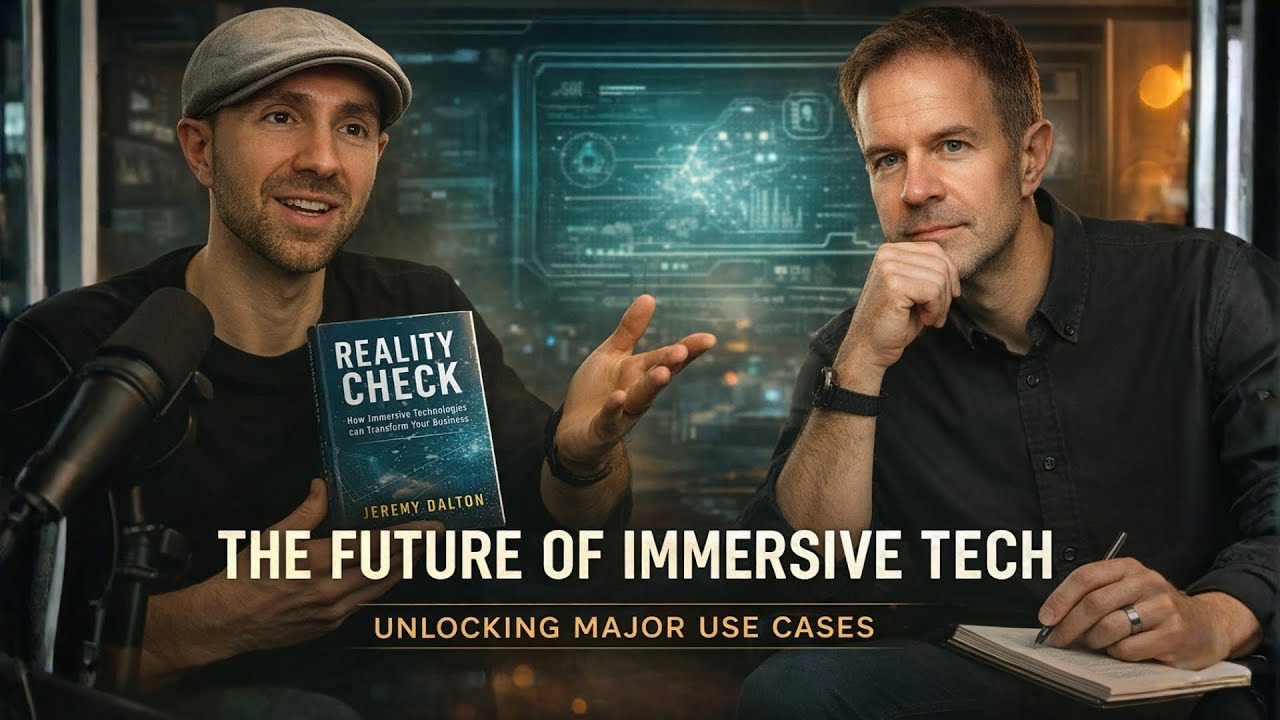
Firefighters, Seniors, Airlines — Why They're All Training This Way Now Jeremy Dalton x Jason Jerald

This will change how we train - AI and storytelling tells us how | Joseph Van Harken x Jason Jerald
The man who invented tomorrow’s tech — yesterday | Richard Marks x Jason Jerald