
Sheriff Brian Kirkland - A Unique Perspective From the Law
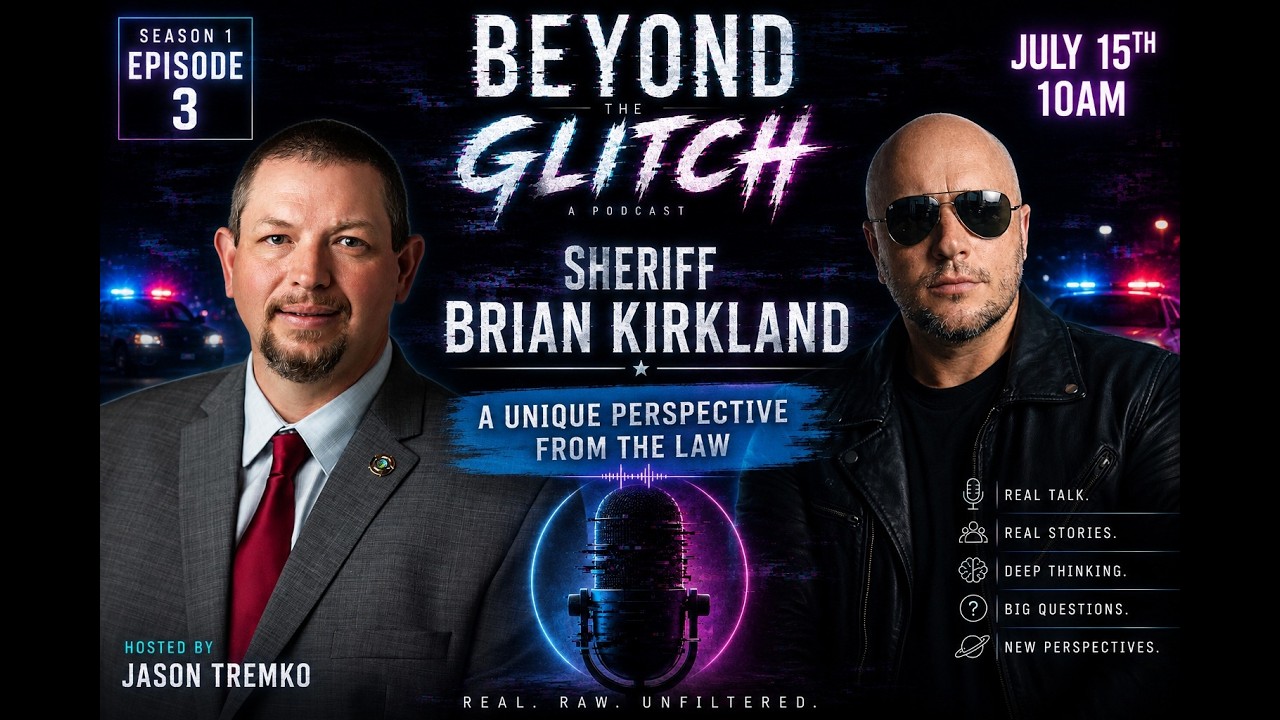
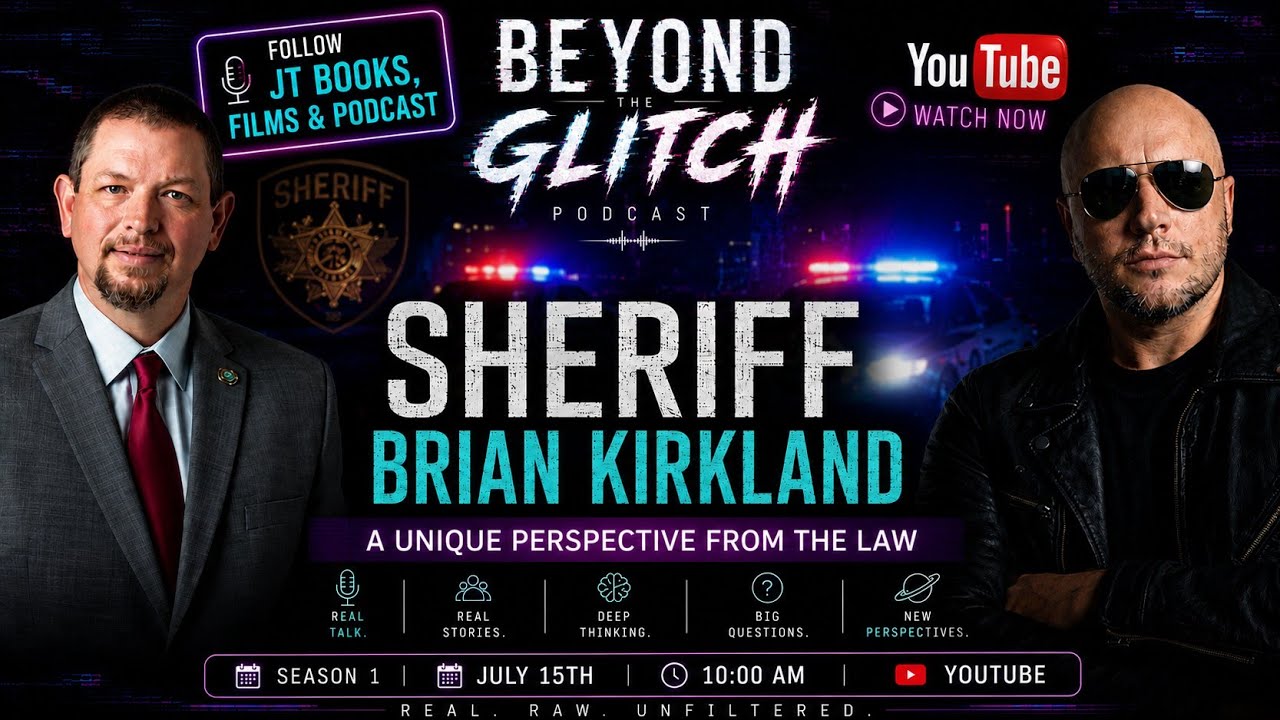
Sheriff Brian Kirkland of Swain County, North Carolina discusses community policing, recent wins like dropping calls from 10,500 to under 10,000 and launching a K-9 unit. He warns that 70-75% of middle schoolers vape, with cartridges hitting 60-70% THC, and flags scams impersonating police demanding money.
Chapters
All right, welcome guys! I am excited today, we're gonna have a great show. I have Sheriff Brian Kirkland, he is currently the Swain County Sheriff in Swain County, North Carolina, over here on the western side of the state. So it's going to be a great hour, great conversation, and, um, as always, let's give you a proper welcome to the show. Welcome to Beyond the Glitch, the podcast where we expose the darkness behind the issues affecting our lives and bring truth, hope, and healing into the light. From addiction and mental health to culture, faith, and the stories people are afraid to tell, nothing is off limits. I'm Jason Tremko, and together we're going beyond the glitch. All right, so welcome to Beyond the Glitch. I am your host, Jason Tremko, and I'm also a resident and local from Western North Carolina as well. So just recently I've had the opportunity to meet, uh, Sheriff Kirkland, and, uh, it's just been an honor. He's a great guy and, um, you know, just has great motivation and truly cares about his community. And I'm very excited to, you know, hear what he has to say. We're going to try to offer a unique perspective from law enforcement, and I don't think there's a better person that we could, we could have to discuss that. He, he was a graduate in 2000 from the BLET course, and he's been doing law enforcement pretty much his whole life. So he's a little bit older than me. I'm 43, he's 46. And, uh, I mean, just dedicated his whole life to serving his community, which is great. And, uh, you know, his, his priorities— I was reading about some of his priorities, and they are the safety of the community and to, uh, you know, basically police by having good relationships, uh, in the community, which is awesome. You know, I think that's something that people underestimate, you know, um most officers that I've met truly care about their community, and that's outstanding. So without further ado, I am going to bring him onto the show. All right. Hello, Mr. Kirkland. How you doing, sir?
I'm doing well. How are you?
I'm doing well, sir. So, um, first time I met you, you know, I kind of told you, you know, about what my work is and what I do and things like that, and you actually told me, hey, I'd be very interested to be on the show. So I thought that was really cool. So what, um, what brings you on the show today?
Well, you know, I think one of the things that we have in common, Jason, not only was, you know, I never served for our country, I stayed, you know, in here and served at a local capacity. And, uh, but your passion against the, you know, for the, the drug education, we share that same belief really, really heavy.
Absolutely. So, um, you know, Western North Carolina, you know, you've been, you've been, uh, the Swain County Sheriff for how long now in total?
Well, it's been a year now. Year.
Okay, good. How's that experience going for you so far?
Uh, it's different. You know, the work is, uh, really no different what I've ever done before. Yeah, I think it's more or less the attention that comes with the work now., you know, uh, it's a, it, it's different.
Yeah. So, you know, it seems like, you know, you can tell me if I'm wrong, but in Western North Carolina, you know, people seem to have a pretty good respect for, for law enforcement. And I would say, um, I know various, you know, different parts of the country. I was, I was a military recruiter in San Francisco, California back in 2005. And that was right there in the middle of the Iraq War surge. And you know, I'm gonna say people didn't really care too much for military presence, you know. So, you know, we had a lot of opposition and stuff out there, um, and I know it's the same thing in certain parts of the country with law enforcement, but, um, I feel like Swain County is a pretty good place. I think people have a lot of respect for law enforcement. Am I correct on that?
Oh, I believe we live in the best community in the world, right? Yeah, you know, I've been— I was born here back in 1980, and I've I spent my whole life here. I never wanted to leave just for, you know, how caring this community is. And you're right, that we still live in a place where people really respect what we do for a living.
Yeah, that's awesome. Um, something I, you know, I don't take for granted. You know, every time I leave the area, I can't wait to get back up here to the mountains again. You know, just, I love it. But, uh, so, you know, tell us a little bit about, uh, you know, what led you to become law enforcement?
Well, you know, growing up I was just an average child, loved the outdoors, you know, loved sports. I played football, I played baseball, you know, a little competitive by nature still. But, you know, always said when I got probably my junior, senior year in high school, I was either going to join the military or I was going to get law enforcement. Obviously, you see, I decided law enforcement side, you know. I had several family members that did join the military. And at first I had a passion to join the Highway Patrol. You know, goals change over a little bit of time, but I decided to go through basic law enforcement in 2000 on my own. You know, I wasn't guaranteed to work nowhere when I went on my own, and I was fortunate enough to get picked up by Sheriff Ogle. He was the previous sheriff here. Gave me opportunity to get my start on patrol as a deputy. And I was honored enough to get up to go to work for the Cherokee Indian Police Department back in 2004, where I ultimately made their traffic team. Of course, you know, I worked a lot of wrecks and, you know, responded to a lot of traffic-related calls. I eventually moved my way into investigations where I learned a lot with major crimes, uh, worked murders and different assaults and larcenies. You know, I worked a little bit of everything and, and, uh, then I had opportunity to come back in administration and I started that in 2011, I believe. And nice. I've worked my way up to Chief Deputy and now here I am.
There you go. Good stuff. Uh, well, thank you for your many years of service. That's awesome. So, you know, what, what does the average person kind of misunderstand about the job of a sheriff?
Uh, as a sheriff, I think, you know, I'm, I'm more like a, a person that tries to get out here and work on partnerships with other agencies. I try to, you know, meet with the community and explain, you know, sort of our vision of where, where we're going with the, with the office. You know, I'm a very community-related guy, you know, One of the first things I did was start putting our guys back into the residential areas and protecting our homes and our property. And I look at law enforcement like a partnership. I've got a group of guys that work drugs every day and are very aggressive. And then we've got our patrol guys that answer calls. But I think visibility is the turnt crime.
Mm-hmm.
So we, we spend a lot of times in the community. I create, I created a community impact team that, um, that's what they do. They patrol their communities, they get out and talk with people. And you know, that, that we gather a lot of information that way. We find out where, where, uh, issues are going on. I mean, there's no better eyes in a community than people that live there. They know who belongs there, they know who don't belong there. You know, like they see somebody pulling into the neighbor's driveway, they know the neighbor's on vacation for the week and ain't nobody supposed to be here. You know, they're, uh, they know the call. You know, we're driving up the road, we might not necessarily know that the neighbor there didn't buy a new car and, you know, and not know who it is. But, you know, that partnership with our community makes a big difference because it helps us bring crime rates down.
Yeah, absolutely. And, uh, I think that's very important, you know, because you see certain parts of the country, uh, where people try to, instead of work with the local law enforcement, they work against them, you know. And to me, I'm like, that just doesn't help. You know, that's not what you guys are there to do. You're trying to help the people, help the community, you know. So, um, yeah, so that's awesome. All right, so what has been some of the most, you know, rewarding parts of your career so far?
Uh, you know, trying to make a difference, feeling like you're making a difference. You know, I'm a— I'm also a stat person. I looked at the stats from the '24 to '25 year frame. You know, we answered 10,500 calls out here. Wow. You know, I looked at the stats from July 1st, 2025 through right at July 1st, 2026, and our calls had dropped under 10,000. We was in the 9,000 range. And I truly contribute that to our community programs, you know, that we're being more, we're being out in the communities more in these res, uh, residential neighborhoods. And, and, you know, just the visibility itself is dropping the crime rate.
That's good.
You know, our drug arrests are going up. Of course, I contribute that to being able to modernize a little bit. We've started a K-9 unit here, which has been extremely successful. Our partnerships with our neighboring agencies, we're sharing information, you know, and getting to know who the people are that's coming and going that's bringing these types of drugs into our community has been a really good plus too for us.
Yeah. Um, yes, you mentioned stats. You know, I'm a big stats guy as well. So, um, you know, obviously, you know, you've seen my work and stuff with my book and everything. So, you know, stats to me are important. You know, while it may not be the end-all be-all, it really is a guide that we should pay attention to and follow and care about, you know, because, you know, it helps us come up with a good plan. You know, you got to peel back the onion and problems to make things better, you know, and Sometimes people are scared to do that, which actually leads me to my next question, uh, about leadership. Um, you know, you're a great leader, so, you know, in your, in your opinion, what does a good leader look like in law enforcement?
Well, you know, I think what helps me is I've been there and I've done that. You know, I started at the very bottom, so I understand what it's like to get tasked with a duty for the day that ain't necessarily the most funnest thing you've ever done, you know. Been in most situations over my years. I've seen a lot of different things. I do have an understanding what these guys go through. One thing that we've really pushed for our deputies is be able to get them more training. And we're fully staffed for the first time in years, and I've been pretty much fully staffed for the last year. That's awesome. It gives more people opportunity to to take a little bit more time off and spend time with their family. But it also gives us more manpower when it comes to doing operations and working. And if you send your guys to training and things, that's going to benefit them and the job they're doing. I try to take care of my deputies and treat them good because I feel, I truly feel like happy workers do happy work, which give you happier results. Absolutely.
Yeah, I'm a firm believer in that. And, uh, Yeah, I mean, you want people to want to work where they are, you know, and that's awesome. So, you know, sending them to training and things like that, you know, and, you know, I'm sure law enforcement is kind of like the military. It comes in waves, you know, you got good times, you got bad times, you know. So when things are difficult, so to speak, or maybe your priorities are a difficult focus, you know, how do you keep your guys motivated? How do you keep your team motivated?
You know, we appreciate the work they do. We let them know how much we thank them for their work. You know, we brag on them out here in the community and, you know, and we're constantly asking them, hey, what can we do to make things better as leadership? You know, I feel like I've built a really good team of leaders beside me. And one thing I've realized, though, it's not one person that's going to do it. It's a teamwork and it's about making a team. Yeah.
My nephew, he, um, started as a city cop. I believe he was in Rocky Mountain, North Carolina, but he just converted over to become a sheriff. And, uh, I mean, he absolutely loves it, you know. Um, you know, a lot of good leadership, um, and that's, that's good to see. So, uh, keep up the good work on that. You know, you got, got a full, fully staffed department. That's, that's awesome. So keep up the good work, sir.
You know, I think modernization and giving the guys the tools they need to do their job makes big difference too.
Yeah, absolutely. Yep. Um, I 100% agree on that. So you're, um, you know, let's say, you know, if somebody's interested, you know, like my son-in-law, he's getting out of the Marine Corps, um, going to be looking for some work soon. Uh, you know, I told him the other day, you know, they were visiting from California. I said, I said, you ought to look into law enforcement, you know, because I know you were telling me there's a couple positions available out there in, um, is it Bryson City? Bryce City has some positions.
Yeah, Bryson City's got several openings. Yeah, that's a great place to get started too.
Yeah, I told him, I said, man, you gotta, you gotta go look into doing something like that. Um, you know, but when, let's say when you're interviewing somebody or looking to hire a new deputy, you know, what characteristics are you looking for? What qualities are you looking for?
Well, I mean, first you want to look, make sure that they've made proper choices in their life. You know, nobody's going to be perfect. We understand that. But we got to make sure we can get them through a background and the psychological exam. And, you know, we got to look to see they're teachable. Yeah. You know, if they already know it all and they're stubborn, then they're probably not a good fit here because we want people that, you know, we put on a really good field training program here. It's usually 12 weeks long, sometimes a little longer. And, you know, but we've got a really big family atmosphere within the office. We're all brothers and sisters and we treat each other like family. That's cool. We may not always agree, but we'll sit there and work things out pretty much.
Yeah.
It's over and we're back to loving each other a minute later. So that family atmosphere is also a big benefit here.
Yeah, definitely. So what, you know, what's, what's the longevity of, of law enforcement? You know, most of it seems like most of the officers I know, They stick it out for a pretty long time.
Well, I mean, the way the, the way our retirement system works, you know, the state has passed a pretty good law enforcement retirement. You know, we get a separation allowance once we made our time, but I mean, that's 30 years, or, or you got to have 25 at 55 at the age, or, you know, 55. Once you reach the age of 55, you can draw a retirement, but a really livable retirement, you just about I have to have 30.
Yeah.
Or at least 25 and 55.
Yeah. So you're, you're getting close to that 30 years. You're going to stick it out a little bit longer?
Absolutely.
Yeah. That's cool. Yeah. Sometimes I wish I would have stuck it out in the military a little bit longer. Um, you know, I did, I did 20 years, 5 days. Um, sometimes I'm like, you know, I wish I would have stuck it out about 30 or something, but, um, but you know, it gives me time to do, you know, this kind of stuff. So I enjoy that. Um, so, you know, we, we originally met through the Green Glitch, um, project that I'm working with here. And, you know, I'm excited. I'll actually be coming out there to Swain County, uh, to talk about some of the stuff. But, you know, from, from your experience, you know, how has drugs changed over time in your community, you know, in your county?
I mean So one thing I've learned about, you know, drug abuse, every family around that, you know, has got some family member or friend that's dealing with some type of substance abuse.
Seems that way.
Yeah, it's obvious. You know, everybody around can say, hey, I know somebody, or I've got a family member that's addicted to drugs. Yeah, we see how drugs destroy families. You know, you've got family members begging, you know, come, you know, even speak with us trying to get help for folks. But, you know, only thing I've come to realize through this, because I'm huge on the educational piece, you know, I've got a very aggressive drug narcotics division and interdiction type guys that do the work and are very aggressive. But on the back end of this, we're really big in drug education and trying to offer things to try to get people off drugs. Yeah, we've started programs in our jail that's never been done before. You know, because the reality of it is, if somebody does come to our jail, we hope they never come back. We don't want them to come back, right? We want to offer them the tools that they need to have the resources once they get out, the word— they don't have to go back to the same environment they're in. They've got somebody they can call. And, you know, through some of these networks we brought into our jail now, you know, they— there's possibilities for long-term treatment plans and halfway houses if they successfully complete that.
Yeah, I think that's so important. Um, you know, and I, I wrote about that, you know, in my book too, you know, based off some of the research and stuff that I've, that I've came across, you know. But I feel like it's so important that we do that, you know, because in, in my experience working with, you know, 12-step programs and things like that, you know, I've come across a lot of people who did time in jail and that's kind of where the positive change happened for them. You know, they, they, they got educated. A lot of them, you know, found Christ in there, um, you know, started going to church or whatever, you know, and just headed, headed in a positive direction. So I think that's so important to, to use that as an opportunity to kind of reach people. It ain't just like, hey, we're going to lock you up and forget you. We're here to help you become a better person. So that's, that's great. Um, Now, I don't know about, you know, other communities and stuff, but, you know, how do you feel, let's say, nationally or state level, you know, we're doing in those, those capacities?
What do you mean, as far as like treatment programs?
Yeah, or just, you know, helping people when they're in jail, you know, helping them to, to get it, get on the straight and narrow.
I feel like, yeah, you know, obviously the people that end up incarcerated, they're the ones that probably need the help the most. You know, and, you know, like for us, we brought in a peer support group, you know, which the peer support group, what's good is 'cause the people that do the peer support, they've been there and done that. They've spent their own time in jail, you know, they have their own issues and they, you know, they beat it, you know, they beat the narcotic urge. And I think for them, I think the trying to educate people and give their story and explain point that they can change is what motivates them not to reuse or fall back in that same trap.
Yeah, absolutely.
We all— this is just my personal opinion, and you know, you may look at it completely different than I do, but I feel like a lot of people, they— when they come to jail, they sober up, you know. Once you get to know them as a sober person, they're really, really good people, you know.
Yeah.
And, uh, when they get out, they have nowhere else— they feel like they have nowhere else to turn but to where they just come from, or to their old friend, or their old family. And, uh, it's all in their face. And I mean, you know, I can imagine how difficult it'd be if you've already got the urge when you see it and it being in your face constantly, not to just fail again.
Yeah, absolutely. Yeah, I was, you know, I was researching, um, I can't remember the exact number, but I think it was, I think it was 45% of people who, you know, with, with marijuana rehab and recovery anyway about 45% of people relapse the very first time that the drug is offered to them, you know. And I'm sure it's the same thing with, you know, alcohol or, you know, harder drugs and things like that. So, you know, what, what advice do you give to families or, you know, just people in the community to help fix that problem?
Well, the best thing you can give to a family member, somebody trying to help a son or a sister or a brother or whatever, a daughter is, you know, don't give up on them. You know, obviously this is where they can go, these are the resources. You know, obviously it takes some self-motivation as well, you know, for them to complete this program and stick with it. But, you know, I think encouragement and showing love and compassion is the best thing they can do.
Yeah, absolutely.
But also they've got— they can't enable them, you know what I'm saying? Yeah, it's not, you know It's one thing to show compassion and love and push them, you know, you need to really do this. But when they do fail, you know, don't give them situations to—
Yeah, that's really interesting to me, you know, because, you know, as a teacher, I see that a lot. You know, I'll see kids that are struggling with, you know, addictions or, you know, marijuana addictions or whatever it is that they're dealing with. You know, I've seen kids just vaping tobacco. You know, since elementary school, you know, they show up in my class and we're like, hey, let's go to the track and run a mile, and they can't even run a mile, you know. And I've actually seen them cry, and I'm like, why are you crying? They're like, yeah, just, I can't, I can't run. And I'm like, why not? Well, I've been smoking since I was like 6 years old, you know. It's crazy, you know. And, and a lot of times you, you see that enabling, like you said, you know, people don't realize the effect that they're having on other people You know, they may not see smoking as a problem, but they're not realizing how this, the 6-year-old is abusing that, and now you're limiting their future. You know, they, they may have been able to go into the military and make a career, but now their lungs are destroyed, you know, so they can't, they can't pass a PT test, you know. So these are things that I see, you know, and I think it's very important, you know, because in my opinion, we have a major problem with with the enabling piece, um, and that's important to, to focus on, I think.
Well, I'm, I'm, I don't think I've ever encountered a 6-year-old smoking, but yeah, I've definitely seen some very, uh, preteen and, you know, 10, 11-year-olds that's already vaping type stuff. And, you know, I'm sure we're going to get into this in a moment, but the vaping is what I see that's really rough on these young people.
Yeah, absolutely. Yeah, I've known, I've known several students that you know, started in elementary school. Um, wow. You know, and it's, you know, my daughter, you know, she was highly addicted to, uh, high-potency marijuana. Um, and, uh, she shares her story in my film, you know, as you know. And, um, I mean, it's, you know, back, back to the, you know, the enabling side of things. Like, if I originally— I was upset about it, you know, because I raised my kids, don't do drugs, stay away from that kind of stuff. You know, I was like, okay, you know, how do I deal with this as a parent? You know, so I was like, I'm going to punish my kid, you know. So I started, you know, with punishment, grounding or things like that. But then I realized it was more than that. It was an addiction. She was started getting super sick. Cannabinoid hyperemesis syndrome, things like that started kicking in. She lost 50 pounds in about 3 and a half months, you know. So I, as a parent, I had to kind of take a step back. And realize that maybe there's more going on here than, than what I realize. And, um, the last thing I would want to do as a parent is just, you know, give more drugs to my kid, you know what I mean? But you see that, it's crazy, you see that kind of stuff.
Well, you know, talking from a dad perspective, you know, with even with my kids, we all want our children to be successful, make good choices, and, and, you know, we pray every day that they do make good choices and Yeah, and do things. And, and, uh, I think just recognizing that, that behavior, you know, early and trying to— I don't think— I think we're in a day and age with social media and the things that are on the internet and the things that are available to us online, you know, parents need to, to be on the lookout for, for changes in behavior for kids and realize when, you know, I know especially in females, I feel like, you know, when they start getting that 13, 14-year-old, might be a little bit earlier You know, they start having a little bit of life change with the hormones and things changing, and a person's got to be able to recognize, is this a natural change versus, you know, is this a self-imposed change, right? Um, don't be afraid to go through their phones either as parents, you know, and it ain't necessarily spying, it's just making sure that, yeah, you're checking them, you're looking out for their behalf. They may not realize it, it's at that moment, they're going to be angry and upset like you violated their privacy. But at the end of the day, we want to push them toward making right choices versus wrong ones.
Yeah, it kind of goes back to that leadership question. You know, as a father, um, and I'm actually making a new film right now called A Good Man. We're going to show the trailer in a little bit. Um, you know, but what I'm trying to talk about is, as a father, you know, we are leaders of our family. You know, and, and we need to show our kids the right way to do things. And, you know, um, I think, you know, if, if we do a better job as, as men in our nation, period, you know, we'll— I think we'll see a direct correlation with, with drug usage going down. I think you'll see less DUIs. I think you'll see less addiction, um, you know. So, you know, that to me, that's a priority— focusing on values, morals, things like that. Um, in this country. Um, so let's see here, let me pull up my next question. So, you know, what, what crimes are increasing that people may not realize, um, in Swain County or North Carolina?
Well, I mean, I think one of the biggest problems I'm seeing lately is people falling for scams. You know, the scams are outrageous. I mean, I don't know how many You know, people, we get calls every day and there's a— and I'm doing a scam presentation tomorrow at Southwestern down here in Almond. But you know, one thing that we're seeing more and more of is these scammers are impersonating law enforcement. I call them a government scam. And you know, they use fear and scare the good, you know, people that's never been in trouble before when they think they're getting a call from a law enforcement officer saying that, hey, you've missed jury duty. You know, and if you don't pay us this much money right now, we're going to arrest you. And you'd be surprised how many people fall for that. And I've put on scam presentations all over this county trying to educate people that law enforcement will never call you and ask for money to get— keep it— to keep you from going to jail. We'll, we'll not do it. We'll never ask for money. We never will. You know, the clerk's office is the one that takes money in on anything. You know, the judge might put a warrant out for you, but guess what, uh, just like I tell people, if we've got a warrant for you, we're coming to your house, we're beating on that door, and we're coming to get you. We're not going to call and say, hey, if you don't give me $5,000 right now, a deputy will be at your house in 10 minutes.
Yeah, straight, straightforward. Yeah, it's not a, it's not a tap dance, right?
It's not. Yeah, if anybody ever calls and says that, hey, if, if you don't pay us this kind of money or you're going to jail, hang up the phone. It's scam every time. There's nothing wrong with hanging up the phone and then calling law enforcement to double-check. But the, the one thing I've noticed about these scammers, and we've called them back and messed with them, you know, they, they spoof these phone numbers online. They get a local number. Most of the time they're sitting overseas, you know. They're using AI to, to change voices to make them sound like they're a local person. But, you know, That's probably the one of the, the biggest crimes I've been seeing here lately, and it feels helpless because 99% of the time there's nothing we can do if you give them money or gift cards.
Yeah, it's a bank problem at that point. Yeah, they're good. I just— I remember one time I got a phone call, um, and they said they were, they were with the Border Patrol.
Yeah.
And that they confiscated a package with my name on it at the border. Yeah, they were trying to scare me into making it sound like I like shipped drugs or something crazy.
Well, they called my chief deputy with that same exact scam.
Yeah, I was like, wow, you know, it was, it was kind of convincing, you know. I was like, this is, you know, because it makes you nervous. But then I was like, no, this is a scam.
I mean, I've seen them email people with, you know, with Swain County logos. And, and, and it's funny, they'll say that they've got missed jury duty, but they'll send them a copy of an actual federal warrant. I mean, they, they found an actual real-looking federal warrant, and they'll put, you know, like, Swain County seals on it. I mean, the paperwork, if you don't know better, looks legitimate. Mhm. But you'd be surprised how many people fall for that. I mean, that's crazy. Just trying to get the word out, let people know that law enforcement will never call you and ask for money, period, over getting out of a warrant. It don't work that way, never will work that way, and, and people just need to hang up the phone. Yeah. But other than that, you know, uh It's still, you know, you get a lot of domestics. A lot of those are drug and alcohol related, you know. We still have a few breaking and enterings, and most of them are drug related, you know. You still have your fights and your, you know, people drinking and driving, you know, just the common everyday crime. And then occasionally you'll get something major, a shooting or something that we don't want to see. And, uh, You know, that's where training comes in handy too, because we, we pray to God that these things don't ever happen, but we want to be prepared if they do.
Absolutely. Well, we're gonna, um, jump into some of the good stuff here that I like to talk about, and I know you do too. You know, we're passionate about the drugs and all that stuff, so we're gonna talk about that. Uh, but before that, I'm going to show a little commercial here. Uh, my brother has a coffee company called Army Man Coffee Company. And, uh, you know, his motto is, "It doesn't taste like turpentine." So if you know anything about the military, you know, we've seen Cadets called, you know, turpentine, coffee tastes like turpentine, stuff like that. So anyway, it's great coffee. I'm gonna play this little commercial real quick. We'll take a little break here and we'll be right back.
Your cleats are tied, the whistle is close, but your legs feel heavy and your focus is still asleep. That is when the real pregame starts. Army Man Coffee Company brings bold, dependable coffee built on grit, discipline, and strength you can count on. One cup, and the locker room changes. The ball looks sharper. The field feels louder. The team gets that sunrise mission energy. Passes snap. Feet move. Confidence kicks in. Look for the soldier, the pug, and the promise— does not taste like turpentine. From first touch to final whistle, bring the fuel that helps you play like you trained for this moment. And when the game gets tough, you do not fade. You rally. You press. You finish strong. Army Man Coffee Company. For early matches, long tournaments, and players chasing the win. Brew your strength.
Alright, so that's Army Man Coffee. Pretty tasty stuff. I'm kind of a coffee snob. I don't know about you, sir.
Oh, I am too. I love coffee. I seen that and it made me want to go make another cup real quick.
Yeah. I drink creamer. Yeah. Um, I don't know if you drink creamer or not.
Oh, I drink mine just black. That's just black. I always have.
So yeah, yeah, you're, you're a better man than me. But, uh, you know, I, I actually picked up this new, uh, creamer they have last night. Um, it's, it's, uh, Harry Potter, uh, Butterbeer flavor. It's a new flavor. It's pretty good stuff.
I'll pick one of them up not too long ago.
So yeah, it's pretty good. I like it. So I've been drinking that. But, um, yeah, if you guys, you know, looking for something new, uh, check that out. I think it's a coffee company that he partners with out of California. It's pretty good stuff. Um, all right, so let's get into some of the good stuff here, you know. And I guess it kind of goes with, you know, criminal behavior. I don't know if it's really criminal behavior, maybe in some cases, but, uh, you know, vaping, you know, the vaping problem, you know. Obviously, you know, I know you work closely with the schools I'm a school teacher. I've taken a personal interest in this with my, my research and my work. And, um, you know, what, what's going on in Swain County, you know, with that?
Vaping is terrible in our schools. Unfortunately, we're seeing more vapes getting confiscated, it seems like, in our middle school than we are at a high school. And we have to— a few from elementary school, it's in a backpack or two. But it seems like at least once a month they're gathering at least a box bags full of vapes that they've, they've took out the school. So I mean, it's obviously an issue.
Yeah. And that's just the ones that get caught.
Yeah. And I'm sure that's a very small percentage of what's actually out there.
Yeah, I know. Like, you know, a lot— and this is what I challenge anybody to do, you know, anybody that hears this video, um, just ask, ask kids, you know. There's times I'll be in Walmart, if I see somebody that looks like they're middle school high school, I'll just be like, hey dude, um, you know, how many people do you think in your school vape or use some kind of, you know, smoking product? And I can tell you this, out of 3 local schools, kids that I've asked, they'll tell me 75%. Um, and a lot of people are like, there's no way.
Yeah, that was my first thought as well. There's no way it'd be that high, but as many vapes as we're getting— and I know we're only getting a small percentage of what's out there— I'd say your numbers are fairly accurate.
Yeah. And that's, that's, you know, based off my research and interviews, I mean, 75%. So, you know, to me, that's very concerning because the other problem, you know, I focus on high potency marijuana. Most people advance from one to the other, you know. So just imagine, you know, like you said, middle school, you're seeing the majority in middle schools. So imagine, you know, you're in 7th grade. Right? You start vaping, you love it, you love it, you use it all the time, you get more, more access to them, you know. Then you start having the opportunity to go to high potency marijuana, okay, 60, 70, 80, 90% strength, okay. Now that becomes an addiction, and this is the exact story that happened to my daughter, you know. So by the time she was a sophomore, she was just pretty much high all the time, you know. So her grades were suffering, her decision making was, was horrible. Um, you know, she barely graduated high school. Um, the only reason she did, and she'll tell you, is because I was a school teacher in the same school with her, you know. So her teachers would help me down and tell me what's going on. But a lot of kids don't have that, that availability. They don't have parents in the school with them. Half the parents probably don't know what's going on with their kid, you know. Um, stats are showing that 60% of parents right now don't know that their kids are using. So, you know, 60% of parents don't know, you know, 70-75% of kids are using, that's a, that's a scary problem to me.
It is. And I mean, out of the vapes that, you know, we, we brought a box in up here the other day because we, we do have a law enforcement partner within the state that has capabilities of testing the THC levels. And, uh, out of that box that was brought up here at the end of the school year, I think it was taken over maybe the last 2 weeks of school. You know, I think, uh, it's probably 15, 20 vapes, but, uh, you know, out of that box I've probably seen 5 THC vapes. And, uh, we did take one apart and tested it just to, you know, to get an idea. And when it come back 69% THC, I was appalled. I was like, you gotta be kidding me.
Yep. Well, and you know, a lot of parents, you know, that I talked to, you know, again, 60% of them don't even know their kids are using And I've had people tell me, oh, you're a liar, you don't know. And I'm like, no, that's, that's a fact, you know. Um, but if 6% don't know, and then on top of that they don't know their kids are using these super high substances, high potency, you know, it's like, man, like, we, we gotta, we have to get involved, you know. Parents are gonna have to get educated because they don't know the terminology, you know, like a cart. They're like, what's a cart? You know, people don't realize, well, that's, that's a vape with marijuana in Right, or shatter and dabs, um, or wax. You know, this is stuff I didn't know.
Um, it is wax. You know, that stuff that comes out of them cartridges are pretty much, in my opinion, wax.
Yeah, yeah, or some type of oil.
Marijuana in its purest form.
Yeah, you know, so, you know, you got to learn the terminology, you know, because first time I smelt it, you know, I was like, what is this? And my kid, you know, she told me, well, that's That's, that's waxes. Um, you know, she didn't tell me that was 90% strength, right? So, you know, the very first time she started using, you know, she was hitting high potency marijuana. It became a major addiction. So, um, you know, it's very concerning to me, you know, and I feel like we need to get a grip on it because, you know, if we don't, the stats are showing that about 40, 42 to 44% of marijuana users will advance to harder drugs. You know, so there's a lot of people in this country that say, you know, we need to fix the drug problem, but they don't want to make the tough decisions to actually fix that problem, you know. And a lot of people, they'll just say, well, you know, that's not fair, you know, because alcohol is worse, right? Which it is, in my opinion. But my response to them is, then why do we want to repeat history, right? But, you know, what are your thoughts on that, on that, on that progression? You know, from, from vaping to cannabis use to harder drugs.
You know, my, my personal opinion is, is I think high-potency marijuana and youth is a gateway drug, you know. And, and, uh, you know, I would say that the, the grade of marijuana from when I was growing up, which I never was really, you know, that's the smell of it gives me a headache.
So yeah.
But, uh, from my understanding, from, you know, what I've spoke with people that have used in the past, you know, the marijuana in the '90s was, you know, that smoking, it was like 5 or 6%, you know, it's very low grades. So, you know, it may, may relieve some anxiety. I'm not sure, I've never really paid attention to the, uh, the science on that. But, you know, when you're talking about 70% day and coming out of middle school, there's no way it's healthy for you or has any health benefit whatsoever.
Yeah, and I feel like that's, uh, you know, education, you know, the narrative side of things. Because, you know, people that probably our age, you know, when we think about marijuana, we're talking about, oh yeah, you know, what it was back in the '70s, '80s, '90s, you know, 1 to 3%, 5%, um, you know, less addictive. You know, and, and nowadays, you know, people that take medicinal marijuana, they're not taking, you know, 500 milligram gummies, right? They're taking maybe 15 milligrams, you know. So they're— medicinal is one thing that makes sense to me, you know, but that's not what our kids are using. You know, if you, if you— and I'm sure you can probably talk more about this, you know, the stuff you're finding in schools, the carts, like you said, 60% That's not a 15 milligram, you know, high potency stuff, addictive stuff, right?
And then if you look at these vape cartridges that they're using, you know, they look like a nicotine vape. They're, you know, they're usually wrapped up with some kind of fruit or a Skittle or, you know, some type of fruity looking packaging on it, you know, that you wouldn't expect. You know, our SROs are— I feel like I've got some of the best school resource officers there is that we have, you know, and most of my school resource officers have been here for a very long time. They love their job dealing with kids and are quickly able to recognize the difference between a nicotine vape and a THC vape. And, you know, I still feel like maybe 20% of the vapes that they do find in the school are probably THC vapes.
Yeah, yeah, I would agree with that. Um, and a lot of them just leave them in their car, you you know, like I know my daughter, um, you know, they may bring a nicotine vape to the school, but they're not always gonna bring that THC vape to the school, you know. So I would go out and find it in her car and stuff like that, you know. But what was crazy to me is, you know, I would take it away, and then the next day she'd have like 2 or 3 more, you know. It was like, where are these things coming from?
And I'm pretty sure you can just order them online, and they, you know, they'll come in the mail like anything else.. But, uh, you know, some of the local, uh, delivery services, obviously if they smell it, they will— yeah, they will turn it in like it's supposed to.
So, yeah, and that's interesting. I didn't know that. Um, so they're actually, they're actually calling you guys and saying, hey, this is what we're picking up. Yeah, that's good, that's good. So you guys, um, are you able to— like, what, what, how do you guys hold accountable the, the people that shipped it to begin with?
Is that something we can do, or Well, I mean, sometimes we'll contact the, the agency of the address it's supposed to be going to. A lot of times I've noticed that people use fake names, you know, when I, when I come to this. And oh wow, they'll determine whether they just want to destroy it or, or whether they're going to try to do a controlled delivery, which I won't speculate too much in how that works.
So, right, interesting. Um, now you were talking about Uh, last time we met, you know, you were talking about how there's no age limit.
No, uh, I had a meeting with a state agency when they were testing the potency of that vape, and there's no age limit on THC vapes, which—
that's so wild—
5-year-old can buy or whatever. It appalled me that there's no age restriction.
Yeah, and it's not at basically any potency level. Yeah, that's so crazy to me. So, so basically, uh, you know, nicotine is You got, you know, the—
at the federal level it's, uh, 18, you know, or 21. At state level it's still 18 for nicotine.
So that's so crazy to me that you can— you could be like 10 years old and just go buy a 500 milligram. Yeah, you know, imagine like a baby or something getting a hold of that, you know, like a kid. So crazy. Yeah, and I've actually talked to a lot of, um, nurses you know, and, and they're seeing this stuff, you know, they're seeing kids overdosing. Um, I did a symposium a couple weeks ago and I had a local nurse and she told me they actually had a kid die from liver cirrhosis and he was like 10 years old, you know. So, you know, the, the substance abuse is really starting to affect the kids, you know. But I think the disconnect is the public doesn't hear about it because of, of right patient rights, you know, HIPAA laws and things like that, you know. So, you know, I'll be out in DC, you know, here in 2 weeks, you know, talking about the Green Glitch Project and stuff, uh, the Whistleblower Summit Film Festival. And, uh, that's one of the concerns I'm going to bring up, you know, because I get, you know, patient rights, but we— the public needs to be made aware, you know, like, this stuff is happening.
Well, you know, I can tell you this, so, you know, Speaking with the school staff, we have 2 or 3 kids a year that end up having to get transported to the hospital for some type of, you know, effect from those type of vapes.
Yeah. And I've seen it. I've had kids, you know, walk right out of the bathroom and pass out on the floor. You know, somebody came running in, oh, we need help, go out there. Sure enough, that's what it was, you know. And I could tell by the performance, you know, because when we're out doing workouts and stuff, you know, a kid that was high performing and now all of a sudden they're, they're just, you know, slow. Yeah, they're slow or below average. Um, you know, and I'll just ask them like, hey, are you, are you smoking? Yep, I'm smoking. You know, they'll just tell me. Um, you know, so this stuff is having an effect on people, um, despite what the narrative is saying out there, you know. So that's, you know, if you're listening, I would just say, you know, get involved, you know, support support the sheriff on the work that he's doing. Um, just get educated, you know.
Um, but I mean, also when they make— you know, we're not seeing too many overdoses with harsher drugs at that age level, but I mean, you know, when you start getting in, we've seen a lot of 20s and 30s with the, the fentanyl overdoses. And, uh, you know, methamphetamines and fentanyl is real, you know.
Yeah, yeah. And I've got something there. There was some kind of new drug coming out too. It's like, like fake pills that they're starting to find in North Carolina.
I can't remember, you know, you get some of these drug dealers that they've got pill presses and they'll turn fentanyl into, you know, pills.
Yeah, that's so wild. Yeah, you can actually— like, I researched this— you can actually go online and purchase one of those things.
Yeah. Oh yeah, you can.
That's so crazy to me that you can do that.
That's the way we used to say ecstasy too. Yeah, you know, I don't see it as much around here now as I I used to back in earlier in my career, but, you know, those were usually made in a, in a pill form. Yeah.
So, you know, what advice would you give parents, um, you know, maybe, uh, community leaders, politicians, things like that, um, in regards to, you know, the, the vaping issue with the kids?
I mean, obviously the vaping issues is, uh, it's huge. You know, I think one thing we need to really pay attention to is, is behavior at home. You know, I know anymore it's easy for parents, you know, after they worked hard all day to want to go home and rest. And, you know, I think it's sort of become normal for kids to come home and go straight to their bedroom and never come back out. You know, the, the video gaming, you know, there's no family connection anymore. More like it used to be when we were growing up before we had those things. It's true. And, uh, I think it's important for parents to know they still got to interact and be parents when they get home. Yeah, you know, I know it's rough, you're tired, you're wore out after you've worked all day, but it's still very important to have an interaction with your kid every night, or your children, and, and, you know, do things as a family. Sometimes it's nice to set cell phones to the side and turn the video games off and, and be a family for you know, at least an hour or two every single night. Yeah, build that connection, have that connection with your child.
Yeah, and I think that's so important, you know. Um, my daughter, she would tell you, you know, she went through all the high potency stuff, major withdrawals. I mean, she pretty much got the worst of high potency marijuana, you know. And, um, you know, she would tell you probably what helped her get clean off all that was the discussions that we had, you know, and I've had discussions with students. You know, I had a kid one time— excuse me— he, um, he's actually on my documentary, um, on my documentary film. He came to me and said, hey, can I, can I be on the film? I want to share my story. And, um, you know, he was at a party one time and he remembered the words that I told him, you know, about marijuana, you know, how you advance from, from vapes to marijuana to harder drugs, um, you know, 44.6%, whatever it is that advances. And he was that close to using cocaine.
No kidding.
Yep. And he remembered the words that, that I told him about that, and that's when he was like, you know what, I need to get help because this is starting to get out of control. So he came to me and we actually got him the help that he needed, and that's why he wanted to share a story, you know. So I think You know, 60% of parents don't know their kids are using. Imagine if we just started, you know, if 60% of parents just started having those connections, having those conversations. You know, I think personally that there would be a direct correlation with lower crime. I think we would see lower drug usage, you know, lower addiction. You know, I think that's one of the most important things that we could do to fix the problem.
Absolutely. Well, Jason, through your research, answer me this, because I mean, I've always been a strong believer that kids that are involved in after-school activities like sports or, you know, different clubs or, or whatever are less likely to get out here and get theirself in trouble than kids that, you know, that don't have an after-school activity of some sort.
Oh yeah, I think that's, yeah, I think that's, uh, a very helpful thing, you know, getting, getting kids involved. Um, you know, I remember when I was in the military, we used to say we're going to make our, our soldiers so tired they're not going to have time to go out, to go out and do something stupid over the weekend, you know. Right. They're gonna be tired, you know.
So, and I'm sure they did that too.
Yeah, they did, you know. Oh yeah, definitely. So I've seen a lot of them scenarios. But, you know, I think keep your kids engaged, you know, keep them busy, um, and they're less likely to get into trouble. I do believe that, um 100%. So, you know, I think it's, it's just, uh, giving them, giving them goals too, you know, helping kids have goals, you know.
Uh, yeah, the goals are, are a big thing, you know. Yeah, helping them just, you know, they've got to decide in that junior and senior year time frame, you know, what their goals are moving forward as they growing into adulthood, whether they want to further their education or look for a trade skill to get go in straight to work, you know. And it's a big change in youth. I understand that, you know, they're stressed out. There's a lot going on in life. But, you know, let a family unit help with that, or let a friend help with that. You know, they don't have to navigate that alone and, and, and do stuff that builds that anxiety to a level where they feel like they've got to do things to—
yeah, relieve that.
Because it, it really— it, it may help for a moment, or make them think it helps for a moment, but at the end of time it's just making it worse.
Yeah, and I think that's, you know, like I said, friends. Um, you know, I've had friends that I've had to help. You know, when I was in the military, um, I had a friend, uh, he was actually deployed in Iraq and his wife was babysitting back at home. And this was back in Norfolk, Virginia. Well, she actually had a home invasion and they shot her and paralyzed her. You know, from the neck down while he was deployed, you know, so he had to come home and deal with all that stuff. And he ended up actually staying in and retiring from his career. But I remember, you know, I had to help keep him level-headed, you know.
I can only imagine.
Yeah.
And plus, you know, I've seen, you know, scenarios. I had a good friend who his wife had an affair on him while he was downrange. He deployed and, you know, came back. And if you knew his story, he grew up in Vegas, you know, so he used to use drugs and was highly addicted and all this kind of stuff. Kind of turned his life around, ended up joining the military. Well, that bad situation led him to kind of go back to that, so he messed up. Um, you know, and I remember, you know, like hearing stories. We had to go to his house and, and dump his liquor out, you know. Like, sometimes you got to do what you got to do, you know. And I think us as friends, we can look out for each other. And kids, you know, kids can do that, you know. Now that the kids know what I talk about in the school, they'll actually bring kids to me that are not even in my class, and they'll say, hey, go talk to him, you know. Who are you?
These kids are starting to build a connection where they feel like they can— they're comfortable enough to talk to you about situations that, uh, they're in, and that's good. They need that.
Yeah, they do need that. And it's not real models. Yeah, and that's, you know, my challenge, you know, to, to parents: be that role model, you know what I'm saying? Like you know, instead of punishing your kid, you know, I guess sometimes you need punishment, but create that safe space where they can come and talk about, hey, you know what, I'm— I think I'm getting addicted to this, you know, so that way you can help them out, you know. And maybe they'll bring friends, their friends, to you, you know. Um, so just, you know, be open-minded, have conversations with them. I think that's so important, you know. Be a good friend, you know. If you're a kid listening to this, look out for your buddies, you know. If they— if they're picking up addictive materials and, and getting that addictive personality, help them out, you know.
But that also works as being friends. As a friend, you know, if, if, if you're a young person, you know, and you've got a friend and you're noticing their behavior start to change, don't be afraid to talk to them about it.
That's right. Yep.
Hey, listen, what's up, you know? Or are you starting to go down this path? Let's get— let's try to get some resources for you before it's too late.
Yep. And I think that's important, you know, getting, um, helping people understand that addictive behavior before it becomes a problem.
Right.
Um, that's important. So, um, yeah, that's some good stuff. All right, so, um, now that we talked about that, let's, let's talk about, um, maybe some of your, your work experience, you know, behind the badge is what I call this section. You know, what's, what's the hardest call that you ever had to respond to, if you can tell us?
Well, I mean, anytime you deal with death It's tough, you know. I mean, unfortunately, this late in my career, you know, I've seen, you know, kids that have passed away. You know, that's probably the hardest part, or, you know, it's just like dealing with loved ones that you may have lost. You know, saying that stuff, we're still human, you know, and we're still, you know, we still have feelings and emotions, and that affects us too. And just being able to, you know, having ways to deal with that too. Not only do we have to try to find resources as leaders for, for the community as they've got things going on in their life, we've also as administrators got to be able to do the same for our guys when they go through a traumatic situation. Yeah.
And, yeah, sometimes, you know, law enforcement, you guys probably got some of the biggest hearts. You know, people think you don't.
Yeah. I mean, we're very caring people.
Yep.
You know, and at the end of the day, we want every one of us have the same goal, and you know, that's to go home at night. But at the same time, we want our community safe because most of us live here. That's right.
Yep. Yeah. You want your kids to grow up in a great place and your grandkids.
And we want our kids to grow here just like we did and stick around. And we're starting to see more of our, you know, our youth, once they get out of school, they move on to further education and then they go do their own thing somewhere else.
Yeah, I've actually, you know, had students that have said that to me. You know, they're like, uh, I need to get out of here. You know, there's too many problems with drugs, or there's too much, you know. So they're, they're noticing, they're seeing that, you know. So how we're setting that example for them is important.
I truly believe though, as far as that goes, I think, uh, as trends go nationwide, I think that each place has got the same problems. Oh yeah, they just be in a different variety, or Hello there.
Yeah, well, everybody knows everybody out here, so, you know, you hear about every little thing, you know, whereas in a big city it's probably more, but you don't hear about it because you don't know anybody.
And it's just making new people and getting out and exploring. I know a lot of youth nowadays like to explore and see new things and, of course, try different things as far as different lays of the land. And, you know, I love the mountains. I love being able to still enjoy all four seasons. And oh yeah, you know, I know a lot of youth likes the beach and the sandy shores and that beautiful side.
My wife loves the beach. I'm like, I'm a mountain goat. She loves the beach.
Yeah, mine does too. I'm more of a lake man myself.
Yeah, yeah, as long as I got a fishing rod in my hand, I don't care where I'm at. You could put me in a swimming pool.
Yeah, that's how I deal with stress. I fish.
Yeah, it's the best way to deal with stress. Absolutely. So, um, you know what, um, you know, well, I guess I should say, how has your faith or your personal values influenced how you lead, um, as the county sheriff?
Well, you, you know, I, I've got a strong faith in God. You know, I go to church at Mount Zion Baptist Church here in Braxton City, and I've got a wonderful pastor and a wonderful church family. And, and, you know, I I pray every single day and, you know, I pray for guidance and to make sure I'm making decisions for the right reasons. Those right reasons are the, you know, are these decisions going to be the best benefit for our community in a whole?
Right on. Yeah.
And that's, uh, decision is going to be the best decisions for our guys to make, you know, to deal with situations at this point. But, you know, the overall goal is to make sure that we make decisions based on what's going to make our community Cypher.
Yep, right on. Yeah, that's good stuff, you know. Um, I mean, that's, that's, that's the best thing somebody could look for in a, in a leader, you know, somebody that's gonna seek the guidance from the Lord. I mean, that's, that's awesome. So, um, all right, and you know, what advice would you give young people who want to make a difference in this community going forward?
Get involved in things, you know, be involved, uh You know, participate where you can. If you decide, if you want to maybe follow this career path, go to your local law enforcement agency, speak to them, learn, you know, see if there's ride-along programs. Or, you know, my goal, and I'm still trying to get the kinks worked out, is to come up with an explorer program just for our youth around here. The, you know, the ones between a certain age group that, that's interested in possibly wanting to be a leader or are making a difference in the community for the good. And give them that opportunity to see what it's like before they're old enough to get to do it, and use that as opportunity to keep our local folks interested in this and maybe turn it into a job opportunity once they reach the proper age. But it's just a matter of trying to get all the kinks worked out for policies and for safety reasons, and what age are we going to let them do what.
So that would be through your Through your—
General instructors that work in here too, so they can sort of teach some of the stuff that's in the academy, you know, show them what it's going to look like if you go to the police academy.
That's pretty cool. Yeah, it's kind of like what we do with ROTC in a lot of ways. I think that'd be really cool. Um, okay, so there's one more question I was going to ask you too, um, you know, regarding, uh, driving, um, because that's something, you know, I've been researching a lot, um, and I know we were talking about it the other day. You were talking about the, the the swabs. It's like a pilot program you guys have. You want to talk a little bit about that?
So I don't have all the ins and outs yet, but I know, uh, you know, I speak with the Western North Carolina Regional DWI Task Force leader, which Miss Ellen Pitt, and she's phenomenal. She truly cares about the, uh, the DWI laws and, and making sure the victims get justice for people that's been injured or killed. The, the driver while impaired. But She reached out to me the other day and said that they're starting a pilot program with swabs for narcotics, you know, because you can drive impaired on alcohol, you can drive impaired with narcotics. I mean, you know, and the field sobriety tests are real similar, the same that they have to go through, but it's just a swab. I guess it's going to show positive or negative for what drugs. I don't know if it's a color change deal. I've not seen the swab yet. I should be, uh, Getting a look at that within the next month.
That's really cool. Yeah, I'm definitely looking forward to hearing more about that, you know, because a lot of people don't realize, um, now you can tell me if I'm wrong, but based off my research, you know, it's still illegal to consume cannabis, um, whenever you're, you're driving in all 50 states.
So I mean, you can be impaired on too much marijuana. It does affect your driving ability if you obviously, if you're take too much.
Yep.
So I've seen, I've seen those DWI convictions over, you know, over time. It's not— I've not seen a great deal of them, but I could possibly see it leading into this type of pilot programs and research. I could possibly see leading into the more of that, trying to get impaired driving off narcotic use. Yeah.
And basically like what percentage you were consuming or whatever. That'd be really cool if you guys could determine that, you know, because then it would be kind of like alcohol, you know. Based off your body weight or whatever, you know. So that's—
oh wait, above—
yeah, so that's probably technology coming, right? Hopefully that'll help people out. Maybe that'll cut back on a lot of the, the traffic issues, you know, car crashes and stuff like that.
And that's the overall goal. I mean, you know, the, the goal is, is cut back on unnecessary car crashes and save lives. There's a lot of lives killed every year nationwide on car wrecks.
Yeah, yeah. And I was looking at a, uh, a coroner report. I was telling a little bit about this the other day, but it was out of Montgomery County, Ohio, and they analyzed data over a certain period of time from car crash deaths, and they found out that 42% of people had consumed high-potency marijuana about an hour before driving. So, you know, almost half of the drivers had that in their system, you know. So then the University of Chicago looked at it at the national level and they noticed— I think it was from 2018 to present— they noticed that car crash fatalities doubled with, uh, high-potency marijuana in their system, you know. So I do believe that there is a direct correlation of using and traffic safety for sure. So that'll be really cool to see how that advances over time. Um, all right, so we're about to wrap this thing up here pretty soon. Um, let's see, a couple more good questions for here. Talked about that. Okay, let's do some— let's do some fun here, some fun stuff. All right, so I didn't tell you these ones. All right, so the surprise. Yeah, a little rapid fire. All right, so coffee or energy drinks?
Coffee.
I'm with you on that. Okay, now I will go to energy drinks too. Now the bad thing is I'm, I'm kind of— I think I'm double dipping now. You know, so I'll get it.
I don't do energy drinks. If it's carbonated, I won't drink it. I'm a water and a coffee kind of guy.
Yeah, I tried this new, um, Monster Import. Have you had that one yet?
I've not. I don't drink soft drinks, but— or energy drinks. But, uh, yeah, you know, I've seen, uh, my kids, and they enjoy them, um, Alani's and Monsters, and, uh, but I've never tried one. Okay, they make me sort of sick feeling.
Yeah, well, hey, you can't go wrong with black coffee.
So coffee seems to work good for me.
So hey, there you go. All right, so favorite patrol vehicle you've driven?
So I started out in a 1996 Caprice that hardly ever run.
Uh-huh.
Uh, so then my next car was a, uh, let's see, I had a, a 1997 '97 Crown Vic. Then I got me a brand new 2004 Crown Vic, which run good. Crown Vics probably was the best for handling as far as, uh, the, the curves, because, uh, you know, the Crown Vics was one of them that if you, if you went into a curve going toward the apex, you could really get back on the throttle hard and it seemed like the suspension would hold on and it would keep its grip. But now probably the most aggressive. And the fastest car I ever had was my first— it was the '07 Dodge Charger when it first came out. You know, it, it just had so much torque. The 0 to 100 was unreal.
That's great.
But the handling of it was not near as good as the Crown Vic.
Are you guys going to be eventually going to the, uh, the electric engines?
Uh, probably not anytime soon. Yeah, I'd have to— I'd have to say the perks that they have enough docking stations or energy around there to charge that many— that's true, vehicles, in my opinion. But yeah, I'd have to see the benefit of where that could work. I could possibly see that working in town, but yeah, those things are quick. They got too many— we got too many hills and curbs around here for it to work properly, in my opinion.
Yeah, that's true. I guess that makes sense. Yeah, because it has fast acceleration, but maybe going up a hill, that might not be—
one thing about, uh, our little county here is we've got a lot of gravel roads, a lot of washed out roads. We've got to have that all-wheel drive and 4 4-wheel drive.
That's true.
Yeah, be able to get up a lot of the driveways that we have to go up.
Makes sense. All right, um, most underrated piece of equipment in your opinion?
Oh goodness, probably that pen. No, you know, uh, body cam. We got body cams, you know, about 8 or 9 months ago. It's been phenomenal. I mean, our court cases are going through court a lot quicker now because, I mean, it takes the story out of it. I mean, you can see both sides when you're there, so it's easy.
You guys like this, you know, that speeds that process up.
Uh, you know, the taser technology's come a long ways. You know, we don't have near the, the, the fights, I guess, that we used to have because of that.
They're like, don't tase me. It's like that, that YouTube video, don't tase me, bro.
I will say this, we went with optics on our, our service weapons now with the laser optics, and, uh, I did see your qualifying scores go up probably 5, 6 points. Interesting.
That's pretty cool. All right, um, biggest myth about police work.
I think the biggest myth that we deal with is there's, you know, we deal with a lot of, in my opinion, simple cases. Uh, you know, you have a lot of family squabbling, you know, usually over family belongings. You'll have brothers and sisters and, and stuff squabbling over mom and dad's stuff, and you know, it— there's nothing I can do. It's because it's civil, you know, it has to be dealt with, with attorneys. But I wish families would spend more time sitting down and working through these issues other than hating each other the way they do when it comes to those properties or houses or furniture pieces. Um, also, we're very much human too. Yeah, you know, I mean, we're just ordinary people that's just got a passion to serve the communities and We've got emotions and, and, uh, feelings as well.
Yeah, you guys aren't RoboCop, right?
Even though it'd be kind of cool to have RoboCop, but it would be pretty neat.
It would be pretty cool. Maybe, maybe in the future, drone, or not. Well, with drones and, you know, all these robots and stuff they're working on, I wouldn't, wouldn't be surprised. Um, okay, um, if you had the attention of every parent in America for 1 minute, What would you say?
Be observant. Be there, you know, spend time with your kids. You know, I think if each parent or family would at least spend 2 hours of their evening together to do just family things and not worry about cell phones and, and video games and whatever else that may go along, even eating dinner and stuff together, I think it makes you a of a stronger family unit. Absolutely. I think the stronger family unit is, uh, less enticing to get out here and do things that's going to affect your future. As far as that goes, I think that's— kids with a strong family unit, I feel like, make better decisions.
Okay. Um, I agree. All right, so we're gonna wrap this thing up. I'm gonna, I'm gonna show you guys a trailer for my new film that'll be coming out in early 2027. And then I have one more question for you, Sheriff. So, um, give me one second here. I'm gonna pop this thing on. He taught us that, you know, it's not about me, it's about, you know, who we can help as far as going out and doing for others.
Every generation asks the same question: Jason Tremko. What is it that makes a man a good man? Is it strength? Is it courage? Is it sacrifice? Some men were shown how to become good men. Others had to discover it on their own.
We need to take a stand for something. Take a stand for the truth. Get back to having good morals within our family, within our communities, our schools, our workplaces.
In a world searching for stronger men, perhaps what we really need are better men. Because history doesn't remember perfect men, it remembers good men.
Imagine the impact we could have on people by just changing the way we speak. Exactly. You know, and as men, I feel like we need to do a better job at that. I don't know about you, but that's what I think.
Oh yeah.
And not only in our words we say, but in how we say it. Mm-hmm.
Good.
All right, so one more question for you. You probably already know what it is.
Maybe.
What do you think is a good man? What defines a good man?
I think it— you— your good character stands on your integrity and your honesty and being truthful and Just straight up.
Okay.
Being loving and compassionate, but also, well, you know, strong to your values and, and, uh, passionate about things you believe in.
Outstanding. So that pretty much wraps up our interview. And, uh, hey Sheriff, thank you so much for coming on the show here, and I'm excited to see, you know, the feedback and stuff like that that we're going to get from the community. And, uh, you know, hey, if you're, if you're watching this, um, I mean, you couldn't ask for a better person here to, to lead your, your county in law enforcement. And, uh, you know, hopefully we'll, we'll see you around for a long time, Sheriff.
Absolutely. If I get a lot of questions or something, I'm going to follow up.
Absolutely. Yeah, I'd love to get you back on the show sometime, you know, as, uh, you know, if there's any new technology that comes out um, you know, any updates that you feel are important for the community, I'd love to support you on that. And, uh, I appreciate your support in what I do as well. And, uh, so it's great.
Just one last thing to remember: people that work together for the right reasons make things stronger.
That's right, I 100% agree. Teamwork makes the dream work, right? Or as Bob the Builder would say, working together gets the job done.
That's exactly right.
Yeah.
Well, I appreciate you allowing me to be on here.
Yes, sir. Thank you very much, and, uh, enjoy your week and be safe out there.
Sounds good. Thank you. All right.
Yes, sir.
Yep.
More from Jason




Two sides on THC! Read these comments from my supporters! #parenting #america #drugprevention
