The Green Glitch Symposium: What's Behind the Devil's Lettuce
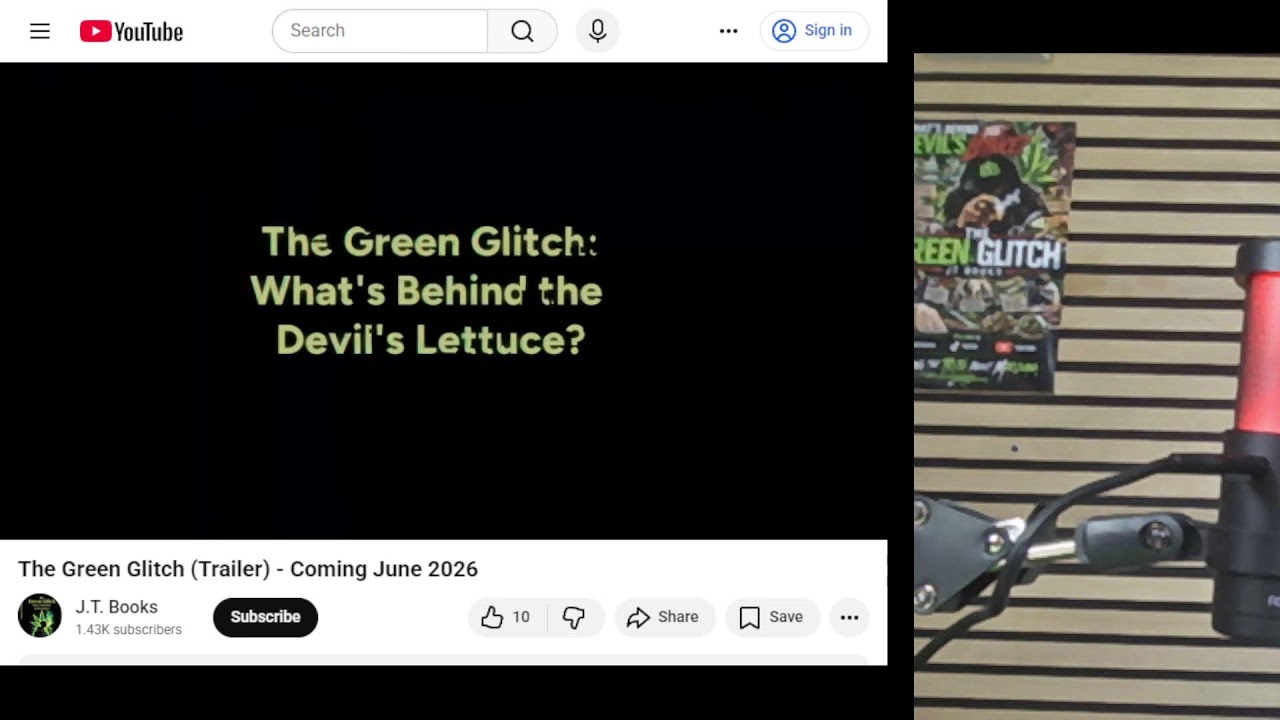
In this 56‑minute symposium recording, Jason Tremko – founder of the Green Glitch National Awareness and Education Initiative and a 20‑year Army veteran – outlines his anti‑marijuana advocacy campaign. He promotes his documentary film and companion book, explains the initiative’s goal to develop a prevention‑focused textbook for schools, and seeks community partners for theater screenings, symposiums, and film‑festival exposure. Tremko presents a series of regional statistics from Western North Carolina (e.g., 521 overdose calls in Asheville in 2025, 44 % of marijuana users progressing to harder drugs, 70 % national support for legalization) to argue that modern, high‑potency cannabis (60‑90 % THC) is a gateway to opioid and fentanyl abuse, increased mortality, and mental‑health complications. He highlights the prevalence of illicit vape cartridges (54‑95 % unapproved), the FDA’s low approval rate (30 of 21.6 million applications), and the rise of counterfeit fentanyl‑laden pills. Tremko stresses that legalization does not equal safety, cites youth exposure as early as 8‑11 years old, and links cannabis use to relapse in treatment programs and worsening of psychiatric medication outcomes. He frames marijuana as a “green glitch” – an under‑the‑surface problem hidden by industry narratives, spiritual/historical associations with witchcraft, and a “devil’s lettuce” motif. The talk concludes with a call for leaders, educators, and community members to demand truthful discourse, support screenings, and push policy change, including participation in the Whistleblower Film Festival in Washington, D.C.
Chapters
Alright, how's everybody doing today? Hope y'all are doing pretty good. So, pretty pumped up, guys. I bring some exciting news today. We had our very first ever symposium last night, and you guys, it's just the start, I believe. Some good opportunities popping up, and I figured we'd kind of, you know, go over some of the stuff that I talked about in person last night at my first book signing and, you know, screening of the film and stuff. So with that being said, if you haven't had a chance to check out my film, look at the description and it actually has the links for Apple TV and for YouTube Movies. And I didn't put the link in there for Google, but you can look in Google and there's also a link on there. I think it's like $2.99 to stream the film, so it's probably a good investment of your time. It's about 56 minutes long and it'll, it'll give you a lot of stuff to think about, guys. So, you know, first thing I wanted to ask y'all this morning is what comes to mind when you think about the word marijuana? I'm gonna give you a second just to think about that. Okay, so, you know, I asked that question last night at my symposium and I had some very interesting, interesting feedbacks, you know, it's kind of across the board, you know, but I want y'all to kind of think about that and ponder that idea as we, as we move forward here. All right, so I'm gonna tell you guys a little bit about my mission. What I'm trying to do. So I am the founder of the Green Glitch National Awareness and Education Initiative, and that's what I'm trying to do. I'm trying to take this thing to a national level, and we're working on putting together a textbook that we can start, you know, providing to education systems, you know, more to take more of a prevention role because I'm an educator and I see a major need for prevention. You know, and I'm not talking about the kind where, you know, once a year we get all the students together and we just have a quick little meeting and talk about, hey, don't do drugs, say no to drugs. No, because that, that's not working. I'm sorry, but it's not working. We need a deeper conversation. It needs to be more internal in the classrooms. It needs to be part of the curriculum, in my opinion. So that's, that's one area that I'm focusing on and pushing for. I'm currently seeking out grant money to be able to book out movie theaters in your area. You know, if you're interested in having me come out to your area, if you got a local theater, you know, talk to them, ask them, hey, would you guys be willing to screen the, the Green Glitch: What's Behind the Devil's Lettuce? And then we can have a discussion after and we make a lot of fun, you know, we do giveaways and stuff like that. You know, we can bring in, you know, local law enforcement or speakers, you know, in addition to me that can discuss local stats in your area, you know, raise awareness and things like that. That's what we're, that's what we're trying to do, guys. So I'm working on that. Like I said, I'm trying to publish the textbooks and, you know, hopefully be able to get into some schools and conduct some symposiums and things like that. So even college campuses, if you got connections in there, reach out to me. Film festivals, you know, I'm working a lot of film festivals and, you know, what a great opportunity to eventually, hopefully get, you know, the film industry to support this, you know, because right now they're pretty much the exact opposite of awareness and the opposite of doing the right thing for our kids. But, you know, hopefully we can work together and fix that. So I'm gonna give you guys a couple stats, you know, I'm out here in Western North Carolina and in Asheville alone, okay, the police department responded to 521 overdoses, overdose-related calls just last year. Okay, and that's very interesting in 2025. You know, some of the most, you know, common causes of fatal overdoses right now in our area are methamphetamines and fentanyl related, you know, and what's going on, you know, dealers are taking fentanyl and, you know, they're cheap products, you know, so they take these cheap products and they're working with that stuff to get it out there because it sells, you know, gives people the high they're looking for. And, you know, a lot of people, they're wanting the highest dosage of something that they can get, you know. It's a sad situation, but people are paying for it and the dealers are entertaining their needs, you know. So eventually people just keep seeking that high over and over and over again until it eventually leads them to where they overdose. It's a pretty sad situation. Jackson County is experiencing drug-related mortality rates that are actually outpacing the rest of the state of North Carolina. I have my opinion on why that is. I think it has to do a lot with what we're seeing in Cherokee. We have the, the one of the largest dispensaries in the Southeast United States, and it's completely legal for recreational, so There's people all across the state, you know, that are coming up here and purchasing their marijuana. You know, you can't convince me that dealers aren't gonna pick that stuff up and go sell it. You know, you just can't convince me of that. So, you know, where there's a need, there's gonna be demand. People are gonna supply it. So, and in regards to the The overdoses and the drug mortality rates and things like that, we already know, 'cause I provided y'all the statistics before. 44% of people who use marijuana will advance onto harder drugs. So more people wanting to get weed equals a higher conversion rate on people that advance to harder drugs, which advances to higher mortality rates. So once again, 70% of people in the United States of America are supporting the legalization of marijuana, okay? And in my opinion, that's what you're gonna get. That's the results you're gonna get, okay? And the thing is, it doesn't happen fast. So people are like, "Oh, you know, everything's fine. Give it some time." You know, in my opinion, give it some time and you're gonna see higher rates, more mortality rates. You're gonna see more and more overdose-related calls. That's just my opinion, you know, um, with the data and the research that I've done, you know, I'm just not gonna be convinced otherwise. So all I could do is tell you and share my information. You got to decide for yourself. Um, okay, let's look at some more stats. All right, so from North Carolina in the past 2020, or in the past 20 years, there was more than 44,500, almost 45,000 North Carolinians who lost their life to a drug overdose. Okay, now that's ones who lost their life. I want you to think about how many had an overdose but didn't lose their life. Okay, then I want you to think about how many of them who, who went to rehab programs— some of them were forced to go to rehab programs, court-ordered. Um, but I want you to think about how many of them relapsed, okay, and went right back into the same lifestyle. That's a scary thing to think about, okay? Because like I wrote about in my book, almost half of people who used treatment programs for marijuana usage ended up relapsing the very first time that marijuana was offered to them. So, you know, people who say marijuana is not addictive, I'm sorry, you're lying to yourself, okay? It is addictive. And you also need to understand it's not the same marijuana that it was 20, 30, 40 years ago. Modern marijuana potency is 60, 70, 80, 90% THC strength, whereas even in the '90s you were talking about maybe 15, 20, 25% at the highest. And, you know, a lot of people are starting with these high potency products. Imagine starting out 90% strength. I was talking to somebody yesterday who was telling me, you know, one, one thing that these kids are hitting now at 90% strength That would be like a whole bag of marijuana, you know, back in the '90s, you know, like you would have to smoke a whole bag to get the high that these kids are getting in a couple puffs. So, you know, people are saying, well, cannabinoid hyperemesis syndrome is not a thing. Okay, well, they didn't have high potency products in their system. So, you know, maybe you didn't get sick back in the day when you were smoking 5-10% strength, but now you're smoking 70, 80, 90% every single day, it's gonna have a different effect on your body, you know. So we got to start being honest here. All right. Um, but yeah, so think about those stats. That's some stuff to think about big time. You know, North Carolina, last year it was about an average of 8 people per day died from a drug overdose. And again, I want you to think about how many people didn't die. Think about how many lives are affected. Think about how many homes are affected. Think about how many kids had to see their parents overdose, or how many kids overdosed. I was talking to a nurse yesterday, um, you know, I always, always talk about how marijuana starts at 10, 11 years old. This nurse had a conversation with me. They're seeing kids 8, 9, 8 years old having overdoses in hospitals, and I don't understand how this isn't making national national news. It's unbelievable. Not only that, they're seeing 8 and 9-year-olds that are having alcohol poisoning. It's just like, what are we doing? You know, I don't understand. So, but yet 70% of people want to, want to legalize marijuana and push for this lifestyle. I'm sorry, I can't support that. Okay, interesting fact too. 1 out of 4 people in North Carolina who had— who died from an overdose had a mental health disorder. Okay, like depression, anxiety, bipolar. So I want you to think about why that is. Okay, if you read my book or watch my film, I do a whole discussion on the book and film about the negative effects of stacking or using high-potency marijuana products with mental health products, okay? You know, a lot of times parents have no clue. The facts are 60% of parents have no clue that their kids are using marijuana, okay? So they take their kid to the doc, they get them on a medication, the kid doesn't admit to the fact that they've been smoking marijuana— ask me how I know, okay? And then what happens is they end up getting worse, okay? Because you go to Google and just Google it, it'll tell you, you know, stacking marijuana, especially high-potency products with mental health medication can often make symptoms worse. Now, I'm a 20-year Army veteran. Okay, I want you to think about this. How many veterans out there are taking mental health medication for PTSD and things like that? Also, we are one of the highest— it's dropped a little bit, which I'm thankful for, you know, probably because a lot of the, you know, combat vets are way down the road now, you know. So maybe we're recovering a little bit from PTSD and things, which is good. Okay, but last time I checked, we are number 2 for the highest suicide rates. We were number 1 for a while, you know. I think we're kind of back and forth from number 2 to number 1, but either way, number 2 is not good, you know. And we're taking medications, you know, VA's prescribing medications and all this stuff, which is good, okay. But if you're taking marijuana, high potency products with those medications that says right on the side effects that it can cause suicidal thoughts, and now you're stacking it with high-potency products that could increase those thoughts even worse, what do you think is going to happen? Right? So, you know, "Well, it helps me. It makes me feel better. It's the only way I can sleep." That right there is all you need to know about the direction that you're heading. That means you're becoming dependent upon that product. Okay? But again, you know, all I can do is tell you. You gotta believe in it yourself. Um, alright, more stats. This is interesting. Okay, North Carolina typically seizes around 77,000 counterfeit pills, um, and 80% of them contain illicit products like fentanyl. Okay, um, I went online yesterday just to research it. Okay, you can find a pill press for $100 That's the cheapest ones they make. Okay, some are thousands and thousands of dollars. But basically, you know, people can go online and they make this stuff. They get counterfeit pills and they make counterfeit pills with synthetic chemicals. They put fentanyl and things like that into it, into these replica molds that look like pills, like Tylenol or something like that. So, you know, this is a big thing. So Well, you're saying, well, that's not marijuana. Well, again, almost half of medic— or excuse me, almost half of marijuana users will advance to harder drugs. These harder drugs started for a reason, okay? I want you to think about that. I don't think people just wake up one day and say, I'm gonna start using fentanyl, okay? It starts with taking a little puff puff. It builds your confidence up, okay? Um, it's kind of like self-mutilation, you know. I can tell you a lot of A lot of people self-mutilate these days. A lot of girls. I saw that as a recruiter. Yeah, you go ask any military recruiter how much self-mutilation they see. They're going to tell you they see a lot coming from the modern kids, the modern generation. And every time they put a little, you know, cut on their arm, okay, in my opinion, it's building their confidence up to where one day they may actually attempt to commit suicide. Okay, a lot of people I know that attempted suicide have self-mutilation scars on their arm. I don't think you just wake up one day and say, I'm gonna cut my wrist. Okay, I'm sorry. I think you, you probably started with self-mutilation. Okay, one thing leads to another. I'm not saying it's like that with everything, every situation. Okay, but these are patterns that I pay attention to. Okay, and it's the same thing with marijuana. Okay, marijuana is a pattern. It's a gateway drug. It leads into bigger things. Okay, so something to think about. All right, let's get the next stat here. Okay, okay, marijuana is a gateway drug. Okay, like I said, the, the industry knows that. Okay, they know that and they're taking advantage of it. They'd be stupid not to, let's be honest here. And they're winning by normalizing cannabis use through misinformation. Okay, they're making us, you know, think pretty much the only thing you hear about is all the positives, you know, medical, medical use and all this kind of stuff, right? But they're not talking about the fact that almost half of medical marijuana users are meeting the medical definitions and thresholds for cannabis use disorder. All right, so they're not talking about that. They're just saying, oh, medical marijuana is great, you know, we're celebrating because this state finally legalized it. You know, think about this: if you got to work so hard to legalize something, Wouldn't that be a red flag? Just saying. Okay, wouldn't that be a red flag for a reason? Okay. Um, when something is seen as normal, questions stop being asked, and that's what the industry is counting on. They don't want you to ask questions, okay? They want you to just— hey, this is normal. Kind of like alcohol, right? I walk into a grocery store, a gas station, I'll probably have to walk by 36 freezers to find my Mountain Dew. That, you know, 35 freezers of alcohol to find one, you know, one freezer that's got some Pepsis and Mountain Dew in it. Okay, it's the same thing at a grocery store. They got a whole section dedicated, usually right by the front door, in most of the stores around here. I walk in, there's a bunch of, you know, fridges full of alcohol. Everybody goes in there, buys it, nobody asks questions. Okay, but yet it is proven and known to cause 7 types of cancer. Nobody questions it because it's been around since the beginning of time. The marijuana industry, in my opinion, is trying to make it to where it was the same situation. We don't question it. So something to think about. Remember, only 10% of an iceberg is seen. Okay, so the other 90% is what I focus on. Okay, I'm not here to demonize people, but I'm here to speak truth. All right. Currently 24 states and Washington, D.C. have legalized recreational weed. I'm hoping my film will get into the Whistleblower Film Festival in Washington, D.C. I'm supposed to find out by the 10th of June, so here in a couple days. If I made it in, then I'll be traveling down to Washington, D.C. to play my film, The Green Glitch, and have these discussions, you know, with politicians. So maybe this thing will turn into something and have some impact. In a much bigger level, hopefully. All right. Okay. Public perception has changed due to legalization. Okay. We need to remember that just because something is legal does not mean that it is safe, y'all. Okay. People, people like to think that way. Well, it's legal. Well, yeah, just because it's legal doesn't mean it's safe. I'm sorry about that, but it's, it's a reality, right? Need to think about that, especially when you're talking about your kids who have a 44% chance at advancing on to a harder drug. Is that something that you really want to chance? Okay, when we talk about marijuana, we need to understand that marijuana is not the same product as years ago. You can't just say, "Oh, that's marijuana, man. I'm just smoking marijuana." No, you need to know the terminology. Okay, you need to say, "I'm smoking a cart." Okay, I'm smoking shattering dabs, right? Um, these things are high-potency products. There's a complete different substance in it, you know, Delta 8, 9, 10, completely different product than marijuana itself. Okay, it just comes from the extracts and things of the marijuana plants. Okay, there's synthetic drugs out there, you know, synthetic forms of marijuana, so it's not the same thing. So do your research. You know, learn what these products are because you can't just say, "I'm smoking marijuana." No, it's completely different products these days. Now, if you are smoking the actual herb, then I would tell you, I would rather you do that than smoke, you know, a lot of these generic forms, you know, synthetics and things. I still don't like it. I think, you know, the fact is, you know, again, 44%. I know a lot of people that started out in the '80s And, you know, I was born in the '80s, I was a child of the '80s, but I know people that used in the '80s who advanced on to harder drugs. You know, the stats don't lie. Even if you're smoking the generic stuff, okay? And I know what a lot of people are gonna say, they're gonna say, "Well, kids aren't supposed to be buying it, it's illegal for them to buy it." It is, okay? But if it is illegal, then why— why, if you ask any kid, Just go up to any kid in your high school that you— that trusts you, okay, and ask them, hey, how many people in your school smoke marijuana? Just give me a number straight off the top of your head. What do you think? Or vape at school, okay? Most of the schools that I've asked kids that to, they'll tell me 60%, 70%, 75%, okay? So to believe that, you know, vape shops and dealers and things like that would not sell to minors— I had somebody literally tell me that there's no way a drug dealer would sell you know, products to a minor. I was just like, oh my Lord. Okay, my daughter was addicted to marijuana. She's like, these people are crazy. Because if you believe that, I'm sorry, you're, you're delusional. Okay, because they are doing it. Okay, and these kids are getting it from somewhere. 60 to 70% of kids are smoking in school. They're getting it from somewhere, people. All right, so you gotta get concerned about it. If you're gonna be part of the solution, so, you know, you need to put the pressure on your community leaders to fix things and to make change. Okay, because what they're doing is not working. I'm sorry. It's not working. All right, and you're gonna see more and more of these problems advancing in the future. Okay, because we're playing patty cake with it. If the kids can't trust somebody to talk to, it's not gonna work, okay? They're not going to talk to the principal. They're not going to talk to the counselors, okay? Because they don't know them. They don't see them every day, okay? They're going to talk to people that they can trust. They're going to talk to people that will listen to them and actually try to help them, okay? A lot of people, you have to, you have to work them up to have enough courage to be able to go talk to a counselor, y'all. You know, so if you just expect them to go in there and, "I want to see the counselor because I'm addicted to marijuana and I'm 13 years old," they're not going to. And you're lying to yourself if you believe that they are. So these are things that, that very much concern me. You know, just because something's been the way it's been for years, or the, you know, policies or laws are the way they are, doesn't mean that it's working. Something we need to think about. These are conversations I'm going to hopefully have in Washington, DC at the Whistleblower Festival. I'm praying I get into that festival.
Okay.
The goal of my work is to educate and inform people. Okay, not to condemn people. Some people might get condemned. They may feel frustrated about what I talk about. Oh well. Sorry, you know, I'm literally speaking facts. That's all, all right? I have hundreds of references. I mean, like, the last, like, 20 pages or whatever it is of my book is nothing but references. Page starting at 131 all the way to, like, 146 is nothing but references. Hundreds of references, guys, that are cited works from reliable sources. So, you know, I'm not making this stuff up. I'm literally just speaking facts. So if you find yourself getting upset about facts and reference works from scholarly references, scholarly sources, you might need to think about a few things. Just being honest with you, okay? Because the problem might not be me, problem might be you. Just being real, okay? I say that because I love you, all right? Um, the facts are, okay, 54 to 95% Uh, vapes and carts on the market are illicit. They're illicit. Okay, the FDA, you already know the stats, I talked about this a lot. Okay, they received 21.6 million applications in 4 years. Okay, between 2019 and 2024, uh, the end of 2019, so basically 4 years, um, only approved 30 products. And the ones that they rejected, they only reviewed 1.2 million of them. The ones they rejected, most of them came back failed for safety. Okay, but yet here they are still marketing this stuff. It's in stores everywhere, vape shops opening all over the place. Time to wake up, people. I know, I know a 16-year-old kid who literally was diagnosed with lung cancer, fighting right now for lung cancer. 16 years old, been smoking since he was 11. That's a normal thing nowadays because we allow it. We allow it to be normal. Okay, moving on here. Okay, what is a glitch? Okay, why do I call it a green glitch? Well, the glitch is defined as an unexpected problem hidden beneath the surface. And again, you know, 90% of the iceberg is not seen. I don't understand. It's one con— it's one, it's one thing, one concept that I just do not understand with leadership on all levels. You know, why are you scared to talk about the problems? Why do we try to cover it up? Why are we so worried about politics? Why are we so worried? Look, speak truth, guys. You know, I'm a believer and, and I say it all the time, okay? Light will always outshine darkness. So why are you scared to speak up? Okay, 90% of the iceberg is under the water, it's in the dark. Bring it to the light because then you want— then you can actually fix something, right? Why are we scared to actually fix something? You know how many times I get told, oh, it's always been that way? Okay, that doesn't impress me. Okay, what impresses me is that you can take something that's always been that way and make it better. You should be thinking about how I can make it better. So look, leaders, get a spine, guys. Get a spine, okay? Learn to fight. Speak for truth, okay? I'm not scared to say something that I wouldn't stand before the President of the United States and say, okay? More importantly, I'm not going to stand before God without being willing to say it, okay? Because truth is truth. Grow a spine, y'all. Grow a spine. I know it's a little crazy this time, I'm going a little different, okay? But it's, it's a reality, stuff we need to talk about. Um, let's keep on going here. Okay, uh, in America currently, less attention is given to unintended consequences And I don't understand why, okay? If something ain't work— working, why are we scared to say that it's not working? Okay, let's just— let's be honest, okay? You know, the Smoky Mountain Dispensary, I pick on them a lot, and that's because I live close, you know, close to them, and I'm seeing the results of what they're doing. You know, they, they started their business and in 4 and a half months they went from, oh yeah, we're a medical-only facility, in 4 and a half months it became a recreational facility. And now people from all around this country and the Southeast are, are getting products from there. Okay, I have a little beach house, you know, that I like to go, you know, visit every once in a while down on the coast. And I got a neighbor down there, you know, and they're like, hey man, can you bring me some weed from the dispensary? Like, dude, you're 6 hours away. So, and people know that it's open, they know where to get their stuff. So I'm sorry, guys, you can't tell me that it's— there's anything good coming from it. But they're projected to be a billion-dollar industry within the next 5 years. Billion dollar. Okay, if that doesn't sound like an addiction industry, I don't know what is. Anyway, They knew the plan. They knew the plan before they, before they even opened the doors. All they're doing is changing the narrative, guys. And you have to be careful because, you know, if you're not careful, you'll get caught up in the narrative that, oh, it's just marijuana, you know, it's just a natural herb, you know. I had somebody tell me that, like, God created everything. He created all the plants and the animals. I said, yeah, okay, but he also kicked Adam and Eve out of the garden because he told them not to eat from a certain tree, okay? He kicked them out, and then when he kicked them out of the Garden of Eden, he actually cursed the land, okay? So there's a reason it's called the Devil's lettuce, just saying, all right? Um, people get so mad about it too, you know? I'm like, People don't get so mad about something that they're that passionate about. They get mad if you talk about marijuana. It's a sensitive spot for a reason. If something you're that passionate about, it kind of sounds like addiction. I'm just saying. If I'm gonna get so mad about something, I must use it a lot. Just saying. I must really love it. I don't hear, I don't hear people who drink alcohol every day get mad when somebody talks about, oh, you shouldn't drink alcohol. All right, I think marijuana has a higher control over people than, you know, alcohol does for sure. I don't know, this is just the way my mind operates, y'all. Okay, it might make some people mad, but oh well. I believe there's a dark spiritual history related to marijuana. Okay, it was used for witchcraft. I wrote a whole chapter about it. Okay, and this all research-based, fact-based. It was used for witchcraft. Okay, so why would I want to participate in anything that was used for witchcraft? Okay, I'm a Christian. I'm a believer. I'm not gonna go use marijuana, okay? It's tied to a dark historical past, okay? Um, just like God is the same yesterday, today, and forever, okay, what makes us think the devil's any different, okay? If anything, the devil is going to be slicker. He's going to change, okay? He's not going to be the same today that he was yesterday. The devil's going to be different, okay? There's a saying, the devil is in the details. Um, 90% of the iceberg is under the water. That's the details, okay? The stuff that I'm talking about, all right? When we start having true conversations and we start looking at facts, we start looking at all the statistics and things, that's when the details are going to be exposed, okay? All right, let me see a couple more things I wanted to talk to y'all about. I think that actually that's probably about it. So, um, that being said, I'm gonna show y'all a trailer of my film. Okay, you know, if you haven't seen it yet, now's a chance for you to check it out. So let's pop that thing up here real quick. This is, uh, Green Glitch. If this isn't the marijuana of the '60s and '70s, then why are we still treating it like it is.
This isn't the marijuana you remember. For decades, marijuana carried a reputation: natural, harmless, even peaceful. But somewhere along the way, it changed. Stronger, faster, engineered, What if what we're calling marijuana today isn't marijuana at all? In the 1960s and '70s, marijuana averaged between 1% and 3% THC. Today, concentrates and cartridges can reach 90%. This isn't evolution, it's engineering.
People think it's gonna be a solution when it's gonna be the problem. And a lot of people will never realize that it's the problem.
I was in 7th grade when somebody offered me a vape.
When 70% of the population encourages the legalization of marijuana, why would kids have anything to worry about?
If you were like me, I didn't like doing anything other than marijuana. All I wanted to do, like, my parents would go do something fun, they would go get breakfast, and I wanted to stay home so I could hide in my room and smoke. Smoke. Like, that's what I wanted to do.
26.6 million applications, 1.2 million reviewed, 30 approved. And that's not a system saying everything is fine. That's a system quietly telling us something is very wrong. In reality, the signs of cannabis addiction are all around us. They're not hidden in dark alleys or dramatic breakdowns. They're woven into everyday conversations, routines, and excuses. All we have to do is slow down, listen, and ask the right questions.
If 70% of people in the United States considered this reality, we might actually be able to stop a child from becoming addicted to marijuana. All right, so that was, uh, the Green Glitch trailer. And, uh, let me get myself back on the screen here. Okay, so interesting, interesting subject, and we need to be talking about it, y'all, before things get even more out of control. In this country. Sorry to keep moving that around. All right, so I'm actually going to be having the young lady that was on there talking about how she would hide in her room and smoke— I'm going to be having her on here shortly to be able to answer some questions. And, uh, you know, it's real talk, y'all. So that being said, If you haven't checked out that film, okay, go check it out. It's 56 minutes long. The link is in the description. You know, we need to share this message, guys. And also, the book is available, okay? The Green Glitch: What's Behind the Devil's Lettuce. Go check it out, okay? You can order it on Amazon. It's $16.95. Leave a review, okay? That's the most important thing, guys. Leave a review, because if you don't leave a review it doesn't pick up in the algorithm, you know, and, uh, it doesn't grow from there. Okay, so God bless y'all. It's good seeing you. Happy Saturday.
More from Jason




Two sides on THC! Read these comments from my supporters! #parenting #america #drugprevention