
Ep. 130- Extreme Hospitality with GoBundance Member Josh McCallen
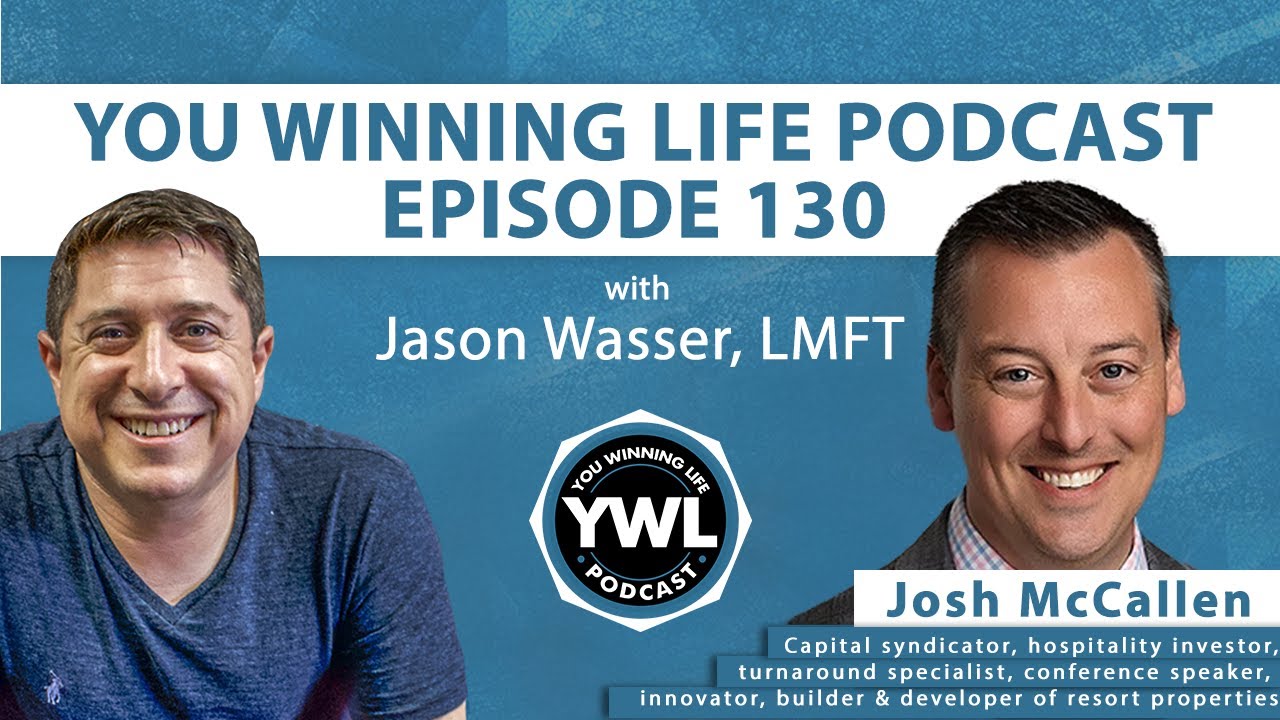
In this episode of the GoBundance podcast, host (Speaker B) interviews hospitality entrepreneur and GoBundance member Josh McCallen. The conversation opens with light banter before diving into the culture and entry requirements of the GoBundance mastermind, emphasizing a $1 million net‑worth minimum, radical accountability, and a community that encourages vulnerability and personal growth. McCallen outlines his unconventional path from a welfare‑raised youth to a multi‑hotel developer: early recruiting work, a stint running a study‑abroad program in a historic Alpine monastery, a pivot to lending to embed himself in the building community, and a breakthrough opportunity to convert a dilapidated beach property into a boutique hotel. He describes the evolution of his vertically integrated operation—300+ investors, a design‑construction arm, and a management company—highlighting lessons about seasonality, the need for specialist operators, and the spiritual nature of hospitality. The bulk of the interview shifts to practical wealth‑building advice for listeners. McCallen critiques traditional Wall‑Street investing, promotes buying cash‑flow‑producing assets, and explains concepts such as house‑hacking, leveraging cheap government‑backed mortgages, using debt as an inflation hedge, and financing deals through self‑directed IRAs or 401(k) loans. He introduces “Accountable Equity,” a community‑driven platform that educates members on these tactics, and stresses mindset shifts inspired by Robert Kiyosaki’s “Rich Dad Poor Dad.” The discussion also touches on family dynamics, the importance of health and mental resilience, and the broader cultural shift in entrepreneurial circles toward holistic well‑being. Throughout, McCallen balances enthusiastic storytelling with cautionary notes about risk, liquidity, and the need for personal fit before pursuing aggressive real‑estate strategies.
Chapters
I'm not sure if I've been on his show.
Apparently you have.
Oh, sorry about that, but it's a good bio that they wrote for you. Oh good.
Yeah, I mean, so I was just gonna like, you know, maybe, maybe text that. Might need to be updated, but yeah.
Would you mind texting it?
Yeah, you'll see if you like it. So, well, clearly we've already started. Everybody, welcome back to another episode. Yeah, you know the name. I'm, I'm not even gonna write But this is really cool. We're at a conference. It is called GoBundance.
That's right.
This is day 2 or 3 of me interviewing some really amazing— I'm a guest. I'm interviewing people who are members of this community. It's been incredible to—
Have you been able to go to some of the events and presentations?
Oh my goodness.
What stands out about being part of these masterminds to you?
Okay, so I've done different types of masterminds. I haven't even introduced you yet. We're going to get into that in a second. This is how— this is why I love what we're doing in this community of podcasting and getting to know people too.
But look at it.
Do you want to do— I'm gonna do this. I'm gonna introduce you, and then we're gonna jump right back. Whatever you want to do.
I'm very flexible.
I know.
I used to be flexible physically. Now I'm just mentally flexible.
And this is all gonna stay in.
I think it's great. Why not?
Guys and everybody, I'm hanging out with Josh McCallen. So I mean, I can read his bio, but he's speaker, coach, builder, investor, development, resort properties, team leadership. Yada yada yada yada. Yeah, I don't want to minimize any of that. You're doing some, some— you're doing some big shit. Oh yeah, yeah, yeah.
Really great large, large team. 300 people work with us. We kind of focus on the capital group, which is all of us normal people investing in operations. We love operating beautiful resorts and hotels.
And that's where you started.
That is, that is how we became— you know, now we've created a vertically integrated group that, you know, The partners own the building, people from all over the country actually, 300+ people, and they invest and then we operate this for them. I always say, then we start working for you. And then we even had to build a design and construction management company with a few architects. We even had the luck of hiring a Disney Imagineer. Cool. Yeah, have you ever heard of that, what a Disney Imagineer is?
Yeah, yeah, they're doing some really sweet stuff behind the scenes.
They're the guys, yeah, what's his name, my boy Walt. Walt created that.
Your boy.
Walt.
He's a little stiff these days.
He's a very stiff guy now. But no, he created Imagineers, and I remember knowing what they were when I was a kid. Sure. And loving the idea that he took animators and engineers and pushed it together and created worlds, you know, physical worlds. But I've told people about this, and people are like, what's an Imagineer?
They clearly are not from Florida.
There's a lot of people who don't know what a Disney Imagineer is.
Not knowing what a café con leche is.
Caffè con lecce. I like that. Very nice.
Yeah. So when you're doing this, so walk me from beginning, right? And I know you asked me the question about what I got out, what am I getting out of this? And this community specifically is the culture, right? There's a really amazing culture here. I know there's bare minimum competencies to enter into this community. And some people can say, well, that's not fair. You know, I want— but, you know, there's 1,001 entrepreneur conferences one can go to, right? You can go to a 10X, you can go to anybody from anybody and anybody, right? There's people who are just throwing these on every weekend. But this requires a bare minimum competency, as I call it, to enter. I don't even know if I've discussed it on any of the other episodes with other guests, but I'd love to help you explain it to your audience if you want. Yeah, so, okay, so what are, what are the qualifications to be part of this community?
So we joined, I joined GoBundance, uh, in 2018, and there is, you do need to have a minimum of asset position of $1 million. So whether it be, you know, you have to have, you don't necessarily need to have $1 million cash, but whether it be your home, your business, maybe your 401k, you add it all up, you need to have $1 million in net worth, they call that. Then you have to be committed to doing the work. So this is a very intimidating group in some ways, right? Because you have to— they call it radical accountability or extreme accountability, they call it, because you have to show all of your business ventures, your wealth, your struggles.
You gotta get naked.
You gotta get naked. You gotta get very naked.
Yeah.
So anyway, there's a lot. I would say that you have to have the willingness to do that, humility. A certain amount of vulnerability. Yeah.
Do you think that's embedded specifically in this culture compared to other types of mastermind or mentorship communities?
You know, I'm in probably 3 types of organizations where you kind of get group peer-to-peer coaching, which I guess if you want to summarize the word mastermind— by the way, do you mind if I put a plug in?
Please.
If you guys are enjoying what we're talking about with GoBundance, my name is Josh McCallen, as we've shown. And of course, our big podcast, which we got to get you on on Capital Hacking, but if you ever wanted to look into things like GoBundance, we've created like an onboarding ramp. So if you just recognize or mention me or call me, I can help you get in, and we created like a subset of people within GoBundance. So it's just something we do with Capital Hacking. So basically—
So it's like a JV thing?
It's like a JV, like if you wanna join GoBundance, all you do is call me, we'll get you in, but then you're also part of an extra bonus package of ideas and— time and community. So basically a subset of a subset.
Got it, got it.
That's a little extra value.
Yeah, well, this is what I think is being added here, is not only are people investing and they're obviously paying to be here on top of their investment, but there is— I was, you know, sitting Friday night, last night, people are just tossing ideas around. Obviously people, they are with each other, but they're also like, you know, talking. I overheard there was a certain person that showed up this morning and who's part of this community apparently, and they were just talking all about their marriages at the table. And this is like This is a vulnerability. Very big person apparently in this community. And it was just like everybody was just sitting over breakfast talking about how do I make my marriages better?
Wow.
That doesn't happen everywhere.
I'm glad you brought that up. Yeah, we're getting used to it now, 4 years into it, you know. But you're right. This is, you know what, the name— I didn't name it, but I do appreciate that it's all about abundance here. So the theory, I think what you just said, the theory is if you're going to be talking about your marriage, There's this— there's— it's, it's the opposite of corporate America where it's like zero-sum, zero-sum game. This is clearly all boats float in a rising tide.
Yeah, yeah, yeah. And it can't— then that's why my podcast, when it came out of being a therapist, when I started my journey into this, I never bought into this entrepreneur— that's for the people that have all these things, and I'm the scholarship kid and I'm only a therapist, right? The only and the just, right? All those things. Until I went to an entrepreneurship conference that my buddy took 2.5 to 3 years to convince me to go. Really? I'm not an entrepreneur. Well, I don't have a business. I'm a private practice, right? And I, and I have a third-generation family furniture business, which is—
oh, do you really?
Very— what they're doing, wonderful.
Wait, what kind of furniture? I might need some.
There you go. So it's anything commercial or residential? They do for both, but it's mid to high-end.
Nice. Do they do hotels?
They could.
Well, let's talk to them. Where's headquarters?
Fort Lauderdale— Hallandale Beach.
See, see, getting some deals done right now, all GoFundMe style.
So right now I decided not to join the business, and you know, I see the difficulties and I love my family, but I also know my emotional side. And I know you partner with your wife, right? And I do in one of the businesses. And I don't know, like, I mean, maybe there's so many different topics we can get into, right? But we can talk about like family dynamics and working with, with, with partners. We can talk about partnership with all of that. Yeah.
So I'm the guy with the 10 kids, 6 ladies, 4 guys. So relationships, or as my wife used to say, we're basically in the people business.
You are. You just created basically a little football team or whatever. Yeah.
So, so yeah, I mean, you should take it seriously. If you were ever invited into a family business, you should take that very seriously. I think you should go into it head, eyes wide open or not go into it.
Right.
I like the way you went about this.
Yeah. Yeah, I'd rather have a relationship with them. And I like coaching them from the outside and giving advice and guidance from the things that I'm learning from this community because they don't have the time.
That's right.
So, and I think that's a really important factor. But I think that this idea of personal development has finally, finally— right, the '80s and '90s, Wolf of Wall Street, that was right, all that, that all this stuff, the, you know, the Wall Street movies, right? They're all— there's not about personal development, it was about sales. But it wasn't about inner growth, it wasn't about your relationships, it wasn't about, it was go out to the conferences and do all the crazy stuff. Now you go to the conferences to talk about how you want to make your marriage in a better way more crazy, and you want your kids to be in a better way more crazy, right? So I feel like this tide has shifted. So since your journeying, right, so you started off working in the hotel industry.
Well, would you like me to share the journey? The journey, I'll summarize it briefly. You know, grew up in welfare, Nice, nice mom, brother, dad left. And so I enjoy work. I mean, I'll work all day. I enjoy it. Been doing it since I was 12. But fast forward, we get married young. My beautiful wife Melanie. We have a child by 24. And now we're, you know, happily married for almost 25 years. 10 kids, as I mentioned. But in the meantime, we had a couple really wonderful little surprise opportunity. So early on, I thought I was gonna be a teacher. I studied education, and then I came up with this idea, you know what, I'm going to go back to school for an MBA, but I'm not going to do it the normal way. I'm going to hack this. I'm going to be working for the university, getting my MBA for free. And so I took a recruiting job for colleges, and, and while I was doing that, I met a billionaire who was creating a college, a private school, and he knew me through people and gave me the job to be his first recruiter. I mean, I was only 25 years old. Hilarious that he did that, but we ended up doing a good job. We lived in Michigan for a period of time, and then from that, another cool situation was I got an opportunity to go to Europe and run a study abroad program for an American school. Well, that school had owned a 700-year-old monastery turned into a 4-star hotel in the foothills of the Alps. I mean, Maria von Trapp could have come around the corner singing, "The bells are alive." They are alive. I can't sing today. But so it was absolutely idyllic.
You're having a what?
Cough drops.
A Ricola.
Yeah, right. A Ricola. Right. Good. So that experience changed me in a lot of ways, right? It just opened the aperture and we could see life differently than just a career. We enjoyed living in the village of Europe, in this village. So 4 years later, the contract ends, I come back to the US, and I say, we're going to get into land development, honey. My wife's like, what the hell's the path into land development for you? I'm like, I don't know, I just feel absolutely drawn to it.
So you knew nothing about it at this point?
It's just like, I watched This Old House since 1979, so I knew a lot about building houses. No, I was handy, I was a handy kid, but no, I'm a tailor. Totally. Never had done a house build. So my theory was, well, I'll get— I'll become a lender. If you're a lender, you're around builders. If you're around builders, you can maybe network with them.
What years were this around?
2006.
Okay, so this is before like YouTube was really anything.
Oh yeah, probably, right? So like Facebook was out there.
Facebook was out, but like where were you gathering the information? Oh, uh, old school books and—
oh, how did I know how to become a land developer? I, uh, there's too much to go into there. I didn't actually know how to become a land developer. I knew where they probably would hang out.
Okay, well, that seems to be the key message. The It was Ryan, it was going to, yeah, it was like Ryan Seacrest.
Yeah, everybody's been doing that. Ryan Seacrest.
There's a YouTube video of him like running through the streets and he's going to the subway and it's like, oh, it's Ryan Seacrest. He's like, no, it's Sirhan.
Oh, I did not know that.
It was like 2 weeks ago. So maybe everybody saw that, that's why. But right, he was talking about, he's like, well, you go to where you go to the, you don't live in that neighborhood yet, but you go and work out in the gym of the neighborhood that you want to work out in. And then you meet people and you network with them.
So, well, the breakthrough was, um, fast forward about 6 months of networking. I'm the lender trying to help people buy houses in neighborhoods. So anyway, I meet neighborhood people, but one, one developer likes me but couldn't find a purpose for me, so he recommends me to another one. Now all of a sudden, once you get one referral, you have a little bit of relationship capital there. So you get 2 down the line and it's everybody thinks they all know you, which is great. And eventually I stumble into an office that's a very wealthy family, and they call those types of things family family offices where they own businesses. And they, uh, serendipity, they were building fancy, fancy beach houses for flips. I get an opportunity to be a project manager because they just were shorthanded. $55 million of houses later, 2 years later, the recession starts. And that thing he had bought, he had bought a hotel. And that's the pivotal part of my story. He had bought a hotel to tear down, to build more houses on the beach. And when the recession came, it didn't seem viable. Remember, there was just so many years there where there was such a soft market. People didn't— there weren't as many buyers. So why, why take a big risk, right? So by 2011, 2012, he and I are chatting, and I don't even work for him anymore because, you know, we hadn't built a house since 2008. And, uh, he says, what would you do with that dump we own on the beach? My family owns on the beach that is being rented out like a fleabag motel. I mean, it's just— nobody even knew he owned it other than us developer side. Anyway, so I said, you know what, you probably couldn't sell it for what you paid for it because you bought at the peak and now we're in the throw, uh, whatever, the trough. I said, why don't we renovate it, make it a boutique hotel instead of tearing it down, and use it as a franchise prototype and renovate beach hotels from here to Nantucket up in the Northeast? And he's like, I kind of dig that idea. So I wrote this little business plan and we've made this fancy hotel out of it. Long story short, it looked gorgeous, but, but was handed over to somebody else to run third-party management. And the beach hotels in the Northeast were super busy and popular for 3 months and empty for the rest of the year. So how do you manage that crazy transition of business? Imagine, you know, at one point when we grew the company, which we successfully gotten it to, we were having 500 staff for 3 months and 100 staff for the rest of the year. So it's, it's crazy.
So this is like what I envision the Catskills like.
Yes, it is like that.
Right. They all go up to the— it's your summer bungalow and then you're gone.
Yeah, exactly. It's fast forward.
We move in.
Exactly. The ghosts move in. So we, we, we were wrong. You couldn't. Build a boutique hotel and hand it over to Joe Schmo unless Joe Schmo was a specialist at this. But if they're a specialist at this type of radical seasonality at a high end, really good service, they probably own their own hotels and they're probably not doing a third party because it's a very small number of people in the world that can handle that kind of operations well. I mean, there's tons that can do it crappy. So we ended up having to let them go. I built— we built a management company to manage the things we were good at building. And got our teeth kicked in for another year. You know, I always say hospitality is a pretty spiritual experience, man. People either are in love with you after you do a good job or they want to hurt you.
Sure.
So that became a training program where we tried to teach that kind of intimacy to our teammates, how to treat people with dignity and respect everybody and love on them. And fast forward 6 years later, 5 years later, I have the chance to go off on my own, and when I go off on my own, I attract my wife into our world, and I ask her for, you know, basically creative support, and we start renovating world-class hotels. We have, in the last 4 years, we've bought 3, and we hope to buy 4 more this year.
Amazing. Amazing. So this is right, the— so many people think that all of this stuff is out of, you know, out of reach, right? And a lot of the people that I— the world that I come from is the W-2 world, right?
Absolutely.
And a lot of the themes this weekend that I've heard a lot is like, I heard one person like, oh, I just left my W-2 job, right, my last week, and now I'm fully like financial freedom. So, um, from your perspective, because you've been in this community for a while, when someone's saying like, I'm going to financial freedom, what is your—
oh, you know what, financial freedom is a lot less tricky than you think.
Yeah.
It just means that you keep your expenses below your non-work income. So if you, you know, some people can become financially free at 25 because they have no kids, no, no responsibilities, and they're only spending $3,000 a month on all in because they're frugal people. So then they really only need to hit $36,000 worth of passive income. But it has to— the theory of being financially free means that the money doesn't come from your hourly work. So anyway, There is a lot of that anti-W-2 stuff here, but, but never— if you're listening to this, don't worry about it. Yeah, no, there's a lot. I will say these kind of entrepreneur groups do bend a little heavily on not wanting you to have a W-2, or you— we cater to people that tend to want to get out of their job and not work.
Well, I think it's that, it's that transition from seeing that you're trading your time for money, right? Right. And then, and like, I know for me at a certain point I hit a threshold unless I'm doing massive large packages and more retreats and all those other things. And I do, right? It's— I am in South Florida. It happens to be, you know, I had this conversation with a therapist the other day where they, they— one of my associates on the West Coast of Florida, and the client kind of backed out last minute. And they're like, oh, I think it must be a financial thing. I'm like, no, it's not. But well, what do you mean? Like, of course, maybe they couldn't afford it. I'm like, I don't think that's— it's a— you think that? I don't think that. So I was like, there's— so there's these, these transitional mindsets that I think that I really do appreciate. So when I see this as a W-2 to financial freedom, I think it's just a mindset, right, that we're talking about of like, yes, you can do that, but are you using your W-2 to leverage?
No, I'm a big fan of W-2s, right? I mean, we hire a lot of great people, and I would love for people to, to be the best at what they're great at.
Exactly.
And if this is fulfilling for you, like, your work is obviously very fulfilling, there's no desire— there should probably not be a desire to let it go if you're great at it. Adding financial freedom on top of that only makes you more peaceful. About your, your state of life, right?
Right. And I'm wondering, like, so how would you— you know, you started from scratch. What would be some of the basic first steps? Because a lot of great questions, right? Because right now, like, so there's a bunch of us just talking about this in the hallway, and we know the market is insane right now. And apparently the best day to get into the market is yesterday, no matter how insane the market is. Apparently that's the consensus I'm getting here. Um, so I'm saying if someone has $50,000 Where do they go first? Right, right. And where would— I mean, or I would even ask you, what should someone be aiming to? That if they're gonna be doing any type of real estate, if we're just gonna stay in that world—
because I love this question, thank you for asking this—
where do they start? Because like, what's the bare minimum number to make a dent? That also— because you have to have the psychology of, okay, if I have some bill that shows up, I'm not gonna lose my crap over it that I now gave $25,000, $50,000, $100,000 somewhere. But where should someone be like, bare minimum threshold?
Okay, so there's a two-part answer here, but the, the fundamental question that you might want to challenge yourself as you're listening— Jenny, Bill, Sam, and Jonathan, if you're listening, you might want to ask yourself, do I own assets that are paying me? Now, these can be a lot of different things. A stock is typically not what we're talking about because those are not usually throwing off cash flow. So there's a book, Rich Dad Poor Dad, Robert Kiyosaki. He, he's been on our podcast. You'd love it. And he just simply explains that the wealthy families or anybody that has any wealth starts by buying assets. Now you're going to say, but I only have $50,000. How do I buy things? Now, now let's break it down. Do you want to be the person who's building the asset appreciation? Like, do you want to be the worker? Of buying the assets and doing something with them, or do you want to buy assets with someone else and be passive? Either way, please make buying assets your choice, your decision, because unless you don't want anything— like, if you don't want this passive income or financial freedom, then don't worry about it. Just keep doing what they tell you to on Wall Street, which is give us your money and shut the hell up. I always, I always joke, I have a whole story about Wall Street. I mean, the whole thing is you're supposed to give them all your money, you know, 401s and all And hold those fingers together. Hold your fingers and don't touch it. Isn't the number one rule, give us your money, dollar cost average, always buy into our Wall Street casino and don't touch it. But the market's up. Don't touch it. The market's down. Don't touch it. But I'm getting older. Don't touch it. I want to buy something. Don't touch it. Right. And then you get older and now you're 70 and you're like, you know what? I have $800,000 saved. They're like, well, great news, you can only live on the print— the interest on the principal, right? Because you can't touch it. Don't touch it. That's like the number one rule. Don't touch it. And then you're about to die. Don't touch it. So we're doing— we're talking about something different. We're talking about use that money to go buy things that start giving you money now. Yeah, either do it actively, like buy something that you could actually manage. You could buy— the two types of things to buy in this world are either a building that collects rent or a business that collects income, you know. And, and you— we don't want to break your mind and bend your brain too much, but there are ways to buy affordable businesses.
And my guess is there's a few episodes on your podcast.
Oh yeah.
Okay, just want to make sure that, like, you know, we don't want to leave them hanging.
Yeah, go to Capital Hacking, um, or, or we— what we do on a— we created this capital group now, and it's for the normal person. It's not for the billionaire family or even the $100 million family like I used to work for. It's for us, people that have made a little bit of money, put it off to the side. What do I do with it? And we call it Accountable Equity. That on there, we do a lot of education on this, and it's, it's mostly mindset. Do you want to just give it to the Wall Street and don't touch it and believe it's going to work out? It actually is interesting. Even if it works out for you, you still can't touch it. Remember, I keep saying that, but it's true. Like, so say it is going up, it's not like you're getting a check every week, right? You're— the $1,000 becomes $1,150, becomes $1,157. But you don't get a check, do you? No, nobody does. Even if you buy dividend stocks, they don't even want you to take it out. They want you to just keep rolling it back in.
Yeah. So I think that's automatically set on.
I know, right?
That's like the dividends will just buy automatically.
Yeah. So if you're, if you're listening, just take a deep breath and think, wait a second, if I would have put that $5,000, $10,000 into something, if me and my friends who are— I'm, you know, you're on Facebook, everybody. Your one friend is buying flip houses and you're like, man, I will never have the energy to do that, right? Well, you call that friend and say, listen, I got $25,000. What would happen if I loaned it to you? Oh, I'd give you 12% interest on it.
That's insane.
Or, or whatever, right? Why, why would you do that, friend? And he'd— that person will say, because if you loan me the $25,000 and then the bank loans me the $100,000, now I have $125,000, and now I don't have any money in the deal and I can flip as many houses as I can find. So I'm happy to give you a lot of interest. Or we could do it the other way, friend. This is ways for you to get involved. Friend could— friend is the person who's really active and hungry. You're either loaning them money out of your 401. By the way, it gets even weirder. You didn't realize you could be doing this right now, Billy and Jenny. You can be doing it out of your 401 without liquidating it. Nobody knows this. I was shocked. So a lot of our investors— you can, you can— no, it's not borrow from. There are— that's probably true too. There's something called self-directed IRA. So, you know, you don't pull it out and get taxed. There's custodians like Camaplan, one of my partners, and they'll— you move your money from Schwab, $25,000, right over to Camaplan. It's now at what is called a legal custodian of your— so no taxation, zero taxation happened because you didn't touch it.
It's moving linearly.
It's moving linear.
Yeah.
And then Billy, your buddy, says, "I'll borrow $25,000 from you at 12%." Crazy amount. The money then is paid from Billy back to that private self-directed IRA. Never to you. You actually never touch the money. You just make the decision. The money goes straight from your IRA, a wire goes out or a check goes to Billy. Billy uses it for 6 months, gives it back to you with interest, goes back in your IRA, and then you say, "Billy, I really like that. Let's do it again." So you just keep recycling the money. The $25,000 might hit $50,000, $60,000 over the 3 years just from letting Billy use it instead of Wall Street. And what I love about that is Billy is doing something. See, Wall Street's actually not, right? I mean, what happens— they're betting, they're betting, they're— you're buying, but you're buying like a tertiary piece of paper. And, you know, what is Amazon doing with our $1,000? Nothing. It might never even get to Amazon, right? It stays over here in the world of Wall Street, right? So, but what Billy is actually doing, something, creating something with it, right? And you might even be proud of Billy. You might be like, wow, I like what you did, Billy. Or what if it's $100,000? Now Billy's doing a small apartment building, like a 4, 4, and it's— he's beautifying a part of downtown and making you money.
Now you feel great twice because you have an investment, you have an emotional investment in that.
Yeah, that's what we do on scale. So we have 300 investors that do the same thing for us. So we just do it on massive scale.
So where should— which should someone put aside? Like, where— I mean, if they're like, right, you're my teachers, you're right, you're— let's say anybody even with like a license related, like even an accountant or somebody like— they have their family where they have their responsibilities, or they're new young professionals.
Oh, you mean how much do they have in reserve?
Like, what should they— yeah, what should they say? Like, you know, if I can allot within the next 24 months, right, to put aside to just start doing— yeah, you just said— where would you say like this is where it makes the most sense? You should obviously have X amount of dollars in savings to protect yourself for X amount of months to, what would those numbers look like?
Well, I've never really, you know, I'm not actually a financial planner. We're actually developers that people partner with. So we're, we're not here to help people figure out their own plan. We always ask them, does this fit your plan? So I'm not the best advisor on that. But if I only had $1,000 extra a month, the best, okay, I would probably shift my mind, shift my mindset. Like I did when I was 24, and I went out and bought a small duplex in an off, off the good track, not on the good side of the tracks house. I lived in one half. So if we're talking about somebody who has $1,000 a month, then they should start with house hacking.
Okay.
House hacking means you buy either a big, big house and rent out 3 rooms because you're still single, and those 3 rooms pay your entire mortgage and your electric bill. So now you live for free. Now you're putting away $15,000 in your first year. Or you buy a duplex where there's two front doors and you live for free. So my wife and I, I talked her into that at 24 and she was like, what the hell? And we never had bills. So quickly with the money we were making, which was not much, I was a recruiter, but now it all was going into savings. So within a year as a 24-year-old family, we had like $10,000, $15,000 in savings.
Do you think that approach still applies now with today's economy? With what's going on with the market?
Two reasons it does.
Okay.
It depends. Back in the day, house hacking meant you bought a duplex, right?
The reason it's way less than now, it doesn't matter.
You know why it doesn't matter? Because the biggest thing about assets is you want to buy an asset that the government will give you the money for it. And government-backed mortgages are cheap. I don't care if they go up by another point. I don't care if they go up by 2 percentage points. Don't fucking matter.
Sorry.
So, so it's still cheap. Oh, and then by the way, at the end of the year, it comes off your taxes anyway. It's unbelievable. So go get the best loan you can get. If you have a W-2 job, I always try to tell the W-2 people, you have something I don't have. That W-2 allows you to get a government-backed mortgage like in a weekend. Yeah, you do the paperwork, you're approved by Monday, you're buying a building 30 days later. Now you own an asset. You buy it, I don't care if it's $600 grand, if you can rent it out, what's the mortgage on $600 grand? I mean, they say you got a $550 $50,000 mortgage. If you're a first-time buyer, you only need to put 3% down, so you're putting down $18,000, and that's where you put your $18,000. Right now you go buy that house, you might have a $3,000, $4,000 mortgage, but you rent out each room for $1,200. You're now making $4,000 plus— $4,843, yeah, but whatever— for over $4,000. They're paying your mortgage off, you're living for free. Now you're banking your W-2 money, and two things happen at the end of 12 months. That house is now worth $675,000 and you have freaking $25,000, $50,000 in your bank account that you wouldn't have had if you were renting. So really, the truth is, buy. That's what you do when you don't have much money. You buy. Now, if you can't afford $600,000, go buy a $185,000 dump. But that would require work. So you have to—
there's different—
not everybody can do the work. So don't worry about the work. Just buy one that's done. But you're going to pay more. But you also don't do the work. So that's okay. Yeah. Anyway, those are some great ideas. I hope that'll change your mind about money.
Yeah, it makes sense. And I think that the thing that I hear commonly is the uncomfortability factor, that there's— in order to move from step 1 to step 2, there's always going to be some level of uncomfortability. But someone will be like, well, like living with 5— I'm a 34-year-old person. What do you mean I'm going to live with 4 other people?
And like, I can't imagine it either.
Right.
People are doing it.
People are doing it. And I wonder, like, there's going to be— there's In order for the needle to be moved, there has to be a new type.
That's right.
Discomfort.
You said that perfectly, because what is happening is they're paying— they're allowing you to create a balance sheet with assets.
Yeah.
So Jim, John, Jenny, you now have hundreds of thousands of dollars of asset. You also have hundreds of thousands of dollars of debt. The craziest way— this is going to break your mind too— when inflation happens, which we're in an inflationary world, we've always been, but now it's just going quicker. You need to own an asset that's benefiting from it, and you need to have debt on that business or building. You must have debt if you want to beat inflation. Do you know why?
My mind is like rattling around right now.
Yeah, this is contradictory to maybe conventional thought. You need debt to beat inflation, but it has to be cheap debt because debt is going down, meaning you're paying off principal. And it is a hedge against the dollar. So that debt is not inflating. It's actually going down, but the dollar is inflating. So you're going to earn more next year, but your debt's not going to change. The building's going to earn more and the debt's not going to change.
Right.
So the really smart people like the billionaires put debt on every freaking thing they buy, not because they couldn't buy things in cash. They might buy toys. By the way, there's a difference between assets and toys. Buying a little jet ski or whatever, a boat, maybe not good to put mortgage on it because it's a toy. It's not going up in value. But your houses are, your buildings are, your businesses are all going up in value. Not cars. Ironically, now they are. But forget that. But no, yeah, I put debt on cars. But you know why I do that? Because the interest rate is so damn cheap. So you're winning by 3% just because of inflation. So if inflation's 8%, and you borrow at 5%, you just won by 3%.
Yeah. And people don't look at the nitty-gritty of that. Yeah.
Cool.
It's super cool.
Yeah. So use debt to offset inflation.
Yeah. Where— I mean, is that— I mean, I'm assuming obviously the podcast is a good place.
Oh yeah.
And all this stuff, like all these concepts get explained there.
Yeah. And then there's a community of thousands of people. Hundreds of investors have actually written checks. But in Accountable Equity, this is, this is the kind of conversation that happens. It's like GoBundance for free. You know, we're all good people. We're all trying to figure out the system.
Yeah.
Beat the system a little bit. Following the rules. By the way, we haven't even tapped into why asset holders don't pay taxes. But it's because the government doesn't want you to pay taxes. They want you to buy more assets. I know it sounds crazy, but that's how the IRS code is written. You never would have thought of it until you read the IRS code where they let me write off all of our income because the building is, quote unquote, depreciating. Even though it's appreciating, right? But that's why the wealthy families don't pay taxes. It's not because they're doing anything illegal. They're literally following the IRS tax code. And we make that possible for hundreds of people.
And the crazy thing is, right, if you just look up the tax code, I mean, I mean, people don't even— I guess it's maybe it's the I don't even know what questions I should be asking is what the mindset is for a lot of people.
Absolutely. It's overwhelming. It took years of just being around. That's why these podcasts exist. You're around other people that are doing it differently than you're doing it. I appreciate you having me on because usually it's just a kernel. You're like, really? That book Rich Dad Poor Dad helps understand— it helps you understand that assets are the trick.
The four quadrants.
All of those. Yeah, yeah. You know all that. That's so good.
That's good stuff. Is there any other— I mean, obviously, like, let's give a shout right to your podcast again, like one more time.
So people— Capital Hacking.
There you go.
Yeah. Capital Hacking. It's a, you know, basically it's a take on Tim Ferriss, you know, life hacking.
Yeah, awesome. And what other—
just accountableequity.com. Visit us, learn, learn with us side by side.
And you think that book, the Kiyosaki book, you think like that, you think that should be on everybody's bookshelf?
Just so you understand how the rich think, you know. And the rich, we're not trying to say they're, they're, they're definitely not bad or good. It's just they think about money differently.
Yeah.
And therefore, why not? You're allowed to think differently. You don't actually have to be rich to think differently, right? But once you change the way you think, you might become rich. Isn't that crazy?
Yeah. And this is, this is the basis of the richness of our mindset, the richness of our health.
Absolutely.
You know, families and relationships, all that stuff. It's, it is looking at it from a different perspective where I'm seeing this, like we started off this conversation with, of like people are talking at these conferences about how to make their lives and health and— right, people are doing a Spartan. There are people out there right now doing a constructed Spartan race by the Spartan team.
Because it's like Ironman but harder, right?
Because Joe DeStina was here this weekend with us, right? So like, these are the things that people who know— you all know what Spartan Race is, you've seen it on TV. He has a TV show now on MSNBC called The Farm, um, right? But this is stuff that's being brought into these entrepreneurship communities because they know that the body and the mind has to be handled.
Amen.
And that's that.
So it's a pleasure to get to know you guys.
Josh, thanks for hanging out. Thank you. Glad we had the time today. We'll do it again.
More from Jason


Howard Behar Starbucks Former International President Heartwarming Story #kindness #shorts





